Lysøen
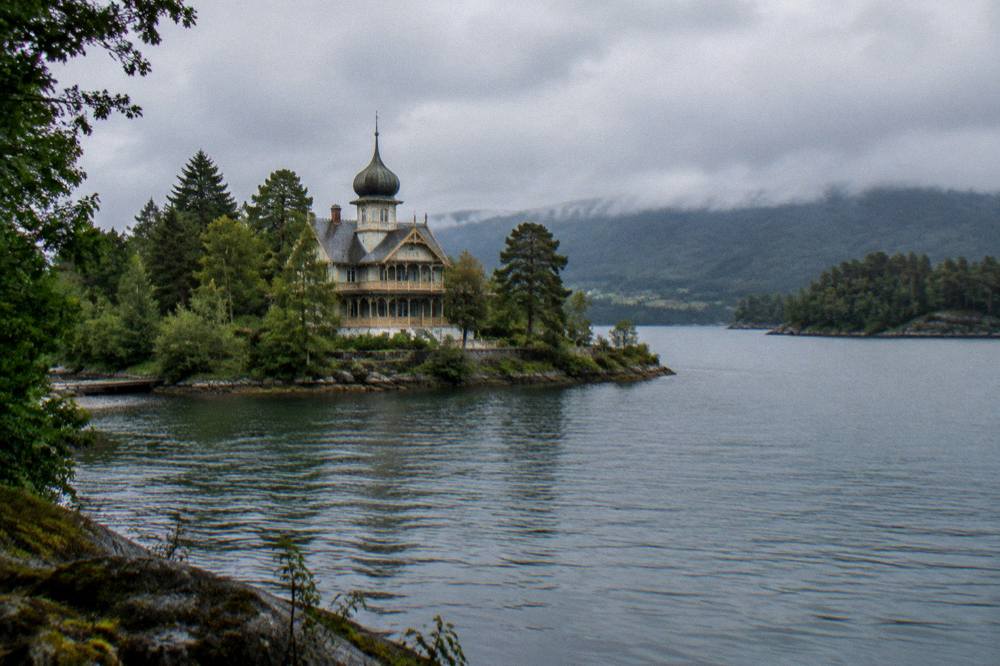
Lysøen is the small island home of the violinist Ole Bull, reached by boat from Bergen in Vestland county on the southwestern coast of Norway, and it makes a quiet half-day contrast to the city's busy wharf and harbourfront.
Short answer
Lysøen is Ole Bull's island villa south of Bergen, Norway, reached by boat. Plan a half day, use the Bergen Card for city transport, and check seasonal boat services before you go.
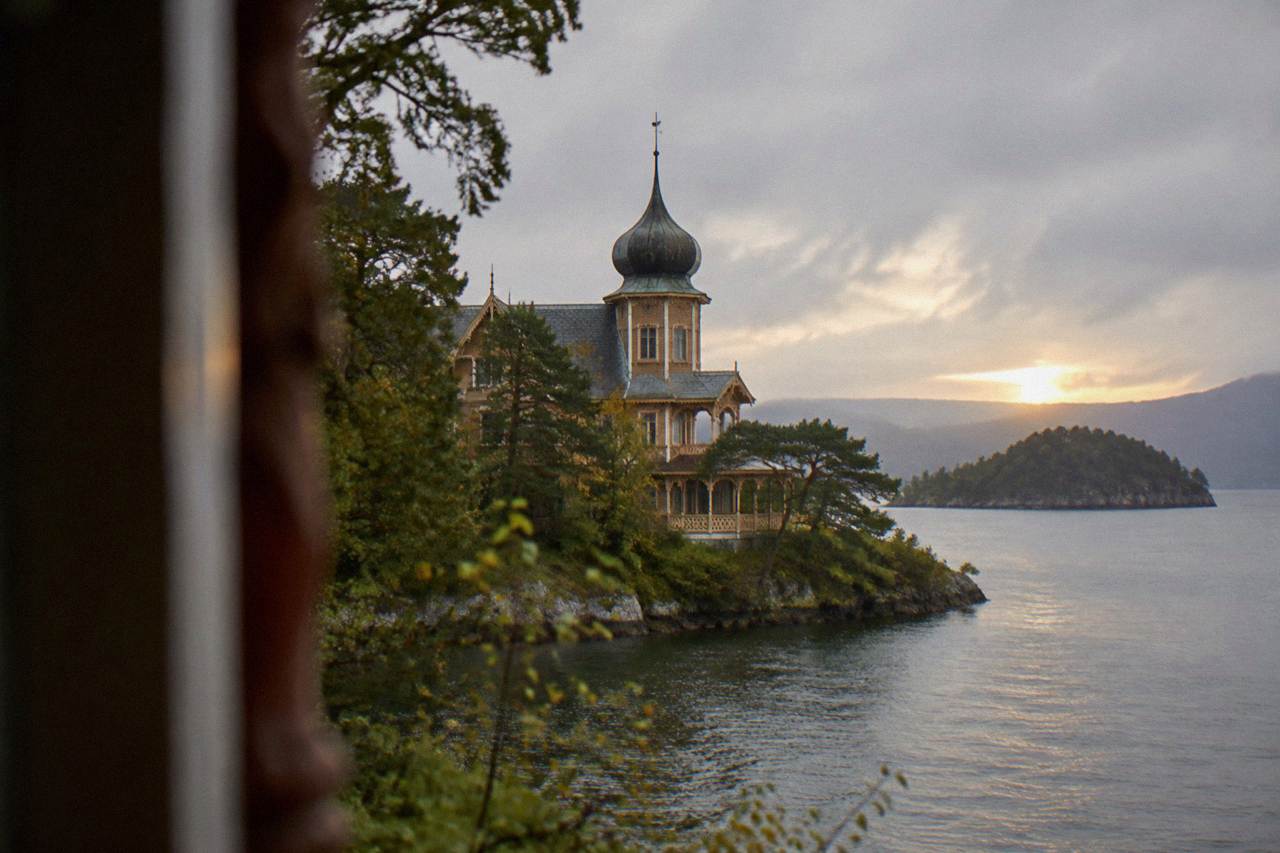
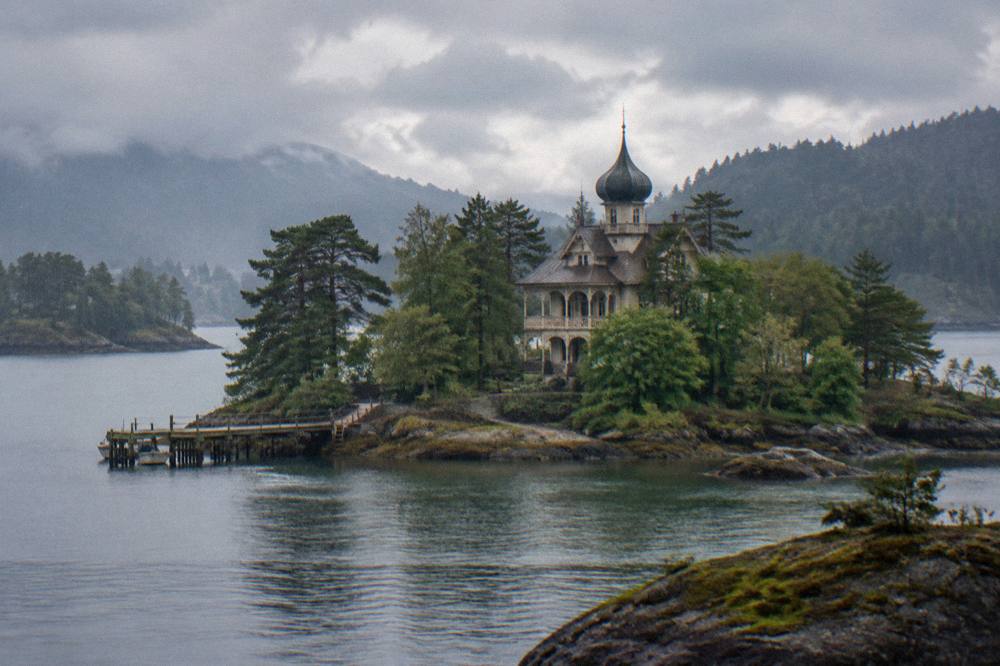
Lysøen is the small island southwest of Bergen, in Vestland county on Norway's southwestern coast, where the violinist and composer Ole Bull built a summer home that has since become one of the region's most personal museums. The villa sits alone among trees at the water's edge, an ornate wooden building with towers, verandas and carved detail that looks less like a stately home and more like a stage set, which suits the man who commissioned it. Bergen was a Hanseatic League trading post long before Bull was born, and the city's merchant wealth and shipping history frame every trip out into its island-studded approaches. This guide covers what the island holds, how to plan the crossing, what the weather does across the year, and how a visit slots into a wider Bergen itinerary.
Where Is Lysøen And How Do You Reach It From Bergen?
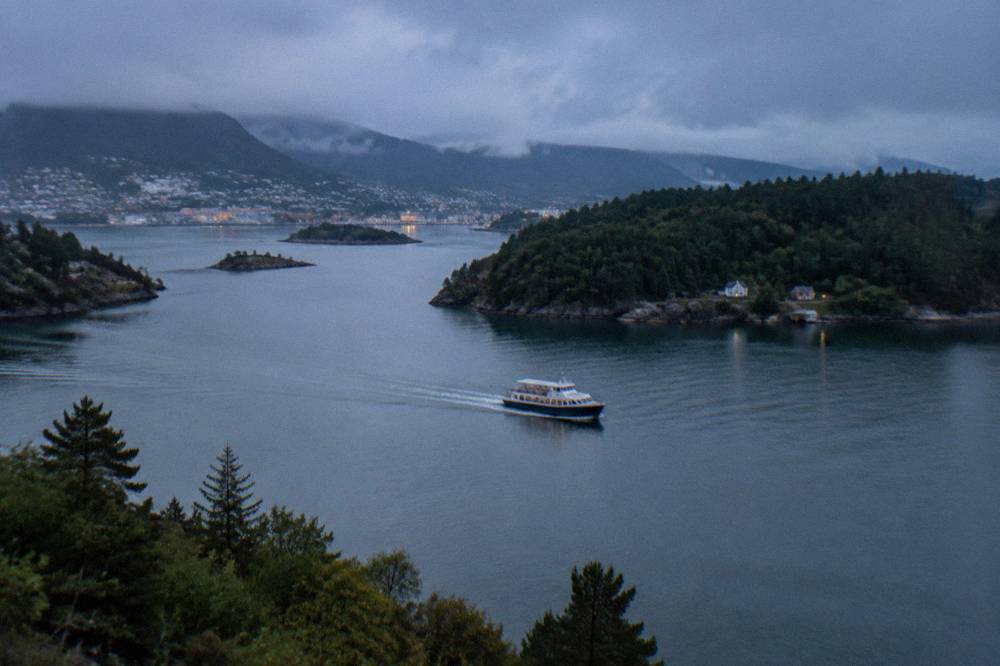
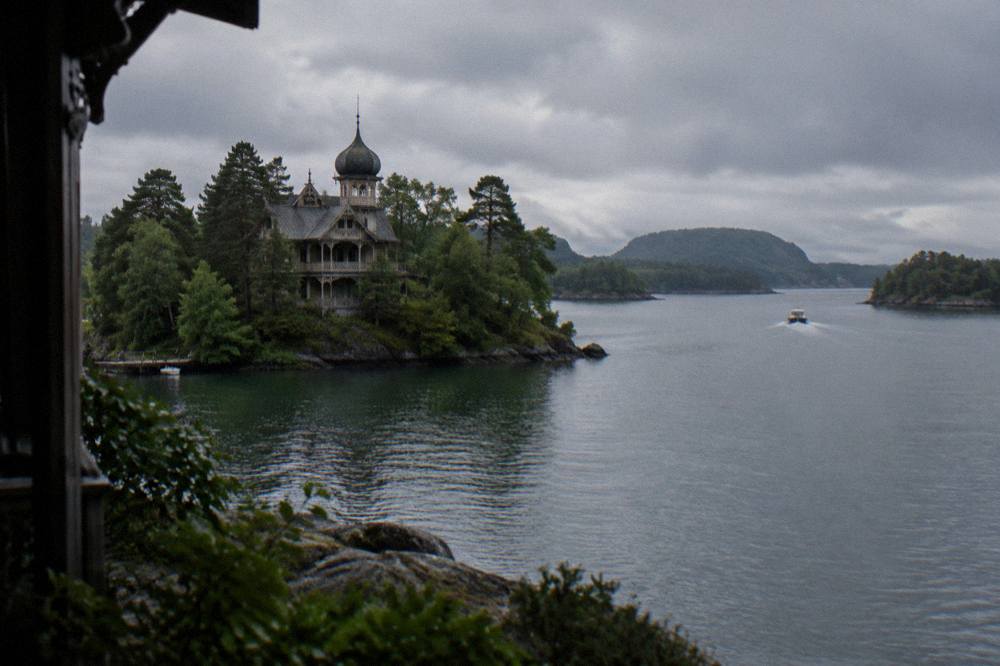
Lysøen is an island in the waters south of Bergen, Norway, reached by boat from the city, and the crossing itself is part of the appeal. The villa sits on the island's shoreline, surrounded by planted grounds, in the same archipelago of small islands and narrow sounds that shaped Ole Bull's choice of retreat. The site is managed as a museum estate, so opening days and sailing schedules follow the season rather than running year-round, so check both before you commit a day.
Bergen grew rich facing the sea, and the island world just beyond its harbour has always been where the city goes to breathe. That is the tradition Bull bought into when he picked his island, and it is the same logic that sends today's visitors out across the water. The mainland city around Bergen Travel Guide's home beat, from the UNESCO-listed wharf at Bryggen to the fortress at Bergenhus, is compact and walkable, but the archipelago changes the register completely: quieter water, forested shorelines, and houses that appear one at a time instead of in rows.
The practical point worth stating plainly is that Lysøen is a seasonal destination. Museum estates of this kind in the Bergen region typically open across the warmer months and close or run reduced services in winter, and the boat connections follow the same rhythm. Nothing in the verified planning data for this site pins an exact sailing timetable to Lysøen, so the honest advice is to check the operator's own current schedule and the museum's own visitor information before you build a day around it. Treat any timetable you find on a third-party aggregator as a lead to verify, not a fact to book against.
| Bergen transport element | Cost or coverage (2026) | Source basis |
|---|---|---|
| Skyss single adult ticket, zone A | 51 NOK | visitbergen.com travel page |
| Bybanen light rail and Skyss buses, county-wide | Free with Bergen Card | Official 2026 Bergen Card flyer |
| Airport Bybanen line 1 | Free with Bergen Card | Official 2026 Bergen Card flyer |
| Flybussen airport bus | Not included free with Bergen Card | Official 2026 Bergen Card flyer |
What Will You Actually See At Ole Bull's Villa On Lysøen?
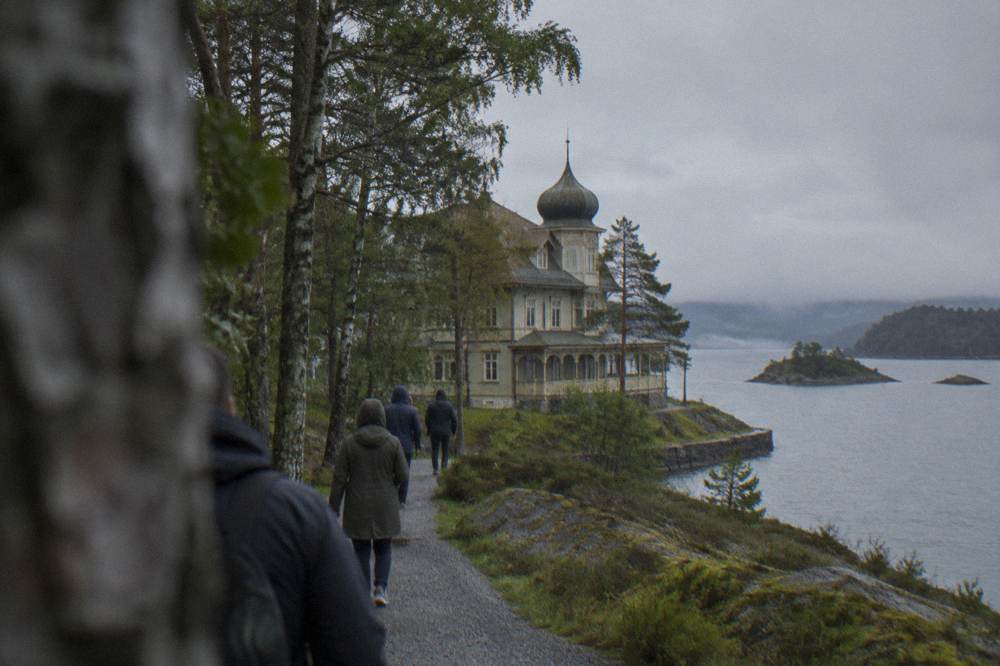
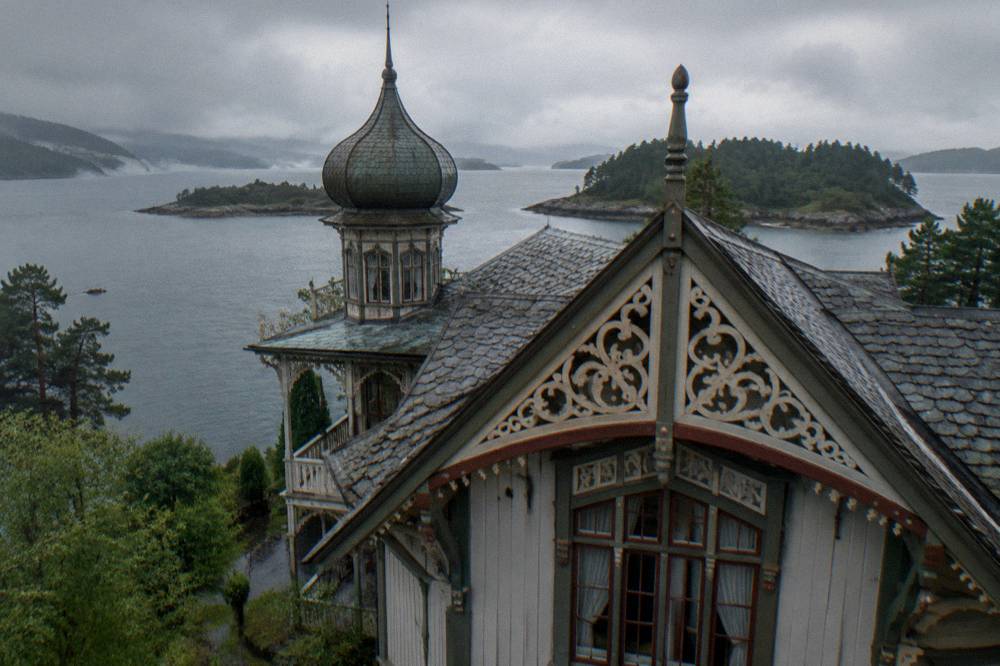
The main sight is the villa itself: a wooden building of fantasy proportions, with a first-floor music room as its centrepiece, and a surrounding estate of woodland paths, shoreline views and planted grounds that Ole Bull shaped himself. The museum presentation is built around the man, his instruments and his music. It is that personal scale, one family's summer world rather than a national collection, that separates it from Bergen's large city museums. Expect a house tour plus a walk, not a full-day sight.
Bull was Norway's first international musical superstar, a violinist who toured the world and then spent his fame and money on this island refuge. The villa he built reflects that career deliberately: an architect's drawings were filtered through a performer's eye, and the result is a building of towers, balconies and carved ornament. The music room upstairs is the emotional core of the visit, the space built to hold audiences for private performances. Interiors of this kind survive rarely, and the reason this one does is that the estate passed into museum care rather than private hands.
Around the villa, the grounds reward the slower part of a visit. Planted woodland, water-facing lawns and paths cut to viewpoints give the island a park character, and the shoreline walk is where the geography of the Bergen archipelago reads clearly: low islands, glacial-rounded rock, dark water. The visit as a whole works best with a guide's framing or at minimum the museum's own printed material, because the story, a musician building a world for himself, is what stops the house being merely pretty.
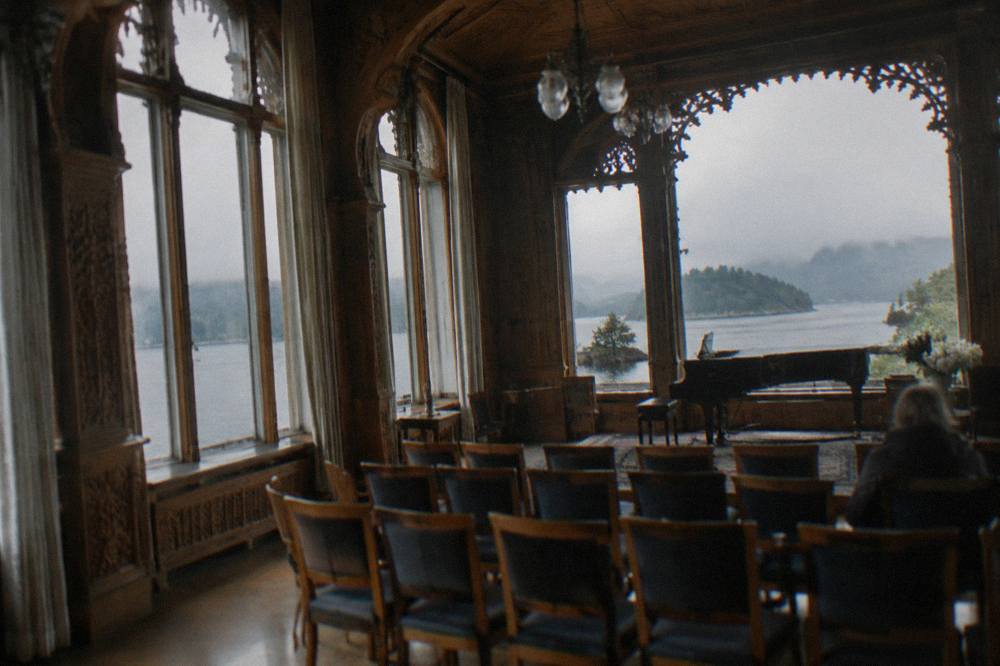
For context, Bergen's museum landscape includes several homes of famous Norwegians and none quite like this one. Troldhaugen, the home of composer Edvard Grieg, is the closest cousin, another musician's retreat outside the city built around a music room and a personal landscape, and the two pair naturally as a study in how Norway's composers lived. If your trip is music-themed, that pairing is the itinerary: one home by water for the violin, one home by lake and hill for the piano.
How Long Should A Lysøen Visit Take, And What Does A Day There Cost?
Plan on a half day for Lysøen itself: the boat crossing out, a guided look through the villa, and a walk in the grounds before returning. Any precise cost figure for the villa's admission is not carried in this site's verified planning data, so treat admission and sailing fees as live numbers to confirm at booking time. The costs you can lock down in advance are the city ones: the Bergen Card, published in NOK in the official 2026 flyer.
That last sentence is the honest way to handle a destination whose fees shift by season. What the verified data does carry is the city-side pricing, and it is worth knowing cold, because almost every Lysøen day starts and ends in Bergen's transport network. The Bergen Card's own 2026 flyer, published by visitbergen.com, lists the card's tiered prices and its free-transport coverage, and the attraction discounts run alongside. That flyer is the single strongest current primary source for the city's attraction prices.
| Bergen Card duration | Adult price | Child price (3-15) |
|---|---|---|
| 24 hours | 400 NOK | 100 NOK |
| 48 hours | 500 NOK | 125 NOK |
| 72 hours | 600 NOK | 150 NOK |
| 96 hours | 700 NOK | 175 NOK |
The card covers Skyss buses and the Bybanen light rail across Vestland county, including the airport line, which matters if you are anchoring a wider fjord trip in the city. Whether the card's attraction list reaches a given estate museum outside the city is exactly the kind of detail that changes between flyer editions, so read the current flyer's own list rather than a summary of an older one.
For the city anchor of the day, a guided walk that ends on the water is the natural fit, since it front-loads the context and leaves the afternoon for the boat. The pairing is deliberate: Discover Bergen on Foot and Boat runs two hours of walking and water, and Check availability before you plan the rest of the day around it.
What Is The Weather Like Around Lysøen, And When Should You Visit?
Bergen's climate is temperate oceanic and wetter than most of Norway, and Lysøen sits in the same weather system as the city: monthly averages from -1.4C in January 2026 to 14.9C in July 2026, with 217 days of precipitation across the trailing 13 months of Met Norway data. The best visiting window is roughly May through September, when the boat services run their full season. Winter visits are possible in principle but the museum estate and sailings thin out sharply.
The yr.no Bergen station table, which carries Met Norway's data, is the source behind those numbers, and its shape tells you what a Lysøen day actually feels like. Rain arrives on more days than it does in almost any city a visitor will have come from. It does not usually arrive as storms, it arrives as showers, drizzle and changeable skies, and the locals' habit of never planning around dry weather is the correct one to copy.
| Month | Mean temperature (observed) | Precipitation (observed mm) |
|---|---|---|
| September 2025 | 13.1C | 206.6 |
| November 2025 | 6.0C | 321.8 |
| January 2026 | -1.4C | 82.0 |
| April 2026 | 7.9C | 65.9 |
| June 2026 | 14.4C | 165.7 |
| July 2026 | 14.9C | 184.2 |
| August 2026 | 14.3C | 243.6 |
Two readings in that table deserve a traveler's attention. April 2026 came in unusually dry at 65.9mm, but April's normal is 141.0mm, so treat that as a lucky month rather than a pattern to bank on. November is the opposite case: 321.8mm observed against a 275.0mm normal, the wettest month in the whole table, and a clear signal to keep any late-autumn boat day flexible.
How Does Lysøen Fit Into A Wider Bergen Itinerary?
Lysøen works best as the half-day excursion on a two-day or three-day Bergen plan: keep the first day for the compact city core of Bryggen, the fish market and Mount Fløyen, and give the second day's first half to the island before returning for an evening in the city. It also pairs cleanly with a music-and-culture theme alongside Troldhaugen and the city museum cluster.
What it does not fit is a rushed one-day stopover, where the boat timing will eat the margins of your schedule.
The logic is simply travel friction. A city day in Bergen is dense: Fløibanen, Mount Fløyen, the fish market, the Hanseatic Museum and St Mary's Church all sit within a short walk of each other, and the Bergen Card's transport inclusion makes moving between them painless. An island day is sparser and slower, and that contrast is the point. Visitors who try to compress both into one day usually end up watching a boat timetable instead of the water.
The fuller culture theme mentioned above is worth naming in links: KODE Art Museums and the University Museum are the civic anchors of that museum cluster, and they set the institutional frame around the domestic-scale homes. The pairing logic holds across all of it, one home by water, one home by hill, and a museum core in between.
The city prices are worth tabulating when you build that first dense day, because the flyer figures let you compare what the attractions cost on their own:
| Bergen attraction | Ordinary adult price (2026 Bergen Card flyer) | Season notes |
|---|---|---|
| Fløibanen funicular return | 200 NOK (Apr-Sep) / 145 NOK (Oct-Mar) | Child 100 / 75 NOK |
| Ulriken643 cable car return | 435 NOK | Confirmed on ulriken643.no |
| KODE Art Museums | 200 NOK listed on flyer | KODE's own standalone price not confirmed on kode.no |
| The Aquarium (Akvariet) | 380 NOK (Nov-Feb) / 415 NOK (Mar-Oct) | Seasonal windows per flyer |
| Haakon's Hall | 120 NOK | Per flyer |
| Bryggen Museum | 170 NOK ordinary / 85 NOK with Bergen Card | Per flyer |
For the excursion half of the plan, the fjord options from Bergen split into lengths. A Mostraumen cruise is the classic fjord run and sits in the same half-day slot as Lysøen, so you choose one or the other per day rather than both:
If your island day runs long and you still want the fjord experience, the food side of the city rescues the evening. A Food and Culture Walk through central Bergen turns the dinner question into the activity itself, and it pairs naturally with the city's compact evening geography.
What Should You Bring To Lysøen, And What Practical Tips Matter?
Bring layered clothing, a real rain layer and flat walking shoes, because the island visit is an outdoor-and-indoor mix and the weather changes on a boat schedule rather than a forecast's. Carry NOK, the Norwegian krone, for small purchases on the day, though card payment is normal across Norway. Download offline maps and timetables before leaving the city, since island data coverage follows the terrain.
And time your return sailing with margin: the last boat of the day is a hard deadline in a way city transport never is.
The rain math is the simplest way to take this seriously. Met Norway's trailing-13-month table for the Bergen station shows 217 days with precipitation, which works out to a wet day more often than not. The month-by-month precipitation figures range from 65.9mm in April 2026 up to 321.8mm in November 2025, and the observed totals run wet against their normals more often than they run dry. The packing conclusion is not complicated: the person with a proper shell jacket has a better day than the person with an umbrella, because wind comes with the water here.
| Season | Mean temperature range (Met Norway data) | What to pack for a Lysøen day |
|---|---|---|
| Spring (Mar-May) | 5.9C to 9.9C observed | Warm layer, waterproof shell, grippy shoes for damp paths |
| Summer (Jun-Aug) | 14.3C to 14.9C observed | Light layers plus a rain layer, sun protection for the boat |
| Autumn (Sep-Nov) | 6.0C to 13.1C observed | Full waterproofs, warm hat, spare layer for the crossing |
| Winter (Dec-Feb) | -1.4C to 5.8C observed | Serious winter kit, and confirm any service runs at all |
On money: Norway's currency is the krone, and prices across this guide are stated in NOK from official sources. Norway is a Schengen Associate, an EEA and EFTA member applying the Schengen acquis, but not an EU member, so do not think of entry to Bergen as an EU crossing, and do not build plans around a specific travel-authorisation date that has not been officially confirmed. On language, Norwegian is the local language and English is widely spoken in tourism settings, so the practical barrier on an island excursion is low.
A final practical habit worth adopting for this whole region: build a weather-check into the morning itself. The yr.no Bergen station table is the reference this site uses for climate, and yr.no's live forecasts are the natural companion for a sailing day. A plan that reads the sky at breakfast and adjusts the day's order, island first or city first, is the plan that survives contact with Bergen weather.
Who Was Ole Bull, And Why Does His Island Matter?
Ole Bull was a Norwegian violinist and composer of international fame, one of the first Norwegian performers to build a worldwide touring career, and a public figure who poured his celebrity into causes at home, including the early promotion of Norwegian national culture. The island villa was his personal stage for that life: a home built for music, hosting and the deliberate performance of Norwegian identity. The house matters because it is that story made physical.
Visiting the island with that context changes what you look at. The carved detail stops being decoration and starts being a statement, an internationally successful Norwegian choosing to build elaborately and distinctively at home rather than abroad. The music room stops being a pretty interior and becomes the working heart of a performer's household. Even the grounds, planted and shaped rather than left wild, read as a composed landscape, arranged like a piece of music.
The Bergen connection is direct. Bull was a western Norwegian, and his fame ran alongside the city's own cultural rise, the same era that produced Grieg at Troldhaugen and the institutions that became today's Bergen Kunsthall and university museums. Placed beside the Maritime Museum and Bryggen's Museum, the villa gives the personal, domestic end of the same regional story those institutions tell at civic scale.
For the music-motivated traveler, the fuller Bergen circuit is Lysøen in the archipelago, Troldhaugen to the south, and a city evening that includes the cathedral and concert life, with the festivals layering on top. The Bergen International Festival ran 27 May to 10 June 2026, Bergenfest ran 10 to 13 June 2026 at Bergenhus Festning, and Nattjazz ran 29 May to 6 June 2026 at USF Verftet, per the festivals' official sites, so late May into June is the stretch when the city's music calendar peaks and an island pilgrimage to a musician's home lands with the most force.
What Nearby Sights Pair Well With Lysøen On The Same Trip?
The strongest pairings are the other small, characterful sites around Bergen's south side and harbour: Fantoft Stave Church for its medieval-inspired wooden architecture, Nordnes Sjobad for a swim-and-sauna stop in season, and the Old Bergen Museum's assembled historic townhouses for a second dose of domestic history. Troldhaugen remains the headline pairing for the music theme, and the city-centre museums cover the civic backdrop. Several of these chain together naturally with a half-day island excursion.
The grouping logic is geography and mood. Fantoft Stave Church, on the list as Fantoft Stave Church, is a wooden church in the stave tradition, rebuilt after fire, and it shares with Lysøen a fascination with Norwegian building craft expressed at an intimate scale. The Old Bergen Museum gives the wider domestic context, streets of preserved wooden houses that show how ordinary western Norwegians lived in the era Bull built his fantasy retreat. Together they frame the villa: exceptional because of who built it, typical in the material it used.
| Nearby pairing | Theme | Time to budget |
|---|---|---|
| Troldhaugen | Composer's home, music room, landscape | Half day |
| Fantoft Stave Church | Wooden architecture, heritage reconstruction | An hour or two |
| Old Bergen Museum | Historic townhouses, domestic life | Half day |
| Nordnes Sjobad | Harbourfront swim and sauna | An hour or two, seasonal |
| Bergenhus Fortress | Medieval and Hanseatic military history | Half day |
Note that the time column above is planning guidance in the site's own voice, not an operator's promise, and seasonal opening always trumps it. What is verifiable from the pricing data is the city-side foundation: the Bergen Card's transport inclusion covers the getting-around, and the attraction prices tabulated earlier in this guide come from the official 2026 flyer.
Common Questions About Lysøen
Where is Lysøen and how do you reach it from Bergen?
Lysøen is an island in the waters south of Bergen, in Vestland county, Norway, reached by boat from the city. Sailing services and the museum's opening days are seasonal, so check the operator's current schedule and the museum's own visitor information before planning the crossing.
What will you actually see at Ole Bull's villa on Lysøen?
The villa is an ornate wooden house with towers and verandas, built around a first-floor music room, and it is presented as a museum of the violinist's life, instruments and music. The surrounding estate has woodland paths, shoreline views and planted grounds, so the visit is a house tour plus a walk.
How long should a Lysøen visit take, and what does a day there cost?
Plan on a half day for the crossing, the villa and the grounds. Admission and sailing fees are not fixed in this site's verified planning data, so confirm current figures with the operator and the museum at booking time. City-side costs, such as the Bergen Card tiers of 400 to 700 NOK for adults, are published in the official 2026 flyer.
What is the weather like around Lysøen, and when should you visit?
Bergen's climate is temperate oceanic and wet, with Met Norway data showing monthly means from -1.4C to 14.9C over the trailing 13 months and 217 days with precipitation. The May-to-September stretch is the reliable visiting window for a boat-based excursion.
Who was Ole Bull, and why does his island matter?
Ole Bull was a Norwegian violinist and composer with an international touring career, and the villa was his summer home and personal stage for music and Norwegian cultural identity. The island matters as that story made physical: a musician's self-portrait in wood, carved detail and shoreline.
What nearby sights pair well with Lysøen on the same trip?
Troldhaugen, Grieg's home, is the headline pairing for a music-themed trip, while Fantoft Stave Church, the Old Bergen Museum and Nordnes Sjobad chain well with a half-day island excursion. All sit in or near Bergen's south side and harbour approaches.
Lysøen rewards exactly the kind of traveler who enjoys Bergen most: someone willing to trade a dense sightseeing list for one unhurried crossing, one house full of a single man's story, and a walk through grounds that were composed as deliberately as the music played inside them. Check the sailing, pack the shell jacket, and let the island set the pace for the day.