Fantoft Stave Church
Fantoft Stave Church stands in the woods of Fana, the southern district of Bergen in Vestland county on Norway's southwestern coast, and it is the most photogenic piece of medieval-style timber architecture within the city limits. This guide covers how to get there, what to look at, and how to pair it with the rest of a Bergen day.
Short answer
Fantoft Stave Church is a reconstructed medieval-style stave church in the Fana district of southern Bergen, reachable by Bybanen light rail or Skyss bus from the city centre. A single Skyss zone A ticket costs 51 NOK, and a Bergen Card covers Skyss buses and the Bybanen across Vestland county. The church sits in a leafy clearing, so it pairs naturally with Troldhaugen and other Fana sights on a half-day loop.
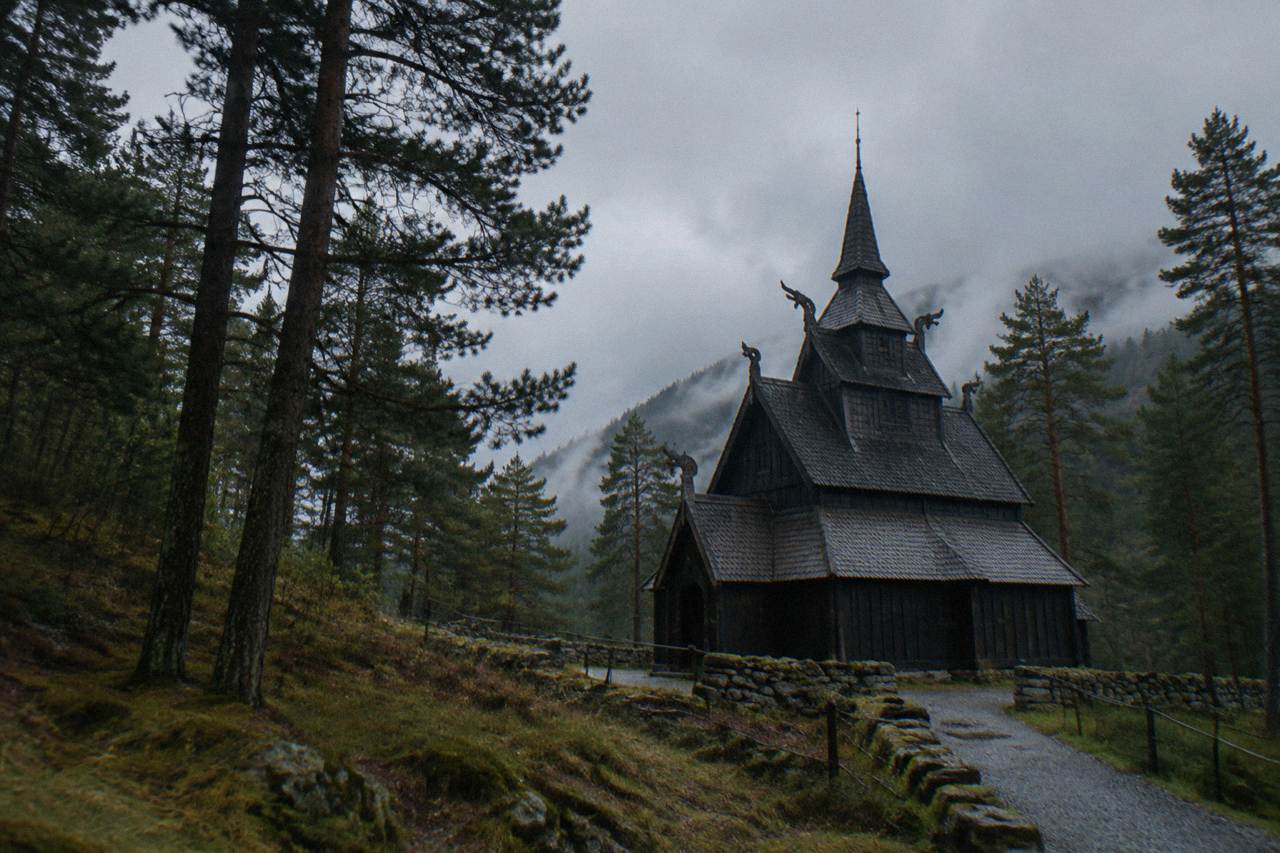
Fantoft Stave Church is one of the strangest and most memorable sights in Bergen, a city and municipality in Vestland county on Norway's southwestern coast and a former Hanseatic League trading post. It is a dark, tiered wooden building that looks lifted straight out of the Middle Ages, yet it stands alone in a forest clearing in Fana, the green southern district of the city, several kilometres from the crowds at Bryggen. The church that stands today is a careful reconstruction, built after the earlier structure on the site burned, and its setting among tall trees gives it a quiet, slightly eerie atmosphere that few other Bergen attractions match.
The point of this guide is practical. It covers what the church actually is, how to reach it from the city centre using public transport, what to look for once you are standing in front of it, what a visit costs alongside the rest of Bergen's attraction prices, and what else to do in Fana once you are down there. Along the way it pulls the freshest verified numbers for the city, from the 2026 Bergen Card flyer to the Met Norway climate table for the Bergen station.
What Is Fantoft Stave Church In Bergen?
Fantoft Stave Church is a reconstructed stave church, a medieval Norwegian building type made of upright timber staves rather than horizontal logs, standing in a wooded clearing in the Fana district of southern Bergen. The version visitors see today was rebuilt after a fire destroyed the earlier structure on the site, so it is a modern reconstruction of a centuries-old design rather than an untouched medieval building, and it is one of the few stave churches visible inside any Norwegian city limits.
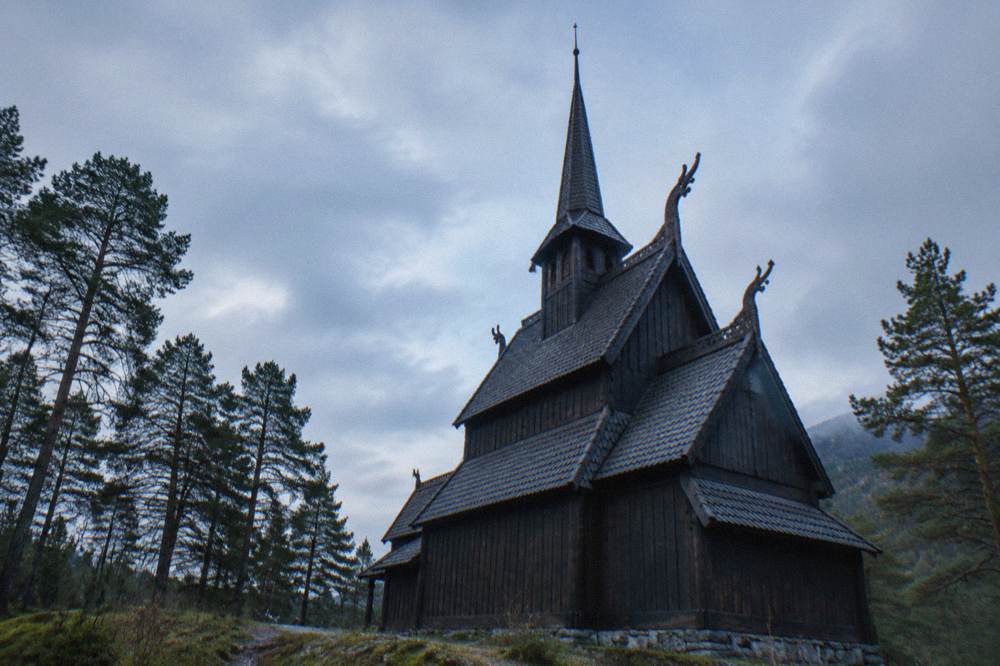
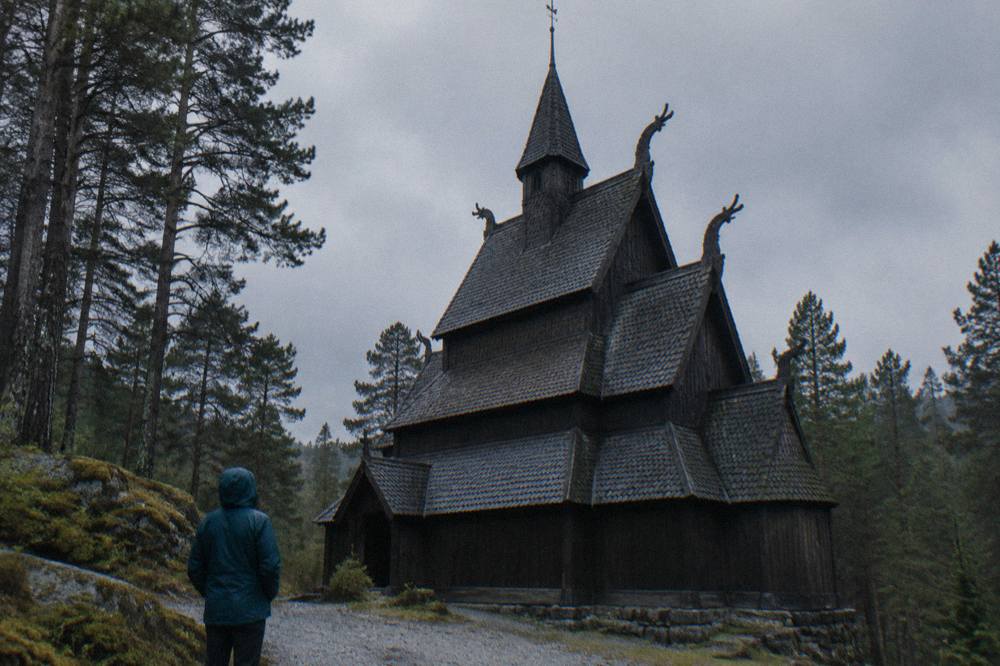
The stave church is Norway's signature medieval architecture. The technique vertical, load-bearing posts, called staves in Norwegian, carry the weight, allowing walls of upright planks and soaring tiered roofs that traditional log construction cannot achieve. The silhouette this produces, a stacked series of pitched roofs shrinking toward a spire, capped with carved gable ornaments, is instantly recognizable and unique to Norway. Fantoft displays the full vocabulary of the type.
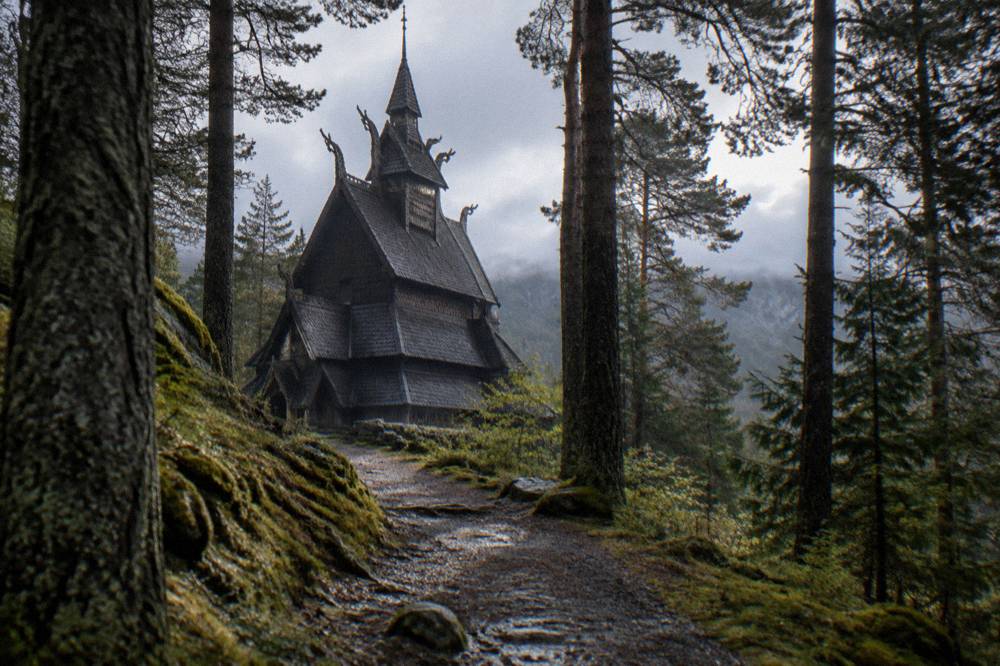
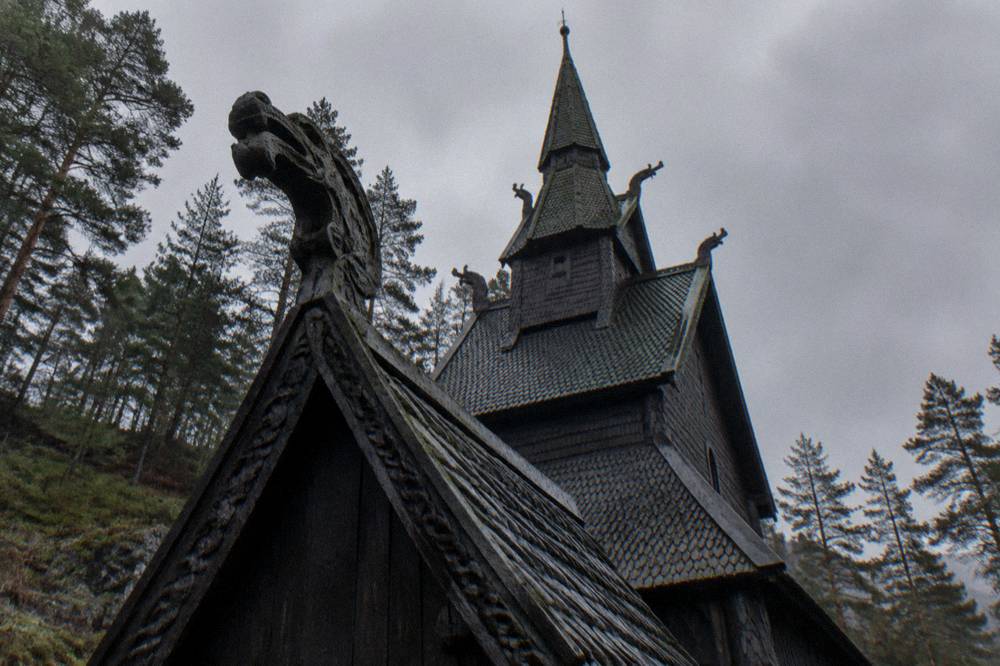
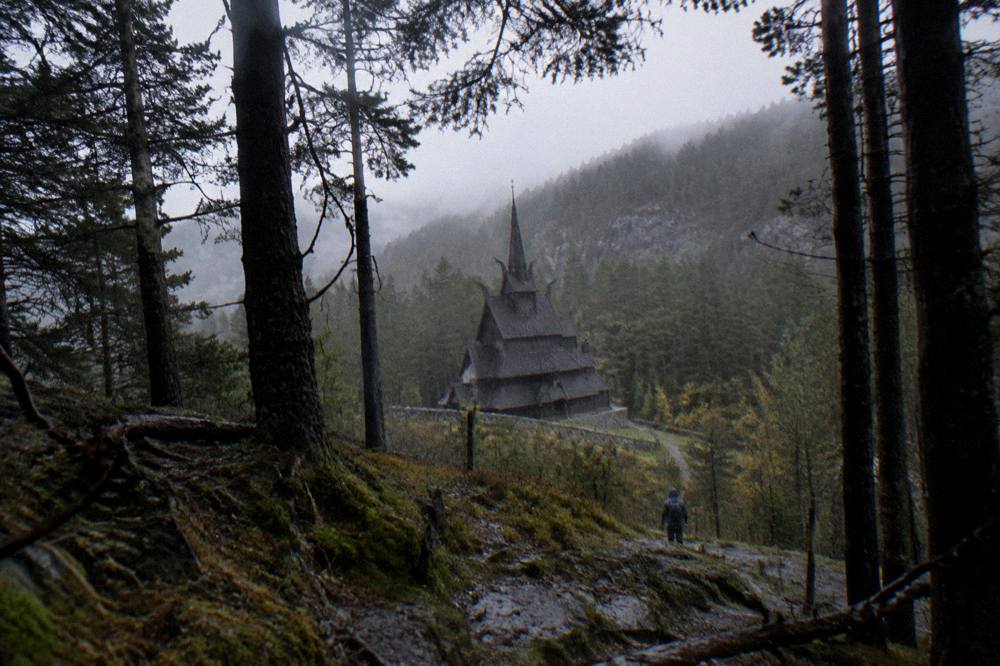
What makes the site unusual is the setting. Most stave churches stand in open farmland or village greens, exposed to weather with mountains behind them. Fantoft stands deep among trees, hemmed in on nearly every side, so the visitor sees it in fragments first: a dark gable through branches, then the full stack of roofs, then the carved doorway. Photographers love the spot for exactly this framing. Bergen's climate helps too, the same coastal wetness that makes the city famous also keeps the surrounding woods deep green, and moss softens the edges of everything.
The reconstruction question deserves honesty. Nothing about the building hides its history, and the fire that destroyed the earlier structure on the site was one of the most notorious events in modern Norwegian heritage. The rebuilding was carried out with close attention to the traditional stave technique, which means the craftsmanship on display is genuinely of the old school even though the timbers are newer. Visitors expecting a dusty original should adjust expectations; visitors interested in how this architecture is actually put together will find the reconstruction arguably more instructive than a pristine survivor, because the joinery and materials read so clearly.
Pair this with a walk through the Hanseatic Museum or Bryggen in the city centre and the contrast is stark: Bergen's UNESCO-listed waterfront, inscribed in 1979 according to UNESCO's own listing, is dense, commercial and horizontal, while Fantoft is solitary, vertical and silent. Both are timber. Only one of them looks like it might step out of a saga.
How To Get To Fantoft Stave Church From Bergen City Centre?
Fantoft Stave Church is reached from central Bergen by Bybanen light rail or Skyss bus into the Fana district, followed by a short walk through residential streets and woodland paths to the clearing. A single adult Skyss ticket for zone A costs 51 NOK, and every Bergen Card option includes free travel on Skyss buses and the Bybanen across Vestland county, including the airport line, so card holders ride south at no extra cost.
The Bybanen is the simplest option for getting into the city. Line 1 runs between Bergen Airport Flesland and the city centre, and Line 2 shares the central stretch; both pass through the northern edge of Fana, with stops within walking distance of the church's neighbourhood. The exact walking time from each platform is not something this site will invent, so use the Skyss travel planner to pick the closest stop and check the walking route before setting off. The trails around the church are well used by locals, and the approach through the trees is part of the appeal.
Buses serve the district too. Skyss runs the city's whole public network, buses and light rail together, and the same 51 NOK zone A single covers both modes. Buy tickets in the Skyss app or at machines; the fare is confirmed on visitbergen.com's own travel information page and echoed on the transport line of the Bergen Card flyer. If a Bergen Card is part of your trip, the transport math changes completely, since all four card durations include unlimited Skyss and Bybanen travel county-wide.
| Option | What It Covers | Cost Basis |
|---|---|---|
| Skyss single, zone A | One adult trip by bus or Bybanen | 51 NOK |
| Bergen Card 24h-96h | Unlimited Skyss buses and Bybanen in Vestland county, including the airport line | 400-700 NOK depending on duration |
| Bybanen Line 1 | Airport Flesland to city centre, via Fana-area stops | Covered by Skyss ticket or Bergen Card |
| Flybussen airport bus | Separate commercial airport service, not included free with the Bergen Card | Fare not published on this site; check the operator directly |
One planning note worth knowing: check the Skyss service alerts before you travel. The summer 2026 maintenance programme suspended sections of both Bybanen lines for parts of late June and July, with replacement buses running on affected stretches, and one direction of the Nonneseter stop has been closed since late February 2026 for nearby demolition work. These are official Skyss notices, not rumours, and a two-minute planner check saves a wasted platform wait.
The walk from the nearest stops is itself a feature of the visit. Fana is one of the greenest parts of a green city, and the streets give way to paths that lead into the woods surrounding the church. Wear proper shoes. Bergen records 217 days with precipitation across a trailing 13 months according to the yr.no station table, which means any given path is likely damp.
Getting back is the same journey in reverse, and the frequency of services toward the centre in the afternoon is good enough that visitors can simply walk back to the stop they arrived at. Keep the Skyss app open on the return leg if the sky is darkening; a wet wait in Fana is a real possibility, and the shelter at some district stops is minimal.
What To Look For At Fantoft Stave Church In Bergen?
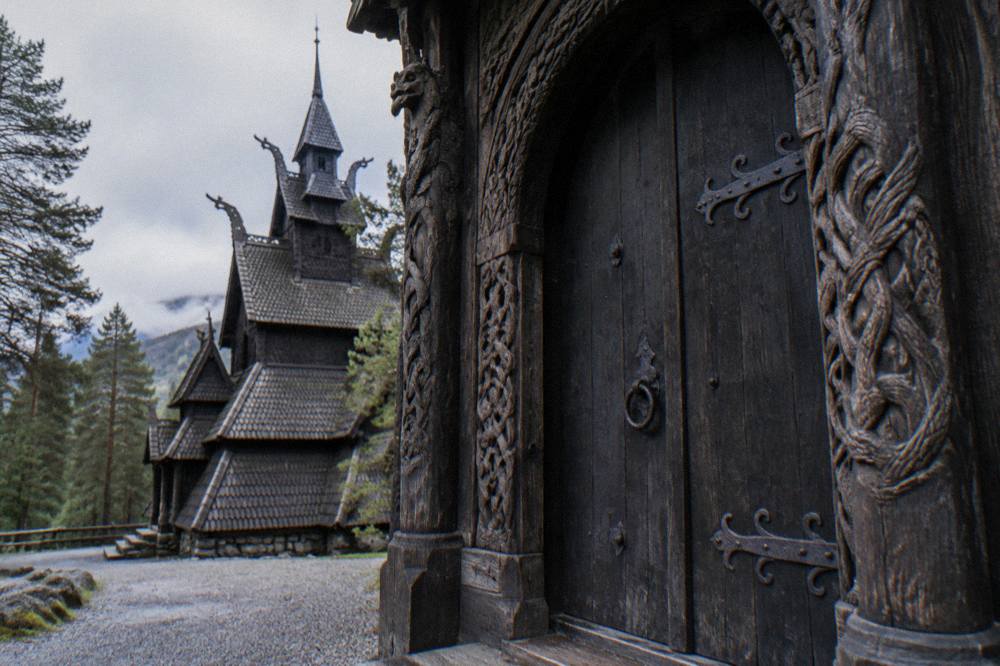
The things to look for at Fantoft Stave Church are the stacked tiered roofs, the carved gable ornaments including dragon-head finials, the upright stave construction of the walls, the carved portal framing the entrance, and the surrounding gallery walkway that lets you circle the whole structure at close range. Together these elements make up the complete vocabulary of medieval Norwegian stave architecture, compressed into one compact building.
Start with the frame. The staves themselves, the heavy upright posts that give the type its name, carry the building, and around their base runs a lower frame of horizontal sill timbers. From the sill upward everything is joinery rather than nails in the traditional method: wall planks slot into grooves, brackets reach diagonally from stave to stave, and the whole upper structure hangs from the posts. A reconstruction like Fantoft makes this legible because the timber is light in colour and freshly cut relative to a survivor church.
| Element | What It Is | Why It Matters Here |
|---|---|---|
| Staves | Vertical load-bearing posts | The defining technique of Norwegian medieval church building |
| Tiered roofs | Successive stacked pitched roofs shrinking upward | The signature silhouette, fully expressed at Fantoft |
| Gable finials | Carved ornaments, including dragon-head crestings | Decoration in the medieval Norse tradition |
| Carved portal | Ornamented doorway frame | The traditional focal point of craft on a stave church |
| Gallery walkway | Covered ambulatory circling the base | Lets visitors inspect the walls and carvings closely |
Then circle the building. The gallery that runs around the base, a standard feature of larger stave churches, lets you walk the perimeter under cover and study the walls at arm's length. Look at how the planks run, where weathering gathers, how the brackets under the roof tiers are shaped. The carved gables above are the showpiece: the dragon-head and crest ornaments rooted in older Norse woodcarving traditions, transplanted onto a Christian building. That blend is what stave churches are famous for, a visible record of the moment two symbolic worlds met in timber.
The interior is modest. Stave church interiors are small, dim and atmospheric, built around a simple room rather than a grand hall, and Fantoft follows the pattern. The interior is not the reason to come; the exterior and the setting are. Give the outside an hour, walk the clearing's edge, and photograph the gables from the different angles the trees allow, because no two angles frame the roof stack the same way.
The admission situation at the church itself has no verified price for the current season, so no figure is published here. Check the listing before you go. What is verified, from the official 2026 Bergen Card flyer published on visitbergen.com, is the full price picture for the major Bergen attractions you will likely combine with the trip, which is the table that actually matters for budgeting the day.
| Bergen Attraction | Adult Price (NOK) | Source Note |
|---|---|---|
| Fløibanen funicular return, 1 Apr-30 Sep | 200 | Bergen Card 2026 flyer |
| Fløibanen funicular return, 1 Oct-31 Mar | 145 | Bergen Card 2026 flyer |
| Ulriken643 cable car return | 435 | ulriken643.no and Bergen Card flyer |
| The Aquarium, winter window | 380 | Bergen Card 2026 flyer |
| The Aquarium, 1 Mar-31 Oct window | 380-415 seasonal | Bergen Card 2026 flyer |
| Haakon's Hall | 120 | Bergen Card 2026 flyer |
| Hanseatic Museum, with guided visit | 160 | Bergen Card 2026 flyer |
| Bryggen Museum, ordinary / with Bergen Card | 170 / 85 | Bergen Card 2026 flyer |
Before committing to the rest of the day, one reassurance worth having: the featured walking-and-boat tour here carries the operator's standard cancellation terms, so a rainy forecast in Fana is not a reason to skip booking a morning in the centre. Checking live availability costs nothing and locks nothing in.
A pattern worth noticing while planning: the two mountain transport prices, Fløibanen and Ulriken643, are the two big-ticket items in the table, and both are cheaper with a Bergen Card than the ordinary prices shown here, with the card's discounted Fløibanen rate limited to one purchase per card at the ticket office. The Bergen Card itself costs as follows, per the same 2026 flyer.
| Card Duration | Adult (NOK) | Child 3-15 (NOK) |
|---|---|---|
| 24 hours | 400 | 100 |
| 48 hours | 500 | 125 |
| 72 hours | 600 | 150 |
| 96 hours | 700 | 175 |
Whether the card pays off on a Fantoft day depends on the rest of the itinerary. A card holder riding south pays nothing for the Bybanen or bus, so a heavy sightseeing day in the centre followed by a Fana afternoon is the profile where the 24-hour card most often makes sense. A dedicated Fantoft-and-back trip on its own, at 51 NOK each way, is far cheaper without one.
How Much Does A Bergen Day Around Fantoft Stave Church Cost?
A day built around Fantoft Stave Church costs 51 NOK each way for a Skyss zone A single from central Bergen, with every ride free on any Bergen Card, and the rest of the spend is set by what you pair it with: a Fløibanen return at 200 NOK in summer or 145 NOK in winter, an Ulriken643 return at 435 NOK, or a 400 NOK 24-hour Bergen Card that bundles transport with discounted attraction entry across the city.
The honest framing is that Fantoft is a cheap anchor for an expensive city. Bergen is Norway, and Norway prices its attractions in Norwegian kroner, so a family of four doing the funicular and the aquarium in one day is stacking several of the biggest ticket prices in the table above into a single outing. The southern half-day flips that: a bus or tram ticket, a walk in the woods, an hour at the church, and you have spent less than the price of a single aquarium adult entry. The Bergen Travel Guide homepage rounds up the full things-to-do picture for budgeting a whole stay.
Money hygiene in Bergen is simple. The currency is the Norwegian krone, NOK, never the euro, and card payment is accepted almost everywhere, including on public transport via the app. Norway is a non-EU EEA/EFTA member and a Schengen Associate, applying the Schengen acquis, so nothing about a visit to Bergen is an EU crossing, and no confirmed ETIAS go-live date is available from official sources.
Food on a Fana day is worth a sentence. The district is residential rather than touristic, so the eating options near the church itself are limited, and the smart move is to eat in the centre before heading south or after returning. The site's restaurant guide covers the city options; the food tour listed later in this article is another way to solve the question, pairing central Bergen eating with a guided walk.
When Is The Best Time Of Year To Visit Fantoft Stave Church In Bergen?
The best time of year to visit Fantoft Stave Church is late spring through early autumn, when the surrounding woods are fully green, the paths are driest, and the Bybanen and bus services run at full schedules; winter visits are perfectly possible and atmospheric, but the same rain that gives Bergen 217 days with precipitation in a trailing 13 months can turn the forest approach into a slog, and the short, grey days compress the photography window.
The Met Norway climate table for the Bergen station, published via yr.no, gives the full monthly picture, and it is worth reading directly rather than trusting folklore about the rainiest city in Europe. The table below shows the observed mean temperature and precipitation for the trailing 13 months at the Bergen station.
| Month | Mean Temp (C) | Precipitation (mm) |
|---|---|---|
| September | 13.1 | 206.6 |
| October | 9.7 | 231.9 |
| November | 6.0 | 321.8 |
| December | 5.8 | 303.5 |
| January | -1.4 | 82.0 |
| February | 0.8 | 133.4 |
| March | 5.9 | 243.9 |
| April | 7.9 | 65.9 |
| May | 9.9 | 127.4 |
| June | 14.4 | 165.7 |
| July | 14.9 | 184.2 |
| August | 14.3 | 243.6 |
Two honest reads of that table. First, there is no dry month in Bergen, only drier ones: January's 82 mm is the driest figure in the trailing period, and April's 65.9 mm the lowest of the spring, while November's 321.8 mm was the single wettest month observed. Second, the mild winters matter more than the rain: a January mean of -1.4 C means the woods around Fantoft are more likely brown and dripping than white and frozen, so a winter visit is a rain problem, not a snow one. Pack for wet, always, and the Fløibanen funicular in the centre makes a good rainy-hour escape on the same day ticket.
Autumn deserves a special word for photographers. The Fana woods around the church turn deep gold and rust through October, when the observed mean sits at 9.7 C, and the low coastal light through the trees is at its most dramatic. November is the gamble: 321.8 mm of rain fell in the wettest observed month of the trailing period, but the same damp feeds the moss that makes the site photograph so well. Go early, keep the church's roofline between you and the sky, and let the weather do the styling.
What Else To Do In Fana, Bergen's Southern District?
Fana, the southern district of Bergen that holds Fantoft Stave Church, also holds the museum at Troldhaugen, lakeside walking country, and several trail networks that make the district a full half-day destination rather than a single-sight trip; paired with the church, the natural loop is the church clearing, a woodland walk, and Troldhaugen, all reached on the same Skyss ticket or Bergen Card ride south.
Troldhaugen is the obvious pairing. The museum at Troldhaugen sits in its own grounds a short ride from the church, and the site's visitor draw is the mix of museum building, historic house and water-facing setting that characterises it. For a Fana half-day the sequence writes itself: church first while the light is good, then Troldhaugen, then a walk around the water near it before riding back toward the centre. The district rewards travelers who slow down; racing it misses the point of leaving the city's bustle in the first place.
| Fana Stop | Character | How It Pairs With The Church |
|---|---|---|
| Fantoft Stave Church | Forest clearing, timber architecture, photography | The anchor of the half-day |
| Troldhaugen | Museum grounds and lake setting | Second stop on the same southbound ride |
| Woodland paths around the church | Quiet forest walking | Extends the church visit into a proper walk |
| Return through the city centre | Bars, restaurants and the waterfront | Turns the afternoon into a full Bergen day |
For walkers, the wider district connects into trail networks that locals use year-round. The terrain is mild, coastal and wooded, not alpine, so it suits casual hiking rather than a strenuous Mount Ulriken ascent; if mountain views are the goal, do Ulriken on a separate morning with its 435 NOK return ticket, then give Fana the afternoon. Families will find the flat paths and the science-focused VilVite centre back in the centre a workable split for a mixed-interest group.
Is Fantoft Stave Church Worth The Trip From Bergen City Centre?
Fantoft Stave Church is worth the trip from Bergen city centre for anyone with a half-day spare, an interest in architecture or photography, or a desire to see a stave church without adding a full fjord day-trip to the itinerary, because the total cost of reaching it is a 51 NOK Skyss single or a free ride on any Bergen Card, and nothing else in the city combines medieval-style timber architecture with a forest setting.
The honest counter-argument is time. Bergen's biggest draws, the Bryggen waterfront, the funicular up Fløyen, a Mostraumen fjord cruise, all compete for the same daylight, and a visitor with only one full day should probably spend it in the centre and on the water. Fana's moment comes on the second day, or on a return visit, or for the traveler who has already seen the postcard Bergen and wants the version locals live among.
It is also worth stating plainly who will be disappointed. Anyone expecting a large, furnished medieval interior, a museum with exhibitions, or a guided heritage site on the scale of the Bergen Cathedral or St Mary's Church in the centre will find Fantoft small, quiet and low on interpretation. The building is the exhibit. Visitors who accept that framing consistently rate the detour among their favourite Bergen memories, largely because the approach through the trees costs nothing and delivers an atmosphere the city centre cannot.
Practical Tips For Visiting Fantoft Stave Church In Bergen
The practical keys to visiting Fantoft Stave Church are checking the Skyss planner for your exact stop and any service disruption, carrying a Bergen Card if the rest of your day includes Bybanen rides or major attractions, wearing shoes that survive wet forest paths, arriving in daylight hours for photography, and confirming the church's current opening arrangement on its listing before you commit, since this site publishes no unverified access details for the site.
Transport first, because it is the one place plans go wrong. Check Skyss alerts on the day, particularly across late June and July, when the summer 2026 maintenance programme suspended stretches of both Bybanen lines and replaced them with buses, and note that the Nonneseter stop has been closed in one direction since February 2026 for demolition work nearby. The Bybanen's normal airport-to-centre route via Fana stops is otherwise your friend. Buy the 51 NOK single in the app, or flash a Bergen Card of any duration, which covers all Skyss buses and light rail across Vestland county, including the airport line.
Clothing is the second key. The climate here is temperate oceanic, wetter than most of Norway: the yr.no station table shows 217 days with precipitation across the trailing 13 months, and even the driest month in that table, April, still recorded 65.9 mm of rain. A waterproof layer and shoes with grip are not pessimism in Bergen, they are the uniform. The woods around the church drain slowly after rain, so even a dry morning can mean damp paths under the canopy.
Timing is the third. The site photographs best with low angle light through the trees, which in practice means morning or late afternoon rather than midday glare, and the summer months give the longest window. For a full-day plan that ends in Fana, start with a central-Bergen morning, perhaps a guided walk such as the Discover Bergen on Foot and Boat experience that pairs the city's streets with its harbour water, eat lunch in the centre, then ride south while the afternoon light softens. The inline booking link for that tour, Check availability, sits beside this page's featured pick because it fits this exact day shape.
Finally, expectations. Fantoft is a compact site with no café, shop or museum facilities worth planning around, so bring water, eat beforehand, and treat the visit as an hour in a special place rather than a facility. That spareness is part of why it works: no coach parks, no queues, no commentary, just a dark stack of roofs in a green hole in the middle of Norway's second city.
Common Questions About Fantoft Stave Church In Bergen
Is Fantoft Stave Church an original medieval building?
No. The structure standing today is a reconstruction, rebuilt after the earlier church on the site was destroyed by fire, using the traditional stave-building technique. It is a faithful modern recreation of a medieval design rather than an untouched original, which makes it unusually good for studying how the construction actually works.
How do I get to Fantoft Stave Church by public transport?
Ride the Bybanen light rail or a Skyss bus south from Bergen city centre into the Fana district, then walk. A single adult zone A ticket costs 51 NOK and covers both modes, and any Bergen Card, from the 400 NOK 24-hour option upward, includes free travel on Skyss buses and the Bybanen across Vestland county.
Is Fantoft Stave Church free to visit?
This site does not publish a current admission figure for the church because none has been verified in its research. Check the site's own listing before visiting. Transport to reach it is either 51 NOK each way on a Skyss single or free with a Bergen Card.
Can you go inside Fantoft Stave Church?
The interior of stave churches is typically small and simple, and access depends on the site's current arrangements, which this site does not publish unverified. The exterior, the tiered roofs, carved gables and the gallery walkway, is the main event at Fantoft and can be appreciated fully from the grounds.
What else should I see in Fana on the same trip?
The museum at Troldhaugen is the natural pairing, reached on the same southbound ride, along with the woodland walking paths around the church itself. Together they make Fana a genuine half-day destination rather than a single quick stop on the way back from somewhere else.
Is Fantoft Stave Church worth it in winter?
It can be. Bergen winters are mild and very wet, with a January observed mean of -1.4 C, so snow is less of an issue than rain and short daylight. The woods around the church keep their atmosphere year-round, but bring full waterproofs and plan the visit for the middle of the day.
Fantoft Stave Church is the quiet counterweight to everything else Bergen does well: where the centre is dense with Hanseatic history, fjord tours and fish-market bustle, the church in its Fana clearing is a single dark silhouette among green, reached for the price of a bus ticket and remembered far longer than the ride that got you there.