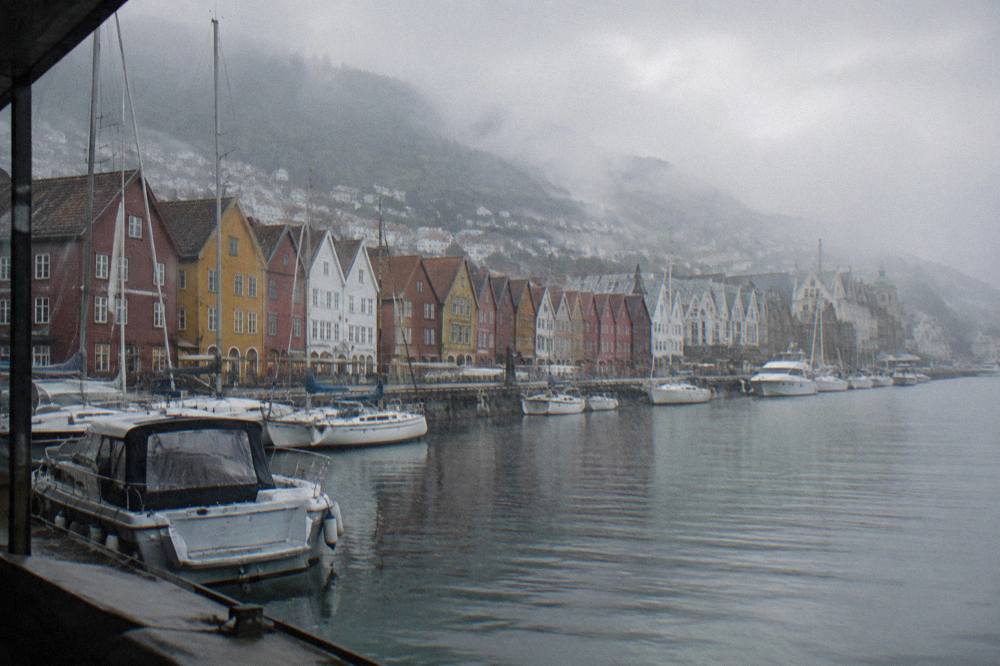
Bryggen In Bergen, Norway: Why Is The Old Hanseatic Wharf Famous?
Bryggen is the row of gabled timber trading houses along Bergen's harbour, inscribed on the UNESCO World Heritage List in 1979. It is the best-preserved trace of the Hanseatic League in Norway and the single most photographed street in the city.
Short answer
Bryggen is famous because it is the surviving wharf of the Hanseatic League's Bergen trading post, a UNESCO World Heritage Site since 1979, and the defining image of the city.
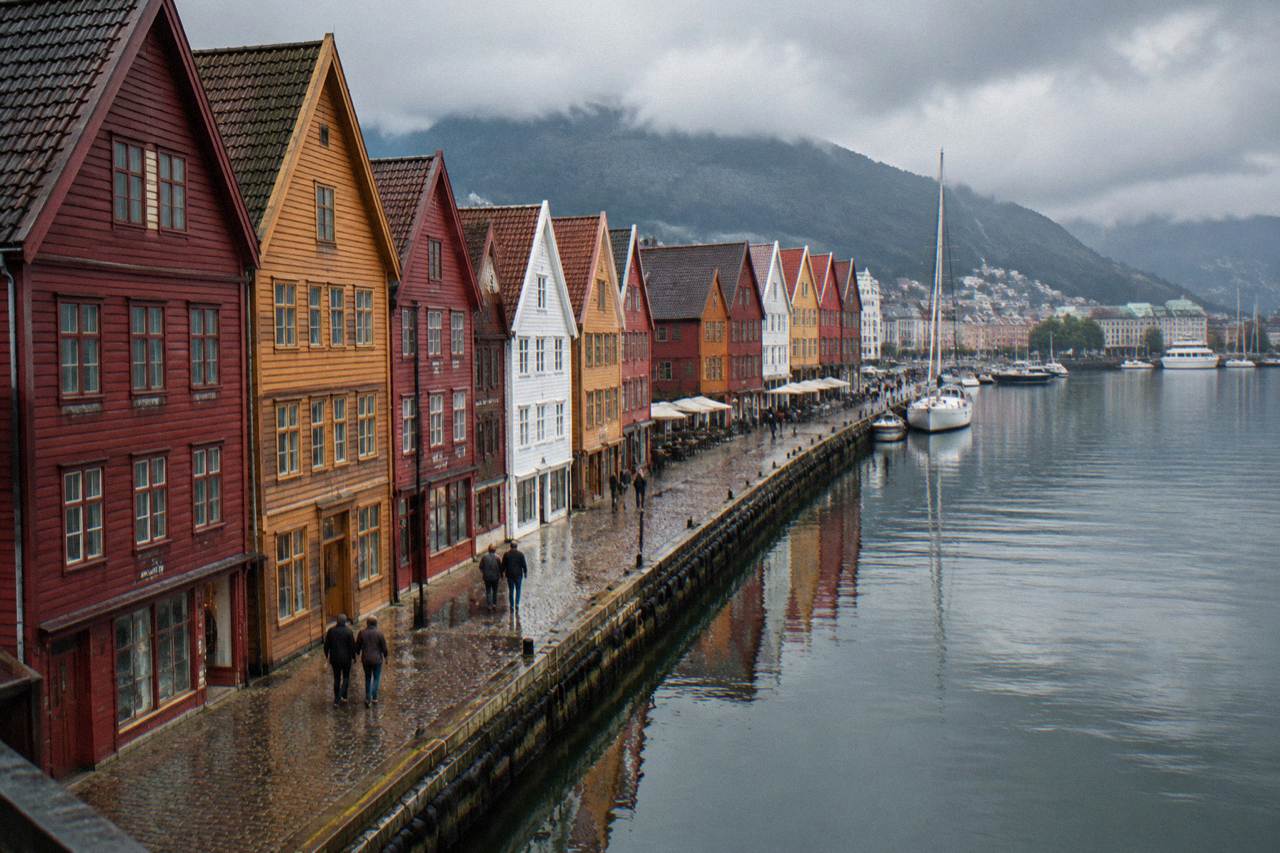
Bryggen is the long row of gabled, colour-washed timber buildings that runs along the north side of Bergen's harbour in Vestland county, on the southwestern coast of Norway. It is the surviving core of the Hanseatic League's trading post in the city, and in 1979 it was inscribed on the UNESCO World Heritage List, an honour UNESCO's own listing page confirms directly: Bryggen, it says, is a relic of an old Hanseatic wharf whose roots reach back to the late Middle Ages. For visitors stepping off a cruise ship or out of the Fish Market, Bryggen is the first sight of Bergen and the one they remember longest.
Why Is Bryggen Famous?
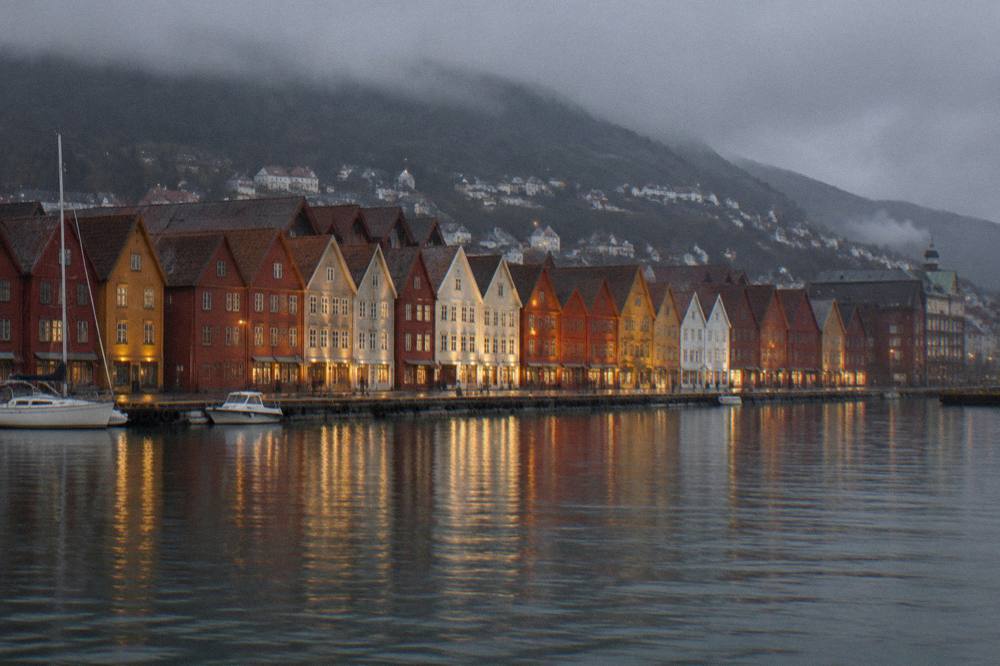
Bryggen is famous as the best-preserved physical reminder of the Hanseatic League in Norway: a working wharf of tall, narrow timber trading houses rebuilt on medieval foundations after repeated great fires, first laid out by German merchants during the Hanseatic era. UNESCO inscribed it on the World Heritage List in 1979, and its rows of warehouses, hoists and covered lanes form the defining postcard view of Bergen's harbour.
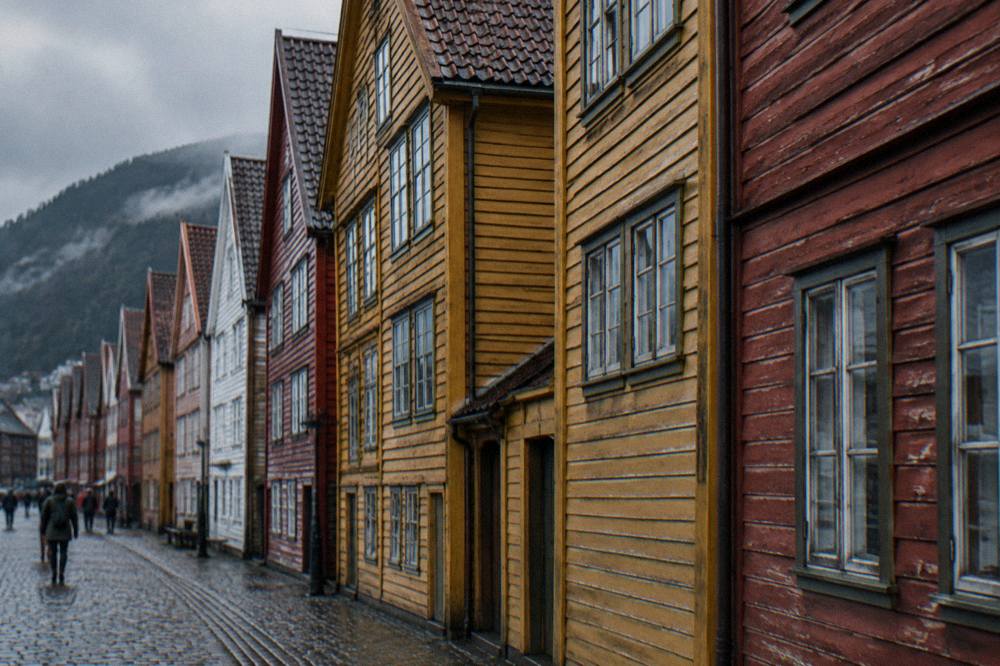
The fame rests on three things stacked on top of each other. First, the buildings themselves: a continuous terrace of wooden warehouses, some leaning visibly with age, in ochre, rust red, brick red and white, standing gable-end to the water exactly as trade required. Second, the history: for centuries this compact strip was one of northern Europe's most important trading stations, where stockfish from the Norwegian north was dried, graded and shipped south in exchange for grain, cloth and beer. Third, the survival: Bryggen has burned repeatedly across its history, and each rebuilding followed the old property boundaries, so the medieval town plan still exists under your feet. UNESCO's listing text for Bryggen notes the value lies in the wharf as a memory of the old Hansa town and its wooden building tradition, not just in individual façades.
The wharf is also unusual among World Heritage Sites in that it never stopped being used. Shops, studios, offices and apartments sit inside buildings that were built to hold dried fish and grain, and the alleys between the rows still function as a covered street network. That daily life is part of what a visit feels like: you are walking through a working quarter that happens to carry a global listing, not a fenced-off open-air museum. It also explains why the site is fragile, since maintaining timber buildings that must simultaneously earn rent and satisfy heritage protection is a constant balancing act for the property's owners.
What Is The History Of Bryggen In Bergen?
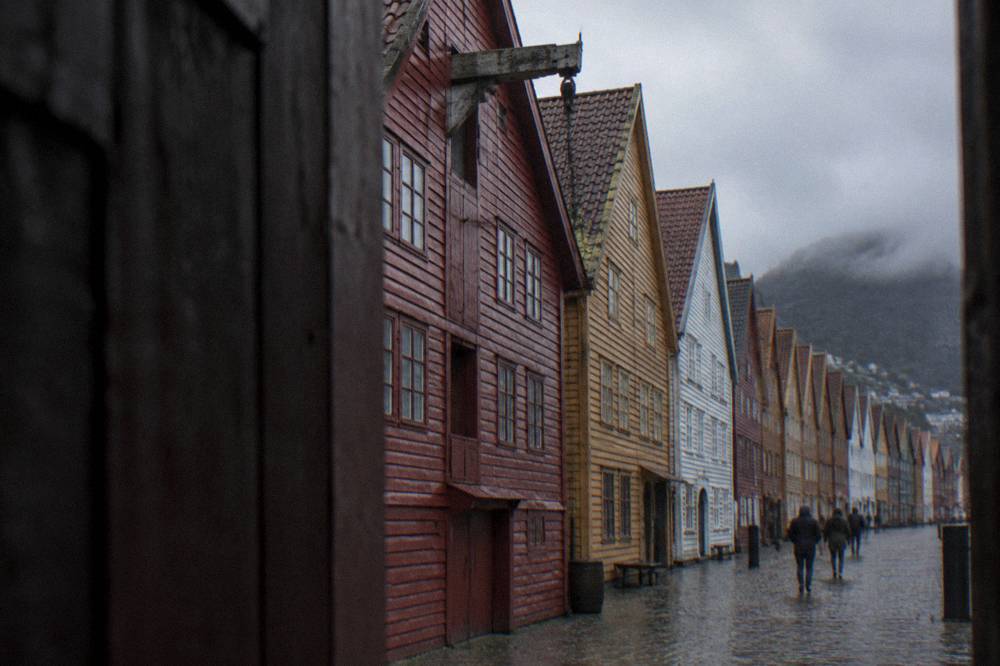
Bryggen's story is tied to Bergen's rise as a trading town, but the wharf as we know it took shape once the German merchants of the Hanseatic League established their Kontor, or trading office, on the waterfront in the medieval period. The buildings you see today were rebuilt after later great fires, always on the same old medieval plots, and the western end was reconstructed again after the most recent major fire.
The Hanseatic League was a network of merchant guilds and market towns, dominated by German traders, that controlled much of northern European maritime commerce in the late medieval period. Its Bergen Kontor, run from the Tyskebryggen, the German wharf, became the league's most northerly outpost and one of its major trading posts. The German community lived apart: young men arrived as apprentices, slept in narrow communal bunks, ate plain shared meals, and were bound by strict office rules while serving the company. Their church was St Mary's Church, the oldest stone building in Bergen, which the German congregation used for centuries.
Fire is the other half of the story. Wooden towns burn, and Bryggen has burned many times, yet each reconstruction reused the same tight medieval plan of parallel rows running back from the quay. After the most recent major fire, archaeologists working in the burnt zone recovered thousands of artefacts: runic inscriptions on bone and wood, ceramics, textiles and the remains of ship fittings, many of which are now displayed in the Bryggen Museum, built directly over the excavation site. UNESCO's own listing notes the deep archaeological deposits beneath the standing buildings as part of the property's significance, and it is those waterlogged layers, preserved by lack of oxygen, that make the wharf a research site as much as a sightseeing one.
| Chapter of the wharf | What happened at Bryggen |
|---|---|
| Medieval origins | German merchants establish the Hanseatic Kontor on the waterfront |
| Hanseatic heyday | Stockfish traded south for grain, cloth and beer through the German office |
| After the great fires | Standing timber warehouses rebuilt on the old medieval plots |
| 1979 | Bryggen inscribed on the UNESCO World Heritage List |
| After the most recent major fire | The gutted western end is excavated; the Bryggen Museum is later built on the site |
What Can You See And Do On Bryggen Today?
Bryggen today is both a monument and a living quarter: you can walk its narrow covered passages between warehouses, browse the small shops, galleries and cafes that now occupy them, visit the Hanseatic Museum to see an original merchant's office, and explore the Bryggen Museum's excavated medieval finds, all within a compact area of a few hundred metres.
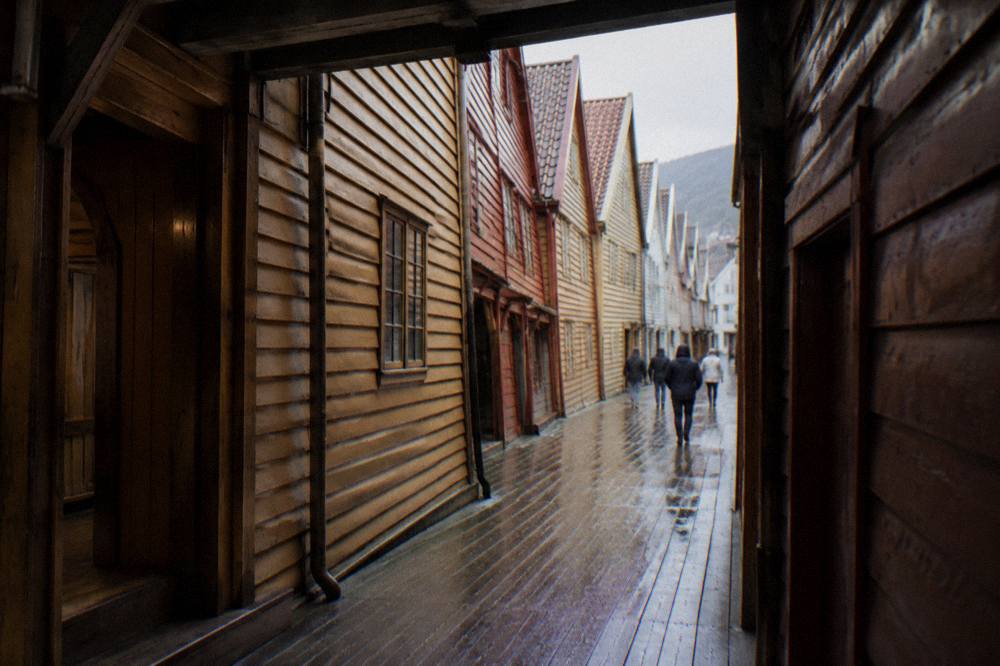
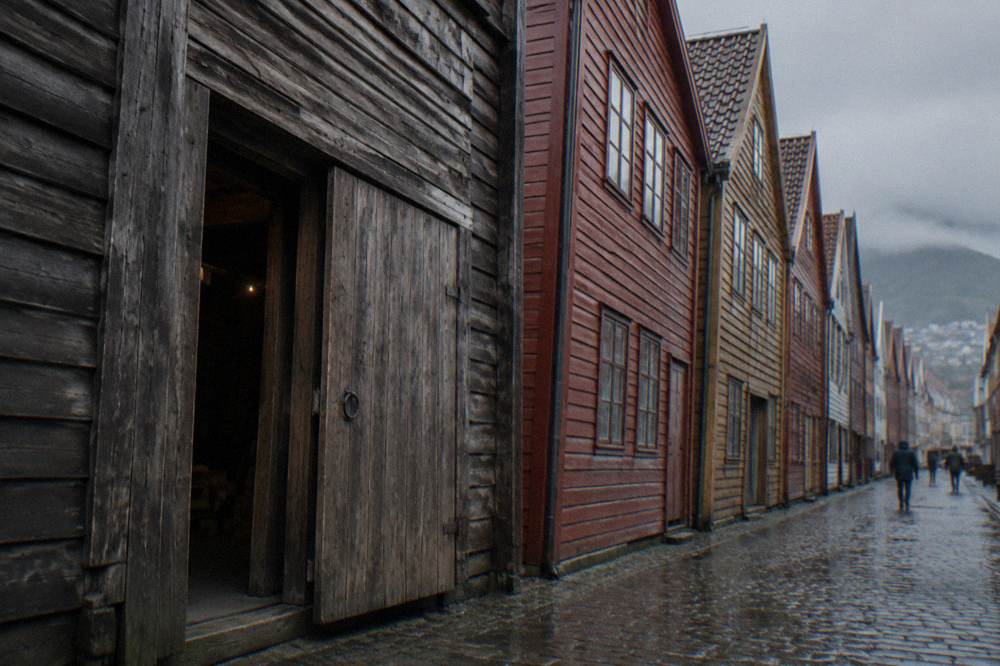
Start on the quay side and look up. Every warehouse carries a projecting hoist beam, the arms that once swung barrels, sacks and dried fish from ship to loft. Then turn into the rows themselves. The passages between the buildings are covered wooden galleries, dark, cool and faintly smelling of tar and old timber. They are freely walkable and they are the part of Bryggen that tends to be underused, because the front row is where the crowds stand and the lanes behind are where the site's texture actually lives.
The single best interior to visit is the Hanseatic Museum, housed in one of the surviving merchant buildings on the wharf, furnished as it was in the trading era. The Bergen Card flyer lists its admission at 160 NOK including a guided visit. A short walk north brings you to Bergenhus Fortress with Haakon's Hall, priced at 120 NOK in the same flyer, and the Bergen Maritime Museum, which tells the city's wider seafaring story. The Bryggen Museum, on the excavation site, is listed at 170 NOK ordinary admission or 85 NOK with the Bergen Card.
Walking the lanes costs nothing, and that free layer matters in a city where attractions add up. One practical note on orientation: Bryggen faces the harbour directly opposite the Fish Market, so a natural loop is to cross from the market, walk the wharf lanes north, then continue along the fortress wall and back through the city-centre streets behind it, past the Bergen Cathedral. The Bergen Aquarium and the Fløibanen lower station sit a few minutes' walk to the southwest, and Mount Ulriken rises behind the whole scene.
How Much Does It Cost To Visit Bryggen?
Walking Bryggen's lanes and photographing the front row is free, and it always has been: there is no gate, ticket or entry fee for the wharf itself. The costs start when you go inside, and the official 2026 Bergen Card flyer prices the main museum entries at 160 NOK for the Hanseatic Museum with guided visit, 170 NOK for the Bryggen Museum, or 85 NOK with the Bergen Card, and 120 NOK for Haakon's Hall.
The figures below all come from the Bergen Card's own 2026 flyer, published by visitbergen.com, which is the strongest current primary source for these entries. Treat them as planning numbers and confirm on the door, because seasonal openings change more often than prices do.
| Sight | Ordinary admission | With Bergen Card |
|---|---|---|
| Hanseatic Museum (with guided visit) | 160 NOK | Reduced |
| Bryggen Museum | 170 NOK | 85 NOK |
| Haakon's Hall | 120 NOK | Reduced |
| Walking the Bryggen lanes | Free | Free |
If you plan to visit three or four paid attractions, the Bergen Card becomes a real question rather than a gimmick. The 2026 flyer prices the card at 400 NOK for 24 hours, 500 NOK for 48 hours, 600 NOK for 72 hours and 700 NOK for 96 hours, with child tickets at 100, 125, 150 and 175 NOK respectively, and it includes free Skyss buses and Bybanen light rail across Vestland county, including the airport line. A dedicated guide to the card weighs the arithmetic.
How Long Should You Spend At Bryggen?
Allow at least two hours to walk Bryggen properly, which covers the front row, the covered lanes, and one museum visit, and half a day if you want two museums plus the fortress. The wharf itself is small, roughly a few hundred metres from end to end, so the time goes not into distance but into the interiors, the excavation museum and the fortress buildings just behind it.
A common mistake is treating Bryggen as a photo stop. The strip between the tourist information office and the fortress is walked in minutes, and in peak summer cruise-ship traffic it can feel exactly that fast. The interiors reward patience: the Hanseatic Museum's guided visit reconstructs the trading life of the German office, and the Bryggen Museum displays the everyday objects, combs, shoes, dice and runes, that excavation lifted from the waterlogged medieval layers, where lack of oxygen preserved organic material that would normally rot away.
Pairing Bryggen with its neighbours is easy because everything here clusters. A morning that works well on paper is the wharf lanes first, before the crowds build, the Bryggen Museum at opening, the Fish Market opposite for a snack, and then Bergenhus Fortress and Haakon's Hall. What food is Bergen famous for is worth reading before that snack stop, because the market and the surrounding streets carry several of the city's signature dishes.
When Is The Best Time To Visit Bryggen?
Early morning is the best time to see Bryggen in summer, before tour groups arrive and before the harbour light turns flat, and in winter the wharf is quieter still, with shorter days and wetter weather offset by far fewer people. Bryggen itself never closes because it is a street, not a ticketed attraction, so the timing question is really about light, crowds and museum opening hours rather than access.
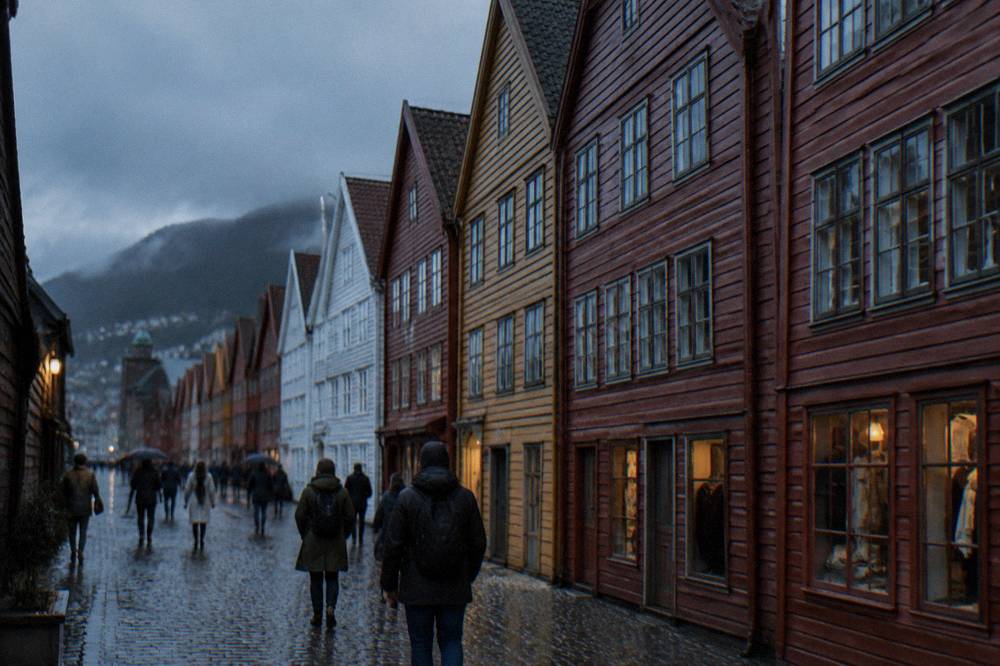
Rain is the factor visitors underestimate. yr.no's Bergen station table, from Met Norway data, shows the trailing thirteen months averaged from -1.4°C in January 2026 to 14.9°C in July 2026, with 217 days of precipitation recorded across the period. November was the wettest month in the table at 321.8 mm observed against a 275 mm normal. Bryggen is one of the best bad-weather sights in the city precisely because its covered lanes and two museums give you shelter without leaving the historic core, a point expanded in the site's Bergen weather guide.
| Month | Mean temperature | Observed precipitation |
|---|---|---|
| January | -1.4°C | 82 mm |
| April | 7.9°C | 65.9 mm |
| July | 14.9°C | 184.2 mm |
| November | 6.0°C | 321.8 mm |
The table above is drawn straight from the yr.no statistics page for the Bergen station, and the months shown are chosen because they bracket the year rather than to flatter it. The practical reading: winter in Bergen is mild for its latitude but dark and damp, spring is the driest stretch in the observed data, and summer brings the warmest means together with the biggest crowds on the wharf.
Which Tours Include Bryggen?
Bryggen appears as a stopping point in several of Bergen's guided walks and food tours, and these are the tours most likely to route through the wharf with a guide who can explain the Hanseatic office: the food and culture walk, the small-group history walks, and the free, tip-based walking tours. A fjord cruise afterwards pairs the wooden wharf with the landscapes the trade ran through.
The related tour on this site is the food and culture walk, a guided route that pairs the harbour's historic quarter with its food stalls and kitchens. This site's page for that tour carries its own pricing, and its operator's live listing will show current availability.
Guided history walks give Bryggen a different value. The wharf's story is mostly invisible, hoists without cargo, lanes without fish, and a guide turns the standing fabric back into a working trading post. The small-group Past and Present walking tour is the flagship example.
Bryggen's merchants shipped out through the fjords, so a fjord afternoon makes a natural second half of the day. The Mostraumen cruise with a local guide is the most-reviewed option of that kind on this site's roster, and it pairs well with a morning spent on the wharf.
Between the guided options, a good sequencing habit is to take the history walk on your first morning in the city and leave the food walk for a later day, once you already know your way around the lanes. That order lets the wharf's context land first and its kitchens second, and both tours start within a short walk of the row itself, so neither needs transport from the centre.
What Should You Know Before Visiting Bryggen?
Know three things before you go: Bryggen is a fragile World Heritage site where a handful of buildings still have people living and working in them, the covered lanes are uneven, dark and often wet underfoot, and the area around the wharf is compact enough that you never need transport once you are there. Everything on foot, everything close, everything old and mostly wooden.
The lanes are the practical bit. The wooden galleries are original fabric, and after rain they stay slick for hours, so shoes with grip matter more in Bergen than almost anywhere else in Europe. Photography etiquette is the other thing: private apartments sit above the shops, so a camera pointed at a lit window at dusk is pointed at someone's living room. The front row is the postcard, but the backs of the rows, seen from the small square behind the Hanseatic Museum, are where the buildings' age shows most honestly.
Budget realistically for food and drink around the wharf, since this is prime harbourfront real estate, and read the site's money and tipping notes before you arrive in Norway. For a longer city stay built around this quarter, the itinerary guides cover one, two and three days in Bergen, and the site's wider collection at Bergen Travel Guide lists every attraction page in one place.
| Practical point | What to know |
|---|---|
| Access | No gate or ticket; the lanes are a public street |
| Footing | Uneven timber galleries, often wet, wear grippy shoes |
| Photography | Private homes above the shops; be discreet at dusk |
| Museums | Hanseatic Museum, Bryggen Museum and nearby fortress sites, priced in the table above |
Common Questions About Bryggen
Why is Bryggen famous?
Bryggen is famous because it is the surviving wharf of the Hanseatic League's Bergen trading post, rebuilt after great fires on medieval plots and inscribed by UNESCO on the World Heritage List in 1979. Its rows of gabled timber warehouses form the most recognisable image of Bergen, Norway's historic west-coast port.
Is Bryggen free to visit?
Yes. The wharf, the front row and the covered lanes between the warehouses are a public street with no gate or admission charge. The museums on and around the site do charge, and the 2026 Bergen Card flyer lists the Hanseatic Museum at 160 NOK and the Bryggen Museum at 170 NOK ordinary admission, or 85 NOK with the Bergen Card.
How old are the buildings at Bryggen?
The foundations and the street plan are medieval, but most of the standing timber was rebuilt after later great fires, always on the same narrow plots. The continuous rebuilding on the original footprint is part of why UNESCO inscribed the site in 1979.
How much time do you need at Bryggen?
Plan on at least two hours for the lanes plus one museum, or half a day for two museums and the nearby Bergenhus Fortress. The wharf itself is only a few hundred metres long, so extra time goes into the interiors rather than the walking distance.
Is Bryggen worth visiting in winter?
Yes, and it is quieter then. Bergen's winter means are mild for the latitude but the city is wet, with 217 days of precipitation recorded across the trailing thirteen months in the yr.no table, and Bryggen's covered lanes and indoor museums make it one of the most weather-proof sights in the centre.