Bergenhus Fortress
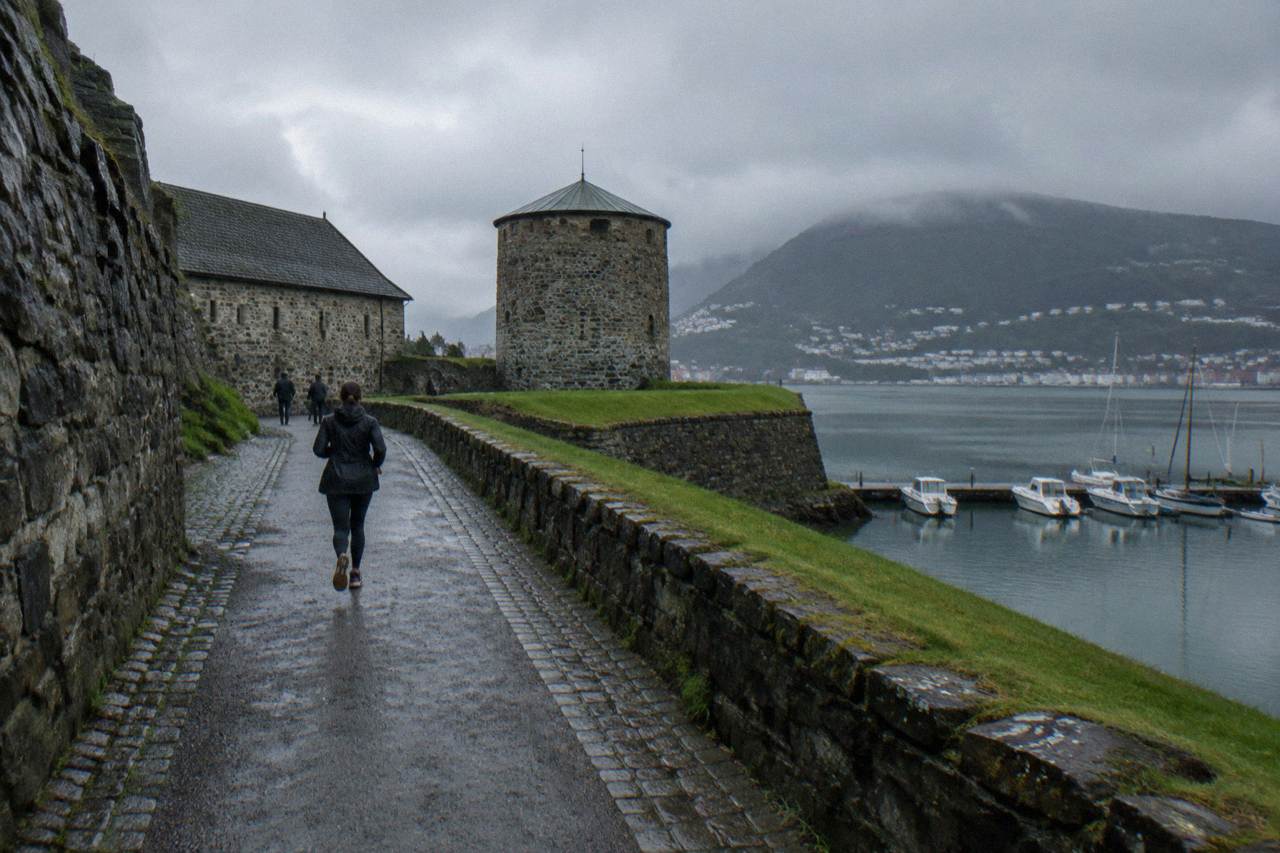
Bergenhus Fortress guards the harbour mouth of Bergen, in Vestland county on Norway's southwestern coast, and it packs a medieval royal hall, a Hanseatic museum quarter and a working naval base into one walkable headland at the end of Bryggen.
Short answer
Bergenhus Fortress is a historic fortress complex at the entrance to Bergen's harbour, containing Haakon's Hall (adult ticket 120 NOK per the 2026 Bergen Card flyer), the Rosenkrantz Tower and grounds that are free to walk. Plan on roughly half a day for the fortress plus Bryggen next door, or a full day if you add a fjord cruise.
Bergenhus Fortress stands at the mouth of Bergen's harbour in Vestland county, on Norway's southwestern coast, and it is the quiet heavyweight of the city's sightseeing: a medieval royal seat, a later military stronghold, a cluster of museums and a still-active naval base, all within a few minutes' walk of the Bryggen wharf. The complex sits on the headland where the harbour narrows, and that single fact explains nearly everything about it. Kings wanted to watch who sailed in. Hanseatic merchants wanted the trade those ships carried. The navy wanted the same commanding position centuries later. The walls you can walk around today are the layered result, and unlike many European fortresses, the core of this one faces the water, not the land, because the sea was the road, the threat and the fortune all at once.
This page on Bergen Travel Guide walks through the whole fortress site: what each building is, what entry costs (with exact NOK figures from the official 2026 Bergen Card flyer), when to go, how the fortress fits into a day in the city, and which cruises and tours leave from the quays at its feet. Nothing here is padded: every price is the specific figure published for the specific sight, and any number that lacks a primary source is left out rather than guessed.
What Is Bergenhus Fortress In Bergen, Norway?
Bergenhus Fortress is a fortified complex on the headland at the entrance to Bergen's harbour, built up over centuries as a royal residence, a defensive stronghold and, today, a partly active military installation with public halls, towers and museums inside. Its most famous single building is Haakon's Hall, the great medieval stone banquet hall, and the grounds between the walls are free to wander in daylight hours.
The site's identity is layered, and that is the honest way to describe it. It began as the seat of royal power in western Norway when Bergen was the country's most important trading city, and the great hall still carries that medieval scale: thick stone, high windows, a ceremonial presence rather than a military one. Later fortification added the towers and curtain walls, and the modern era added naval administration that continues today. So the visitor experience splits naturally in two. The outdoor grounds, lawns, ramparts and harbour-facing walks are open public space. The interiors, principally Haakon's Hall and the Rosenkrantz Tower, are ticketed museum spaces.
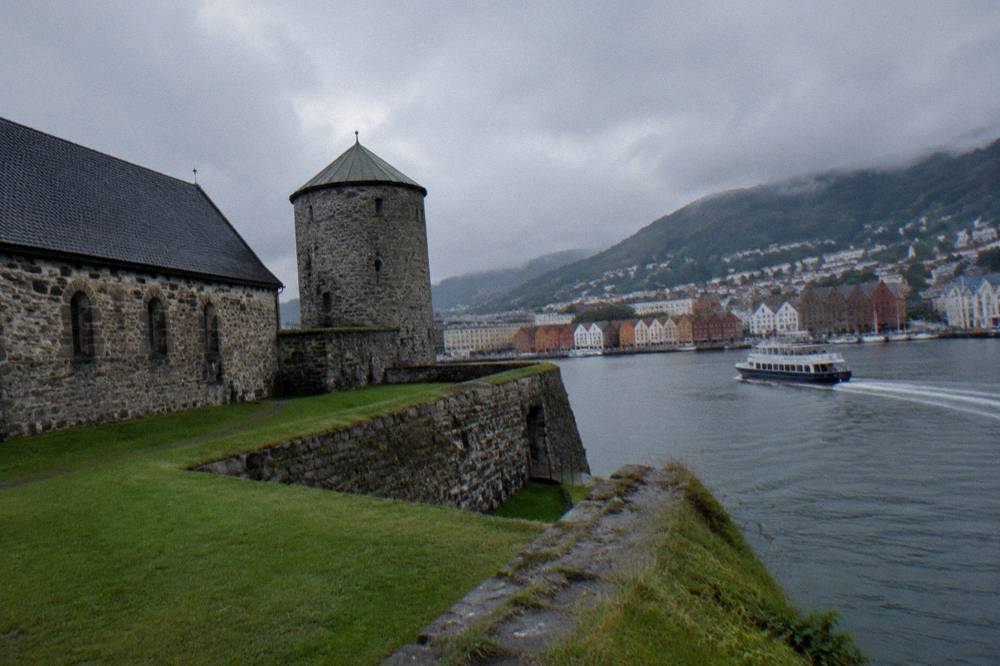
What surprises many first-time visitors is how un-fortress-like parts of it feel. The inner lawns are soft, open and popular with locals on a dry afternoon. Cruise ships and fishing boats pass close enough to photograph from the ramparts. The whole place reads less like a barricade and more like a stage whose scenery kept changing with whoever owned the harbour that century. The Hanseatic League, whose wharf at Bryggen became a UNESCO World Heritage site in 1979 (the date is confirmed directly on UNESCO's own listing page for the site), operated within sight of these walls for hundreds of years, and the Hanseatic Museum nearby preserves that merchant era inside one of the old trading buildings.
A few reference points frame any visit to the city, and they apply just as well from the fortress gates:
| Fact | Figure | Source |
|---|---|---|
| Municipality population | 294,860 (1 January 2026) | Bergen kommune |
| Bryggen UNESCO inscription | 1979 | UNESCO listing, whc.unesco.org/en/list/59 |
| Days with precipitation, trailing 13 months | 217 | yr.no Bergen station table, Met Norway |
| Currency | Norwegian krone (NOK) | All official price sources |
Keep the rain figure in mind when you plan. This is a coastal, temperate city, and the fortress grounds are largely outdoors. The buildings, on the other hand, are the best rainy-day furniture in town, which is one reason this site pairs so well with Bergen's wet-weather reputation.
What Can You See At Bergenhus Fortress In Bergen?
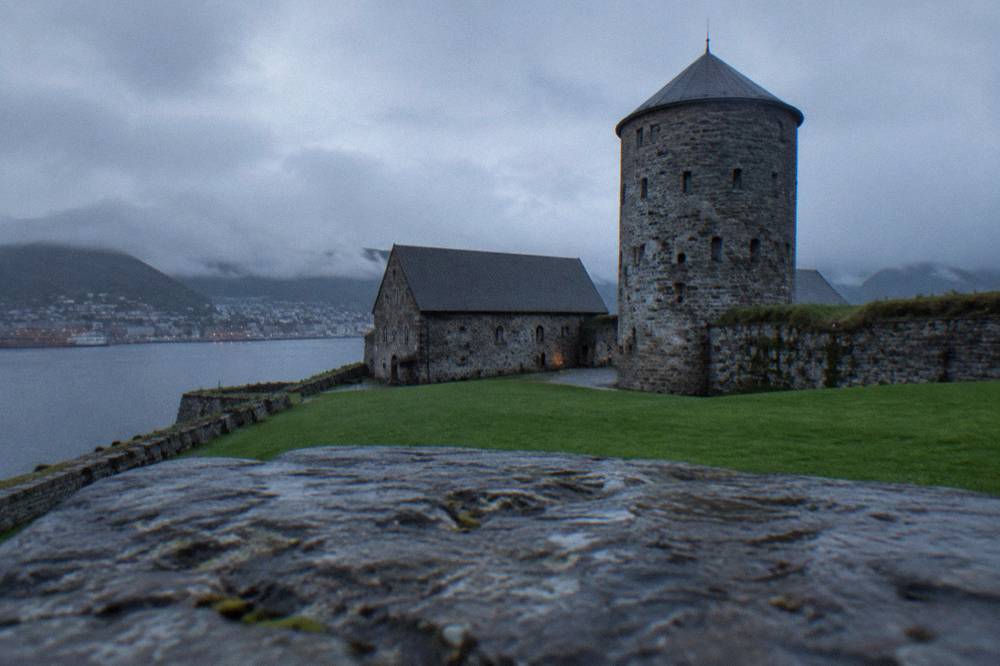
The three named sights are Haakon's Hall (the medieval stone ceremonial hall, 120 NOK adult per the 2026 Bergen Card flyer), the Rosenkrantz Tower (the fortified tower with period interiors and harbour views) and the open fortress grounds with their ramparts, lawns and naval memorials. Around the headland cluster sit the Hanseatic Museum, the Bryggen wharf and the maritime quarter, all walkable without transport.
Start with the hall. Haakon's Hall is the single most imposing medieval interior in the city: a stone feast hall built for royal ceremony, later restored, and today furnished and interpreted as the ceremonial heart of medieval Bergen. The flyer price is 120 NOK for an adult, and the listing includes it among the attractions covered by the Bergen Card scheme, so cardholders should check the discount terms at the desk rather than assuming either full price or free entry. The tower is the counterweight: tighter, darker, more obviously military, with levels that tell the fortress's later defensive story and openings that frame the harbour mouth from above.
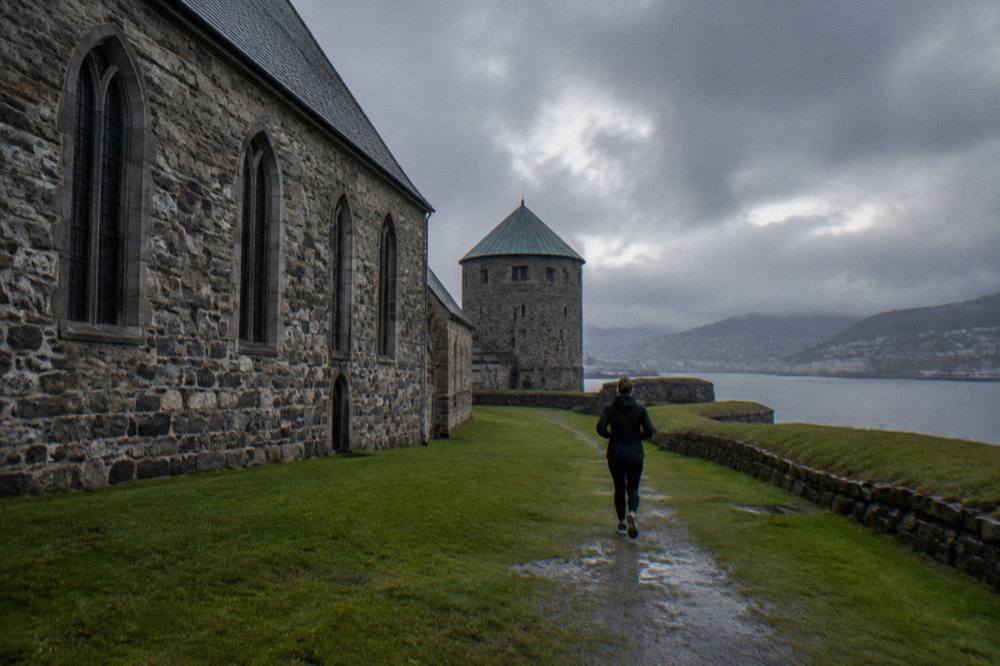
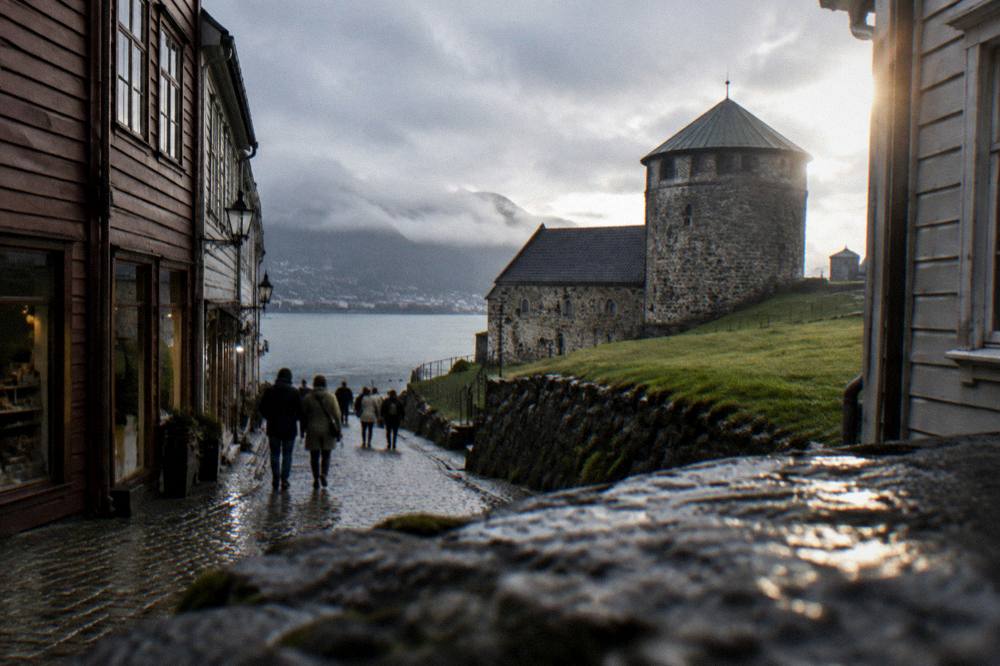
Between and around them, the grounds reward slow walking. The lawns sit inside the old defensive line, the ramparts face the water where the fjord traffic comes and goes, and the still-working naval presence means some areas are signed off-limits; respect the signage, it is a functioning installation, not a theme park. Give the exteriors time in shifting light: the stone changes character completely between a grey drizzle and a low evening sun.
The tickets for the named interiors, with each figure belonging to that specific sight, as published in the official 2026 Bergen Card flyer:
| Sight | Ordinary adult price | Notes from the flyer |
|---|---|---|
| Haakon's Hall | 120 NOK | Medieval stone hall, part of the fortress complex |
| Hanseatic Museum | 160 NOK | Price includes a guided visit |
| Bryggen Museum | 170 NOK (85 NOK with Bergen Card) | Hanseatic archaeology at the wharf |
One caution that matters: do not blend these numbers. The 160 NOK Hanseatic Museum price is that museum's own figure with its guided visit, and the 85 NOK Bryggen Museum price is the card rate for that one building. A surprising number of guides online quietly average or cross-assign these; this page will not. Also note what is absent: no independently verified standalone price exists here for every small interior in the city, so if a room is not in the table above, ask at the desk rather than trusting a number you read elsewhere.
If your time in the city is short and you want the fortress plus the water in one loop, the harbour in front of the walls is where the cruise and kayak departures leave from, and the quays are visible from the ramparts. Here are the strongest options for pairing a fortress morning with a fjord afternoon:
All three leave from the central harbour area, which means no transport leg between your fortress visit and the boat: walk out through the gates, and you are effectively already at the pier.
How Much Does It Cost To Visit Bergenhus Fortress?
Walking the fortress grounds is free; the paid parts are the interiors: Haakon's Hall at 120 NOK adult, with the surrounding Hanseatic sights at their own published figures (Hanseatic Museum 160 NOK, Bryggen Museum 170 NOK ordinary). The Bergen Card, which starts at 400 NOK for 24 hours adult (100 NOK child) per the official 2026 flyer, includes Skyss buses and the Bybanen light rail across Vestland county, including the airport line, plus discounts at many attractions.
The card math is the first thing to get straight, because the flyer's coverage is broader than one might expect. It is not just museums: the transport inclusion alone, covering the light rail all the way out to the airport, gives the card real value the moment you land. The 2026 price ladder, adult and child (ages 3 to 15), direct from the flyer:
| Bergen Card duration | Adult | Child (3-15) |
|---|---|---|
| 24 hours | 400 NOK | 100 NOK |
| 48 hours | 500 NOK | 125 NOK |
| 72 hours | 600 NOK | 150 NOK |
| 96 hours | 700 NOK | 175 NOK |
Whether the card beats individual tickets depends on your pace, not on a formula anyone can promise you in advance. A fortress-focused half day with two museum interiors plus a ride up a mountain will usually justify the 24-hour card; a single morning at the fortress with one interior probably will not. The honest answer is to count your planned entries the night before, using the line-item prices below, and let the addition decide.
| Attraction (2026 Bergen Card flyer figures) | Price detail |
|---|---|
| Fløibanen funicular, return | 200 NOK adult (1 Apr - 30 Sep); 145 NOK adult (1 Oct - 31 Mar) |
| Ulriken643 cable car, return | 435 NOK adult |
| The Aquarium | 380 NOK (1 Nov - 28 Feb); 380/415 NOK seasonal (1 Mar - 31 Oct) |
| KODE Art Museums | 200 NOK as listed on the flyer (KODE's own standalone price was not verifiable) |
| Haakon's Hall | 120 NOK |
| Skyss single ticket, zone A | 51 NOK |
Those mountain and museum figures are printed with their seasonal windows deliberately: Fløibanen's return fare literally halves outside the summer window, which quietly changes the arithmetic of a spring or autumn visit. And the 51 NOK single transit ticket is worth knowing even if you never buy one, because it sets the floor that the card's transport inclusion is measured against.
A natural pairing for the paid part of your day: after the halls, take the short walk over to the Bryggen Museum side of the wharf or spend the late afternoon at the Maritime Museum, which sits on the same harbour edge and continues the same seafaring story the fortress walls start.
When Is The Best Time To Visit Bergenhus Fortress?
The driest, calmest window for the outdoor fortress grounds is late spring through summer, with July averaging 14.9C and June 14.4C in Met Norway's trailing-13-month table for the Bergen station; the interiors are excellent in the November-to-January wet season (November observed 321.8 mm of rain), and June brings Bergenfest directly onto the fortress grounds, 10 to 13 June in 2026 and 9 to 12 June in 2027.
The climate table is worth reading rather than summarizing, because Bergen's weather is not a smooth curve. The Met Norway data for the Bergen station, trailing 13 observed months, shows how uneven the year actually is:
| Month | Mean temperature (observed) | Precipitation (observed mm) |
|---|---|---|
| September | 13.1 C | 206.6 |
| October | 9.7 C | 231.9 |
| November | 6.0 C | 321.8 |
| December | 5.8 C | 303.5 |
| January | -1.4 C | 82.0 |
| February | 0.8 C | 133.4 |
| March | 5.9 C | 243.9 |
| April | 7.9 C | 65.9 |
| May | 9.9 C | 127.4 |
| June | 14.4 C | 165.7 |
| July | 14.9 C | 184.2 |
| August | 14.3 C | 243.6 |
Two rows jump out against the folklore. January, the month everyone assumes is grim, observed the least rain in the whole table at 82 mm, though it is the coldest at -1.4 C. And November, not any winter month, is the soak: 321.8 mm observed, the wettest row in the table, against a normal of 275.0 mm. In other words, a crisp January day with frost on the ramparts can be a better fortress-photography day than a mild November one. Over the trailing 13 months the station counted 217 days with precipitation, so whatever the season, pack for the possibility and treat dry hours as a gift to be spent outdoors.
The events calendar matters here more than at most attractions, because Bergenhus is a live festival venue. Bergenfest takes place at Bergenhus Festning itself, with the full lineup and day schedules announced and tickets sold through the official channel. The wider festival fortnight transforms the whole harbour district:
| Event | 2026 dates | Venue |
|---|---|---|
| Bergen International Festival (Festspillene) | 27 May - 10 June | Venues across Bergen |
| Nattjazz | 29 May - 6 June | USF Verftet |
| Bergen Pride (Regnbuedagene), parade 6 June | 29 May - 6 June | Pride Park in Nygårdsparken and city streets |
| Bergenfest | 10 - 13 June | Bergenhus Festning |
| Bergen International Film Festival | 14 - 22 October | Various venues |
If you are visiting in June, expect the fortress grounds to host stages and fences during Bergenfest setup, with the city busy and hotels tight. If you are visiting in October, the film festival spreads across town instead and the fortress returns to its quiet self, with autumn light on the harbour. Christmas has its own draw: the Bergen Christmas market runs at Festplassen from 20 November to 22 December 2026 with free entry, and the gingerbread city runs from 14 November 2026 to 10 January 2027, both a reasonable stroll from the harbour.
How Do You Get To Bergenhus Fortress From Central Bergen?
You walk. Bergenhus Fortress sits at the northern end of the Bryggen wharf, at the point where the harbour narrows, within the walkable historic core of central Bergen, so from the city centre, the fish market or most central hotels the fortress is reached on foot along the harbour front, with no bus, tram or ferry leg needed.
That is the whole practical answer, and it is one of the site's best features. The fortress is not on a hill; unlike Fløibanen's Mount Fløyen or the Ulriken cable car's summit, there is no ascent, no queue for a funicular and no timetable to catch. Follow the water. From the fish market the route runs past the Hanseatic buildings of Bryggen to the fortress gates, and the walk itself passes the best street scenery in the city.
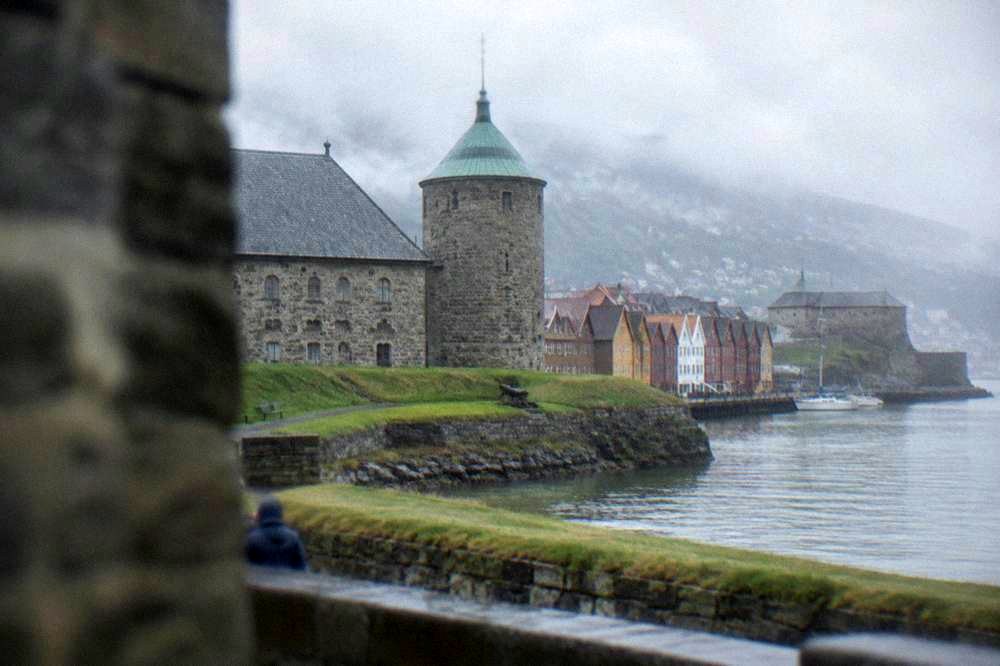
For orientation, the site sits beside the parish church of St Mary's Church, one of the oldest stone buildings in the city, which makes a natural two-stop pairing for anyone interested in medieval Bergen. Arrival by cruise ship is its own case: the cruise berths sit in the same harbour system, and disembarking passengers effectively start their day within short flat walking distance of the fortress, the wharf and the fish market.
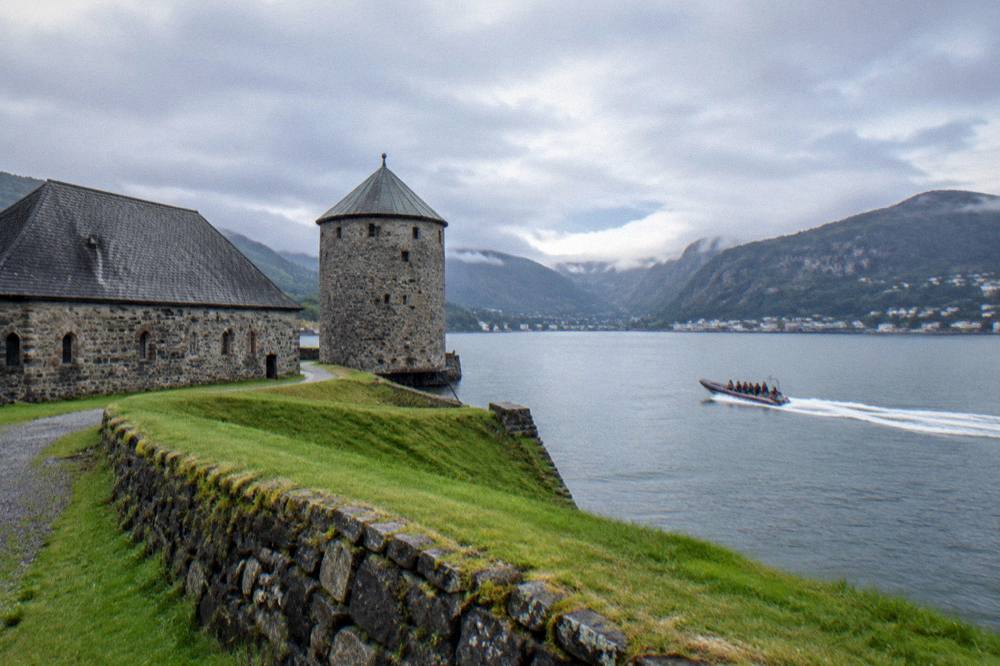
Because the fortress sits at the water's edge, the most memorable way to arrive is from the water itself. The private Zodiac and pontoon cruises that depart from the central harbour give you the fortress walls as they were designed to be seen, from a boat's eye view at the harbour mouth, and the same operator runs fjord itineraries of varying length:
The rest of the harbour's small-craft options cover different appetites, from paddling the shoreline to full-day fjord runs:
the Bybanen light rail and Skyss buses are included with the Bergen Card, but no minutes figure for the airport-to-centre rail run can be given here. The Bybanen timetable valid from 10 August 2026 covers lines 1 and 2 on their current routes, including the airport, and the Skyss journey planner is the tool to use for live times.
What Is Near Bergenhus Fortress In Bergen?
Within the same harbour corner as the fortress you find Bryggen (the UNESCO-listed Hanseatic wharf), the Hanseatic Museum, St Mary's Church, the Bryggen Museum, the fish market and the Maritime Museum, all clustered in the historic core; the funicular to Mount Fløyen and the city's shopping streets sit a short flat walk further, and Nordnes with its outdoor sea bath lies across the peninsula.
The density is the point. Few cities offer this many named sights in one strollable corner, and the fortress is the anchor at the seaward end of all of it. A sensible loop runs fortress grounds first while legs are fresh, then Bryggen's wooden lanes, then the museums you care about, ending at the fish market for something to eat. Rain, when it arrives, interrupts the loop rather than ending it, because the museum interiors sit along the same route.
Across the harbour peninsula, Nordnes offers a different tone: residential streets, the aquarium and the Nordnes sea bath, a harbourside swimming and sauna spot where locals take the year-round plunge regardless of the 217 days of recent precipitation the station counted. It is the same sea the fortress was built to watch, put to a gentler use.
For families, the balance shifts: VilVite Science Center and the aquarium absorb children's energy that stone halls cannot, and the fortress grounds' open lawns work well as the run-around stop between them. For photographers, the ramparts at the harbour mouth are among the city's strongest positions: cruise ships, small boats and the Bryggen roofline all fall into a single frame from the water-facing walls, and the light moves across that frame all day.
Which Guided Tours Fit A Bergenhus Fortress Day?
A fortress visit pairs best with a water activity or a city walking tour, because the fortress, the wharf and the departure quays occupy the same corner of central Bergen: the small-group walking tours cover the fortress and Bryggen in about two hours, while the fjord cruises and the guided kayak tour use the adjacent harbour, letting you combine halls in the morning and water in the afternoon without any transit between them.
The logic is simply geography. Everything in this cluster, halls, tower, wharf, museums, piers, sits within the same flat harbour corner, so the only real decision is indoor-versus-outdoor and how much water you want. A wet morning argues for the fortress interiors plus a museum; a dry afternoon argues for the boat. The city's food and culture walks also depart from the central harbour area and make a good late-day complement once the fortress gates are behind you.
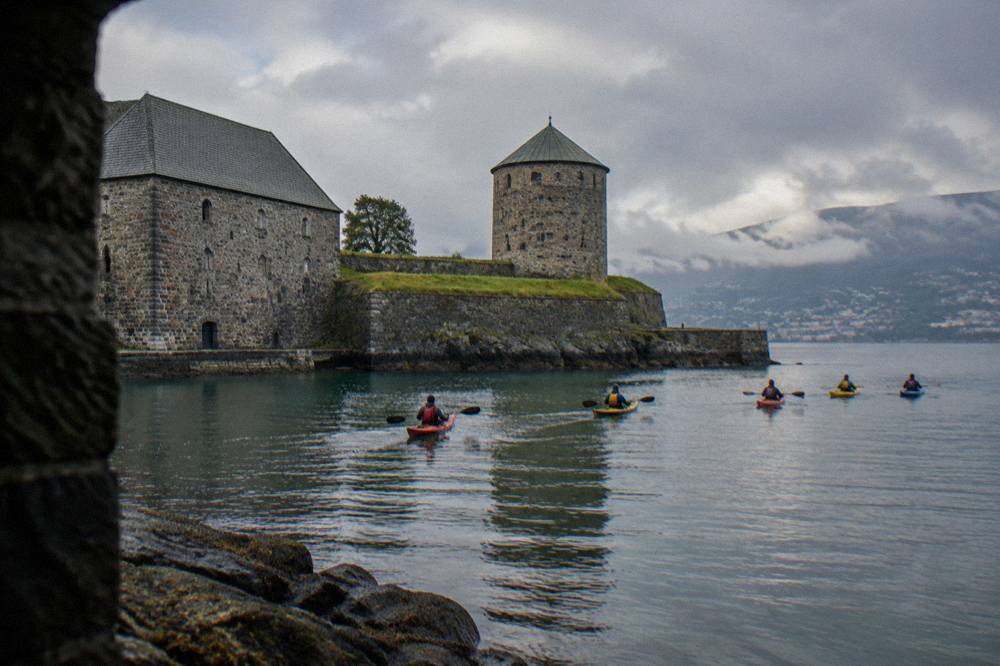
For travellers whose main reason to be in Bergen is the fjord water rather than the stone, the kayak option leaves from the same waterfront and paddles the shoreline and islands the fortress was built to command:
And if the day is running long enough for a full fjord itinerary, the Hardangerfjord tour with lunch is the strongest water-heavy pairing, returning you to the harbour at the fortress's doorstep:
Visitors who want the fortress explained rather than just seen should know the city's walking tours vary sharply in tone, from history walks to comedy-inflected rambles, and the free, tip-based walks book quickly in the June festival weeks when the fortress grounds are partly occupied by festival staging. Whatever the month, checking availability before you set out costs nothing:
The related cruise for this article is the Zodiac and pontoon option, whose departure point sits in the harbour facing the fortress walls, and whose full details live on the operator's listing rather than in any figure typed here.
Common Questions About Bergenhus Fortress
Is Bergenhus Fortress free to visit?
The grounds are free: the lawns, ramparts and open areas are public space in daylight hours. The named interiors charge admission, with Haakon's Hall at 120 NOK for an adult per the official 2026 Bergen Card flyer, and the surrounding Hanseatic sights at their own figures (Hanseatic Museum 160 NOK with a guided visit, Bryggen Museum 170 NOK ordinary or 85 NOK with the card).
How long should I spend at Bergenhus Fortress in Bergen?
Covering the grounds, Haakon's Hall and the Rosenkrantz Tower comfortably takes about half a day at an unhurried pace. Add the Hanseatic Museum and Bryggen and it becomes a full day in the same corner of the city, with no transport between stops.
What is the difference between Haakon's Hall and the Rosenkrantz Tower?
Haakon's Hall is the great medieval stone ceremonial hall, built for royal feasting and state occasions, and it presents the fortress's royal era. The Rosenkrantz Tower is the later fortified tower with defensive interiors and harbour views, presenting its military story. The two interiors are distinct sights with separate tickets.
Can you see Bergenhus Fortress from a fjord cruise?
Yes. The fortress sits directly at the harbour mouth, so cruises departing the central harbour pass its walls and towers at close range on the way out, which is the view the fortification was designed around: the sea approach it once commanded.
Does the Bergen Card cover Bergenhus Fortress?
The 2026 Bergen Card flyer lists Haakon's Hall among its attractions, and the card, from 400 NOK adult for 24 hours, includes free Skyss buses and the Bybanen light rail across Vestland county including the airport line, plus discounts at many attractions. Read the specific terms for each sight on the flyer, because coverage differs sight by sight.
Is Bergenhus Fortress a good rainy-day activity in Bergen?
It is one of the better ones, with a caveat. The interiors, Haakon's Hall and the tower, are stone buildings that suit a wet morning well. The grounds, which are the free half of the experience, are exposed, and with 217 days of precipitation counted at the Bergen station over the trailing 13 months, plan the interiors for the rain and the ramparts for the gaps.
The fortress rewards exactly the kind of visit Bergen itself does: slow, weather-adaptive, half stone and half water. Walk the walls first, buy the hall ticket second, and let the harbour decide the rest of the afternoon.