Bergen Fish Market
The Bergen Fish Market has sold seafood on the city's inner harbour for generations. This guide covers what to eat, what a visit costs, and how to pair it with Bryggen, Fløibanen and the rest of central Bergen.
Short answer
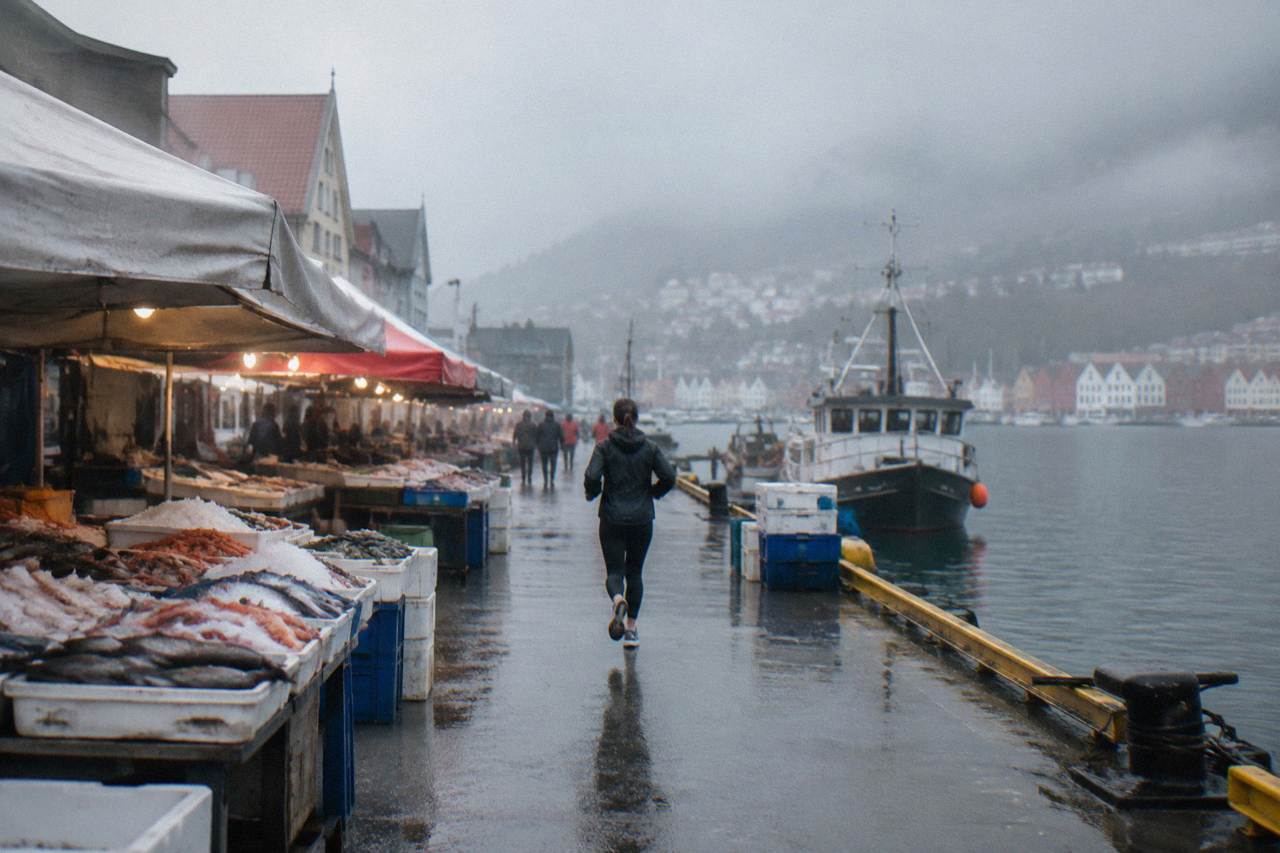
The Bergen Fish Market is a harbourside market in central Bergen, Norway, where stallholders sell fresh fish, shellfish, whale and reindeer meat, and takeaway plates like fish and chips and shrimp sandwiches. It sits a few minutes' walk from Bryggen, and its stall prices are posted at each stall rather than published centrally.
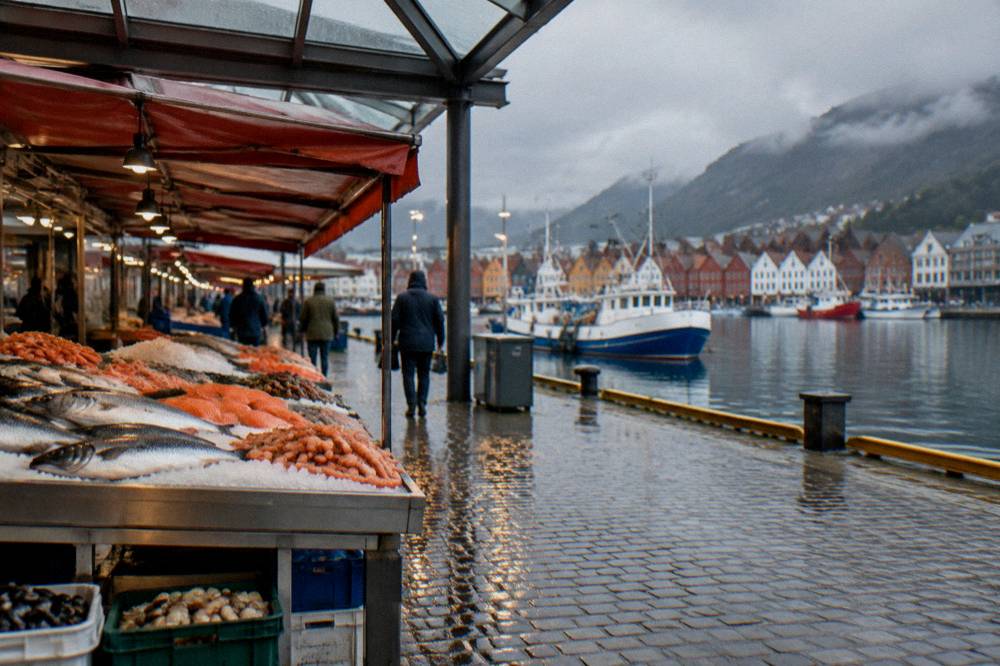
The Bergen Fish Market, or Fisketorget, sits on the inner harbour of Bergen, a city in Vestland county on Norway's southwestern coast. Fresh fish, shellfish, whale meat, reindeer fillets and paper cones of shrimp have been traded on this quay for as long as most Bergensers can remember, and the market is one of the few attractions in the city that costs nothing to enter. You pay only for what you eat. The 2026 Bergen Card flyer, published by visitbergen.com on 12 May 2026, confirms the Fish Market as a live, operating part of the city's attraction line-up, and yr.no's Bergen station table shows why a harbourside market makes sense here: the trailing 13 months logged 217 days with precipitation, so much of Bergen's life happens under awnings and beside steaming grills anyway.
This page from Bergen Travel Guide covers what the market actually sells, what a visit realistically costs, how the stalls differ from the fixed counters inside, and how to fold the market into a day that also takes in Bryggen's wharves, the Fløibanen funicular and the harbour-side museums.
What Is The Bergen Fish Market?
The Bergen Fish Market is the city's harbourside seafood market on the inner quay in central Bergen, Norway, where independent stallholders sell fresh and cooked seafood, plus reindeer and whale meat, to locals and visitors standing side by side in the same short queues. Entry is free, there is no ticket and no gate, and the market's character changes with the season: the open-air stalls dominate in summer, while more of the trade moves into covered and indoor counters when the Bergen rain sets in, which the yr.no statistics table shows it does on 217 of the trailing 13 months' days.
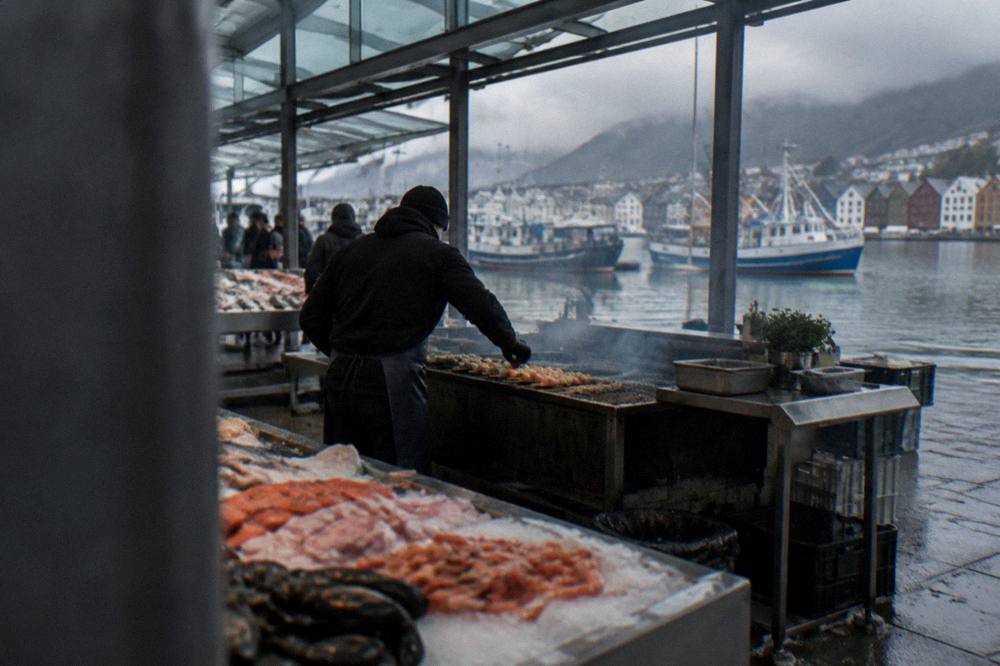
The market is not a museum piece. It is a working retail space, and the stallholders who run it are mostly small operators whose prices are posted on each stall's boards. Some sell raw fish and shellfish to take home and cook. Others run grills and counters selling ready-to-eat plates: fish and chips, shrimp by the half kilo, salmon and whale skewers, fish soup, and moose or reindeer wraps. The Hanseatic Museum a few hundred metres along Bryggen tells the older half of this story, the Hanseatic League trading post that made Bergen a fish-exporting city in the first place, and the market is where that trade history still has a cash register.
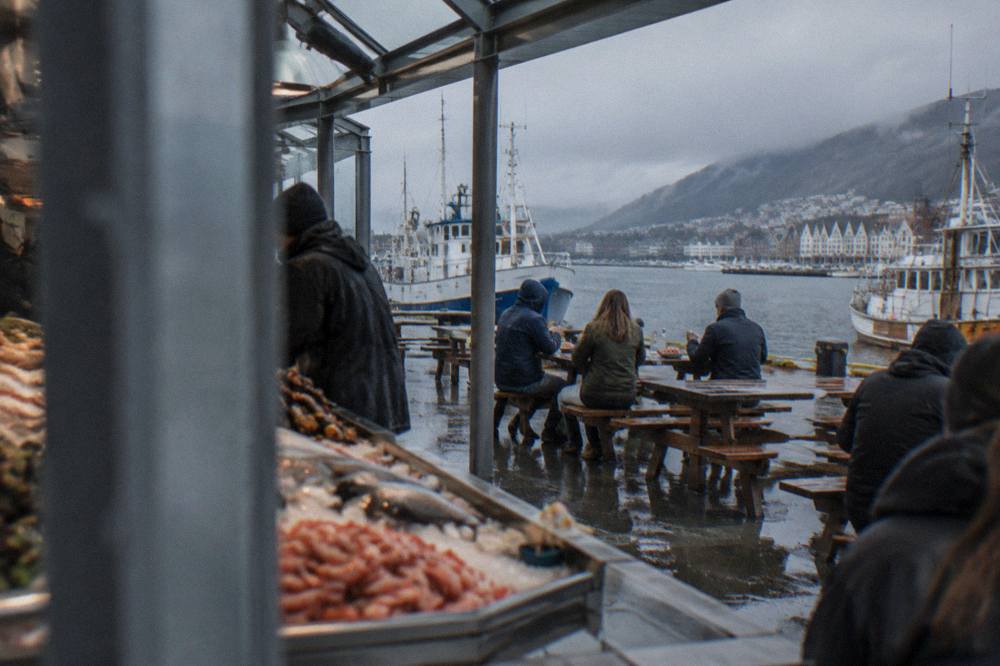
Two things catch first-time visitors off guard. First, the market is smaller than its reputation suggests; the photogenic row of stalls hugs the harbour rather than filling a square. Second, it is genuinely mixed-use: a Bergen local buying the evening's cod stands in the same short queue as a visitor eating a plate of shrimp with a view across the water toward the Bergenhus fortress. Both are the market's real clientele.
What Can You Eat At The Bergen Fish Market?
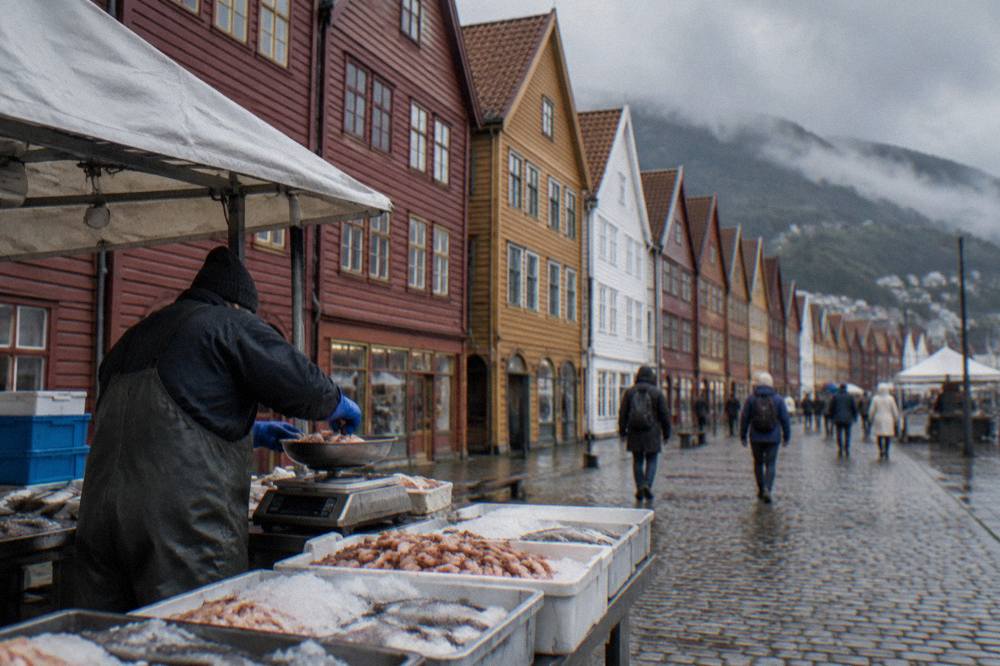
Expect fresh and smoked salmon, cod and halibut, brown shrimp sold by weight and eaten cold with bread, fish and chips from the grills, fish soup, whale and reindeer meat, moose wraps, shellfish including crab and mussels, and open shrimp or salmon sandwiches built to eat standing at the harbour rail. The stallholders set their own menus and their own prices, and both change through the year, so the honest answer to "what does X cost" is always the same: the price is on the board at the stall, and the boards move.
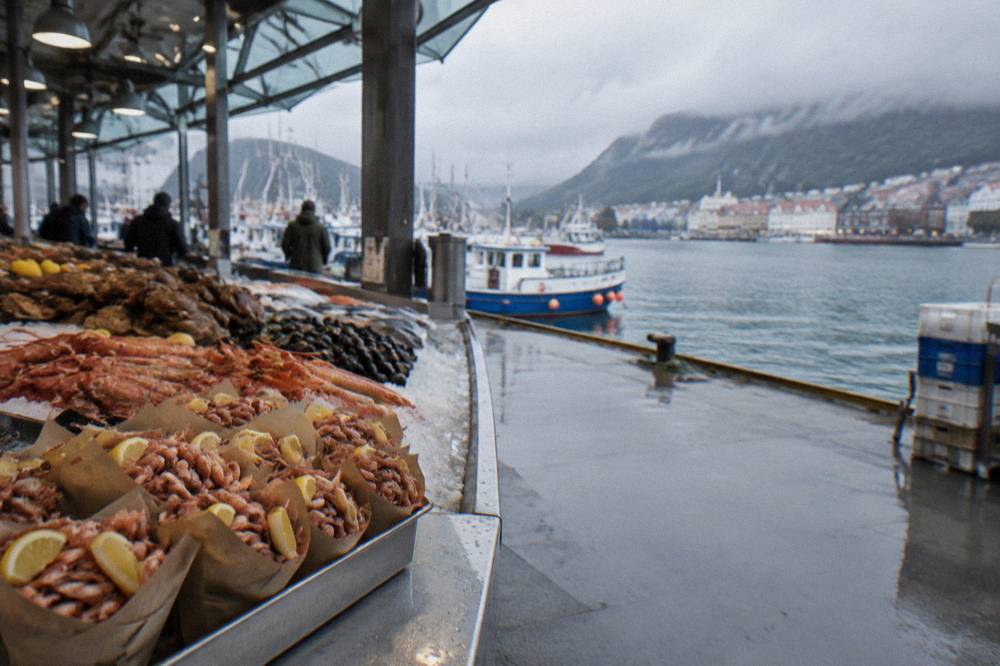
The signature plate is the shrimp cone or shrimp plate: cold, peeled brown shrimp with mayonnaise, lemon and a slice of bread. It is the most local thing on the quay and the item the market's reputation rests on. The grills do the rest: fish and chips, salmon portions and skewers. Whale meat appears at some stalls and not at others, and reindeer and moose products are common enough that the market doubles as a place to try game meats that rarely appear on menus elsewhere in the city. None of these are Bergen inventions; they are coastal Norwegian staples, but the harbour setting and the packed quay give them a theatre no restaurant kitchen can match.
A useful habit: walk the full row before buying anything. The stalls are not identical, the same plate can differ from one counter to the next, and standing comparisons are a two-minute job here. It is also the fastest way to sense which stalls are aimed at takeaway eating and which are aimed at raw fish to cook at home.
A guided walk can shortcut the guessing. The A Taste of Bergen Food Tour with Fløibanen Funicular builds a route through the city's food stops, the market quay among them, and adds a ride up Fløyen; the operator's live listing carries the current price, rating and duration, so Check availability there rather than trusting secondhand figures.
For visitors who want the fjord and the food in one trip, the market also works as a pre-departure stop: eat early, then head out. The full-day options below are the strongest pairing in that style.
How Much Does A Visit To The Bergen Fish Market Cost?
The market itself is free to enter and browse, stall food prices are set by each operator and posted at the stall rather than published centrally, so no reliable single figure exists, and the things around the market carry the known NOK prices: a Skyss zone A single is 51 NOK and the 2026 Bergen Card runs 400 NOK for 24 hours. Those two figures, both from the official Bergen Card flyer and visitbergen.com, frame a market visit better than any per-plate guess.
The trap to avoid is treating the market as a budget meal. A paper cone of shrimp is a reasonable harbour lunch; a full hot plate at a stall counter, plus a drink, lands at restaurant-level money for an outdoor bench. That is not a scandal, it is what harbour-front food in Norway costs, and NOK is the only currency in play: the Norwegian krone, never the euro, and no card is a substitute for knowing roughly what you intend to spend.
The Bergen Card is worth checking against your own plan before you buy anything, because the flyer's coverage is broad. The official 2026 prices:
| Card length | Adult (NOK) | Child 3-15 (NOK) |
|---|---|---|
| 24 hours | 400 | 100 |
| 48 hours | 500 | 125 |
| 72 hours | 600 | 150 |
| 96 hours | 700 | 175 |
The card includes free Skyss buses and the Bybanen light rail across Vestland county, including the airport line, plus discounted entry to Fløibanen, Ulriken643 and most museums, per the flyer's own line items. It does not cover food at the market, and visitbergen.com's flyer confirms the Flybussen airport bus is not included free either.
Where Is The Bergen Fish Market And What Sits Near It?
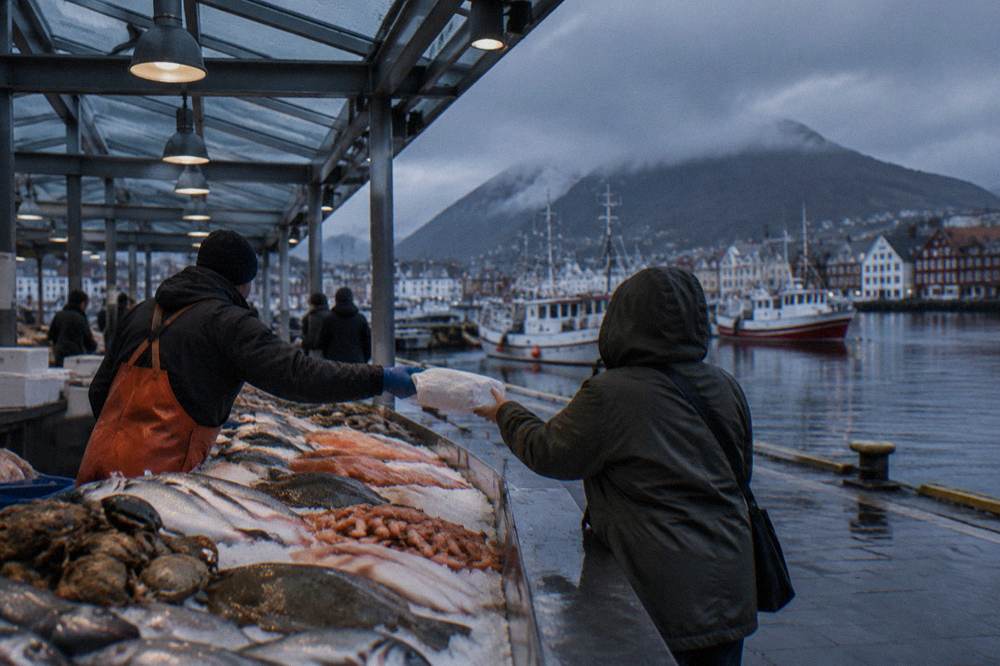
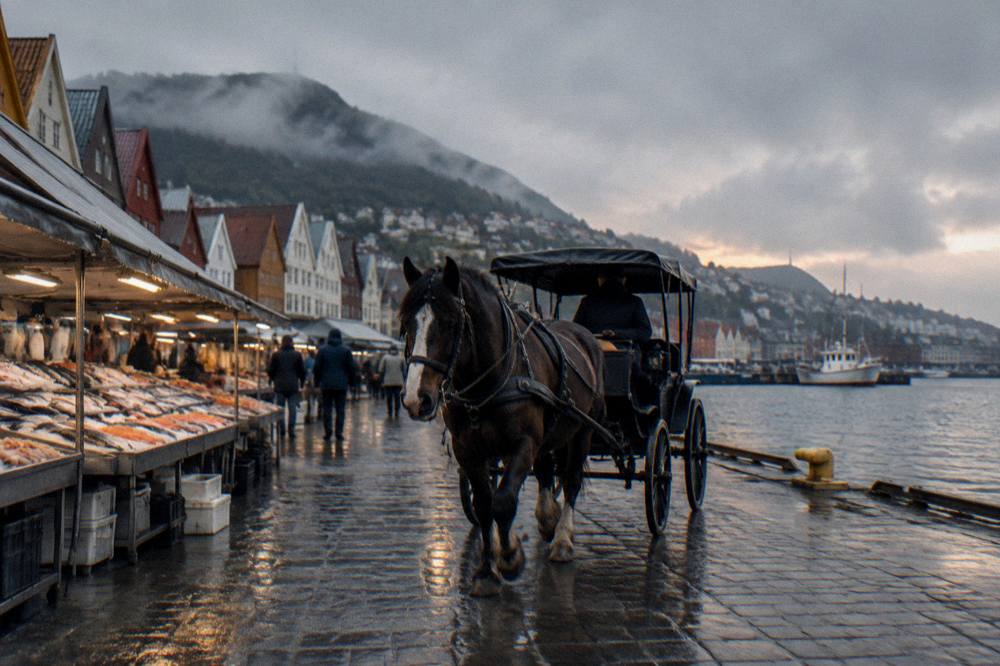
The market occupies the inner-harbour quay in central Bergen, a short level walk from both Bryggen's UNESCO-listed wharves and the Torgallmenningen square, which makes it the natural hinge between the Bryggen district, the fortress, the museums and the shopping streets behind the harbour. UNESCO's own listing text confirms Bryggen's wharf was inscribed on the World Heritage List in 1979, and the market sits within easy walking distance of it.
Everything on this table is a short walk from the market's stalls, and each carries a confirmed price from the 2026 Bergen Card flyer:
| Attraction | Ordinary price (NOK) | Bergen Card price (NOK) |
|---|---|---|
| Hanseatic Museum, with guided visit | 160 | see flyer discount line |
| Bryggen Museum | 170 | 85 |
| Haakon's Hall | 120 | see flyer discount line |
| Fløibanen return (1 Apr-30 Sep) | 200 | discounted, one per card |
| Ulriken643 cable car return | 435 | discounted, one per card |
| KODE Art Museums | not independently verified; 200 NOK appears on the card's own lines | 200 |
The KODE figure deserves its caveat spelled out: treat 200 NOK as the Bergen Card flyer's figure, not a confirmed standalone museum price. The rest of the row, Bryggens Museum and the Hanseatic Museum in particular, is solid, and the pattern is clear: the market's free entry plus a handful of discounted museum doors makes a full low-cost day out of this corner of the city.
The practical walking loop is simple. Start at the market, eat first or reserve eating for the return leg, cross to Bryggen's wooden wharves, then swing back along the harbour to Torgallmenningen, the city's main square, for the shopping streets. The Maritime Museum and the Aquarium extend the same harbour line further out toward Nordnes.
When Is The Best Time Of Year To Visit The Bergen Fish Market?
The market is at its liveliest in the warmer months, roughly May to September, when the outdoor stalls are fully set out and Bergen's festival calendar fills the harbour with visitors, but the same months bring the heaviest summer rain the yr.no statistics table records, so a wet-weather plan matters as much as a dry one. Bergen is a temperate oceanic city, wetter than most of Norway, and planning against the rain table beats hoping.
The yr.no/Met Norway data for the trailing 13 months shows how the year actually runs:
| Month | Mean temp (C) | Precipitation (mm) |
|---|---|---|
| March | 5.9 | 243.9 |
| April | 7.9 | 65.9 |
| May | 9.9 | 127.4 |
| June | 14.4 | 165.7 |
| July | 14.9 | 184.2 |
| August | 14.3 | 243.6 |
| September | 13.1 | 206.6 |
| October | 9.7 | 231.9 |
| November | 6.0 | 321.8 |
Read that as a visitor, not a meteorologist. April was the driest recent month on the table at 65.9mm, while November topped it at 321.8mm observed against a 275.0mm normal. The summer months are mild, 14.4 to 14.9 degrees, but not dry, and 217 days with precipitation across the trailing 13 months means the market's covered sections and the indoor counters are not a fallback, they are routine. The rainy day guide covers the rest of the wet-weather toolkit.
The festival calendar bends the harbour around the market too. Festspillene i Bergen, the Bergen International Festival, runs 26 May to 12 June 2027 for its 75th jubilee edition per fib.no; Bergenfest follows at Bergenhus Festning on 9 to 12 June 2027; and the Bergen Matfestival, the food festival, lands around 4 to 5 September 2026 with the Norsk Siderfestival alongside it. A food-focused visitor aiming at the Matfestival gets the market at its most crowded and most alive, but early June festival crowds thin the quay's stall queues the other way.
Is The Bergen Fish Market A Tourist Trap?
The honest verdict is mixed and structural: the harbour row is unapologetically aimed at visitors and carries visitor-level prices for hot plates, while the raw fish counters and the shrimp trade retain a genuine local customer base, so the market is a tourist-facing market with a real fishmonger's core rather than a pure photo opportunity. The distinction matters for where you spend.
The complaint pattern is predictable and fair: some stalls sell the same plate you would find in a mid-range restaurant, at restaurant prices, on a bench. The defence is equally predictable and also fair: it is a harbour quay in one of Norway's most visited cities, the fish is real, and the prices are posted before you order. The visitor who walks the row, compares boards, buys a shrimp plate and eats it at the rail gets the market's best version. The visitor who sits down hungry at the first grill with a family of four gets the expensive version.
This split is the clearest way to decide in advance:
| If you want | Do this | Skip this |
|---|---|---|
| The most local plate | Cold shrimp with bread and mayo, from the counter with the shortest menu | Long multi-item hot menus |
| Raw fish to cook yourself | The raw counters, prices by weight | The grill section |
| Game meats (reindeer, moose) | Stalls that post both raw and cooked cuts | Wrap-only stalls if you want to taste the meat plainly |
| A cheap lunch | Buy at the stall, eat at the harbour rail | Counter seating where a cover applies |
| Photos without crowds | Early morning, before tour groups arrive | Midday and festival weekends |
One caution on that last row: opening and closing hours are set by individual stallholders, are not published centrally, and can shift with the season and the weather, so treat any timing advice, including "early morning", as a strategy to check against the stalls on the day rather than a guarantee. A market this small depends on individual operators' decisions, and those decisions are not a fact a guide can state for them.
How To Fit The Fish Market Into A Day In Bergen
The strongest pattern is to anchor the market at one end of a harbour day: eat at the market first, then walk Bryggen and the museums, ride Fløibanen or the Ulriken643 cable car for the view, and return to the quay for a second small plate rather than one large meal, which spreads the cost and turns the market into the day's recurring hub instead of a single stop. That works because central Bergen is compact and everything in the price table above sits on the same short harbour line.
A sample day built from the verified prices:
| Time | Stop | Cost anchor |
|---|---|---|
| Morning | Market breakfast plate, then Bryggen's wharves | stall-board price; Bryggen street free |
| Late morning | Bryggen Museum or Hanseatic Museum | 170 NOK / 160 NOK ordinary, 85 NOK for Bryggen Museum on the card |
| Midday | Fløibanen up, walk on Fløyen, funicular down | 200 NOK return in the Apr-Sep window |
| Afternoon | Torgallmenningen and the shopping streets | free to browse |
| Evening | Return to the quay for a shrimp plate at the rail | stall-board price |
Families get a bonus pairing: the Aquarium and the VilVite science centre give children a paid attraction at each end of the harbour line, and the market itself, free to walk and full of ice, crabs and grills, is a reliable twenty minutes of free entertainment between them. The Bergen with kids guide expands that route.
Visitors staying longer, or arriving on a cruise, can push the same logic out of the city. The market's raw counters are the city's kitchen, and the fjords are its larder; a full-day fjord trip that leaves from the harbour a short walk from the stalls turns the morning market visit into the first course of the day.
A glacier-lake day trip is the most dramatic of those first courses, but it is not the only one. The same harbour that carries the market's stalls carries the boats, and the fjord itineraries below cover the two other strongest pairings for a market-morning-plus-fjord-afternoon plan.
For a slower second day, Hardanger's orchard country and waterfalls sit within day-trip range of the city, and a guided version with lunch included pairs neatly with a market evening the night before.
Common Questions About The Bergen Fish Market
Is the Bergen Fish Market free to enter?
Yes. There is no entry fee, no ticket and no gate. You pay only for what you buy, and every stall posts its own prices on its own boards.
What is the most local thing to eat at the market?
Cold brown shrimp with bread, mayonnaise and lemon, eaten standing or at a bench by the harbour rail. It is the plate the market's local reputation rests on.
Can I pay by card at the market stalls?
Card acceptance is a decision made stall by stall, and it is not something a guide can state for individual operators. Most harbour-front trade in Bergen runs on cards, but carry a card and a small amount of NOK cash as a fallback and check the board at the stall.
How far is the market from Bryggen?
The market quay and Bryggen's wharves sit beside each other on the same inner harbour, and the walk between them is a matter of minutes on level ground.
Does the Bergen Card cover food at the market?
No. The 2026 Bergen Card flyer covers transport and attraction entry, including Skyss buses, the Bybanen light rail across Vestland county and discounted entry at Fløibanen, Ulriken643 and most museums, but food purchases at the market's stalls are not part of the card.
Is the market open in winter?
Individual stallholders set their own days and hours, and those change with season and weather, so no reliable blanket opening schedule can be stated here. More of the trade moves toward covered and indoor counters in the colder months, and the wettest recent months on the yr.no table, November at 321.8mm and December at 303.5mm, are exactly when that shift matters most.
A final planning note: the market rewards visitors who treat it as a habit rather than a monument. Walk the row, compare the boards, eat what the harbour hands you that day, and let the rest of the harbour, Bryggen, the museums and the mountains behind the city, fill the hours between plates.