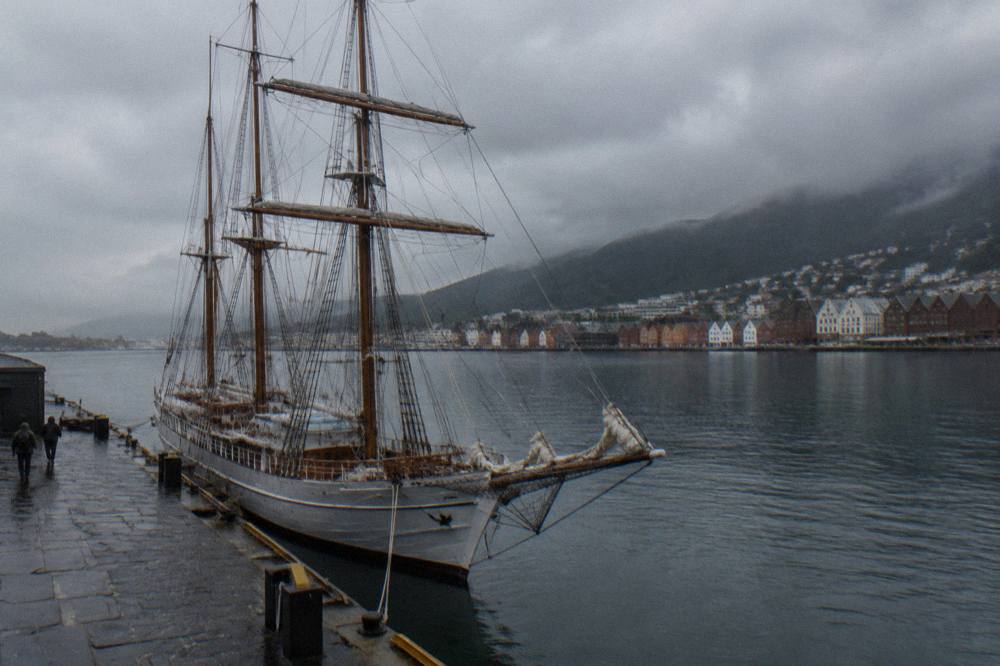
Bergen Maritime Museum
Bergen, on the southwestern coast of Norway, was built by the sea, and the Bergen Maritime Museum is where that seafaring story is told. Here is what to expect, what it costs, and how to fold it into a day in the old Hanseatic quarter.
Short answer
The Bergen Maritime Museum covers Norway's seafaring history from Viking ships to modern steamers, and sits near the university area a short walk from Bergen's city centre. The 2026 Bergen Card flyer lists it among the discounted museums, so check the flyer or the visitbergen.com card page for the current admission line before you go.
Bergen, in Vestland county on Norway's southwestern coast, grew rich on ships, stockfish and Hanseatic trade, and no building tells that part of the story better than the Bergen Maritime Museum. The city was a Hanseatic League trading post for centuries, and its museums still carry the traces: model ships, charts, paintings and artefacts that follow Norwegian seafaring from the Viking age to the steam era. This guide covers what the museum is, what it holds, how the Bergen Card treats it, how to reach it, and how to build a full Hanseatic day around it.
What Is The Bergen Maritime Museum?
The Bergen Maritime Museum is a dedicated maritime history museum in Bergen, Norway, holding ship models, nautical charts, marine paintings and boat artefacts that trace Norwegian seafaring from the Viking age through the Hanseatic trading era to steam and motor shipping. It forms part of the cluster of university-linked museums in the city and sits within easy reach of the old Hanseatic quarter at Bryggen.
Bergen exists because of the sea. The kommune's own statistics page counts 294,860 residents as of 1 January 2026, and nearly all of them live within sight of water: the harbour, the Byfjorden, or the fjord channels that made this port the largest trading hub in medieval Norway. A museum about ships here is not a niche interest. It is the city explaining itself.
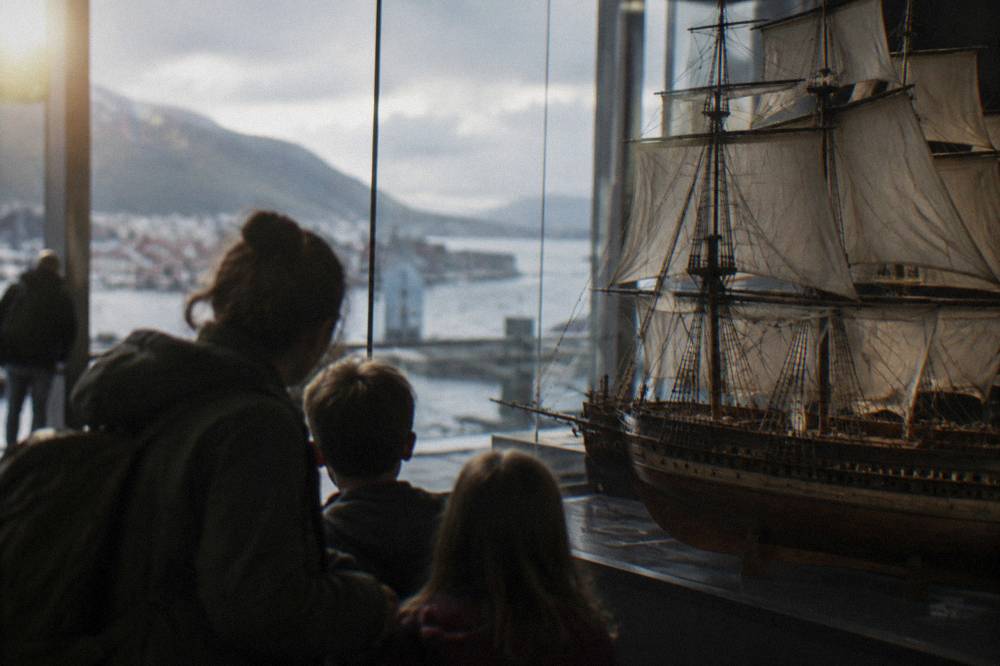
The museum's collection follows that arc. Viking-age vessels and their successors sit alongside the merchant ships that carried stockfish from northern Norway to buyers across Europe, and the steamers that linked coastal communities before the road network existed. Paintings and models do a lot of the work, which is typical of Norwegian maritime museums: the objects are often small, the stories are large.
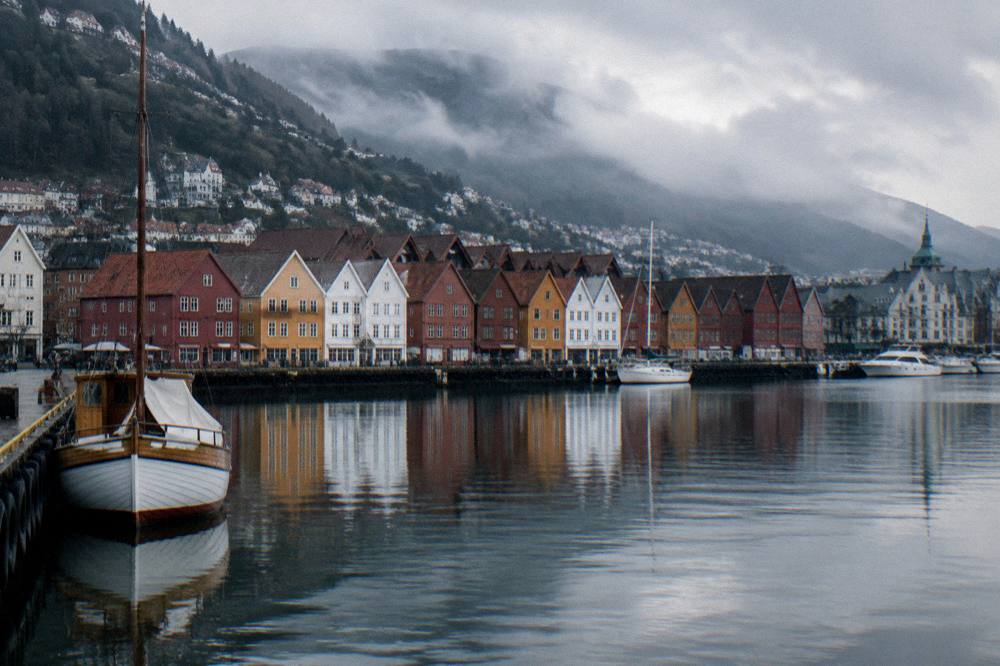
If you are planning a wider trip, start with Bergen Travel Guide for the full money page of things to do in Bergen, then come back here for the maritime detail. The museum pairs naturally with the Hanseatic Museum on the wharf, which covers the trading post's commercial life, and with Bryggen, the wharf itself, the wooden Hanseatic quarter UNESCO inscribed in 1979.
What Will You See Inside The Bergen Maritime Museum?
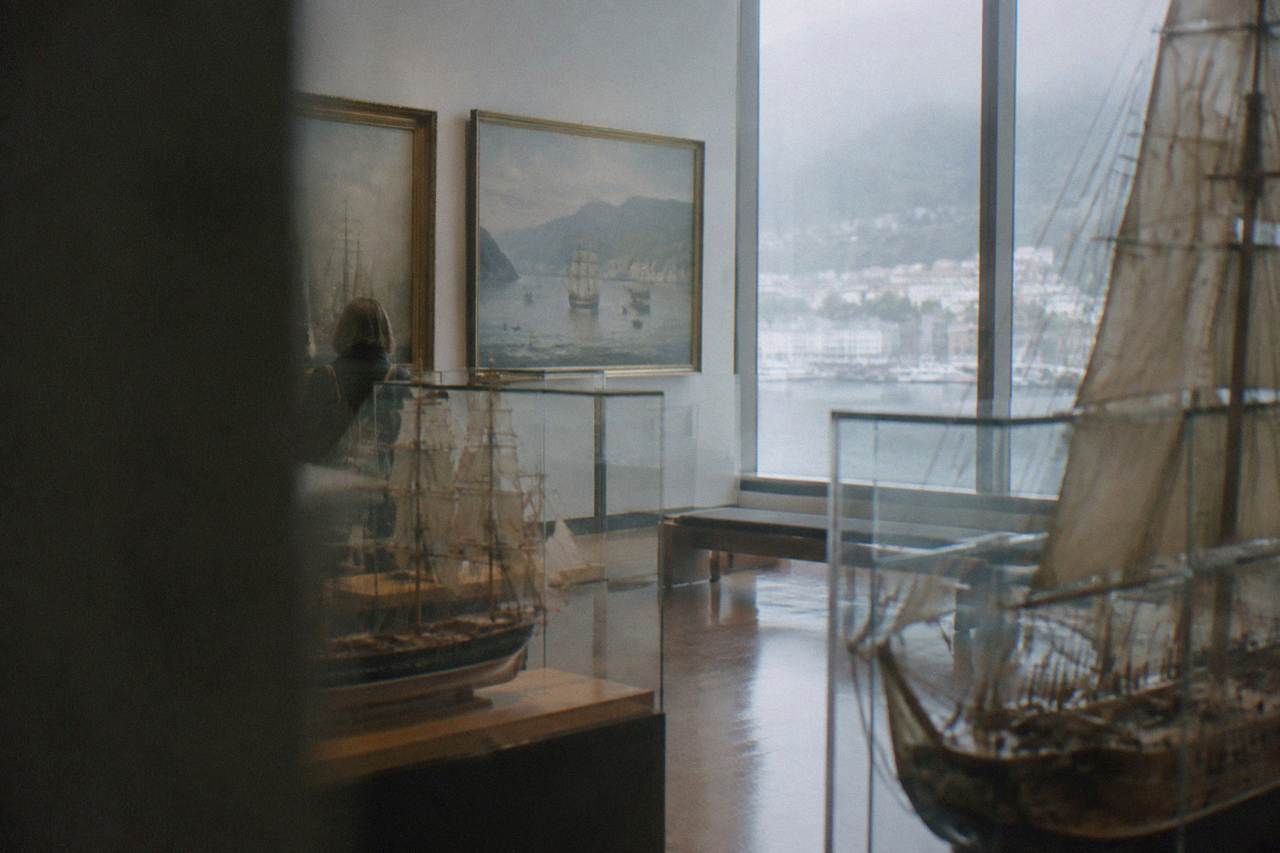
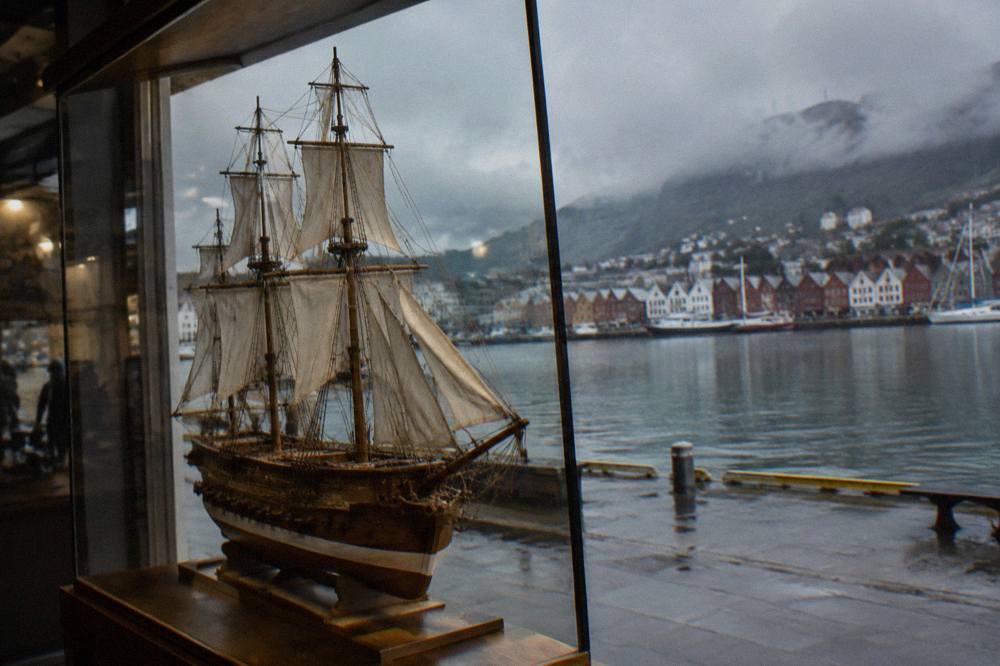
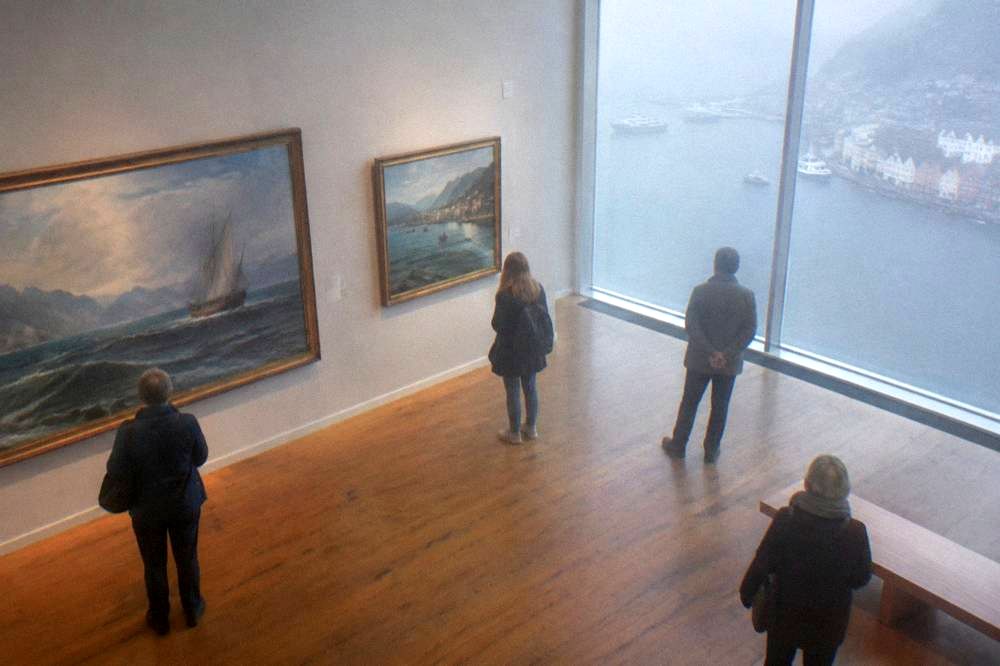
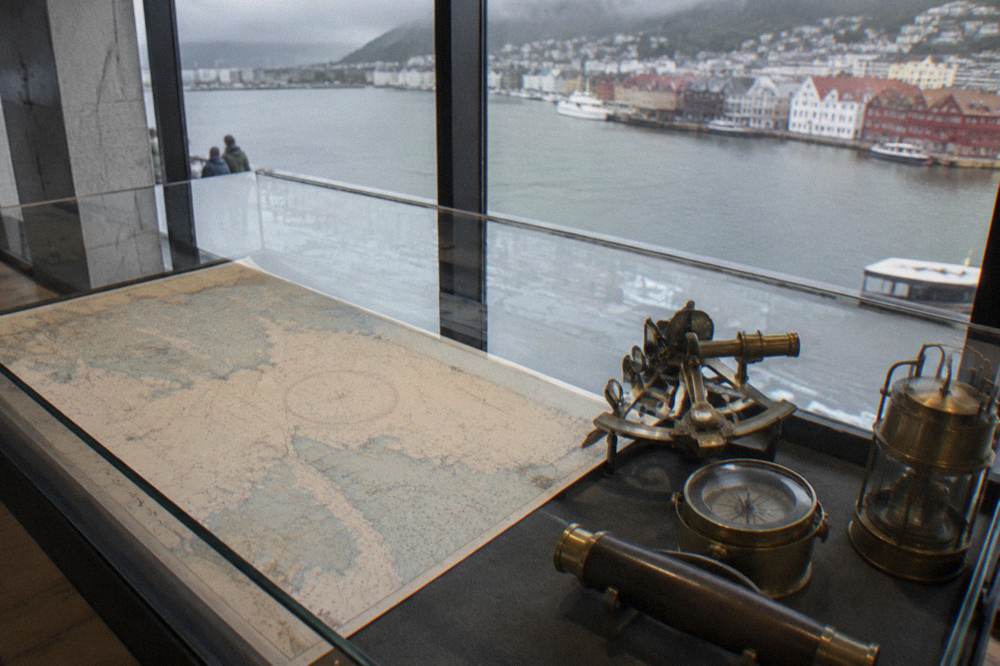
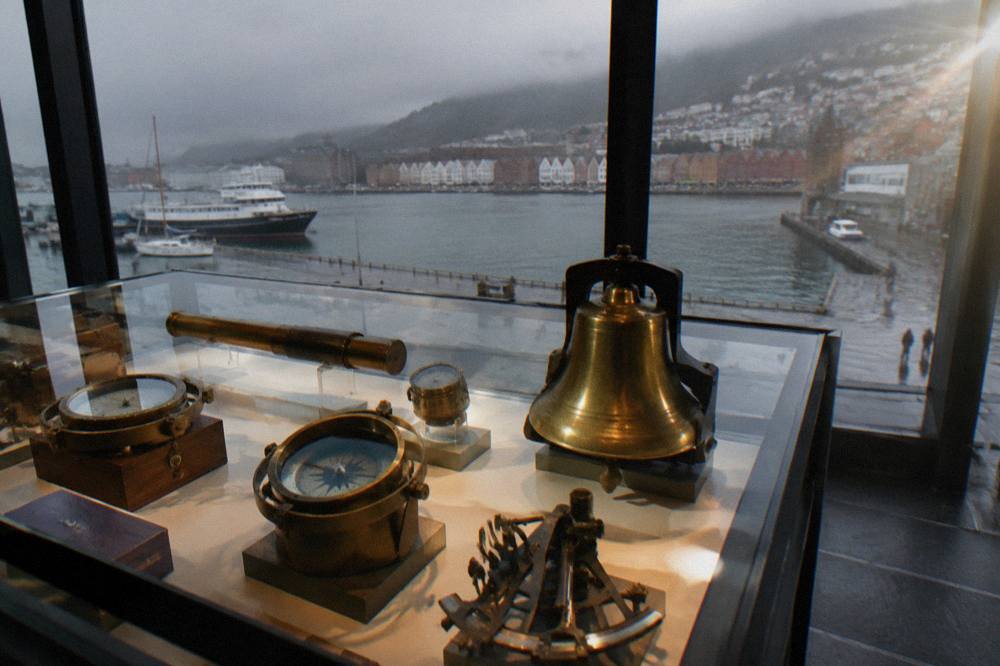
Inside, the core displays are ship models spanning several centuries, nautical instruments and charts, marine paintings of Bergen's harbour and the Norwegian coast, and preserved boat sections and equipment from the steam and motor eras. The galleries are arranged so the Viking and medieval material leads into the Hanseatic period, which then gives way to coastal steamers and modern shipping. Expect dense, traditional display cases rather than interactive screens.
That last point matters for planning. This is a collection museum in the classic European sense. The models are the stars: intricate wooden hulls built to scale, often with rigging intact, showing how Norwegian boatbuilding changed from clinker-built open vessels to iron and steel hulls. The chart material documents how the coastline itself was surveyed, which is its own kind of history for a country that lived off coastal routes.
The Hanseatic section connects directly to what you can still see outside. Bryggen's wooden buildings, the ones UNESCO listed in 1979, were warehouses and offices for German merchants, and the museum's paintings show that same waterfront working. Standing in front of a harbour painting and then walking ten minutes to the painted scene is one of the better museum experiences Bergen offers.
Visitors who want the city's seafaring story told to them rather than read from cases have good options. The trio below covers a food-led culture walk, a small-group walking tour with a local guide, and a full-day Viking village and fjord combination.
One honest caveat appears on the About page: this site has not been vetted by a visit to Bergen. Every operational detail here, from prices to closures, comes from primary sources such as the official Bergen Card flyer and the museum's own listing, not from a visit.
How Much Does The Bergen Maritime Museum Cost, And Is It On The Bergen Card?
The Bergen Maritime Museum appears in the official 2026 Bergen Card flyer's list of attractions, which means cardholders get the flyer's museum terms, free or discounted depending on the season; the exact admission figure for the museum itself is printed on that flyer and on visitbergen.com's Bergen Card page, so check the current flyer rather than relying on second-hand numbers. The card itself costs 400 NOK for 24 hours and up to 700 NOK for 96 hours for an adult.
The Bergen Card is usually the right arithmetic for a museum-heavy day. The 2026 flyer, published 12 May 2026, prices the card as follows.
| Card length | Adult (NOK) | Child 3-15 (NOK) |
|---|---|---|
| 24 hours | 400 | 100 |
| 48 hours | 500 | 125 |
| 72 hours | 600 | 150 |
| 96 hours | 700 | 175 |
Beyond museums, the card includes free Skyss buses and the Bybanen light rail across Vestland county, including the airport line. That transport line alone can move the maths in the card's favour.
For context, here are confirmed ordinary and card-related prices from the same flyer for the other Hanseatic-era sights you are likely to combine with a maritime visit. The Bergen Card flyer is the source for every figure in this table.
| Attraction | Ordinary price (NOK) | Bergen Card price (NOK) |
|---|---|---|
| Bryggen Museum | 170 | 85 |
| Hanseatic Museum (with guided visit) | 160 | listed on flyer |
| Haakon's Hall | 120 | listed on flyer |
| KODE Art Museums | not confirmed as standalone | 200 via card |
| The Aquarium, 1 Nov-28 Feb | 380 adult | listed on flyer |
| The Aquarium, 1 Mar-31 Oct | 380/415 seasonal | listed on flyer |
The KODE line is worth a second look because it shows how this site handles sourcing: kode.no's own ticket page returned an error on direct fetch, so the 200 NOK figure is the Bergen Card's bundled price, not a confirmed standalone ticket. The same caution applies to the Maritime Museum's own door price: the flyer lists it, and this guide points you to the flyer instead of repeating a number second-hand.
If your day is museum-heavy, the card clearly pays; if the Maritime Museum is your only paid stop, a single ticket from the desk plus a 51 NOK Skyss single (zone A) may be cheaper. That 51 NOK fare comes from visitbergen.com's own Skyss page and the flyer's transport line.
Where Is The Bergen Maritime Museum And How Do You Get There In Bergen?
The Bergen Maritime Museum stands in the university area on the southwest side of Bergen's city centre, within the cluster of university-linked museums, a short walk from the city's core and from the Bryggen wharf. You can reach it on the Bybanen light rail, which the Bergen Card covers for free across Vestland county, on a Skyss bus at 51 NOK for a zone A single adult ticket, or on foot from the centre.
Walking is the simplest answer because Bergen's centre is compact and the museum district hangs directly off it. The Bybanen's own network covers the airport and the centre, though the exact journey time in minutes is not something this site publishes, because no primary source has been directly fetched for it. The Skyss fare, by contrast, is confirmed: 51 NOK for a single adult ticket in zone A, and free with the Bergen Card.
One 2026 transport note that matters if your visit falls in early summer: the Bybanen ran scheduled summer maintenance between 29 June and 26 July 2026, with replacement buses on parts of lines 1 and 2, and the Nonneseter stop has been closed in one direction since 23 February 2026 due to demolition nearby. Check skyss.no's travel planner on the day.
If you are arriving by cruise ship, the port publishes a live list of arrivals on bergenhavn.no, which is worth checking before assuming your timing; this site does not publish an annual cruise-call count because no primary source has confirmed one.
The wider museum cluster rewards the walk. The University Museum of Bergen, the Bryggens Museum with its excavated wharf ruins, and the quiet Leprosy Museum in the old hospital district all sit within the same broad area, each covering a different slice of the city's past. None of those has a confirmed admission price, so check each listing directly rather than trusting a rounded number.
How Long Should You Spend At The Bergen Maritime Museum?
Plan on roughly one to two hours for the main galleries, longer if you read the chart and model labels in detail, and treat the museum as one stop in a half-day circuit rather than a standalone destination. Its position next to other university museums and a short walk from Bryggen makes a combined visit more rewarding than the museum alone, and a walking pace through two museums offers more than a sprint through one.
The realistic pattern for a first-time visitor is a morning here, lunch in the centre, and an afternoon on the wharf. Bergen's climate supports that indoor-outdoor rhythm: yr.no's Bergen station table, from Met Norway data, shows 217 days with precipitation over the trailing 13 months, so a museum morning is a useful hedge against the weather rather than an admission of defeat.
The mountain transport prices below, all from the official Bergen Card flyer and Ulriken643's own price pages, show what an afternoon alternative costs if the skies clear.
| Mountain option | Price detail (NOK) | Source |
|---|---|---|
| Fløibanen return, 1 Apr-30 Sep | 200 adult / 100 child | Bergen Card flyer |
| Fløibanen return, 1 Oct-31 Mar | 145 adult / 75 child | Bergen Card flyer |
| Ulriken643 return | 435 adult | ulriken643.no price page |
| Skyss single, zone A | 51 adult | visitbergen.com Skyss page |
Note the Ulriken643 closure if you are travelling in early January: the cable car's own site lists scheduled maintenance in weeks 1 and 2 of 2026, reopening around 13 January, plus standard Christmas closures. Fløibanen, by contrast, had no 2026 closure notice.
When Is The Best Time To Visit The Bergen Maritime Museum?
Any month works, because the museum is indoors and Bergen's climate is temperate oceanic year round; yr.no's Met Norway table for the Bergen station shows monthly means ranging from -1.4C in January 2026 to 14.9C in July 2026, with November the wettest observed month at 321.8mm of precipitation. A museum visit is genuinely a wet-day plan in a city that recorded 217 days with precipitation over the trailing 13 months.
The table below is drawn directly from that yr.no station table. It is the same source this site uses for every climate claim, and it shows observed figures against the long-term normals.
| Month (observed) | Mean temp | Precipitation (mm) | Normal (mm) |
|---|---|---|---|
| Sep | 13.1C | 206.6 | 248.0 |
| Oct | 9.7C | 231.9 | 268.0 |
| Nov | 6.0C | 321.8 | 275.0 |
| Dec | 5.8C | 303.5 | 290.0 |
| Jan | -1.4C | 82.0 | 256.0 |
| Feb | 0.8C | 133.4 | 209.0 |
| Mar | 5.9C | 243.9 | 202.0 |
| Apr | 7.9C | 65.9 | 141.0 |
| May | 9.9C | 127.4 | 109.0 |
| Jun | 14.4C | 165.7 | 132.0 |
| Jul | 14.9C | 184.2 | 158.0 |
| Aug | 14.3C | 243.6 | 208.0 |
Read that table honestly: even the driest observed months in the period carried substantial rainfall, and the trailing-13-month extremes ran from 28.0C on 14 August to -11.3C on 8 January. There is no month in which Bergen is reliably dry, which is precisely why a maritime museum earns its place on a rainy-day list alongside the Old Bergen Museum's historic wooden houses and the KODE art museums by the lake.
Is The Bergen Maritime Museum Good For Families?
Families with school-age children tend to get the most from the museum, because the ship models and harbour paintings are visually immediate and the Viking and steamship material maps onto things children already know; very young children will find it a quieter, more look-don't-touch experience than the city's science centre or aquarium. The practical compromise is a short museum stop in the morning followed by a livelier afternoon stop nearby.
The livelier afternoon options are well documented on this site. The VilVite science centre is the hands-on choice, though its admission price could not be confirmed, and the Bergen Aquarium is the animal one, with admission prices of 380 NOK in the winter window and 380/415 NOK seasonally from March to October.
Families booking a guided element for the day have a strong option in the small-group format below.
For older children, the Viking and Hanseatic material is the hook. Bergen was a Hanseatic trading post, and the museum's medieval section explains how a wooden wharf became the centre of a German trading network that shaped the whole Norwegian coast. Follow it with a walk to the Bergenhus fortress and Haakon's Hall, where the 120 NOK flyer price covers a stone hall from the same era the models depict.
What Should You Combine With The Bergen Maritime Museum In One Day?
The strongest single-day plan is a Hanseatic circuit: the Maritime Museum in the morning, the Hanseatic Museum and Bryggen wharf at midday, the Bryggens Museum excavations in the early afternoon, and the Bergenhus fortress to close, all within the compact peninsula between the harbour and the museum district. Add the Fløibanen funicular in the evening if the weather clears, at 200 NOK for a summer return or 145 NOK in the winter window.
That circuit works because the geography cooperates. Everything listed sits on the same central peninsula, and the Bybanen and Skyss network covers the legs you would rather not walk, free with the Bergen Card. The flyer's confirmed prices for the circuit's paid stops are already in the tables above, so the only arithmetic left is the card break-even, which usually lands somewhere in the second museum.
The full-day alternative is to leave the city entirely. Bergen's biggest draw is the fjord country around it, and the Viking village combination below is the version that pairs fjord scenery with the same maritime history the museum covers in miniature.
For a food-led version of the harbour walk, the site's featured food and culture tour runs through the same lanes the ships served, and its live listing carries the current price and availability: Check availability. The matching page on this site describes the food and culture walk in detail.
If your visit lands on a festival date, plan around it. The dates below are drawn from the official festival sites.
| Event | Dates | Venue |
|---|---|---|
| Bergen International Festival 2027 | 26 May-12 Jun 2027 | city-wide |
| Bergenfest 2027 | 9-12 Jun 2027 | Bergenhus Festning |
| Nattjazz 2027 | 28 May-5 Jun 2027 | USF Verftet |
| Bergen International Film Festival 2026 | 14-22 Oct 2026 | various venues |
| Bergen Christmas Market 2026 | 20 Nov-22 Dec 2026 | Festplassen |
Common Questions About The Bergen Maritime Museum
How much is the Bergen Maritime Museum?
The exact admission figure is printed on the official 2026 Bergen Card flyer and on visitbergen.com's Bergen Card page, both of which list the museum; this guide points you there rather than repeating a second-hand number. A 24-hour Bergen Card costs 400 NOK for an adult, and the flyer states what the card gets you at the museum.
Is the Bergen Maritime Museum included with the Bergen Card?
Yes, the museum appears in the official Bergen Card flyer's attraction list, so cardholders receive the flyer's museum terms, free or discounted by season. The card also covers free Skyss buses and Bybanen light rail across Vestland county, including the airport line.
How long does a visit to the Bergen Maritime Museum take?
Roughly one to two hours covers the main galleries for most visitors. Allow longer if you read the chart and model labels in detail, and plan the museum as one stop in a half-day Hanseatic circuit rather than a standalone destination.
Is the Bergen Maritime Museum good for kids?
School-age children get the most from the ship models and Viking material. Very young children will find it quieter and more look-don't-touch than the VilVite science centre or the Bergen Aquarium, so many families pair a short museum stop with a livelier afternoon visit nearby.
What else is near the Bergen Maritime Museum?
The museum sits in the university museum district, within walking distance of the University Museum of Bergen, the Bryggens Museum excavations, the Hanseatic Museum on the wharf, and the Bergenhus fortress. The Bybanen and Skyss network connects the area to the rest of the city, free with the Bergen Card.
When is the best time to visit the Bergen Maritime Museum?
Any month, since it is indoors and Bergen's climate is temperate oceanic year round: yr.no's Bergen station table shows monthly means from -1.4C to 14.9C and 217 days with precipitation over the trailing 13 months, so the museum works as a wet-day plan in every season.
Why The Bergen Maritime Museum Earns A Morning
The Bergen Maritime Museum earns its place on a Bergen itinerary because it is the single best indoor explanation of why this city exists at all: a Hanseatic trading post that grew rich on coastal shipping, in a country where the sea connected everything before the roads did. One to two hours inside, paired with the Hanseatic Museum and Bryggen in the same half-day, tells the whole story for the price of a museum circuit the Bergen Card already discounts.
That is the honest case for it. The museum is traditional rather than flashy, and its displays lean on models, charts and paintings rather than screens, but the subject is the city itself. Bergen recorded 294,860 residents at the start of 2026, and the harbour those residents see every day is the same one the museum's paintings show working under sail.
Practical closure notes for the surrounding circuit: Ulriken643's cable car closed for maintenance in weeks 1 and 2 of 2026, reopening around 13 January, and the Bybanen ran summer replacement buses between 29 June and 26 July 2026. Fløibanen, the Hanseatic sights and the aquarium had no closure notices at the time of writing. Check the official flyer and skyss.no on the day, and the circuit will run itself.