Bergen Museum
The University Museum of Bergen, Norway is the city's grand old collections museum on Muséplass, a short walk from the city centre. Here is what is inside, what it costs to visit, and how to fit it into a Bergen trip.
Short answer
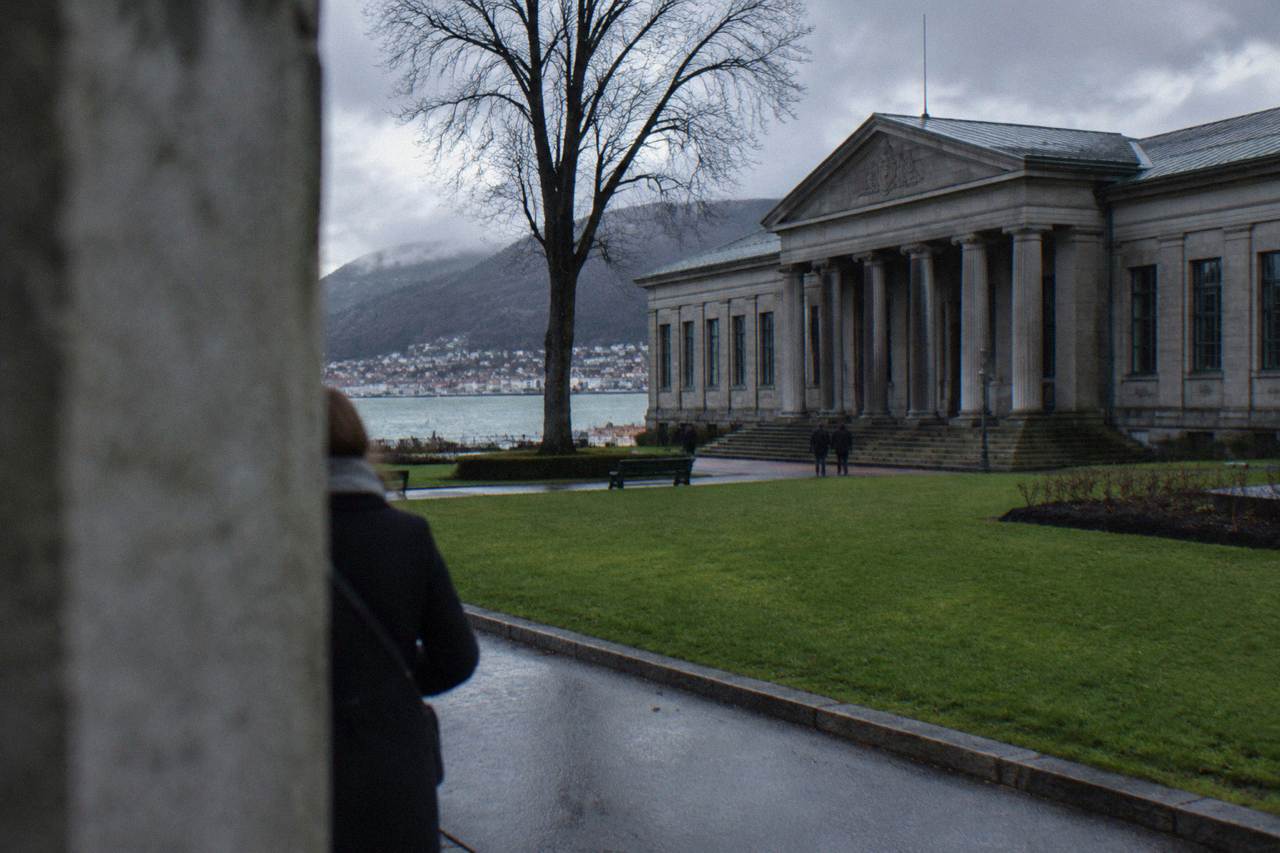
The University Museum of Bergen is the public collections museum of the University of Bergen, on Muséplass in the city centre. It displays natural history and cultural history side by side, and it is usually visited in around two hours, often paired with nearby museums or the Fløyen funicular.
Bergen, on the southwestern coast of Norway in Vestland county, packs an unusual amount of museum into a small city centre, and the collection at the heart of it all is the University Museum of Bergen. Known locally by its Norwegian name and sitting on Muséplass at the top of the city's museum district, it is the institution that gathered the region's natural history and cultural history long before the university itself took its current shape. For visitors it works as a rainproof anchor for any Bergen itinerary: a single grand building complex within an easy walk of the Flori/Fish Market area and the funicular.
This guide covers the practical side of visiting: what the museum actually contains, how to reach it with Skyss buses and the Bybanen light rail, what a visit costs and where the honest answer is that no verified admission figure is available, and how to pair the museum with the rest of central Bergen. It also folds in the city's other museum options, because the commonest visitor mistake is treating Bergen's museums as interchangeable when each collects something quite different.
What Is The University Museum Of Bergen?
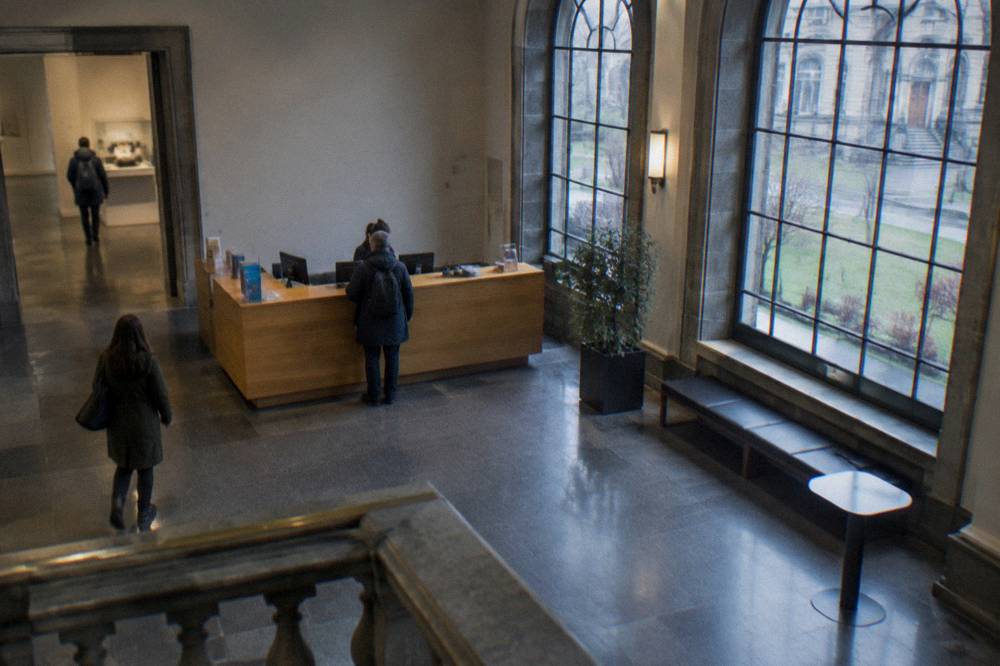
The University Museum of Bergen, Norway is the public collections museum of the University of Bergen, located on Muséplas square at the edge of the city centre, holding natural history and cultural history collections under one roof, and it is usually visited in around two unhurried hours as the indoor anchor of a museum-district half day. It is a classic old-school collections museum: zoology, geology and botany displayed alongside Norwegian antiquities and ethnographic material, rather than the themed storytelling of newer institutions. Because the building and its gallery wings sit around a shared square, it works well as a half-day indoor stop, and it is one of the most reliable rainy-day anchors in a city that recorded 217 days with precipitation over the trailing thirteen months of yr.no data.
The museum's role in the city is larger than its floor space suggests. It is the research museum of the university, meaning the objects on display are working collections rather than props, and exhibitions rotate around them. For travellers who have seen Bryggen's wooden wharf and want the story behind the objects that came out of its soil, or who have walked the fish market and wondered about the fish, this is where those threads connect. The building itself, with its weight and symmetry, is part of the exhibit: it was built to signal that a small trading town had become a scholarly city.
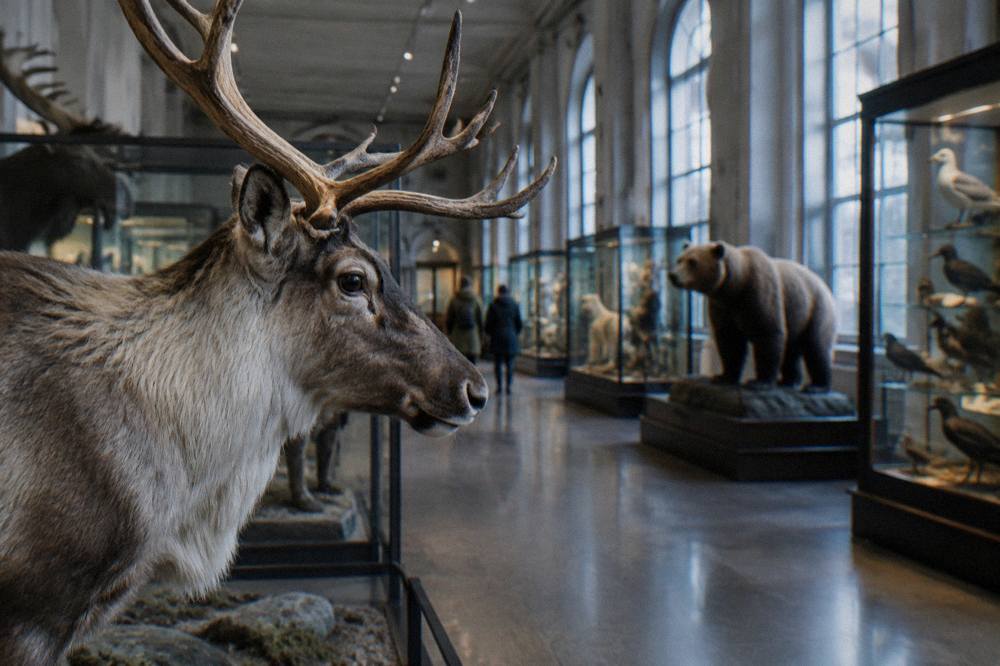
Practically, expect an institution of halls rather than a single narrative route. Zoology halls with mounted animals and taxidermy cases, geology displays, and cultural history galleries covering Norwegian prehistory through the medieval and more recent periods. The tone is quieter and more encyclopaedic than Bergen Kunsthall or the art rooms of KODE Art Museums, which suits travellers who like old cabinets and long labels.
Where Is It, And How Do You Get There From Central Bergen?
The University Museum of Bergen sits on Muséplass, uphill and south-west of the city centre, reached on foot from central Bergen in a modest uphill walk or by Skyss bus, with a single adult zone A ticket at 51 NOK according to visitbergen.com's transport page. The Bybanen light rail serves the wider area and, per the official 2026 Bergen Card flyer, the card covers free travel on Skyss buses and the Bybanen across Vestland county including the airport line. No independently verified door-to-door journey time in minutes is available for any specific route, so check the Skyss journey planner for live times rather than trusting a round number quoted elsewhere.
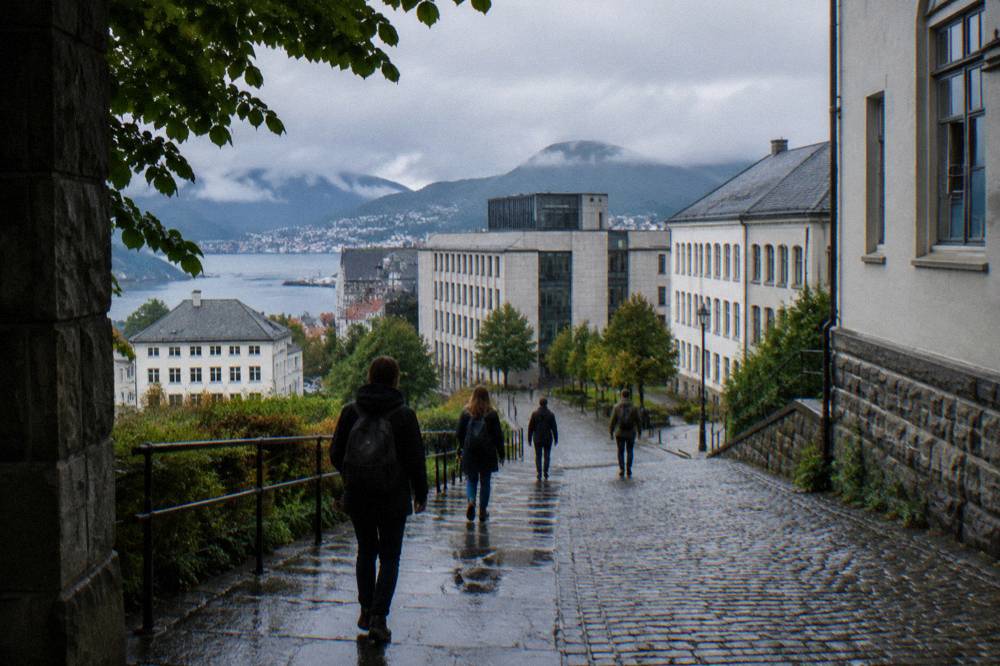
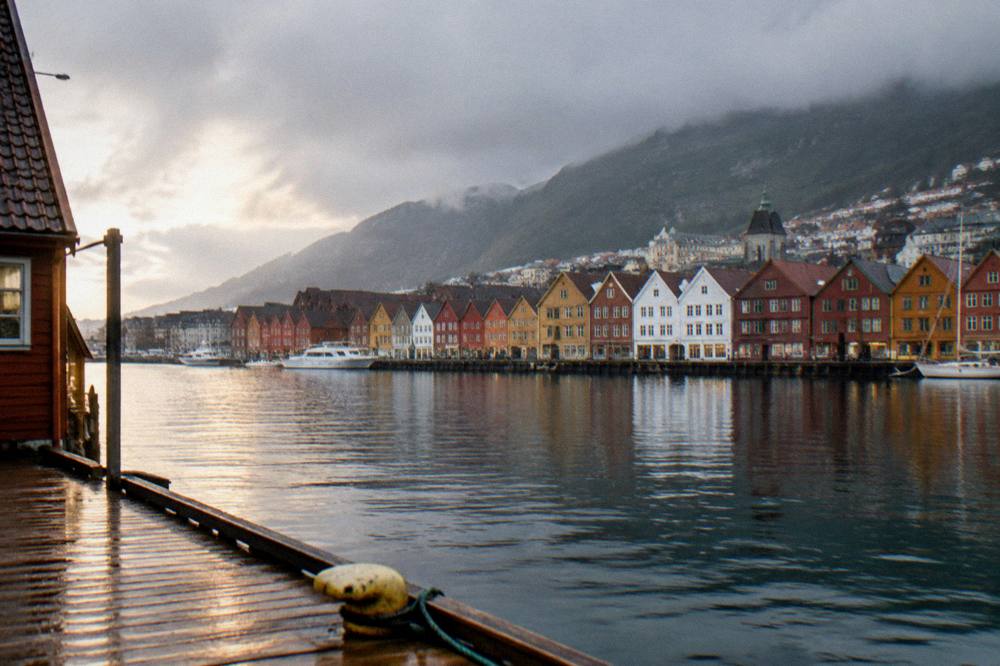
The walk is part of the point. Leaving the harbourside around the Bergen Fish Market, the route climbs through the streets behind Bergen Cathedral toward the museum quarter, where the University Museum shares its neighbourhood with the university's own buildings and a cluster of other museums. It is a compact district: once you are up there, you are within a few minutes' walk of several indoor attractions, which matters enormously in a city where yr.no's station table shows the wettest observed month, November, delivering 321.8 mm of rain.
For transport planning, the honest summary is that the cheap options are excellent. The table below gathers the transport figures this site has actually verified from primary sources, and deliberately leaves out anything it could not confirm.
| Option | Verified figure | Source note |
|---|---|---|
| Skyss single adult ticket, zone A | 51 NOK | visitbergen.com transport page and Bergen Card flyer |
| Bergen Card holder on Skyss/Bybanen | Free travel in Vestland county, incl. airport line | Official 2026 Bergen Card flyer |
| Flybussen airport bus with Bergen Card | Not included free; a discount may apply | Bergen Card flyer |
| Bybanen airport-to-centre journey time | No verified minutes figure; use the Skyss planner | Not confirmed from a primary source |
If you are pairing the museum with paid experiences, the strongest fit is a morning walking the city's food culture and an afternoon among the galleries, or the reverse on a wet day when the museum wins the morning slot. These are the tours this site has verified and recommends for that kind of split day:
What Can You Actually See Inside The Bergen Museum?
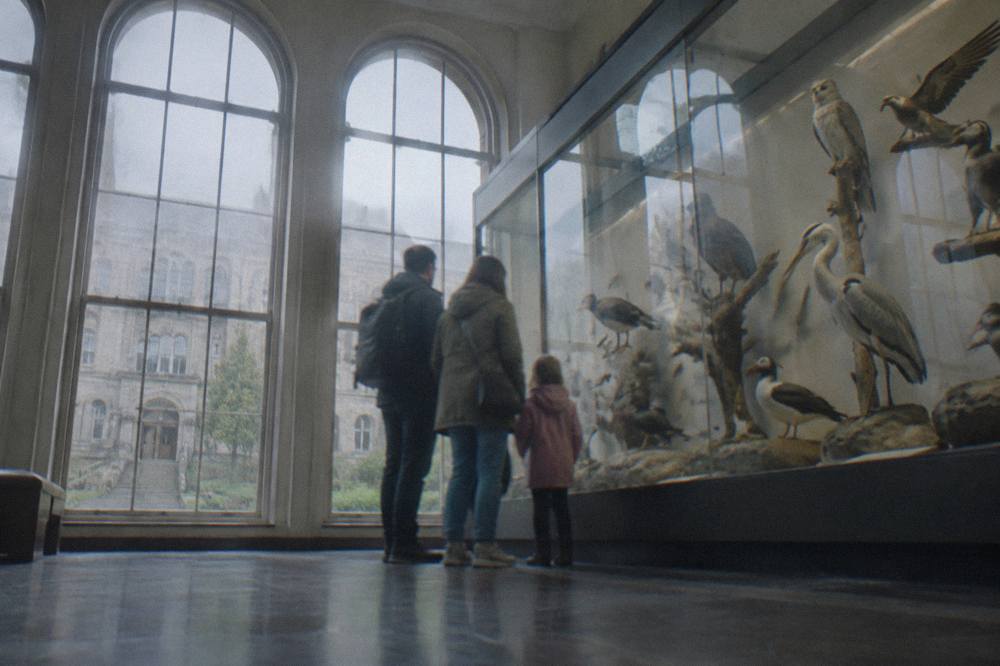
Inside, the University Museum of Bergen splits into natural history and cultural history: zoology and geology halls with mounted animals, fossils and mineral displays, and cultural history galleries covering Norwegian prehistory, the Viking Age, the medieval period and the city's own past, plus rotating temporary exhibitions. The natural history side is the part most visitors remember, because it preserves the older European tradition of wall cases and taxidermy rather than digital installations, and it is one of the few places on a Bergen trip where the region's animals can be studied at length and in the dry. The cultural history galleries carry the other half of the story, from stone tools to church art to objects from western Norway's farming and fishing communities.
For context, the museum exists because Bergen spent centuries as a Hanseatic trading post, and the objects that trade and scholarship accumulated ended up here and in a family of sibling institutions. Bryggen, the UNESCO World Heritage wharf inscribed in 1979, has its own excavation museum in Bryggen's Museum, where the medieval merchant quarter's finds are displayed. The Hanseatic Museum shows the merchant's house itself, and the Bergen Maritime Museum covers the seafaring side. The University Museum takes the wider view: the land, the animals, the deep past and the folk cultures of the region, with the Hanseatic episode as one chapter among many.
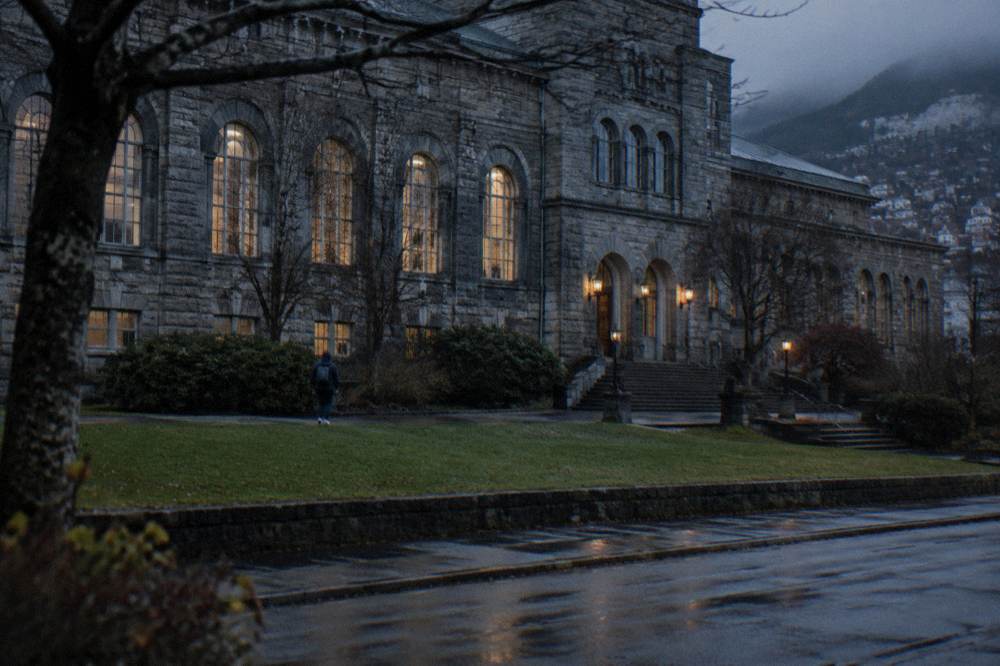
Allow roughly two unhurried hours for the permanent galleries, more if a temporary exhibition catches you. The halls reward slow looking: labels are dense, cases are full, and the building's own architecture does quiet work between rooms. Travellers with children should temper expectations, because this is not a hands-on science center in the style of VilVite Science Center; it is a look-and-read museum, which some children love and some do not.
A reasonable pairing question, since the museum district also holds a couple of the city's other collections, is which ones earn a half day. This site has verified prices for several neighbours from the official 2026 Bergen Card flyer, and those figures are the only ones used in the comparison below.
| Museum | Listed admission price | What it collects |
|---|---|---|
| Hanseatic Museum | 160 NOK with guided visit | The merchant's trading house on the wharf |
| Bryggen's Museum | 170 NOK ordinary, 85 NOK with Bergen Card | Archaeological finds from the medieval wharf |
| Haakon's Hall, at Bergenhus Fortress | 120 NOK | The royal ceremonial hall of medieval Bergen |
| KODE Art Museums | 200 NOK as listed in the Bergen Card flyer | Paintings, design and decorative art |
| The Aquarium | 380 NOK (1 Nov to 28 Feb window), 380/415 NOK seasonal (1 Mar to 31 Oct) | Nordic marine life and a historic aquarium |
For the University Museum's own admission, this guide deliberately prints no number. No opening-hours or admission figure for the University Museum could be confirmed, and the honest instruction is to check the museum's own current pages before you go. Where a price is not verified, this site does not guess it.
If you want a guide's structure around the city before diving into the halls on your own, a walking tour earlier in the day or a longer fjord excursion afterwards turns the museum into one layer of the trip rather than the whole of it:
The food and culture walk is a natural companion because the museum explains the region's raw materials and the walk explains what the city does with them, from the harbourside market to the small kitchens of the old town.
How Much Does A Visit Cost, And Is It Worth Combining With A Bergen Card?
A visit to the University Museum of Bergen should be planned without a confirmed admission figure: no standalone price for the museum could be found, so the practical advice is to budget from the Bergen Card options, which run 400 NOK for 24 hours up to 700 NOK for 96 hours for an adult, and to check the museum's own site for its current ticket. The Bergen Card, priced from the official 2026 flyer, bundles transport across Vestland county and admission or discounts at most of the city's attractions, and for many visitors the mathematics work out once two museums plus a funicular ride are on the plan.
| Bergen Card 2026 | Adult | Child (3-15) |
|---|---|---|
| 24 hours | 400 NOK | 100 NOK |
| 48 hours | 500 NOK | 125 NOK |
| 72 hours | 600 NOK | 150 NOK |
| 96 hours | 700 NOK | 175 NOK |
The card's transport coverage is the underrated half of the deal. Free Skyss buses and the Bybanen light rail across the whole county, including the airport line, means the card pays for itself on movement alone if you are making even a few trips. What the flyer does not include free is the Flybussen airport bus, where a discount may apply instead, and the two mountain rides are discounted rather than free, at their own ticket offices: Fløibanen's return ticket is 200 NOK for an adult from April to September and 145 NOK from October to March, while the Ulriken cable car's return is 435 NOK for an adult.
Whether the museum itself justifies a card purchase depends on the rest of the day. A sensible test: if your plan includes the University Museum plus two of the priced neighbours above plus a ride up Fløyen, the card is almost certainly the right instrument. If the museum is your only paid stop, a single Skyss ticket at 51 NOK plus whatever the museum charges at the door is the cheaper shape.
When Is The Best Time To Visit The Bergen Museum?
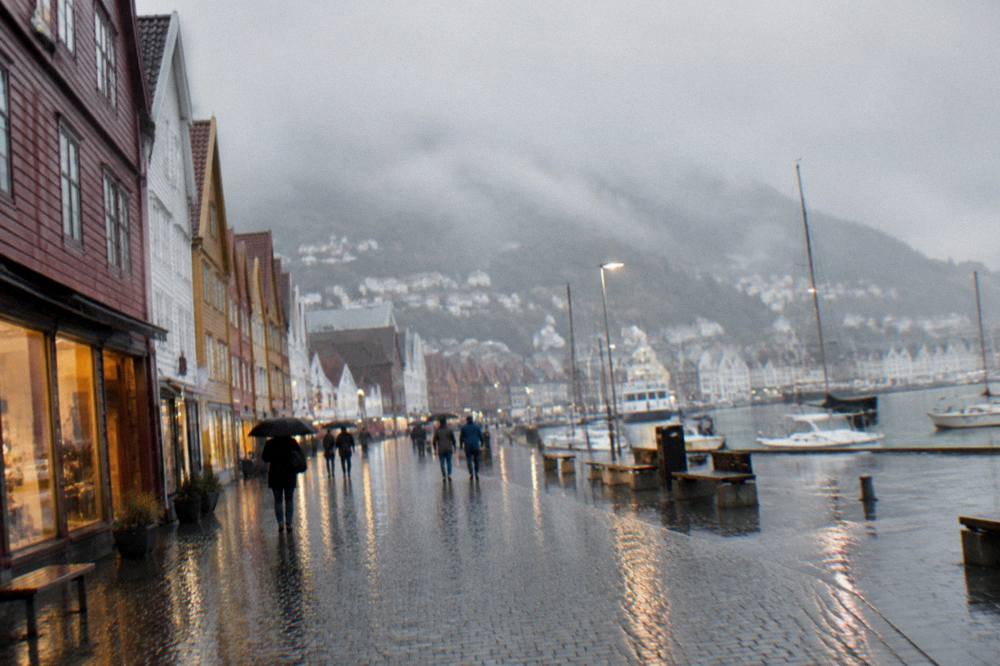
The best time to visit the University Museum of Bergen is a wet weekday morning between May and September, when the city's outdoor draws are hardest to enjoy and yr.no's own station table shows monthly observed precipitation running from 127.4 mm in May to 243.6 mm in August, with summer crowds thickest around the harbourside. A museum built for long halls is exactly what a Bergen rain schedule wants, and the trailing-13-month Met Norway data this site uses shows 217 days with precipitation, so planning an indoor anchor for every day of a Bergen trip is not pessimism, it is arithmetic.
The table below is drawn directly from yr.no's Bergen station statistics, observed data over the trailing thirteen months. Read it as the real shape of a Bergen year, not a summary invented for this page.
| Month | Mean temperature, observed | Precipitation, observed mm |
|---|---|---|
| January | -1.4 C | 82.0 |
| February | 0.8 C | 133.4 |
| March | 5.9 C | 243.9 |
| April | 7.9 C | 65.9 |
| May | 9.9 C | 127.4 |
| June | 14.4 C | 165.7 |
| July | 14.9 C | 184.2 |
| August | 14.3 C | 243.6 |
| September | 13.1 C | 206.6 |
| October | 9.7 C | 231.9 |
| November | 6.0 C | 321.8 |
| December | 5.8 C | 303.5 |
Two seasonal notes matter for planning. First, the dark, wet shoulder months of October through January are when a collections museum earns its place on the itinerary, since the same period includes the Christmas market at Festplassen, which runs 20 November to 22 December 2026 with free entry, and the Pepperkakebyen gingerbread city from 14 November 2026 to 10 January 2027. Second, summer visitors should not assume dry weather: July's observed 184.2 mm is a normal Bergen month, not an anomaly.
How Do You Pair The Museum With A Full Bergen Day?
A strong full day pairs the University Museum of Bergen with a morning or afternoon structured around one guided experience: a food and culture walk in the city centre, a fjord excursion out of the harbour, or a self-guided museum circuit that adds Bryggen's Museum, the Hanseatic Museum and the Maritime Museum, all within central Bergen and close enough to combine on foot or with a single 51 NOK Skyss ticket. The museum works best in the middle of a day, after the city has given you its street-level context and before an evening climb up Fløyen for the view back down.
A concrete example of the shape: a harbourside morning around Bryggen, an early lunch, the climb to the museum district for two gallery hours, then a descent through the old town toward dinner. Days built that way survive the rain without collapsing, because each segment has an indoor fallback. The pattern extends outward, too: the museum's natural history halls make an excellent counterweight to a full-day fjord trip, where the geology you saw in a case in the morning is the landscape you are looking at in the afternoon.
If a fjord day is the anchor of the trip, the two options this site highlights below are verified products with strong review histories, and they fit the pattern of museum-first-day, fjord-second-day that many travellers use to hedge against weather.
The guided Nærøyfjord excursion covers the UNESCO-listed arm of the Sognefjord with a cruise included, a contrast to the museum's contained halls that makes each feel bigger. For a day spent closer to ice than water, the Folgefonna glacier lake tour is the other natural pairing:
For travellers who prefer to stay inside the city, the self-guided museum circuit deserves its own half day, and the city's smaller specialist collections reward the curious: the Leprosy Museum tells one of medicine's most significant Bergen stories, the Old Bergen Museum preserves the town's wooden architecture, and St Mary's Church anchors the medieval layer beside the fortress. Like the University Museum, these smaller institutions publish their own hours and prices, and this site prints no figure for them that it has not verified from a primary source.
Is The Bergen Museum Good With Kids And On A Budget?
The University Museum of Bergen suits curious school-age children better than toddlers, since it is a look-and-read collections museum rather than a hands-on science center, and on a budget the cheapest honest plan is the 51 NOK Skyss zone A ticket, whatever the museum charges at the door, and the free layers of the city, Bryggen's wharf, the harbour, the streets of the old town. Families whose children need buttons to push should route the day toward VilVite Science Center or the Bergen Aquarium, whose adult price this site has verified at 380 NOK in the winter window and 380 to 415 NOK seasonal in the summer window, and save the University Museum for the adults' half day.
Budget travellers should think in layers rather than single tickets. The verified floor of a Bergen day is low: walking the city costs nothing, a Skyss single is 51 NOK, and the biggest decisions are the mountain rides and the fjord excursions. The free-walk format, tip-based and run on the GuruWalk platform, is a genuinely cheap way to add a guide's knowledge without a ticket price, and the city has several of them; the Bergen Card, by contrast, pays off once the day includes paid entries and transport. Both can be true on the same trip: a free morning walk, a museum afternoon, a card only if a second museum and a funicular ride follow.
The budget question also has a weather answer. With 217 days of precipitation in the trailing thirteen months and the wettest observed month at 321.8 mm, the cheap plan that assumes outdoor weather will occasionally fail, and the museum is the insurance policy that keeps a budget day from dissolving. Bergen Travel Guide keeps a running set of these pairings, including rainy-day plans and season-by-season breakdowns, for exactly this reason.
For a full day that keeps the museum at its centre and adds the city's best verified experiences, these are the three tours this site recommends most often alongside it:
A food and culture walk pairs naturally with the museum's cultural history halls, and an inline option to check current availability sits here: Check availability. The fjord and glacier days pair with the natural history side, and both leave from the harbour area within walking distance of the museum district.
Common Questions About The Bergen Museum
Six questions come up most before a visit to the University Museum of Bergen, answered here against its own admission notes and the Bergen Card's published rates.
What Is The Bergen Museum?
The Bergen Museum is the University Museum of Bergen, the public collections museum of the University of Bergen on Muséplass in the city centre, displaying natural history and cultural history under one roof. It holds zoology, geology and botany alongside Norwegian archaeology and cultural history, and it functions as the research museum of the university. For visitors it is a half-day indoor attraction in the city's museum district.
How Much Does It Cost To Visit?
No admission price for the University Museum of Bergen could be confirmed, so the honest answer is to check the museum's own current pages, while budgeting around the Bergen Card options of 400 NOK for 24 hours up to 700 NOK for 96 hours for an adult. The Bergen Card also covers free Skyss and Bybanen transport across Vestland county.
How Do I Get To The Museum From The City Centre?
The University Museum of Bergen sits on Muséplass, a modest uphill walk south-west of the centre, reachable with a 51 NOK single adult zone A Skyss ticket or free with the Bergen Card, which covers Skyss buses and the Bybanen across Vestland county.
How Long Should I Spend There?
Plan around two unhurried hours for the University Museum's permanent galleries, longer if a temporary exhibition catches you, and treat it as the indoor anchor of a half day rather than a full one. The halls are dense and reward slow looking. Many pair it with a sibling museum or a climb to the viewpoints above the city.
Is The Bergen Museum Good For Children?
It suits curious school-age children who enjoy animals, fossils and Viking Age artifacts far better than toddlers who need hands-on exhibits, because it is a collections museum of display cases and labels. Families after interactive exhibits should head to VilVite Science Center, and families after animals should go to the Bergen Aquarium, whose verified adult prices run 380 NOK in the winter window and 380 to 415 NOK seasonally in summer.
Should I Book A Tour Before Visiting The Museum?
Yes, a guided experience around the city or the fjords pairs well with a museum visit, and booking ahead of your travel dates protects the best-seller slots, especially in the May-to-September window when Bergen's festival calendar is fullest. The food and culture walk is the closest thematic match, since the museum explains the region's raw materials and the walk shows what the city does with them. Free cancellation terms vary by product, so check the operator's live listing when you book.
The University Museum of Bergen is the city's memory in building form: the animals, stones and objects of western Norway arranged where a rainy afternoon can do them justice, a short climb from the harbour and a single cheap ticket from anywhere the Bybanen runs.