Bergen Rain: What To Do In Bergen, Norway When It Rains
Bergen, on Norway's southwestern coast, logged 217 days with precipitation in the trailing 13 months of yr.no's station table. Rain is not an interruption to a Bergen itinerary. It is the itinerary, and this page is built around that fact.
Short answer
Bergen is built for rain: walk the covered Hansegan wharf at Bryggen, museum-hop, ride the Fløibanen funicular, eat a long fish-market lunch, and hand the afternoon to a food tour or fjord cruise. Nothing on that list closes for rain.
Bergen, a former Hanseatic League trading post in Vestland county on Norway's southwestern coast, logged 217 days with precipitation across the trailing 13 months of yr.no's official station table, and that single number shapes everything below. Rain here is not an interruption to the itinerary. It is the itinerary. The wharf roofs, the museums, the funicular, the covered market counters and the fjord-bound boats were all built by people who worked through weather far worse than anything a visitor meets in a week, and the city rewards travellers who plan for water instead of resenting it.
What To Do In Bergen When It Rains?
Bergen logged 217 days with precipitation across the trailing 13 months of yr.no's official station table, so the city is built for wet weather: walk the covered Hanseatic rooftops at Bryggen, work through its museums, ride the Fløibanen funicular toward the cloud line, eat a long lunch at the fish market, and hand the afternoon to a food tour or a fjord cruise, because none of it stops for rain.
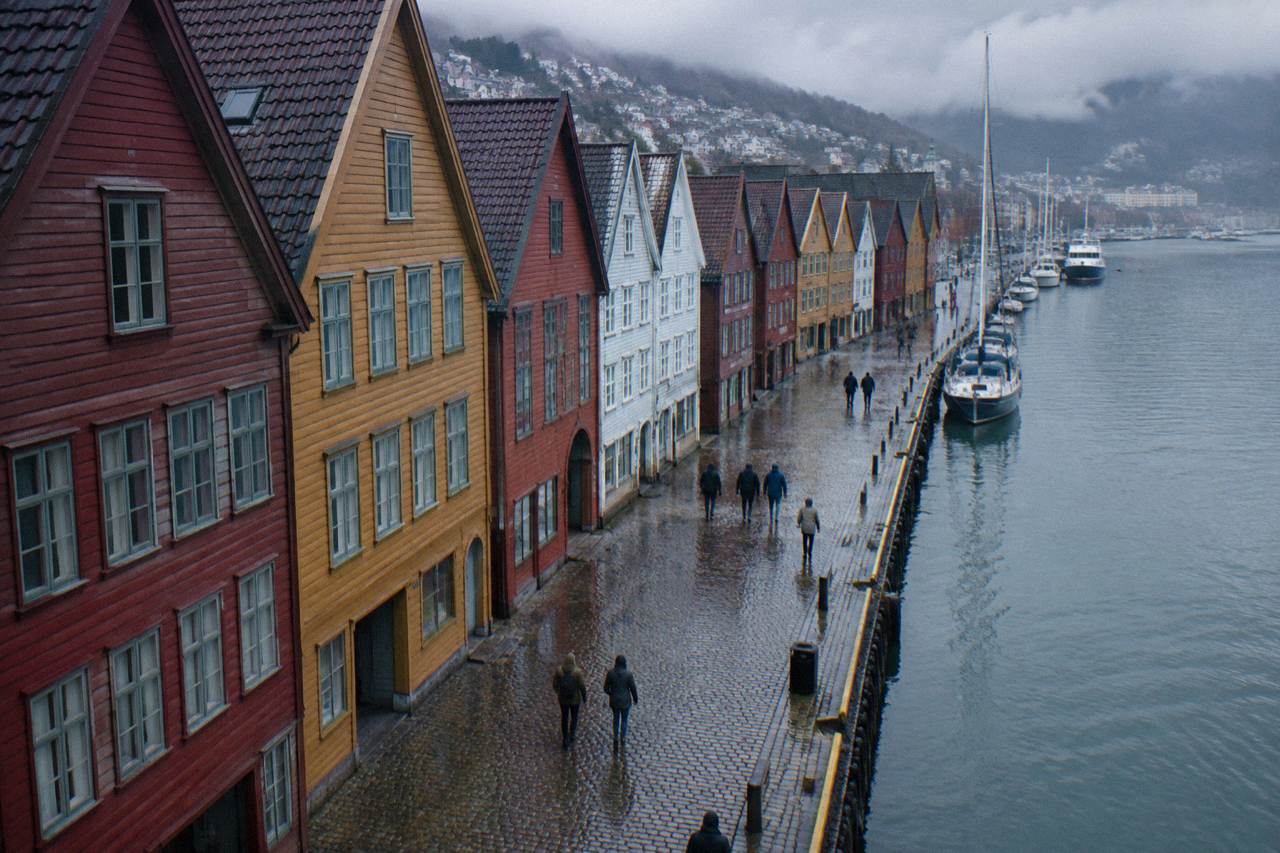
The wharf at Bryggen, Bergen's UNESCO-listed Hanseatic quarter, is the natural first stop, and not only because UNESCO's own listing text dates the inscription to 1979. The wooden buildings stand shoulder to shoulder with deep overhanging roofs, and walking the narrow lane between them in rain is closer to the historic experience than any dry-day visit: the timber was soaked more often than not for four centuries of Hanseatic trade. The galleries and workshops along the row open onto sheltered doorways, and the whole stretch funnels you toward the museum cluster at its northern end.
From there the wet-day logic runs downhill, literally. The museums sit in the flat ground between the wharf and the lake, the fish market is beside the harbour, and every major indoor cluster is stitched together by the same compact city centre described in the one day in Bergen itinerary. A guide changes the equation in rain, because commentary fills the gaps between shelters.
The Discover Bergen on Foot and Boat tour earns its place on a rainy-day list for a simple structural reason: half of it happens on the water, under a roof. The rest of this Bergen Travel Guide page works through the same logic, sight by sight, price by price, with the figures the primary sources actually publish.
Is The Bergen Card Worth It On A Wet Day In Bergen?
A 24-hour Bergen Card costs 400 NOK for an adult and 100 NOK for a child aged 3 to 15, with 48-hour, 72-hour and 96-hour versions priced up to 700 NOK, and the official 2026 flyer lists free Skyss buses and Bybanen light rail across Vestland county, including the airport line, plus discounted entry to Fløibanen, Ulriken643 and most museums, which is precisely the bundle a rainy day uses hardest.
The flyer, published by visitbergen.com in May 2026, is the source for every card price on this page, and the table below reproduces its structure exactly.
| Card | Adult | Child (3-15) |
|---|---|---|
| 24 hours | 400 NOK | 100 NOK |
| 48 hours | 500 NOK | 125 NOK |
| 72 hours | 600 NOK | 150 NOK |
| 96 hours | 700 NOK | 175 NOK |
A wet day is the card's best case, and the reasons are structural. Rain pushes you indoors, indoors means museums, and the museums are where the card's discounts cluster. Rain also pushes you onto transport between shelters, and the card covers the Skyss buses and the Bybanen light rail, including the airport line, at no extra charge. A single adult Skyss ticket in zone A costs 51 NOK at the ordinary rate, so the transport component alone starts repaying the card the moment the weather sends you across town twice.
| Item | With Bergen Card | Ordinary Adult Price |
|---|---|---|
| Skyss single ticket, zone A | Free with card | 51 NOK |
| Fløibanen return | Discounted, one ticket per card, at the ticket office | 200 NOK (1 Apr-30 Sep) / 145 NOK (1 Oct-31 Mar) |
| Ulriken643 return | Discounted entry, per the flyer | 435 NOK |
| Bryggen Museum | 85 NOK | 170 NOK |
| Flybussen airport bus | Not included free | See the operator's live listing |
Two cautions from the same flyer. The Fløibanen discount applies to one ticket per card and is bought at the ticket office rather than through the card alone. And Flybussen, the airport coach, is not included free with the card, whatever a well-meaning blog may claim; the flyer confirms the exclusion.
Which Bergen Museums And Indoor Sights Save A Rainy Day?
The strongest wet-day set sits at Bryggen and the blocks behind it: the Hanseatic Museum at 160 NOK including a guided visit, Bryggen Museum at 170 NOK ordinary or 85 NOK with the card, Haakon's Hall at 120 NOK, and the Aquarium at 380 to 415 NOK depending on season. KODE's art museums appear on the Bergen Card flyer at 200 NOK, though the museums' own standalone ticket price is not published on their site.
Every figure in that answer comes from the 2026 Bergen Card flyer or the attraction's own pricing page, and none of it is a guess. The table gathers the set.
| Indoor sight | Adult price | Notes |
|---|---|---|
| Hanseatic Museum | 160 NOK | Includes a guided visit, per the flyer |
| Bryggen Museum | 170 NOK | 85 NOK with the Bergen Card |
| Haakon's Hall, Bergenhus Fortress | 120 NOK | Per the flyer |
| The Aquarium (Akvariet) | 380-415 NOK | Seasonal windows: 380 NOK in the 1 Nov-28 Feb period |
| KODE Art Museums | 200 NOK | Bergen Card flyer line item; the museum's own standalone price is not published |
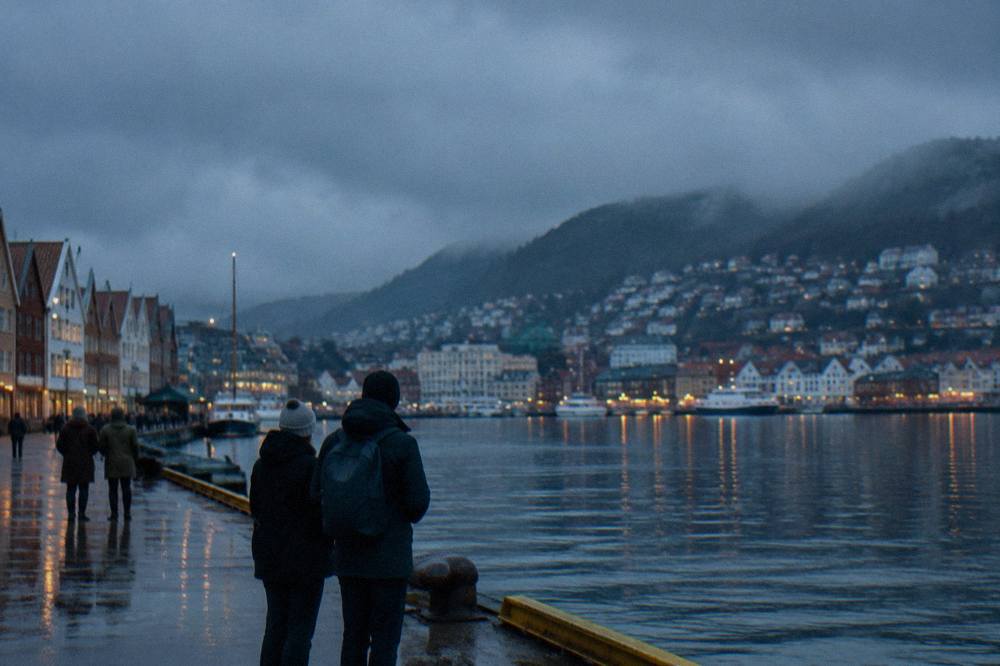
Bryggen Museum sits where the wharf meets the modern city, built over the excavation of the medieval Hanseatic settlement, so its artefacts and its address tell the same story. The Hanseatic Museum, inside one of the surviving wharf buildings, trades on the same history from the inside. Haakon's Hall, the stone ceremonial hall inside Bergenhus Fortress, adds the royal-medieval layer, and the fortress walls themselves give a wet walk a purpose and an endpoint.
The Aquarium is the classic family answer, and its price structure rewards checking the calendar before you pay: the flyer splits the year into seasonal windows with different ordinary adult prices. KODE is the art-lover's answer, a cluster of museum buildings across the city centre, with the caveat carried in the table: the 200 NOK figure is the card-flyer line item, not a confirmed standalone box-office price, as the museum's own ticket page does not list a figure.
For travellers with children, the wet-day rotation is covered in the Bergen with kids itinerary, which pairs the Aquarium with the science centre and other roofed stops.
Can You Still Ride Fløyen And Ulriken643 In The Rain?
Yes, both run in rain, and the weather often makes them better: a Fløibanen return ticket costs 200 NOK for an adult from 1 April to 30 September and 145 NOK from 1 October to 31 March, while a round trip on the Ulriken643 cable car is 435 NOK, and the Bergen Card flyer lists discounted entry to both, with the Fløibanen discount limited to one ticket per card at the ticket office.
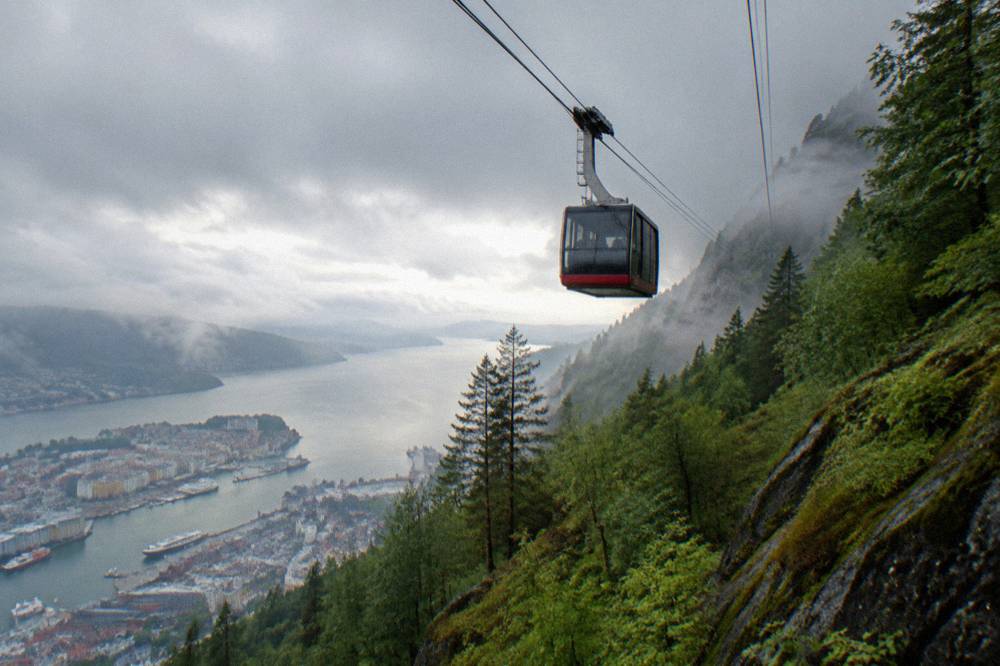
The counter-intuitive part is the cloud, not the ride. Bergen's two city mountains, Mount Fløyen and Mount Ulriken, sit inside the very weather system producing the rain, which means a funicular or cable car in unsettled conditions frequently climbs through the cloud into clear air above it. The classic wet-day result is a grey city below and bright, drifting cloud around the summit plateau. There are no promises here, only the observation that this is a mountain city and the mountains go exactly where the rain comes from.
| Mountain transport | Adult return price | Source window |
|---|---|---|
| Fløibanen funicular | 200 NOK | 1 Apr-30 Sep |
| Fløibanen funicular | 145 NOK | 1 Oct-31 Mar |
| Ulriken643 cable car | 435 NOK | Confirmed on ulriken643.no's prices page |
| Skyss single ticket, zone A | 51 NOK | Ordinary rate, useful for reaching the Fløibanen station |
One planning note that most guides miss: Ulriken643's own site carries a scheduled maintenance closure for the first two weeks of 2026, with a reopening around 13 January, plus standard Christmas closures. Fløibanen's pricing, by contrast, changes with the calendar rather than the weather, which is why the winter ticket is the cheaper one to buy on a wet February afternoon.
The wet-day pairing that solves two problems at once is a food tour that ends on the funicular, because it moves the mountain ride into the plan without needing a separate decision in the rain.
Where To Eat In Bergen When It Pours?
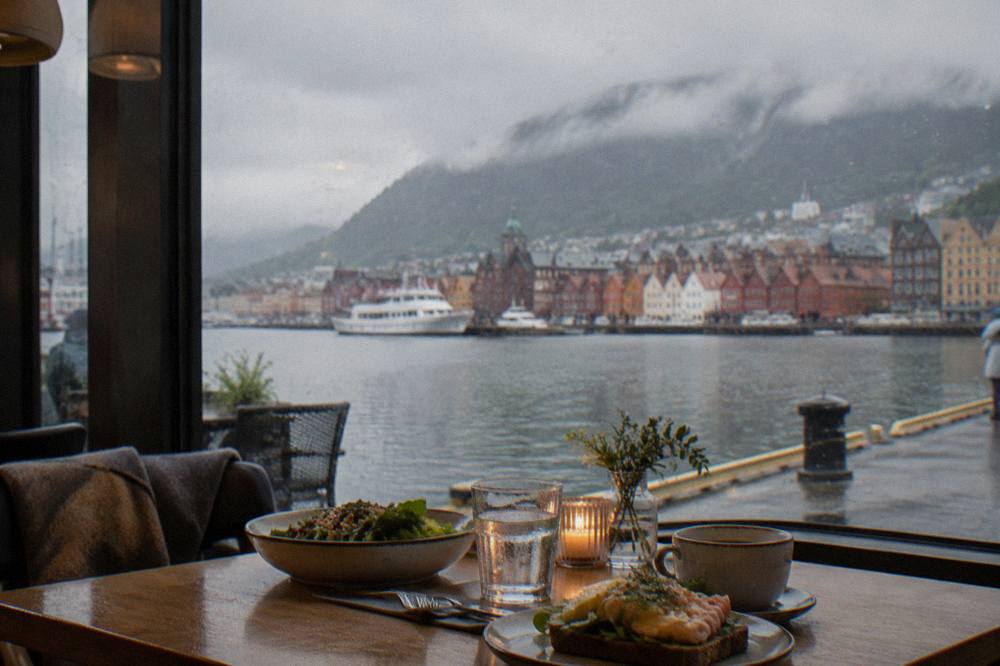
Eat where the roof already is: the fish market's covered counters, the cafes along the Hanseatic wharf, and the long indoor lunches that Bergen does better than almost any city of its size, with a guided food tour as the most rain-proof sightseeing on offer because it moves between sheltered stops and pairs its tastings with a Fløibanen ride.
The fish market by the harbour is the obvious anchor, and its counters sit under cover, which turns a meal into weather-independent sightseeing. The local-eats question has its own answer on the blog sibling about where locals eat in Bergen, but the wet-day shortlist is simpler: shellfish at the market, a hot lunch in the city centre, and whatever the cafes along the wharf are baking.
A guided food tour converts a rainy afternoon from dead time into the best hours of the trip. The stops are indoors by design, the guide handles the route between them, and the funicular component in the card below means even the mountain gets folded into the meal.
The A Taste of Bergen Food Tour with Fløibanen Funicular is this site's featured pick for wet weather, and the reasons are all structural: indoor stops, a covered ride uphill, and a guide handling the route between them. Check availability for your dates, since food tours sell out in festival weeks.

For a cheaper wet-day structure, GuruWalk's free, tip-based walking tours in Bergen cover the central sights with a local guide, and the tip model means the only fixed cost is what you choose to give. The trade is exposure: a free walk keeps you outdoors between stops, so save it for drizzle rather than a proper delivery of Vestland rain.
Do Fjord Cruises From Bergen Run In The Rain?
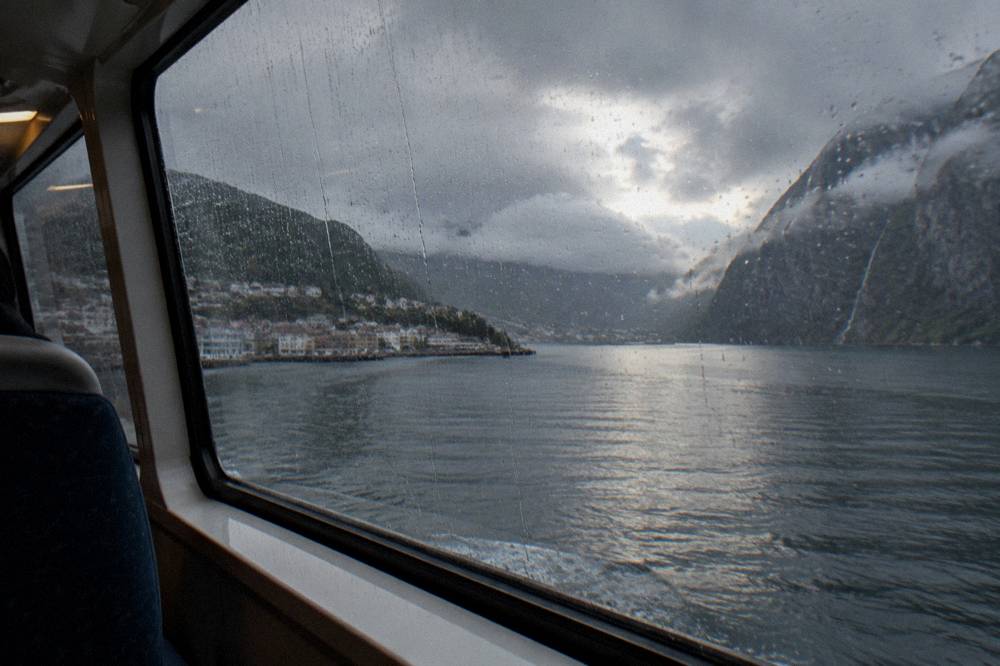
Yes, fjord cruises run in rain, and the fjords lose nothing for it: waterfalls run harder, the rock walls darken, and the boats serving Bergen's fjord routes carry covered salons and cabin seating, so the Mostraumen trip into the Osterfjord and the longer Sognefjord and Hardangerfjord day trips work in exactly the weather that keeps the viewpoints above the city stuck inside cloud.
The logic is the same one that makes the fish market a rain-proof stop, applied at fjord scale. The sights on a fjord cruise are vertical rock, moving water and waterfalls, and none of them is diminished by precipitation; the boat provides the roof. On a day when Mount Fløyen's summit is inside cloud, the Mostraumen route's narrow channel and its waterside scenery are the more reliable spectacle, and the Mostraumen fjord cruise guide covers the route in detail.
The longer day trips behave the same way. The Sognefjord and Hardangerfjord routes spend most of the day on water or in a coach, both of them sheltered, and the classic rail-and-fjord combinations described in the Norway in a Nutshell and Bergen to Flåm guides are, in practice, a sequence of roofs: train carriage, ferry salon, train carriage again.
Two honest caveats. Rough weather at sea can change a routing, and any specific sailing's status lives on the operator's live listing, which is where to check the morning of. And if the forecast is for wind rather than rain, note that a small-boat fjord trip is a different proposition from a large cruise vessel; check the vessel type on the listing before booking.
How Wet Is Bergen, Month By Month?
yr.no's Bergen station table shows observed precipitation over the trailing 13 months running from 65.9mm in April 2026 to 321.8mm in November 2025, against monthly normals of roughly 109mm in May to 290mm in December, with mean temperatures spanning -1.4C in January 2026 to 14.9C in July 2026 and 217 days with precipitation across the whole period; there is no dry season to aim for.
The table below is the Met Norway data from yr.no's Bergen station, trailing 13 observed months, reproduced month by month. It is the source behind every weather figure on this page, and it rewards a slow read: the driest recent month, April 2026 at 65.9mm, would count as a wet month in much of Europe.
| Month | Mean temp (observed) | Precipitation (observed) | Precip normal |
|---|---|---|---|
| Aug 2025 | 15.1C | 165.1mm | 208.0mm |
| Sep 2025 | 13.1C | 206.6mm | 248.0mm |
| Oct 2025 | 9.7C | 231.9mm | 268.0mm |
| Nov 2025 | 6.0C | 321.8mm | 275.0mm |
| Dec 2025 | 5.8C | 303.5mm | 290.0mm |
| Jan 2026 | -1.4C | 82.0mm | 256.0mm |
| Feb 2026 | 0.8C | 133.4mm | 209.0mm |
| Mar 2026 | 5.9C | 243.9mm | 202.0mm |
| Apr 2026 | 7.9C | 65.9mm | 141.0mm |
| May 2026 | 9.9C | 127.4mm | 109.0mm |
| Jun 2026 | 14.4C | 165.7mm | 132.0mm |
| Jul 2026 | 14.9C | 184.2mm | 158.0mm |
| Aug 2026 | 14.3C | 243.6mm | 208.0mm |
Ranked by observed precipitation, the five wettest of those thirteen months make the point sharper than any average could, and no figure here has been averaged or blended with older references.
| Rank | Month | Observed precipitation | Normal |
|---|---|---|---|
| 1 | Nov 2025 | 321.8mm | 275.0mm |
| 2 | Dec 2025 | 303.5mm | 290.0mm |
| 3 | Mar 2026 | 243.9mm | 202.0mm |
| 4 | Aug 2026 | 243.6mm | 208.0mm |
| 5 | Oct 2025 | 231.9mm | 268.0mm |
What the table does not contain matters too. The yr.no page gives monthly totals and normals, not a rain-day count per calendar month, and no daylight-hours or sunshine figure for the city was sourced, so none appears here. Where a competing guide prints those numbers, ask which primary source it is quoting.
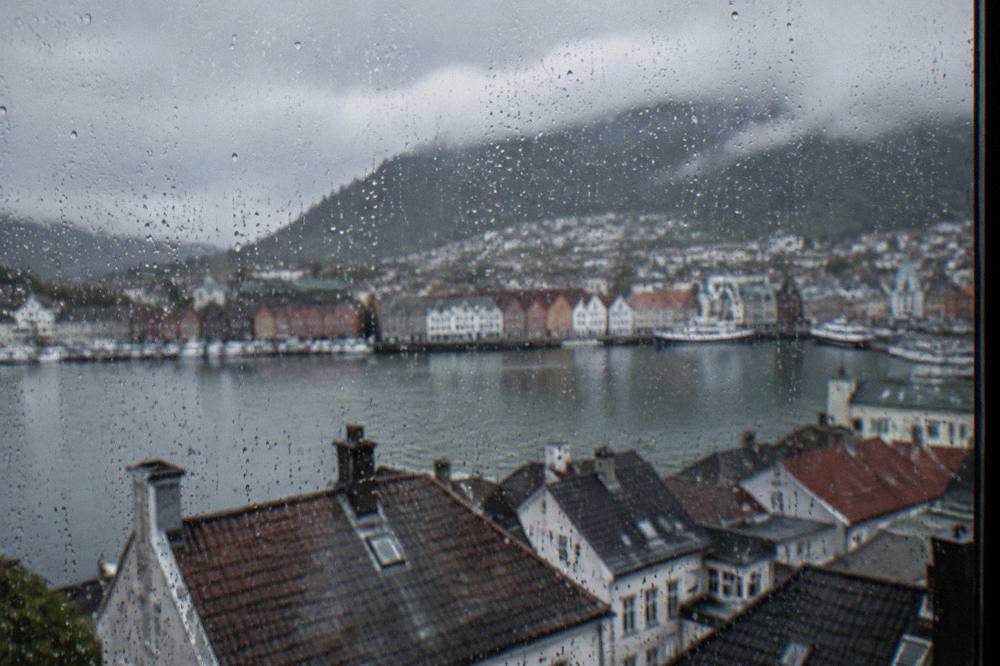
What To Pack For Rain In Bergen, Norway?
Pack for the range the station table actually records: a proper shell jacket over layers, waterproof shoes with grip for Bryggen's cobbles and the Mount Fløyen paths, a compact umbrella that tolerates wind, and a dry bag for electronics, because the trailing 13 months include temperature extremes of -11.3C and 28.0C and no month in the table below 82mm of precipitation.
The shoes deserve their own sentence. Bryggen's lane is cobblestone worn smooth by centuries of rain, and the funicular paths are soft ground. Grip matters more than insulation, and a shoe that holds wet stone is the difference between a mountain walk and a cautious shuffle.
Layers beat any single warm item, because the table's mean temperatures swing from -1.4C in January to 14.9C in July while the rain stays constant across the year. The shell jacket is the piece that never leaves the daypack. An umbrella is a fair-weather accessory in this city, useful in drizzle and decorative in anything stronger, so treat it as a supplement to the shell rather than a substitute. The full packing logic, including what to bring for fjord day trips, is laid out in the guide to planning a trip to Bergen, and winter-specific packing sits in the Bergen winter weekend itinerary.
How To Turn A Wet Day Into The Best Day Of Your Bergen Trip?
Build the day around the rain instead of against it: open under the Hanseatic roofs at Bryggen, activate a 24-hour Bergen Card at 400 NOK, museum-hop through the middle hours, take the funicular the moment a gap shows in the cloud, and close with a food tour or a fjord cruise, a sequence that wastes none of the weather and turns every shower into a routing decision you were going to make anyway.
The morning belongs to Bryggen, before the tour groups arrive and while the wharf lane is at its most atmospheric in drizzle. The Hanseatic Museum and Bryggen Museum carry the history, and the card's 85 NOK Bryggen Museum rate makes the pairing cheap. The middle of the day belongs to the museum cluster behind the wharf, KODE for art, the Aquarium for families, Haakon's Hall for the medieval layer, all of them roofed and all of them inside the card's discount list.
The late afternoon is the timing decision. Watch the cloud base, not the forecast icon: when it lifts, take the funicular and walk the plateau; when it does not, stay low and let the food tour or the fjord cruise carry the evening. Both branches of that decision are already on this page, with prices, and the two days in Bergen itinerary shows how the same structure stretches across a longer stay.
A Food and Culture Walk is the alternative closer for travellers who would rather eat their way through the last of the afternoon, again with indoor stops doing the weather management.
Common Questions About Rainy Days In Bergen
What to do in Bergen when it rains?
Work the covered spine of the city: the Hanseatic wharf at Bryggen, the museum cluster behind it, a long fish-market lunch, the Fløibanen funicular if the cloud lifts, and a guided food tour or a fjord cruise for the afternoon. None of these stops depends on dry weather, and the Bergen Card at 400 NOK for 24 hours discounts most of them.
Is Bergen worth visiting in the rain?
Yes, and the numbers say so plainly: 217 days with precipitation in the trailing 13 months means the city's visitor economy is built around wet weather rather than despite it. The wharf, the museums, the funicular and the fjord boats all operate in rain, and the atmosphere of Bryggen in drizzle is closer to its historic working condition than any postcard blue sky.
What is the rainiest month in Bergen?
In the trailing 13 months of yr.no's Bergen station table, November 2025 was the wettest observed month at 321.8mm against a 275.0mm normal. On the normals, December is the wettest at 290.0mm. There is no per-calendar-month rain-day count in the official table, so any guide printing one is estimating.
Does the Fløibanen funicular close in bad weather?
No weather-closure policy for Fløibanen has been announced, and its pricing changes by calendar season rather than conditions: 200 NOK adult return from 1 April to 30 September, 145 NOK from 1 October to 31 March. Ulriken643, by contrast, publishes a scheduled maintenance closure for weeks 1-2 of 2026 with a reopening around 13 January, which is worth checking on the operator's own pages before a winter visit.
Are Bergen museums included with the Bergen Card?
Most museums get discounted or free entry, and the 2026 flyer prints the specifics: Bryggen Museum at 85 NOK with the card against 170 NOK ordinary, KODE listed at 200 NOK, and around fifteen further attractions with their own card rates. The Hanseatic Museum at 160 NOK and Haakon's Hall at 120 NOK carry their own pricing in the same flyer.
Can you see the fjords from Bergen in the rain?
You can see the fjords themselves, which is the point. The Mostraumen cruise into the Osterfjord and the longer Sognefjord and Hardangerfjord day trips run in rain, with covered salons doing the sheltering, and vertical rock and waterfalls are not diminished by precipitation. What rain does hide is the view from the city mountains on a day the summits sit inside cloud.
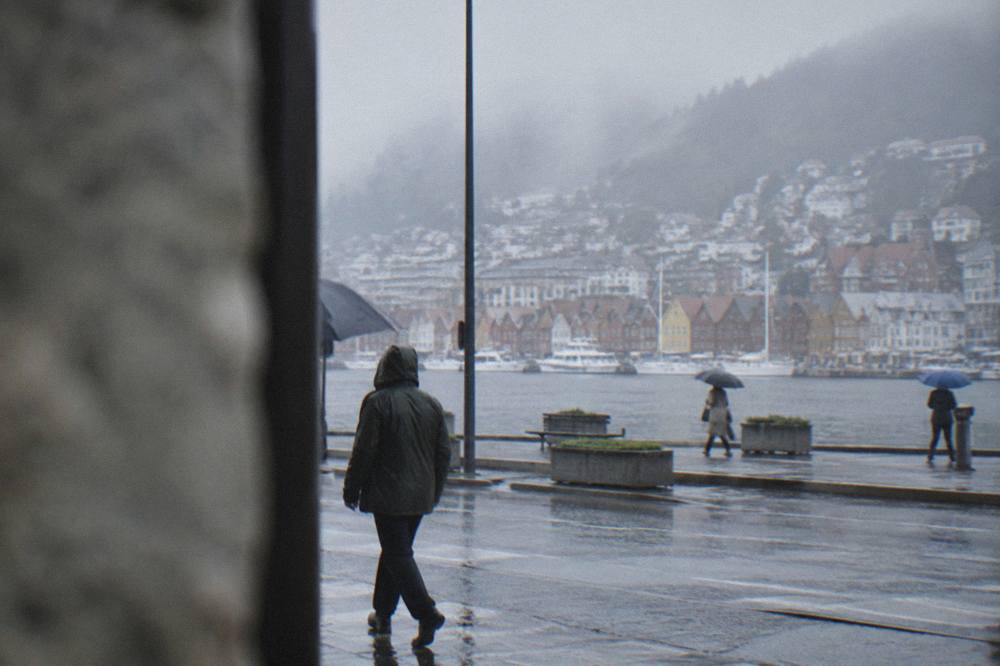
The last word is the first fact of the page, restated as permission: 217 days with precipitation in thirteen months means the odds of meeting rain in Bergen are close to even on any given day, and the city's best experiences are the ones that never needed the sun. Pack the shell jacket, buy the card, keep the funicular in your back pocket for the moment the cloud lifts, and let the rain do what it has always done here: make the timber wharf gleam and send everyone indoors to eat well.