Flam
Flåm sits at the inner end of a fjord arm reached from Bergen by rail, road and water, and it is the single most popular day trip out of the city. This guide covers whether the day is realistic, which version of the route to book, what it costs, and how to plan around the schedules.
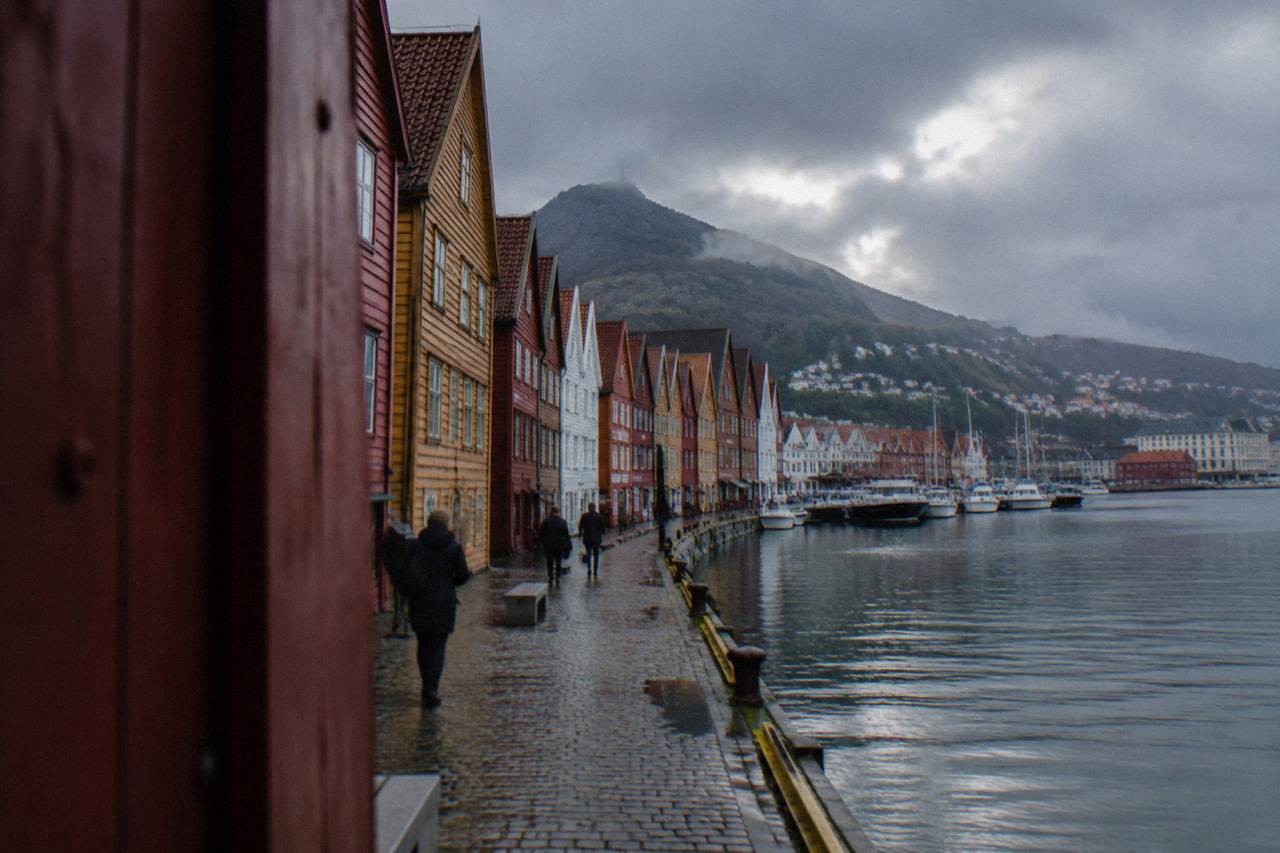
Short answer
Yes, Flåm works as a day trip from Bergen, though it is a long day built from several legs rather than a single direct service. The classic route combines the mountain railway between Bergen and the high plateau with a fjord cruise leg through the Aurlandsfjord and Nærøyfjord, and it is sold both as a self-guided round trip and as guided combos. Start early, book ahead in summer, and treat the day as the centrepiece of your stay rather than a side outing.
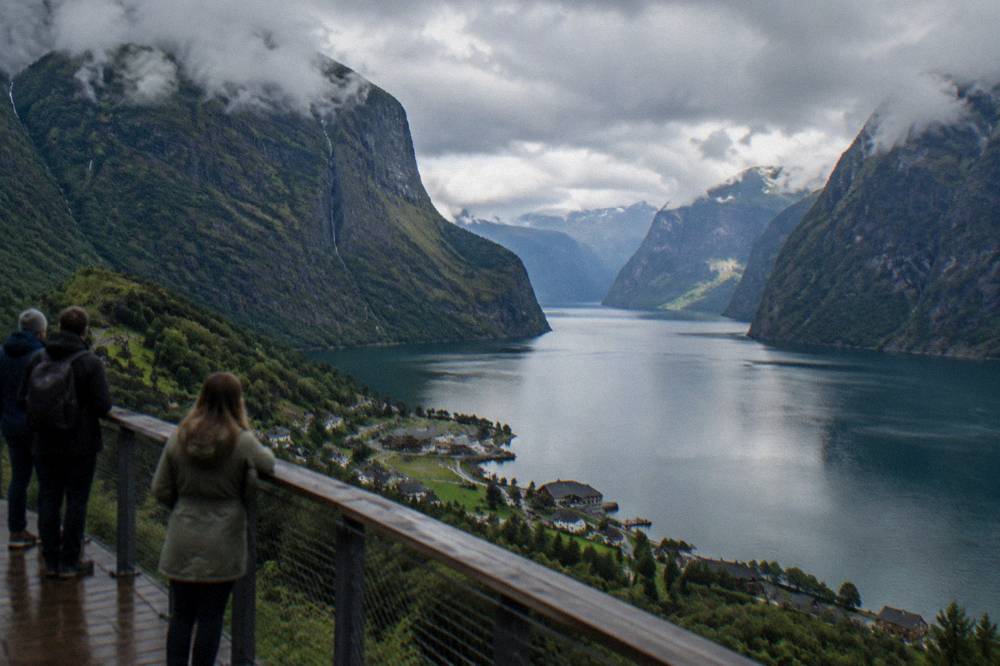
Flåm is a small village at the end of the Aurlandsfjord, an arm of the Sognefjord, reached from Bergen in Vestland county on Norway's southwestern coast by one of the most photographed transport chains in Scandinavia. The question every visitor to Bergen eventually asks is whether the village can be done comfortably as a single day out of the city, or whether it deserves an overnight. The honest answer is that it can be done in a day, that the day is long, and that the planning is easier than most people expect because the whole route is sold as ticketed legs that connect on purpose.
Is Flåm A Day Trip From Bergen?
Yes, Flåm is a genuine day trip from Bergen, and thousands run it that way every summer, but it is a full, structured day rather than a casual outing. The route is a chain of train, boat and bus legs between Bergen and the Aurlandsfjord, mostly following the classic Norway in a Nutshell corridor. You leave in the morning, you are back in the evening, and you should book in advance in high season because the boats and the mountain railway both sell out.
The reason it works at all is geography. Flåm sits at sea level at the head of the Aurlandsfjord, while the railway that serves it climbs from the village to Myrdal on the mountain plateau, where it meets the main Bergen to Oslo line. That junction is what turns a remote fjord village into a loop you can run out of Bergen in daylight: one set of trains takes you over the mountains, the Flåm Railway drops you down to the water, and a boat brings you back along the fjord to a bus or a rail connection home.
What the day is not is relaxing. This is a day built around departures, and the visitors who enjoy it most are the ones who accept that rhythm rather than fighting it. If your idea of a day trip is a slow ferry and a long lunch, the Mostraumen fjord cruise out of Bergen harbour is the better fit. If you want the postcard scenery of mountain railway, waterfall and fjord cliff in one loop, Flåm is the trip.
There is also a fair argument for splitting the trip across two days, especially in the shoulder season when the light is short and the weather turns fast. The five day Bergen and fjords itinerary exists precisely because a lot of travellers find that one night somewhere along the Sognefjord, in Flåm itself or in Balestrand, turns the whole experience from a sprint into a journey.
What Does The Bergen To Flåm Route Actually Involve?
The route is a four leg loop: a mountain railway from Bergen over the plateau to Myrdal, the steep Flåm Railway down to the village, time in Flåm itself, then a fjord cruise back along the Aurlandsfjord and Nærøyfjord to a road or rail connection home. Operators sell it under the Norway in a Nutshell name as a self-guided ticket chain, or as guided day tours bundling the same legs with commentary and, in some versions, lunch. No leg requires you to drive.
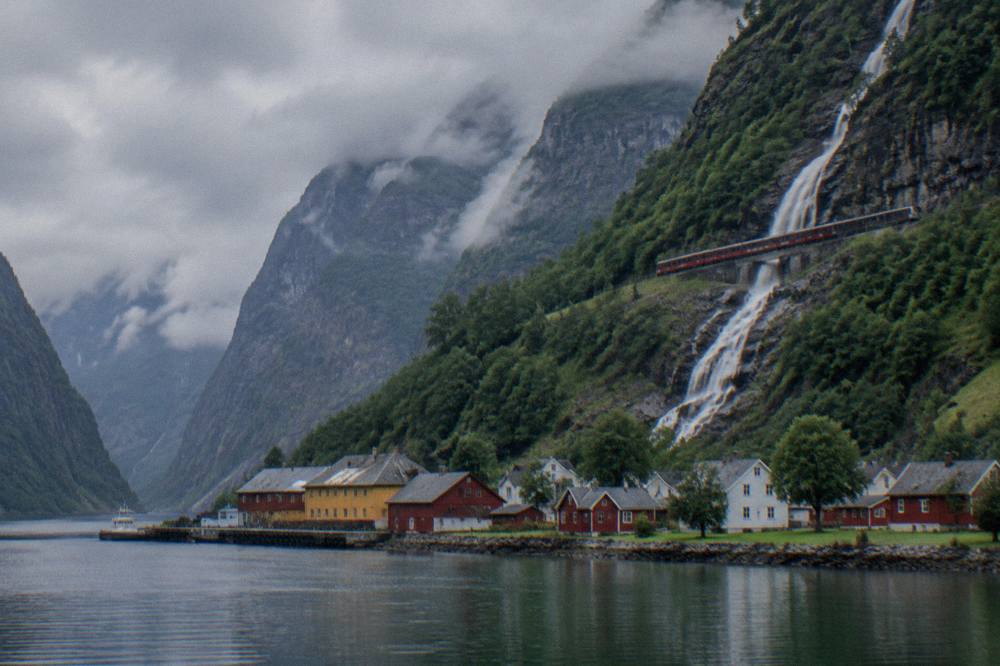
The train from Bergen is the opening act, and it is a serious railway rather than a tourist novelty. It climbs out of the city through tunnels and snow sheds to Finse, the highest station on the line, before dropping to Myrdal. At Myrdal you change to the Flåm Railway, one of the steepest standard gauge adhesion railways in the world, which descends in tight curves past the Kjosfossen waterfall to the village. That change at Myrdal is the hinge of the day, and the timetable is built around it, which is why the self-guided product works: the connections are engineered, not guessed.
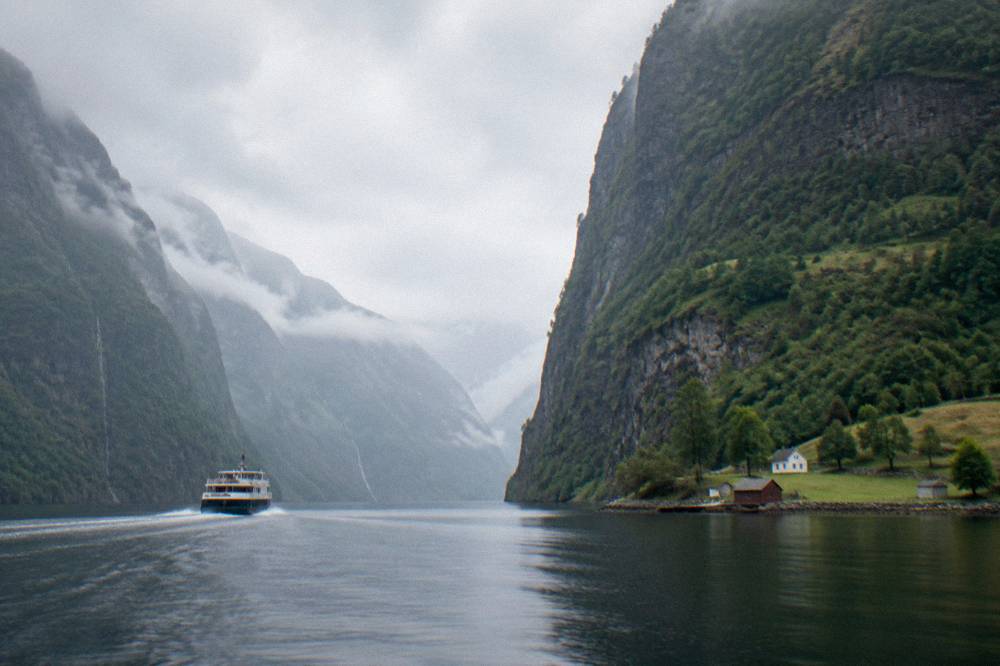
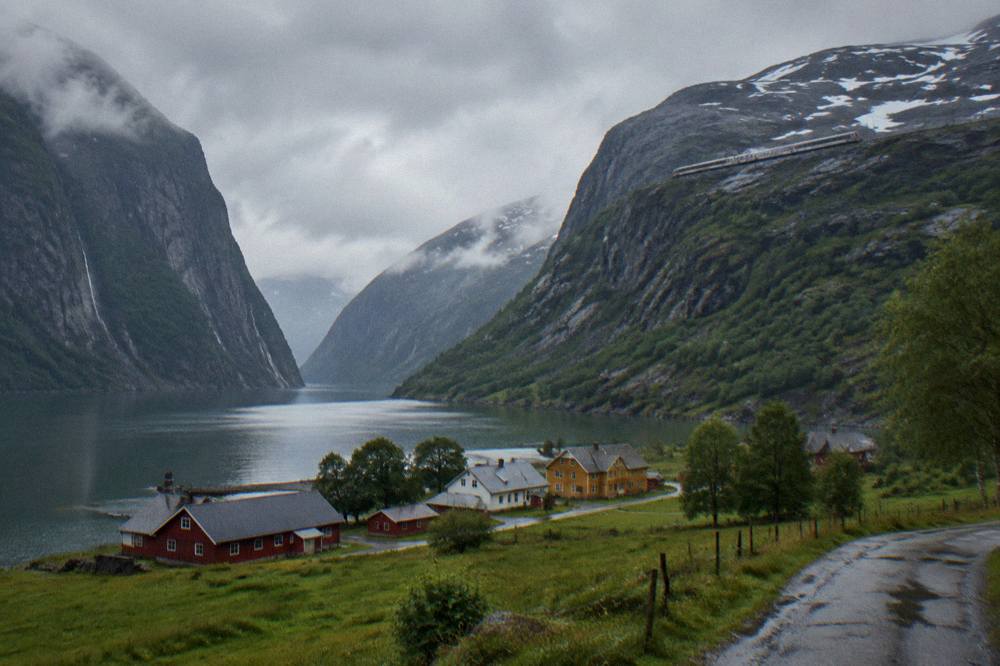
Once you are down in Flåm, the village is walkable and compact, with the harbour, the railway station and the small museum all within a few minutes on foot. The boat leg out of Flåm is the part most people remember. The cruise runs down the Aurlandsfjord and into the Nærøyfjord, the narrow UNESCO inscribed arm of the Sognefjord, to Gudvangen, where a bus climbs the hairpins of Stalheimskleiva territory back toward the coast road and Bergen. Travellers who want to understand the shape of that water leg first should read how long the ferry ride from Bergen to Flåm actually is, because there is also a direct long-distance cruise option on the same fjord system.
The whole loop is what the travel trade calls Norway in a Nutshell, a named multi leg route sold by several operators rather than a single company's branded tour, and our Norway in a Nutshell guide breaks down every leg in order. For a shorter introduction to the corridor, the essentials fit in one table:
| Leg | Mode | What you see |
|---|---|---|
| Bergen to Myrdal | Mountain railway | Hardangervidda plateau, Finse, snow sheds, tunnels |
| Myrdal to Flåm | Flåm Railway | Steep descent, Kjosfossen waterfall stop, valley floor |
| Flåm village | On foot | Harbour, fjord arm, railway museum, shops |
| Flåm to Gudvangen | Fjord cruise | Aurlandsfjord and Nærøyfjord cliffs, farm hamlets |
| Gudvangen to Bergen | Bus and road | Stalheim valley descent, coastal Vestland road |
The three options above cover the three ways people actually buy this day: the self-guided round trip ticket, which is the version this site features for first time visitors, a private waterfall tour for travellers who want a guide and a vehicle to themselves, and a city walking tour for the morning before or the day after. The self-guided ticket is the one to understand first, because every guided version is a variation on it.
Which Flåm Day-Trip Option Suits You Best?
Choose the self-guided round trip for the classic loop at the lowest complexity and a visible price. Choose a guided combo for commentary, a fixed group and, in some versions, lunch and viewpoint stops like Stegastein folded in. Choose the one way or round trip fjord cruise ticket if you would rather spend the day mostly on the water, and a private tour only if your dates and budget make a guide worthwhile. All four are sold as live listings with free cancellation.
The self-guided product suits confident travellers. You get the legs, you follow the timetable, and the route itself does the guiding. The trade off is that at Myrdal, Flåm and Gudvangen you are on your own, which is either freedom or anxiety depending on the traveller. For a sense of what that day holds, Bergen Travel Guide's own breakdown of the Nutshell route is the reference this article builds on.
The guided combos are where the differences start to matter. The Viking Village, Nærøyfjord and Flåm Railway combo tour adds a reconstructed Viking village at Gudvangen to the standard loop, which works well for families. The guided Nærøyfjord, Flåm and Stegastein tour includes a two hour fjord cruise and the Stegastein viewpoint above the Aurlandsfjord, a platform that the self-guided loop skips. The UNESCO fjord cruise with lunch builds a meal into the day, which matters on a schedule this tight.
The Viking village combo is the one to pick when the travellers in your group need a story, not just scenery: the reconstructed settlement at Gudvangen breaks up the transport legs with something you can walk around and touch, and the fixed group means the guide keeps the whole day moving on time.
For travellers who would rather simply ride the water, the King of Fjords cruise ticket runs the long fjord leg between Bergen and Flåm directly, turning the day into a mostly maritime experience, though it is a long day on the water and reviews suggest it suits patient travellers more than restless ones. The is Flåm or Bergen better question is worth settling before you commit, because some visitors end up wishing they had slept in the village and shortened the Bergen half instead.
Booking behaviour matters more here than on most day trips. The summer boats and the Flåm Railway both run at high load, and the mistake people make is booking flights and hotels first and the fjord day last, when the good departures are gone. Book the day trip as early as you book the hotel, and keep the cancellation terms in mind, since most listings on this site allow you to back out before travel.
Does The Bergen Card Help On A Flåm Day Trip?
The Bergen Card does not cover the Flåm legs, but it still earns its price on a day-trip-heavy stay because it includes free Skyss buses and the Bybanen light rail across Vestland county, including the airport line, plus free or discounted entry to most Bergen museums and attractions. The 2026 flyer lists a 24 hour card at 400 NOK for an adult and 100 NOK for a child aged 3 to 15, with 48, 72 and 96 hour options up to 700 and 175 NOK.
The useful part for this itinerary is transport on the Bergen end. Whatever you do about Flåm, you will move around the city: from hotel to station, from station to harbour, from harbour to dinner. The card's county wide Skyss and Bybanen coverage handles all of that, and the airport line is included, which matters on arrival and departure days. Fløibanen and Ulriken643 are discounted rather than free, and the card's own flyer is explicit about which window applies.
| Card | Adult | Child 3-15 |
|---|---|---|
| 24 hours | 400 NOK | 100 NOK |
| 48 hours | 500 NOK | 125 NOK |
| 72 hours | 600 NOK | 150 NOK |
| 96 hours | 700 NOK | 175 NOK |
The honest maths depends on how much city you pack around the fjord day. A visitor who runs Flåm one day, then the museums, funicular and aquarium the next, will clear the card's price comfortably. A visitor who lands, does the fjord day, and flies out again may be better off with single tickets. The Bergen Card guide does that arithmetic in full, but the short version is: more than two attraction days in the city and the card wins.
When Is The Best Time Of Year For The Bergen To Flåm Trip?
Summer, from late June through August, is the peak season for the route, with the fullest timetables, the longest daylight and the biggest crowds, while late May and September offer a quieter ride with a real risk of rain and cooler fjord water. Winter versions of the trip exist but the boat legs thin out and the high plateau is a snowfield, so the route is best treated as a May to September one. Bergen's climate is temperate oceanic and wet year round, so pack for rain in every month.
The climate record matters more here than on most itineraries, because a wet day in Flåm is still spectacular but a wet day on the plateau can close the views entirely. The yr.no station table for Bergen, which is Met Norway's own data, shows the shape of the year: mild, wet winters and cool, still fairly wet summers. November is the wettest month in the trailing record, with 321.8mm of observed precipitation against a 275.0mm normal, and the trailing 13 months as a whole recorded 217 days with precipitation. Bergen earns its rain reputation honestly.
| Month | Mean temp (observed) | Precipitation (observed mm) | Precip normal (mm) |
|---|---|---|---|
| September | 13.1 C | 206.6 | 248.0 |
| October | 9.7 C | 231.9 | 268.0 |
| November | 6.0 C | 321.8 | 275.0 |
| December | 5.8 C | 303.5 | 290.0 |
| January | -1.4 C | 82.0 | 256.0 |
| February | 0.8 C | 133.4 | 209.0 |
| March | 5.9 C | 243.9 | 202.0 |
| April | 7.9 C | 65.9 | 141.0 |
| May | 9.9 C | 127.4 | 109.0 |
| June | 14.4 C | 165.7 | 132.0 |
| July | 14.9 C | 184.2 | 158.0 |
| August | 14.3 C | 243.6 | 208.0 |
Two readings of that table matter for this trip. April stands out as unusually dry in the observed record, 65.9mm against a 141.0mm normal, which makes spring a genuinely tempting window if you can take the colder mornings. And July, the warmest observed month at 14.9 C, still carries 184.2mm of rain, so the difference between the wettest and driest month is one of degree, not of kind. There is no dry season here, only a slightly less wet one, and any packing list built around sunshine is built on a fiction.
What Should You Actually Do In Flåm Itself?
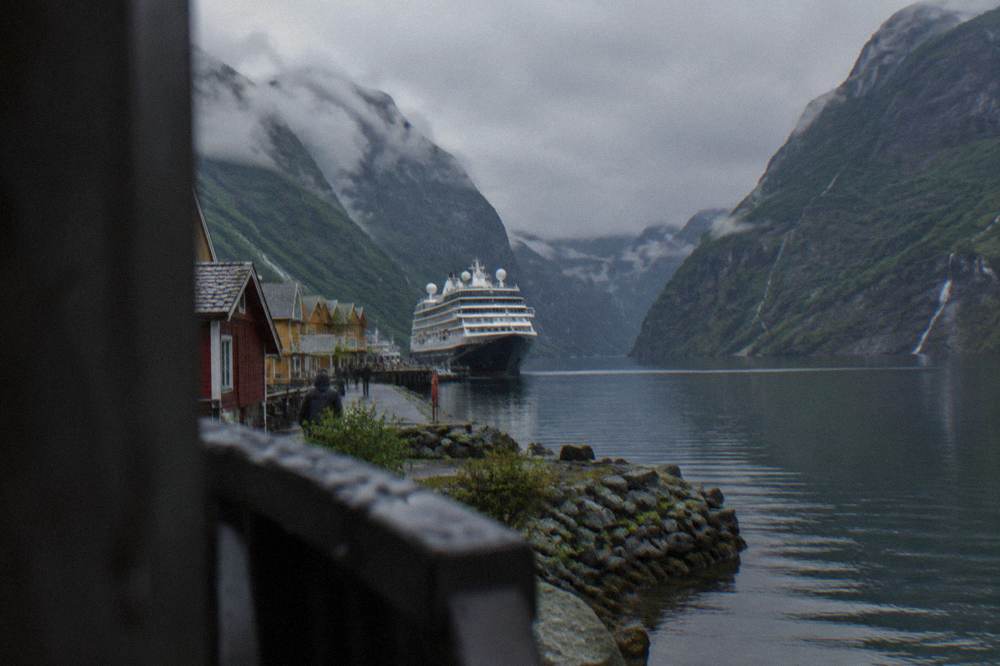
Flåm rewards a short, focused visit: the harbour front, the small railway museum, a walk along the fjord shore, and either the Stegastein viewpoint above the Aurlandsfjord or a short fjord sightseeing cruise if your main leg did not already include one. The village is small enough that you will see the core of it in the gap between arrivals and departures, so the real decision is what to do with the one or two hours the timetable gives you.
The Stegastein platform is the most common add-on: a wooden viewpoint cantilevered over the Aurlandsfjord, reached by minibus from the village. It appears in several of the guided combos listed above, which is the cheapest way to see it if you have not booked a tour that includes it, since the viewpoint is awkward to reach independently on a day-trip schedule. Otherwise, the shore walk east of the harbour is the quiet half hour in the village, away from the coach park.
Eating is the practical question. Flåm has a handful of cafes and restaurants, but a day this tightly scheduled rewards a packed lunch or a tour that bundles a meal, which is exactly what the lunch-inclusive UNESCO cruise does. Flåm is also one of the few places in Norway where the beer and pizza are priced like a ski resort, so expectations should be set accordingly: this is a village with a captive market, not a food destination. The what food is Bergen famous for question is better answered back in the city.
For travellers who fall for the fjord and want more, the honest escalation is not more time in the village but more water: either the Sognefjord itself, the king of the fjords and the parent of the arm you just cruised, or the Nærøyfjord, the narrow UNESCO arm that most Flåm boats touch. Both have their own guides on this site, and both change the arithmetic of the day trip, because the further down the fjord system you go, the more the day becomes a journey and the less it becomes an excursion.
Can You Combine Flåm With Other Destinations?
Not comfortably in one day, no, because the Flåm loop is already a full day of connected legs, and bolting on a second fjord or a second village turns the schedule fragile. What does work is building a multi day sequence: Flåm plus the Sognefjord, or Flåm plus Hardangerfjord, or Flåm plus an overnight in Balestrand, each as its own day or pair of days anchored on Bergen. Treat the map as a set of named corridors, not a buffet.
The realistic combinations are set out below, and the pattern is consistent: one corridor per day, with Bergen as the hub, works. Two corridors in one day works only for the shortest legs, and the Mostraumen cruise is the one genuinely short fjord option on this list.
| Named day trip | What it is | Best combined with Flåm how? |
|---|---|---|
| Flåm and the Flåm Railway | The loop described above | As the flagship day, on its own |
| Sognefjord | Norway's longest fjord system, parent of the Flåm arm | As a separate day, or as the boat leg of a longer Nutshell |
| Nærøyfjord | The narrow UNESCO arm, touched by most Flåm cruises | Usually already inside the Flåm day |
| Hardangerfjord | Orchard and waterfall fjord south of Bergen | As a separate day, different direction |
| Mostraumen | Short fjord cruise from Bergen harbour, tight rapids | As a half day, before or after |
| Voss | Inland lakes and adventure sports town | As a stop on the rail line out, or its own day |
| Trolltunga | The long cliff ledge hike | Never combined, it consumes a whole day alone |
For travellers building a week, the Hardangerfjord is the natural second fjord, a softer, greener corridor to the south, and the contrast between the two water systems is the single best argument for seeing both. For travellers squeezing a fjord around a cruise stop, the calculus is different again, and the Bergen cruise ship day guide handles that constraint properly, because a ship timetable does not forgive a missed connection at Myrdal.
What If The Weather Turns On Your Flåm Day?
Rain is the normal condition, not the exception, so the plan is not to avoid it but to make it survivable: waterproof layers for every leg, dry bags for phones and tickets, and a decision made the night before about whether the day is worth running or swapping. Bergen recorded 217 days with precipitation in the trailing thirteen months, and the fjord boats run in rain, so the main casualties are views and morale, not operations.
The boats and trains run in almost anything, and the cliffs of the Nærøyfjord are arguably more atmospheric in low cloud and drizzle than in flat sunshine. What rain does kill is the mountain plateau section, where cloud at Finse altitude can reduce the opening rail leg to a tunnel crawl, and the Stegastein viewpoint, where you may pay for a platform and see a wall of grey. If the forecast is bad, the guided tours with a fixed itinerary suffer more than the self-guided ticket, because a guide must run the script regardless.
The consolation is that a rain day in the city is a strong day in Bergen. The museums are clustered, mostly indoor, and the Bergen Card covers most of them. The ordinary entry prices from the 2026 flyer are the reference for a rain-day plan B:
| Attraction | Ordinary adult price | Notes |
|---|---|---|
| KODE Art Museums | 200 NOK on the Bergen Card flyer | Standalone price not published in this source |
| Akvariet (Aquarium) | 380 NOK winter window, 380-415 NOK seasonal | Season split 1 Mar to 31 Oct |
| Bryggen Museum | 170 NOK | 85 NOK with the Bergen Card |
| Hanseatic Museum | 160 NOK | Includes guided visit |
| Haakon's Hall | 120 NOK | Inside Bergenhus Fortress |
| Fløibanen return | 200 NOK Apr to Sep, 145 NOK Oct to Mar | Discounted with the card, one ride per card |
| Ulriken643 return | 435 NOK | Confirmed on the operator's own price page |
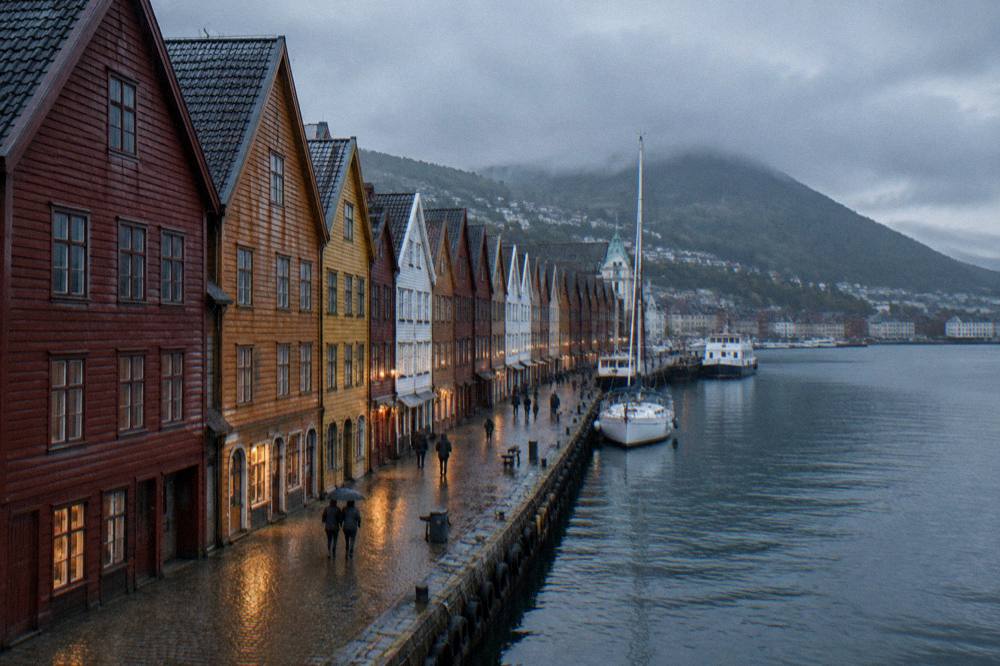
The full rainy day playbook, including what stays open and what genuinely closes, is in the rainy day in Bergen guide. The short version: museums first, aquarium with kids, one mountain ride only if the cloud base is above the top station. The Bryggen wharf itself is a rain-compatible walk, and the UNESCO listing dates the timber warehouses to a heritage inscription in 1979, which is the sort of fact that improves a wet afternoon.
How Do You Get To The Departure Points In Bergen?
The mountain railway departs from Bergen's main station, a short walk or Bybanen ride from anywhere in the centre, and the boat tours that start in the city leave from the harbour front at the bottom of Bryggen, so no Flåm itinerary needs a car. A single adult Skyss ticket in zone A costs 51 NOK, the Bybanen's line 1 connects the airport at Flesland to the centre, and the Bergen Card makes all of it free for cardholders.
Getting it right on the morning is mostly about being early at the right station, and the two relevant departure zones, the railway station and the harbour, are twenty minutes apart on foot at a relaxed pace. Visitors coming from further out should note that the light rail network carries the standard summer engineering works, and the dates below are the ones that matter for a summer trip.
| Transport item | Detail | Window |
|---|---|---|
| Skyss single ticket, zone A | 51 NOK adult | Standard fare |
| Bybanen line 1 | Airport to city centre, free with Bergen Card | Runs year round |
| Line 1 summer suspension | Slettebakken to Byparken section replaced by buses | 29 June to 26 July 2026 |
| Line 2 summer suspension | Kaigaten to Bergen busstasjon section suspended | 29 June to 12 July 2026 |
| Nonneseter stop | Closed in the direction from the centre | From 23 February 2026 |
| Flesland runway night closure | Lighting maintenance, nightly 22:30 to 03:30 UTC | 19 May to 5 June 2026, excluding weekend nights |
None of that touches the airport line itself, which is the piece visitors care about, and the runway work at Flesland is an overnight operation with no terminal closure. The practical reading of the table is simple: if your Flåm day falls in July 2026, check the Skyss travel planner the night before for replacement buses on the city centre section, and leave earlier than feels necessary.
Should You Book The Flåm Day Trip In Advance?
Yes, in every month from May to September, because the seats that sell out are the ones you cannot substitute: the Flåm Railway's tight departures and the summer fjord boats. The self-guided round trip and the guided combos are all sold as live listings with free cancellation, so booking early costs you nothing if plans change, while arriving in Bergen in July without a ticket costs you the day. Book the fjord day first, the hotel second.
The reverse mistake also exists: travellers who book the guided combo months ahead for a fixed date, then find the forecast is a washout and cannot move it. The middle path is to book a cancellable product early, watch the forecast in the final days, and swap or cancel if the plateau will be buried in cloud. The listings on this site all carry the operator's own cancellation terms, and the reassurance line in the box above is not decoration, it is the actual planning tool.
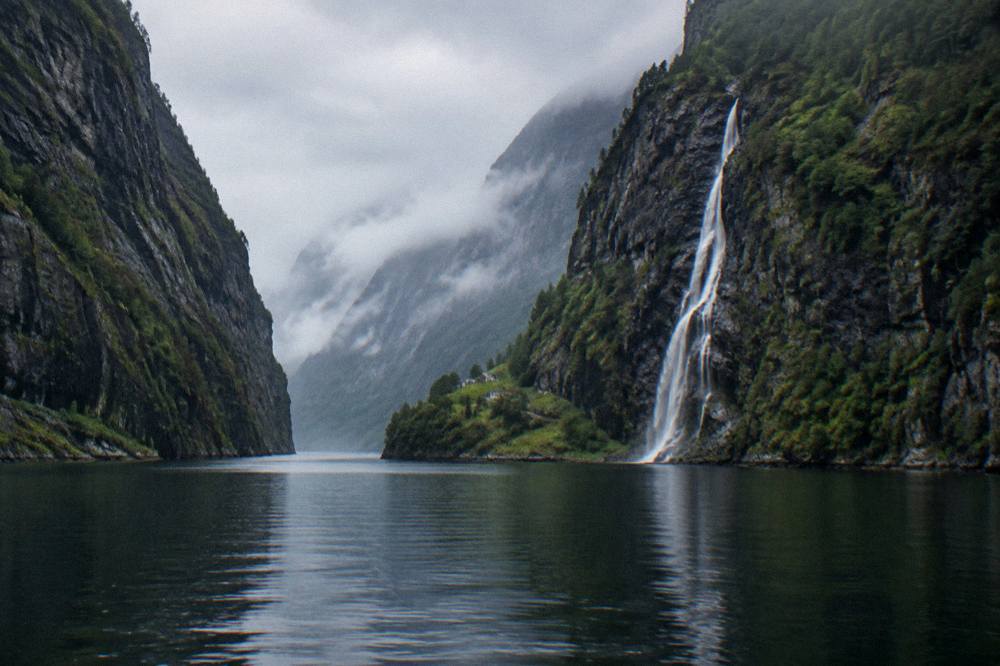
The final decision, for a lot of visitors, is whether Flåm deserves its reputation or whether the quieter corridors deliver more fjord per krone. The honest answer is that Flåm earns its fame on the railway leg alone, that the crowds are real but seasonal, and that the Nærøyfjord water between Flåm and Gudvangen is the best two hours of fjord scenery reachable from Bergen in a day. That is the bet you are making when you buy the ticket, and it is a good one.
Common Questions About Flåm Day Trips From Bergen
Is Flåm a day trip from Bergen?
Yes. The loop is sold as a single day of connected train, boat and bus legs, and it is the most booked day trip out of the city. It is a long, schedule-driven day, so book the legs in advance between May and September, and consider an overnight along the fjord if you would rather not race the timetable.
Is there a direct train from Bergen to Flåm?
No single train runs the whole way. The route is a chain: the mountain railway to Myrdal, then the Flåm Railway down to the village. The change at Myrdal is short and signposted, and the connecting departures are timed to meet each other. The direct train question has its own full answer on this site.
Which is better, Flåm or Bergen?
They do different jobs. Bergen is a real city with the wharf, the museums and the food; Flåm is a small village whose job is to be the doorway to the fjord. Seeing both, with Bergen as the base and Flåm as the excursion, works better than committing entirely to either.
Can you do a day trip to the fjords from Bergen without booking anything in advance?
Outside high season, sometimes yes. In summer, rarely. The fjord boats and the Flåm Railway both run at high load, and the seats that disappear first are the ones on the most scenic departures. A cancellable booking made early costs nothing to change and removes the risk entirely.
What happens if it rains on the booked day?
The boats and trains run in rain, so the day usually still works, just with fewer views. Check the operator's cancellation terms before you travel, since most products on this site allow cancellation ahead of departure. If the cloud base is low on the plateau, the city museums are the better use of the day, and most of them are covered by the Bergen Card.
Is the Flåm day trip worth it with kids?
Generally yes, with two cautions. The boat leg and the waterfall stop on the railway are genuine highlights for children, but the day is long and tightly timed, which suits some kids and defeats others. The guided combos with a village stop and lunch built in are the easiest versions for families, because the guide absorbs the schedule pressure.
Whatever version of the day you book, treat Flåm as the centrepiece rather than an afterthought: leave early, book before you fly, carry rain gear even in July, and give the village the respect of a proper full day rather than a squeezed half one. The fjord does the rest.