Which Is Better, Flåm Or Bergen?
Flåm and Bergen serve different purposes on a Norway fjord trip: one is a small village built around a railway and a fjord arm, the other is a city of 294,860 people with Hanseatic history. Here is how to choose.
Bergen, a city and municipality in Vestland county on Norway's southwestern coast, and Flåm, a village at the inner end of the Aurlandsfjord arm of the Sognefjord, are only ever rivals in the wrong question. One is a former Hanseatic League trading post with a population of 294,860 (Bergen kommune figure, as of 1 January 2026); the other is a settlement of a few hundred people that exists, in tourist terms, around a railway and a pier. The honest answer to "which is better" depends entirely on what a trip to western Norway is for, and the two places are connected well enough that most itineraries do not have to choose at all.
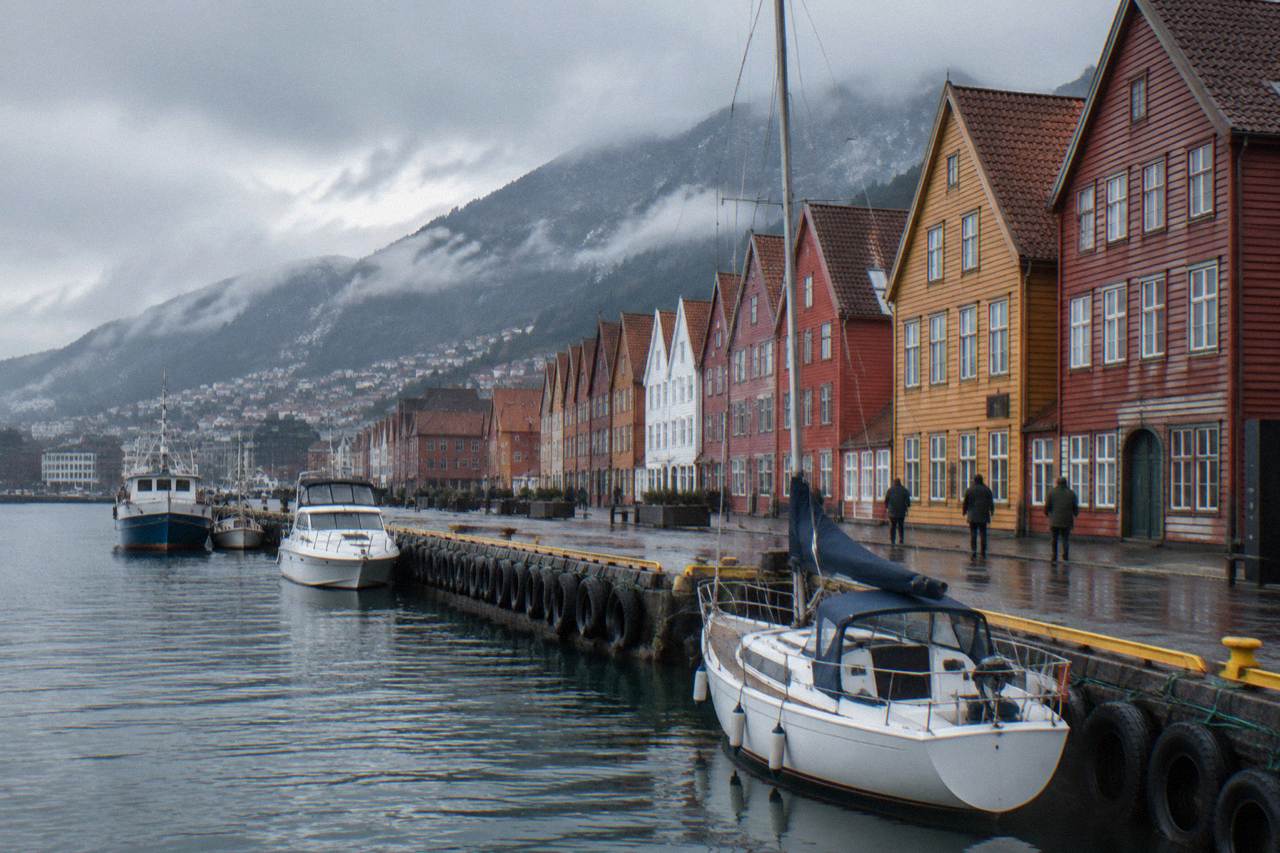
Which Is Better, Flåm Or Bergen?
Bergen is better as a base and as a destination in its own right, because it has the UNESCO-listed Bryggen wharf, two mountain railways, museums and restaurants, while Flåm is better only at one thing: being deep inside fjord scenery within minutes of stepping off a train. A traveller with two nights or more is almost always better off sleeping in Bergen and visiting Flåm as a day trip or a stop on a longer route, rather than the reverse.
The reason is structural. Bergen has hotels, hospital-scale infrastructure, an airport and a university; Flåm has a railway station, a cruise pier and a valley. Flåm's entire visitor economy peaks when trains and boats arrive and quiets when they stop. Bergen, by contrast, stays a living city after the day-trippers leave, and its attractions, from the Hanseatic wharf to the Fløibanen funicular, are open to visitors across a full day and evening.
That said, "better" is doing quiet work in the question. If the goal is photographs of steep fjord walls and waterfalls with minimal walking, Flåm delivers that faster than anywhere in the region. If the goal is to understand a place, eat well and sleep somewhere with options after 8pm, Bergen wins without contest. The strongest version of the trip uses both.
What Kind Of Place Is Flåm Compared To Bergen?
Flåm is a fjord village of roughly a few hundred residents in Aurland municipality, at sea level at the end of the Aurlandsfjord, while Bergen is the second-largest urban area in Norway and Vestland county's administrative centre, surrounded by seven mountains and built around a working harbour. Flåm's visitor offer is concentrated in one valley; Bergen's spreads across distinct neighbourhoods, from the Bryggen wharf to the Nordnes peninsula.
Bergen was a Hanseatic League trading post for centuries, and the traces are physical: the Bryggen wharf, inscribed on the UNESCO World Heritage List in 1979 per UNESCO's own listing, the Hanseatic Museum and the Bergenhus fortress. The kommune's population of 294,860 makes it a regional capital, with the University Museum of Bergen, the KODE art museums and a full working waterfront.
Flåm has none of that scale, and that is the point. Its single unambiguous attraction is the Flåm Railway, one of the steepest standard-gauge railway lines in the world, which climbs from the village up the Flåmsbana valley toward the mountain station at Myrdal. Around it sit a small railway museum, a brewery, kayak rentals on the fjord and shorelines that look exactly like the postcards. A traveller who arrives in Flåm with expectations of a town will be surprised by how small it is; the visitor centre, the station and the pier are, in practice, the same few hundred metres.
For planning how these two connect, this site's Bergen to Flåm day-trip guide covers the full route, and the Flåm Railway guide goes deep on the train itself.
Those three products describe the practical difference between the places: food and funicular in Bergen, and two different ways of reaching Flåm from the city.
How Do The Fjord Experiences Compare?
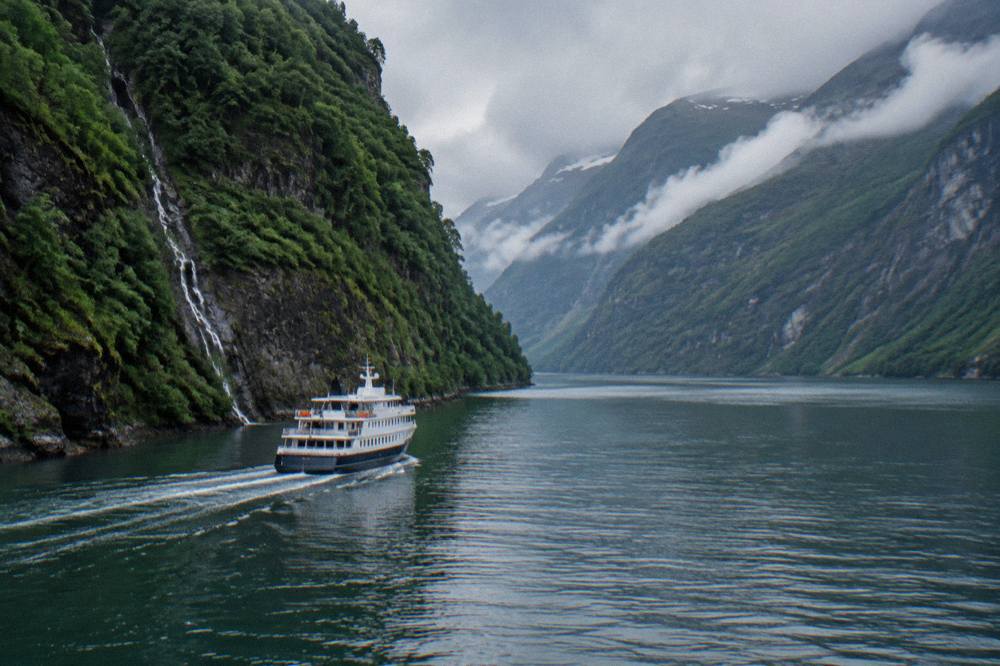
From Bergen's harbour, the closest water experience is a cruise up the Osterfjord to Mostraumen, while Flåm sits directly on the Aurlandsfjord, an arm of the Sognefjord, so the fjord scenery in Flåm is immediate and vertical while Bergen's requires a boat or a mountain railway first. Neither city offers fjord walls at the doorstep: Bergen's drama is on its rooftops and hillsides, Flåm's is at the water.
Bergen's fjord offer works outward. A short cruise from the city centre travels up the Osterfjord through the Mostraumen current, a half-day proposition that leaves the rest of the day for the city. Longer routes reach the Sognefjord and Nærøyfjord, the UNESCO-inscribed arm of the Sognefjord, usually with the Flåm Railway or the Stegastein viewpoint folded in. The city's own vertical attractions, the Fløibanen funicular to Fløyen and the Ulriken643 cable car, give high views over the islands and the Byfjord without a boat at all. The wider set of guides lives on Bergen Travel Guide.
Flåm's fjord offer is at the pier. Cruise boats leave the village for the Nærøyfjord within sight of the station, and the Stegastein viewpoint above Aurland hangs over the Aurlandsfjord a short drive up the valley. The trade-off is variety: in Flåm, everything is fjord; in Bergen, the fjord is one of several kinds of day.
Two caveats matter for planning. First, weather: yr.no's Bergen station table shows 217 days with precipitation over the trailing 13 months, with November the wettest observed month at 321.8 mm against a 275.0 mm normal, so boat-dependent sightseeing in either place can be curtailed at short notice. Second, seasonal maintenance: the Ulriken643 cable car has scheduled maintenance closure in weeks 1-2 of 2026, reopening around 13 January, so check before promising yourself the Bergen view.
The Bergen Card's 2026 flyer (visitbergen.com) gives a useful way to price the city-side fjord-and-mountain day:
| Bergen Card option | Adult | Child (3-15) | Covers |
|---|---|---|---|
| 24-hour | 400 NOK | 100 NOK | Skyss buses and Bybanen light rail county-wide, including the airport line |
| 48-hour | 500 NOK | 125 NOK | Same transport coverage, two days of museum entry |
| 72-hour | 600 NOK | 150 NOK | Same transport coverage, three days of entry |
| 96-hour | 700 NOK | 175 NOK | Same transport coverage, four days of entry |
The card does not include the Bybanen's airport journey time in any published figure this site could verify, and the Fløibanen return is discounted rather than free with the card: the flyer lists 200 NOK adult (1 April-30 September) and 145 NOK adult (1 October-31 March) as ordinary prices, purchased at the ticket office at a discounted rate for cardholders.
Wondering how long the water crossing takes? This site's answer on how long the ferry ride from Bergen to Flåm is covers it directly.
Ready to lock in the fjord leg from Bergen?
Most bookable routes from Bergen allow free cancellation up to 24 hours before departure, and many offer pay-later options, so reserving early costs nothing extra.
How Many Days Do You Need In Bergen Versus Flåm?
Bergen needs a minimum of two full days to cover the Bryggen wharf, one mountain ascent, the fish market and a short fjord cruise, while Flåm needs roughly half a day: arrival by train or boat, the Flåm Railway up and down or a fjord cruise, a meal, and departure. Adding a third Bergen day buys the museums and a neighbourhood like Nordnes or Sandviken; adding a second Flåm day mostly buys quiet.
The asymmetry surprises people who treat the two as comparable stops. Bergen's attraction list runs long: Bryggen, the Hanseatic Museum, KODE, the aquarium, the fish market, both mountains, and the day trips that radiate outward. The site's guides on how many days in Bergen is enough and one day in Bergen break the tiers down, but the short version is that one day is a highlight reel, two is comfortable and three is relaxed.
Flåm inverts the logic. The village's schedule is essentially the railway's and the boats' schedules. Arriving mid-morning and leaving late afternoon is the standard pattern, and staying overnight mainly shifts the experience toward the hours when the crowds thin, which some travellers consider the best fjord time of all.
Weather planning favors Bergen slightly in practical terms, because the city has indoor options when the rain arrives, and per yr.no's station table it arrives often:
| Month (trailing 13) | Mean temperature observed | Precipitation observed | Precipitation normal |
|---|---|---|---|
| July 2026 | 14.9° | 184.2 mm | 158.0 mm |
| May 2026 | 9.9° | 127.4 mm | 109.0 mm |
| March 2026 | 5.9° | 243.9 mm | 202.0 mm |
| January 2026 | -1.4° | 82.0 mm | 256.0 mm |
| November 2025 | 6.0° | 321.8 mm | 275.0 mm |
January 2026 was unusually dry for Bergen, 82 mm against a 256 mm normal, while November 2025 ran wetter than its normal. The lesson is not to pick a "safe" month but to pack for rain in any of them.
Can You Combine Flåm And Bergen On One Trip?
Yes, and combining them is the standard pattern: Bergen has the airport, the hotels and the transport hub, while Flåm is reached from Bergen by a multi-leg route of train, boat and bus sold under names like Norway in a Nutshell, or by direct fjord cruise ticket. Most itineraries fly into Bergen, spend two or three nights in the city, and devote one of those days to Flåm and the Sognefjord arms before departing.
The route itself is the attraction. Trains and boats connect the two places through the Bergen Railway, the Flåm Railway and the fjords, and multiple operators sell packaged versions of the loop. The site's guides on Norway in a Nutshell and the Sognefjord describe the legs in detail, and the answer on whether there is a direct train from Bergen to Flåm settles the common misconception: there is not, the journey changes trains at Myrdal.
For travellers weighing the packaged versions against each other, the comparison of Norway in a Nutshell versus Sognefjord in a Nutshell covers the differences.
Between those two route products, the difference is guidance: one is self-directed with tickets in hand, the other a cruise-and-transfer package. Both depart from Bergen's side of the map.
A guided middle path also exists, with a Nærøyfjord cruise and the Stegastein viewpoint folded in:
That product suits the traveller who wants the Flåm-area fjord scenery without assembling the legs personally.
Common Questions About Flåm Or Bergen
Which is better, flåm or bergen?
Bergen is better as a base and as a destination, with the UNESCO-listed Bryggen wharf, two mountain railways and a full city's worth of food and museums. Flåm is better at immediacy: fjord walls and the Flåm Railway are within a few minutes of stepping off the train. Most travellers sleep in Bergen and visit Flåm.
Can you do Flåm as a day trip from Bergen?
Yes. The standard day trip leaves Bergen early, transfers at Myrdal onto the Flåm Railway, and returns by boat or train, roughly a full day door to door. The site's Bergen to Flåm day-trip guide covers the route.
Is Flåm too crowded to enjoy?
Flåm concentrates its visitors into a few hundred metres around the station and pier, and days with cruise calls are noticeably busier than days without. Arriving by early train rather than by boat spreads the crowds across the day, and the village empties after the last departures.
Which has better food, Bergen or Flåm?
Bergen, by a wide margin. The fish market, the historic trading-post restaurant culture and a food-and-funicular tour ecosystem exist because Bergen is a city of nearly 295,000 people. Flåm's food offer is good but small, built for the day-visitor window. The site's answer on what food Bergen is famous for lists the specifics.
Do I need a car to visit either place?
No. Bergen's attractions are walkable or served by the Bybanen light rail and Skyss buses, both covered county-wide by the Bergen Card. Flåm is reached by train and boat, and its valley attractions are linked by shuttle and boat services, so a car adds cost without adding reach on the standard route.
Where should I fly into?
Bergen. Bergen Airport, Flesland, connects to the city by the Bybanen line 1 light rail, the cheapest option and free with the Bergen Card, while Flåm has no airport. Flying into Bergen and departing by rail toward Oslo is the classic pattern.
The verdict, stated plainly: Bergen is the better place to spend money and nights, Flåm is the better place to spend a camera battery, and the fjord route between them is short enough that nobody has to choose.