Where Do The Locals Eat In Bergen?
Where Bergen, Norway locals actually eat: the neighbourhoods, dishes and habits beyond Bryggen and the Fish Market, with a practical food-first plan.
Bergen, in Vestland county on Norway's southwestern coast, has a population of 294,860 according to Bergen kommune's own statistics page, and most of those people do not eat on the Bryggen wharf. The colourful Hanseatic frontage, inscribed on the UNESCO World Heritage List in 1979, is where the cruise passengers and the cameras go. The people who live here eat one, two or three streets back from the water, and uphill into the wooden-house neighbourhoods, and that difference is the single most useful thing a visitor can learn about food in this city.
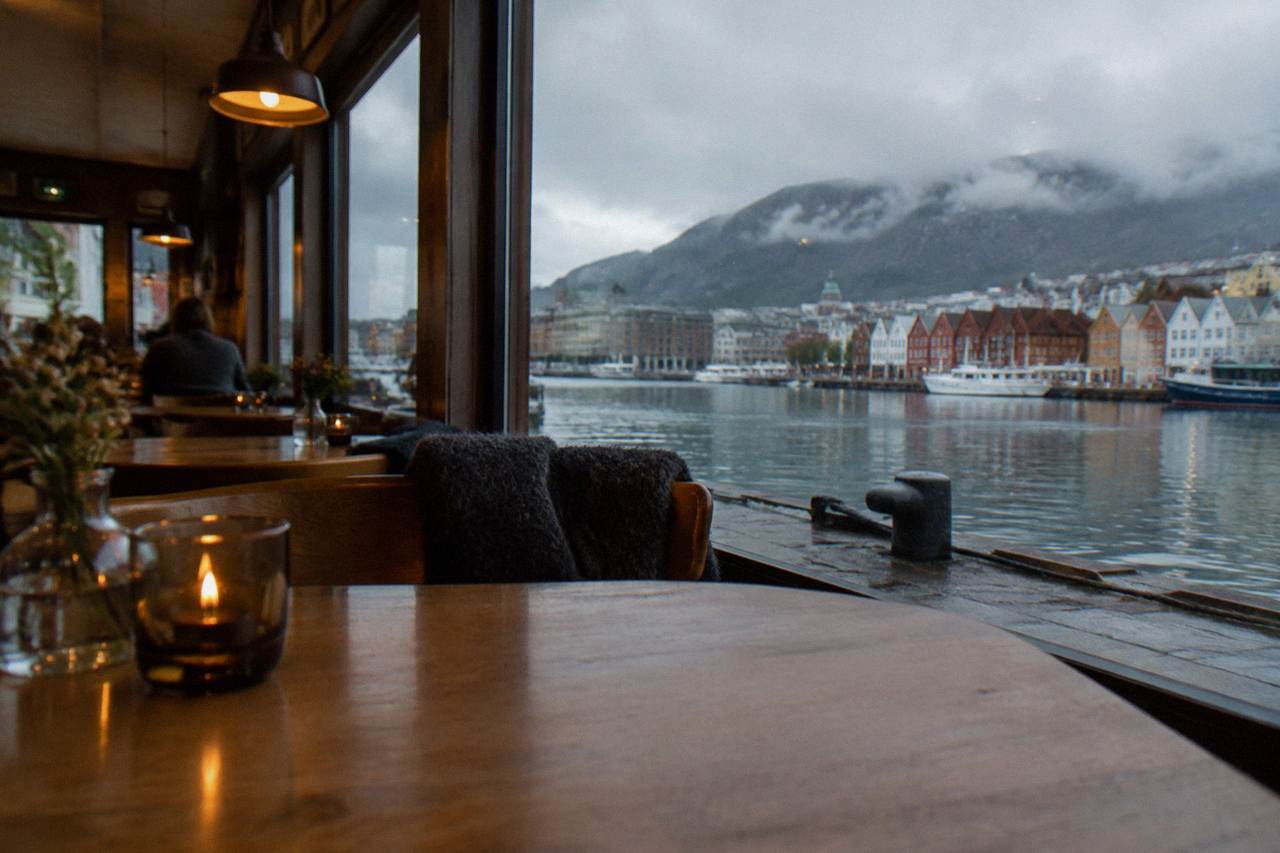
Where Do The Locals Eat In Bergen?
Locals in Bergen eat mainly in the side streets behind the harbour, in the Skostredet and Marken quarter, on the Nordnes peninsula, in the wooden-house lanes of Sandviken, and around the university streets of Nygårdshøyden. They order fish soup, warm shrimp in bread, waffles with brown cheese, and whatever the day's catch is at places a five-minute walk uphill from the Fish Market, where the prices and the queues are both lower.
The geography matters more than any single name. The harbourfront strip that runs from Bryggen past Fisketorget is where many visitors spend their first afternoon, and it is pleasant, but it is the city's shop window. A short climb in almost any direction, and the character of the dining changes fast. The lanes of Sandviken and the Nordnes peninsula, both old wooden-house districts within twenty minutes of the centre on foot, hold small cafés and neighbourhood kitchens that open for the people who actually live in those lanes. The Skostredet and Marken quarter, just behind the main shopping streets, has become the city's most concentrated eating street, the kind of district where a visitor can simply walk down Skostredet and pick one.
That uphill instinct has a weather logic too. yr.no's Bergen station table, from Met Norway data, shows 217 days with precipitation across the trailing 13 months, with November the wettest observed month at 321.8 mm. Locals eat indoors, in small rooms, and they book them, because a warm table at 18:00 on a wet November evening is a competitive asset in this city.
Which Bergen Neighbourhoods Do Locals Actually Eat In?
Four areas carry most of the local eating in Bergen: Skostredet and Marken for bistro-style dinners, Nordnes for casual peninsula cafés, Sandviken for quiet wooden-lane kitchens, and Nygårdshøyden around the university for cheap, student-priced food. The Fish Market at the harbour is for visitors; the streets directly behind and above it are where the residents of this Vestland city spend their money.
Skostredet deserves its reputation. It is a single street of small independent kitchens, and asking a Bergen resident where to eat on a Friday night gets you this street more often than any single venue. Marken, immediately north of it, mixes old grocery buildings with cafés that serve the lunch crowd. Nordnes, the peninsula that juts out between the harbour and the fjord, holds a cluster of cafés a short walk from the aquarium, and in summer the locals sit outside where the light lasts late into the evening. Sandviken, the wooden-house district on the slopes northeast of the centre, is quieter: fewer venues, smaller rooms, and mostly locals because it sits above the tourist radius. Nygårdshøyden, around the university and the student quarter, is where the price-per-plate drops and the portions grow.
| Neighbourhood | Distance from harbour | What dominates | Local habit |
|---|---|---|---|
| Skostredet / Marken | 5-minute walk | Small bistros, cocktail bars, specialty coffee | Friday and Saturday dinners, weekend brunch |
| Nordnes | 10-15 minute walk | Peninsula cafés, harbourside ice cream | Weekend walks that end with coffee |
| Sandviken | 15-20 minute walk uphill | Wooden-lane kitchens, bakeries | Weekday, quiet, booked by regulars |
| Nygårdshøyden | 10-15 minute walk south | Student cafés, cheap pizza, pubs | Lunch and late evening, cash-light |
| Fisketorget / Bryggen | On the waterfront | Tourist-facing market and wharf eateries | Visited by locals mainly with visiting guests |
The pattern in the table is the whole answer in miniature. Every district that locals actually eat in sits off the water, uphill or around a corner, and every district on the water is one they walk visitors through. If a place in Bergen has a direct view of the harbour, it is probably priced and paced for visitors; if it does not, the odds shift sharply in your favour.
What Foods Do Bergen Locals Order?
Locals in Bergen order fish soup made with cream and the day's catch, shrimp served warm in a paper or bread, whale and lamb dishes in the older kitchens, cinnamon buns and waffles with brown cheese at coffee stops, and a cheap hot dog from a kiosk after a late night. The constant is local seafood; the habit is ordering what the west-coast weather calls for, which means hot, thick and filling.
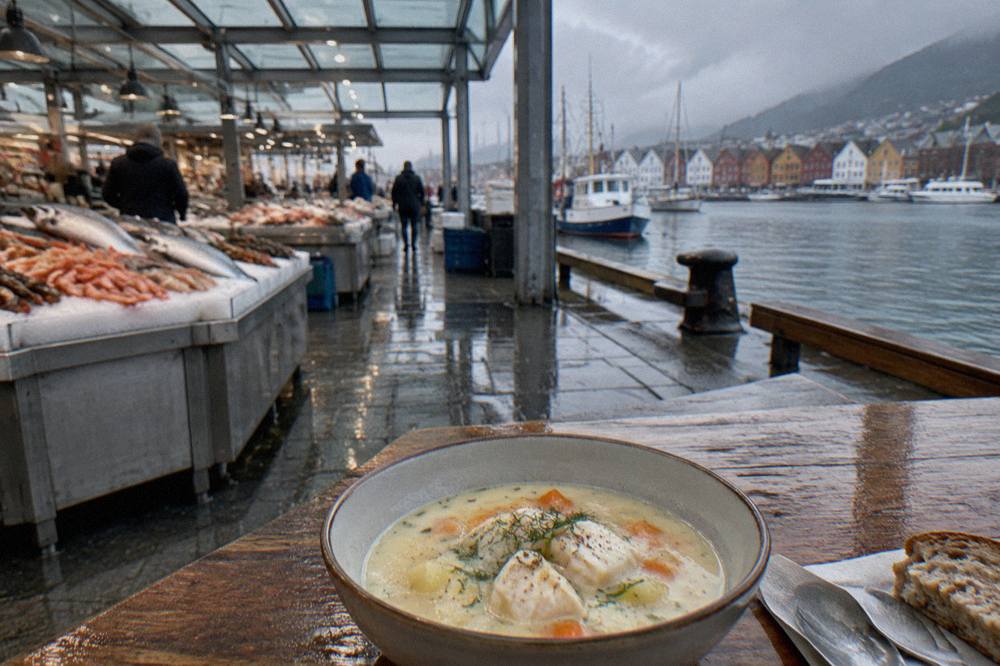
Norway's west coast has a defined everyday food culture, and Bergen sits in the middle of it. Fish soup, a cream-based soup with chunks of white fish, is the single most ordered local dish in the city, and every neighbourhood kitchen has its own version. Warm shrimp, sold from the small boats at the inner harbour when the boats are in, gets eaten standing or on a bench, in bread, with mayonnaise. This is one of the few harbour rituals locals genuinely keep, because it costs a fraction of a restaurant plate and tastes of the fjord outside. The older kitchens carry whale and lamb; the bakeries carry skolebrød, a custard-filled bun with coconut, and cinnamon buns that Bergen residents treat as a food group of their own. Brown cheese, the caramel-tasting whey cheese of Norway, appears on waffles and bread and surprises almost every first-time visitor.
The sweets question has its own answer on this site: the full rundown of the city's signature dishes is in what food Bergen is famous for, which covers the pastry cases in detail. The short local version is that the afternoon coffee stop, with something sweet beside the cup, is not optional in this city. It is a daily institution.
| Observed month | Mean temperature | Precipitation (mm) | What locals are eating |
|---|---|---|---|
| November 2025 | 6.0° | 321.8 | Fish soup, lamb, hot everything |
| January 2026 | -1.4° | 82.0 | Heavier stews, dark coffee, waffles |
| June 2026 | 14.4° | 165.7 | Shrimp outdoors, ice cream, lighter plates |
| July 2026 | 14.9° | 184.2 | Harbour shrimp, summery fish dishes |
The table above, drawn from Met Norway's own station data for Bergen, is the context guidebooks leave out. The eating calendar here tracks the rain, not the calendar month. A July table on a dry evening is shrimp and a beer outdoors; a November evening at the same table is fish soup and a candle, because with 217 days of precipitation in the trailing 13 months, the city's kitchens are built around warmth.
How Do You Eat In Bergen Like A Local On A Normal Day?
Eat like a local in Bergen by structuring the day as locals do: a bakery or coffee stop mid-morning, a proper warm lunch or a shrimp handout at the harbour, coffee with something sweet at 15:00 or 16:00, and a booked dinner after 18:00 in the Skostredet or Nordnes back streets. Use the light rail and buses, not taxis, and eat in the neighbourhoods the transport passes through anyway.
The timing is the part visitors get wrong. Northern European habits apply: kitchens fill from 18:00, the good rooms are booked rather than walked into, and the coffee stop in the middle of the afternoon is treated as seriously as a meal. A single Skyss ticket in zone A costs 51 NOK according to the transport authority's own pricing, and the light rail and bus network stitches the eating neighbourhoods together, so a lunch in the centre and a dinner up in one of the hillside districts is a normal, cheap day rather than an expedition. The Bergen Card, which the 2026 official flyer lists at 400 NOK for a 24-hour adult pass, includes free Skyss buses and the Bybanen light rail across Vestland county, which makes a grazing day across neighbourhoods almost free on the transport side. More of these guides are collected on Bergen Travel Guide.
One honest note about the market experience: Fisketorget, the fish market at the inner harbour, is marketed hard at visitors, and locals do not shop there weekly. But the shrimp boats at the water's edge are a genuine shared ritual, and the surrounding streets, not the market itself, are where the local eating happens. The market is the entrance; the neighbourhoods behind it are the meal.
A guided walk is the shortcut for the first day. The site's featured food walk is the Food and Culture Walk, and its full details, including current pricing and review figures, render from the verified listing:
The case for doing it early in the trip is simple: a session with a guide who knows the back streets resets your radar for the rest of the stay. After it, the unglamorous kiosks and the café with locals reading newspapers stop looking like detours and start looking like the point.
Can You Eat Locally In Bergen On A Budget?
Yes, and locals do it constantly: a bakery lunch with a coffee, shrimp bought straight from a boat at the harbour, and a kiosk hot dog in the evening keep a food day in Bergen cheap, especially if you buy bread, brown cheese and fruit from a supermarket for the gaps. The expensive meals here are the harbourfront restaurants, which locals largely skip.
The budget logic of this city is unforgiving and well understood by everyone who lives in it. Norway's currency is the krone, NOK, and the supermarkets are the levelling instrument: every local bakery lunch competes with a grocery-store sandwich that costs a fraction of a restaurant plate. The meal pattern that keeps local budgets intact is the one described above, a big carbohydrate-heavy bakery stop in the morning, something modest and warm at midday, and then either a booked dinner or a cheap late option. Students in the Nygårdshøyden quarter have refined this into an art, and the streets around the university are the cheapest place in the city to test it.
The evenings are the other budget lever. Late-night food in Bergen is dominated by the kiosk hot dog and the cheap pizza slice near the student quarter, not fine dining, and no local pretends otherwise. Alcohol is the single biggest wallet risk in Norway; the people who live here drink at home before going out or accept the cost knowingly, and a visitor who follows the restaurant-drink habit of southern Europe will feel it in the krone.
When Do Bergen Locals Plan Their Eating Around Events?
Locals build food weekends around the city's festivals, and the anchor is Bergen Matfestival, which ran across the first weekend of September 2026, alongside a year-round rhythm of coffee stops, Christmas market food at Festplassen from late November, and fish-heavy celebrations tied to the harbour calendar. Eating here is seasonal, and the locals follow the season rather than fighting it.
The Matfestival is the clearest example. Held in early September across the centre's squares, it pulls the region's producers into the streets, and it is exactly the kind of event that residents attend themselves rather than offload onto tourists. The 2026 edition fell around 4-5 September, per the festival calendar listings, and the pattern repeats annually. The December version of the same instinct is the Christmas market at Festplassen, which the season's listings placed between 20 November and 22 December 2026 with free entry, plus Pepperkakebyen, the gingerbread city, running from mid-November into January. Locals eat their way through both.
The last piece of local knowledge is the weekend fjord reflex. When the forecast clears, Bergen residents go to the fjord, and the eating goes with them: shrimp from a boat, coffee from a thermos, a packed lunch on a rock. The practical version for a visitor is the Mostraumen fjord cruise, and its live price and rating render from the verified listing at Check availability. A day trip into the Osterfjord is the single most local thing a visitor can do with a sunny Saturday, and the question of whether it works is covered in whether you can do a day trip to the fjords from Bergen.
Common Questions About Eating Like A Local In Bergen
Where do the locals eat in bergen?
Mostly in the streets off the water: Skostredet and Marken for dinners, Nordnes for casual cafés, Sandviken for quiet wooden-lane kitchens, and the university quarter of Nygårdshøyden for cheap eats. The harbourfront and the Fish Market are where they take guests, not where they eat themselves.
Is food in Bergen expensive for locals too?
Yes, by most European standards. Locals manage it with bakery lunches, supermarket bread and brown cheese, shrimp bought directly from boats, and kiosk hot dogs at night, saving the restaurant budget for booked weekend dinners in the back streets.
Do Bergen residents eat at the Fish Market?
Rarely for a meal. The market is tourist-facing. The one harbour ritual locals do keep is buying warm shrimp from the small boats at the inner harbour and eating them on the spot or on a nearby bench.
What time do locals eat dinner in Bergen?
Dinner is early by southern European standards, with kitchens filling from 18:00, and good rooms booked rather than walked into. The mid-afternoon coffee stop, around 15:00 or 16:00 with something sweet, is treated as a fixed part of the day.
Is tap water free in Bergen restaurants?
Tap water in Norway is generally served on request, and Bergen's municipal supply is high quality. Asking for a glass rather than ordering bottled water is exactly what a local would do.
Eating like a local in Bergen is not a treasure hunt for hidden venues. It is a habit of turning away from the water, walking five minutes uphill, and ordering what the west-coast weather is asking for, and the rest of the city's food life follows from that one instinct.