Bergen Old Town
Bergen, the old Hanseatic trading port on Norway's southwestern coast, does have an old town, in fact it has several layers of one, and this guide maps them all.
Short answer
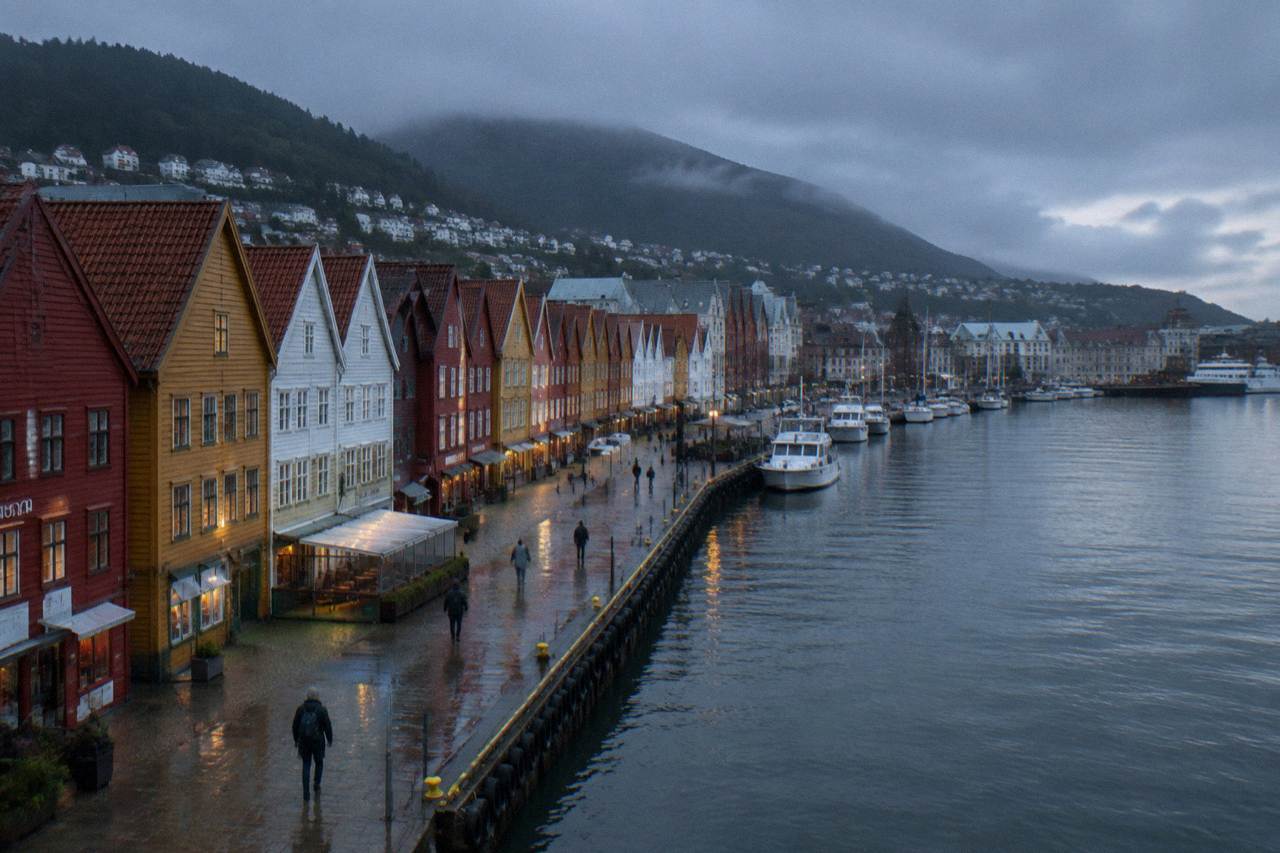
Yes. Bergen's old town is real and walkable: the UNESCO-listed Bryggen wharf, the wooden houses of Sandviken, the Nordnes peninsula and the open-air Old Bergen Museum together preserve centuries of the city's Hanseatic and wooden-town past.
Bergen, in Vestland county on the southwestern coast of Norway, grew rich as a Hanseatic League trading post, and the parts of the city where that history still stands are what most people mean when they ask about an old town. The answer is not one single quarter. It is a chain of districts, from the UNESCO-listed wharf at Bryggen through the cobbled lanes behind it, north to the wooden houses of Sandviken, and around the Nordnes peninsula, with an open-air museum preserving whole relocated buildings on the way. This page on Bergen Travel Guide maps all of it: what counts as old, what you can actually see, and how to string it into a walk.
Does Bergen Have An Old Town?
Yes, and more than one layer of it. Bergen's old town is the UNESCO-listed Bryggen wharf plus the surrounding historic districts: the Marken and Skostredet lanes, the wooden houses of Sandviken to the north, and the Nordnes peninsula, along with the Old Bergen Museum, an open-air collection of relocated historic buildings. Bryggen was inscribed on the UNESCO World Heritage List in 1979.
The confusion is understandable, because Bergen has no single walled medieval core the way some European cities do. Fires swept through the wooden town repeatedly across the centuries, and what stands today at Bryggen is largely reconstruction on medieval foundations, rebuilt in the same narrow, deep-roofed Hanseatic style that the trading settlement always used. UNESCO's own listing notes the wharf's Hanseatic commercial heritage and its 1979 inscription year, and that is the anchor fact of any old-town walk.
What makes Bergen unusual is that the "old town" experience is distributed. The harbourfront wharf is the postcard, but the wooden-house atmosphere continues up the slopes of Sandviken, around the quiet streets of Nordnes, and among the cobbles of Marken and Skostredet. A visitor who only photographs Bryggen and leaves has seen perhaps a tenth of what survives.
What Exactly Counts As Bergen Old Town?
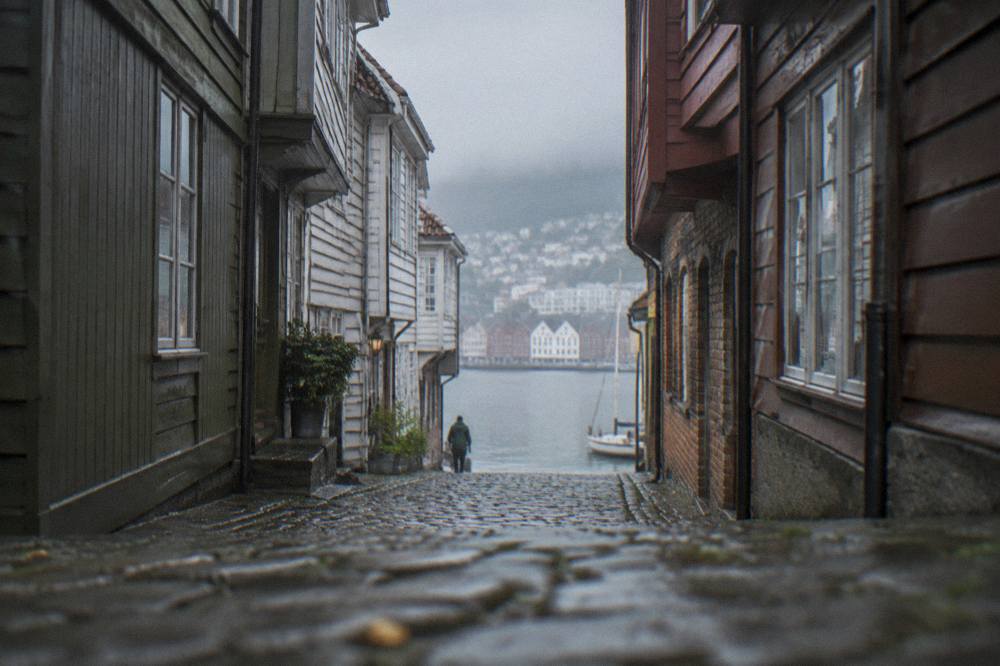
Bergen Old Town, as this site uses the term, covers four connected historic areas within easy walking distance of the harbour: the Bryggen wharf and its museum quarter, the Marken and Skostredet lane network, the Sandviken wooden-house district on the slope north of the fortress, and the Nordnes peninsula with its church, aquarium and museum streets. The Old Bergen Museum at Sandviken preserves relocated historic buildings as a fifth, open-air piece.
Each district has a different character and a different era. Bryggen is the commercial Hanseatic layer, tall gabled trading houses packed along the water. Sandviken is the residential layer, small white and ochre timber homes climbing the hillside. Nordnes is the civic and maritime layer, where the Bergen Aquarium, the Bergenhus Fortress boundary and the Old Bergen Museum's sister sites sit among quiet streets. Marken and Skostredet, by contrast, are the shopping lanes of the old core, cobbled, boutique-lined and only a few minutes' walk from the city centre.
The table below is the honest version of a "which old area is which" answer:
| Historic district | Era it preserves | Character | Main sight |
|---|---|---|---|
| Bryggen wharf | Hanseatic trading era | Gabled wooden warehouses, museums, galleries | Bryggen and its museum quarter |
| Marken and Skostredet | Historic lane network | Cobbled shopping streets, cafés | Boutique lanes behind the harbour |
| Sandviken | Old wooden-house district | Steep residential streets, viewpoints | Old Bergen Museum |
| Nordnes | Church and maritime heritage | Peninsula of museums and the aquarium | Aquarium and historic streets |
| Bergenhus fortress area | Medieval fortress onward | Stone halls and grounds | Haakon's Hall and Rosenkrantz Tower |
One practical note: the whole chain is compact. None of these districts is more than a short walk from any other, which is why a single well-planned day covers the old town comfortably, as the one day in Bergen itinerary lays out.
A guided walk is the fastest way to get the layers explained, and the food and culture walk is the one that stitches the districts together with the city's food history in between. The roster above also includes a fjord cruise, because the old town faces the water that made it, and a small-group history walk for visitors who want the past-and-present narrative from a local guide.
What Can You See Inside Bergen Old Town?
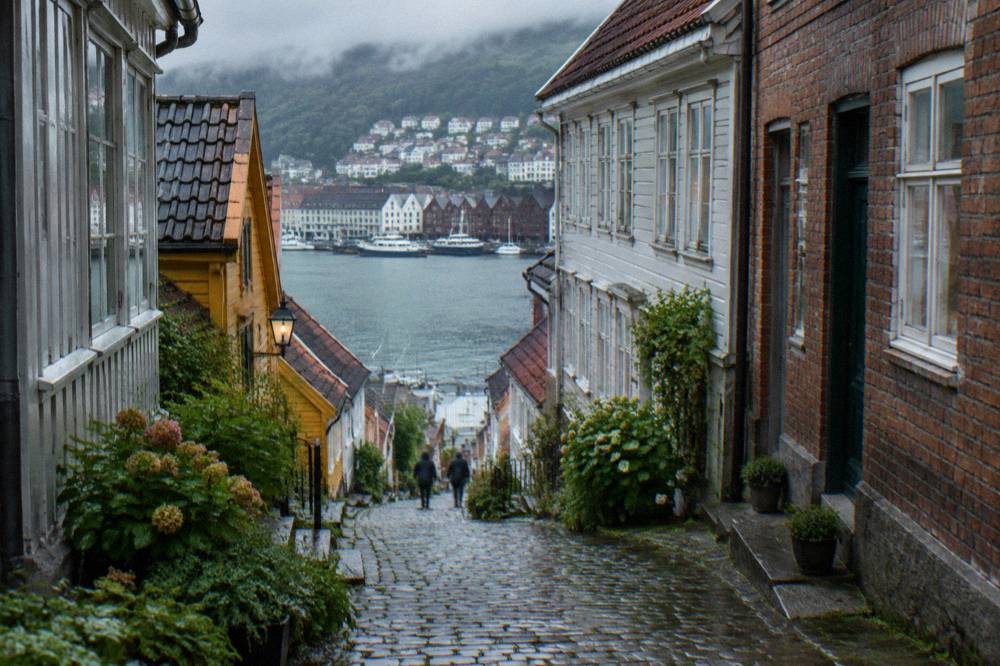
Inside Bergen's old town you can see the Bryggen wharf and its museums, the Hanseatic Museum on the wharf's corner, Bryggen Museum with its medieval excavations, the Old Bergen Museum's relocated timber buildings, Haakon's Hall at Bergenhus, and the fish market at the harbour's edge. Entry prices are modest: the Bergen Card flyer lists Haakon's Hall at 120 NOK, the Hanseatic Museum at 160 NOK with a guided visit, and Bryggen Museum at 170 NOK ordinary or 85 NOK with the card.
The wharf itself costs nothing to wander. The alleys between the gabled buildings are public, filled with craft shops, and the buildings lean and crowd in a way no reconstruction drawing quite conveys. The museums are where the depth lives. Bryggen Museum sits on the site of the archaeological excavation of the medieval wharf and displays what the digs recovered; the Hanseatic Museum preserves a merchant's trading house interior; Haakon's Hall is the stone ceremonial hall of the medieval fortress, the oldest surviving secular building in the city.
The Old Bergen Museum, up in Sandviken, is the open-air piece: historic timber buildings relocated from around the city and arranged as streets, with costumed interpretation in season. It is the single best place to understand what ordinary life in the wooden town looked like, and it pairs naturally with a walk down through Sandviken's own surviving streets.
| Old town sight | What it is | 2026 adult entry (Bergen Card flyer) |
|---|---|---|
| Bryggen wharf | UNESCO-listed Hanseatic warehouses | Free to wander |
| Bryggen Museum | Medieval excavation finds | 170 NOK ordinary, 85 NOK with card |
| Hanseatic Museum | Merchant trading house interior | 160 NOK with guided visit |
| Haakon's Hall | Medieval stone ceremonial hall | 120 NOK |
| Old Bergen Museum | Open-air relocated timber town | Seasonal, check the listing |
| Fish market | Harbourfront market stalls | Free to browse |
For a fuller sense of what the city's museums hold beyond the old town, the wider museum quarter, including KODE's art museums whose Bergen Card price is 200 NOK, sits just across the centre.
The food and culture walk is the natural companion to this quarter, because it moves between the fish market, the wharf and the lanes while explaining what Bergen actually ate during its trading centuries. Cancellation is free before the start time, so it can be booked ahead and adjusted if the weather turns, which in a city with 217 days of precipitation in the trailing 13 months, per yr.no's Bergen station table, is a real consideration.
How Does Bryggen Connect To The Rest Of The Old Town?
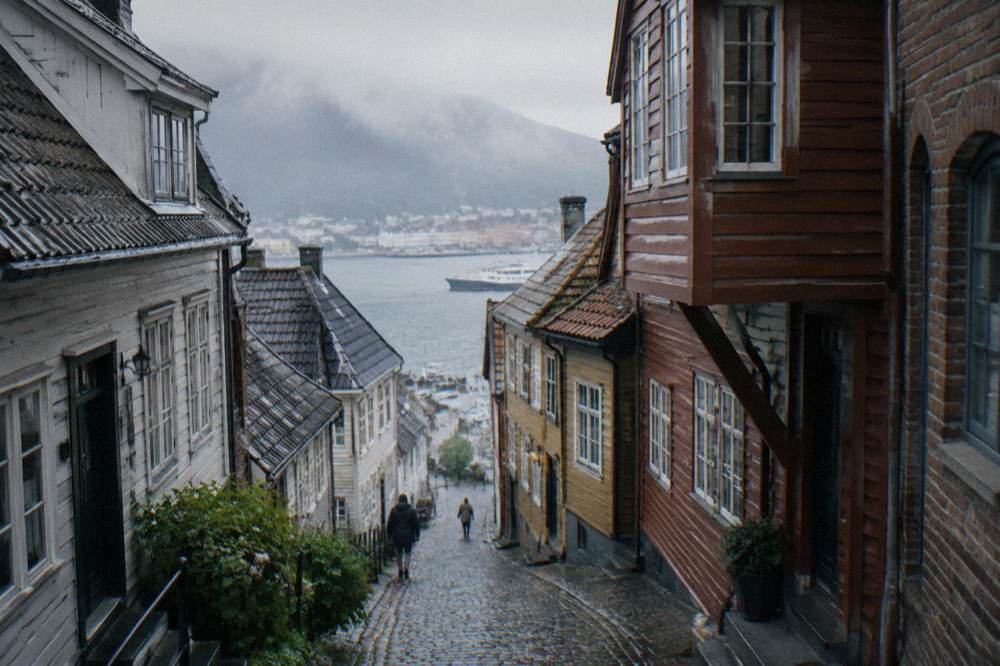
Bryggen is the anchor of Bergen's old town and the point from which the other historic districts radiate: north along the water to Bergenhus Fortress and the Sandviken slope, west across the harbour to the Nordnes peninsula, and inland through the Marken and Skostredet lanes to the modern city centre. Every old-town walk in Bergen starts or ends at the wharf.
The geography is simple once you stand on it. The wharf faces the inner harbour, Vagen, with the fish market at its southern end and the fortress at its northern end. Behind the wharf rise the lanes and then the hillsides: to the north, Sandviken's wooden houses climb toward the Mount Ulriken massif's lower slopes; to the south and west, the streets run up toward the Fløibanen funicular and the viewpoints above. A return funicular ticket is 200 NOK adult from April to September and 145 NOK from October to March, per the 2026 Bergen Card flyer, so the climb from old town to panorama is a short, priced hop.
This connectedness is why the old town rewards walking above all other ways of seeing it. The distances are short, the streets are the attraction, and every route between the districts passes more historic fabric than any single museum holds. A visitor who walks the full chain, wharf to fortress to Sandviken and back around Nordnes, will cross the entire historic core of the city without ever needing a bus or a ticket beyond the museum doors.
How Long Should You Spend In Bergen Old Town?
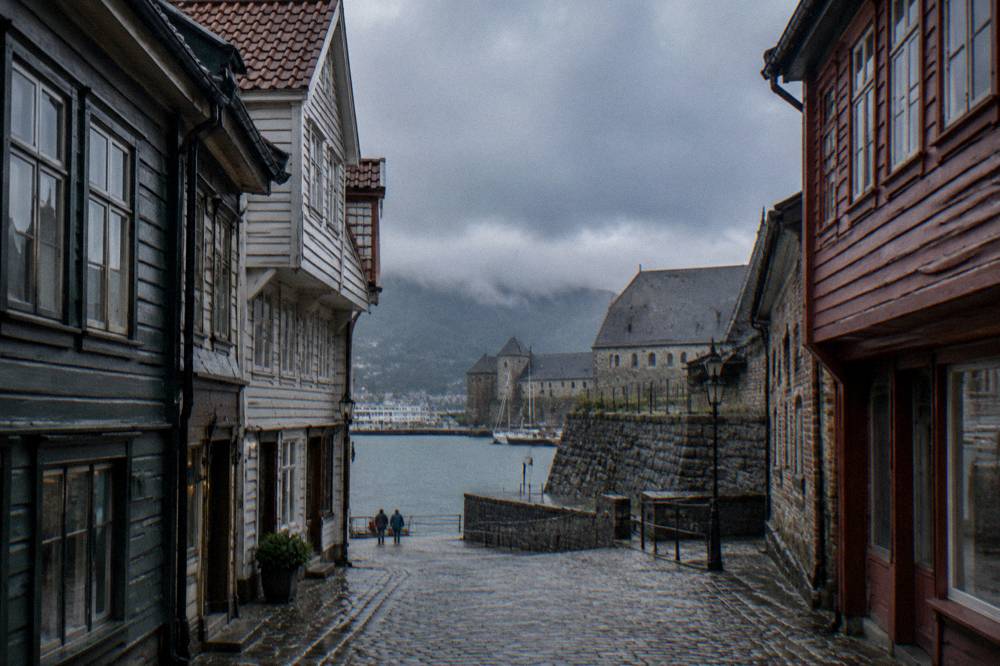
The core of Bergen's old town, the Bryggen wharf, the fortress area and one museum can be seen in about half a day, while a full day adds the Old Bergen Museum, the Nordnes peninsula and a sit-down food stop. Two days is the comfortable maximum for the historic districts alone, after which the fjord day trips, which depart from the same harbour, are the natural next step.
Half a day gets you the wharf, the alleys, the fish market and either Bryggen Museum or the Hanseatic Museum, plus the walk around the fortress. A full day adds the trip up to Sandviken and the Old Bergen Museum, which is worth the climb for the open-air streets alone. Beyond that, the old town's museums can absorb a second morning, but the city's real scale is small: Bergen's kommune counts 294,860 residents as of 1 January 2026, and the historic core is a fraction of that footprint.
The honest planning table:
| Time you have | What fits | What to skip |
|---|---|---|
| 2-3 hours | Bryggen wharf, alleys, fish market | All museums |
| Half a day | Wharf plus Bryggen Museum or Hanseatic Museum | Sandviken and Nordnes |
| Full day | Everything above plus Old Bergen Museum and Nordnes | Nothing major |
| Two days | Old town at leisure plus a viewpoint ride | Fjord day trips |
| Three or more days | Old town plus fjord excursions | Nothing |
For visitors arriving by ship, the Bergen cruise ship day itinerary covers the same ground compressed into a port call, and the two days in Bergen plan spreads it out. Rain, which is likely, has its own answer in the rainy day in Bergen itinerary, built around the museums this page lists.
The food and culture walk is the best single booking for the half-day case: it moves through the old districts, stops at the food landmarks and leaves the afternoon free for a museum or the funicular.
What And Where Should You Eat Around Bergen Old Town?
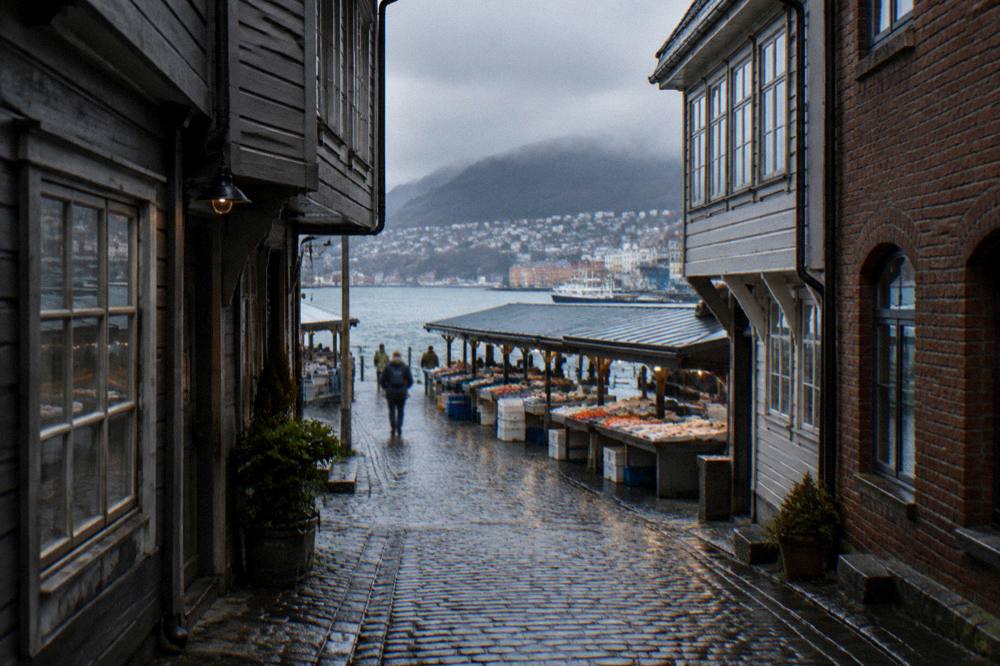
Around Bergen's old town the eating landmarks are the harbourfront fish market, where stalls sell fresh and prepared seafood you can browse for free, and the small cafés and bakeries tucked into the wooden buildings of Bryggen and the Marken lanes behind them. The fish market is the historic anchor, sitting at the wharf's southern end where the trading harbour always fed the city.
The old town's food story is a trading story. The same harbour that carried dried fish north to the Hanseatic warehouses now lands the catch at the market stalls, and the lanes behind the wharf hold bakeries in buildings that have served the district for generations. The food and culture walk covers this ground with a guide who explains the history between stops, which is why it is this page's featured tour; its live listing carries the current price and availability.
For eating independently, the pattern is simple: browse the market for a fast, standing taste of the harbour, then take a table in the lanes for anything slower. The best restaurants in Bergen guide extends the list city-wide for visitors who want a full dinner after the old town closes its museums.
When Is The Best Time To Walk Bergen Old Town?
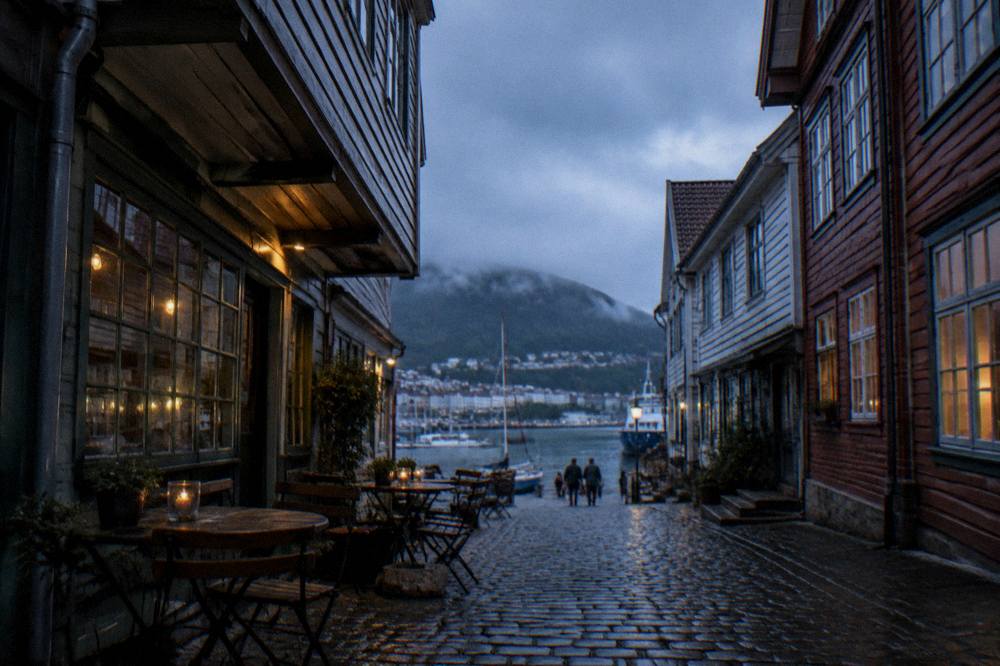
The best time to walk Bergen's old town is morning, before the cruise-day crowds reach the wharf, and in the drier months of the year: yr.no's Bergen station table shows April 2026 with 65.9 mm of rain against a 141 mm normal, the driest month in the trailing 13 months, while November 2025 recorded 321.8 mm, the wettest. Early morning and late evening are when the wooden streets look most like their old selves.
The climate here is temperate oceanic and wetter than most of Norway, with monthly mean temperatures running from -1.4 C in January 2026 to 14.9 C in July 2026 across the trailing 13 months of Met Norway data. That does not rule out any season; it rules out umbrellas as an afterthought. The lanes of Bryggen are at their most atmospheric in low light and drizzle, and the museums exist partly for exactly those days.
Season by season, from the verified Met Norway table:
| Season | Mean temperature range (observed, trailing 13 months) | Wettest recorded month | Old town character |
|---|---|---|---|
| Spring (Mar-May) | 5.9 to 9.9 C | March, 243.9 mm | Light crowds, clear air |
| Summer (Jun-Aug) | 14.3 to 14.9 C | August, 243.6 mm | Busiest, longest days |
| Autumn (Sep-Nov) | 13.1 down to 6.0 C | November, 321.8 mm | Quiet lanes, wettest stretch |
| Winter (Dec-Feb) | 5.8 down to -1.4 C | December, 303.5 mm | Christmas market season, empty alleys |
Should You See The Old Town With A Guide Or On Your Own?
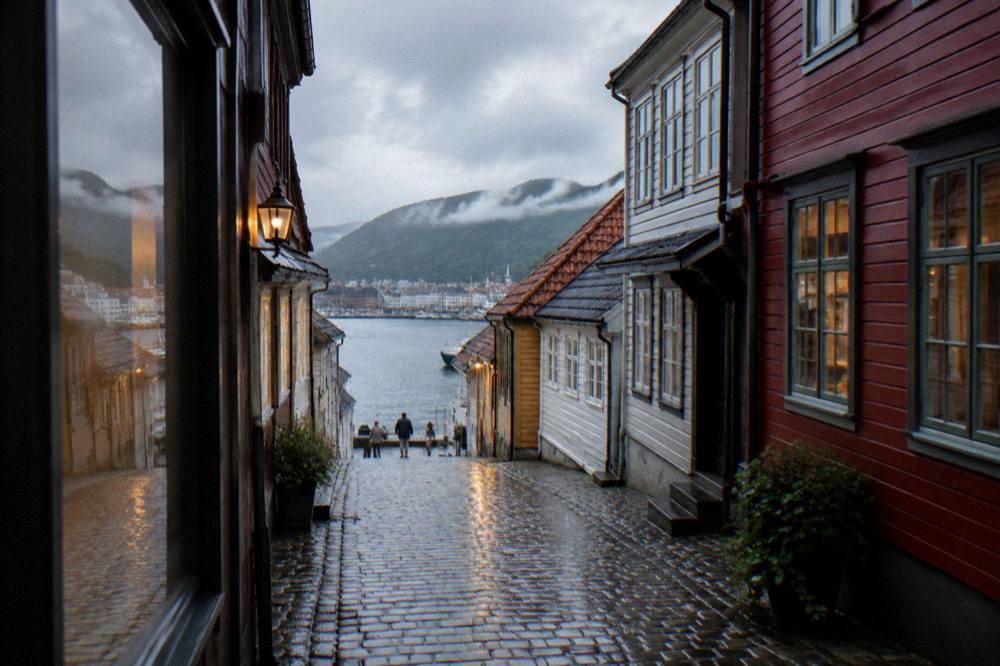
Bergen's old town works both ways, guided and independent, and the choice is mostly about depth: on your own you can wander Bryggen, the fortress and Sandviken freely and at no cost beyond museum entries, while a guide adds the Hanseatic context, the fire history and the food story that the buildings do not explain on their own. A two-hour guided walk covers what most independent visitors piece together over a full day.
The free option is genuinely good here. GuruWalk runs several tip-based walks in the city, including a comedy-and-history walk and a free walking tour, all pay-what-you-want at the end. The paid small-group walks add smaller groups and tighter routes, and the fjord cruise from the roster below is the way to see the old town's harbour from the water, the view the Hanseatic merchants actually had.
Between the two water-and-land options, the cruise is the half-day choice that puts the wharf, the fortress and the Nordnes shoreline into one frame from the deck. It departs from the harbour edge that anchors the old town, so it slots neatly after a morning among the museums. Book whichever matches the weather the morning brings, and keep the free walks as the fallback.
The past-and-present walk is the land alternative: a small-group tour with a local guide that traces how the old districts became the modern city, ideal on a day when the harbour is choppy or the clouds sit low on the hillsides.
For visitors extending beyond the city, the same harbour launches the classic excursions: Norway in a Nutshell, the Bergen to Flam route and the Flam Railway, all covered in this site's Sognefjord day-trip guides.
Common Questions About Bergen Old Town
Does Bergen have an Old Town?
Yes. Bergen's old town is the UNESCO-listed Bryggen wharf plus the connected historic districts of Marken and Skostredet, Sandviken and Nordnes, along with the open-air Old Bergen Museum. Bryggen was inscribed by UNESCO in 1979.
Is Bryggen the same as Bergen Old Town?
Bryggen is the heart of it, the Hanseatic wharf, but the old town extends further: the wooden houses of Sandviken, the Nordnes peninsula and the lanes behind the harbour all belong to the same historic fabric.
How much does it cost to visit Bergen Old Town?
Wandering the wharf, the alleys and the fish market is free. Museums charge entry: the 2026 Bergen Card flyer lists Bryggen Museum at 170 NOK ordinary or 85 NOK with the card, the Hanseatic Museum at 160 NOK with a guided visit, and Haakon's Hall at 120 NOK.
How old are the buildings at Bryggen?
The wharf's buildings stand on foundations that go back to the medieval trading settlement, rebuilt in the Hanseatic style after the fires that repeatedly swept the wooden town. UNESCO inscribed Bryggen in 1979 for its Hanseatic commercial heritage.
Can you walk everywhere in the Old Town?
Yes. All the historic districts are within a short walk of each other, connected from the wharf north to Sandviken, west to Nordnes and inland through the Marken and Skostredet lanes to the city centre.
What is the Old Bergen Museum?
An open-air museum in Sandviken that preserves historic timber buildings relocated from around the city and arranged as streets, showing what the wooden town looked like in past centuries.