Sandviken Bergen
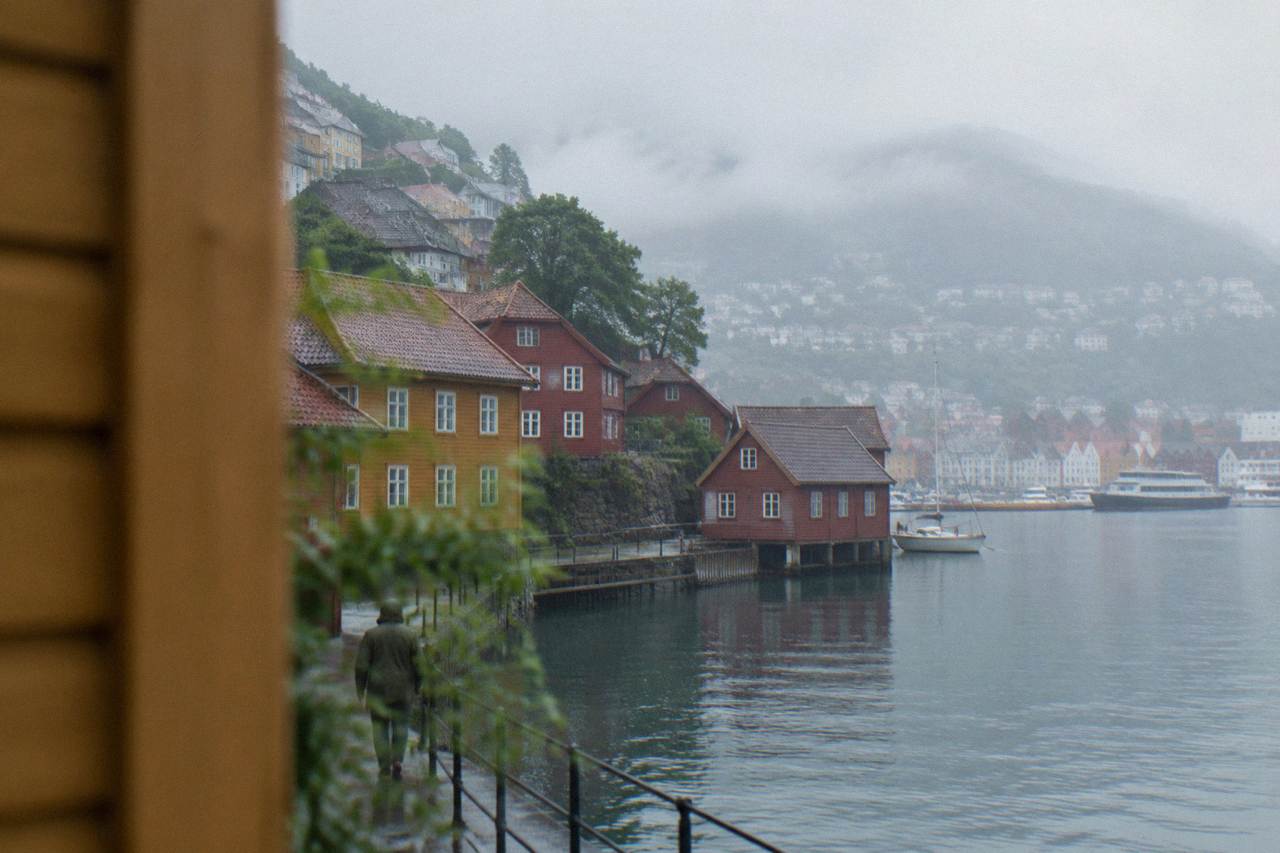
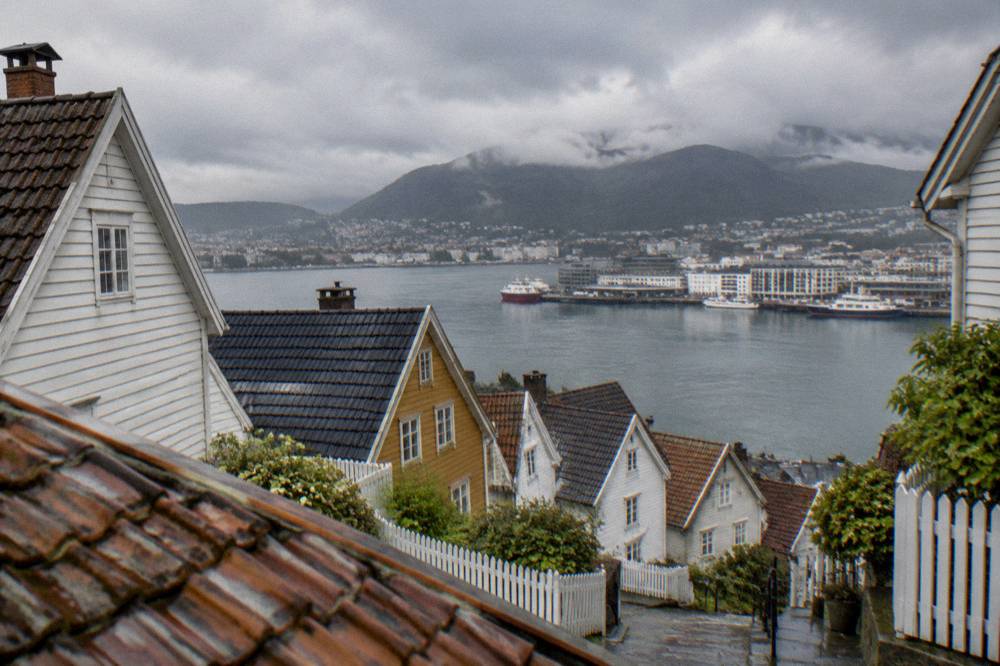
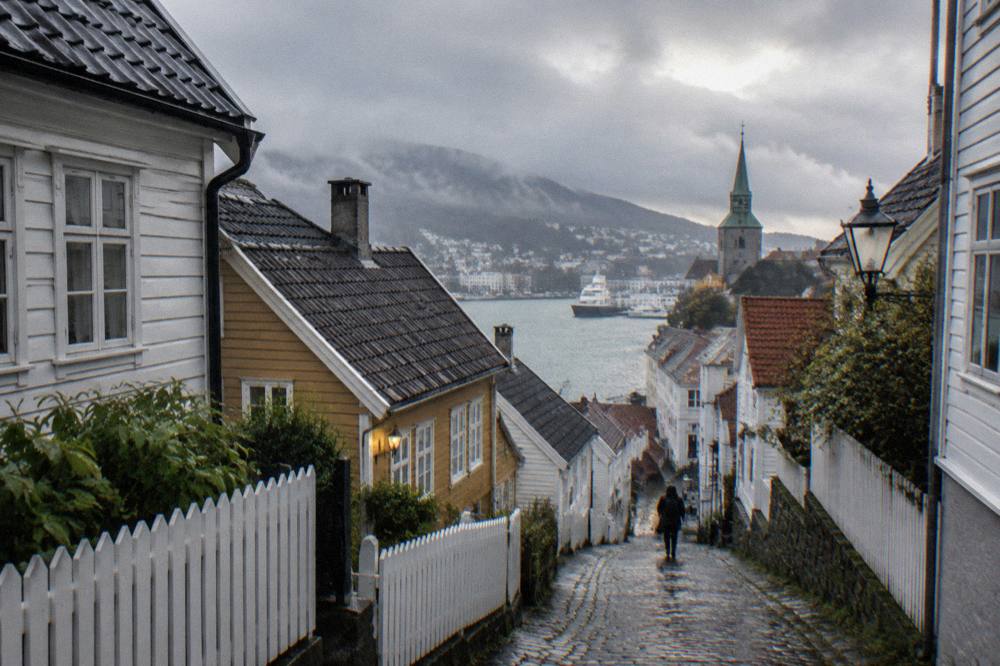
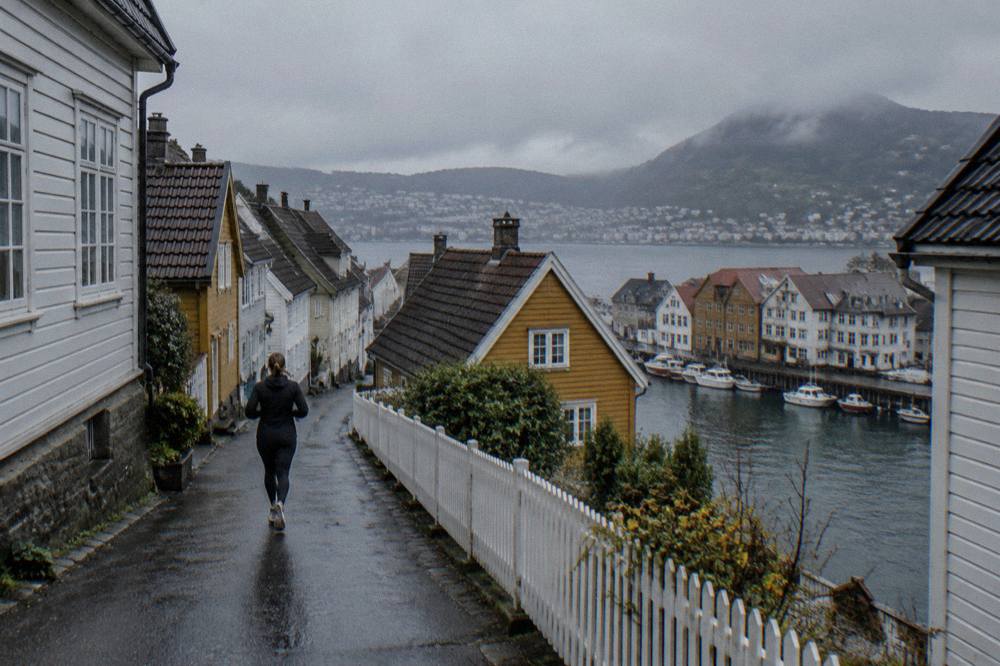
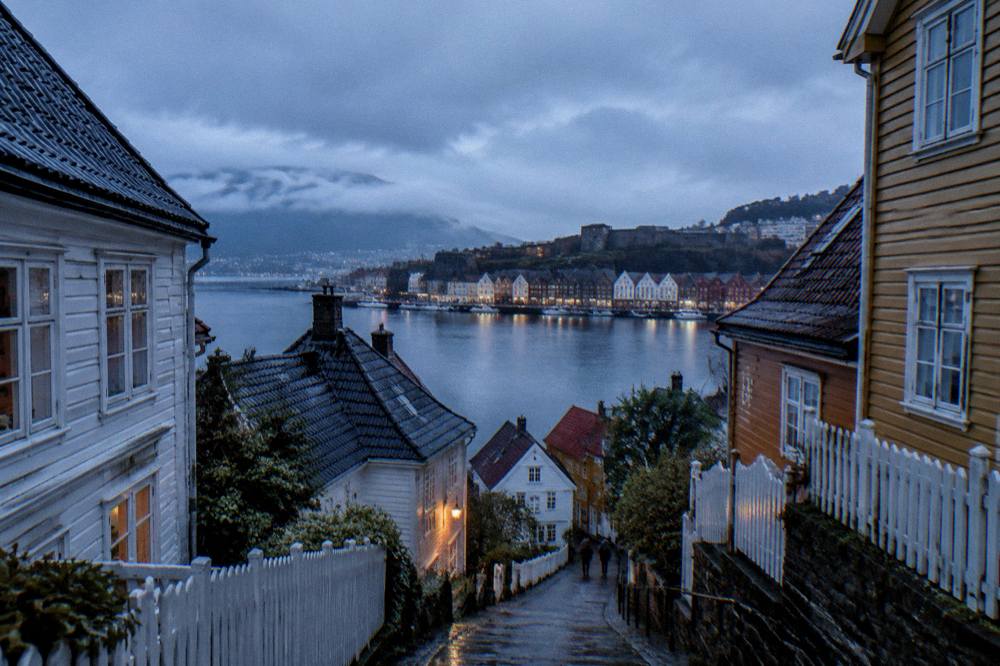
Sandviken is the strip of whitewashed and ochre wooden houses that climbs the hillside immediately north of Bryggen, in Bergen, Vestland county, on Norway's southwestern coast.
Short answer
Sandviken is Bergen's historic wooden-house district just north of the Bryggen wharf, reached on foot in a short walk from the city centre and best known for its historic timber facades, harbour-front warehouses, and the Stoltzekleiven stair climb toward Mount Fløyen.
Sandviken is the old wooden-house district that begins where the Bryggen wharf ends and runs north along the harbour edge of Bergen, a city and municipality in Vestland county, on the southwestern coast of Norway. For most of the year it is quiet: white and ochre facades, boatsheds at the waterline, and a staircase of a street called Sandvikenbakken that keeps climbing until the wooden houses give way to forest. UNESCO's own listing for Bryggen describes that wharf as a remnant of the Hanseatic League's trading post, and Sandviken grew up directly beside it as the residential and shipyard quarter that served the same trade. Today it is one of the few places in the city where you can read Bergen's wooden-building tradition at a glance, from the harbour wall to the treeline, without a ticket or a queue.
What Is Sandviken In Bergen Norway?
Sandviken is a historic residential district on the northern shore of Bergen's harbour, immediately north of the Bryggen wharf and below the western flank of Mount Fløyen. Its defining feature is a dense stock of old wooden houses, many painted white, ochre or iron red, stacked on a hillside that rises steeply from the water toward the forest edge. The area is part of the contiguous wooden-city fabric that survived Bergen's repeated fires and modern rebuilding, and it is named on this site alongside the other real districts the city covers: Bergen City Centre, the Nordnes peninsula, and the cobbled lanes of Marken and Skostredet. It is not a museum and not a theme-park old town; people live here, boats are repaired here, and the washing is hung out to dry between the gables.
The district is small enough to walk end to end. At the southern end it touches Bryggen, whose Hanseatic wharf was inscribed on the World Heritage List in 1979, confirmed directly in the UNESCO listing text. At the northern end it runs toward Skansen and the lower reaches of the Fløyen massif, where the funicular's upper station area and the network of hillside trails begin. Between those two anchors sits the heart of the district: Sandvikenbakken's stepped lanes, the Sandviken church, and rows of timber houses whose smallest windows face the sea for reasons that made sense to the people who built them.
A short orientation helps before you go. The table below places Sandviken against the other districts this site covers, using the descriptions from this site's own area map.
| District | Character | What You Go For |
|---|---|---|
| Sandviken | Old wooden houses north of Bryggen | Hillside lanes, harbour views, quiet streets |
| Bergen City Centre (Sentrum) | Compact commercial core | Shops, Torgallmenningen square, restaurants |
| Nordnes | Peninsula neighbourhood | The aquarium, old wooden lanes, salty walks |
| Marken and Skostredet | Cobbled lanes close to the centre | Independent shops, cafés, small studios |
| Bergen Old Town | Historic quarter feel | Wooden architecture and period streetscapes |
| Fana | Outward, leafier district | Troldhaugen and the Fantoft stave church |
Why Is Sandviken Famous For Its Old Wooden Houses?
Sandviken is famous because it holds one of the largest surviving concentrations of historic wooden houses in Bergen, a city built almost entirely of timber until fire, and later regulation, changed how it was rebuilt. The houses are small, gabled, and packed onto steep plots above the harbour, and their uniform scale is exactly what a modern visitor notices first: no high-rises, no gap sites, just timber rows running up the slope. Unlike Bryggen, where the commercial warehouses were rebuilt time and again across the city's fire-historied past and protected as World Heritage, Sandviken's stock is mostly residential and mostly privately owned, which is why the district reads as a neighbourhood rather than an exhibit.
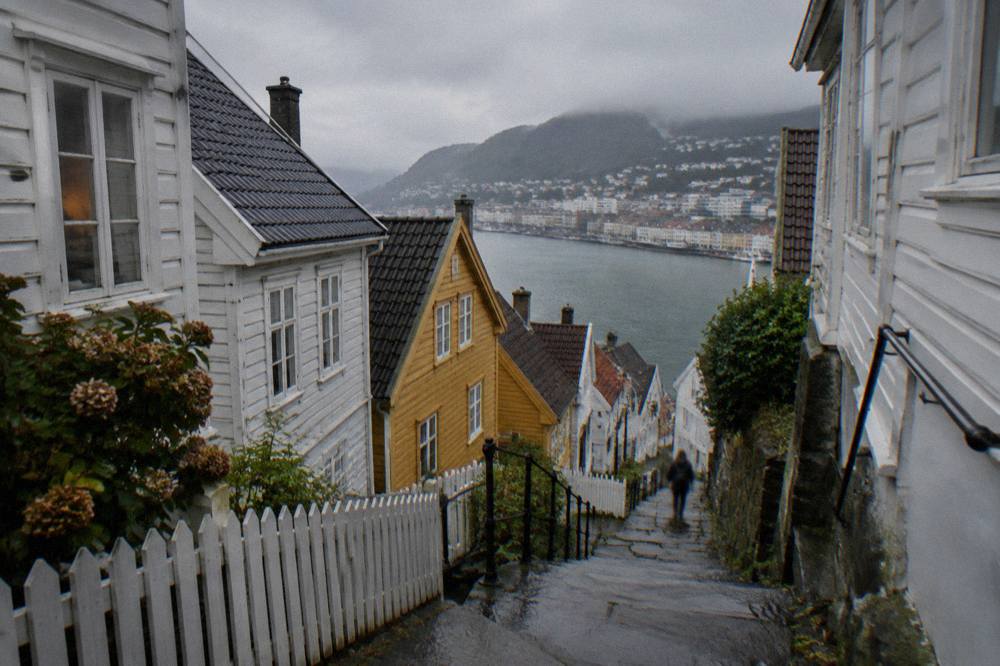
Bergen's climate explains a lot of what you see. This is a temperate oceanic, coastal city, wetter than most of Norway: yr.no's Bergen station table from Met Norway shows monthly mean temperatures ranging from -1.4°C in January 2026 to 14.9°C in July 2026, and 217 days with precipitation over the trailing thirteen months. Wooden houses in this climate live under constant paint, tar and maintenance, which is why the facades are fresh and the colours deep, and why the district's most consistent maintenance feature is water management: steep pitches, deep gutters, and stone walls holding the hillside in place.
The district's working heritage shows at the water's edge. Sandviken's shore historically mixed housing with boatsheds, slipways and small industry serving the Hanseatic trade that ran out of Bryggen, and some of that working shore survives in the row of harbour buildings known as the Sandviksboder, restored warehouse rows now holding shops and workshops. The Bryggen connection matters to understanding the whole northern harbour: the trade that funded the wharf also funded the housing around it, and the Bryggen guide on this site covers that Hanseatic history in detail.
If you want the flavour of the old harbour quarter with a guide in front of it, a small-group walk or a food-and-culture route both work, and this site's featured trio for this area sits below.
The three options above cover different shapes of day. A food-and-culture walk stays inside the city and eats its way along the harbour, a private waterfall day trip pushes east into the Hardanger highlands, and the two-day Sognefjord round trip turns the whole fjord region into an overnight circuit.
How Do You Get To Sandviken From Bergen City Centre?
The simplest way to reach Sandviken is on foot from the city centre: leave Bryggen's northern end at the Sandbrogaten side, and the first Sandviken lanes begin within a few minutes of the wharf, with the whole district walkable from there. There is no separate station or gate; the boundary is simply where the rebuilt Hanseatic warehouses end and the older residential timber rows begin. For anyone arriving by light rail or bus, Bergen's Skyss network serves the centre, and a single adult ticket for zone A costs 51 NOK according to the fare page published by the city's visitor information and confirmed in the Bergen Card transport line.
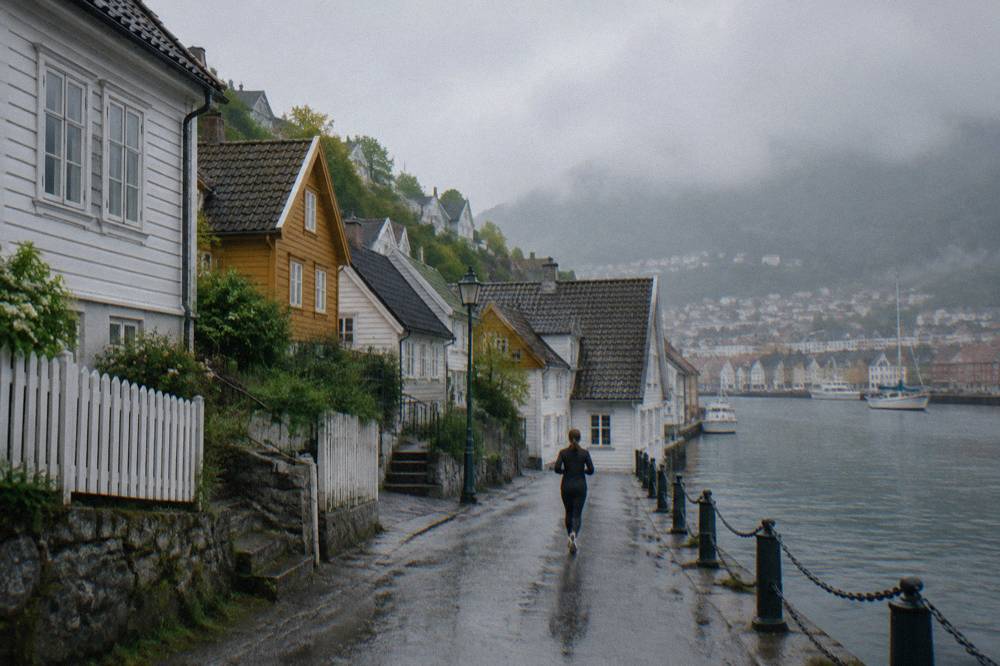
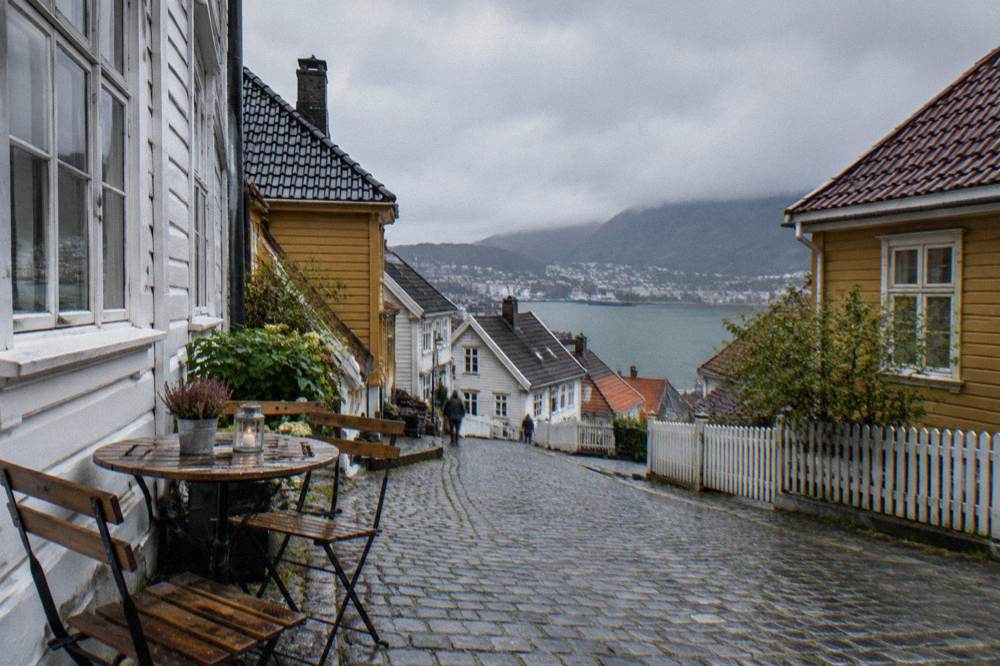
The honest planning note is about the hill, not the distance. Sandviken's lower streets along the water are flat and easy, but the side lanes climb hard, and the famous Stoltzekleiven stairway, which starts in this district and climbs toward the upper slopes of Fløyen, is a serious set of steps rather than a gentle stroll. Anyone planning to walk the district should expect stepped lanes, uneven historic paving, and some steep grades between the harbour and the treeline. The getting around guidance on the Fløyen page is worth reading if your route involves the funicular at either end of the day.
The options below cover the realistic ways to arrive and move on.
| Option | What The Sources Confirm | Practical Note |
|---|---|---|
| On foot via Bryggen | The district starts at the north end of the Bryggen wharf | Flat along the water, steep in the side lanes |
| Skyss bus or Bybanen light rail to the centre | Single adult zone A ticket: 51 NOK | Bybanen line 1 serves the airport from the centre |
| Bergen Card transport coverage | Free Skyss buses and Bybanen light rail across Vestland county, including the airport line | Card also discounts many attractions |
| Funicular for the return | Fløyen funicular exists; return prices below | Drops you at the harbour side of the centre |
One transport caveat belongs here rather than buried later. Bergen's Bybanen network has scheduled summer maintenance in 2026: line 1 was suspended between Slettebakken and Byparken from 29 June to 26 July 2026, with replacement buses running, and the Nonneseter stop has been closed in the direction from the city centre since 23 February 2026 owing to demolition nearby. Those closures sit mostly on the southern and eastern edges of the centre rather than on Sandviken's harbour front, but anyone routing a day around the light rail in summer should check the Skyss travel planner before setting out.
Where Should You Eat Around Sandviken And The Northern Harbour?
Eating around Sandviken means two things: the small kitchens and harbour-side tables of the northern city centre, and the bigger seafood scene at the Fisketorget fish market a short way south along the harbour. The district itself is quiet and residential, so the reliable strategy is to eat at its edges, near the Sandviksboder warehouse row or back toward the wharf, and to treat the district's lanes as the walk between meals rather than the venue. The city's food reputation runs through fish, lamb, berries and baked goods, and this site's guide to the Bergen fish market covers the seafood end of that reputation in detail.
A guided food walk is the efficient way to cover that ground, because Bergen's food culture is spread across the harbour, the market and the small rooms inland of it, and a guide who knows the city stitches those together. The Food and Culture Walk is this site's featured tour for this area, it runs three hours with a 4.6 rating on its listing, and its route sits in the walkable zone between the harbour and the market. Check availability
Beyond the guided option, the practical advice is timing. The market and the harbour-side kitchens are busiest through the middle of the day, especially when a cruise ship is in port, and Bergen Havn publishes a live list of arrivals that shows which days those crowds land on. Eating early or late relative to the port schedule changes the whole feel of the harbour, and on a wet evening, which in this city is a real planning case, the small rooms inland of the water are warmer and easier than the outdoor stalls.
What Are The Best Views Around Sandviken?
The best views from Sandviken are the ones earned on foot: the harbour panorama from the upper lanes above Sandvikenbakken, where the whole Bryggen waterfront and the Nordnes peninsula sit below you in one frame, and the classic postcard angle looking south along the wooden shore toward the wharf. Above the district, the Fløyen trails begin, and the funicular offers the mechanised version of the same view. The two mountains that frame the city, Fløyen and Ulriken, both give wide views over the harbour, and the two are compared in this site's page on Mount Ulriken.
The Stoltzekleiven stairway deserves its own sentence of warning. It starts in Sandviken and climbs a stone staircase up the flank of Fløyen, and it is the steepest, most popular stair climb in the city, busy on dry weekends and slick in the wet. The Bergen Card's own flyer lists the Fløyen funicular return at 200 NOK for an adult from 1 April to 30 September and 145 NOK from 1 October to 31 March, with child tickets at 100 and 75 NOK in the same windows, and the Ulriken643 cable car return at 435 NOK adult, confirmed on the operator's own prices page. Those two mechanised options are the sensible return legs after a stair climb, and the table below sets the priced viewpoints side by side.
| Viewpoint | How You Get There | Adult Return Price (2026) |
|---|---|---|
| Fløyen funicular | Funicular from the centre, or trails and stairs on foot | 200 NOK (Apr-Sep) / 145 NOK (Oct-Mar) |
| Ulriken643 cable car | Cable car from the Haukeland side of the city | 435 NOK |
| Upper Sandviken lanes | On foot up the district's stepped streets | Free |
| Stoltzekleiven stairway to the Fløyen trails | On foot, stone staircase from the district | Free |
Two freshness notes attach to those viewpoints. Ulriken643's own site lists a scheduled maintenance closure in the first two weeks of 2026, reopening around 13 January, plus standard Christmas closures, so a winter visit should check the operator's page first. And the climate table below, from Met Norway's own station data for Bergen, shows what the viewing weather realistically looks like month by month.
| Month | Mean Temp (Observed) | Precipitation (Observed mm) |
|---|---|---|
| January | -1.4°C | 82.0 |
| March | 5.9°C | 243.9 |
| May | 9.9°C | 127.4 |
| July | 14.9°C | 184.2 |
| September | 13.1°C | 206.6 |
| November | 6.0°C | 321.8 |
The pattern is straightforward: November is the wettest month in the observed table at 321.8 mm, spring and summer are milder and drier relative to the autumn, and no month in the trailing thirteen was dry. Anyone photographing the district should plan for soft light and wet streets as the default, which, on old timber and painted gables, is not a bad default at all.
Is Sandviken A Good Place To Stay In Bergen?
Sandviken works as a base for a specific kind of trip: a quiet, walkable, residential stay within easy reach of the centre, where the trade-off is fewer hotels, restaurants and late-night options immediately at hand in exchange for waking up inside the wooden city itself. No sourced ranking of Bergen's districts exists, and this site does not invent one; what the area genuinely offers is atmosphere and proximity, a short harbour walk from Bryggen, the fish market and the centre's transport hubs. Anyone who wants restaurants, nightlife and the thickest concentration of beds should read the city-centre coverage instead: Bergen City Centre is where the hotel stock concentrates, and the one-day Bergen itinerary shows how little time the distances between the districts actually take.
The lodging reality is a mix. Bergen's hotel inventory runs from hostels, with named city hostels listed from around $26 per night in the current booking platforms, through mid-range harbour hotels to design properties, and the districts north of the centre hold a smaller share of that stock than the centre and the wharfside. Vacation rentals exist across the older districts, and in a wooden-house area the rental stock is predictably characterful, small, and older. The practical advice without inventing any rate: book early for the festival weeks, because late May and early June stack the Bergen International Festival, Bergenfest, Nattjazz and Bergen Pride into the same window, with 2026 dates running from 27 May to 10 June for the festival proper.
The honest counter-case is noise and stairs. A district of stepped lanes means luggage goes uphill, and a historic harbour means gulls and early boat traffic. Neither is a reason to avoid the area, but both are reasons to pack lighter than you think you need to.
How Does Sandviken Fit Into A Day Trip From Bergen To The Fjords?
Sandviken fits a fjord day as the quiet morning or evening bookend, not the main event: the fjord tours, whether to Mostraumen, the Sognefjord or Hardanger, depart from the harbour piers a short walk south of the district, so the sensible pattern is a dawn wander through the wooden lanes, breakfast at the harbour, the tour, and a slow return through Sandviken when the day-trippers have gone. The Mostraumen fjord cruise guide and the Norway in a Nutshell page cover the tours themselves; this district's role is the unhurried hour on either side of them.
The long tours justify an overnight near the harbour. The two-day Sognefjord round trip listed below runs fjords, waterfalls and a glacier into a single two-day circuit out of the city, and a private Vøringsfossen waterfall day runs roughly seven and a half hours into the Hardanger plateau; both leave early, both return tired, and both are easier from a bed near the departure point than from a distant suburb. The listings carry their own current prices, durations and ratings, and the two solo picks below show them side by side with this page's food walk for contrast.
The waterfall tour above suits a small group with a car and a driver, while the two-day Sognefjord circuit below suits travellers who want the fjord region done properly rather than sampled.
For anyone stitching a longer route together, the practical sequence is worth writing down. The table below shows how a five-day pattern absorbs the district without wasting the fjord days.
| Day | Where You Sleep | What The Day Holds |
|---|---|---|
| 1 | Bergen centre or Sandviken | Bryggen, the fish market, Sandviken lanes, Fløyen by funicular |
| 2 | Bergen | Mostraumen fjord cruise from the harbour piers |
| 3 | On the fjord route | Nutshell-style day or overnight Sognefjord circuit |
| 4 | Bergen | Museums, Ulriken, the western hills |
| 5 | Departure | Slow morning in the district before the airport run |
What Does A Visit To Sandviken Cost Compared To Central Bergen?
Walking Sandviken itself costs nothing: the streets, the harbour front and the views are free, and the only priced items in and around the district are the funicular, the cable car, the museums and the food you buy. The one card worth pricing is the Bergen Card, which at 400 NOK for a 24-hour adult pass covers free Skyss buses and Bybanen light rail across Vestland county, including the airport line, plus free or discounted entry to most of the museums and attractions around this district. The 2026 prices from the official Bergen Card flyer are set out below.
| Bergen Card (2026) | Adult | Child (3-15) |
|---|---|---|
| 24 hours | 400 NOK | 100 NOK |
| 48 hours | 500 NOK | 125 NOK |
| 72 hours | 600 NOK | 150 NOK |
| 96 hours | 700 NOK | 175 NOK |
Around the district, the attraction prices that matter most are the ones on the harbour walk south toward the centre. The same official flyer lists the Aquarium at 380 NOK adult in the winter window and 380 to 415 NOK across the March-to-October season, Haakon's Hall at 120 NOK, the Hanseatic Museum at 160 NOK with a guided visit, and the Bryggen Museum at 170 NOK ordinary or 85 NOK with the card. KODE's art museums appear on the flyer at 200 NOK, though that figure is the flyer's own line-item and not the museum's separately published standalone price, so treat it as the card-table price rather than a confirmed walk-up rate.
The budget reality of Bergen generally is separate from the district, and this site's coverage of the Bergen Card and of Bergen on a budget breaks that down properly. What belongs on this page is the narrower point: Sandviken is one of the least expensive parts of a Bergen visit precisely because its appeal is structural. The houses are the attraction, the lanes are the attraction, and the best hour of a visit is the one spent simply climbing them.
What Is There To Do In Sandviken On A Rainy Bergen Day?
On a wet day Sandviken is best treated as a short, well-dressed circuit: the Sandviksboder warehouse row and the harbour edge at the bottom, the church on its rise above the lanes, and then a retreat south along the water into the covered cluster of the centre, where the museums, the aquarium and the fish market's indoor tables take over. The district's lanes are steep and stone-stepped, so rain here means proper footwear and a coat rather than an umbrella in the gusts that come off the harbour. The rainy day itinerary exists for exactly this case, and it holds the full museum list for a wet afternoon.
The all-day rain plan, for the record, is not a failure of a plan. With 217 days of precipitation over the trailing thirteen months in the Met Norway table for this station, wet days are a load-bearing part of any Bergen itinerary, and the district's timber walls, dark paint and running gutters are arguably better in the rain than under a clear sky. Eat late, walk early, and let the middle of the day happen indoors. Anyone with a full day to spare can push the pattern further with a private waterfall trip into a landscape where the rain is the point, and the pick below is that option.
Common Questions About Sandviken Bergen
What Is The Difference Between Sandviken And Bryggen?
Bryggen is the rebuilt Hanseatic commercial wharf, inscribed by UNESCO in 1979, standing immediately south of Sandviken at the head of the harbour. Sandviken is the residential wooden-house district that grew beside it and runs north along the shore and up the hillside below Fløyen. One is a World Heritage commercial quarter; the other is a living neighbourhood of old timber houses.
How Much Time Should You Spend In Sandviken?
An unhurried hour or two covers the harbour edge and the main stepped lanes at a walk, with more time if you add the Stoltzekleiven stairway up toward the Fløyen trails. The district rewards slow looking rather than ticking, so a coffee stop and one long climb make a complete visit.
Is Sandviken Walkable From Bergen City Centre?
Yes. The district begins at the northern end of the Bryggen wharf and the walk from the centre's core is short and flat along the water. The catch is the side terrain: the lanes climb steeply, and anyone routing up toward the Fløyen trails should expect stairs and gradients.
Can You See The Fjords From Sandviken?
Not the great fjords themselves; the district looks south across the harbour to the Nordnes peninsula and the Bryggen waterfront, with the mountain ridges of Fløyen above it. The fjord tours, including the Mostraumen cruise and the Sognefjord circuits, depart from piers a short walk south along the harbour.
What Is The Wettest Month In Bergen?
November leads the trailing thirteen months of Met Norway's station data for Bergen with 321.8 mm of observed precipitation against a 275.0 mm normal, with December close behind at 303.5 mm. Spring months run drier by comparison, though no month in the table was dry.
Where Does Sandviken Sit Relative To The Other Bergen Districts?
It is the northernmost of the old harbour districts this site covers, sitting between Bryggen and the Skansen end of the shore below Fløyen, with the Nordnes peninsula across the water and the city centre a short walk south. Further out lie the cobbled lanes around Marken, the old town quarter, and, well south and inland, the leafier district of Fana.
For everything that sits beyond this district's lanes, from the two-day Bergen itinerary to the Hardangerfjord day trips that leave from the same harbour, the rest of Bergen Travel Guide picks up exactly where Sandviken's wooden streets end.