Bergen Norway City Center
Bergen's city center, Sentrum, packs a UNESCO-listed wharf, two mountainside rides, a fish market and most of the city's museums into a peninsula small enough to cross on foot in under half an hour.
Short answer
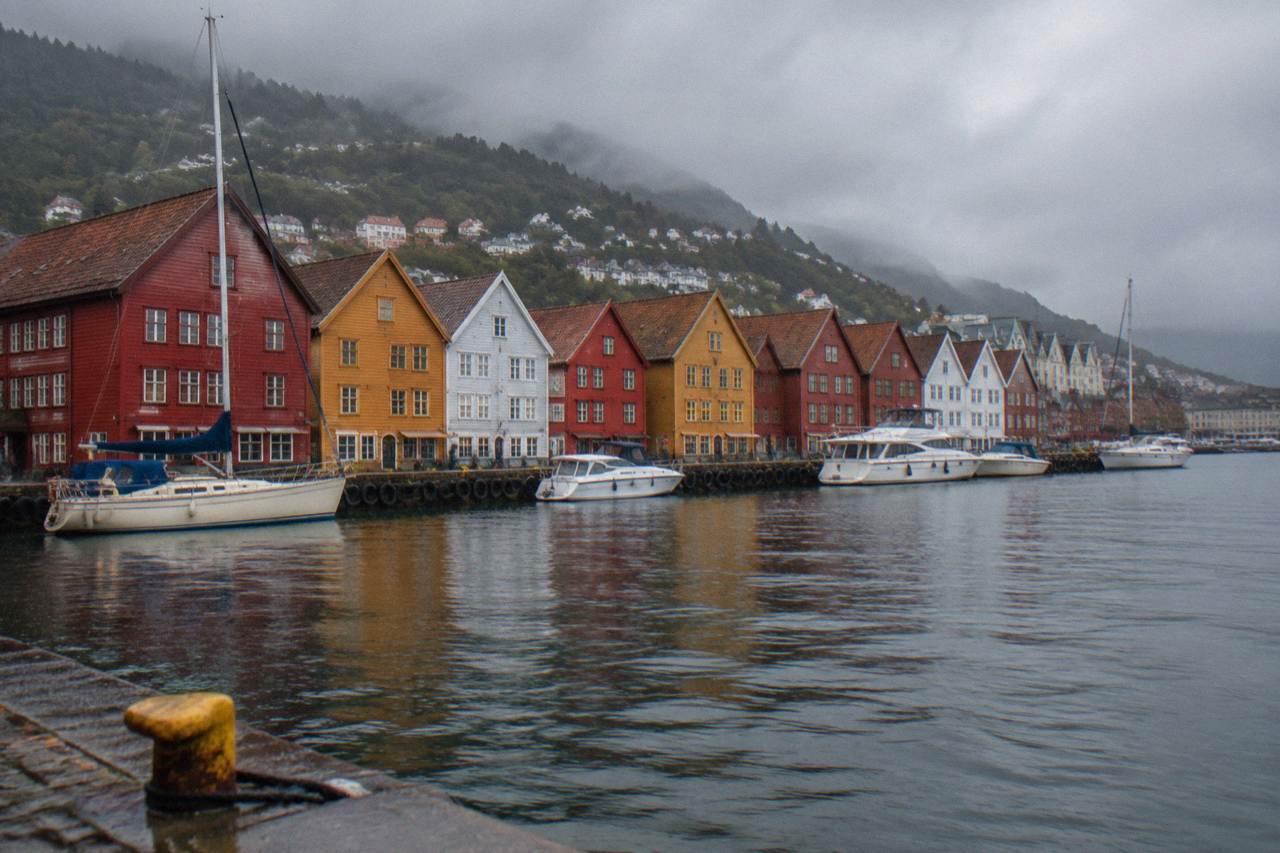
The city center of Bergen, Norway is the Sentrum peninsula around Torgallmenningen and Vagen harbor, holding Bryggen (UNESCO-listed since 1979), the fish market, Bergenhus fortress, and the lower stations of both the Fløibanen funicular and the Ulriken643 cable car. A 24-hour Bergen Card costs 400 NOK and covers local buses and the light rail plus discounted attraction entry.
Bergen, in Vestland county on Norway's southwestern coast, keeps almost everything a visitor needs on one small peninsula. The city center, known locally as Sentrum, wraps around Vagen harbor, and its former Hanseatic League trading post core at Bryggen has been on the UNESCO World Heritage List since 1979, a date confirmed on UNESCO's own listing page. The municipality counts 294,860 residents as of 1 January 2026 according to the kommune's own statistics, yet the center itself feels compact, with the fish market, the fortress, the cathedral and both mountain rides all reachable on foot from Torgallmenningen, the main square. This guide from Bergen Travel Guide covers what sits inside that peninsula, what each part costs, how walkable it really is, and which day trips leave from quays a few minutes from the square.
What Is In The Bergen Norway City Center?
The city center of Bergen is the Sentrum peninsula around Vagen harbor: Torgallmenningen square, the UNESCO-listed Bryggen wharf on its eastern side, Bergenhus fortress and the wooden quarters of Nordnes and Sandviken to the north, and the shopping lanes of Marken and Skostredet running south toward the train and bus stations. Almost every major attraction in the city sits inside or on the edge of this walkable core.
The geography is simpler than most guides admit. Vagen, the inner harbor, cuts the peninsula in half, with Bryggen on the east bank and the fish market and fortress on the west. Torgallmenningen, the long open square rebuilt in classical style after a major city fire, functions as the center's main axis, and every major street eventually feeds into it. The two mountains that frame the city, Floyen and Ulriken, both have their lower stations within the peninsula: the Fløibanen funicular a few minutes' walk up from the fish market, and the Ulriken643 cable car at the southern edge of the center.
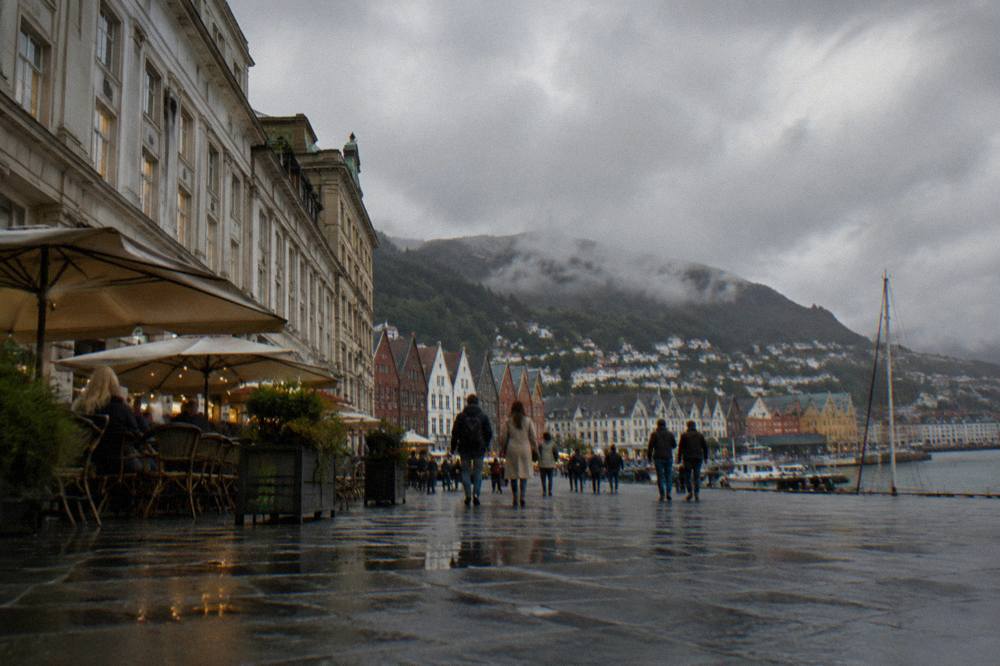
The center is also where the city's character changes street by street. East of the square, the wooden gabled buildings of Bryggen, standing on medieval foundations, lean over narrow passageways that the Hanseatic traders used for centuries. North of the fish market, the Bergenhus fortress holds Haakon's Hall and the Rosenkrantz Tower, stone buildings from the city's medieval and early modern periods. South of Torgallmenningen, the pedestrian lanes of Marken and Skostredet carry the newer, design-heavy side of the city. The areas guide to Nordnes and Sandviken covers the quiet wooden-house quarters at the peninsula's tip if you want the residential contrast.
For a first-time route through all of it, the one day in Bergen itinerary sequences the center from morning coffee on Torgallmenningen to the evening view from Floyen, and the two days in Bergen version adds the museums at a slower pace.
Which Attractions Sit Inside The City Center Of Bergen?
Inside Sentrum you can visit the UNESCO-listed Bryggen wharf, the Bergen fish market, Bergenhus fortress with Haakon's Hall and the Rosenkrantz Tower, Bryggen Museum, the Hanseatic Museum, the Maritime Museum, KODE's four art museum buildings, Bergen Cathedral, St Mary's Church and the lower stations of both the Fløibanen funicular and the Ulriken643 cable car, all without leaving the peninsula.
The attraction density here is unusual for a city of this size. KODE, the city's combined art museum, spreads across four buildings along the western edge of the lake that sits just south of the center, and the Bergen Card flyer lists its admission at 200 NOK under the card scheme. Bryggen Museum, built over the excavated medieval wharf, is listed at 170 NOK ordinary admission or 85 NOK with the Bergen Card, and the Hanseatic Museum, inside one of the surviving trading houses, is listed at 160 NOK including a guided visit. Haakon's Hall, the stone feast hall inside the fortress, is 120 NOK per the same flyer.
The two mountain rides anchor the center's edges. The Fløibanen funicular climbs from a station near the fish market to the top of Floyen, with a return ticket listed in the Bergen Card ordinary-price table at 200 NOK adult from 1 April to 30 September and 145 NOK from 1 October to 31 March. The Ulriken643 cable car leaves from the southern edge of the center with a listed adult return of 435 NOK, confirmed on the operator's own prices page. For the differences between the two, including which views suit which weather, the site's comparison of the cable car and the funicular goes through it in detail.
If rain closes in, and with 217 days of precipitation recorded over the trailing 13 months at Bergen's yr.no station it often does, the rainy day in Bergen itinerary keeps almost everything above inside, since Bryggen Museum, KODE, the Hanseatic Museum, the Maritime Museum and the Aquarium are all under a fifteen minute walk from Torgallmenningen. Cruise passengers get a tighter version in the Bergen cruise ship day itinerary, because the cruise quay sits at the north end of the same peninsula.
Guided walks also start from the middle of the center, and a local-led introduction changes how the rest of the peninsula reads. The food-and-culture-walk below covers the central streets and market counters, while the RIB and glacier options below it cover the water and mountain days out that leave from the same quays.
How Much Does A Day In Bergen City Center Cost?
Bought separately at 2026 flyer prices, the main paid center attractions cost: 200 NOK for the Fløibanen return in season, 435 NOK for Ulriken643, 380 NOK for the Aquarium, 200 NOK for KODE, 170 NOK for Bryggen Museum and 160 NOK for the Hanseatic Museum. The 24-hour Bergen Card at 400 NOK instead includes free Skyss buses and the Bybanen light rail plus discounted entry at most of these.
Those figures all come from the official 2026 Bergen Card flyer published by visitbergen.com, the most current primary price source for the city's attractions. The table below lays out the line items a center visitor is most likely to buy.
| Attraction (all inside Sentrum) | Ordinary adult price | With Bergen Card |
|---|---|---|
| Fløibanen return (Apr-Sep) | 200 NOK | Discounted, one per card |
| Fløibanen return (Oct-Mar) | 145 NOK | Discounted, one per card |
| Ulriken643 cable car return | 435 NOK | Discounted |
| KODE Art Museums | 200 NOK listed in flyer | Included at 200 NOK line |
| Bergen Aquarium | 380 NOK (seasonal windows) | Included |
| Bryggen Museum | 170 NOK | 85 NOK |
| Hanseatic Museum (with guided visit) | 160 NOK | Included |
| Haakon's Hall | 120 NOK | Included |
The pass math depends on how many of these you actually enter. The 2026 Bergen Card prices, adult and child, are fixed across four durations:
| Bergen Card duration | Adult | Child (3-15) |
|---|---|---|
| 24 hours | 400 NOK | 100 NOK |
| 48 hours | 500 NOK | 125 NOK |
| 72 hours | 600 NOK | 150 NOK |
| 96 hours | 700 NOK | 175 NOK |
The card's transport coverage is the part visitors tend to undervalue: the flyer states it includes free Skyss buses and the Bybanen light rail across Vestland county, including the airport line. That alone covers the 51 NOK zone A single fare each way, and the full breakdown of the pass is in the site's Bergen Card guide.
One warning on the Ulriken643 cable car: the operator's maintenance schedule closes the cable car for the first two weeks of 2026, reopening around 13 January, plus standard Christmas closures. Check the operator's own page before building a January day around it.
A guided food and culture walk is one of the few center activities where the cost converts directly into edible samples along the route, and the operator's live listing carries the current price, rating and departure point on Torgallmenningen.
Is The Bergen City Center Walkable?
Yes, the Bergen city center is one of the most walkable city centers in Norway: the Sentrum peninsula runs from Bergenhus fortress in the north to the Ulriken cable car station in the south, every major attraction sits on or just off that axis, and the streets between them are a mix of pedestrian lanes, harbor-side walkways and the car-light quarters of Marken, Nordnes and Sandviken, so a visitor can cover the whole center without a single bus ride.
Walkability is also the center's main practical weakness in bad weather, because the exposed stretches along Vagen harbor and across Torgallmenningen have almost no shelter, and the yr.no station table for Bergen records monthly precipitation ranging from 65.9 mm in April 2026 to 321.8 mm in November 2025. The table below shows what the climate data actually says, month by month, from Met Norway's own statistics.
| Month | Mean temperature | Precipitation |
|---|---|---|
| September | 13.1 C | 206.6 mm |
| October | 9.7 C | 231.9 mm |
| November | 6.0 C | 321.8 mm |
| December | 5.8 C | 303.5 mm |
| January | -1.4 C | 82.0 mm |
| February | 0.8 C | 133.4 mm |
| March | 5.9 C | 243.9 mm |
| April | 7.9 C | 65.9 mm |
| May | 9.9 C | 127.4 mm |
| June | 14.4 C | 165.7 mm |
| July | 14.9 C | 184.2 mm |
| August | 14.3 C | 243.6 mm |
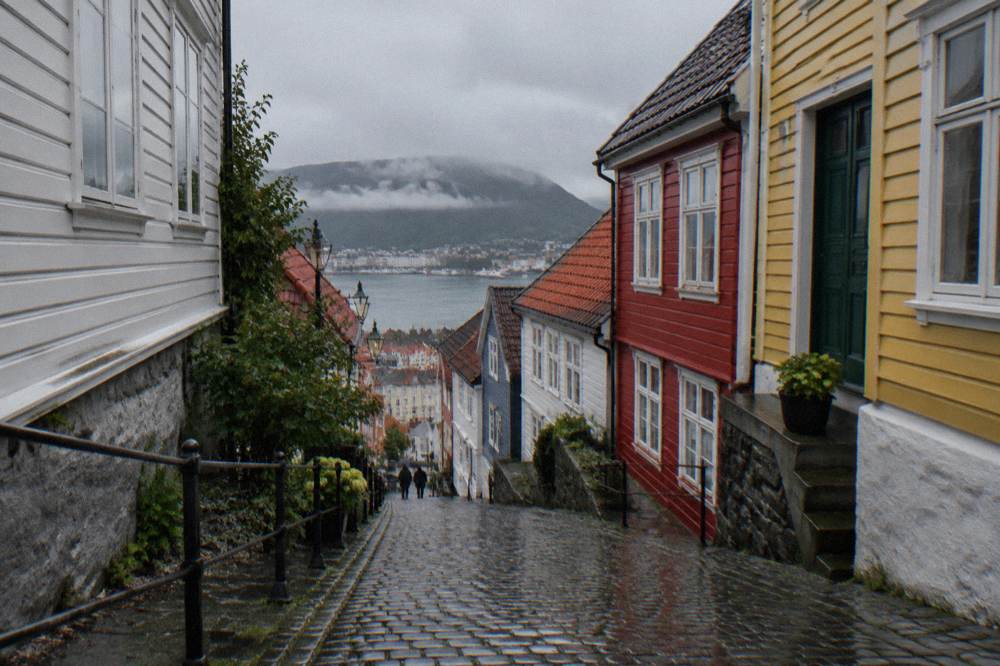
Two things follow from that data. First, the center's steep side streets, especially the climb from Bryggen up to Floyen's lower station and the lanes behind St Mary's Church, get slick in the wet months, so shoes with grip matter more here than in flatter Norwegian cities. Second, the low-precipitation months, April at 65.9 mm and February at 133.4 mm in the trailing table, are the ones where a walking-only day in the center is most likely to stay dry, even if they are not the warm ones. The site's Bergen weather guide and the packing guide translate this into what to bring.
For walkers who want a real climb inside the center, the Stoltzekleiven stair path, one of the steepest maintained walks in the region, starts just north of the center and runs straight up the mountain side, and the hiking guide lists it alongside the ridge trails above Floyen. The Bergen old town areas guide covers the northern wooden quarters for anyone extending the walk past the fortress.
Where Do You Eat And Shop In Bergen City Center?
The eating and shopping core of the Bergen city center runs from the fish market on the harbor edge through the pedestrian lanes of Marken and Skostredet south of Torgallmenningen, with the main cluster of restaurants along the Bryggen side streets and the harbor front, and the city's specialist food shops, bakeries and design stores concentrated inside the five blocks between the square and the lake.
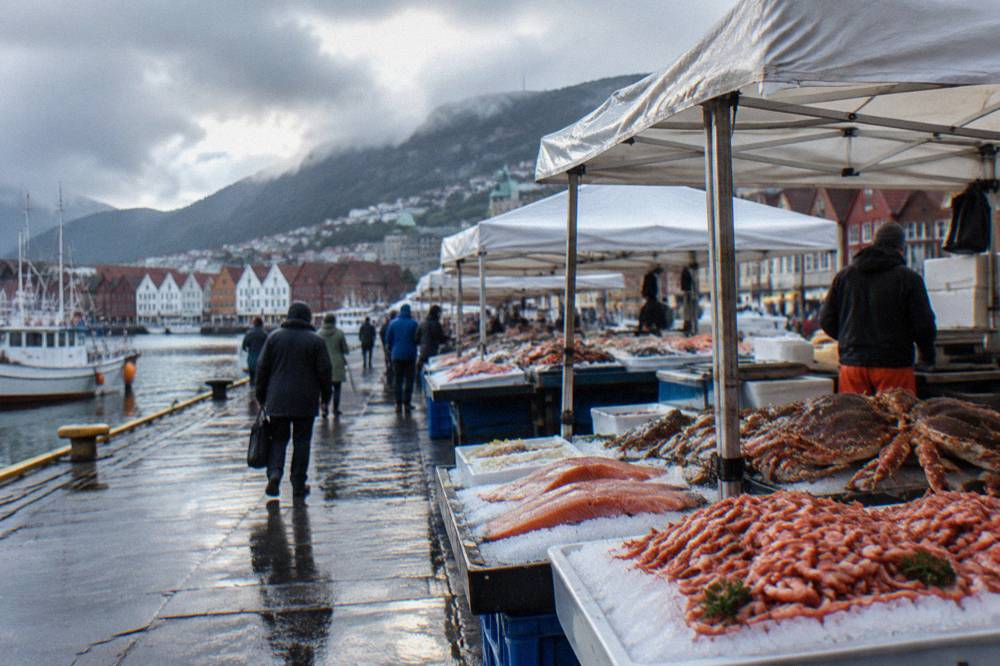
The fish market is the center's most recognizable food stop, and the site's dedicated guide covers what is actually worth buying there versus what is priced for the harbor view. The streets just behind it, along the western edge of Vagen, hold the seafood restaurants that locals use, and the blog post on where locals eat in Bergen maps the ones away from the visitor strip. The bakery question has its own answer too, since the pastry Bergen is known for is a specific local bun with its own history, covered in a dedicated post.
For structure rather than improvisation, the guided food and culture walk above strings the market, the back lanes and the central counters together in one route, and the operator's live listing shows the current price, rating and schedule. It is the natural way to eat the center if you only have one full day in it.
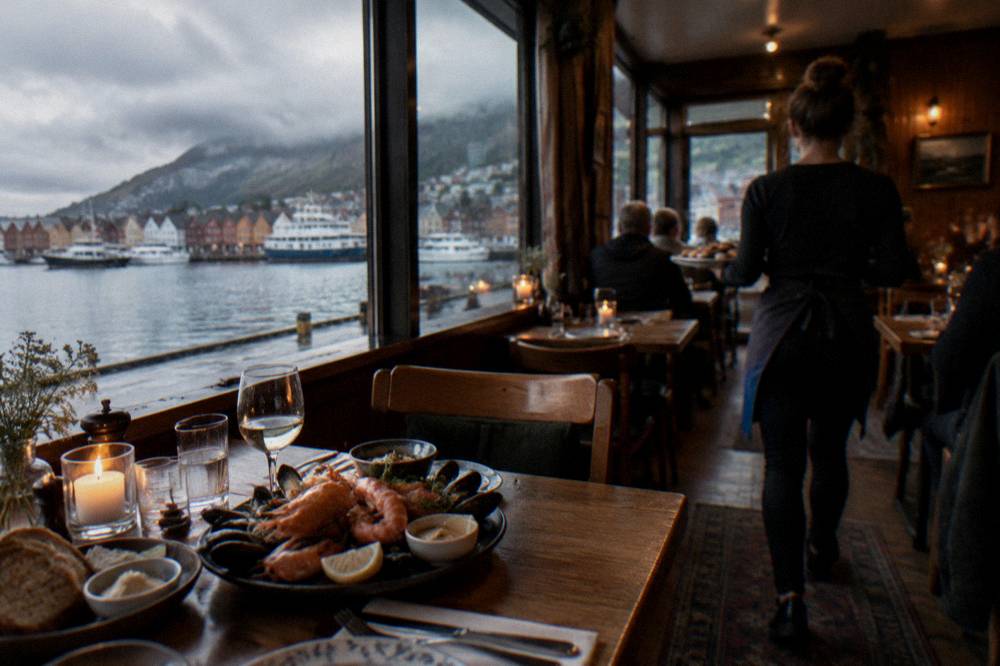
Shopping in the center splits along the same seams as the architecture. The Marken and Skostredet lanes carry Norwegian design, secondhand and independent fashion, while Torgallmenningen and the streets off it hold the larger chains and the department stores. The shopping in Bergen guide goes block by block. For the eating half of the question, the best restaurants in Bergen guide covers the whole municipality but flags which kitchens sit inside Sentrum itself.
How Do You Get Around The Bergen City Center?
Inside the city center you mostly walk, and when you do not, a Skyss zone A single ticket costs 51 NOK for an adult, the Bybanen light rail runs through the center with line 1 connecting Bergen Airport Flesland to the city center, and the Bergen Card includes free travel on all Skyss buses and the Bybanen across Vestland county including the airport line, so most center visitors never pay a separate bus fare beyond the card.
The center's transport reality is that almost nothing requires a vehicle until you leave the peninsula. The Bybanen runs along the southern and eastern edges of Sentrum, with the two central interchange stops at Byparken and Bergen busstasjon, and line 1 continues to the airport terminal. The 2026 Bergen Card flyer confirms the airport line is included with the card, which makes the light rail the cheapest airport connection for card holders. The exact journey time from Flesland to the center is not something this site publishes, because no primary source was fetched to confirm it.
| Transport option | What it costs (2026) | Notes |
|---|---|---|
| Skyss bus or Bybanen, zone A single | 51 NOK adult | Confirmed on visitbergen.com and the flyer |
| Bybanen line 1, airport line | Included with Bergen Card | Runs Flesland to city center |
| Bergen Card 24h | 400 NOK adult | Includes all Skyss/Bybanen in Vestland county |
| Taxi | Metered, no sourced fare | No published flat rate for center trips |
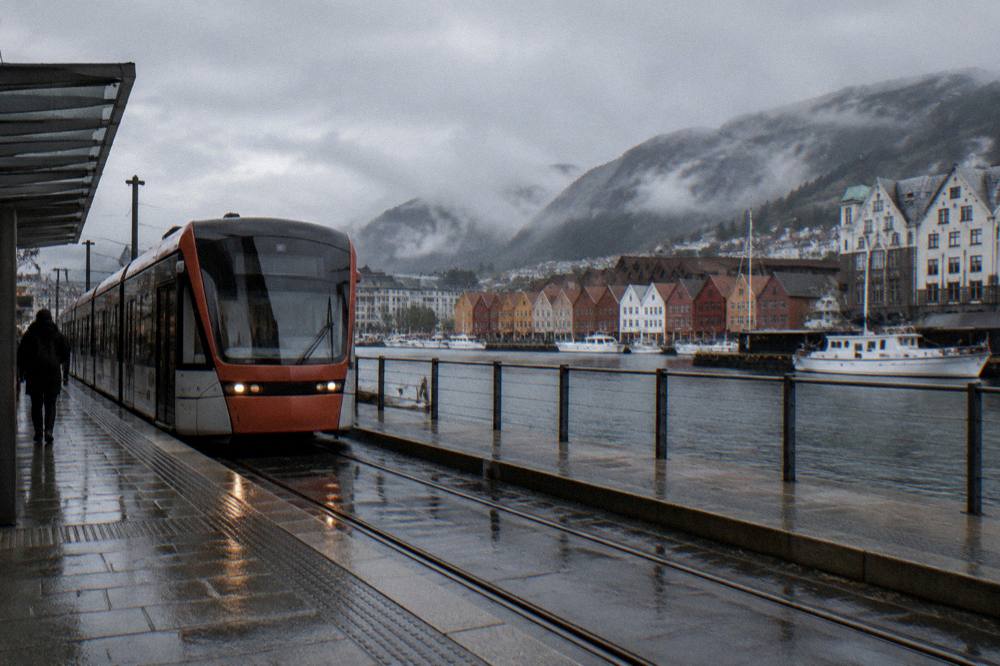
Two 2026 service notes matter if your dates fall in the maintenance windows. Bybanen line 1 is suspended between Slettebakken and Byparken from 29 June to 26 July 2026, with replacement buses running from the terminals, though the airport-to-Slettebakken stretch runs normally, and line 2 is suspended between Kaigaten and Bergen busstasjon from 29 June to 12 July for asphalting work. The Nonneseter stop is closed in the direction out of the city center from 23 February 2026 onward because of a demolition nearby. Skyss publishes live deviations on its own planner, so check it if your trip overlaps those windows. The getting around Bergen guide covers all of this, including the airport transfers, in more detail.
Where Should You Stay In The City Center Of Bergen?
The center's own accommodation sits in three pockets: the harbor front between the fish market and the fortress, where most of the larger hotels cluster; the lanes behind Torgallmenningen, where smaller hotels and guesthouses sit above the shops; and the quieter wooden-house quarters of Nordnes and Sandviken at the peninsula's northern tip, where the trade is location and atmosphere rather than view. No nightly rate is printed here because none was sourced from a verified primary source for this page.
The honest summary is that location inside Sentrum matters more than the specific street. Anything within ten minutes of Torgallmenningen puts the fish market, Bryggen, the fortress and both mountain rides in walking range, and the trade-offs between the pockets are practical ones. The harbor front is closest to the cruise quays and the fish market but faces the busiest summer foot traffic. The Nordnes and Sandviken quarters are the quietest and most photogenic, in the Nordnes and Sandviken guides' territory, but they sit on the far side of the fortress from the train and bus stations. The Fana area south of the center is the budget outlier, covered in the Fana guide, and it trades the walk-in distance for the light rail connection back into Sentrum.
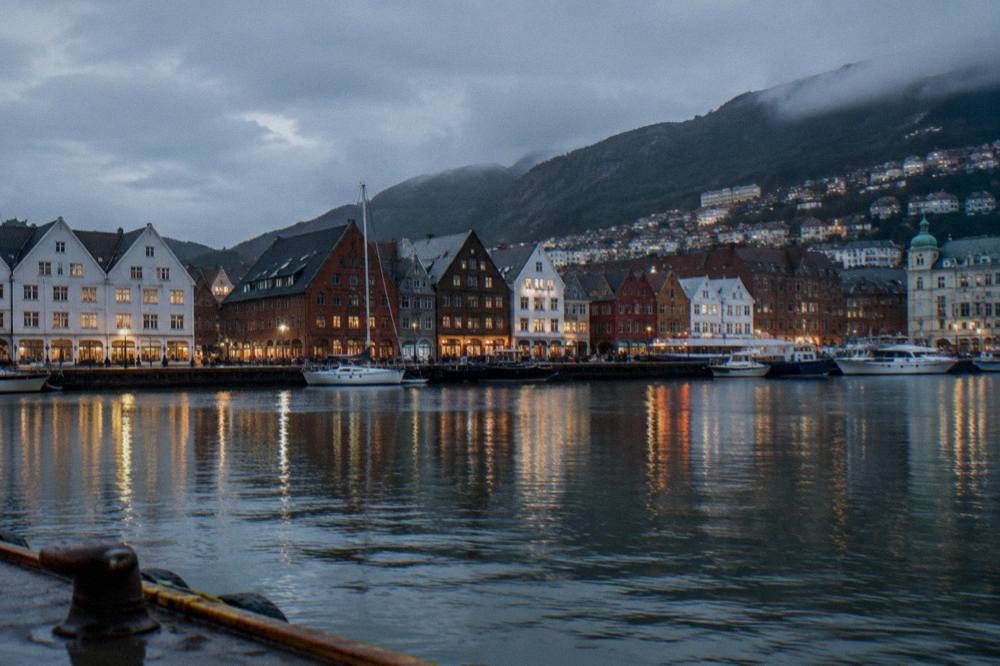
For anyone matching a hotel to a short visit, the where to stay in Bergen and best hotels in Bergen guides do the neighborhood-by-neighborhood comparison with the trade-offs spelled out, and the cruise port guide matters more than any hotel choice for day visitors, since the quays sit inside this same peninsula.
Which Day Trips Leave From The City Center?
Most of Bergen's flagship day trips depart from quays and stations inside or on the edge of the city center: the Mostraumen fjord cruises leave from the harbor near the fish market, the Norway in a Nutshell routes and the Flam railway connections start at the train station on the peninsula's eastern edge, and the Hardangerfjord and glacier-bound buses leave from the adjacent bus station, making the center the departure point for nearly every fjord itinerary in the region.
That is the quiet advantage of staying inside Sentrum: the day trips do not require a transfer across town first. The table below maps the main day-trip families to their departure point and character.
| Day trip from the center | Departure point | What it is |
|---|---|---|
| Mostraumen fjord cruise | Harbor quays near the fish market | Narrow-fjord cruise through Osterfjord waters |
| Norway in a Nutshell | Train and bus stations, Sentrum east | Self-guided or guided loop toward Flam |
| Flam and the Flam Railway | Train and bus stations, Sentrum east | Mountain railway and Sognefjord side |
| Hardangerfjord tours | Bus station | Orchard and waterfall fjord to the south |
| Folgefonna glacier tours | Bus station | National park and glacier lake, full day |
| Rosendal cruise | Harbor quays | Villages and manor house on the Hardangerfjord |
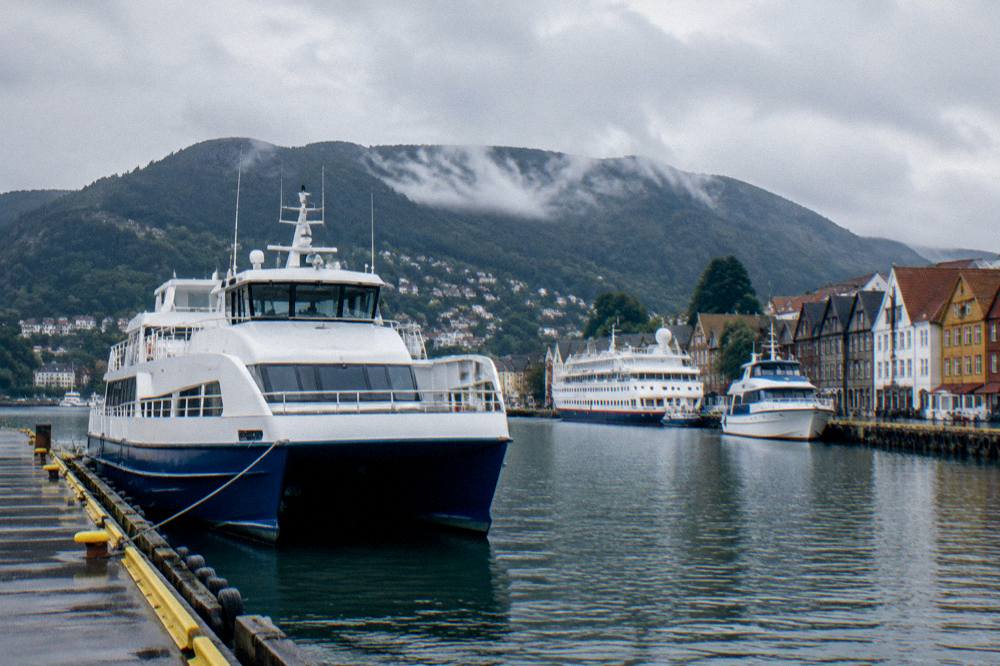
The fjord tours from Bergen guide compares them properly, and the individual guides cover Norway in a Nutshell, the Bergen to Flam route, the Flam Railway, the Sognefjord and the Hardangerfjord in full.
The RIB fjord safari above is the fastest water option out of the center's quays, and the operator's live listing carries its price, rating and departure point.
For the mountain-and-glacier alternative, the Folgefonna tour above runs as a full-day bus loop from the center to the national park and its glacier lake, with the current figures on the operator's live listing.
Whichever way you split your days, the pattern holds: the city center of Bergen holds the UNESCO wharf, the fortress, the museums and both mountain rides inside one walkable peninsula, and it doubles as the departure hub for every fjord day trip in the region. Plan the center on foot, buy the attractions as a card or individually using the flyer figures above, and treat the quays and stations at the peninsula's edge as the launch pad for everything beyond it.
Common Questions About Bergen City Center
Is the Bergen city center walkable?
Yes, the Sentrum peninsula is highly walkable, with Bryggen, the fish market, Bergenhus fortress, KODE, Bergen Cathedral and both mountain rides reachable on foot from Torgallmenningen. The streets between them are pedestrian lanes and harbor walkways, though the exposed harbor stretches have little rain shelter.
How much does a day in the Bergen city center cost?
At 2026 flyer prices, the main paid center attractions bought separately are 200 NOK for the Fløibanen return in season, 435 NOK for Ulriken643, 380 NOK for the Aquarium, 200 NOK for KODE, 170 NOK for Bryggen Museum and 160 NOK for the Hanseatic Museum, while a 24-hour Bergen Card at 400 NOK covers Skyss buses, the Bybanen light rail including the airport line, and discounted or included entry at most of them.
Which attractions are inside the Bergen city center?
Bryggen (UNESCO-listed since 1979), the fish market, Bergenhus fortress with Haakon's Hall and the Rosenkrantz Tower, Bryggen Museum, the Hanseatic Museum, the Maritime Museum, KODE's four buildings, Bergen Cathedral, St Mary's Church, and the lower stations of the Fløibanen funicular and the Ulriken643 cable car all sit inside or on the edge of the center.
How do I get from Bergen Airport to the city center?
Bybanen light rail line 1 runs from Bergen Airport Flesland to the city center, and it is included free with the Bergen Card, making it the cheapest option for card holders. A Skyss zone A single ticket costs 51 NOK. This site does not publish the journey time in minutes because no primary source has confirmed it.
Where do day trips from Bergen depart?
Nearly all of them leave from inside or beside the center: fjord cruises from the harbor quays near the fish market, and the Norway in a Nutshell, Flam, Hardangerfjord and glacier routes from the train and bus stations on the peninsula's eastern edge.
Is the Ulriken cable car open in January?
The Ulriken643 cable car closes for scheduled maintenance across the first two weeks of 2026, reopening around 13 January, plus its standard Christmas closures. The Fløibanen funicular is the winter alternative from the center, with a 145 NOK adult return listed from 1 October to 31 March.