2 Days In Bergen
Two days is enough to see Bryggen, ride the Fløibanen funicular up Fløyen, eat well around the Fish Market and take one fjord excursion from Bergen, the old Hanseatic port on Norway's southwestern coast.
Short answer
Yes, two days covers Bergen's compact historic core, both city mountains and one fjord trip. A third day is only needed for a second fjord, Grieg's home at Troldhaugen or a slower museum pace.
Two days in Bergen, the former Hanseatic trading post in Vestland county on Norway's southwestern coast, is enough to see the historic core properly, ride both of the city's mountain railways, and still push out onto the fjord water that makes the region famous. The city is compact, the attractions cluster within walking distance of the harbour, and the Bybanen light rail stitches the airport to the centre. The honest question is not whether two days works, but what has to be left out, and this guide answers that with a day-by-day plan built on the official Bergen Card price list.
How To Spend 2 Days In Bergen, Norway
Two days in Bergen splits cleanly into a historic-core day and a viewpoint-plus-food day: Day 1 covers Bryggen, the Fish Market, Bergenhus Fortress and the Fløibanen funicular up Fløyen; Day 2 pairs the Ulriken643 cable car with a food tour, a museum or a half-day fjord cruise. The 24-hour Bergen Card at 400 NOK covers buses, the light rail and museum entries, which fits a two-day visit almost perfectly.
Bergen rewards a tight plan because its core is genuinely walkable. The distance from Bryggen to the Fish Market is a few minutes on foot, and Bergenhus Fortress sits immediately north of the wharf. What catches visitors out is not distance but weather: yr.no's Bergen station table shows 217 days with precipitation across the trailing 13 months, so every day of this itinerary has a wet-weather branch. The plan is designed so no single block collapses in the rain.
The structure below assumes a morning arrival on Day 1 and an evening departure on Day 2. If you are still deciding between one, two or three days, the companion piece on how many days in Bergen is enough breaks the trade-off down further.
| Day | Morning | Afternoon | Evening |
|---|---|---|---|
| Day 1 | Bryggen wharf and Hanseatic Museum | Fish Market and Bergenhus Fortress | Fløibanen funicular up Fløyen |
| Day 2 | Ulriken643 cable car or Mostraumen cruise | Food tour or KODE museums | Harbour dinner and Sandviken stroll |

What To Do In Bergen On Day One?
Day one belongs to the historic core: start at the Bryggen wharf, a UNESCO World Heritage Site since 1979, walk the Fish Market and the Hanseatic Museum, then cross into Bergenhus Fortress to see Haakon's Hall, and finish with the Fløibanen funicular up Fløyen for the sunset view. A 24-hour Bergen Card at 400 NOK covers the museums and transport on this exact route.
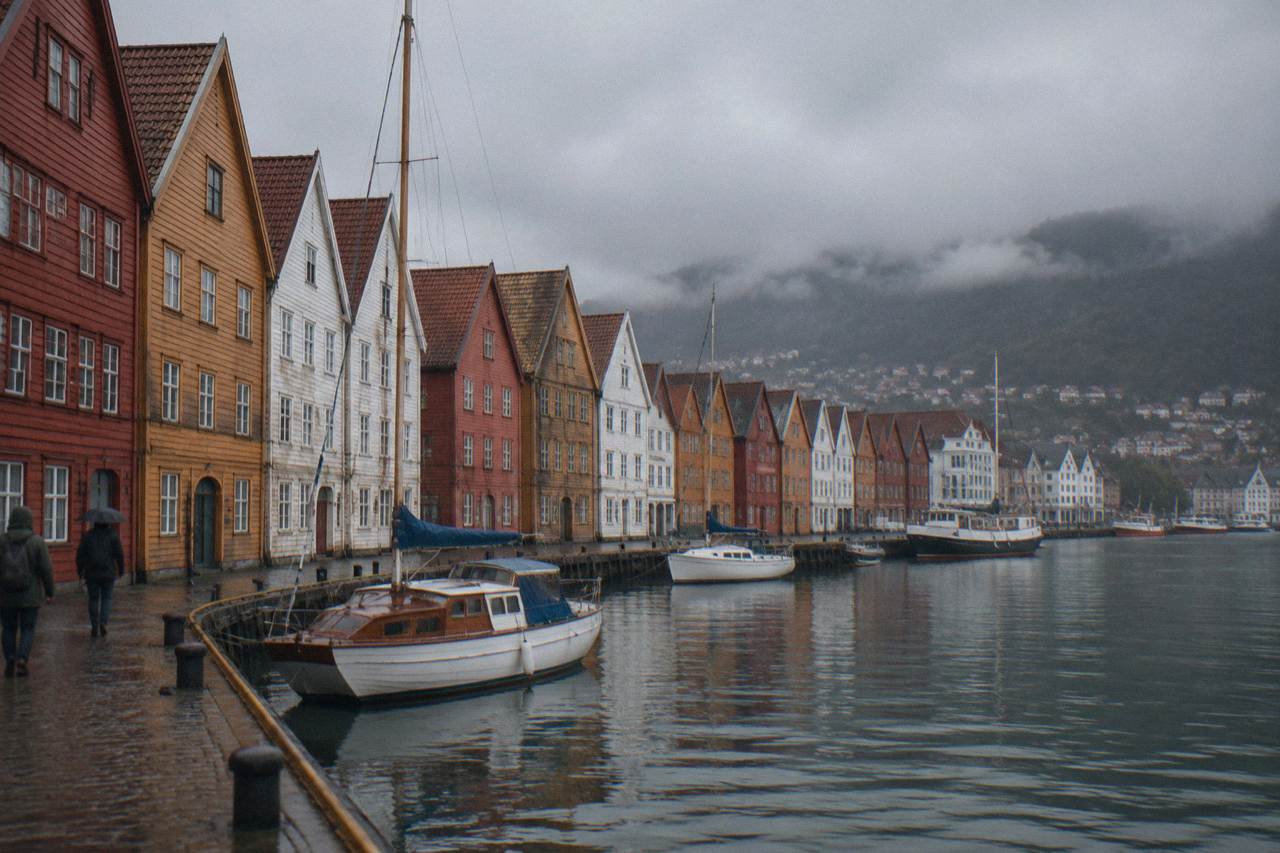
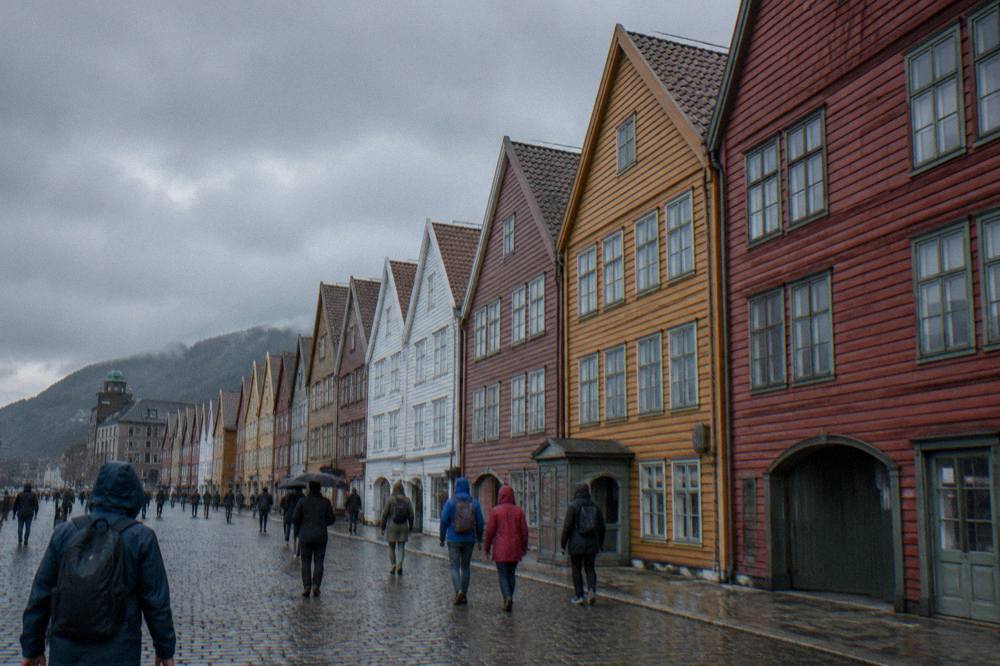
Bryggen is the reason most people come to Bergen in the first place. UNESCO's own listing for the site confirms the 1979 inscription of the old Hanseatic wharf, and the leaning wooden buildings still house workshops, galleries and small shops. The Bryggen attraction guide covers the alleys and museums in detail; for a two-day visit, allow two unhurried hours. The Hanseatic Museum is priced at 160 NOK with a guided visit in the official Bergen Card flyer, and the Bryggen Museum at 170 NOK ordinary admission, 85 NOK with the card.
From Bryggen it is a short walk south to the Fish Market, where the Bergen Fish Market guide explains what is genuinely local versus what is flown in for the stalls. Lunch here is the pragmatic move on a tight itinerary: seafood is expensive everywhere in the city, and the market concentrates the choice in one spot on the harbour.
The afternoon belongs to Bergenhus Fortress. Haakon's Hall costs 120 NOK per the same official flyer, and the fortress grounds are free to wander, with the Bergenhus Fortress guide detailing the buildings. Save Fløibanen for late afternoon deliberately. The flyer prices a return adult ticket at 200 NOK from 1 April to 30 September and 145 NOK from 1 October to 31 March, and the lower evening light over the harbour is what you make the trip for.
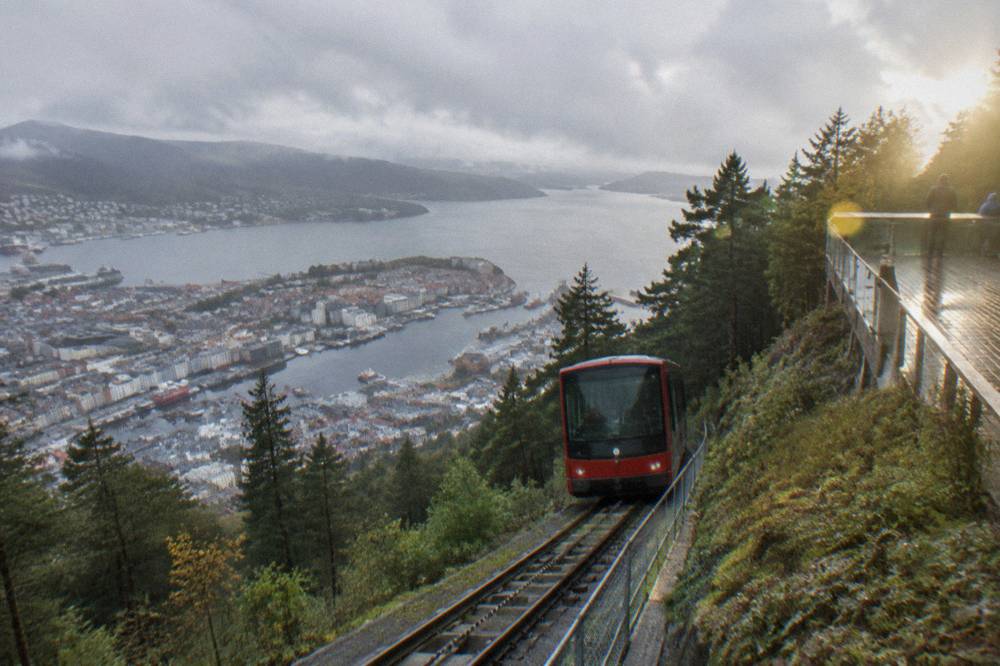
Fløyen itself is a free place once you are up there. The Fløyen guide maps the short loop trails above the station, including the popular path past the troll statue and the goats that graze the hillside in summer. If the mountain is in cloud, which happens often, the rainy day in Bergen itinerary has a museum-first alternative that reuses the same transport.
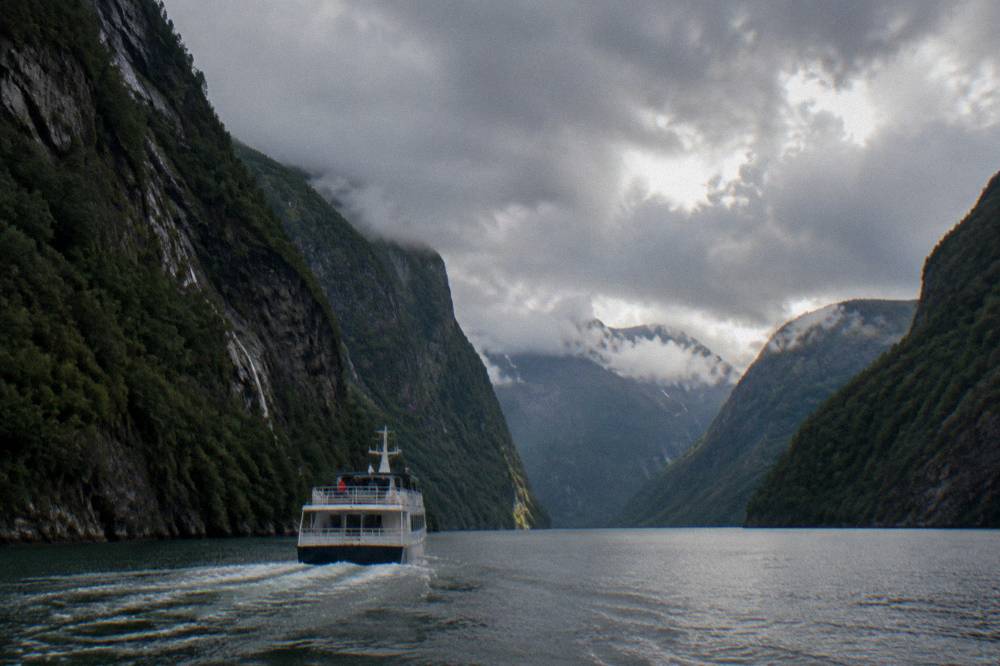
The Mostraumen question comes up on Day 1 for early risers: the fjord cruise to the narrow Mostraumen channel takes roughly half a day, and doing it on arrival day means giving up the fortress or the funicular. Most two-day visitors are better served holding the fjord for Day 2 or swapping to a dedicated fjord plan such as the Norway in a Nutshell day trip, which is a full-day commitment from Bergen.
A guided morning walk is another Day 1 opener worth weighing against a self-guided Bryggen start. The Past and Present small group tour and the central Bergen walking tour both cover the core in the morning, which leaves the full afternoon intact. If you prefer to spend nothing up front, the free GuruWalk walks, such as Bergen's Greatest Hits, run on tips and are bookable through Bergen Travel Guide.
What To Do In Bergen On Day Two?
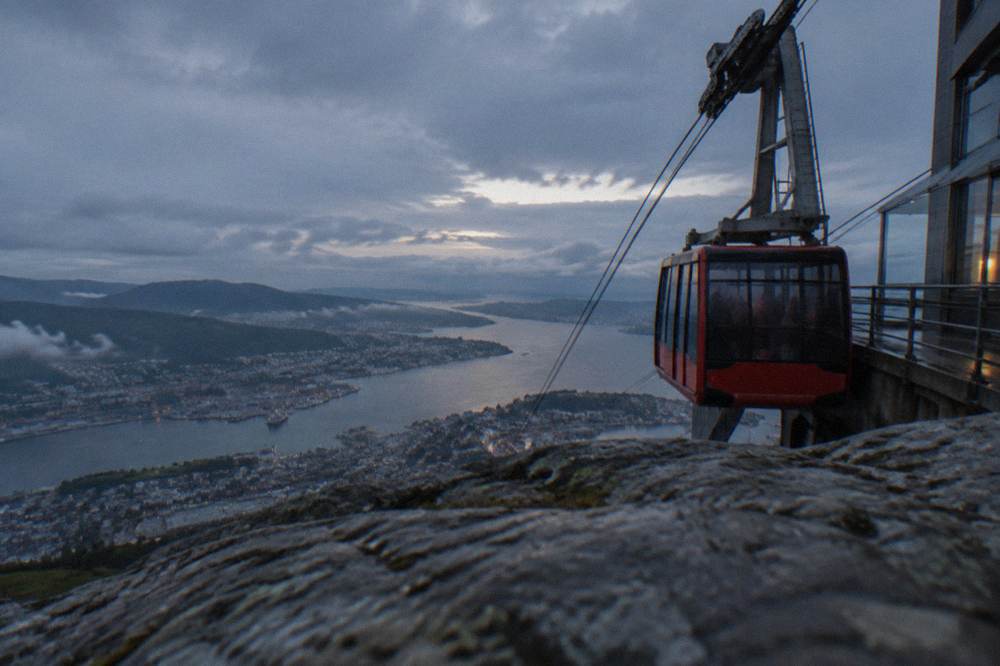
Day two pairs a mountain with a meal: take the Ulriken643 cable car up Bergen's highest city mountain at 435 NOK for a return adult ticket, walk the ridge, then spend the afternoon on a guided food tour or in the KODE art museums, both of which sit within the compact centre. If you only have one fjord experience in you, this is the day to book it, since most cruises depart from the harbour a short walk from Bryggen.
Ulriken is the mountain most two-day itineraries skip, and that is a mistake if heights matter to you. The Mount Ulriken guide covers the cable car, the Vidden plateau trail and the zipline. One practical note for winter visitors: the operator's maintenance schedule closed the cable car in the first two weeks of January 2026 before reopening around 13 January, so January trips should check the operator's page first. The Ulriken round-trip cable car ticket can be booked in advance, which matters when the weather window opens on a Saturday.
For the afternoon, a food tour is the highest-density way to spend your time in this city, because it combines the Fish Market stalls, the specialist shops around Marken and a ride on Fløibanen if you did not fit it in on Day 1. The Taste of Bergen food tour with Fløibanen is the option that bundles the funicular, and it is the single booking that touches the most of what Bergen is known for in one afternoon.
The museum alternative is KODE. The Bergen Card flyer lists 200 NOK as the card's KODE line item, though KODE's own standalone adult price is not listed there, so treat that figure as the card rate. The KODE Art Museums guide explains the four buildings along the lake. For families, the Bergen Aquarium, at 380 NOK ordinary adult admission in the low-season window per the same flyer, sits on the Nordnes peninsula and pairs with a harbour walk.
Sandviken and Nordnes are the evening fills. The old wooden-house quarters north of the fortress cost nothing and photograph well in low light. The St Mary's Church area around the oldest building in the city is a short loop from Bryggen and finishes a two-day trip well, especially on the long June and July evenings. If a third experience tempts you, the three days in Bergen itinerary shows exactly what the extra day buys: Troldhaugen, the museums on the west side and a slower rhythm.
Is 2 Days In Bergen Enough?
Yes, two days is enough for Bergen's core: Bryggen, both mountains, the Fish Market, Bergenhus and one fjord outing all fit inside a 48-hour visit with the light-rail airport link at either end. Two days is not enough if you want a second fjord, Troldhaugen, the Fantoft stave church and the full KODE set without rushing. The cut-off point is the fjord count, not the city itself.
The arithmetic is simple. The city centre compresses into one full day at a comfortable pace. The second day buys the mountains, the food layer and a half-day on the water. What does not fit is stacking a Sognefjord or Nærøyfjord full-day excursion onto the same two days as everything else, because those trips run roughly 10 to 13 hours door to door. The how many days you need for Norway in a Nutshell breakdown treats that question directly: the classic fjord loop wants its own day or an overnight.
For cruise passengers the calculus differs again: a call at the Port of Bergen is effectively a one-day visit, and the Bergen cruise ship day itinerary is the plan built for that constraint. For everyone else, two days is the honest minimum, and the question of four days is answered on is 4 days in Bergen too long, where the answer is that it is not, provided the extra days go to fjords rather than the same city blocks.
| What you want from Bergen | Days actually needed | What two days forces you to skip |
|---|---|---|
| Bryggen, Fløyen, Fish Market | 1 day | Nothing |
| Both city mountains plus the core | 2 days | Troldhaugen, Fantoft stave church |
| One Mostraumen or Hardangerfjord trip | 2 to 3 days | A relaxed second museum day |
| Nærøyfjord, Flåm and Stegastein combo | 3 days | Two days leaves the city day very thin |
| Sognefjord overnight or glacier trip | 4 days or more | Not compatible with a 2-day stay |
How Much Does A 2-Day Bergen Trip Cost In NOK?
A two-day Bergen trip on the official price list starts with a 400 NOK 24-hour Bergen Card or a 500 NOK 48-hour card, adds 200 NOK for a Fløibanen return in the summer season, 435 NOK for an Ulriken643 return and 51 NOK for a single Skyss zone-A ticket, so the card plus the two mountain rides are the biggest fixed sightseeing lines before food and tours. Children pay 100 to 125 NOK for the cards.
The Bergen Card flyer, published on visitbergen.com, is the source for every attraction figure in the table below. The card's real value for a two-day visitor is the 48-hour tier at 500 NOK adult, 125 NOK child, which covers the exact span of a Day 1 arrival to Day 2 departure, including the free Bybanen airport line.
| Item | Adult (NOK) | Child (NOK) | Source |
|---|---|---|---|
| Bergen Card 24h | 400 | 100 | Bergen Card flyer |
| Bergen Card 48h | 500 | 125 | Bergen Card flyer |
| Bergen Card 72h | 600 | 150 | Bergen Card flyer |
| Fløibanen return (Apr-Sep) | 200 | 100 | Bergen Card flyer |
| Fløibanen return (Oct-Mar) | 145 | 75 | Bergen Card flyer |
| Ulriken643 return | 435 | see operator | Bergen Card flyer |
| Bryggen Museum | 170 | 85 with card | Bergen Card flyer |
| Haakon's Hall | 120 | included on card | Bergen Card flyer |
| Skyss single ticket, zone A | 51 | reduced | visitbergen.com transport page |
Food is the budget variable. The honest advice is that restaurant pricing is the line item no card fixes, and the savings in this city come from the card and the supermarkets rather than cheap dining. If costs decide the trip length, two days with the 48-hour card is the most efficient shape a Bergen visit can take.
What If It Rains On Your Bergen Weekend?
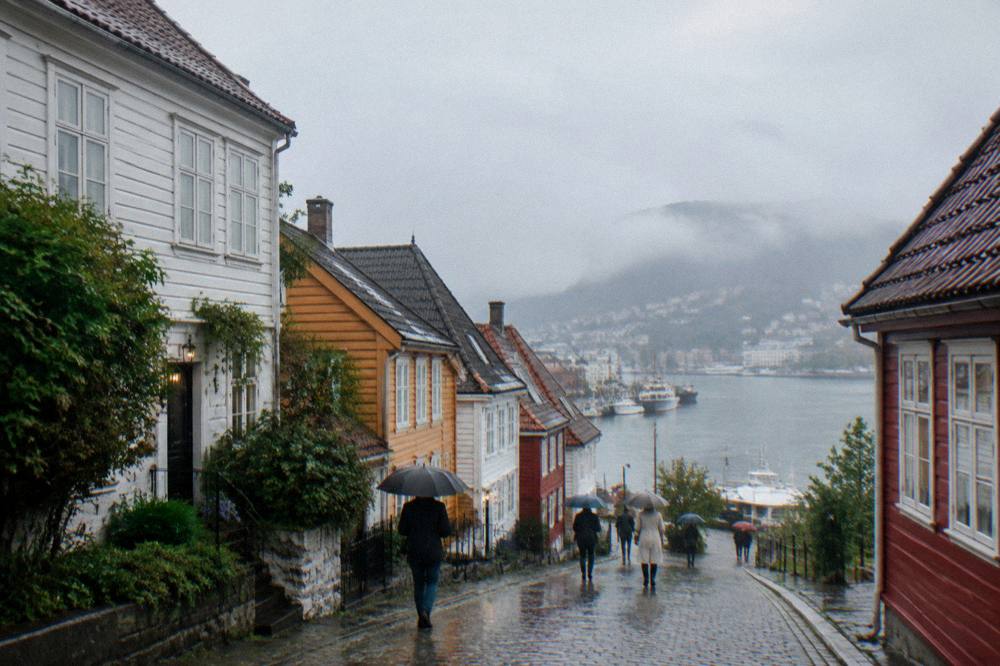
Plan for rain, because Bergen records 217 days with precipitation across the trailing 13 months on the official Met Norway table, and the wettest month in that window was November with 321.8 mm observed against a 275.0 mm normal. The rain is rarely heavy all day, but a two-day itinerary needs a museum branch for each outdoor block: KODE, the Bryggen Museum, the Hanseatic Museum, the Aquarium and the VilVite science centre all sit on the card.
The yr.no Bergen station table shows monthly precipitation totals ranging from 65.9 mm in April 2026 to 321.8 mm in November 2025, and even the "dry" months are not dry in absolute terms. The practical consequences for a two-day visit: book the Fløibanen and Ulriken legs with flexibility, keep the museums for the wettest forecast block, and check the morning forecast before committing to a fjord cruise, since the fjord experience in driving rain is a different product than the brochure one.
| Month | Mean temp (observed) | Precipitation (observed mm) |
|---|---|---|
| Sep 2025 | 13.1 C | 206.6 |
| Nov 2025 | 6.0 C | 321.8 |
| Jan 2026 | -1.4 C | 82.0 |
| Apr 2026 | 7.9 C | 65.9 |
| Jul 2026 | 14.9 C | 184.2 |
| Aug 2026 | 14.3 C | 243.6 |
A wet two-day plan is not a lesser plan. The rainy day in Bergen itinerary covers the full indoor circuit, and the harbour-side museums alone can absorb a sodden afternoon. The one booking to protect is the funicular, where low cloud can put the entire point of the ride behind a grey wall, so keep the ticket for whichever half-day carries the better forecast.
Should You Add A Fjord Day Trip To Your 2-Day Bergen Stay?
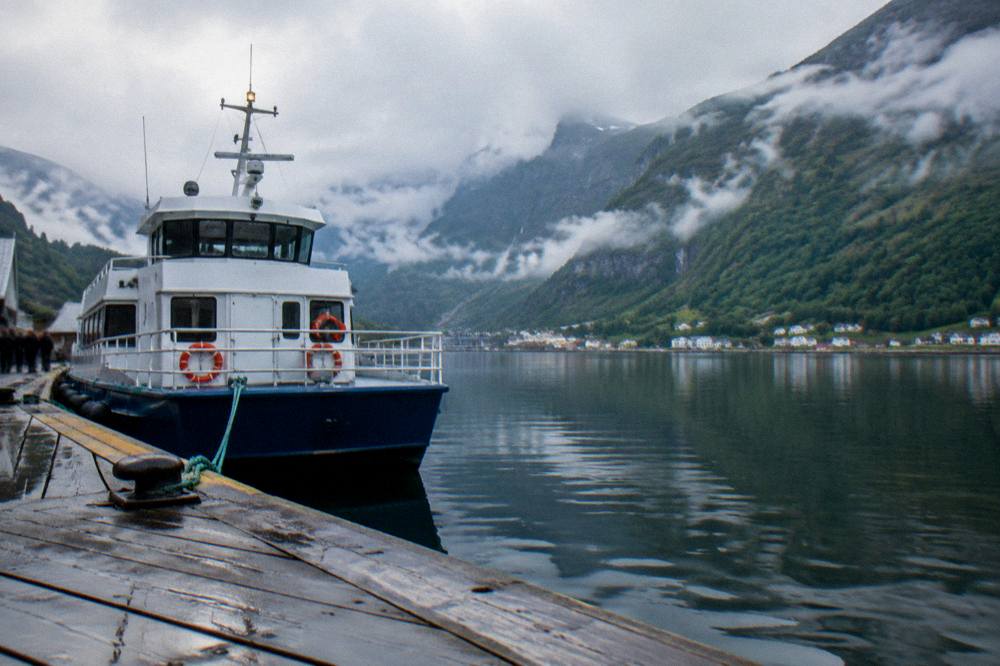
Yes, if you accept the trade: a Mostraumen cruise takes roughly half a day and slots between the core sights, while the Nærøyfjord, Flåm and Stegastein combos take 10 to 11 hours and effectively consume all of Day 2, leaving the mountains and museums to Day 1 alone. Two days plus one fjord excursion works; two days plus two fjord excursions does not.
The half-day branch is the Mostraumen cruise out of the city harbour, covered alongside the region's other fjord options in the Sognefjord guide on this site. The full-day branch is the UNESCO-listed Nærøyfjord, the arm of the Sognefjord that most photographs of Norway come from, reached via bus to the Flåm railway and a viewpoint at Stegastein. The Bergen to Flåm guide lays out the routing.
If the full-day combo wins your Day 2, accept that the plan becomes: Day 1 city core at full pace, Day 2 fjord, and everything else drops off. That is a legitimate two-day Bergen trip, and many visitors prefer it to a second museum day, but it should be a decision made before the trip rather than discovered on the ground. The Nærøyfjord excursion is the single highest-value full-day swap available from this city.
The last decision is seasonal. A winter two-day visit, covered in the Bergen winter weekend itinerary, trades fjord reliability for the Christmas market at Festplassen, which in 2026 runs from 20 November to 22 December, and for shorter daylight, though no daylight-hours figure for Bergen has been verified from a primary source, so check the forecast rather than assuming. Summer flips the trade: long evenings, all transport running, and the mountains best used late in the day when the day-trippers have gone.
Common Questions About 2 Days In Bergen
Is 2 days in Bergen enough?
Yes, for the historic core, both mountains and one fjord excursion. Two days is not enough for a second fjord plus Troldhaugen, Fantoft and the full museum set, so pick one big excursion and keep the rest of the plan central.
What should I skip if I only have 2 days in Bergen?
Skip Troldhaugen, Fantoft stave church and a second fjord excursion. Those are the first cuts; the city core, Fløyen, Ulriken and one fjord trip are the parts worth protecting.
Is the Bergen Card worth it for 2 days?
Usually yes. The 48-hour card at 500 NOK adult covers the exact span of a two-day visit, includes the Bybanen airport line and free Skyss buses, and discounts or covers the major museums. Heavy eaters of museums come out ahead; visitors doing only Bryggen and the mountains may not.
Can you see the fjords from Bergen in 2 days?
Yes, as a half-day Mostraumen cruise or a full-day Nærøyfjord and Flåm excursion, but not both in a two-day visit alongside the city sights. Choose one fjord block and build the rest of the itinerary around it.
What is the rainiest part of a Bergen visit?
On the official Met Norway table for the trailing 13 months, November 2025 was the wettest observed month at 321.8 mm, and January 2026 the driest at 82.0 mm. Whatever the month, pack for rain and keep a museum branch ready.
Do I need a car for 2 days in Bergen?
No. The centre is walkable, the Bybanen light rail connects the airport, and the fjord excursions run on buses and boats from the harbour. A car adds parking cost and no reach inside two days.
Two days in Bergen, done in this order, is a complete visit rather than a compressed one: the wharf and fortress on the first afternoon, both mountains across the two mornings, the food and museum layer in between, and one deliberate choice of fjord. Everything on the skip list, from Troldhaugen to a second fjord, is the raw material of the three-day and five-day plans, not a failure of the two-day one.