Bergen Norway Weather
Bergen, on Norway's southwestern coast in Vestland county, recorded 217 days with precipitation in the trailing 13 months. Here is what the official Met Norway station data actually says about the city's weather, month by month, and what it means for your trip.
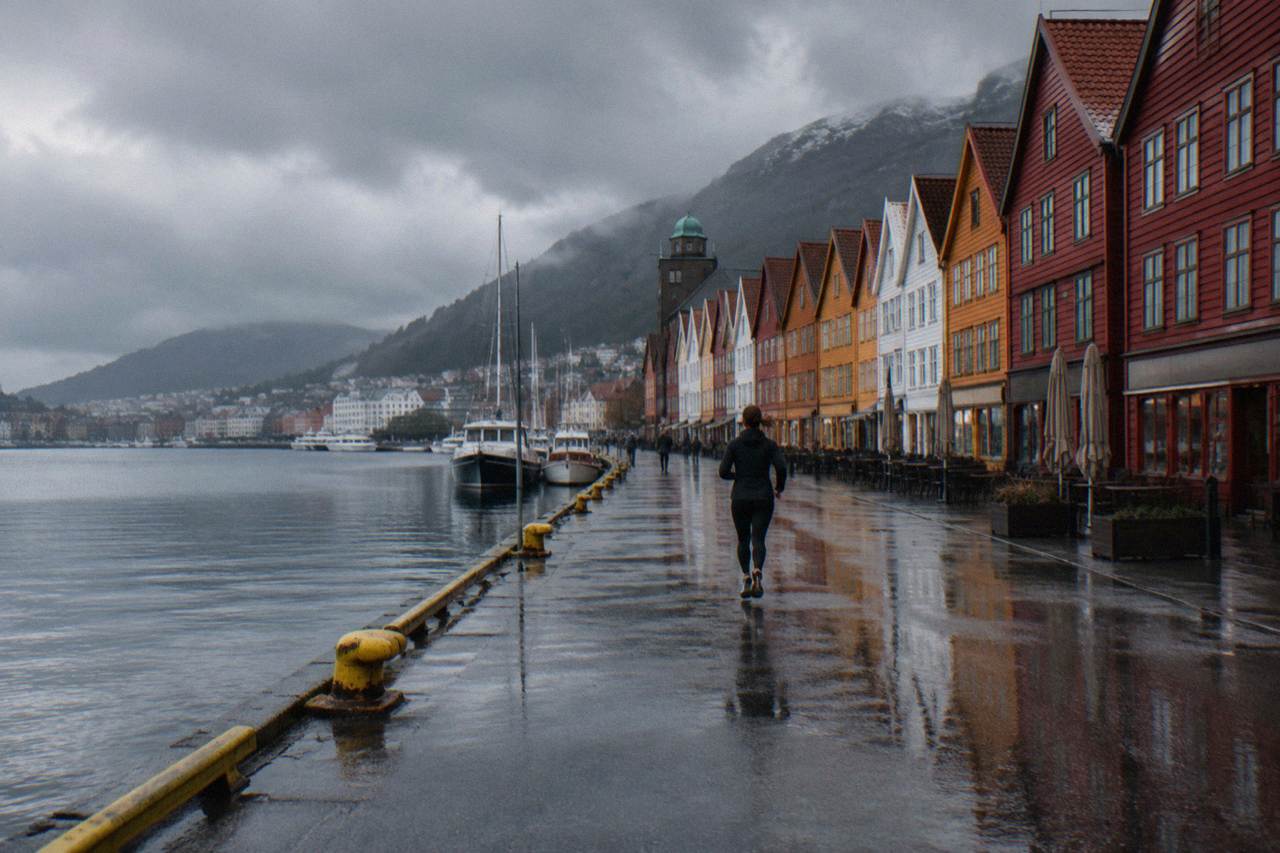
Short answer
Yes, it rains often in Bergen: 217 days with precipitation in the trailing 13 months, monthly totals from 65.9mm to 321.8mm, and monthly mean temperatures from -1.4C in January to 14.9C in July, all from yr.no's official Bergen station table.
Bergen, in Vestland county on Norway's southwestern coast, is a city whose reputation is built as much on its weather as on its Hanseatic wharf. The old trading post sits between seven mountains and a fjord, and the North Atlantic weather systems roll straight into that bowl. The result is a temperate oceanic climate that is wetter than most of Norway, with rainfall arriving in long, grey stretches rather than dramatic single storms. Locals have a word for the steady drizzle, and visitors quickly learn why.
This guide works from one primary source: the official Bergen station statistics published by the Norwegian Meteorological Institute, Met Norway, through yr.no. Every temperature and rainfall figure below comes from that trailing 13-month table, so nothing here is folklore. If a number is not in that table, it does not appear on this page. For the broader planning picture, the Bergen trip planning guide covers flights, timing and budget, and the best time to visit Bergen guide weighs weather against crowds and prices.
Is It Rainy In Bergen?
Yes, rain is a constant in Bergen: yr.no's Bergen station table, built from Met Norway data, shows 217 days with precipitation across the trailing 13 months, monthly rainfall totals ranging from 65.9mm in April 2026 to 321.8mm in November 2025, and a 12-month precipitation sum of 2309.9mm. Rain in Bergen is rarely a single violent storm; it is a steady, often light coastal drizzle that locals treat as background weather rather than an event worth cancelling plans over.
That 217-day figure deserves context. Across a full year, it means measurable precipitation on roughly six days out of every seven. But the intensity varies enormously. A Bergen "rain day" can be ten minutes of drizzle or a full grey afternoon, and the monthly totals in the Met Norway table swing by a factor of nearly five between the driest and wettest months.
The pattern has a shape. Autumn and early winter are the soakings: November and December recorded 321.8mm and 303.5mm respectively. Spring is the reprieve, with April down at 65.9mm. Summer sits in the middle, warm enough to enjoy and wet enough to keep the famous green surroundings green.
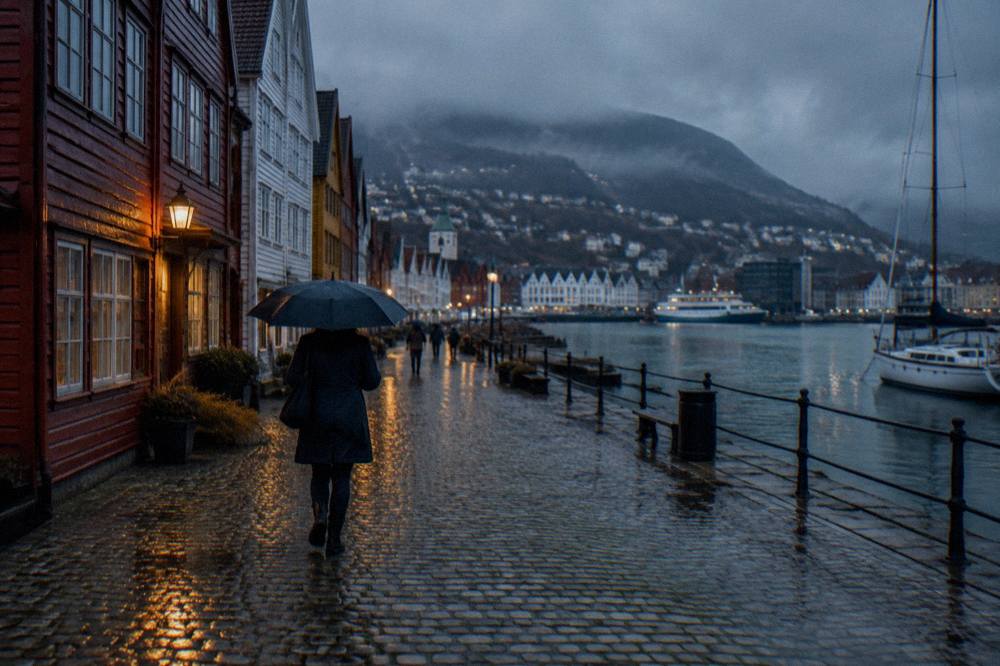
For travellers, the honest framing is this: assume some rain every day, plan one fully indoor option per day, and treat every dry hour as a bonus to spend outdoors. The rainy day in Bergen itinerary does not exist as a joke. It exists because half the year demands it.
How Much Rain Does Bergen Get Every Month?
Bergen's wettest observed month in the trailing 13-month Met Norway table was November 2025, with 321.8mm of precipitation against a normal of 275.0mm, and December 2025 followed at 303.5mm against a 290.0mm normal. The driest month was April 2026 at just 65.9mm, less than a quarter of November's total. Every single month in the table recorded measurable rain, so there is no dry season in Bergen, only wetter and less wet ones.
Here is the full table from the official yr.no Bergen station statistics. The "observed" columns are what actually fell in the trailing 13 months; the "normal" columns are the long-term reference values Met Norway uses for comparison.
| Month | Mean temp (observed) | Precipitation observed (mm) | Precipitation normal (mm) |
|---|---|---|---|
| August 2025 | 15.1C | 165.1 | 208.0 |
| September 2025 | 13.1C | 206.6 | 248.0 |
| October 2025 | 9.7C | 231.9 | 268.0 |
| November 2025 | 6.0C | 321.8 | 275.0 |
| December 2025 | 5.8C | 303.5 | 290.0 |
| January 2026 | -1.4C | 82.0 | 256.0 |
| February 2026 | 0.8C | 133.4 | 209.0 |
| March 2026 | 5.9C | 243.9 | 202.0 |
| April 2026 | 7.9C | 65.9 | 141.0 |
| May 2026 | 9.9C | 127.4 | 109.0 |
| June 2026 | 14.4C | 165.7 | 132.0 |
| July 2026 | 14.9C | 184.2 | 158.0 |
| August 2026 | 14.3C | 243.6 | 208.0 |
Two rows jump out. January 2026 recorded only 82.0mm, far below its 256.0mm normal, which is why that month's mean temperature, -1.4C, was also well under its 2.6C normal: the precipitation that usually falls as rain in January instead stayed frozen. April 2026 landed at less than half its own normal too, at 65.9mm against 141.0mm. A single trailing window can run dry, and this one did.
Ranking the months by observed rainfall makes the seasonal rhythm even clearer.
| Rank | Month | Observed rainfall (mm) | Precipitation normal (mm) |
|---|---|---|---|
| 1 | November 2025 | 321.8 | 275.0 |
| 2 | December 2025 | 303.5 | 290.0 |
| 3 | March 2026 | 243.9 | 202.0 |
| 4 | August 2026 | 243.6 | 208.0 |
| 5 | October 2025 | 231.9 | 268.0 |
| 6 | April 2026 | 65.9 | 141.0 |
The seasonal guides break this down month by month if you have fixed dates: spring in Bergen, summer in Bergen, autumn in Bergen and winter in Bergen.
What Is The Weather Like In Bergen In Each Season?
Bergen runs a temperate oceanic climate with cool summers and mild, wet winters: observed monthly means over the trailing 13 months ran from -1.4C in January 2026 to 14.9C in July 2026, and the extremes for the whole period were a high of 28.0C on 14 August and a low of -11.3C on 8 January. Snow reaches the city in the coldest months, but the coast keeps winter temperatures near freezing rather than far below it, and rain returns quickly.
The oceanic label does a lot of work. The sea moderates everything: winter rarely goes properly arctic, and summer rarely gets hot. What the sea does not moderate is moisture. Atlantic systems hit the mountains that ring the city, rise, and dump their water. That is the whole story of Bergen weather in one sentence.
| Season | Months | Observed mean temps in window | Rainfall character (observed) | What it means for plans |
|---|---|---|---|---|
| Winter | Dec-Feb | 5.8C, -1.4C, 0.8C | 82.0-303.5mm per month | Short days, cold rain or snow, museums and cosy interiors |
| Spring | Mar-May | 5.9C, 7.9C, 9.9C | 65.9-243.9mm per month | The driest window of the year, unpredictable swings |
| Summer | Jun-Aug | 14.4C, 14.9C, 14.3C | 165.7-243.6mm per month | Mildest temps, long evenings, showers between sun |
| Autumn | Sep-Nov | 13.1C, 9.7C, 6.0C | 206.6-321.8mm per month | The wettest stretch, dramatic skies, quiet trails |
Spring deserves its reputation as the value window. April 2026 came in at 65.9mm, the driest month in the entire table, and the whole March-to-May window still averages around 8C. Autumn is the opposite: the three months from September through November are the wettest run of the year, and November is the month that gives Bergen its soggy name.
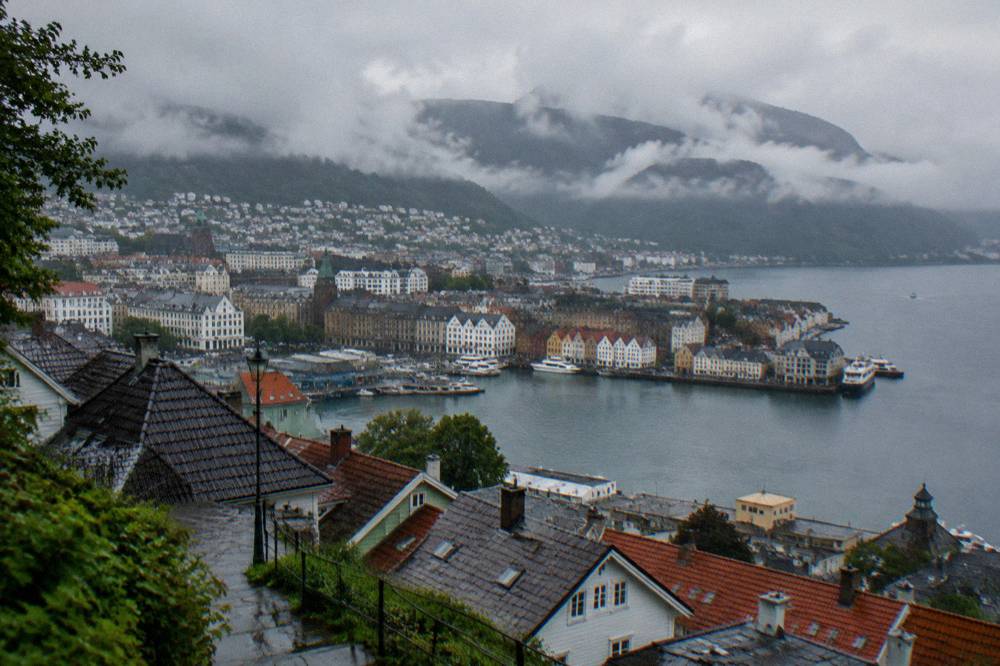
Weather also shapes what a day out costs. The Bergen Card covers transport and museum entry across the city, which matters most exactly in the months when the table above turns wet. This site's featured food tour shows how the city's indoor side works: the Food and Culture Walk pairs stops you can reach under cover with the flavours the city is known for.
The same logic applies at the high end of the budget range. A private guide with a flexible route, such as the Private Tour: Bergen City Sightseeing, can shift a wet itinerary indoors without losing the day, and the Bergen Card guide explains which museum entries soften the cost of exactly that kind of rainy rerouting.
When Is The Best Time To Visit Bergen For Dry Weather?
For the driest window, the Met Norway table points to spring: April 2026 recorded just 65.9mm of rain and May 127.4mm, against November's 321.8mm and December's 303.5mm. Those months averaged 7.9C and 9.9C, cool but comfortable for walking. June and July bring the warmest means, 14.4C and 14.9C, but with noticeably more rain than April. On rainfall alone, April is the standout month in the current table.
There is a trade-off, and it is worth stating plainly. April is the driest month but not the warmest, and the mountains around the city in early spring can still hold snow higher up. July is warmer but wetter, 184.2mm against April's 65.9mm. Neither choice is wrong; they suit different trips.
| Priority | Best month in the table | The figure | The trade-off |
|---|---|---|---|
| Least rain | April 2026 | 65.9mm observed | Cool 7.9C mean, thin high-elevation snow possible |
| Warmest days | July 2026 | 14.9C mean | 184.2mm of rain in the same month |
| Fewest soaked hours relative to warmth | June 2026 | 14.4C mean, 165.7mm | Peak-season prices and crowds |
| Winter atmosphere | December 2025 | 5.8C mean, 303.5mm | Christmas market, dark afternoons, heavy rain |
| Festival energy | June 2026 | 14.4C mean | Rain between events, book lodging early |
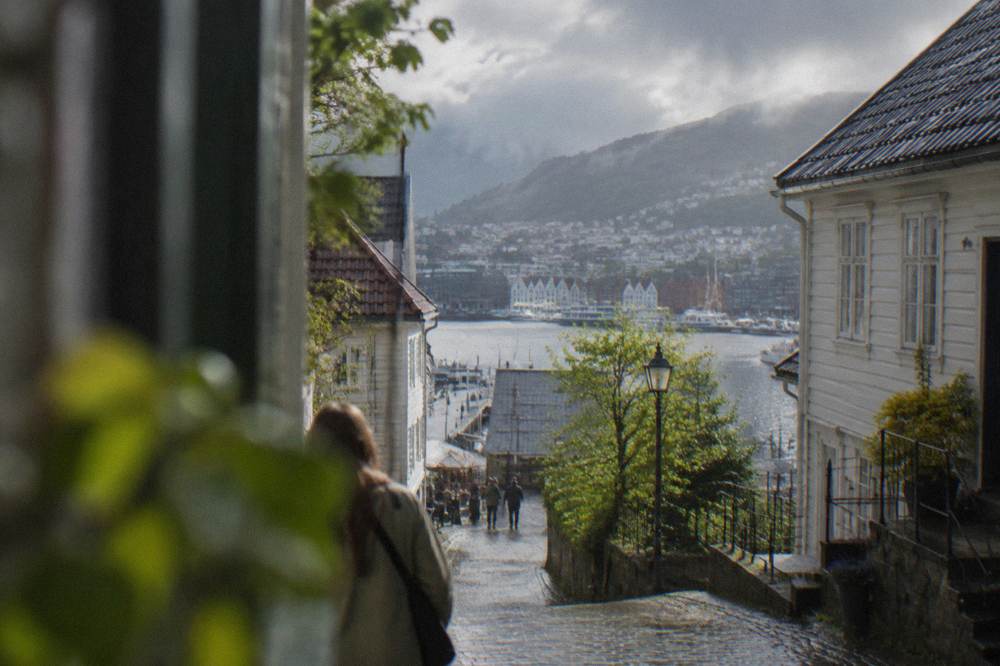
If your dates are tied to festivals rather than rainfall, the June window packs the Bergen International Festival, Bergenfest, Nattjazz and Bergen Pride into the same late-May-to-mid-June stretch, and the best time to visit Bergen guide weighs all of it together. Christmas visitors get the market at Festplassen and the Pepperkakebyen gingerbread city, which run from mid-November to late December, the single wettest stretch of the Met Norway table. That is a fair trade many travellers make knowingly. The Bergen at Christmas guide covers it.
Is Bergen The Wettest Place In Norway?
Bergen is wetter than most of Norway, and the 217 days with precipitation in the trailing 13 months are the number behind the city's reputation, but no verified primary source confirms any "rainiest city in Europe" title, so this page does not claim one. What the Met Norway table does confirm is a coast-facing pattern: 2309.9mm of precipitation summed across the 12 recorded months, concentrated in autumn and winter, when November and December each recorded well over the wettest spring months combined.
The distinction matters because Bergen's rain legend gets repeated loosely. The verifiable part is the station data: 217 precipitation days, 2309.9mm over twelve months, a November peak of 321.8mm. The unverifiable part is the superlative. Mountains just inland of Bergen receive far more moisture than the city station records, and other coastal spots on Norway's west face are comparably soaked. The city station measures the city.
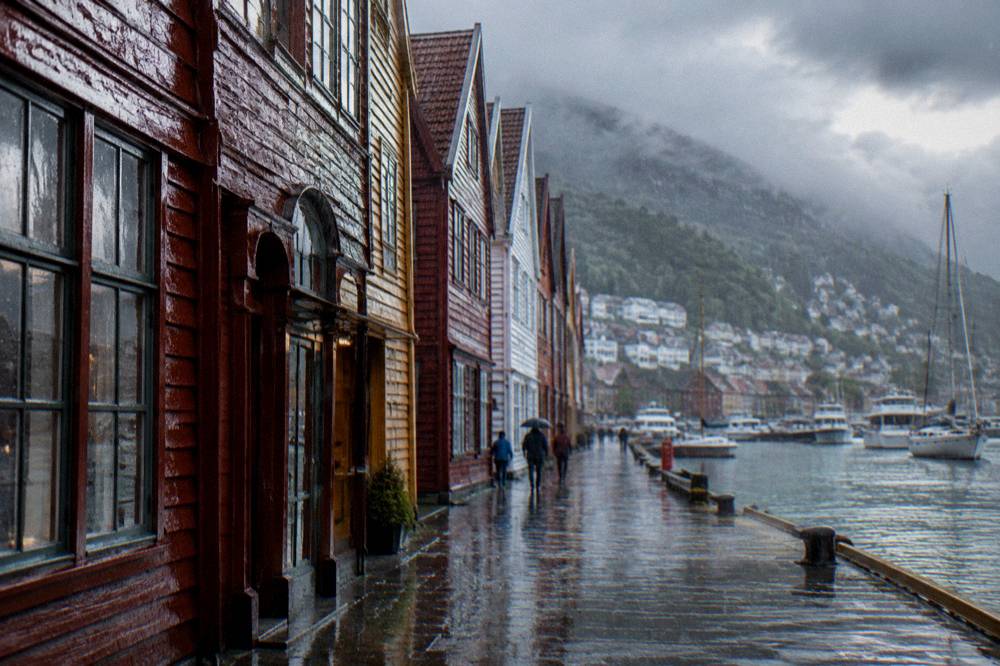
What you can say with confidence is that the rain is productive. The 2309.9mm total, spread across the year, is why the surroundings stay impossibly green, why the waterfalls around the fjords run hard, and why the mountains around the city photograph well in every light except flat grey. Fjord weather follows related patterns, and the weather in the Norwegian fjords answer breaks down what the same Atlantic systems do once they push east of the city.
What Should You Pack For Bergen Weather?
Pack for rain first and temperature second: with 217 precipitation days in the trailing 13 months, a waterproof shell and quick-drying layers matter more in Bergen than a heavy arctic coat, because observed monthly means only dropped below freezing once, at -1.4C in January 2026, and the period's record low was -11.3C. The record high of 28.0C shows summer can spike, so versatile layers beat any single jacket for every season of the year.
The shoe decision is bigger than many expect. Cobblestones in the old quarters, wooden wharf planking and steep mountain trails all get slick, and wet stone is the actual hazard in this city, not cold. Grip beats fashion here.
| Condition you may meet | Figure from the station table | What to carry |
|---|---|---|
| Steady autumn drizzle | 321.8mm in November 2025 | Waterproof shell, hood, water-resistant day bag |
| Cold snap in winter | -11.3C record low, 8 January | Insulated layer, hat, gloves, shoes with grip |
| Mild summer day | 14.9C July mean | Light layers, compact rain shell in the bag |
| Warm spike | 28.0C record high, 14 August | Sun layer, water bottle, sunglasses |
| Rain roughly every other hour | 217 precipitation days per year | Umbrella for city use, but a hood for the trails |
One Bergen-specific note: umbrellas work on the flat city streets and fail on the mountain saddle between Fløyen and Ulriken, where wind funnels between ridgelines. A hood stays on; an umbrella turns inside out. The choice of layers also depends on when you come, so pair this table with the seasonal guides and the where to stay in Bergen and hotels in Bergen pages, since a central base shortens every wet walk home.
A private guided day is one way to hand the wet-weather juggling to someone who already knows which alleys have cover, and the getting around Bergen guide covers the transport side of the same problem.
Does Bergen Rain Ruin Tours, Fjord Cruises And Hikes?
Rain should reshape a Bergen itinerary rather than cancel it: with 217 precipitation days in the trailing 13 months, the practical question is not whether it will rain during your trip but which activities suit a wet day and which you should hold for a drier one. A fjord cruise is workable in steady drizzle, a rocky summit trail is a different proposition when wet, and guided city and food walks sit comfortably between the two.
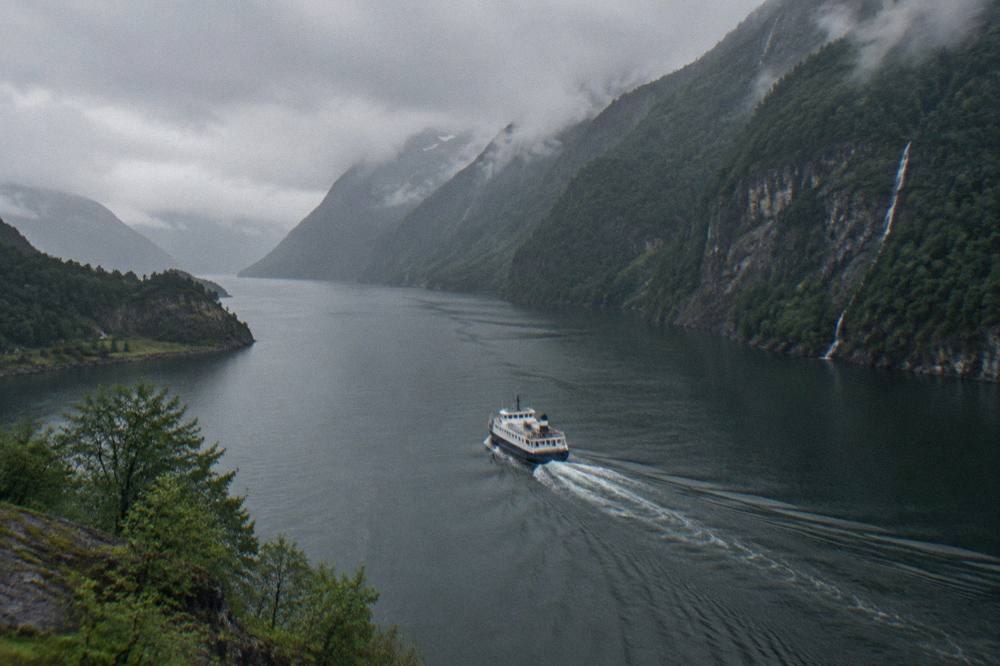
The sorting is fairly simple once you accept the rain as a given. Water-level activities barely change character in drizzle; the Mostraumen fjord arm is dramatic in grey weather and arguably more atmospheric. High trails change a lot: wet plank steps and slick stone on the popular climbs around the city demand caution and proper shoes. The hiking in Bergen guide covers which routes handle weather better than others.
| Activity type | In steady drizzle (the common case) | In November and December (the wettest months) | Best saved for a dry window |
|---|---|---|---|
| Fjord cruise on the water | Runs its route, covered seating | Fine, dress warm, sea spray adds to it | Sunset or summit-photo sailings |
| Guided city walk | Fine, alleys and arcades give cover | Fine with proper shoes | The view from the top of Fløyen |
| Food and culture walk | Well suited, mostly indoor stops | Well suited | Open-air fish market lingering |
| Summit hike over rock | Possible with care and grip | Not recommended | Ridge walks and photo stops |
| Private sightseeing day | Flexible, route can shift indoors | Flexible | Panoramic viewpoints above the clouds |
Day trips follow the same logic. The Vøringsfossen waterfall region is at its most dramatic precisely when the weather is wet, because the falls run hardest on the months the station table shows heavy rain upstream. A private day tour to Vøringsfossen is the classic example of a trip that turns the rainiest weather into the payoff rather than the problem.
For fjord-region options beyond the city, the fjord tours from Bergen guide lays out the full range of cruises and combos, and the Bergen cruise port page covers what a ship-day visitor can realistically fit between showers.
The honest bottom line: the rain shapes Bergen the way heat shapes a Mediterranean city. It is not an obstacle to the trip; it is the trip's texture. Plan one covered option per day, keep a dry-window activity in reserve, and the city rewards both. For everything that is not weather, the Bergen Travel Guide homepage holds the full picture of the city and its fjords.
Common Questions About Bergen Weather
Is it rainy in Bergen?
Yes. The official Met Norway station table via yr.no shows 217 days with precipitation in the trailing 13 months, with monthly rainfall totals between 65.9mm (April 2026) and 321.8mm (November 2025). The month-by-month data is laid out in the table earlier on this page.
What is the rainiest month in Bergen?
November, in the current trailing table: 321.8mm observed against a 275.0mm normal. December follows at 303.5mm. The wettest run of the year is September through November.
What is the driest month in Bergen?
April 2026, at just 65.9mm of observed precipitation, well below its 141.0mm normal and less than a quarter of November's total. Spring is the closest thing Bergen has to a dry season.
How cold does Bergen get?
The observed monthly means ranged from -1.4C in January 2026 to 14.9C in July 2026, and the extreme low across the whole trailing 13-month window was -11.3C on 8 January. The coast keeps the city milder than inland Norway in winter.
Does it snow in Bergen?
It can. January 2026 was the coldest observed month at a -1.4C mean and recorded only 82.0mm of precipitation, far below its 256.0mm normal, which suggests much of that month's moisture fell as snow rather than rain. Snow in the city rarely stays long; the surrounding mountains hold it longer.
Is Bergen always wet?
Nearly. The trailing 13-month table recorded measurable precipitation on 217 days, but intensity varies hugely, from 65.9mm in the driest month to 321.8mm in the wettest, and a fair share of those days are brief drizzle rather than steady rain.
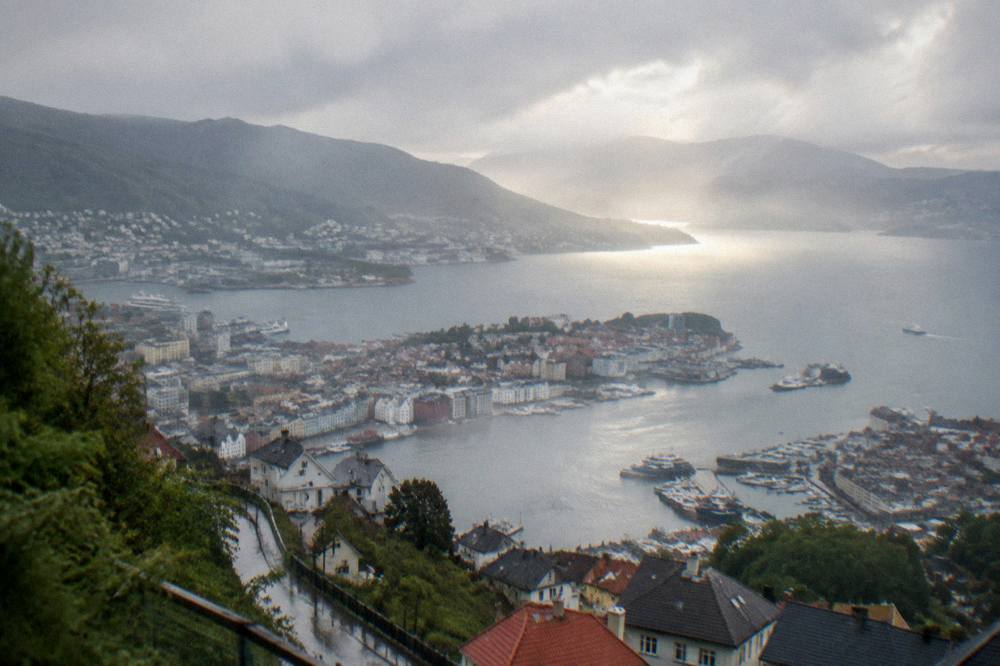
The pattern that matters for planning is simple and stable: wettest from September to December, driest from April to June, warmest in July, coldest in January. Pick your window against the table above, pack a shell whatever you choose, and Bergen's weather becomes a detail of the trip rather than the whole story. The sky that soaks the city is the same one that keeps its mountains green and its waterfalls running, and the breaks between showers, when they come, are the light this city is photographed in.