Visit Bergen Norway
Bergen, in Vestland county on Norway's southwestern coast, is the country's second city and the gateway to the fjords. This guide covers everything worth deciding before you book: trip length, itinerary shape, season, transport, budget and the day trips that justify the flight.
Short answer
Plan at least three full days in Bergen: two for the city itself, Bryggen, Fløyen and the museums, plus one for a fjord or glacier day trip. Visit between May and September for the longest and warmest days, buy a Bergen Card for transport and attractions, and book fjord tours early in high season. Bergen is compact and walkable, so no car is needed in the city.
Bergen sits on Norway's southwestern coast, hemmed in by seven mountains and a harbour that has traded with the rest of Europe since the Hanseatic merchants set up shop on the Bryggen wharf centuries ago. The city of roughly 294,860 people, in Vestland county, is the country's second largest and the standard starting point for every serious fjord itinerary, because the Osterfjord, Hardangerfjord and Sognefjord systems all begin within a day trip of its docks. Planning a visit here is less about picking attractions, the centre is genuinely small, and more about getting three structural decisions right: how long to stay, which season to come in, and which fjord day trips to reserve ahead. This guide, from Bergen Travel Guide, walks through each of those decisions with the numbers attached.
Where Is Bergen Norway And Why Do People Go?
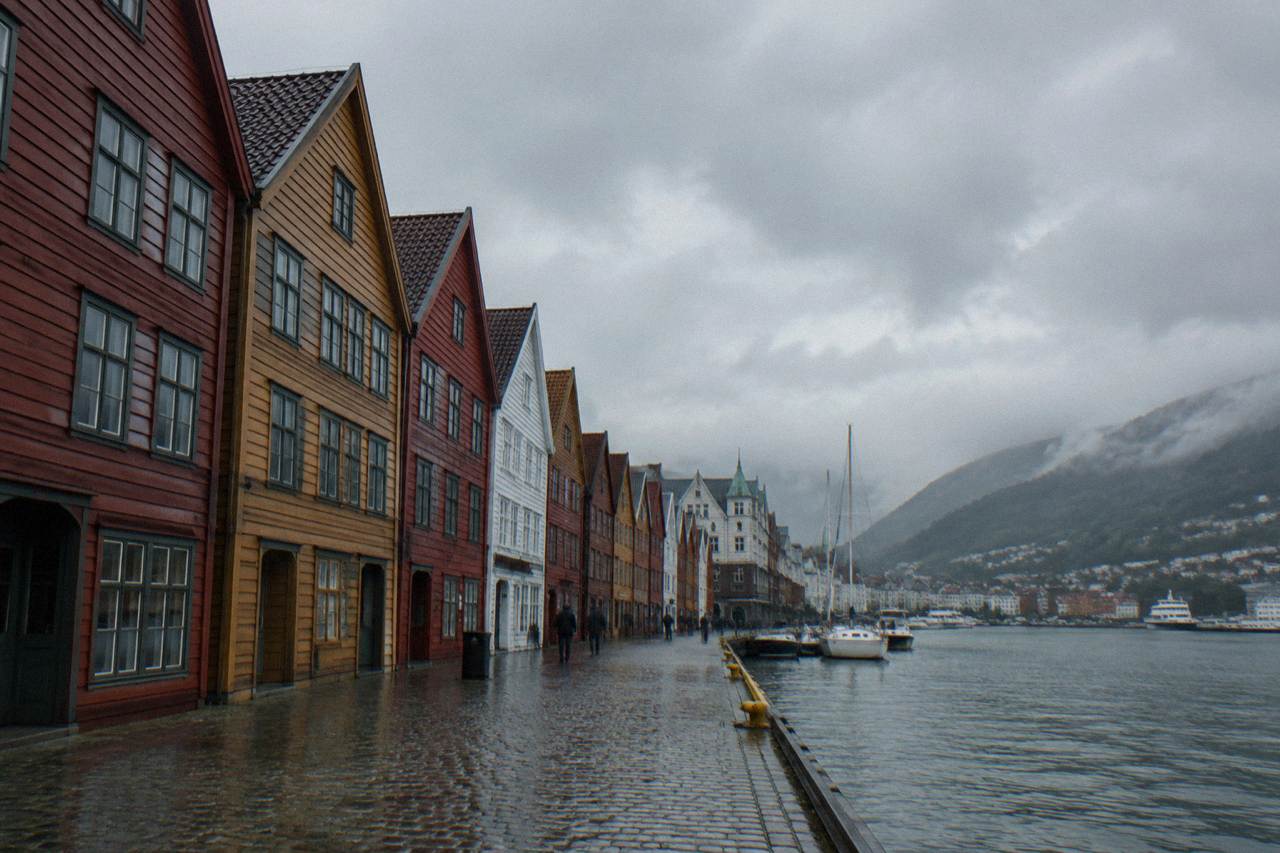
Bergen is a city and municipality in Vestland county on Norway's southwestern coast, linked to Oslo by one of Europe's most scenic mainline railways, and it is the country's second-largest city at 294,860 residents (Bergen kommune, 1 January 2026). It is a former Hanseatic League trading post, and the wooden wharf buildings of Bryggen have been on the UNESCO World Heritage List since 1979, which UNESCO's own listing page confirms. People go for two reasons stacked on top of each other: a genuinely walkable, historic city centre, and the fastest access to fjord scenery of any large Norwegian town.
The Hanseatic chapter matters more than many people expect. For centuries, German merchants of the Hanseatic League ran the dried-fish trade of the entire Norwegian coast from the offices and storehouses of Bryggen, and the wharf that survives today is a rebuild in the medieval style the district is protected for. That layered history is why the compact centre packs in a UNESCO district, the Hanseatic Museum, the Bergenhus fortress with Haakon's Hall, and a fish market within a fifteen-minute walk of each other. The Bergen city centre guide covers that core on foot in detail.
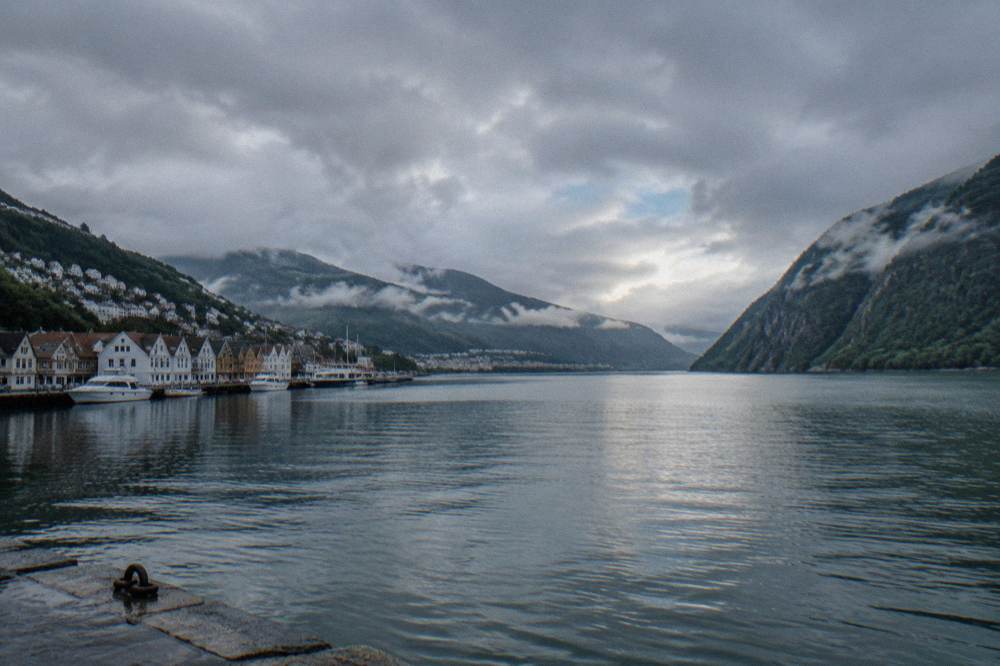
The second reason is geography. Bergen sits where the coastal fjord landscape starts, and the Osterfjord reaches practically to the city limits, which is why a three-hour fjord cruise is a standard half-day activity rather than a major expedition. Serious fjord systems, the Hardangerfjord with its waterfalls and the Sognefjord with the Flåm railway at its far end, are same-day trips by bus and boat. If the fjords are the main point of the trip, read the fjord tours from Bergen roundup before booking anything.
How Many Days Do You Need In Bergen?
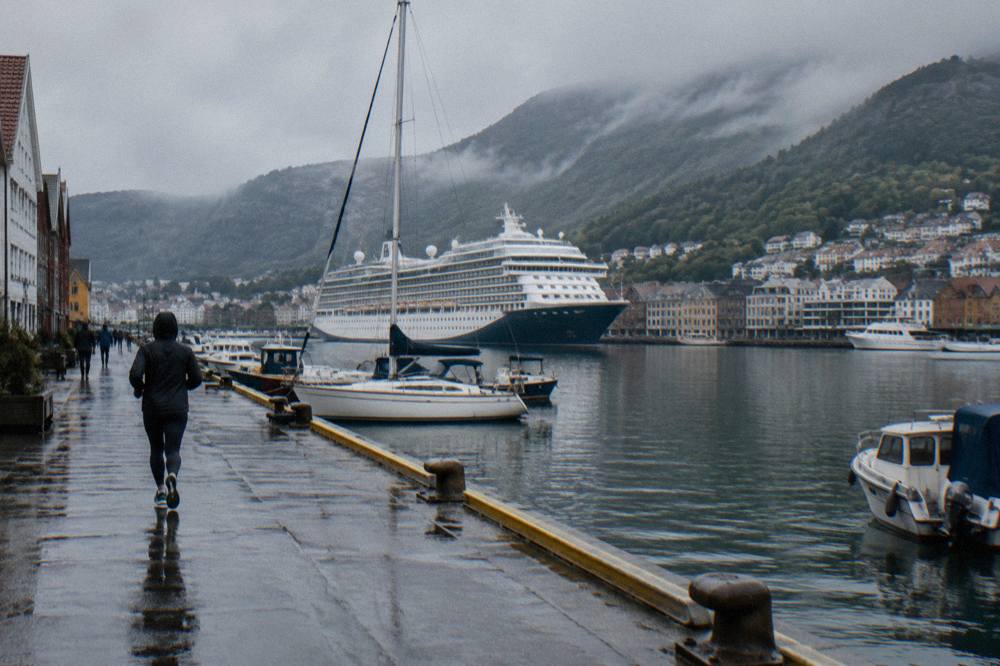
Three full days is the realistic minimum: one for the historic centre and the two mountains, Fløyen and Ulriken, one for museums and neighbourhoods like Nordnes and Sandviken, and one for a fjord day trip. Two days works if the fjord excursion is the priority and the city gets compressed, while four or five days allows two fjord trips, a glacier or waterfall excursion, and slower pacing. The one-day version exists, and many cruise passengers do it, but it only covers Bryggen, one mountain and a quick museum stop.
The constraint that drives everything is the fjord day trips. The short Osterfjord cruises run three to four hours, so they slot into a half day, but the Sognefjord and Hardangerfjord circuits, and especially the Flåm railway combinations, are effectively full-day commitments with early departures. That is why "how many days" and "which fjords" are really one decision: a two-day trip with no fjord day is a city break, while a trip that includes Flåm, Hardanger and a glacier is a five-day minimum done comfortably.
There are full itinerary builds already written for each length, and they go into the hour-by-hour detail this page will not repeat: the one day in Bergen plan, the two day itinerary, the three day itinerary and the five-day Bergen and fjords plan. Cruise passengers arriving for a single port day have a dedicated cruise ship day guide, and there is a rainy day in Bergen plan because, as the weather section below makes plain, you will probably need it at some point.
For the fjord day itself, the short options split into three styles, and the choice matters more than the operator:
| Day trip style | What it looks like | Time needed | Best for |
|---|---|---|---|
| Fjord cruise from the city centre | Round-trip sightseeing boat up the Osterfjord to Mostraumen | Half day | First-time visitors, all ages |
| RIB fjord safari | Small fast rigid-inflatable boat, close to waterfalls | About half day | Thrill-seekers, photographers |
| Sognefjord and Flåm circuit | Bus, cruise and the Flåm railway in one loop | Full day, early start | The bucket-list fjord experience |
What Should A First-Time Bergen Itinerary Look Like?
Anchor day one on the historic core: Bryggen, the Hanseatic Museum, the fish market and the Fløibanen funicular up Mount Fløyen, which are all within a short walk of the harbour. Give day two to the second mountain, Ulriken, plus the museums, KODE or the Maritime Museum, and a neighbourhood such as Nordnes. Reserve day three entirely for a fjord day trip booked before you arrive. That skeleton survives almost any season and any budget.
Two details make the skeleton work better. First, do the Fløibanen on day one even though it is the most touristy thing in the city, because the view over the rooftops and harbour is the single image that recalibrates everything you walk past afterwards. Second, leave one block of unscheduled time, because Bergen rewards wandering: the wooden houses of Sandviken, the reclaimed Festplassen square and the independent shops around Marken and Skostredet are the parts visitors remember when the itinerary had a gap.
The mountains deserve their own arithmetic, because they are not interchangeable. Fløibanen is a funicular that leaves from a street-level station minutes from the fish market, while Ulriken643 is a cable car to the highest of the seven mountains, further from the centre. Both have exact 2026 prices in the official Bergen Card flyer, and the flyer also lists the discounted card rates, which is where the card starts paying for itself:
| Mountain transport | Adult return, ordinary | Adult return, with Bergen Card |
|---|---|---|
| Fløibanen funicular (1 Apr, 30 Sep) | 200 NOK | Discounted, one per card, at ticket office |
| Fløibanen funicular (1 Oct, 31 Mar) | 145 NOK | Discounted, one per card, at ticket office |
| Ulriken643 cable car | 435 NOK | Discounted per the flyer |
The full card-versus-ordinary-price comparison, including the bus and light-rail travel that comes free with every card, is laid out in the Bergen Card guide. For most first-time visitors staying two days or more, the card wins, and the free Skyss network it includes covers the whole county.
For the fjord day, one warning from the itinerary files: the Sognefjord circuits have early morning departures, and the UNESCO fjord cruise option with lunch departs at 07:45. Treat day three as a real commitment rather than a lazy morning.
If that half-day fjord slot is the part of the itinerary you are most excited about, it is also the part worth locking in first. The RIB safari's availability moves fastest in high season, and bookings with free cancellation let you hold the date while the rest of the plan firms up.
When Is The Best Time To Visit Bergen?
May through September is the visitor season: the Bergen International Festival runs late May into June, the fjord boats run fullest schedules, and July, the warmest month in the trailing-year table, averaged 14.9C. November through March is dramatically wetter and darker, with November the standout at 321.8mm of rain, but Christmas brings the gingerbread city and the market at Festplassen, and winter prices drop.
The numbers behind that summary come from the Met Norway station table published on yr.no, and they matter more here than in most destinations because Bergen's reputation for rain is real, measurable and uneven across the year. The trailing 13 months recorded 217 days with precipitation, which is more than half the year, but the monthly totals swing enormously. April 2026 delivered just 65.9mm, while November 2025 soaked the city with 321.8mm, nearly five times as much. Planning around that swing is the single highest-value thing in this guide.
| Month | Mean temperature (observed) | Precipitation (observed) |
|---|---|---|
| September | 13.1C | 206.6 mm |
| October | 9.7C | 231.9 mm |
| November | 6.0C | 321.8 mm |
| December | 5.8C | 303.5 mm |
| January | -1.4C | 82.0 mm |
| February | 0.8C | 133.4 mm |
| March | 5.9C | 243.9 mm |
| April | 7.9C | 65.9 mm |
| May | 9.9C | 127.4 mm |
| June | 14.4C | 165.7 mm |
| July | 14.9C | 184.2 mm |
| August | 14.3C | 243.6 mm |
Read the table honestly and it reframes the question. January, the coldest month, is also one of the driest in this observed period at 82.0mm, while August, a peak-season month, took 243.6mm. The reliable sweet spot is the April-to-June window, when rainfall was low, the festival calendar fills up, and the mountains are still snow-capped above the city. Late June into July is the warmest stretch, and the Bergen in summer guide covers what that unlocks, including the midnight-light evenings and the fullest boat schedules.
The shoulder and winter months each have one thing that justifies them. September brings the Bergen Matfestival, the food festival, on the first weekend; autumn colour is the autumn guide's subject. Christmas is genuinely special: the market at Festplassen runs 20 November to 22 December 2026, and Pepperkakebyen, billed as the world's largest gingerbread city, runs 14 November 2026 to 10 January 2027. The Christmas in Bergen guide and the winter guide take those further. For the full month-by-month trade-offs, including the festival calendar with the 2026 and 2027 dates for Festspillene, Bergenfest and Nattjazz, see the best time to visit Bergen and the weather guide.
How Do You Get To Bergen And Around Without A Car?
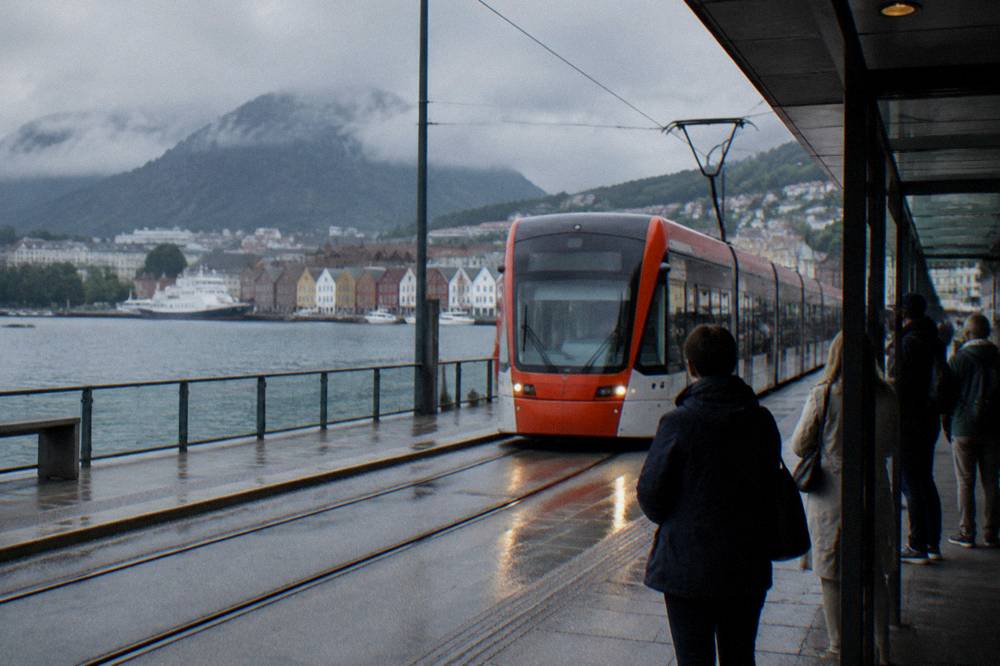
Fly into Bergen Airport Flesland, which sits on the Bybanen light-rail line 1 with direct service to the city centre, or arrive on the Bergen Railway from Oslo, one of Europe's most scenic mainline train routes. A single Skyss zone A ticket costs 51 NOK, and the Bergen Card covers all Skyss buses and light rail in Vestland county, including the airport line, at no extra charge. No car is needed for the city, and most fjord day trips run on buses and boats anyway.
The airport-to-centre decision is simpler in Bergen than in most cities. The Bybanen is the cheapest option and is included with the Bergen Card, and the Flybussen airport coach runs as the alternative; visitbergen.com's listing shows adult one-way online fares from 189 NOK for Bergen sentrum to Flesland, with discounts for students and seniors. If you already hold a Bergen Card, the light rail is free, which usually settles it. The Bergen airport guide and the flights to Bergen guide cover routes and airlines in depth, and the getting around Bergen guide covers buses, the harbour ferries and tickets beyond the airport transfer.
Coming overland, the Oslo to Bergen railway is the famous option, crossing the Hardangervidda mountain plateau, and the Oslo to Bergen train guide covers which side to sit on and how the two cities compare. There are also car ferries into Bergen from points along the coast, covered in the site's ferries guide, and an extensive car rental guide if the fjords beyond the standard day trips are the goal.
One thing worth knowing before you plan transit-heavy days: the Bybanen has scheduled summer maintenance in 2026. Skyss's official notices state that from 29 June to 26 July 2026 line 1 was suspended between Slettebakken and Byparken with replacement buses, while the airport-to-Slettebakken section ran normally, and line 2 had a shorter suspension around Kaigaten in early July. The city's transport authority publishes live updates, so check the Skyss travel planner for any week you travel. That kind of check is also why the Bergen parking guide exists for the minority who do drive.
How Much Does A Trip To Bergen Cost?
Budget around three figures per day per person before flights: the 24-hour Bergen Card is 400 NOK for an adult, the 72-hour version 600 NOK, a single Skyss ticket is 51 NOK, and ordinary adult attraction entries range from 120 NOK at Haakon's Hall to 435 NOK for the Ulriken643 return trip. Food is the budget's biggest variable, and the city's restaurant scene runs from harbour fish stands to full tasting menus, which is why dedicated guides cover it rather than one number here.
The card math is where planning pays. At 400 NOK for 24 hours, a card pays for itself on the day you ride Fløibanen, enter the museums and take the light rail, and at 600 NOK for 72 hours the free county-wide transport tilts it decisively for anyone doing a fjord day with a Skyss-connected leg. The how expensive is Bergen guide does the full daily-budget breakdown across hotel tiers, and the where to stay guide and best hotels guide handle the accommodation line, the single biggest cost in any Norwegian trip.
| Cost line | 2026 figure | Source |
|---|---|---|
| Bergen Card 24h, adult / child | 400 / 100 NOK | Official 2026 Bergen Card flyer |
| Bergen Card 48h, adult / child | 500 / 125 NOK | Official 2026 Bergen Card flyer |
| Bergen Card 72h, adult / child | 600 / 150 NOK | Official 2026 Bergen Card flyer |
| Bergen Card 96h, adult / child | 700 / 175 NOK | Official 2026 Bergen Card flyer |
| Skyss single ticket, zone A | 51 NOK | visitbergen.com travel information page |
| Haakon's Hall entry | 120 NOK | 2026 Bergen Card flyer |
| Hanseatic Museum entry, with guided visit | 160 NOK | 2026 Bergen Card flyer |
| Bryggen Museum, ordinary / card | 170 / 85 NOK | 2026 Bergen Card flyer |
| The Aquarium, adult, seasonal | 380-415 NOK | 2026 Bergen Card flyer |
Tour prices are deliberately left off that table: they change with season and operator, and every bookable product on this site renders its live price from its own listing page rather than from a printed number. The same rule applies to rating and review counts. What can be said from the planning side is structural: the free and tip-based walking tours, run through GuruWalk, are the cheapest structured introduction to the city, and the paid fjord boats, the RIB safari and the food walks each occupy a distinct budget tier.
For the food line specifically, the best restaurants in Bergen guide is the reference, and the Bergen on a budget guide collects the free and cheap alternatives, from the walking tours to the free museums windows in the Bergen Card flyer. Families should check the Bergen with kids guide, since child card prices and family attraction rates shift the arithmetic considerably.
What Should You Pack For Bergen Weather?
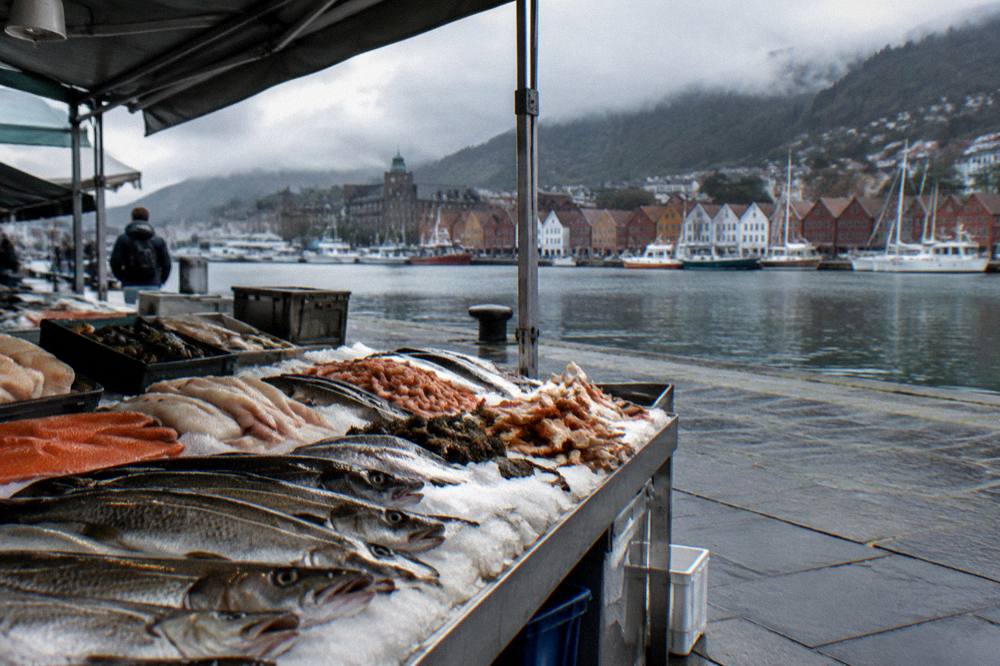
Pack for rain and layering in any season: a proper waterproof shell, waterproof shoes and a warm mid-layer are non-negotiable, because 217 days with precipitation in the trailing year means rain is the default assumption rather than the exception. Even in July, which averaged 14.9C, the mountains above the city are dramatically colder than the harbour, and January, at -1.4C, sits near freezing with coastal dampness that reads colder than the number.
The full checklist, including what actually holds up on Bryggen's cobbles in a downpour, is in the what to pack for Bergen guide. The short version: buy the waterproofs before you arrive rather than in Bergen, where prices for good outdoor gear are honest but high, and bring them even for a week that forecasts sun. The observed data above should be the reason, a summer month in the table still recorded well over 200mm of rain.
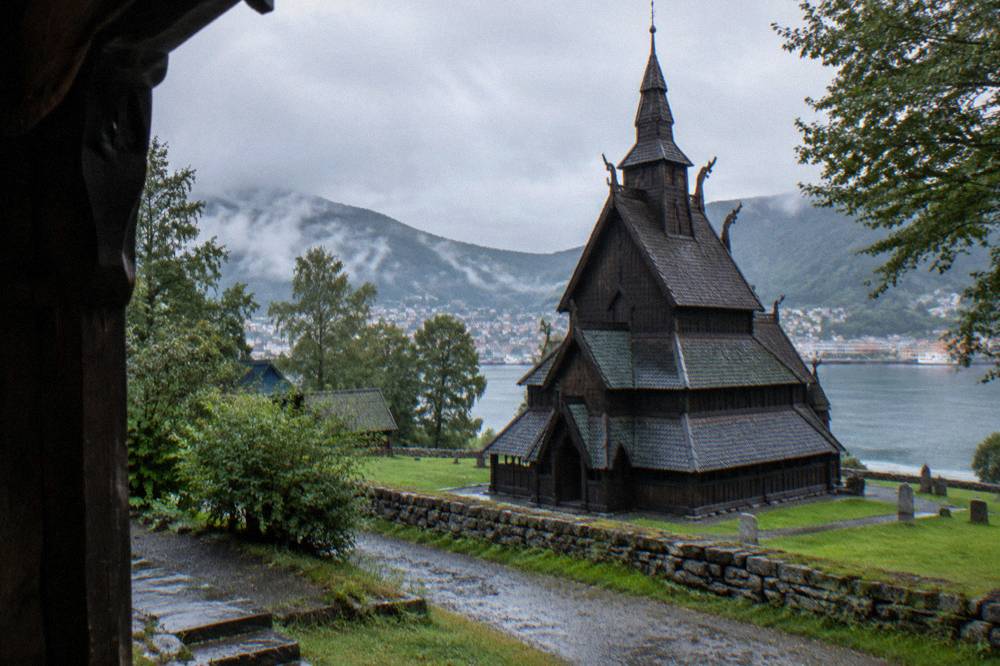
There is a compensating upside. Rain is precisely why the fjord landscape around Bergen is so green and why the waterfalls on every Hardangerfjord and Sognefjord itinerary are so loud, and the shifting cloud between the mountains is a photographer's asset rather than a loss, as the photography spots guide makes the case for. The moss, the cloud and the light are the city's actual look.
What Can You Do In Bergen If You Have Special Interests?
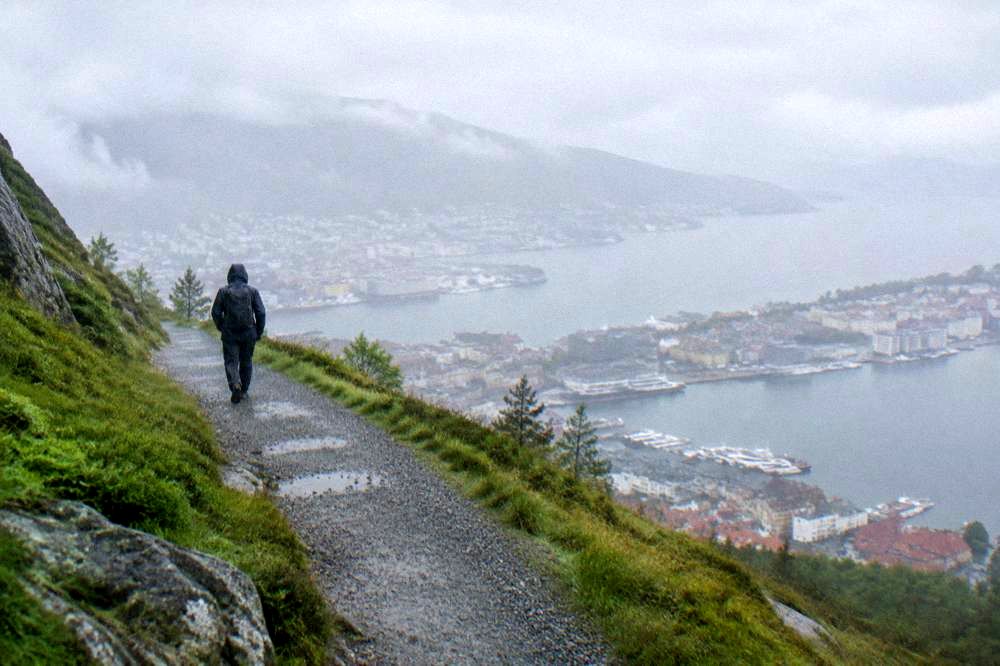
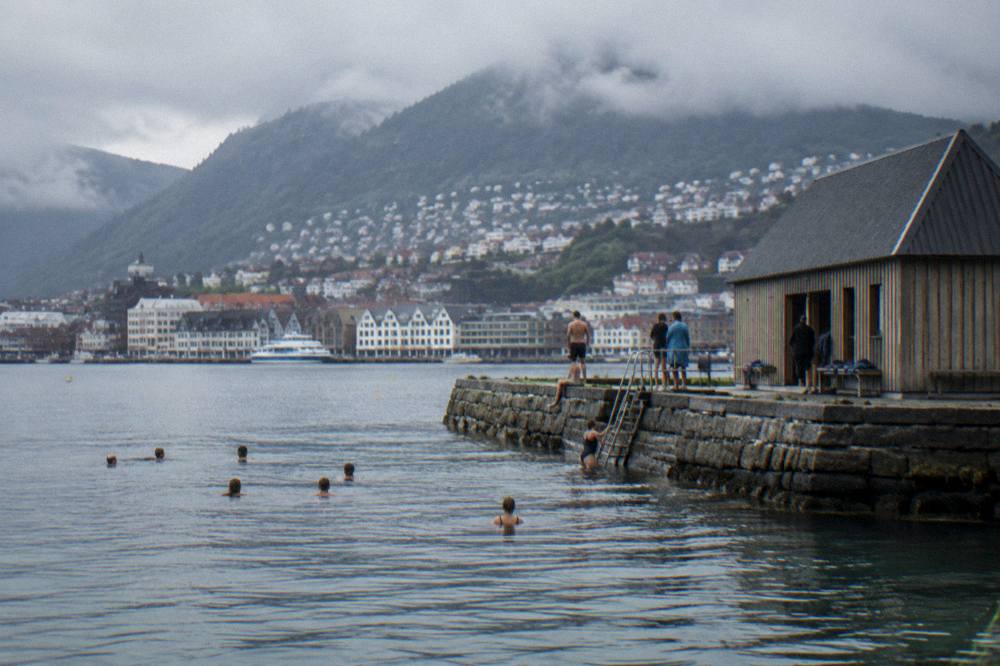
Beyond the standard itinerary, Bergen has deep tracks for hikers, families, food travellers, history readers and swimmers: the city is ringed with trailheads including the Fløyen and Ulriken ridge paths, the northern shore of Nordnes has a harbour seawater bath, and the museum cluster runs from the Hanseatic era through Edvard Grieg's home at Troldhaugen. Matching the trip to the interest is what separates a good visit from a checkbox one.
Hikers get the most surprising bargain. The trails from both mountain stations can be linked into a full traverse of the ridge system above the city, and the Stoltzekleiven stone-step climb, the city's famous staircase-to-viewpoint route, is a serious workout with a strict one-way etiquette in high season. The hiking in Bergen guide covers routes, difficulty and what the weather table above means for gear. Families have their own decision tree in the with kids guide, with the aquarium and the VilVite science centre anchoring the rainy-day options.
History readers should build around the Bergen history guide, the Bergenhus fortress, the Hanseatic Museum and the cluster covered in the museums guide, while music travellers make the short trip to Troldhaugen. Food travellers have the food tours guide alongside the restaurants page, and anyone wondering whether the city is safe at night, it is, with the standard big-city cautions in the safety guide. The spas and saunas guide and the Nordnes sjøbad page handle the cold-water and warmth side, which is a genuine subculture here.
One special interest that gets asked about constantly: the northern lights. Bergen's latitude and coastal cloud mean it is a rare, low-probability sight from the city itself, and the northern lights in Bergen guide explains honestly what the odds are and what it takes to raise them. Do not plan a trip around them from here, that is a Tromsø project, but do check the aurora forecast on a clear winter night.
Which Fjord Day Trip Should You Book From Bergen?
Choose by time budget and tolerance for speed: the Osterfjord cruises to Mostraumen fit a half day and suit everyone, the RIB fjord safari covers the same water fast and close to the surface for thrill-seekers, the Hardangerfjord tours add big waterfalls and ferry crossings in around eight hours, and the Sognefjord circuits with the Flåm railway are the full-day bucket-list option. Booking before arrival matters most for the full-day circuits in summer, when boats and buses fill.
The Osterfjord, Mostraumen option is the workhorse, and it is the one most first-time visitors should take. It leaves from the city centre, threads the narrow Mostraumen strait where the current is visible, turns back, and returns you with half a day to spare for Bryggen or a museum. The RIB safari runs the same geography in a completely different register: small boat, high speed, spray, and waterfall closeness that full-size boats cannot attempt. That trip is the site's featured fjord pick, and its live price and current rating render on its own page, Check availability, alongside the detailed Mostraumen fjord cruise guide.
The Hardangerfjord is the day for waterfalls, orchard country and, in the stronger itineraries, a ferry crossing across the fjord itself, laid out in the Hardangerfjord guide. The Sognefjord and Flåm circuits are the flagship trips, combining Norway's longest fjord, the Nærøyfjord branch, a UNESCO-listed stretch of water, and the famous Flåm railway; the Norway in a Nutshell guide, the Bergen to Flåm guide and the Sognefjord guide break the variants down. Ambitious travellers with time can also reach Voss, Trolltunga, Preikestolen and even Ålesund as long day trips or overnights, each with its own guide on this site.
A closing planning note on the practical order of operations: book the fjord day trips first, since they are the scarcest inventory, then the Sognefjord circuits if you want them, then accommodation near the centre or the light rail, then the Bergen Card once the itinerary is fixed and the card-length can be matched to it. Everything else in Bergen, the wharf, the mountains, the fish market, the museums, the gingerbread city if you come in winter, can be decided on the ground with an umbrella in hand.
Common Questions About Visiting Bergen
How many days do you need in Bergen?
Three full days is the comfortable minimum: two for the city, Bryggen, Fløyen, Ulriken and the museums, and one for a fjord day trip. Two days works if the fjord excursion is the priority, and five days allows two fjord or glacier trips at a relaxed pace.
What is the rainiest month in Bergen?
In the trailing 13 months of Met Norway data via yr.no, November was the wettest at 321.8mm observed, well above its 275.0mm normal. The same table recorded 217 days with precipitation across the year, so pack waterproofs regardless of month.
Do you need a car in Bergen?
No. The centre is compact and walkable, the Bybanen light rail and Skyss buses cover the city and county, and the fjord day trips run on buses and boats. A car only earns its cost if you are heading beyond the standard day trips, for example to Trolltunga or the longer coastal routes.
Is the Bergen Card worth buying?
For most visitors staying two days or more, yes. The 24-hour card is 400 NOK for an adult, the 72-hour 600 NOK, and it includes free Skyss buses and light rail across Vestland county, including the airport line, plus free or discounted entry to most museums and the two mountain rides.
When is the best time to visit Bergen?
May through September for the warmest weather, the fullest fjord boat schedules and the festival calendar, with the Bergen International Festival running late May into June. Christmas, from late November, is the special alternative, with the market at Festplassen and the gingerbread city.
Can you see the northern lights in Bergen?
Rarely, and only on clear, dark winter nights with strong aurora activity. Bergen's coastal cloud makes it a low-probability sight from the city, so treat any sighting as a bonus rather than planning a trip around it.