Best Time To Visit Bergen
Bergen, the former Hanseatic trading port on Norway's southwestern coast in Vestland county, is a city you time around two things: rain and summer festivals. This guide breaks the whole year down with verified Met Norway figures and official festival dates.
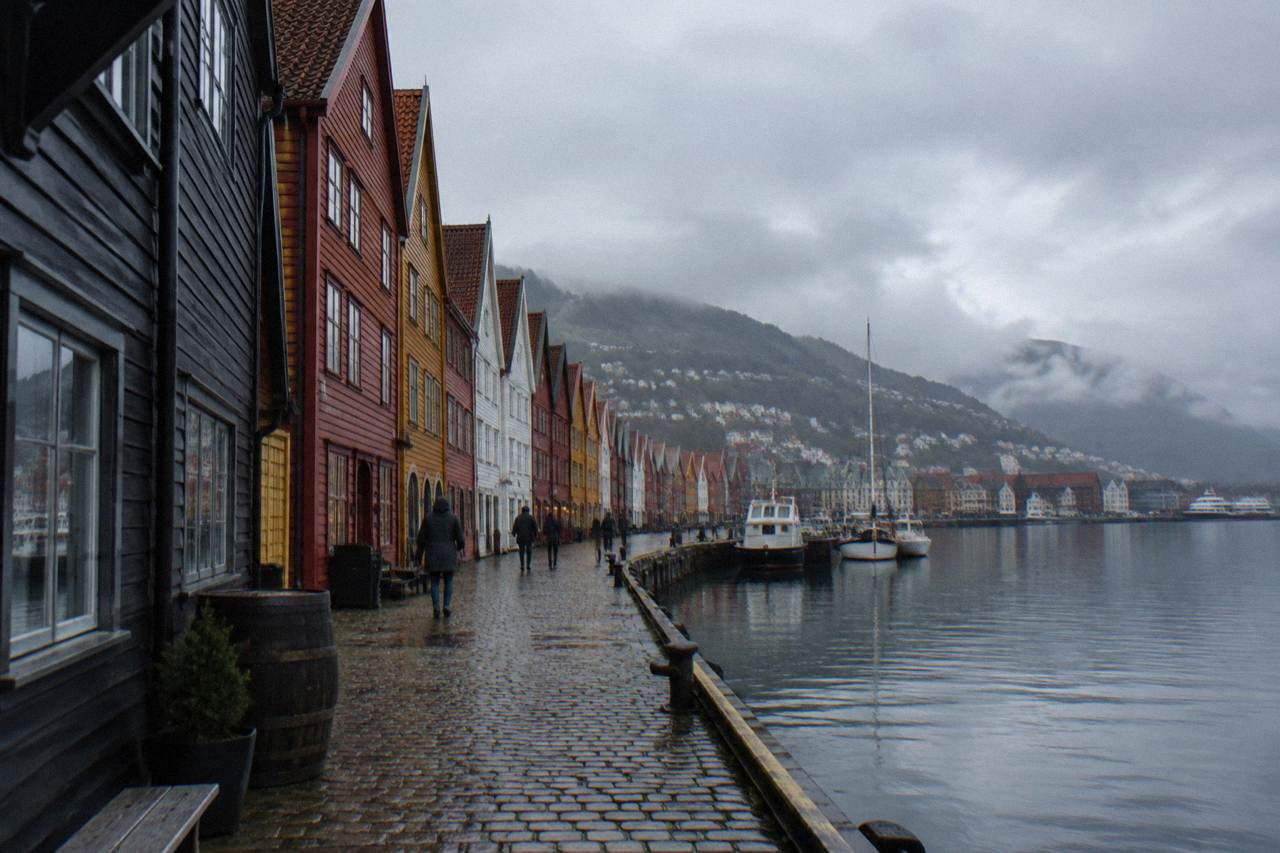
Short answer
Late June and early July give Bergen its warmest weather and full fjord-cruise season; May, September and October bring thinner crowds and shoulder-season prices; November is the wettest observed month at 321.8mm.
Bergen, the former Hanseatic trading post on Norway's southwestern coast in Vestland county, is a city you plan around two variables: rain and the summer festival calendar. yr.no's Bergen station table shows 217 days with precipitation across the trailing thirteen months of Met Norway data, while the official Bergen Card flyer prices the same Fløibanen return ride at 200 NOK in summer and 145 NOK in winter. In few other European cities does the month you pick change the experience this much. This guide breaks the year down using verified climate figures, official festival dates from the organisers' own sites, and the honest trade-offs of every season, so the choice is a data-backed one rather than a guess.
What Is The Best Month To Visit Bergen?
Late June and early July are the best window for most visitors: yr.no's Bergen station table shows July with the warmest observed monthly average of the trailing thirteen months (14.9C), rain is marginally lighter than the autumn peaks, and the fjord-cruise and festival season runs at full strength. May, September and early October suit travellers who want fewer crowds, lower shoulder-season prices and the coloured wharf mostly to themselves.
That answer comes with a caveat every Bergen guide should carry honestly: no month is dry here. The trailing thirteen months of Met Norway data show precipitation somewhere in the city on 217 days. What changes through the year is the volume, the temperature it falls in, and what else is happening while it falls. July's observed total of 184.2mm is genuinely different from November's 321.8mm, and a July shower over a festival crowd at Bergenhus Festning is a different trip from the same shower in an empty January street.
The second variable is price and crowds. Summer carries the peak: the funicular charges its higher summer fare from 1 April, hotel demand peaks around the festival run, and Bryggen's lanes fill. From 1 October the funicular drops to 145 NOK and the queues thin with the cruise traffic. Travellers who can only travel in one window should read the season sections below, then the month-by-month table near the end, which names a verdict for all twelve months. For the full city rundown, the planning a trip to Bergen guide covers everything the calendar does not.
How Does Bergen's Weather Change Month By Month?
Bergen has a temperate oceanic climate: yr.no's Bergen station table shows observed monthly averages swinging from a January low of -1.4C to a July high of 14.9C over the trailing thirteen months, with 217 days of precipitation in total and a wettest observed month of November at 321.8mm. April was the driest recent month at 65.9mm, against a 290mm December normal. Rain is the planning variable, not cold.
The full table below is the same one Met Norway publishes through yr.no's statistics page for the Bergen station, and it is the single most useful planning document for this city. Note that the "normal" column is the long-run reference value, while the observed column is what the trailing thirteen months actually delivered.
| Month | Observed mean temp | Observed precipitation | Precipitation normal |
|---|---|---|---|
| Aug 2025 | 15.1C | 165.1mm | 208.0mm |
| Sep 2025 | 13.1C | 206.6mm | 248.0mm |
| Oct 2025 | 9.7C | 231.9mm | 268.0mm |
| Nov 2025 | 6.0C | 321.8mm | 275.0mm |
| Dec 2025 | 5.8C | 303.5mm | 290.0mm |
| Jan 2026 | -1.4C | 82.0mm | 256.0mm |
| Feb 2026 | 0.8C | 133.4mm | 209.0mm |
| Mar 2026 | 5.9C | 243.9mm | 202.0mm |
| Apr 2026 | 7.9C | 65.9mm | 141.0mm |
| May 2026 | 9.9C | 127.4mm | 109.0mm |
| Jun 2026 | 14.4C | 165.7mm | 132.0mm |
| Jul 2026 | 14.9C | 184.2mm | 158.0mm |
| Aug 2026 | 14.3C | 243.6mm | 208.0mm |
Three readings jump out. First, November is not just the wettest month, it is the wettest by a wide margin, 321.8mm observed against a 275.0mm normal. Second, April and May are the quiet outliers on the dry side: April's 65.9mm was the driest observed month in the entire window, and May carries the lowest normal in the table at 109mm. Third, the January figures are strange in a way worth knowing: the mean was -1.4C with only 82mm of precipitation, cold enough that much of that moisture likely fell as snow, while the January temperature extreme hit -11.3C on 8 January. None of this makes any month a bad month; it just changes what you pack and what you book. For more depth on the wet side of the ledger, see which month rains most in Bergen and the deeper Bergen weather data guide.
When Is Bergen's Peak Season And When Is It Quietest?
Bergen's peak runs from mid-June through mid-August, when cruise traffic, the summer festival crowds and the full fjord-cruise timetable converge; the quietest months are January, February and March, when the Port of Bergen's live arrivals list is at its shortest and museums sit half empty. May, September and early October sit between the two: shoulder-season pricing, thinner crowds on Bryggen, and the same train, bus and funicular service.
The summer peak is dense for good reasons. The funicular, the Ulriken643 cable car, the fjord cruises out to Mostraumen and the long day trips toward Flåm and the Sognefjord all run their fullest timetables, and the festival calendar stacks six major events into the last week of May and the first two weeks of June. visitbergen.com's own listings confirm the pattern the cruise port shows: summer is when everything is open, running and booked.
| Season | Months | Recent observed means | Rain profile | Crowds and prices | Best for |
|---|---|---|---|---|---|
| Winter | Dec to Feb | -1.4C to 5.8C | Heavy, Nov peak 321.8mm, Dec normal 290mm, Jan observed only 82mm | Quietest of the year, funicular at 145 NOK | Christmas market, Pepperkakebyen, museums |
| Spring | Mar to May | 5.9C to 9.9C | April driest recent month 65.9mm, May lowest normal 109mm | Shoulder, thin until late May | Bryggen without queues, city walking |
| Summer | Jun to Aug | 14.4C to 14.9C | Moderate by Bergen standards, Jul 184.2mm | Peak, funicular 200 NOK from 1 Apr | Festivals, fjord cruises, long trips |
| Autumn | Sep to Nov | 13.1C falling to 6.0C | Wettest season, Nov 321.8mm | Shoulder into quiet, funicular 145 NOK from 1 Oct | Film festival, food festival, value |
The shoulder windows reward travellers who plan around the price seams. Fløibanen's return ticket drops from 200 NOK to 145 NOK for adults on 1 October and stays there until 31 March, a saving the Bergen Card flyer spells out explicitly. The same flyer shows the Bergen Card itself is a flat 400 NOK for 24 hours regardless of season, so the card's value is highest exactly when attraction-hopping is the main activity: winter and late autumn. The the Bergen Card, explained guide and the what Bergen costs breakdown cover those numbers in full.
If the peak-versus-quiet trade-off matters to you, one mid-trip decision helps either way: a food tour with Fløibanen funicular pairs the city's food stops with the ride up the mountain, and it runs whatever the sky is doing. Check availability
Is Spring A Good Time To Visit Bergen?
Spring is one of the smartest windows for Bergen: Met Norway's table shows April 2026 delivered just 65.9mm of rain, the driest observed month of the trailing thirteen, and May has the lowest precipitation normal in the data at 109mm. Temperatures climb from 5.9C in March to 9.9C in May. Crowds stay thin until late May, and the first major festival, Festspillene, opens on 27 May 2026.
March is the gamble month. The observed March mean of 5.9C is mild enough for comfortable walking, but the same month delivered 243.9mm of rain, which is more than any summer month recorded. The trade is simple: thin streets, no queues at Bryggen's museums and the aquarium, and the chance of proper rain. Travellers weighing it should read whether March works for Bergen before committing.
April and May are the reliable half. The city greens up, the funicular switches to its summer timetable and its 200 NOK summer fare on 1 April, and the harbour fills out with the first full fjord-cruise schedules. The Mostraumen cruise along Osterfjord runs through spring, and the guided walks around the city centre are at their emptiest. Late May is the sweet spot before the peak: Festspillene opens 27 May, Bergen Pride and Nattjazz follow at the end of the month, and the summer crowds arrive with them.

For views rather than streets, the Ulriken cable car is a spring fixture, and a round-trip ticket can be booked ahead for any clear window.
Why Do Most Travellers Choose Summer For Bergen And The Fjords?
Summer is when Bergen runs everything at full strength: the Sognefjord and Mostraumen cruise schedules, the Fløibanen funicular at its 200 NOK summer fare, and a wall of festivals between late May and mid-June, from Nattjazz on 29 May 2026 to Bergenfest closing on 13 June 2026. July is the warmest recent month at 14.9C. The trade-offs are peak pricing and the year's thickest crowds on Bryggen.
July deserves its reputation. It holds the warmest observed monthly mean in the table at 14.9C, and its 184.2mm of rain, while not small, is under the November total by nearly 140mm. The long daylight that midsummer Norway is famous for is the reason the day trips stretch to ten hours and more, though no daylight-hours figure for Bergen is sourced here, so plan by schedule rather than by a stated number of hours. The every fjord tour from Bergen guide lays out which long trips run in which window.
August is the quiet shift. The observed mean is still 14.3C, but the month's 243.6mm of rain and 208.0mm normal mark the point where the autumn pattern starts reclaiming the city. Festival crowds are gone, cruise traffic begins to taper, and the first week of the month can feel like a summer month at shoulder-season volume. The full index of guides sits on Bergen Travel Guide.

On the water is where summer earns its booking. A guided kayak trip out of the harbour is a summer product in practice, running in the months when the water, the air and the schedule all cooperate.
What Is Autumn Like In Bergen?
Autumn is Bergen at its most atmospheric and its wettest: September still averaged 13.1C, but November dumped 321.8mm, the wettest observed month in the Met Norway table, and the autumn normals climb toward 290mm in December. In exchange you get thin crowds, the 145 NOK winter funicular fare from 1 October, the film festival from 14 to 22 October 2026 and the food festival in early September.
September is the best-kept secret in this calendar. The mean of 13.1C is only 1.8C below July's, the food festival lands in the first week of the month alongside the cider festival, and the cruise traffic and festival crowds have both moved on. The 206.6mm of observed rain is real, but it falls on a city at shoulder-season prices.
October is the value pivot. On the first of the month the funicular fare drops to 145 NOK, the Bergen Card flyer's free-admission window at KODE opens on 1 October and runs to 30 April, and the Bergen International Film Festival runs 14 to 22 October across the city's cinemas. November is the month to book only if museums, food and moody harbour photographs are the point: 321.8mm of observed rain is the wettest figure in the table, full stop.
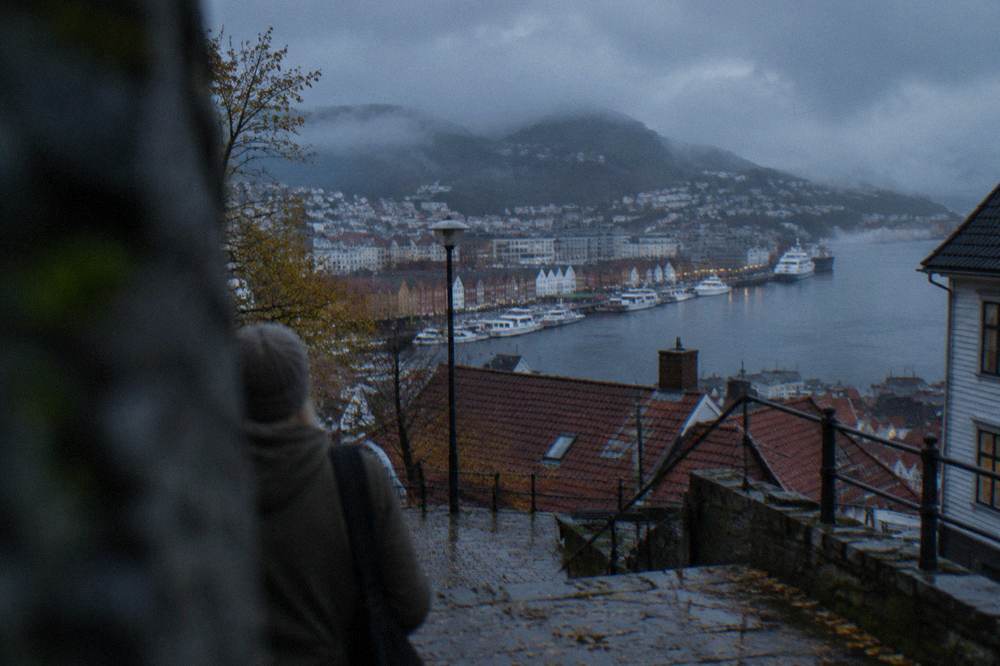
The detailed autumn guide to Bergen covers the season month by month, including what stays open as the days shorten.
Is Winter A Good Time To Visit Bergen?
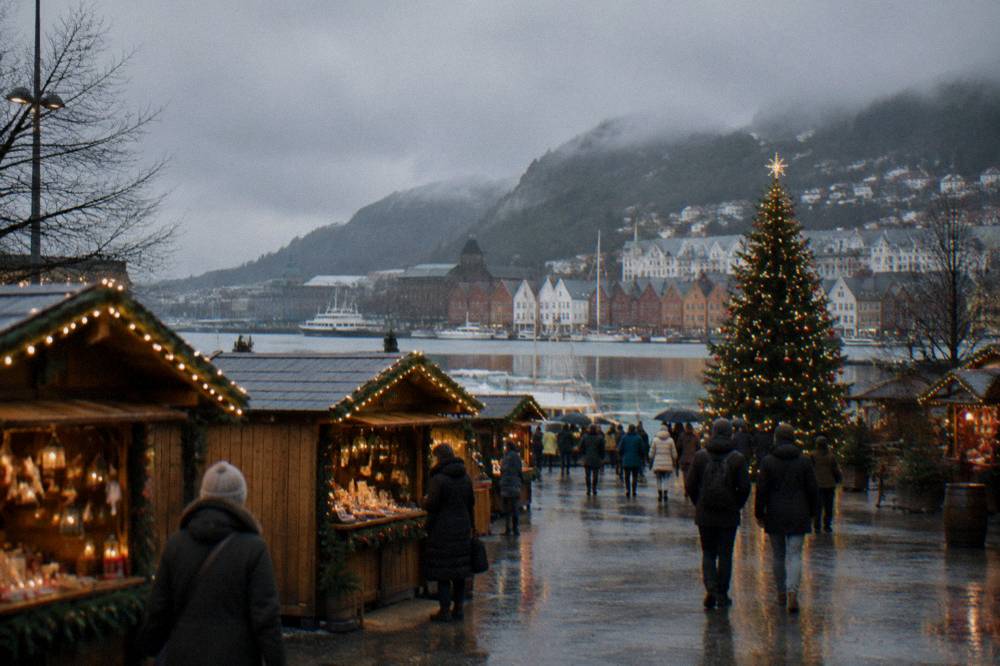
Winter in Bergen is mild for its latitude and quiet: December's observed average was 5.8C against a 3.1C normal, though the 8 January 2026 low hit -11.3C. The Christmas market runs 20 November to 22 December 2026 and Pepperkakebyen, the gingerbread city, stays up from 14 November 2026 to 10 January 2027. January and February are the city's emptiest, cheapest weeks, with the 145 NOK funicular fare and short museum queues.
The Christmas window is the reason to book a December trip. The market at Festplassen runs daily from 20 November to 22 December 2026, free to enter per the visitbergen.com listing, and Pepperkakebyen, billed as the world's largest gingerbread city, runs from 14 November 2026 to 10 January 2027. The harbour, the coloured lights on Bryggen and the funicular's 145 NOK winter fare make the city feel priced for locals rather than visitors.
January and February are for a particular traveller: one who wants museums, long lunches and near-empty streets. The observed January mean of -1.4C with just 82mm of precipitation reads as a cold, comparatively dry month, and February's 0.8C with 133.4mm is similar. One planning note matters for early January: the Ulriken643 cable car schedules maintenance in weeks one and two of 2026, reopening around 13 January, so a New Year trip should build around Fløibanen instead. The winter guide to Bergen and the Bergen's coldest month, explained answer cover the cold end of the year in depth.
A short guided walk is the one product that works identically in every season, and it is a good winter anchor for a first visit.
Which Months Bring Bergen's Biggest Festivals?
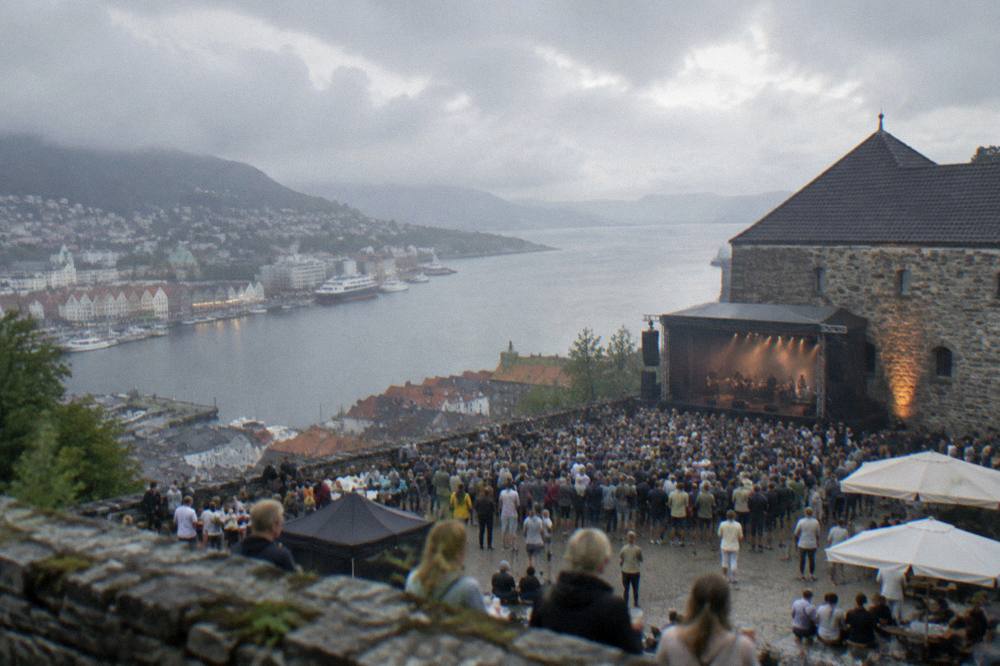
Late May through mid-June is Bergen's festival core: Festspillene runs 27 May to 10 June 2026, Nattjazz 29 May to 6 June, Bergen Pride 29 May to 6 June with its parade on 6 June, and Bergenfest closes the run from 10 to 13 June at Bergenhus Festning. Autumn counters with the film festival from 14 to 22 October 2026 and the food festival in early September. The 2027 festival season opens 26 May.
Every date below comes from the festival organisers' own sites or their verified listings, and the 2027 column is included wherever the organiser has actually announced dates. Where a 2027 date has not been announced, the table says so rather than guessing.
| Festival | 2026 dates | 2027 dates | Venue or note |
|---|---|---|---|
| Festspillene i Bergen | 27 May to 10 June | 26 May to 12 June | 75th jubilee edition in 2027 |
| Nattjazz | 29 May to 6 June | 28 May to 5 June | USF Verftet |
| Bergen Pride | 29 May to 6 June, parade 6 June | Not yet announced | Pride Park in Nygårdsparken |
| Bergenfest | 10 to 13 June | 9 to 12 June | Bergenhus Festning |
| Eggstockfestivalen | 3 to 6 June | Not announced | Det Akademiske Kvarter |
| Bergen Matfestival | Around 4 to 5 September | Not announced | With Norsk Siderfestival |
| Bergen Intl. Film Festival | 14 to 22 October | Not announced | Citywide cinemas |
| Christmas market at Festplassen | 20 Nov to 22 Dec | Not announced | Free entry |
| Pepperkakebyen | 14 Nov 2026 to 10 Jan 2027 | Not announced | Gingerbread city |
The cluster effect is worth understanding before you book. The last week of May and the first two of June put four festivals and a parade inside twenty days, which fills the city centre and the hotels around it. A traveller whose priority is the fjords rather than the stages should aim for July, after the festival run closes and before the autumn rain arrives. The the best month for the fjords answer covers that side of the calendar.
What Should You Pack For Bergen In Each Season?
Pack for rain in every season: Bergen recorded 217 days with precipitation across the trailing thirteen months, so a waterproof shell and a compact umbrella are year-round kit, not summer extras. Under it, layers: a warm midlayer from October to March, when the 8 January 2026 low hit -11.3C, and lighter kit for July and August, the only months whose recent averages reach the mid-teens in Celsius. Sturdy waterproof shoes matter more than a second jacket.
The table turns the climate data above into a packing list. It is deliberately unglamorous, because the difference between a good Bergen day and a miserable one is usually footwear.
| Season | Base layers | Rain kit | Extras worth carrying |
|---|---|---|---|
| Winter | Warm midlayer, hat, gloves | Waterproof shell, umbrella | Grip-soled shoes for icy cobbles |
| Spring | Medium layers, one warm piece | Shell always, umbrella | Sunglasses for bright spring harbour light |
| Summer | Light layers plus one warm evening piece | Packable shell | Daypack for long fjord day trips |
| Autumn | Medium layers building toward winter kit | Shell and umbrella both | Spare socks; the wettest months are here |
One seasonal note on money: the Bergen Card flyer confirms the card covers Skyss buses and the Bybanen light rail, including the airport line, at every 24h to 96h tier, which makes it a rain-day tool as much as a museum pass. When the weather turns, the card turns a wet afternoon into a museum-hopping one.
Which Month Should You Actually Book For Bergen?
Book June if you want the festival-and-fjord peak, July if you want the warmest weather (14.9C recent average) with fewer festival crowds, and May, September or October for shoulder-season value with the 145 NOK winter funicular fare arriving 1 October. Book January or February only for a quiet, cheap city break; accept that November is the wettest observed month at 321.8mm.
The month-by-month table below is the whole guide compressed into one view, using the observed and normal figures from Met Norway, the festival dates from the organisers, and the fare seams from the Bergen Card flyer.
| Month | Verdict | Why |
|---|---|---|
| January | Quiet and cold | Observed mean -1.4C, only 82mm of rain, emptiest streets of the year |
| February | Quiet, cold | 0.8C mean, 133.4mm observed, museum city at its calmest |
| March | Shoulder gamble | 5.9C mean but 243.9mm of rain; thin crowds reward the waterproof |
| April | Strong shoulder | Driest observed month at 65.9mm, everything open, few crowds |
| May | Best value peak-adjacent | Lowest rain normal at 109mm, Festspillene opens 27 May |
| June | Peak, festival core | Four festivals inside three weeks, full cruise schedules |
| July | Warmest month | 14.9C observed mean, festivals done, crowds still high |
| August | Late summer, rain returning | 14.3C mean but 243.6mm observed as autumn pattern starts |
| September | Best-kept secret | 13.1C mean, food festival, shoulder crowds |
| October | Value pivot | Funicular drops to 145 NOK on 1 Oct, film festival 14 to 22 Oct |
| November | Wettest month | 321.8mm observed, the wettest figure in the table |
| December | Christmas window | Market 20 Nov to 22 Dec, mild 5.8C observed mean |
Once the month is chosen, the surrounding decisions are covered elsewhere on this site: where to stay in Bergen by neighbourhood and season, and flights to Bergen for getting there. The two booking windows that fill fastest are the festival fortnight from late May and the Christmas market run from 20 November, so those are the dates to lock down first.
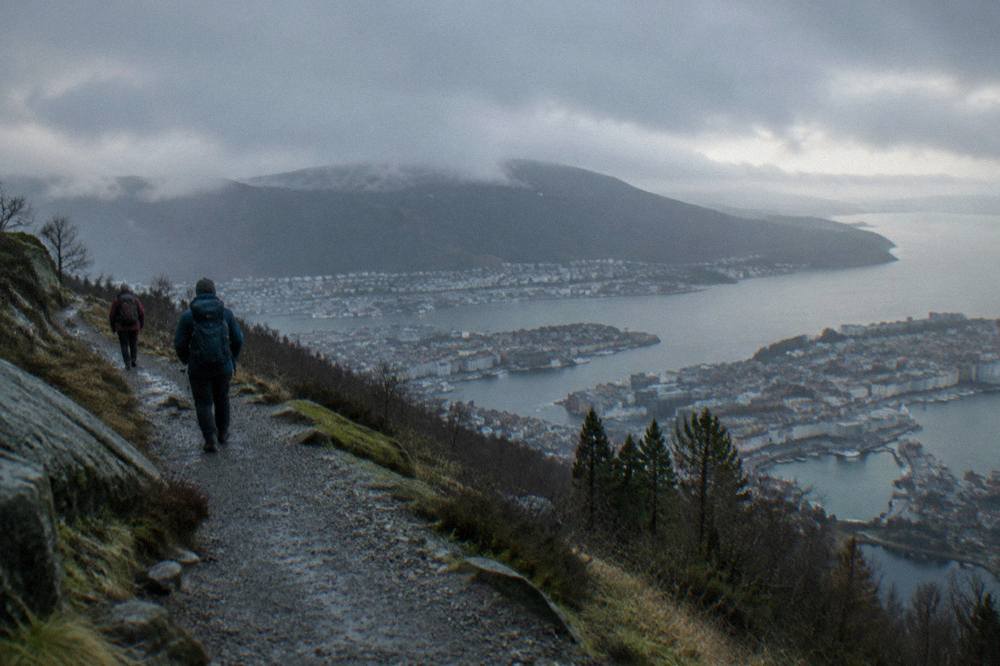
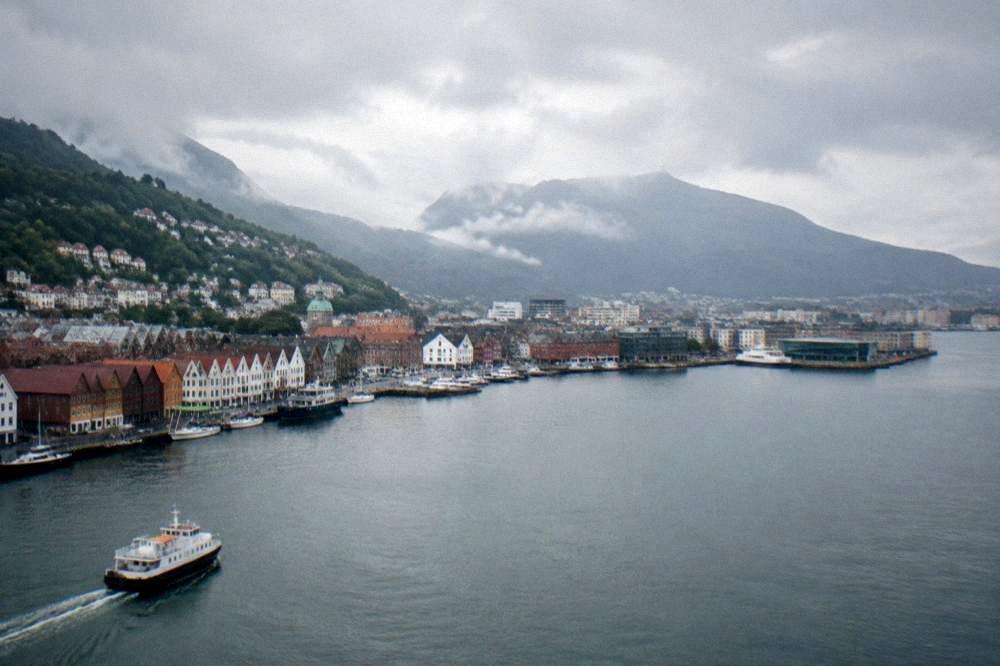
Whatever month you land on, the honest summary from this site, which researches Bergen from primary sources rather than lived visits, is that the calendar changes the price of the funicular, the volume of the rain and the density of the crowds, but it never changes the essentials: the wharf UNESCO inscribed in 1979, the harbour, and the two mountains above it are there in every season. Choose the month that matches your tolerance for each of the three variables, pack the shell, and Bergen does the rest.
Common Questions About The Best Time To Visit Bergen
What is the best month to visit Bergen?
Late June and early July for most visitors: July carries the warmest observed monthly average of the trailing thirteen months at 14.9C, the full fjord-cruise schedule is running, and the festival rush of late May and early June has passed. May, September and October are the strong alternatives for thinner crowds and lower prices.
What is the rainiest month in Bergen, Norway?
November. yr.no's Bergen station table shows November as the wettest observed month of the trailing thirteen at 321.8mm, against a 275.0mm normal. December follows closely with a 290.0mm normal and 303.5mm observed.
What is the coldest month in Bergen?
January. The observed January 2026 mean was -1.4C, the lowest monthly average in the Met Norway table, and the trailing period's temperature extreme low of -11.3C was recorded on 8 January.
Is March a good time to visit Bergen?
It is a trade-off. The observed March mean of 5.9C is mild for walking, and the streets and museums are at their quietest, but the same month recorded 243.9mm of rain, more than any summer month in the table. March suits travellers who prioritise empty streets and low prices over dry weather.
What is the best month to visit Norway fjords?
June through August, when the long day trips and fjord cruises from Bergen run their fullest timetables and the observed monthly means sit in the mid-teens Celsius. July is the warmest of the three at 14.9C observed.
When is the cheapest time to visit Bergen?
January and February, when crowds are thinnest, and the window from 1 October to 31 March, when the Fløibanen return fare drops from 200 NOK to 145 NOK for adults per the Bergen Card flyer's price table. The 24-hour Bergen Card itself costs a flat 400 NOK year-round, so its value does not vary by season.