Where To Stay In Bergen Norway: The Best Areas For Every Trip
Bergen, on Norway's southwestern coast, packs its hotels, hostels and guesthouses into a compact bowl of a city between seven mountains and the sea. The best area to stay depends on what you want from the trip, and this guide walks through each district so you can choose with confidence.
Short answer
For most first-time visitors, the area between Torgallmenningen and Vagen harbour is the best place to stay in Bergen: you can walk to Bryggen, the Fish Market and Fløibanen in minutes, and the airport light rail stops right there. Families and quieter-stay travellers often prefer Nordnes or Sandviken, still within a 15-minute walk of the centre.
Bergen, in Vestland county on Norway's southwestern coast, is a city of roughly 294,860 people (the kommune's own population page states the figure as of 1 January 2026), and nearly everything a visitor wants to see sits inside a walkable bowl at the head of Byfjorden. That geography shapes where you should sleep. The city centre is small, the mountains press in on three sides, and the harbourfront districts of Bryggen, Nordnes and Sandviken sit within easy walking distance of one another, which means the choice of area matters less for distance and more for noise, price and atmosphere.
This guide, from the editorial desk at Bergen Travel Guide, works through the main districts one by one. Every figure below comes from a primary source, including the official Bergen Card flyer, yr.no's Bergen station table and the kommune's own pages.
What Is The Best Area To Stay In Bergen?
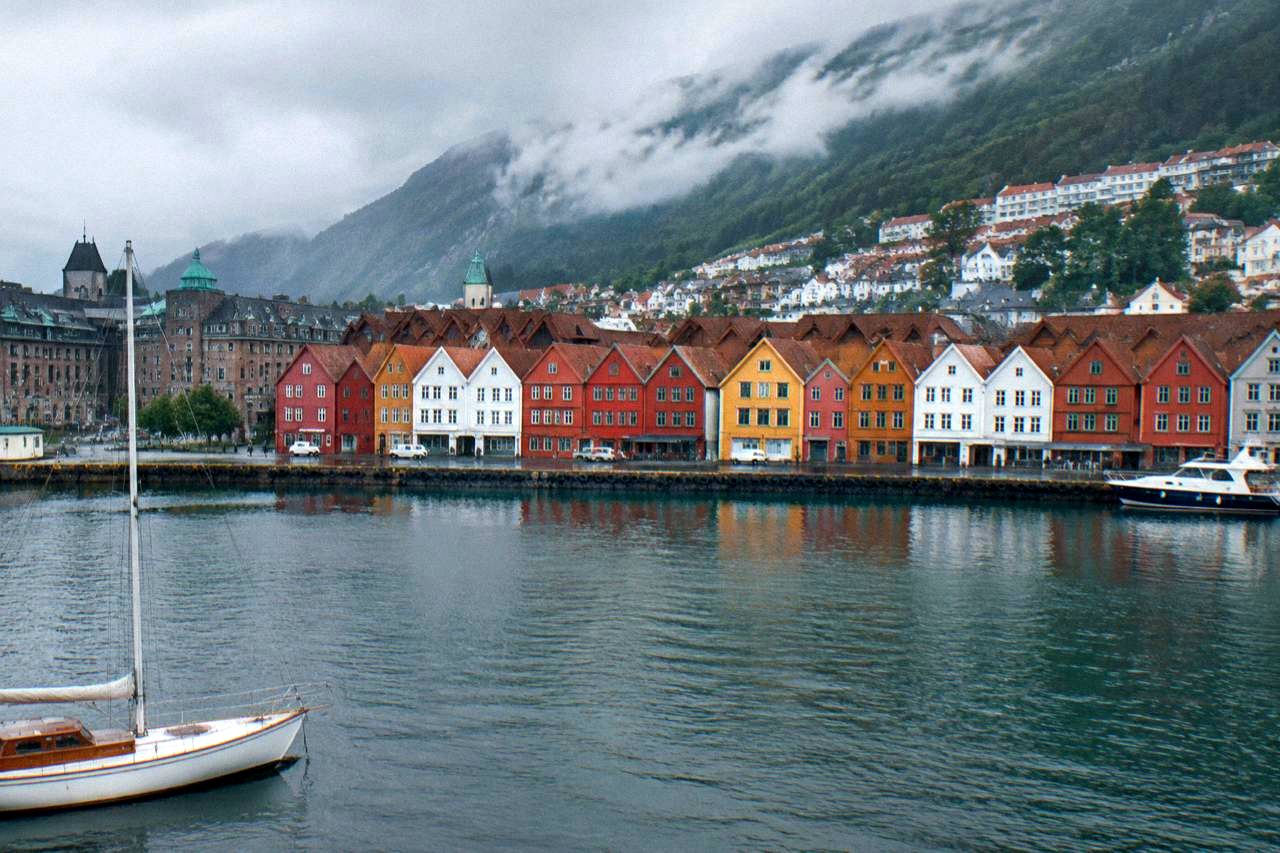
For a first visit of one to three nights, the best area to stay in Bergen is the city centre around Torgallmenningen, the Ole Bulls plass quarter and the harbour edge at Vagen: Bryggen, the Fish Market, Bergenhus Fortress, the Fløibanen lower station and the main Bybanen stops are all within a short walk. Nordnes and Sandviken are quieter alternatives that stay within roughly 15 minutes on foot of the same sights, and suit families and travellers who prefer residential streets over hotel corridors.
The centre earns its ranking through geometry more than anything else. The compact city core means a hotel near Torgallmenningen puts the UNESCO-listed Bryggen wharf, inscribed in 1979 according to UNESCO's own listing, a few minutes away on foot. The Fløibanen funicular's lower station sits at the western edge of the centre, and the official 2026 Bergen Card flyer prices a return adult ticket at 200 NOK from 1 April to 30 September and 145 NOK from 1 October to 31 March, so an evening ride up Fløyen is an easy add-on from a central base.
District choice also affects your airport transfer. The Bybanen light rail line 1 runs from Bergen Airport Flesland into the city centre, and a Skyss single adult ticket in zone A costs 51 NOK per the transport page on visitbergen.com. Staying anywhere near a Bybanen stop keeps that connection simple; the Bergen Card, at 400 NOK for a 24-hour adult pass, includes free Skyss buses and Bybanen light rail across Vestland county including the airport line.
| District | Best for | Walk to Bryggen | Character |
|---|---|---|---|
| City centre (Torgallmenningen) | First visits, short stays, nightlife | A few minutes | Hotels, shopping, restaurants |
| Harbour edge (Bryggen/Vagen) | Views, atmosphere, cruise calls | On your doorstep | Historic, touristy, can be noisy |
| Nordnes | Families, quieter stays, aquarium | Around 10-15 minutes | Residential peninsula, museums |
| Sandviken | Wooden-house charm, low noise | Around 15 minutes | Old town lanes, hillier |
| Marken/Skostredet | Boutique feel, café streets | Around 10 minutes | Small-scale, central |
| Further out (Fana, Lagunen) | Budget, car trips, long stays | Bus or light rail needed | Suburban |
Which Bergen Neighbourhood Suits Your Trip?
Match the district to the trip, not to the star rating: city-centre streets around Torgallmenningen suit first-timers and anyone on a short stop; the Nordnes peninsula suits families who want the Aquarium and quiet evenings; Sandviken suits travellers chasing the old wooden-house Bergen of photographs; Marken and Skostredet suit couples who want boutique streets without full-on hotel bustle; and areas along the Bybanen lines suit longer stays and anyone heading out to day trips by rail or bus.
The reasoning is straightforward. Bergen's sights cluster tightly around the harbour. Bryggen, the Fish Market, Bergenhus Fortress, the Hanseatic Museum, St Mary's Church and the Fløibanen station all sit within a belt you can cross in about 20 minutes on foot, so a central base removes almost all need for local transport inside the city. The trade-off is that central streets get busy in summer, and the harbour edge carries noise from bars and, in season, from the port.
Nordnes changes that balance. The peninsula juts into the harbour between the centre and the ship yards, and holds the Aquarium, whose ordinary adult entry the 2026 Bergen Card flyer lists at 380 NOK in the winter window and up to 415 NOK seasonally, plus the old swimming baths at Nordnes Sjobad and several museums. The streets are residential, the cruise berth sits at the neck of the peninsula, and it stays calmer at night than the centre.
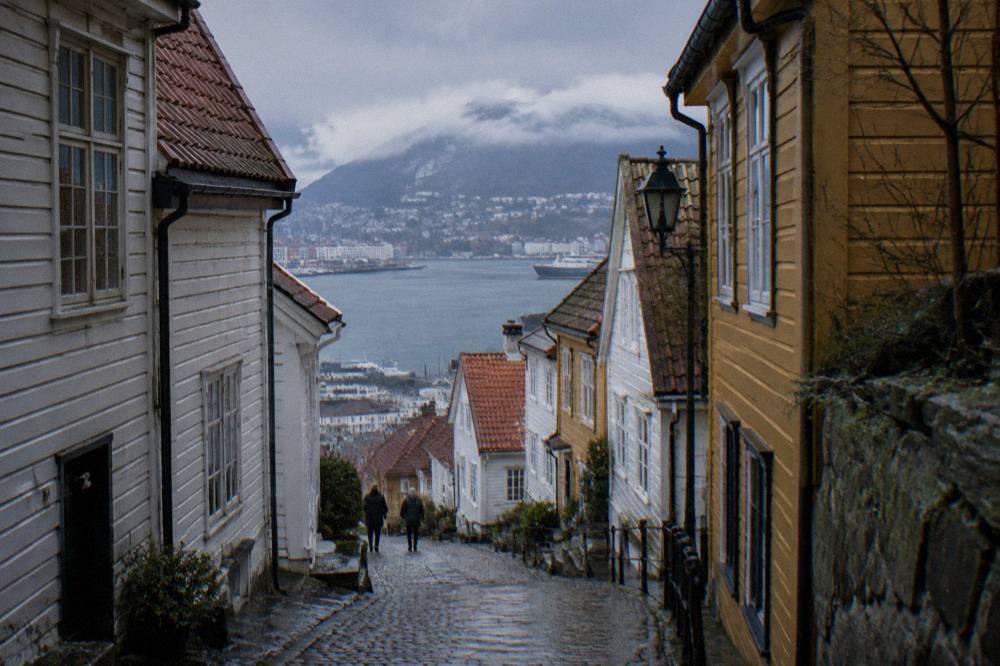
Sandviken, north of Bergenhus, is where the postcard wooden houses climb the hillside in white, ochre and red. It is hillier, quieter and slightly further from the restaurants, which suits travellers who want atmosphere over convenience. For more on these streets, see the site's dedicated guides to Bergen's old town districts, Sandviken and its lanes and Nordnes, the harbour peninsula.
Budget is often the deciding factor, and Bergen is not a cheap city; the site's full cost breakdown covers this in How Expensive Is Bergen? A Realistic Budget Guide. What matters for area choice is that sleeping inside the historic bowl costs more than sleeping along the light rail, and the trade is purely money versus walking minutes.
Walking the districts before you commit money to a room is genuinely useful, and the guided walks above cover the centre and harbour belt. The Past and Present small-group walk route, for instance, sweeps the same streets a hotel search will show you, and the free GuruWalk options listed on this site's walking-tours guide run tip-based equivalents.
Is The City Centre Actually The Best Place To Stay In Bergen?
Yes for most short trips: the centre around Torgallmenningen and Ole Bulls plass keeps every headline sight inside a 15-minute walk, sits on the Bybanen airport line, and holds the densest supply of restaurants and bars. The honest caveats are price, which runs above the city average, summer street noise in the bar quarter, and the fact that you will be sleeping among the crowds you came to see rather than escaping them at night.
The centre's reach is its whole argument. From a room near Torgallmenningen you can reach the Fish Market, Bryggen, the funicular, the KODE art museums cluster and the shopping streets of Marken and Skostredet without a single ticket. The city-centre orientation guide on this site maps that walk in detail, and the Torgallmenningen square itself anchors it as the city's main public space.
Noise is the real downside. The bar streets around the harbour and the upper end of the centre stay loud on summer weekends, and the port adds cruise-ship activity in season. Bergen Havn, the Port of Bergen, publishes a live list of ship arrivals on its own arrivals page, so if peace matters, check what is berthed near your dates before booking a harbour-view room. Travellers on a schedule should also read the site's cruise port guide for how the berths map onto the centre.
A central base also compounds with the Bergen Card. The card's 24-hour adult price of 400 NOK (the 2026 flyer lists child 3-15 at 100 NOK, and 48h at 500/125 NOK) buys free Skyss buses and Bybanen across the county, so from a central room you can ride out to the airport or toward the day-trip departure points without buying individual 51 NOK tickets. The site's Bergen Card guide does the full maths on when the card pays off.
| City-centre plus | City-centre minus |
|---|---|
| Every headline sight within walking distance | Higher nightly rates than outlying areas |
| Bybanen airport line runs through the centre | Bar-quarter noise on summer weekends |
| Densest restaurant and café supply | Busy with tourists in peak season |
| Funicular, museums and harbour on foot | Limited parking, high parking fees |
| Best base for two- and three-day itineraries | Fewest budget beds in the historic core |
Where To Stay In Bergen Near Bryggen And The Fish Market?
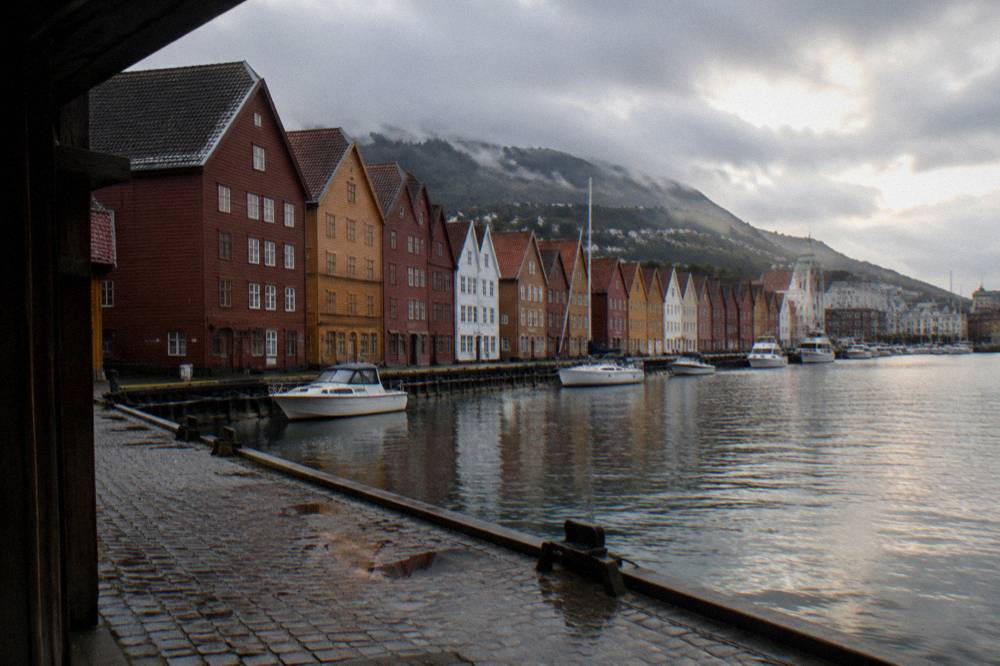
Stay on the harbour edge itself if being beside Bryggen and the Fish Market is the whole point of the trip: the wharf buildings, the market stalls at Torget and the Bergenhus Fortress sit directly outside your door, and the museums of the Hanseatic period are minutes away. The costs of that position are the highest nightly rates in the city, real noise from the port and the bar streets, and interiors that are often modern reconstructions rather than the historic timber they resemble.
Bryggen is the oldest draw. The UNESCO inscription dates from 1979, and the listing's own text frames the wharf as the remnant of the Hanseatic trading post that shaped the city's commercial history. The wooden buildings burned and were rebuilt repeatedly across centuries, so today's gables, characterful as they are, are largely later structures on medieval foundations. Sleeping inside or beside them means sleeping inside the main visitor attraction.
The Fish Market at Torget sits at the southern end of the same waterfront. The site's Fish Market guide and restaurant guide cover what is actually sold there and where locals eat instead; the short version for area-choosing purposes is that the market sits directly on the walk between the centre and Bryggen, so a harbour-edge room puts it in your daily path rather than at the end of a trek.
For travellers who want the harbour without the noise, the western side of Vagen towards the Bergenhus end is calmer than the bar quarter. The fortress, whose grounds the site covers in its Bergenhus Fortress guide, buffers the streets behind it, and Haakon's Hall, priced at 120 NOK in the 2026 Bergen Card flyer, sits inside the complex. That end of the harbour is a reasonable compromise between view and sleep.
Should You Stay Outside The Centre At All?
Yes, in three situations: stays of four nights or more, where a quieter room and a Bybanen ride beat paying centre prices every night; trips built around day tours to the fjords, where being near the bus and rail stations matters more than being near the harbour; and family trips, where Nordnes or the western districts give children room that hotel-centre streets do not. What you lose is spontaneity, since an evening stroll to the harbour stops being a two-minute decision.
The arithmetic of longer stays is the strongest argument. Central Bergen's nightly rates sit at the top of the city's range, and a family staying five nights can save real money by sleeping near a light-rail stop and buying a Bergen Card for transport. The Bybanen line 1 runs between the airport and the centre, and line 2 extends the network, with timetables valid from 10 August 2026 published by Skyss covering both lines on current routes.
Day-trip logistics argue the same way. Fjord tours, whether the Mostraumen cruise, Hardangerfjord trips or the Flam railway packages, depart from points around the harbour and bus station, and most involve early starts. The site's fjord tours guide and the getting around guide cover the departure geography in detail; for area purposes, a room within walking distance of the bus station removes the early-morning scramble.
Families get a specific deal out of Nordnes. The Aquarium, the site's Aquarium guide explains, sits on the peninsula's tip, and the residential streets around it have playgrounds and calm evening streets. The Bergen with kids guide builds a full itinerary around that base, including the VilVite science centre, whose details the site covers separately.
| If your trip is... | Consider staying in... | Why |
|---|---|---|
| One night between flights | Near the bus station or Torgallmenningen | Fast access to Bybanen and the airport line |
| Two to three nights, first visit | City centre or harbour edge | Everything walkable, no local transport needed |
| A family week | Nordnes | Aquarium, quiet streets, still 10-15 minutes from Bryggen |
| Photographs and charm | Sandviken | Old wooden lanes, hillside views, low nightlife |
| Fjord day tours every day | Near the bus station or harbour | Earliest departures within a short walk |
| Budget stay, four nights or more | Along Bybanen line 1 or 2 | Cheaper rooms, card-covered transport into the centre |
Where Are The Hostels And Cheap Beds In Bergen?
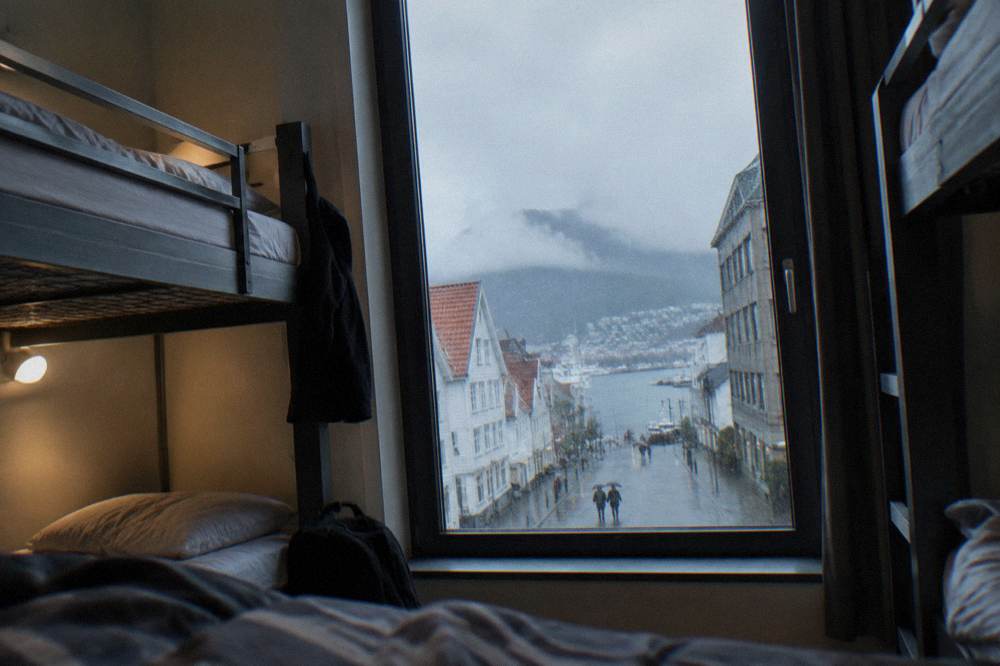
Bergen's budget beds sit in two places: a handful of hostels around the city, including HI Bergen Hostel Montana and City Hostel Bergen, both listed on Hostelworld with from-prices around the mid-$20s per night, and outlying hotels along the transport lines that undercut the centre. The hostel inventory is confirmed live and bookable; the trade for the price is that the cheapest beds are not in the historic core, so budget stays in Bergen almost always mean a bus or light-rail commute into the centre.
The hostel supply is real but thin. The site's verification pass confirmed named Bergen hostels on Hostelworld with from-prices of roughly $26, and confirmed live city inventory across the major booking platforms. What it did not find is a hostel on the Bryggen waterfront; the historic core is hotel territory, and price falls as you move away from Vagen.
For travellers weighting price above all, the site's Bergen on a budget guide lists the free sights, which matters when the money saved on a bed goes into 51 NOK transport tickets and 200 NOK funicular rides. Rain strategy matters too: Bergen's yr.no station table shows 217 days with precipitation across the trailing 13 months, with the wettest observed month at 321.8mm, so a cheap room with no indoor common space is a false economy in November. The rainy day guide covers the indoor options, and the Bergen weather guide has the full monthly picture.
Timing shifts prices as much as area does. The best time to visit guide explains the seasonal rhythm, and the festival calendar crowds the city hard in late May and early June: the Bergen International Festival ran 27 May to 10 June in 2026, Bergenfest 10 to 13 June, Nattjazz 29 May to 6 June, and Bergen Pride the same week, all per the festivals' own sites. Beds are tightest then, and the festivals guide has the full list.
How Close Should You Stay To The Cruise Port In Bergen?
Cruise passengers docking in Bergen should stay in the centre or on the Nordnes peninsula: the main cruise berths sit at the head of the harbour, within walking distance of Bryggen and the city centre, so no transfer is needed and a hotel near Torgallmenningen or on the Nordnes side puts you at your ship in roughly 10 to 15 minutes on foot. Only passengers arriving on smaller vessels berthed further along the harbour need to think about transport at all.
The port geography is forgiving. Bergen Havn's live arrivals page lists the ships, and the berths cluster around the peninsula neck and the inner harbour, directly across the water from the Fish Market. The cruise port guide maps the walkable relationship in full, and the cruise ship day guide covers what is achievable if Bergen is just a port call rather than an overnight stop.
For pre-cruise hotel nights, the calculus is the same as any central stay: walkability beats proximity, because the port walks to the centre. The one group who should think harder are passengers whose ships depart on early-morning day tours, since the fjord-cruise and tour-bus departure points sit around the inner harbour, and a Nordnes room reaches them as easily as a centre one.
Where To Stay In Bergen For Fjord Day Trips?
Stay near the inner harbour and the bus station: the Mostraumen cruises depart from the harbour pier beside the Fish Market, the Hardangerfjord and Sognefjord coaches use the bus station area at the edge of the centre, and the Norway in a Nutshell rail route starts from Bergen railway station, all three within a 15-minute walk of a central or harbour-edge room. Travellers doing multiple day tours save almost nothing by staying further out and lose the early starts.
The departure points set the rule. Fjord day trips from Bergen run from the waterfront and the transport nodes at the eastern edge of the centre, which the fjord tours guide details, with the Mostraumen guide, the Hardangerfjord guide and the Sognefjord guide covering the individual routes. A room at the centre's eastern end, near the bus and rail stations, shortens the morning walk for every one of them.
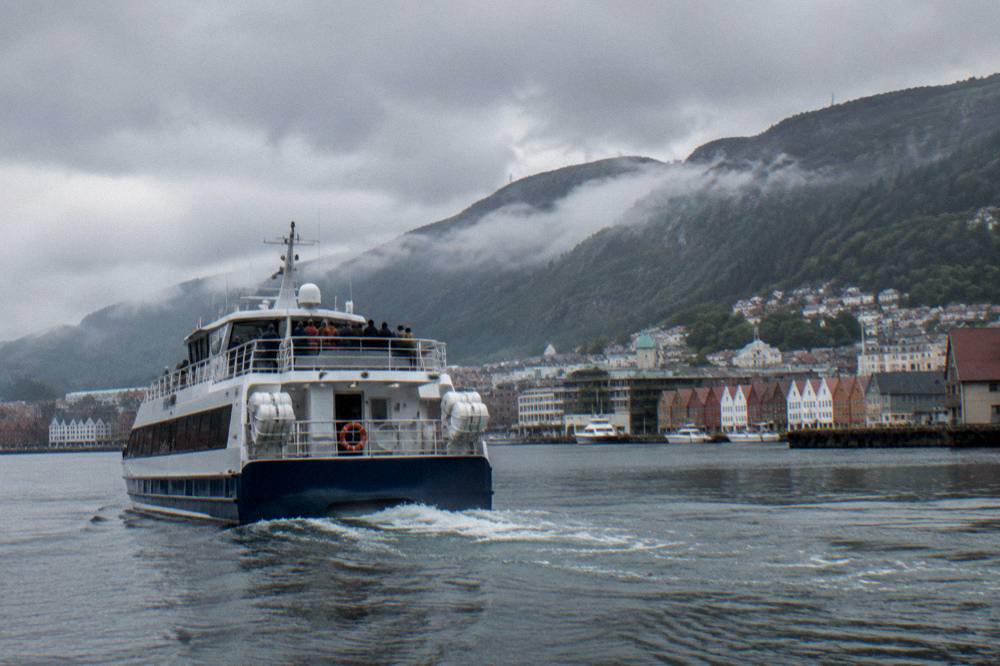
The day-trip-heavy itinerary also argues for card-covered transport. A 24-hour Bergen Card at 400 NOK covers the Skyss network, and the longer 96-hour version at 700 NOK (the flyer's own figures) covers a full week's local riding for a five-day stay built around tours. Pair it with the one-day, two-day or three-day itineraries depending on how long you keep the room.
| Day trip | Departs from | Best base district |
|---|---|---|
| Mostraumen fjord cruise | Harbour pier, inner harbour | Harbour edge or centre |
| Hardangerfjord tours | Bus station area | Centre, near the bus station |
| Flam railway packages | Bergen railway station | Centre, near the rail station |
| Ulriken643 cable car | Ulriken station, south of centre | Anywhere on Bybanen line 1 |
| Rosendal cruise | Harbour pier | Harbour edge or Nordnes |
Where To Stay In Bergen In Winter And At Christmas?
In winter, stay in the centre or on the harbour edge: daylight is short, rain falls on roughly two days in every three, and the Christmas Market at Festplassen plus the Pepperkakebyen gingerbread city at Bergenhus run from late November to late December, so a base that reaches the indoor sights, the market and the funicular without a wet walk wins. Winter rates are also lower than summer, which makes the historic core affordable when it usually is not.
The Christmas season concentrates the city. The Christmas Market at Festplassen runs 20 November to 22 December 2026 with free entry, and Pepperkakebyen, the gingerbread city, runs 14 November 2026 to 10 January 2027, both per visitbergen.com listings. Festplassen sits at the southern end of the lake Lille Lungegardsvann, a short walk from Torgallmenningen, so a central room reaches the market, the gingerbread display and the shops on one loop.
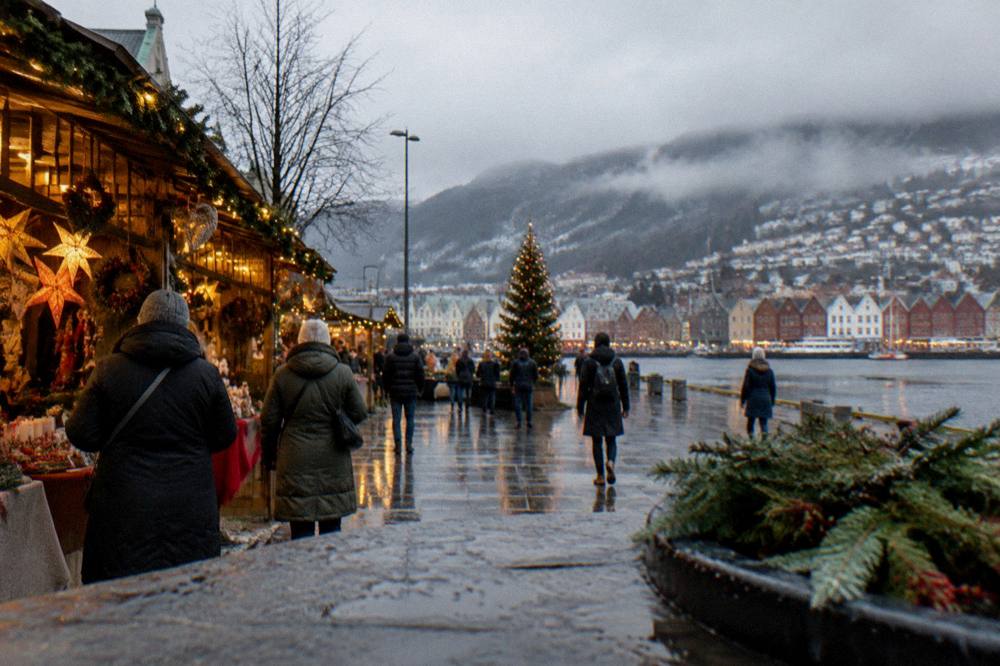
The weather data supports the indoor bias. The yr.no Bergen station table shows monthly observed means from 14.3C in August 2026 down to -1.4C in January 2026, and November as the wettest trailing month at 321.8mm of precipitation against a 275.0mm normal. The Bergen in winter guide and the Christmas in Bergen guide cover the seasonal programme, while the winter weekend guide compresses it into a two-night plan.
Winter also lowers the funicular price: the Bergen Card flyer lists the Fløibanen return at 145 NOK adult from 1 October to 31 March, against 200 NOK in summer. Off-season travellers can read the spring, autumn and summer guides for how the same areas behave at other times of year.
What About Parking, Cars And Getting To Your Hotel?
Arrive by air and the Bybanen airport line is the simplest link: it runs from Flesland terminal into the centre, and the Bergen Card covers the ride free, while a single zone A ticket costs 51 NOK. Driving changes the answer entirely, because central Bergen has limited and paid parking, so if you keep a car for Trolltunga, Hardanger or the coastal routes, a hotel with parking, or a base outside the historic core, beats a charming central address with nowhere to leave the vehicle.
The car question decides districts more than many visitors expect. The parking guide covers the rules and the car rental guide the rental side; for area choice, the practical version is that the historic bowl's streets were built for horses and foot traffic, and the cheapest rooms with easy parking sit along the ring roads and Bybanen lines rather than beside Bryggen.
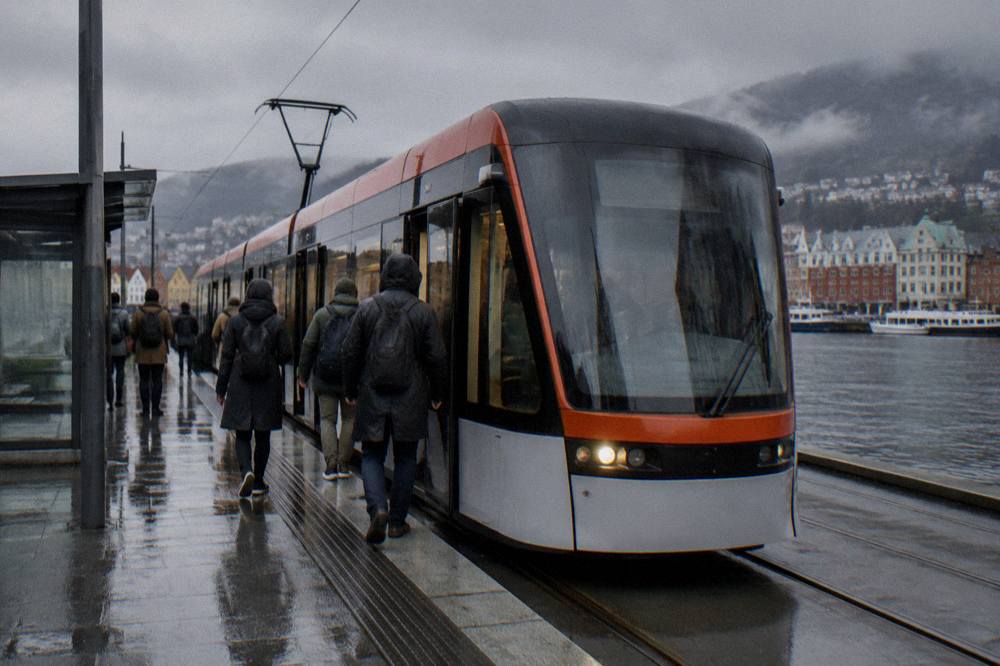
Train arrivals land in the same place. The Oslo to Bergen railway terminates at Bergen station at the centre's eastern edge, next to the bus station, so rail travellers can walk to most central rooms; the Oslo to Bergen train guide covers the journey itself, and the flights to Bergen guide the air side, including the airport's overnight runway-lighting maintenance window on nights between 19 May and 5 June 2026 published by Avinor, which affects only overnight operations.
One transport caveat is worth planning around. Bybanen's own maintenance pages report summer 2026 works: line 1 suspended between Slettebakken and Byparken from 29 June to 26 July 2026, with replacement buses, and line 2 suspended between Kaigaten and Bergen busstasjon from 29 June to 12 July 2026, plus a one-direction closure of the Nonneseter stop from 23 February 2026. If your stay overlaps those weeks and your room sits beyond the works, check the Skyss travel planner before you book.
Which Areas Should You Avoid, And What About Safety?
No Bergen district fails a basic safety test: this is a small, orderly Nordic city, and the honest answer is that the only areas to think twice about are the bar streets of the centre on summer weekend nights, purely for noise and late-night bustle rather than danger, plus the slopes of the mountainside if a hilltop guesthouse means a steep walk with luggage. The city centre on a Saturday night is loud, not unsafe, and everything within the built-up bowl is ordinary residential or visitor territory.
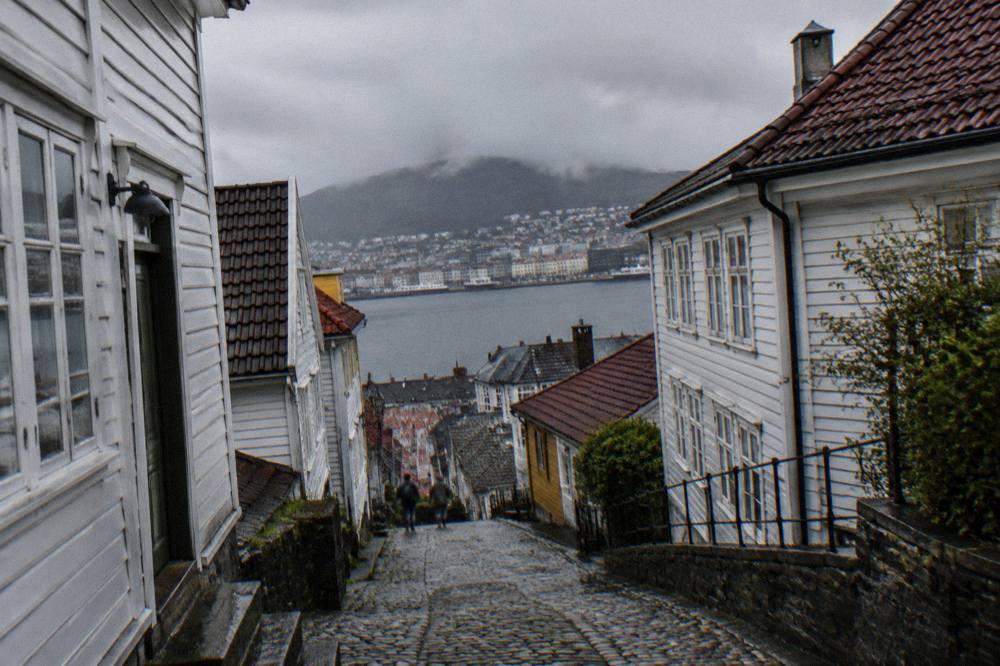
The site's Is Bergen safe? guide covers the detail, including the practical risks around slippery wooden wharfs, steep cobbled lanes and, for hikers, the mountainside trails that begin almost at the city's back door, which the hiking guide covers properly. The specific trap for hotel-choosers is the hillside: several scenic addresses sit partway up towards Fløyen or Ulriken, and the walk up with a suitcase is a real consideration.
Beyond that, choose on price and character. The full hotel shortlist sits in the best hotels in Bergen guide, and the planning basics, from currency, which is the Norwegian krone, never the euro, to entry rules for a Schengen Associate country that is not an EU member, sit in the planning a trip to Bergen guide.
A food walk doubles as an orientation to the centre's eating streets, and the funicular ride that ends the featured tour above puts the whole bowl of the city below you, which is the fastest way to see how the districts fit together before you unpack.
For travellers who prefer a straight city walk, the small-group options below cover the same ground, and the free GuruWalk tours listed on the Bergen walking tours guide run on a tip basis with no fixed price.
Whichever district you settle on, book early for the late-May festival fortnight and the Christmas weeks, and check the Port of Bergen arrivals page if your dates coincide with large cruise calls, because those two calendars move the city's room supply more than any other factor.
Common Questions About Where To Stay In Bergen
What Is The Best Area To Stay In Bergen?
The city centre around Torgallmenningen and the harbour edge at Vagen is the best area for most visitors: Bryggen, the Fish Market, Fløibanen and the main museums are all within a short walk, and the Bybanen airport line stops there. Nordnes and Sandviken are quieter alternatives within roughly 15 minutes on foot of the same sights.
Is It Better To Stay In The City Centre Or Near The Harbour In Bergen?
They overlap: the harbour edge is part of the city centre. A room directly on the Bryggen waterfront trades higher rates and port-side noise for the view and doorstep access, while a room a few streets back, towards Torgallmenningen or Ole Bulls plass, keeps the same walkability with quieter nights.
Where Should Families Stay In Bergen?
Nordnes suits families best: the Aquarium sits on the peninsula, the streets are residential and calm in the evenings, and the centre stays a 10 to 15 minute walk away. The Bergen with kids itinerary on this site is built around that base.
Is Bergen Expensive To Stay In?
Yes by most European standards, and the historic core carries the city's highest nightly rates. Hostels including HI Bergen Hostel Montana and City Hostel Bergen list from-prices around the mid-$20s per night, and rooms along the Bybanen lines undercut the centre. The site's cost guide has the full budget breakdown.
Do I Need A Car To Stay In Bergen?
No. The centre is compact and walkable, the Bybanen and Skyss network covers the city, and the Bergen Card includes both. A car only earns its parking fees if your itinerary includes Trolltunga, Hardanger or the coastal routes; in that case a hotel with parking outside the historic core is the practical choice.
When Is It Hardest To Find A Room In Bergen?
Late May to mid-June, when the Bergen International Festival, Bergenfest, Nattjazz and Bergen Pride cluster into the same fortnight, and the weeks of the Christmas Market from 20 November to 22 December. Book well ahead for those windows or plan to stay along the transport lines.