Restaurant Bergen Norway: The Best Places To Eat
Bergen, in Vestland county on Norway's southwestern coast, eats better than its size suggests: a Hanseatic port city of under 300,000 people, ringed by cold North Sea water, with a restaurant scene built on seafood, lamb, mountain berries and a stubborn local pride in all three.
Short answer
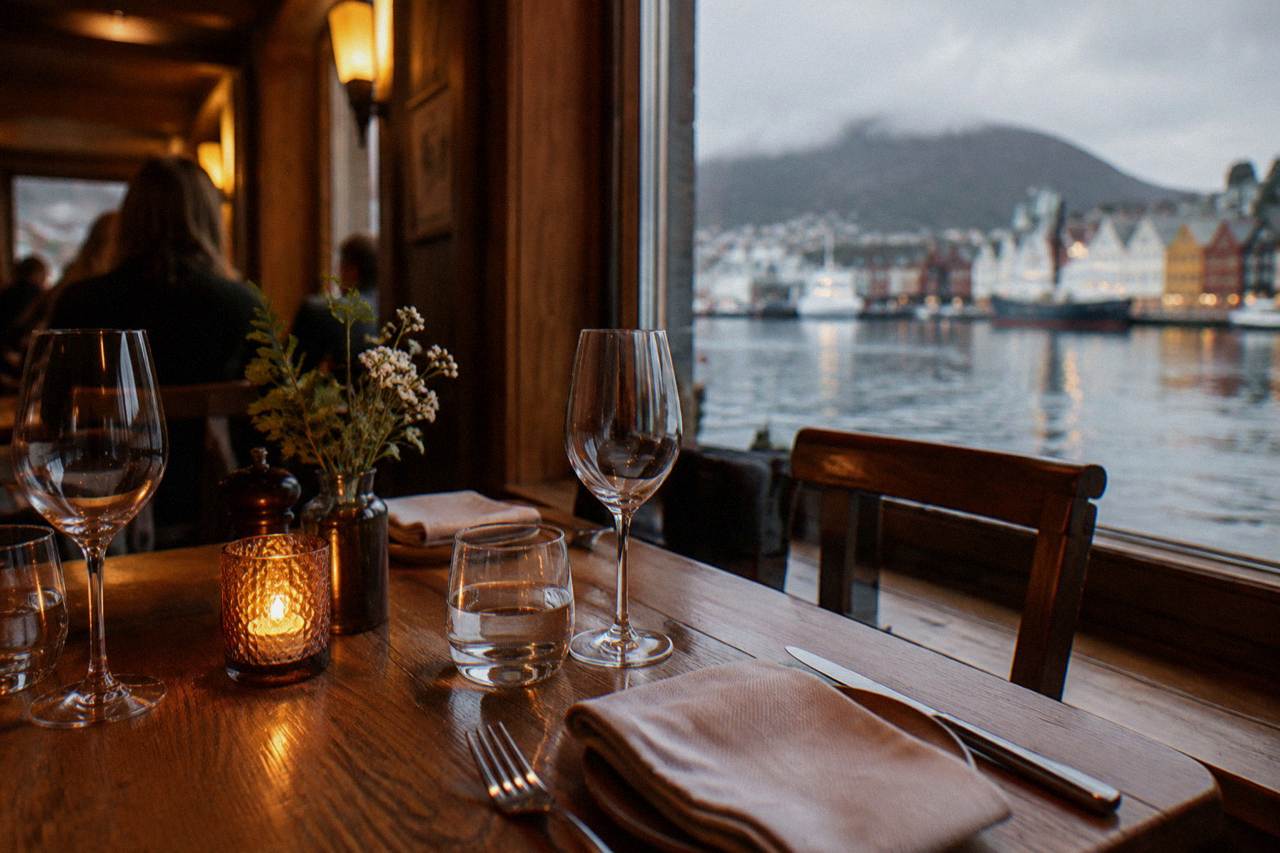
The best restaurants in Bergen cluster around Bryggen, the city centre and the harbour front. Enhjørningen and Lysverket lead for fine dining, Skatekaia and the Fish Market stalls for seafood by the water, Søstrene Hagelin for takeaway fish, and Baker Brun for the city's most reliable cinnamon buns. Book ahead in summer and during festivals.
Bergen, Norway's rain-washed Hanseatic port on the southwestern coast, is a small city that takes its food seriously in proportion to its weather. The same oceanic climate that gives the place more than two hundred wet days a year also delivers cold, clean water to the harbour every single day, and the restaurants here are built, first and always, around what the boats bring in. The dining scene spans UNESCO-listed wharf cellars, white-tablecloth kitchens run by ambitious chefs, dockside fish counters, and a bakery culture that treats the cinnamon bun as a minor civic monument. This guide walks through the best restaurants in Bergen neighborhood by neighborhood, explains what to order and why, and ends with the practical details: when to book, what things cost in general terms, and how the city's own food walks and sightseeing tours slot into a day built around eating.
What Are The Best Restaurants In Bergen?
The strongest picks are Enhjørningen for historic Hanseatic fine dining in one of the old wharf buildings on Bryggen, Lysverket for the city's most decorated modern kitchen near the KODE art museums, Skatekaia for seafood straight off the boats at the inner harbour, and Bryggeloftet & Stuene for traditional Norwegian cooking above the Bryggen wharf. For quick eating, Søstrene Hagelin sells takeaway fish dishes and the Fish Market stalls serve the day's catch. Book the fine-dining rooms several days ahead in summer.
That shortlist is the honest answer, but it flattens the real character of the place. Bergen's restaurant landscape is unusually compact: almost everything worth booking sits within a twenty-minute walk of the harbour, from the student cafés of Nygårdshøyden up the hill to the west, to the fish counters at the very edge of the water. The old trading quarter around Bryggen, inscribed on the UNESCO World Heritage List in 1979, contributes cellar restaurants in buildings that have stood through centuries of fires and rebuilds, and the atmosphere of eating inside them is part of the meal as much as the menu.
The city's size works in a visitor's favor in another way. A population of roughly 294,860, per Bergen kommune's own statistics, supports a dense, competitive scene where a restaurant that coasts does not survive. Reservations culture is real but forgiving: the top handful of kitchens fill up on summer evenings and festival weekends, while most good mid-range places can absorb a same-day booking. During Festspillene i Bergen, which ran 27 May to 10 June in 2026, and Bergenfest at Bergenhus Festning in mid-June, tables in the centre vanish early.
Which Bergen Restaurants Serve The Best Seafood?
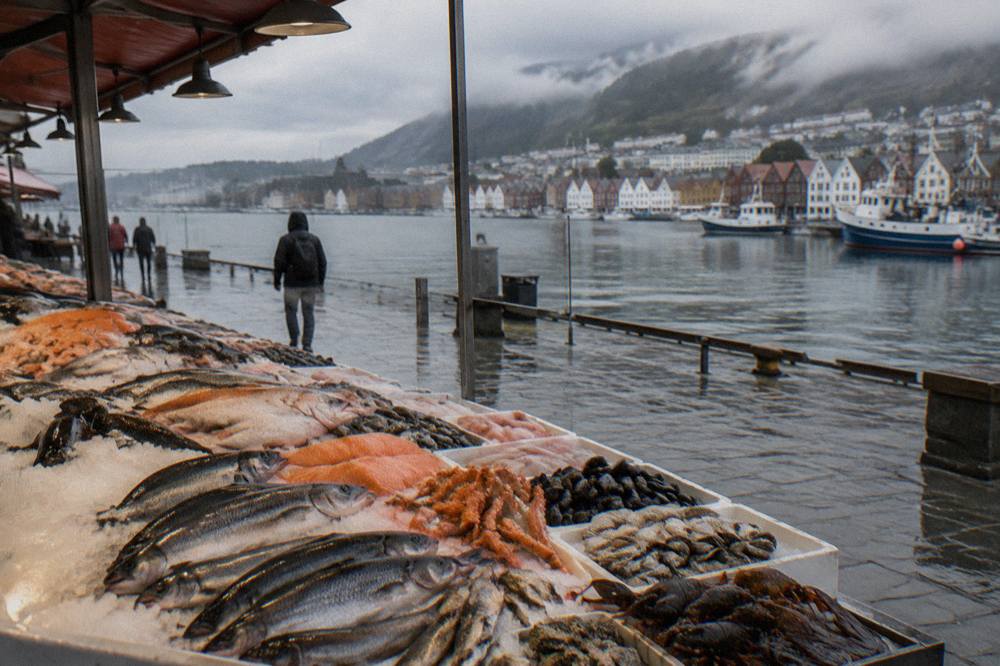
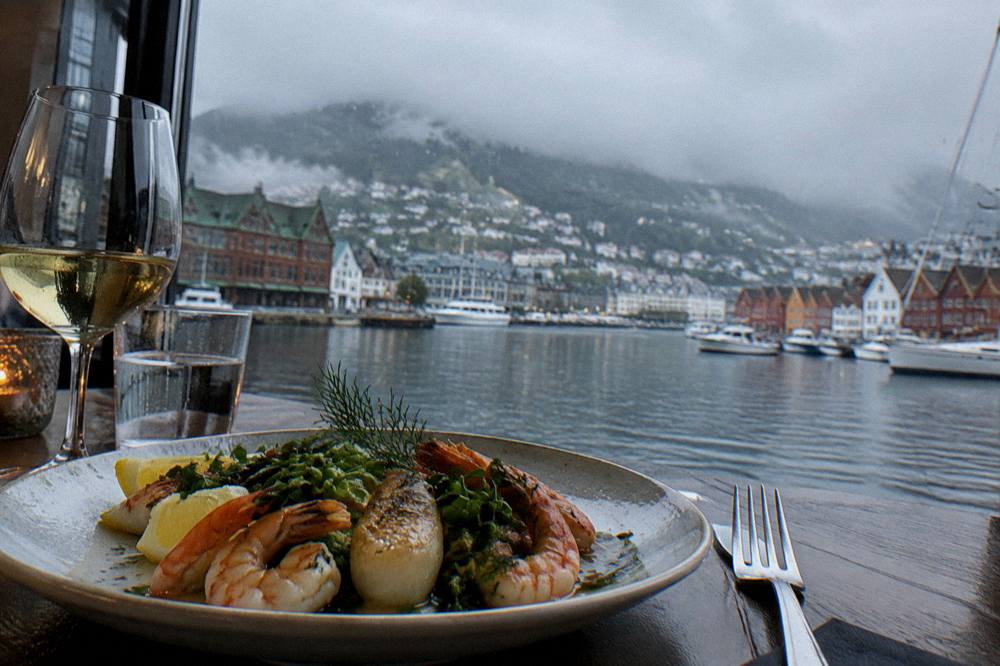
Skatekaia at the inner harbour, Enhjørningen on the Bryggen wharf, and the Fish Market stalls at Torget are the three anchor seafood experiences in Bergen. Skatekaia plates the day's catch steps from where the boats land it, Enhjørningen elevates seafood in a candle-lit Hanseatic cellar, and the Fish Market offers fast, casual portions of shrimp, salmon and fish soup eaten standing or on a bench. Søstrene Hagelin rounds it out with takeaway.
Seafood in Bergen is not a genre, it is the default. The North Sea current keeps the water cold, and the fishing tradition here predates the Hanseatic League itself. What that means on a plate: skrei cod in winter, langoustine and halibut through the year, shrimp boiled same-day in summer, and a local devotion to fish soup, a cream-thick, tomato-warmed bowl that appears on menus from the cheapest stall to the smartest kitchen.
The practical hierarchy looks like this:
| Restaurant | Location | Seafood Style | Best For |
|---|---|---|---|
| Skatekaia | Inner harbour, near the boat quay | Simple, boat-to-table | Lunch of the day's catch |
| Enhjørningen | Bryggen wharf cellar | Fine dining, historic room | Dinner occasion |
| Fish Market stalls | Torget, by the harbour | Casual counter service | Fast seafood, harbor views |
| Søstrene Hagelin | Strandgaten | Takeaway fish dishes | Eating on the go |
| Bryggeloftet & Stuene | Above Bryggen | Traditional, generous portions | Classic Norwegian table |
One caution that is worth money: the stalls at the Fish Market exist for tourists and price accordingly, and nothing on this page needs to pretend otherwise. The food is real and the setting, right on the water with the cruise port and the wharf in view, is part of what you are paying for. Locals tend to buy their fish where the boats actually land it and cook at home, which is exactly what Skatekaia's model borrows from. For more on how the market fits into the city's food economy, see the companion coverage in Bergen dining and drinking costs.
Where Should You Eat Near Bryggen And The Harbour?
Bryggeloftet & Stuene and Enhjørningen sit directly on the Bryggen wharf, both serving traditional Norwegian food in timbered rooms; around the corner on the harbour side, Cornelius Sjømatrestaurant runs a boat-service seafood kitchen on Holmen, and the Fish Market is a two-minute walk. For after-dinner drinks, the narrow lanes behind the wharf hold most of the old-town's cosiest bars.
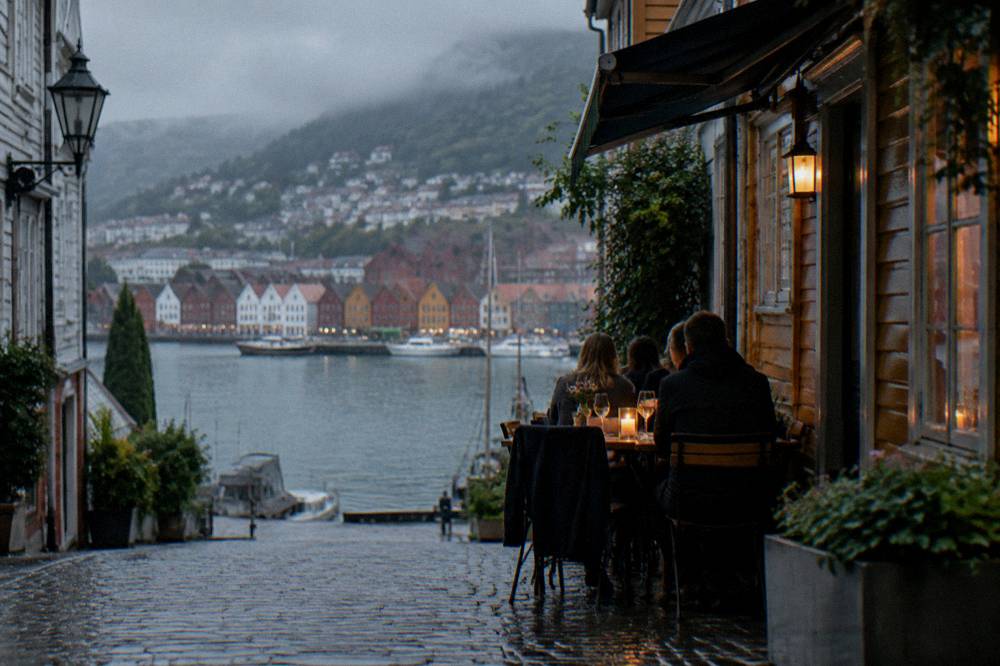
Bryggen is the emotional center of eating in Bergen. The row of gabled wooden buildings, rebuilt again and again after fires yet continuous as a trading site since the Hanseatic era, houses restaurants in low-ceilinged cellar rooms where the timber has gone black with age. Enhjørningen is the best known: a formal, candle-lit room where the menu leans on seafood, game and berries, and where the building itself does half the storytelling. Bryggeloftet & Stuene is the friendlier, more casual sibling upstairs, plating lamb and fish in quantities built for the West Coast weather.
Cornelius, on the small island of Holmen just off the city's harbour, is the one seafood restaurant in the city that makes the journey part of the meal: it runs its own boat service for diners, and the kitchen structures its menus around the ocean. It books out early in summer, and the boat schedule constrains your evening, so it rewards planning rather than improvisation.
For the practical side of a food-focused day in this neighborhood, a guided walk saves a lot of guesswork. The Bergen food and culture walk strings the harbour stalls, the wharf lanes and the old town together with a local guide who explains what you are eating and why it matters to the city.
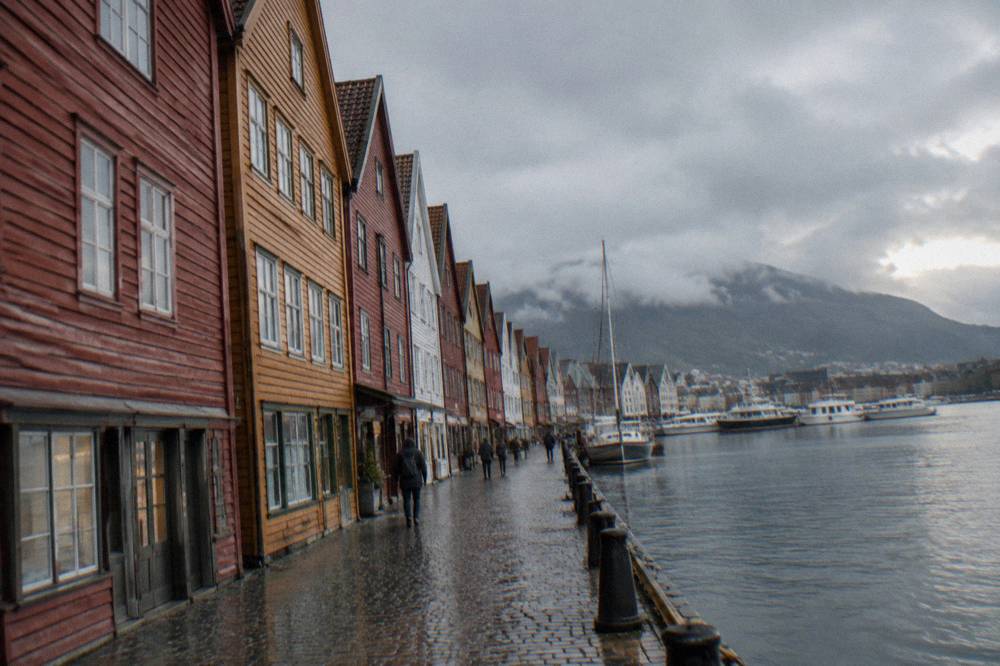
Bergen being Bergen, the weather shapes the meal. The yr.no statistics for the Bergen station show monthly rainfall totals ranging from a mild 65.9 mm in April 2026 to a soaking 321.8 mm in November 2025, and 217 days with precipitation across the trailing thirteen months. Practically: plan dinner reservations rather than long outdoor wanders between October and February, and treat a July evening on the harbour as the reward for surviving the rest of the year. The full climate picture is in the Bergen weather guide.
What Food Is Bergen Famous For?
Bergen is famous for fish soup, fresh boiled shrimp, skrei cod in season, Bergen's cinnamon buns (skillingsboller), lamb dishes from the surrounding fjord farms, and raspeballer, the West Coast potato dumpling served with salted meats. The city's food identity comes from the sea on one side and the mountain farms of Vestland on the other, with a Hanseatic trading history layering spices and techniques on top.
The honest way to understand eating in Bergen is as a conversation between sea and mountain. The sea half is easy to find: it is on every menu within sight of the water. The mountain half is subtler, arriving as lamb from the fjord valleys, as goat cheese, as berries, and as the slow, preserved-food traditions that carried West Coast households through winters before refrigeration. Other pages covering the same trip are gathered on Bergen Travel Guide.
| Dish | What It Is | Where To Try It |
|---|---|---|
| Fish soup | Creamy tomato-fish chowder | Fish Market stalls, Skatekaia |
| Skillingsboller | Cardamom-spiced cinnamon buns | Baker Brun, Godt Brød bakeries |
| Boiled shrimp | Same-day North Sea shrimp, served cold with bread and mayo | Fish Market, harbour counters |
| Raspeballer | Boiled potato dumplings with salted lamb | Bryggeloftet & Stuene, traditional kitchens |
| Skrei cod | Migrating winter cod, served 19 ways | Enhjørningen, Cornelius |
| Brunost | Caramelised whey cheese, sliced thin | Any bakery or delicatessen |
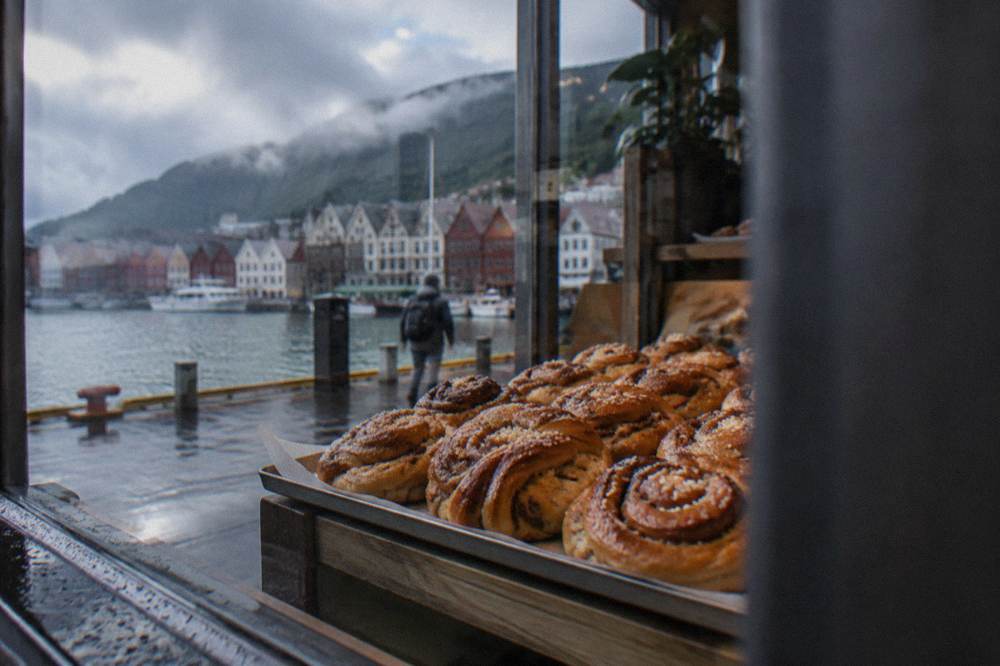
The cinnamon bun deserves its own sentence, because Bergen argues about it with a seriousness outsiders find funny. Baker Brun, the old bakery on Torgallmenningen, is the standard-bearer for the dense, cardamom-forward version; the Godt Brød chain bakes a softer sourdough-leaning bun across multiple locations. Both schools sell out by early afternoon, which is less a marketing trick than a reflection of how many buns this city eats daily.
Which Neighborhood Should You Eat In Tonight?
Eat in the city centre and along the harbour front if you want the classic Bergen dinner: Bryggen cellars, harbour seafood, the Fish Market. Eat around Marken and Skostredet for small independent kitchens and natural wine. Eat in Nygårdshøyden, up the hill toward the university, for cafés and student-priced cooking. Sandviken, on the northern peninsula, offers quiet neighbourhood restaurants a short walk from the centre.
Each area of the city has a distinct dining personality, and the walk between them is short enough that you can follow your appetite rather than a plan. A rough map of the city's tables:
| Area | Character | Typical Evening | Strength |
|---|---|---|---|
| Bryggen and harbour | Historic, formal-to-casual | Wharf cellar dinner, harbour stroll | Seafood, atmosphere |
| City centre and Torgallmenningen | Busy, varied | Fish Market lunch, bistro dinner | Convenience, range |
| Marken and Skostredet | Independent, young | Small plates, wine bar | Quality per krone |
| Nygårdshøyden | Student, café culture | Coffee, brunch, early dinner | Value, baked goods |
| Sandviken | Residential, quiet | Neighbourhood restaurant | Calm, local crowd |
| Fjord-side south (Møllendal) | Creative, waterfront | Long dinner, tasting menus | Chef-driven cooking |
The small-kitchen scene around Marken and Skostredet is where Bergen's younger chefs work: short menus, tight wine lists, rooms the size of a living room. Names change as chefs move on, which is a healthy sign in a scene this size, and the reliable strategy is to walk Skostredet in the early evening and read the menus on the doors. Up in Nygårdshøyden the tone shifts entirely: coffee, cinnamon buns, cheap and generous student portions near the university buildings, with the whole area a ten-minute uphill walk from the harbour. If you are basing your stay around one of these neighborhoods, the where to stay in Bergen guide pairs each area with its hotel options.
Is Fine Dining In Bergen Worth Booking?
Yes: Lysverket, adjacent to the KODE art museums, is the city's flagship modern kitchen and worth booking for its tasting menu alone, while Enhjørningen delivers the historic-cellar version of a special occasion. Both are priced for occasions rather than weeknights, and both fill fastest on summer weekends and festival evenings. For a middle path, the fjord-side kitchens around Møllendal run chef-driven menus at lower stakes.
Lysverket earned its reputation on seafood-first cooking and a room that has drawn national attention since it opened; its location beside the city's art museums makes it easy to fold into a culture day along the lake at Lille Lungegårdsvannet. Enhjørningen, by contrast, sells the wharf as much as the food: the low timber ceilings, the candles, the sense of eating inside the city's trading history. They are different experiences and both have a legitimate claim on a visitor's one big dinner.
The practical booking advice is simple. Reserve the top kitchens for midweek if your dates allow, because weekends in June through August are festival season as much as tourist season: Nattjazz runs at USF Verftet in late May to early June, and the Bergen International Festival fills late May and the first ten days of June. A table you can walk into at 17:30 is easier to find than one at 20:00, and Norwegian dining hours run earlier than in southern Europe.
What About Cafés, Bakeries And Cheap Eats In Bergen?
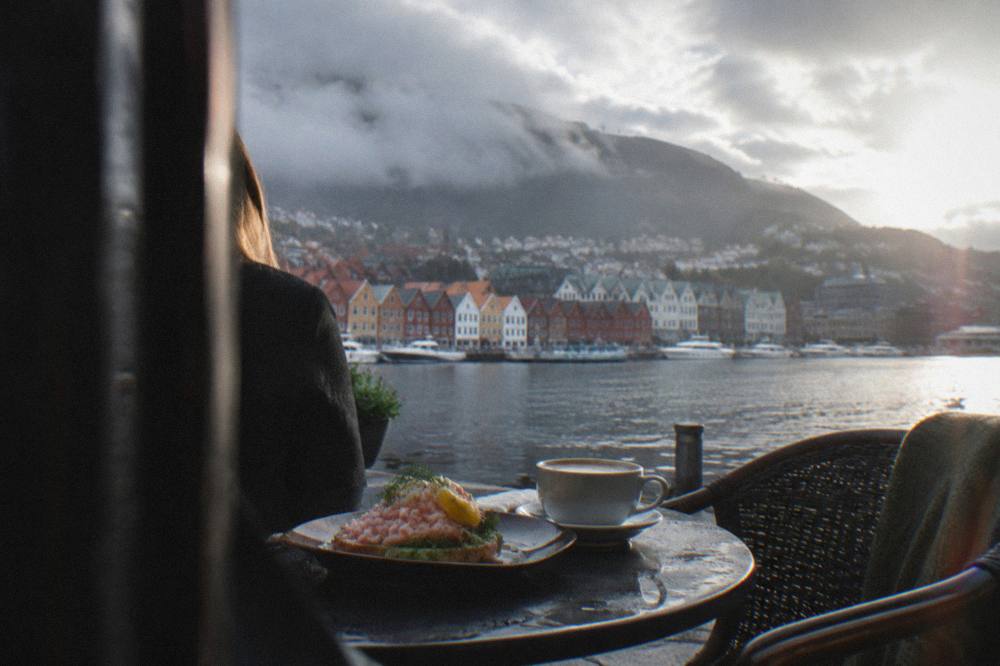
Baker Brun and the Godt Brød bakery chain anchor Bergen's café culture; the Fish Market stalls and Søstrene Hagelin handle cheap hot food; pølse (sausage) kiosks around Torgallmenningen sell the city's fastest meal; and the university quarter's cafés in Nygårdshøyden offer the best-value sit-down food in the city. A hot dog and a cinnamon bun together cost a fraction of a sit-down dinner and are, honestly, a perfectly Bergen lunch.
Norwegians eat lunch early and eat it cheaply, which is why every bakery in the city does its heaviest trade before noon. The packed-lunch culture, matpakke, means that even on a workday the city's cafés are full of people eating an open sandwich rather than a hot meal, and visitors can borrow the habit happily: a couple of slices of bread, brunost, a boiled egg, a coffee, and you have eaten like a local for very little.
The cheap-eat hierarchy in the centre, from cheapest upward: the sausage kiosks, then the bakery counters, then the takeaway fish at Søstrene Hagelin, then the Fish Market stalls, then the harbourside lunch kitchens. The budget picture across the whole city, including alcohol, which is where Norwegian prices bite hardest, is covered in detail in the money and tipping in Bergen guide. What matters here: tipping is genuinely optional, rounding up the bill is appreciated but not expected, and no server is working for tips the way they are elsewhere.
When Is The Best Time Of Year To Eat In Bergen?
Summer, from June through August, brings the best combination of fresh shrimp, outdoor harbour eating and long evenings, with July's mean temperature of 14.9°C at the warm end of the year. Autumn, September to November, is the season for game, lamb and shellfish, while winter means skrei cod from January to April and the Christmas market's food stalls from late November. Every month eats well here; what changes is where you sit.
The climate table from Met Norway's Bergen station tells the practical story. Temperatures run from a January mean of -1.4°C to a July mean of 14.9°C, and rain falls somewhere in the city on 217 of the trailing thirteen months' days. That is not a reason to avoid eating outdoors; it is a reason to choose your month for the right meal.
| Season | Mean Temperature Range | What The Menus Do |
|---|---|---|
| Spring (Mar-May) | 5.9°C to 9.9°C monthly means | Lamb, first greens, lighter fish dishes |
| Summer (Jun-Aug) | 14.3°C to 14.9°C monthly means | Boiled shrimp, outdoor counters, berries |
| Autumn (Sep-Nov) | 6.0°C to 13.1°C monthly means | Game, shellfish, heartier stews |
| Winter (Dec-Feb) | -1.4°C to 5.8°C monthly means | Skrei cod, raspeballer, Christmas fare |
November is the wettest month in the observed table, 321.8 mm, which locals treat as soup season and visitors should treat as cellar-restaurant season. The flip side of the rain: the city's cosiest rooms are at their best precisely when the weather is at its worst, and a candle-lit Hanseatic cellar with fish soup outside a November storm is a genuinely great evening. The seasonal planning picture, month by month, is in the best time to visit Bergen guide.
Can You Combine Dining With Bergen's Views And Fjords?
Yes: dine early on the harbour front and ride the Fløibanen funicular or the Ulriken643 cable car afterward for the city's evening panorama, or take a fjord cruise that returns in time for a late dinner. The Mount Fløyen and Mount Ulriken viewpoints both sit minutes from the city centre, and several tours pair sightseeing with the dining day rather than competing with it.
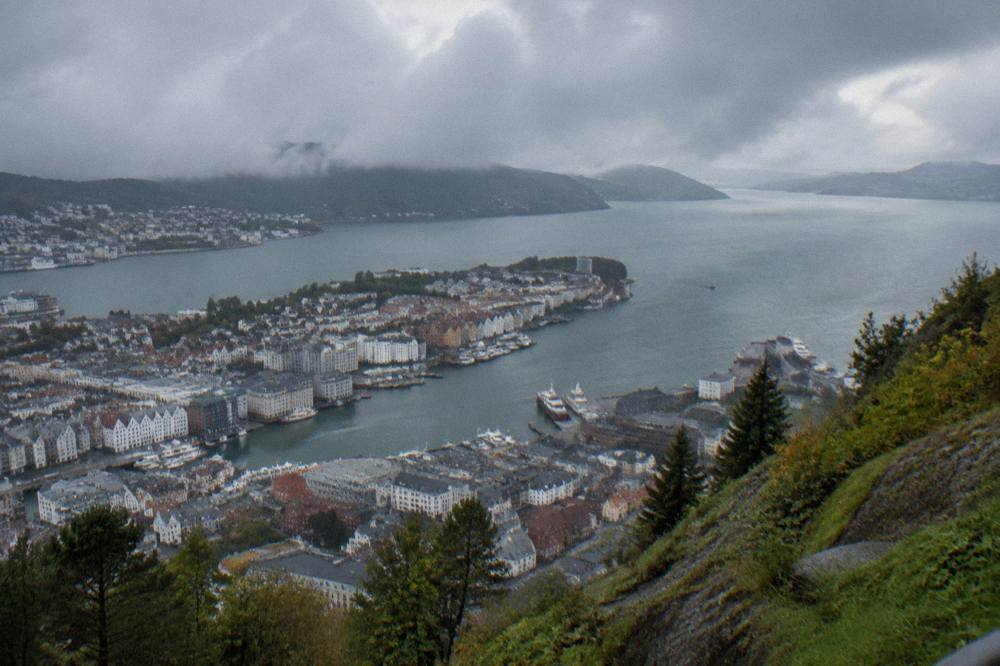
The geometry of Bergen makes this easy. The city is squeezed between water and mountains, so the two best views in town, from the top of Fløyen and from Ulriken, are each reachable in a quarter hour from the harbour restaurants. An early dinner followed by a funicular ride up into the dusk is one of the classic evenings here, and in summer the light stretches the plan comfortably.
For the bigger version, the fjord itself is the dining companion. The Mostraumen cruise through Osterfjord, the city's nearest dramatic fjord run, takes a half day and returns you to the harbour with an appetite intact; the guided version pairs the scenery with a local's commentary on the water, the farms and the fish. The full range of options, from short harbour runs to full Sognefjord day trips, is laid out in the fjord tours from Bergen guide.
How Do You Get A Table, And What Else Should You Know?
Book the fine-dining rooms two to five days ahead outside festival weeks, and a week or more ahead between late May and mid-June; everything else can usually be reserved the same day. Norwegians dine early, kitchens often stop taking orders well before midnight, card payment is near universal, and tipping is optional in a way visitors from tip-based countries sometimes find hard to believe. Sunday is the quietest restaurant day.
The mechanics are friendly. English is spoken in every kitchen and at every host stand in this city, online booking is standard at the serious restaurants, and no-show culture is mild. What trips visitors up is timing: Norwegians eat dinner on the early side, so a 20:00 booking can feel like the last act of the evening rather than the start of one, and Sunday, which is a quiet day across the country, thins out the open kitchens considerably.
| Situation | How Far Ahead To Book | Notes |
|---|---|---|
| Lysverket, Cornelius in summer | One to two weeks | Festival weeks fill first |
| Enhjørningen, cellar rooms | Two to five days | Book the cellar if offered |
| Mid-range centre restaurants | Same day, usually | Early seating easier |
| Bakeries, Fish Market stalls | No booking | Arrive before noon for buns |
| Christmas market weeks | Well ahead | Late November to 22 December is busy |
Payment and tipping deserve their own paragraph because they surprise people. Norway is almost cashless; the kroner exists but many counters prefer cards, and the tram-and-bus system is card-tap throughout. On tipping: it is not a wage subsidy here, ten percent is generous rather than standard, and rounding up a bill is a perfectly normal way to say thank you. The full detail on cards, tax and how much a day of eating costs is in money and tipping in Bergen.
If you are arriving hungry, the airport at Flesland connects to the city by the Bybanen light rail's line 1 and by airport bus, and the Bergen airport guide covers the options; the getting around Bergen guide takes over from there. Between the transport pages and this one, the eating day plans itself.
Common Questions About Restaurants In Bergen
What are the best restaurants in bergen?
Enhjørningen and Lysverket for a special dinner, Skatekaia and the Fish Market stalls for seafood by the water, Bryggeloftet & Stuene for traditional Norwegian plates, and Søstrene Hagelin for takeaway fish. Baker Brun is the bakery stop. Book the first two ahead; the rest can be same-day.
Do I need to book restaurants in Bergen in advance?
Only the top kitchens, and only in high season. Book Lysverket and Cornelius a week or more ahead in summer, the cellar rooms on Bryggen a few days ahead, and expect festival weeks, especially late May through mid-June, to fill first. Mid-range places are usually same-day.
What is the most famous food in Bergen?
Fish soup and boiled shrimp carry the harbour identity, skillingsboller, the cardamom cinnamon bun, carries the bakery culture, and raspeballer, the West Coast potato dumpling, carries the mountain-farm tradition. Skrei cod in winter is the seasonal prize.
Is the Bergen Fish Market worth eating at?
Yes, with expectations set. The stalls serve fresh, simple seafood in a harbour-front setting and price for the view as much as the food. Eat there once for the atmosphere, then eat your serious seafood meals at Skatekaia or one of the wharf restaurants.
Is tipping expected in Bergen restaurants?
No. Tipping in Norway is a genuine bonus, not a wage requirement; rounding up the bill or leaving up to ten percent for excellent service is generous and appreciated, and nothing negative follows from tipping nothing.
When do kitchens stop serving in Bergen?
Early by southern European standards. Norwegians dine around 18:00, and many kitchens take their last orders well before midnight, with Sunday the quietest day of the week. Book an early table if you want the widest choice of kitchens.
Bergen rewards the appetite that plans a little and wanders a lot: book one serious dinner on the wharf or beside the museums, leave the rest of the days to the fish counters, the bakery queues and whatever kitchen on Skostredet has its door open, and the city will feed you well in every kind of weather it knows how to make.