Bergen Cruise Port
Bergen, on the southwestern coast of Norway in Vestland county, is one of the most frequented cruise ports in Northern Europe, and its harbour sits directly against the historic city centre. This guide covers where ships actually dock, the walking question every cruiser asks, what a day ashore costs in NOK, and which fjord excursions leave from the piers.
Short answer
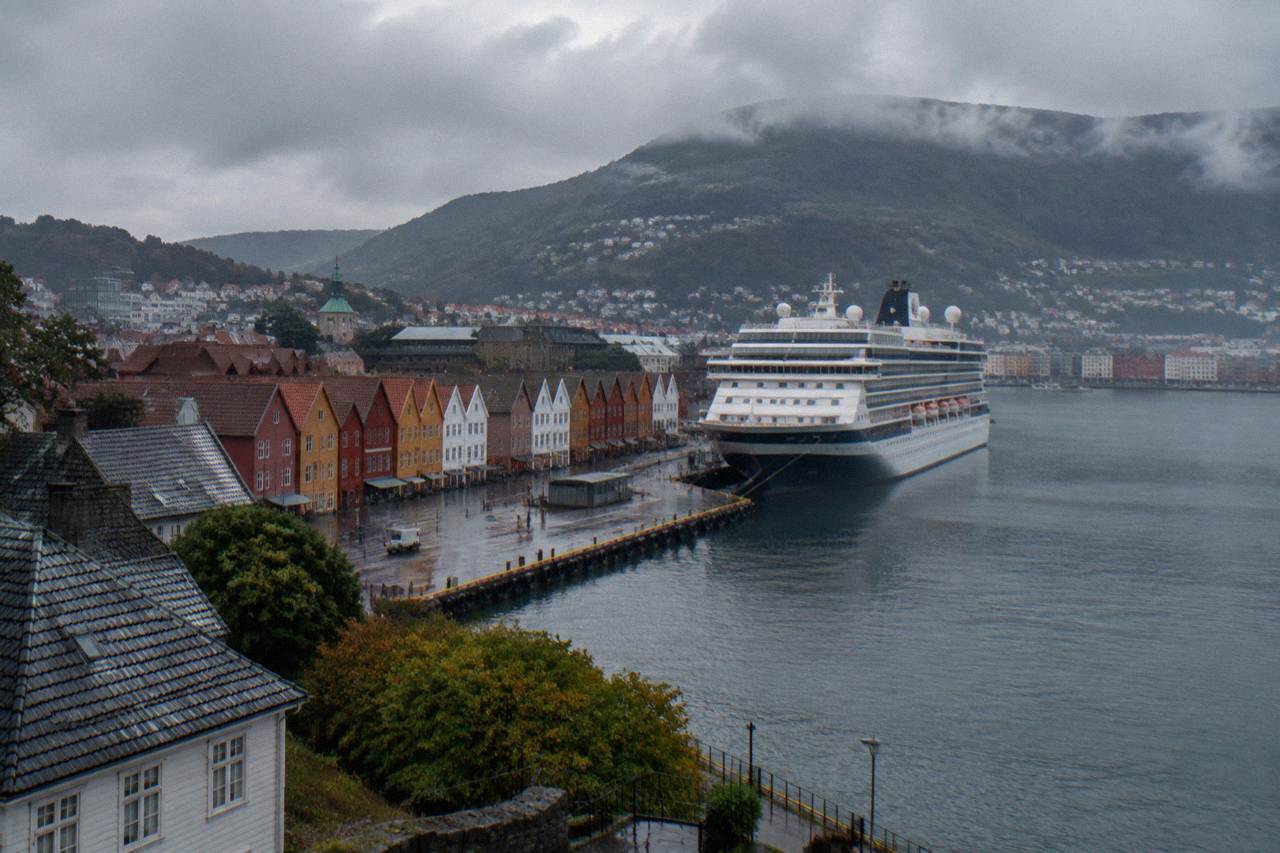
Yes, most cruise passengers arriving in Bergen can walk straight off the ship and into the city centre in a matter of minutes: the harbour piers sit alongside Bryggen, the fish market and the Hanseatic wharf, and the main downtown attractions are on foot from the quays. Only passengers docked at outlying industrial berths need a shuttle or a short ride.
Bergen, in Vestland county on Norway's southwestern coast, is a city built around its harbour. The old Hanseatic trading post of Bryggen faces the water, the fish market sits a few hundred paces from the quays, and the two mountains that frame the city, Fløyen and Ulriken, rise within sight of the mooring lines. For cruise passengers that geography is the whole story: this is one of the few major cruise ports in Europe where the destination and the dock are, for most sailings, the same place. Bergen Havn, the Port of Bergen, even publishes a live list of arrivals on its own website, so you can check which berth your ship has before you sail.
This guide answers the questions that matter on a port day: where ships actually tie up, whether walking in is realistic, what the alternatives cost, and how to spend six or ten hours well. Prices below come from the official 2026 Bergen Card flyer published by visitbergen.com and from Met Norway's climate table for the Bergen station, and every tour price and rating renders from live listing data rather than being typed by hand.
Where Do Cruise Ships Dock In Bergen, Norway?
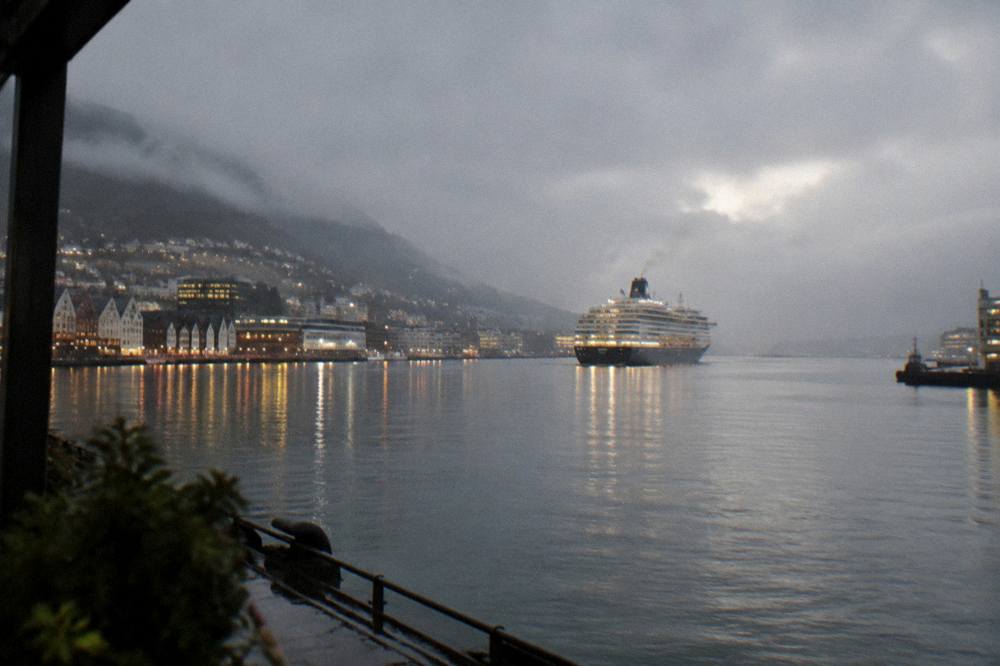
Most cruise ships calling at Bergen tie up at piers immediately south and east of the city centre, with the main cruise berths at Skolten, located next to the Bergen Aquarium and the Nordnes peninsula, and additional quays along the inner harbour by Bryggen and the fish market. From the Skolten and downtown berths, the historic core of Bergen is a short flat walk along the waterfront, with no gate, shuttle or ticket needed in between. Larger vessels on peak days can be assigned outer berths further from the centre.
The port runs along the eastern side of the peninsula that holds the city centre, so the relationship between quay and town is unusually intimate. The Skolten cruise pier area sits by the harbour mouth on Nordnes, close to the Aquarium and a pleasant waterside stroll from the centre. When the central berths are full, ships dock at quays further out, and those passengers are typically offered a shuttle or a short taxi or bus ride into town.
Bergen Havn's own arrivals page, at bergenhavn.no, lists every vessel scheduled to call, and it is worth a look the week before you sail. It shows the ship name, the berth and the arrival and departure windows, which answers the one question a shore-day plan actually depends on: how far is the walk, and is there a walk at all. The port's dedicated cruise landing page was not reachable, but the arrivals feed itself was live and current.
A few practical notes for the quay itself. Cruise traffic in Bergen is foot traffic: there is no fenced terminal complex of the kind you find at cargo-oriented ports. The immediate area around the inner harbour has cafés, the fish market stalls and the start of the Bryggen UNESCO wharf, inscribed on the World Heritage List in 1979 according to UNESCO's own listing text. If your ship berths at one of the outer quays, ask at the gangway about the shuttle, because the port authority and the cruise lines arrange transport when the walk into town is not practical.
Can You Walk Into Bergen From A Cruise Port?
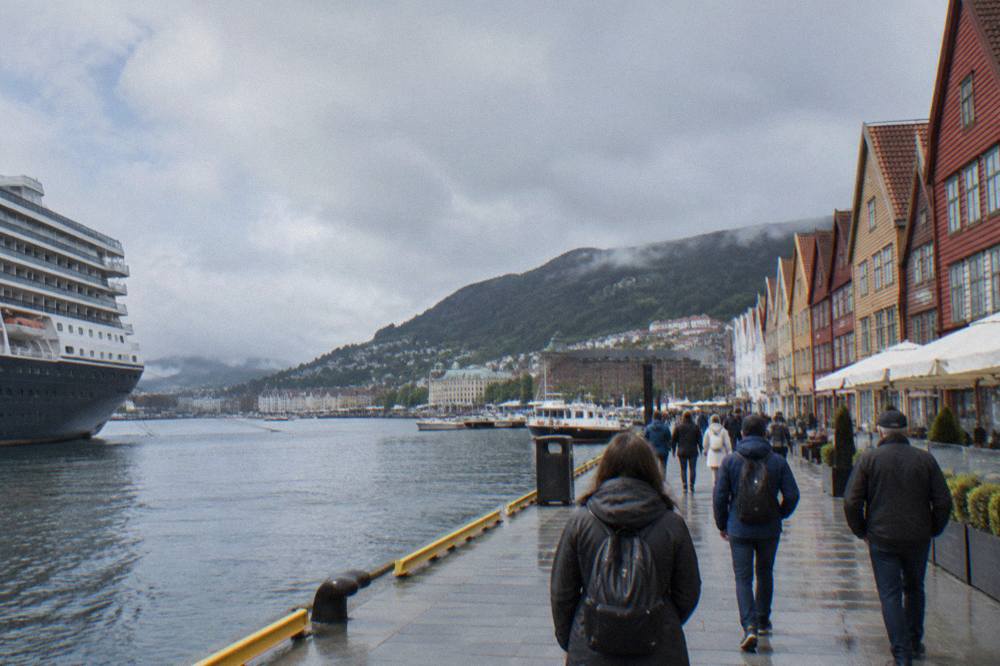
Yes, in most cases you can walk into Bergen directly from the cruise port, and this is the normal way passengers do it. The main cruise berths sit on the edge of the city centre, with Bryggen, the fish market, the Hanseatic Museum and the shopping streets of the downtown core all reachable on foot along flat waterfront paths. Only ships assigned the outer, industrial berths face a walk long enough that most passengers prefer a shuttle, bus or taxi instead.
The honest version of the answer is berth-dependent. From the central harbour quays, the walk to the heart of Bergen is short and obvious: leave the ship, follow the water, and you arrive at the painted gable ends of Bryggen within minutes. Nothing about that route is strenuous. The terrain is flat, the pavement is continuous, and the whole way is through working harbour streets rather than an industrial exclusion zone.
From the outer berths the calculation changes, and this is where a little planning pays off. The port does not publish a walking-distance figure for each berth, and this site does not invent one, so the reliable move is to check the arrivals feed for your berth assignment and ask the crew how the ship is handling transfers. On days when several ships call at once, the central piers fill and the later arrivals go further out; that is the day a shuttle matters.
For orientation once you are off the ship: the city centre is compact and walkable, as this site's Bergen cruise ship day itinerary sets out hour by hour. The grid of streets between the fish market and Torgallmenningen square holds most of what a day visitor wants, and the Fløibanen funicular station, the gateway to the mountain views, sits a short walk from the harbour on the western edge of downtown. If you are planning more than a single day in the region, the five-day Bergen and fjords itinerary extends the same logic inland.
How Do You Get From The Port To The City Centre Without Walking?
If walking is not an option, the alternatives are the Skyss buses and the Bybanen light rail, a single adult ticket in zone A costs 51 NOK per the visitbergen.com transport page, and the Bergen Card includes free Skyss buses and Bybanen travel across Vestland county, including the airport line. Taxis operate from ranks near the harbour, and the Flybussen airport coach, which does not come free with the Bergen Card, lists adult one-way online fares from 189 NOK between Bergen sentrum and Flesland on visitbergen.com.
Public transport in Bergen is run by Skyss, and the network is simple for visitors: buses fan out across the city and the Bybanen light rail runs on two lines, with line 1 connecting the city centre to the airport at Flesland. The single zone A fare of 51 NOK is confirmed on visitbergen's own travel information page and on the transport line of the 2026 Bergen Card flyer. That flyer also confirms what the card covers: free Skyss buses and Bybanen light rail throughout Vestland county, airport line included.
| Option | What it covers | Cost (verified source) |
|---|---|---|
| Skyss single ticket, zone A | One adult journey on buses and Bybanen | 51 NOK (visitbergen.com transport page) |
| Bergen Card 24h | Free Skyss buses and Bybanen across Vestland county, plus attraction discounts | 400 NOK adult, 100 NOK child 3-15 (2026 Bergen Card flyer) |
| Bergen Card 48h | Same transport coverage, longer window | 500 NOK adult, 125 NOK child |
| Flybussen airport coach | Bergen sentrum to Flesland airport, one way | Online adult fare 189 NOK (visitbergen.com listing) |
Two cautions from the current service information. The Bybanen runs summer maintenance in 2026, with line 1 suspended between Slettebakken and Byparken from 29 June to 26 July and replacement buses running instead, per Skyss's own notices; if your port day falls in that window, check the Skyss travel planner before assuming the light rail reaches the centre. And the Nonneseter stop is closed in the direction away from the centre from 23 February 2026 onward because of demolition work nearby. Neither affects the harbour quays directly, but both matter if your plan involves riding transit into or across downtown.
For a port day, honestly, most passengers never need any of this. The walk covers the essentials. Where transport earns its fare is the fjord excursion question: several guided day tours pick up centrally and return to the same area, which removes the only real risk of a shore day, the ship sailing without you. The Hardangerfjord tour with lunch and waterfalls is the one this site features for exactly that reason, and you can Check availability against your port day. The fjord tours from Bergen guide compares the full range.
What Should You Do On A Day Ashore In Bergen?
The core of a Bergen port day is Bryggen, the fish market and the Fløibanen funicular, three things that sit within a short walk of each other and of the cruise berths, with a return ticket on the funicular costing 200 NOK for an adult from April to September and 145 NOK from October to March according to the 2026 Bergen Card flyer. Add the Hanseatic Museum or the Bergenhus fortress area if the weather closes in, and the day is full without a single vehicle.
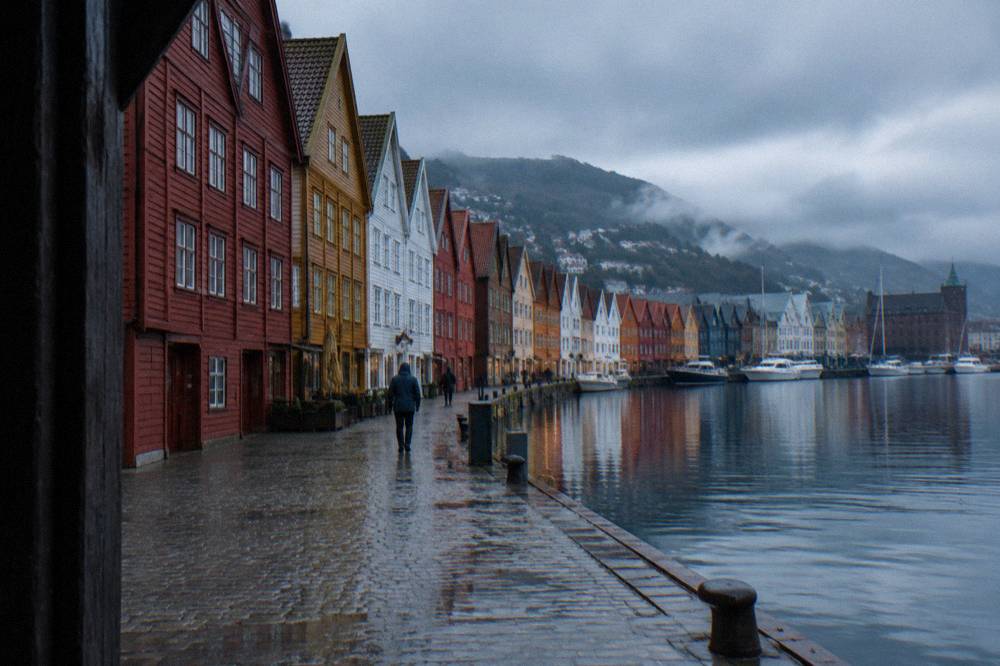
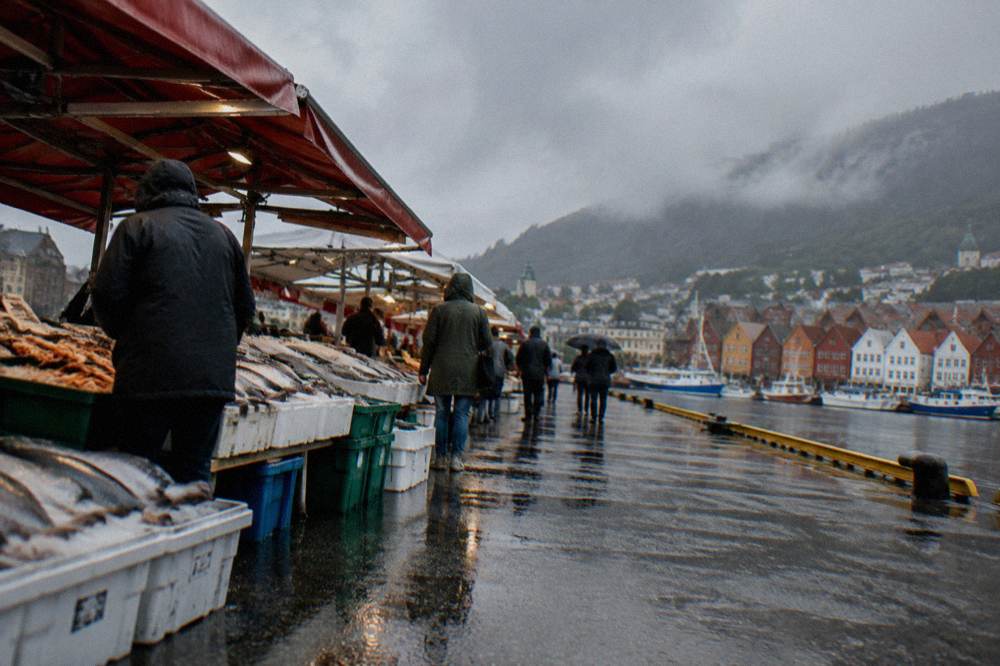
Start at the water. Bryggen's gabled wooden warehouses, the remains of the Hanseatic trading settlement that made Bergen a Hanseatic League port, are the postcard and the history lesson in one, and UNESCO's own listing confirms the wharf was inscribed in 1979. The fish market sits around the head of the inner harbour, and the Bergen fish market guide covers what is actually worth buying there. From either point, downtown Bergen unrolls southward in a compact grid.
The funicular is the second half of most port days. Fløibanen lifts you from a street corner near downtown to the Fløyen plateau, and the view back over the harbour, the Nordnes peninsula and the islands offshore is the single best orientation for the city. The Bergen Card flyer's ordinary-price table gives the return fare by season, and cardholders buy a discounted ticket at the office, one per card. If you would rather have a guide than a map, the small-group walking tours are the strongest category in the city's roster. Everything else covered here is indexed on Bergen Travel Guide.
Rain changes the plan, not the day. Bergen's climate is temperate oceanic and famously wet: Met Norway's station table for the trailing thirteen months shows 217 days with precipitation, and monthly rainfall ranging from 65.9 mm in April 2026 to 321.8 mm in November 2025. The rainy day in Bergen guide and the Bergen museums guide exist for exactly this, and the covered options near the harbour are unusually good.
| Attraction | Entry price (2026 Bergen Card flyer) | Notes |
|---|---|---|
| Fløibanen funicular, return | 200 NOK adult (Apr-Sep), 145 NOK (Oct-Mar) | Bergen Card rate available at ticket office, one per card |
| Ulriken643 cable car, return | 435 NOK adult | Confirmed on ulriken643.no and the flyer |
| Hanseatic Museum | 160 NOK with guided visit | On the wharf near the cruise berths |
| Bryggen Museum | 170 NOK ordinary, 85 NOK with Bergen Card | Covers the wharf's archaeology |
| Haakon's Hall | 120 NOK | At Bergenhus fortress, walkable from the harbour |
| The Aquarium | 380 NOK (Nov-Feb window), 380/415 NOK seasonal (Mar-Oct) | Close to the Skolten cruise berths |

One closure to know about if Ulriken is on your list: the Ulriken643 cable car has scheduled maintenance in the first two weeks of 2026, reopening around 13 January, plus standard Christmas closures, per the operator's own site. Outside those windows the second mountain is a genuine alternative to Fløyen, with the Mount Ulriken guide covering the hike and the cable car in detail.
Which Shore Excursions And Fjord Tours Leave From Bergen?
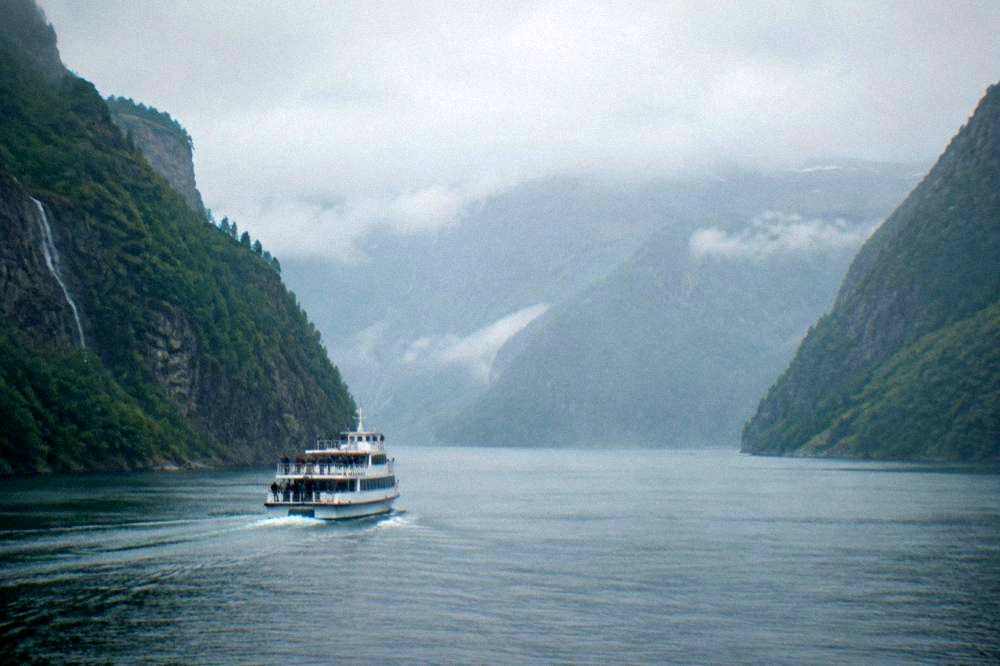
The fjord excursions from Bergen split into three broad groups: the half-day Mostraumen and Osterfjord cruises that leave from the city harbour and return within four hours, the full-day Sognefjord and Flåm trips that trade a longer coach or boat leg for the biggest scenery, and the Hardangerfjord tours to the south, which pair fjord water with waterfalls and orchard country.
A passenger with a typical eight-to-ten-hour call can take any of the three, but the departure and return times on the live listing decide which.
The Mostraumen option is the natural fit for a short call. The boats leave from piers in the city centre, run out through the inner waterways to the narrow Mostraumen strait and come back the same morning or afternoon. This site's Mostraumen fjord cruise guide covers the route and the boat options, and the is the Bergen fjord cruise worth it answer addresses the value question directly.
The full-day options reach further. The Sognefjord and Flåm itineraries, including the round trips marketed as Norway in a nutshell, take you onto the famous railway and the long fjord arms, and the Norway in a nutshell guide explains what the name actually covers. The Bergen to Flåm guide handles the routing question for that corridor. These are the tours where a late ship departure becomes a real constraint, because the return legs are long.
Hardangerfjord sits in the middle on time and near the top on scenery. The tours run south from Bergen into the orchard and waterfall country, and the version with lunch and waterfall stops is the one this site rates for port days because the timing is built around a single day. The Hardangerfjord guide covers the region, and the Folgefonna and Rosendal guide extends it to the glacier side.
How Much Does A Day In Bergen Cost?
A day ashore in Bergen costs as little as 400 NOK per adult for a 24-hour Bergen Card, which covers the transport network and adds discounted or free entry at most major attractions, per the official 2026 flyer, while a pay-as-you-go day built around the funicular, a museum and a meal runs to several hundred NOK more. The currency is the Norwegian krone throughout, and no Bergen tourist tax or visitor levy has been sourced, so none is charged below.
The card arithmetic depends on how much you move. The 2026 flyer prices the Bergen Card at 400 NOK for 24 hours, 500 for 48, 600 for 72 and 700 for 96, adult rates, with children aged 3 to 15 at 100, 125, 150 and 175 NOK respectively. Against that, a return funicular ticket alone is 200 NOK in the summer window and the Skyss single is 51 NOK, so a day with two attractions and any bus rides starts to justify the card quickly. The Bergen Card guide works through the sums line by line.
| Bergen Card duration | Adult (NOK) | Child 3-15 (NOK) | Included |
|---|---|---|---|
| 24 hours | 400 | 100 | Free Skyss buses and Bybanen incl. airport line, plus free or discounted attractions |
| 48 hours | 500 | 125 | Same coverage |
| 72 hours | 600 | 150 | Same coverage |
| 96 hours | 700 | 175 | Same coverage |
Food is where budgets drift. The best restaurants in Bergen guide ranges from the fish market counters to full-service dining, and the how expensive is Bergen guide puts the city in honest context against the rest of Norway. The Bergen on a budget guide is the one to read if the port day is one stop on a longer Norwegian sailing.
When Is The Best Time To Cruise Into Bergen?
The main Norwegian fjords cruise season runs late spring through early autumn, and Bergen's own climate data favours June and July, when Met Norway's station table shows mean temperatures of 14.4 and 14.9 C, against a much wetter and colder November through March, so most sailings call between May and September. The trade-off is crowds: the festival weeks of late May and early June fill the city, and the question of which month suits a fjords cruise has its own dedicated answer on this site.
The climate table for the Bergen station over the trailing thirteen months gives the honest picture. July 2026 averaged 14.9 C, June 14.4 C and August 14.3 C, with monthly rainfall of 184.2, 165.7 and 243.6 mm respectively. Winter is a different city: January 2026 averaged -1.4 C, the coldest month in the table, and December 2025 delivered 303.5 mm of rain. The extremes over the period ran from 28.0 C in August to -11.3 C in January.
| Month | Mean temp (observed, C) | Precipitation (observed, mm) |
|---|---|---|
| January 2026 | -1.4 | 82.0 |
| April 2026 | 7.9 | 65.9 |
| May 2026 | 9.9 | 127.4 |
| June 2026 | 14.4 | 165.7 |
| July 2026 | 14.9 | 184.2 |
| September 2025 | 13.1 | 206.6 |
| November 2025 | 6.0 | 321.8 |
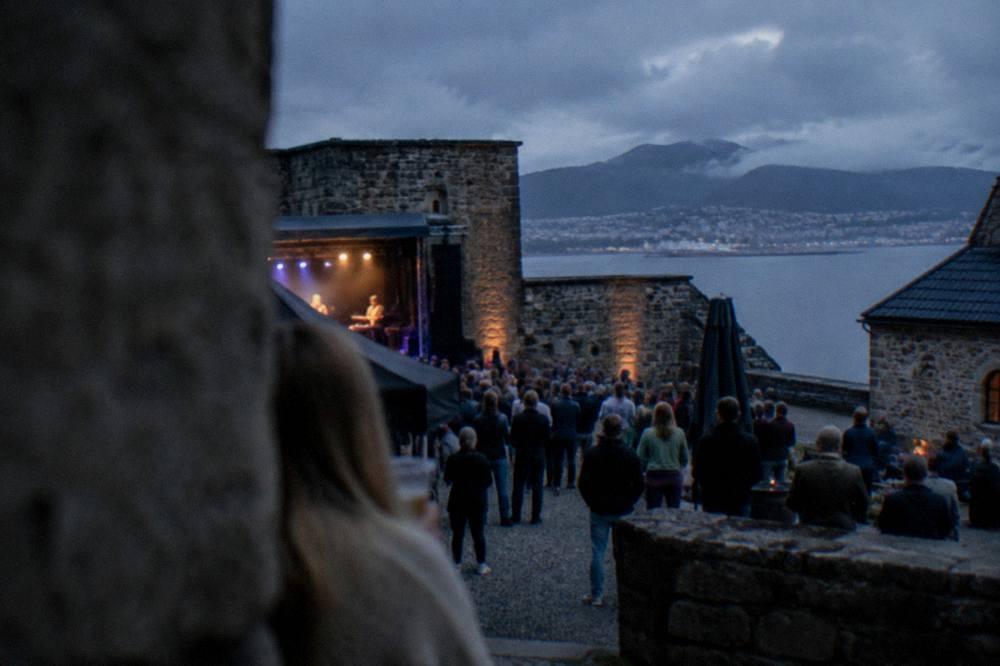
The festival calendar is the other timing factor. The Bergen International Festival ran 27 May to 10 June in 2026 and returns 26 May to 12 June 2027 for its 75th edition, per the festival's own site. Bergenfest occupies Bergenhus fortress 10 to 13 June 2026 and 9 to 12 June 2027. Nattjazz runs at USF Verftet from 29 May to 6 June 2026 and 28 May to 5 June 2027, and the Bergen International Film Festival follows on 14 to 22 October 2026.
| Event | 2026 dates | 2027 dates |
|---|---|---|
| Bergen International Festival | 27 May - 10 June | 26 May - 12 June |
| Bergenfest (at Bergenhus Festning) | 10 - 13 June | 9 - 12 June |
| Nattjazz (at USF Verftet) | 29 May - 6 June | 28 May - 5 June |
| Bergen International Film Festival | 14 - 22 October | Not yet announced |
| Bergen Christmas Market (Festplassen) | 20 Nov - 22 Dec | Not yet announced |
For choosing the sailing itself, the best time to visit Bergen guide and the what is the best month to cruise Norway fjords answer carry the full comparison, and the what is the best cruise line to visit Norway fjords answer addresses the operator question. If Bergen is the start or end of your voyage rather than a midpoint, the flights to Bergen guide and the getting around Bergen guide pick up the planning from there.
One operational note for anyone flying in or out around a cruise: Bergen Airport Flesland has a scheduled overnight runway closure for lighting maintenance from 19 May to 5 June 2026, between 22:30 and 03:30 UTC nightly except Saturday and Sunday nights, per Avinor's official circular. It affects overnight operations only, not daytime flights or the terminal, but it is worth knowing if your embarkation or disembarkation falls in that window. The Bergen airport guide covers the rest of the airport picture.
Common Questions About The Bergen Cruise Port
Can you walk into Bergen from a cruise port?
Yes. Most cruise ships berth at piers on the edge of the city centre, with Bryggen, the fish market and downtown Bergen reachable on foot along flat waterfront paths. Only ships assigned the outer berths face a walk long enough that a shuttle, bus or taxi is the better choice, and the ship's crew will say which situation applies.
Do I need a visa or a special permit to go ashore in Bergen?
Norway is a Schengen Associate, an EEA and EFTA member applying the Schengen acquis, but it is not an EU member, so entry to Bergen is never an EU crossing. Visa-exempt third-country nationals will eventually need ETIAS once that system goes live, but no specific go-live date is stated here because none has been independently verified against an official source.
Is the Bergen Card worth it for a single port day?
Often yes. The 24-hour card costs 400 NOK for an adult per the official 2026 flyer, covers free Skyss buses and the Bybanen light rail including the airport line, and adds free or discounted entry at most major attractions, so a day combining the funicular, a museum and any transit typically breaks even or saves money.
Can I do a fjord tour and still make it back to the ship on time?
The half-day Mostraumen cruises and the Hardangerfjord day tours are built around a single day ashore and return to the central area, but the full-day Sognefjord and Flåm itineraries have long return legs, so the departure time on the live listing is the deciding factor. Check the return time against your ship's all-aboard before booking anything.
What happens if it rains on my port day?
It rains often: Met Norway's Bergen station table shows 217 days with precipitation over the trailing thirteen months. The city is built for it, with covered museum options near the harbour including the Hanseatic Museum, Bryggen Museum and Haakon's Hall, and the fish market stalls operate in wet weather.
Where can I find out which berth my ship is using?
Bergen Havn publishes a live list of arrivals on its own website at bergenhavn.no, showing ship names, berths and arrival and departure windows. It is the most reliable pre-cruise check for the one thing that matters most on the day: whether you walk off the ship straight into town or take a shuttle.
Whether your call at Bergen is six hours or two nights, the shape of the day is the same: a harbour that hands you the city the moment you step off the gangway, a mountain lift a short walk from the quay, and fjord water in every direction beyond it. Plan the berth, plan the weather, and the port does the rest.