What Is The Coldest Month In Bergen?
January is the coldest month in Bergen, Norway. Met Norway station data, what winter actually feels like, and what is still worth doing between December and February.
Bergen, the Hanseatic trading city in Vestland county on Norway's southwestern coast, keeps a temperate oceanic climate, which means its coldest month is mild by inland Norwegian standards but very wet. The coldest month in Bergen is January. Met Norway's own station table for Bergen, published on yr.no, shows an observed January 2026 average of -1.4 degrees against a January normal of 2.6 degrees, and every other month in the trailing 13-month window sits above freezing on average. That single table is the basis for everything below.
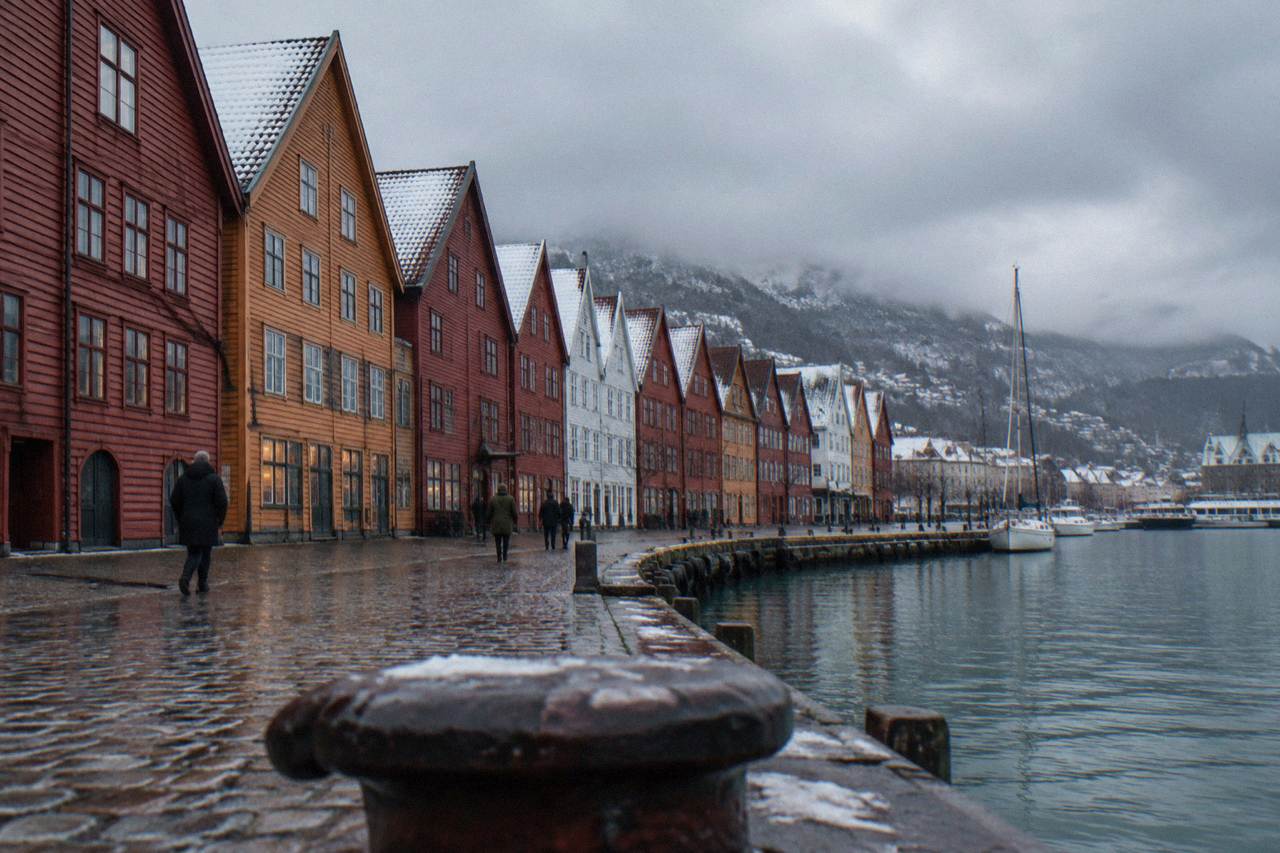
What Is The Coldest Month In Bergen?
January is the coldest month in Bergen. Met Norway data via yr.no shows the Bergen station recording an observed January 2026 monthly average of -1.4C against a normal of 2.6C, the lowest of any month in the trailing 13-month window. The same table's cold extreme for the period, -11.3C, also fell in January, on 8 January. February is the second-coldest month in the dataset, with an observed average of 0.8C.
Two things make that figure worth reading carefully. First, the observed January 2026 average of -1.4C came in well below the 2.6C normal, so that particular January was colder than Bergen's typical January. A more normal January in the city hovers a little above freezing on average. Second, because Bergen sits on the coast, cold here rarely means the deep, dry frost of inland Norway. The Bergen station table records 82mm of precipitation in January 2026 against a January normal of 256mm, and a drier-than-normal January is not the same as a dry one.
The trailing 13-month window also frames what "cold" means in this city. The low extreme of -11.3C on 8 January and the high extreme of 28.0C on 14 August bracket a year in which the sea moderates both ends. That is why the coldest month in Bergen feels less like a Scandinavian deep freeze and more like a damp, near-freezing coastal winter where the wind does most of the work.
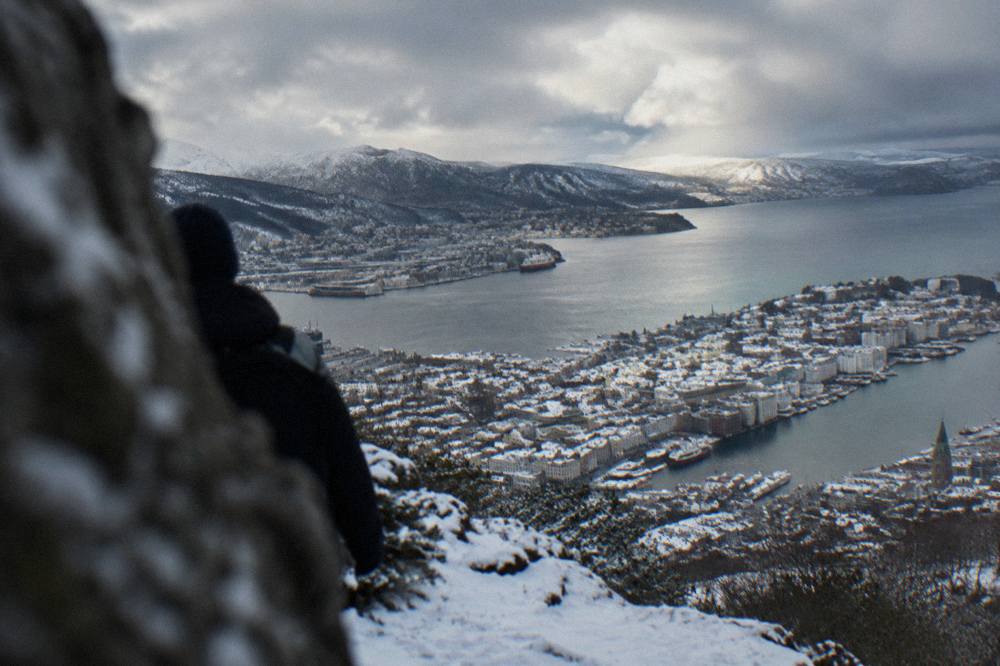
How Cold Does Each Winter Month In Bergen Actually Get?
Bergen's winter runs through December, January and February, and the Met Norway table shows observed monthly averages of 5.8C in December 2025, -1.4C in January 2026 and 0.8C in February 2026. Precipitation stays heavy in all three, with December's 303.5mm observed the wettest of the trio and January's 82mm unusually dry. March still averages 5.9C observed, so true winter cold is concentrated in the middle two months.
The table below is drawn directly from the Met Norway Bergen station data on yr.no, covering the trailing 13 observed months from August 2025 to August 2026.
| Month | Observed mean (C) | Normal (C) | Observed precipitation (mm) | Precip normal (mm) |
|---|---|---|---|---|
| Aug 2025 | 15.1 | 15.4 | 165.1 | 208.0 |
| Sep 2025 | 13.1 | 12.6 | 206.6 | 248.0 |
| Oct 2025 | 9.7 | 8.6 | 231.9 | 268.0 |
| Nov 2025 | 6.0 | 5.3 | 321.8 | 275.0 |
| Dec 2025 | 5.8 | 3.1 | 303.5 | 290.0 |
| Jan 2026 | -1.4 | 2.6 | 82.0 | 256.0 |
| Feb 2026 | 0.8 | 2.3 | 133.4 | 209.0 |
| Mar 2026 | 5.9 | 3.8 | 243.9 | 202.0 |
| Apr 2026 | 7.9 | 7.2 | 65.9 | 141.0 |
| May 2026 | 9.9 | 10.7 | 127.4 | 109.0 |
| Jun 2026 | 14.4 | 13.6 | 165.7 | 132.0 |
| Jul 2026 | 14.9 | 15.6 | 184.2 | 158.0 |
| Aug 2026 | 14.3 | 15.4 | 243.6 | 208.0 |
Read the January and February rows against the December row and one pattern stands out: the coldest months are not the wettest months. November, with 321.8mm observed, is the wettest month in the whole window, and December follows close behind. January and February get less rain because they are colder, and much of that precipitation arrives as snow or sleet instead. Across the trailing 13 months the station counted 217 days with precipitation, which is why locals treat a waterproof layer as year-round equipment rather than winter gear.
For planning purposes, the honest summary is this: expect averages around freezing in January and February, averages around 6C in November and December, and rain of some kind on roughly two days in every three across the year. If your dates are flexible, the sister question of which month rains the most matters as much as the temperature, and what is the rainiest month in Bergen covers it in detail.
Cold weather also changes what the city itself offers. Indoor-heavy days work well here: the museums cluster around the city centre, a Bergen food tour keeps you moving between warm kitchens, and the compact centre means short dashes between stops rather than long exposed walks. Check availability
Does It Snow In Bergen In The Coldest Months?
Yes, it snows in Bergen in January and February, but the city's coastal position means snow rarely lies deep or long in the centre. Met Norway data shows those two months average below freezing, so precipitation in them often falls as snow, while December at 5.8C observed is more often a rain month. Snow is far more reliable on the mountains above the city, which stay white long after the harbour streets have turned back to slush.
The distinction matters for visitors. In the streets around Bryggen and the fish market, a January snowfall can be gone within a day or two as Atlantic air pushes back in. On Fløyen and on Mount Ulriken above the city, the same snowfall settles and holds, and the white mountain frames over a grey harbourfront are a genuine part of a Bergen winter. Visitors who specifically want snow underfoot usually head up the funicular rather than out the door.
One dated operational detail belongs here: the Ulriken643 cable car's own site lists scheduled maintenance closure for weeks one and two of 2026, reopening around 13 January, plus standard Christmas closures. Anyone planning an Ulriken trip in the coldest stretch should check the operator's current schedule before committing, since the exact closure window shifts year to year. Fløibanen, the Fløyen funicular, is the more weather-proof of the two ascents, and is the Bergen funicular worth it takes that question head on.
What Do Prices Look Like In Bergen's Coldest Months?
Winter is Bergen's low season for prices on the attractions the Bergen Card covers. The 2026 Bergen Card flyer, published by visitbergen.com, lists a Fløibanen return at 145 NOK for an adult from 1 October to 31 March against 200 NOK in summer, and a 24-hour Bergen Card at 400 NOK adult and 100 NOK child. Ulriken643's return is 435 NOK for an adult year-round on the operator's own price page.
The winter discount on the funicular is small but real, and the seasonal split is worth knowing when you budget. The table below gathers the confirmed 2026 figures.
| Item | Winter price (1 Oct - 31 Mar) | Summer price (1 Apr - 30 Sep) |
|---|---|---|
| Fløibanen return, adult | 145 NOK | 200 NOK |
| Fløibanen return, child | 75 NOK | 100 NOK |
| Ulriken643 return, adult | 435 NOK | 435 NOK |
| Bergen Card 24h, adult / child | 400 / 100 NOK | 400 / 100 NOK |
The Bergen Card also bundles free Skyss buses and Bybanen light rail across Vestland county, including the airport line, which is a useful shield against cold waits at bus stops. KODE Art Museums appears on the Card flyer at 200 NOK, though that is the Card-bundled figure, so treat 200 NOK as the Card price rather than a walk-up price. Everything else covered here is indexed on Bergen Travel Guide.
If the question underneath your weather search is whether the fjords are better in another month, the best month to visit Norway fjords is a separate decision, and for the city itself is Bergen worth visiting answers the broader question.
A self-guided audio walk is a good fit for the coldest months for a simple reason: you set the pace. When the wind picks up off the harbour you can duck into a café for twenty minutes and resume where you stopped, which is not something a fixed-departure group tour allows. The compact centre makes this practical, since most of the route between Torgallmenningen and Bryggen stays within a few minutes' walk of shelter.
What Should You Pack For Bergen In January And February?
Pack for wet cold rather than deep frost: a genuinely waterproof shell jacket and shoes, warm layers you can shed indoors, and something windproof for the harbourfront. Met Norway data puts January and February averages below freezing with precipitation in both months, and the 217 days with precipitation over the trailing 13 months mean rain or sleet is likelier than clear frost. Jeans, incidentally, are a poor choice once they soak through.
The practical test of Bergen winter gear is not insulation, it is drying. A jacket that keeps you dry through a two-hour walk around the harbour in sleet is worth more than a heavy parka that wets out. Inside, shops, museums and cafés are heated to a level that makes an over-dressed visitor uncomfortable within minutes, so layers beat a single thick garment. Gloves and a hat earn their space in the bag for the exposed stretches along Skolten and the fish market.
Footwear deserves the same thinking. Cobbles around Bryggen hold surface water and, in January, patches of ice. Soles with real grip matter more than they would in a drier city. If you want the full checklist rather than the winter summary, the site's broader planning pages, including the guide to the best time to visit Bergen, cover the shoulder seasons where the packing calculus changes.
Is The Coldest Month Still A Good Time To Visit Bergen?
Yes, January and February are still a good time to visit Bergen if you go in with the right expectations. Crowds at Bryggen and the museums thin out, winter rates apply at several attractions, and the city's indoor culture, from KODE to the Hanseatic Museum, is built for exactly this weather. The trade-off is short daylight hours and the real chance of sleet on any given day, so build indoor fallbacks into every itinerary.
The Christmas season extends the argument slightly further. The Bergen Christmas Market at Festplassen runs 20 November to 22 December 2026 with free entry, and Pepperkakebyen, billed as the world's largest gingerbread city, runs 14 November 2026 to 10 January 2027. That means the festive layers of the city carry well into the coldest stretch, and a January visitor catches the tail of it. No 2027 market dates had been announced, so check the current listing before you travel.
One more seasonal note for anyone weighing Bergen against the capital: the two cities have genuinely different winter personalities, and which is nicer, Oslo or Bergen compares them directly. In short, Bergen's coldest month is milder than Oslo's, wetter than Oslo's, and, for visitors who like a city at low season pace, quietly better value.
Common Questions About Bergen In Winter
What is the coldest month in bergen?
January is the coldest month in Bergen. The Met Norway station table on yr.no shows an observed January 2026 average of -1.4C against a January normal of 2.6C, with February second-coldest at an observed 0.8C average. The trailing 13-month low extreme, -11.3C, was also recorded in January.
How cold does Bergen get in winter?
Observed monthly averages from the Met Norway Bergen station run from -1.4C in January 2026 to 0.8C in February, with December 2025 at 5.8C. The single coldest reading in the trailing 13 months was -11.3C on 8 January, but averages hover around freezing rather than far below it.
Is Bergen colder than Oslo?
Bergen's coastal, temperate oceanic climate keeps its coldest months milder on average than inland eastern Norway, but far wetter. Met Norway data for the trailing 13 months shows Bergen precipitation on 217 days, so cold in Bergen usually arrives wrapped in rain or sleet rather than dry frost.
Does it snow in Bergen in January?
Yes, snow falls in January, and because the month averages below freezing, more of its precipitation arrives as snow than in December. In the city centre snow rarely lies deep or long, while the mountains above Bergen, including Fløyen and Ulriken, hold their snow cover through the coldest weeks.
Is the Ulriken cable car open in winter?
Generally yes, but with exceptions. The operator's own site lists a scheduled maintenance closure for weeks one and two of 2026, reopening around 13 January, plus standard Christmas closures, so check the current schedule before booking a winter visit.
Are Bergen attractions cheaper in winter?
Some are. The 2026 Bergen Card flyer lists a Fløibanen return at 145 NOK adult from 1 October to 31 March, against 200 NOK in the summer window. A 24-hour Bergen Card costs 400 NOK adult and 100 NOK child year-round and includes free Skyss buses and the Bybanen light rail, including the airport line.
The short version: pack for wet cold, book anything on the mountains with a weather eye, and let January be what it is in Bergen, the quietest, coldest, and often the cheapest month to walk the old Hanseatic streets.