Is The Bergen Funicular Worth It?
Is the Bergen funicular worth it? A direct answer on Fløibanen's price, the view over Bergen, Norway, and when the ride beats walking up.
Bergen, a former Hanseatic League trading post on Norway's southwestern coast in Vestland county, has one attraction almost every visitor ends up weighing: the Fløibanen funicular that climbs Mount Fløyen from the edge of the city centre. The question is fair to ask, because the ticket is not trivial money in a city where a single Skyss zone A ticket costs 51 NOK, and because the mountain is, in principle, walkable. This page gives a direct answer using the official 2026 Bergen Card price table and verified facts about the city, not vague impressions.
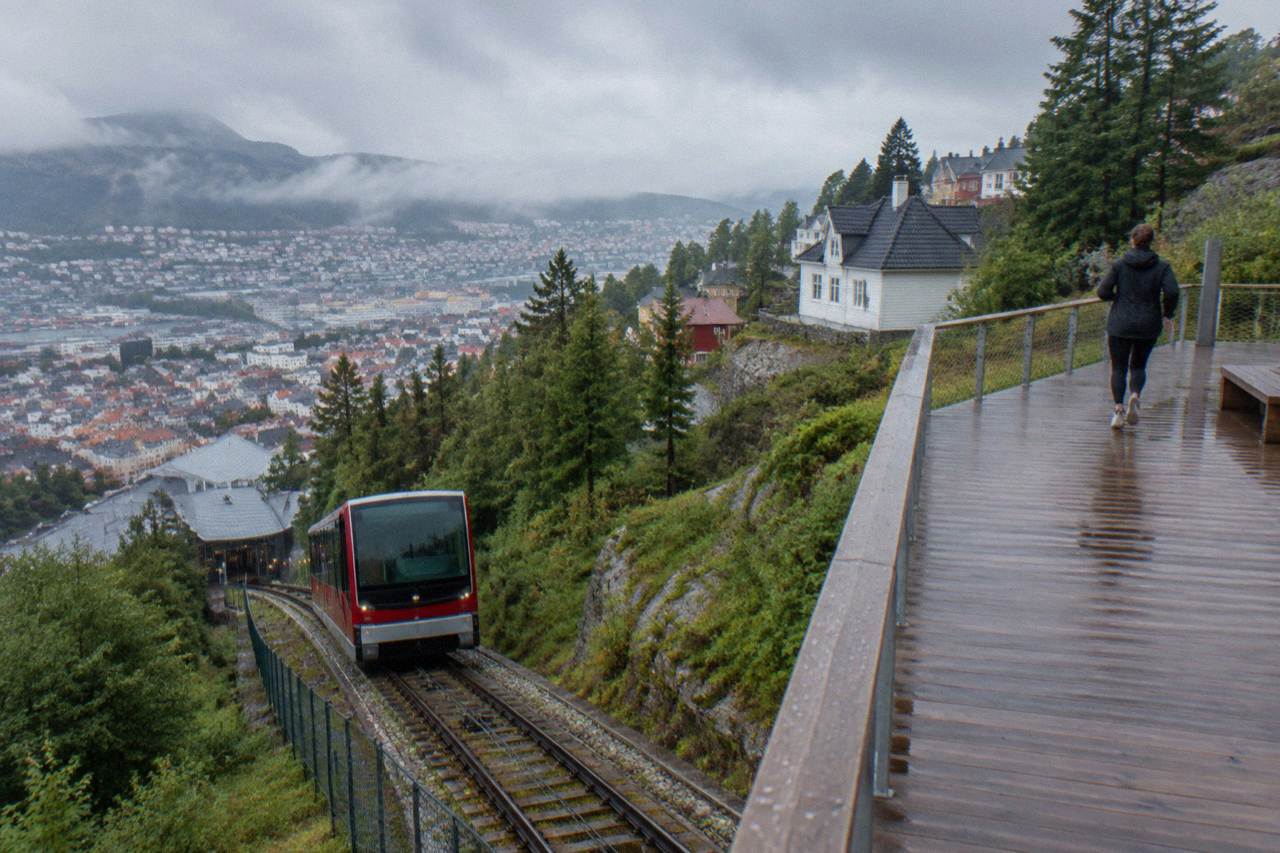
Is The Bergen Funicular Worth It?
Yes, for most visitors the Fløibanen funicular in Bergen is worth the ticket price: a return ride costs 200 NOK per adult in the April-to-September season and 145 NOK from October to March, per the official 2026 Bergen Card price table, and it delivers the single best panorama of the city, the harbour and the surrounding fjord landscape. The one honest exception is a fit visitor with dry weather and spare hours, who can hike up and pay only for the way down.
That verdict deserves unpacking. The view from the top of Fløyen is the standard image of Bergen used across Norwegian tourism material for a reason: the entire city centre, the Bryggen wharf, a UNESCO World Heritage site inscribed in 1979, and the islands and water of the Byfjorden spread out below in one sweep. No other vantage point in the city combines that height with that proximity to the centre. The ride itself is short and steep, and the funicular is a working part of the city's transport, not a theme-park attraction: locals use it for the trails above the city.
The cost question matters because Bergen is expensive and the funicular is priced accordingly. The seasonal split means a winter visitor pays noticeably less than a summer one. Children ride for 100 NOK in summer and 75 NOK in winter, which makes the family maths easier than many attractions in the city. A discounted Bergen Card rate also applies, once per card, purchased at the ticket office rather than online.
Weather is the one variable that genuinely changes the answer. Bergen's climate is temperate oceanic and wet: yr.no's Met Norway station table for the city shows 217 days with precipitation over the trailing 13 months, with monthly rainfall running from 65.9 mm in April 2026 to 321.8 mm in November 2025. On a day of low cloud, the top of Fløyen can sit inside the cloud layer, and the panorama vanishes. The mountain itself is still pleasant, with forest paths and a small lake area near the upper station, but the postcard payoff is gone. Checking the forecast on the day, rather than pre-booking a fixed time, is the practical move.
How Much Does Fløibanen Cost In 2026?
A return ticket on the Fløibanen funicular costs 200 NOK for an adult and 100 NOK for a child aged 4 to 15 between 1 April and 30 September, falling to 145 NOK adult and 75 NOK child between 1 October and 31 March, according to the official 2026 Bergen Card price table. A once-per-card Bergen Card discount is available, but only when bought at the ticket office.
These are the ordinary prices published in the Bergen Card flyer, the most current primary source for Bergen attraction pricing. For context, the Ulriken643 cable car, the funicular's larger competitor on the city's other mountain, charges 435 NOK for an adult return, which makes Fløibanen the cheaper of the two mountain rides by a wide margin. The full picture:
| Ticket | 1 Apr - 30 Sep | 1 Oct - 31 Mar |
|---|---|---|
| Fløibanen adult return | 200 NOK | 145 NOK |
| Fløibanen child return (4-15) | 100 NOK | 75 NOK |
| Ulriken643 adult return (year-round) | 435 NOK | 435 NOK |
The Bergen Card itself, which bundles transport and attraction access across the city, costs 400 NOK for 24 hours and up to 700 NOK for 96 hours per adult, and the flyer lists free Skyss buses and Bybanen light rail travel across Vestland county, including the airport line, among its benefits. The Fløibanen discount is not free transport: it is a reduced fare purchased at the office, once per card. Visitors planning a packed museum-and-transport itinerary should read the Bergen Card terms carefully, and anyone weighing which mountain ride to buy should read the dedicated comparison of Bergen cable car versus funicular before committing.
One practical note: prices are per person per return journey, and the figures above are the only ones this site treats as verified. Anything cheaper advertised by a third party is a reseller's markup game, not an official reduction.
What Is The Ride And The Top Of Fløyen Actually Like?
The Fløibanen funicular climbs from a station near the fish market in central Bergen to the top of Mount Fløyen in roughly a quarter hour, passing through a tunnel section and stopping at intermediate stations where residents live, and the summit gives a free-to-roam plateau of gravel paths, forest, a small lake, a playground and a goat enclosure, all above the city's rooftops. No timed entry or guide is needed at the top.
The lower station sits a few minutes' walk from the Bryggen wharf, which makes it one of the easiest major attractions in Norway to reach without transport. The carriages are large, glassed and functional rather than luxurious, and the ride's appeal is the speed of the transition: from the harbour's fish market to an empty forest track above the treeline of the town in the time it takes to drink a coffee. The intermediate stops are a genuinely local detail; this is commuter infrastructure that happens to serve a world-famous view. Other pages covering the same trip are gathered on Bergen Travel Guide.
At the top, the plateau is free to wander and open year-round. The main viewpoint looks north over the city centre and out to the islands, and the network of marked paths from the upper station suits everything from a twenty-minute loop to a half-day hike. The Sherpa-built stone staircase trail up the neighbouring slope of Fløyen is a popular fitness route, and the walk back down to the city centre through the woodland takes most people under an hour, though no exact walking-time figure is published in a source this site treats as primary. On clear summer evenings the summit plateau fills with locals barbecuing, which says more about its value than any review score.
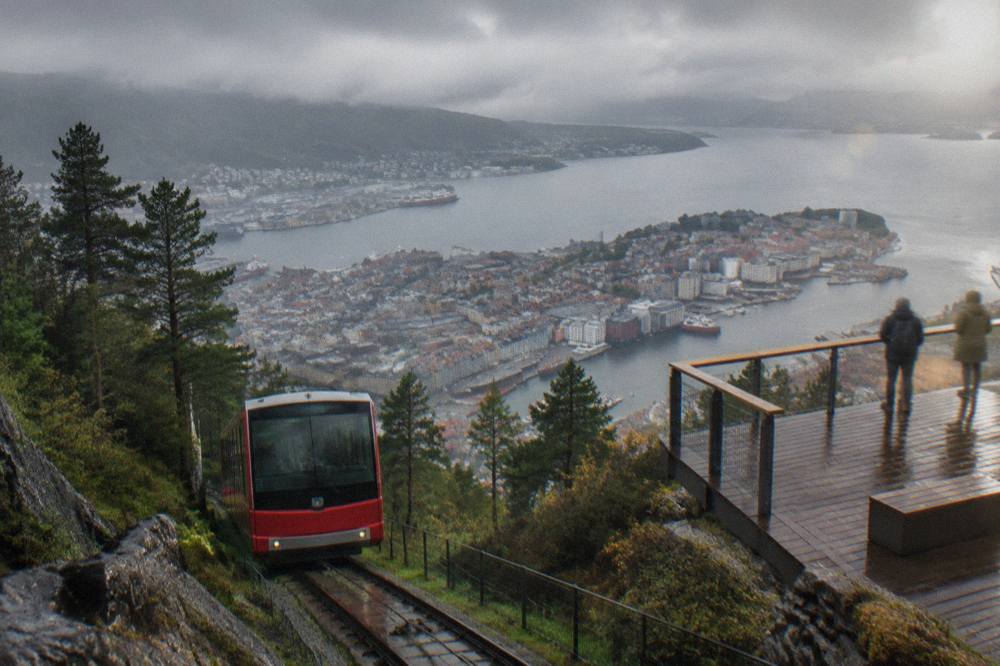
For visitors who want the ride folded into a structured visit to the city rather than bought standalone, the food and culture walks that include a Fløibanen ascent are worth a look, and this site's featured pick for that is Check availability on the food tour with Fløibanen ride, which you can also read about on the Fløibanen Mount Floyen guide.
When Is The Funicular Not Worth It?
The Fløibanen funicular is not worth the full return fare when thick low cloud sits on the summit, when you have dry weather, decent shoes and two spare hours to hike up and descend on foot, or when you are already committed to the Ulriken643 cable car, whose 435 NOK return ticket and higher summit give a different, longer panorama, so paying for both mountains in one short visit is a common overspend.
Cloud is the big one. A summit inside cloud gives you a forest and a lake but no city, and the funicular's price is essentially the price of the view. Bergen's weather makes this a real planning issue, not a theoretical one: the yr.no station table shows November 2025 alone delivered 321.8 mm of rain against a 275 mm normal. The practical advice from this desk is to keep Fløibanen flexible, buy on the day rather than far ahead, and go early in a visit so you have a fallback day.
The hike question splits by fitness. The path network up Fløyen is real and well used, so a return ticket is genuinely skippable for anyone happy to climb. A common compromise, paying for the descent only, is available at the upper station and costs less than a full return, though the exact single-leg price is not in this site's verified price table and should be checked at the ticket office on the day.
For a fuller treatment of the mountain's trails and seasonal character, see the dedicated Fløibanen Mount Floyen page. If your visit is short and the mountain competes with fjord day trips for your time, the honest trade-off is that Bergen's fjord excursions take hours while Fløyen takes one, which is why many visitors pair the two.
Is Fløibanen Worth It With The Bergen Card Or In Winter?
Fløibanen is worth it with the Bergen Card if you were buying the card anyway, because the card's once-per-card discount reduces the fare when purchased at the ticket office, and it is genuinely cheaper in winter, with the adult return at 145 NOK from 1 October to 31 March, 55 NOK below the summer fare, though winter also brings shorter opening aesthetics, cloud risk and the Bergen Christmas season's crowd pull toward the gingerbread city at Festplassen.
The card logic is simple arithmetic. A 24-hour Bergen Card at 400 NOK makes sense only against a list of paid attractions, and the flyer's bundled line items such as the Aquarium at 380 NOK seasonal, the Hanseatic Museum at 160 NOK and the Bryggen Museum at 170 NOK ordinary (85 NOK with the card) add up fast for a museum-heavy day. For a visitor whose plan is mostly the outdoors, the funicular and the free Skyss travel across Vestland county, the card is a marginal call that should be made with the flyer in hand.
Winter changes the mountain rather than closing it. The cheaper fare, the possibility of snow on the plateau, and the darkness that sets in by mid-afternoon make Fløyen a shorter, sharper visit, and the city's winter calendar pulls attention elsewhere: the Bergen Christmas Market at Festplassen runs 20 November to 22 December 2026, and the gingerbread city runs 14 November 2026 to 10 January 2027. A dusk ascent on a clear winter evening, with the city's lights below, is a different product from the summer panorama, and at 145 NOK it is one of the better-value things to do in Bergen in winter.
One detail often missed: the Ulriken643 cable car, the other mountain option, has scheduled maintenance closures in the first weeks of 2026, reopening around 13 January, so anyone visiting Bergen in early January should confirm which mountain ride is actually running before planning the day around it.
Common Questions About The Bergen Funicular
Is the Bergen funicular worth it?
For most visitors, yes. A return ticket costs 200 NOK per adult in the April-to-September season and 145 NOK from October to March per the official 2026 Bergen Card price table, and the summit panorama of central Bergen, the Bryggen wharf and the Byfjorden is the best single view in the city. The main exceptions are thick cloud on the summit and fit visitors with time to hike.
How much does the Fløibanen funicular cost?
An adult return costs 200 NOK from 1 April to 30 September and 145 NOK from 1 October to 31 March. Child returns cost 100 NOK in summer and 75 NOK in winter. A once-per-card Bergen Card discount applies when bought at the ticket office. These figures come from the official 2026 Bergen Card price table.
Is Fløibanen or the Ulriken cable car better?
Fløibanen is cheaper (200 NOK versus Ulriken643's 435 NOK adult return) and starts right next to the city centre, making it the easier choice for most visitors. Ulriken643 is Bergen's highest mountain and gives a wider, longer panorama. This site carries a dedicated comparison of the two rides with the verified prices.
Can you walk up instead of taking the funicular?
Yes. Fløyen has a network of marked paths from the city centre, including a popular stone staircase trail, and the walk down takes most people under an hour. A common money-saving approach is to hike up and pay only for the descent, with the single-leg fare bought at the upper station on the day.
Does the Bergen Card cover the funicular?
Not as free transport. The Bergen Card flyer lists a discounted Fløibanen fare, once per card, purchased at the ticket office. The card does include free Skyss buses and Bybanen light rail travel across Vestland county, including the airport line, and free or discounted entry to a long list of museums and attractions.
What happens if the top of Fløyen is in cloud?
The panorama disappears, though the plateau's forest paths, lake and playground remain pleasant. Bergen had 217 days with precipitation over the trailing 13 months per Met Norway data, so check the forecast on the day and keep your visit flexible rather than pre-booking a fixed time far ahead.
For a wider frame on how the ride fits a first visit, the how many days in Bergen is enough page maps the city's essentials against realistic time budgets.
If the verdict here points you toward building a full day around the mountain and the food culture at its base, one structured option stands out: the food tour that folds a Fløibanen ascent into a guided walk through Bergen's kitchens and market stalls, which this site features as its pick for combining the ride with the city's best-known flavours.