Is Bergen Worth Visiting?
A plain answer to whether Bergen, Norway is worth visiting, with verified prices, weather data from Met Norway, and how the city works as a base for the western fjords.
Bergen, Norway, sits in Vestland county on the country's southwestern coast, a former Hanseatic League trading post wedged between mountains and sea, and it has spent the last few decades converting that geography into one of Scandinavia's most-visited city breaks. The question every planner eventually asks, "is Bergen worth visiting?", deserves a straight answer built on numbers rather than postcards. The short version: the city's own tourism authority prices a full day of museums and transport at 400 NOK, the waterfront is UNESCO-listed, and the wettest city reputation in Europe is partly earned and partly oversold.
Is Bergen Worth Visiting?
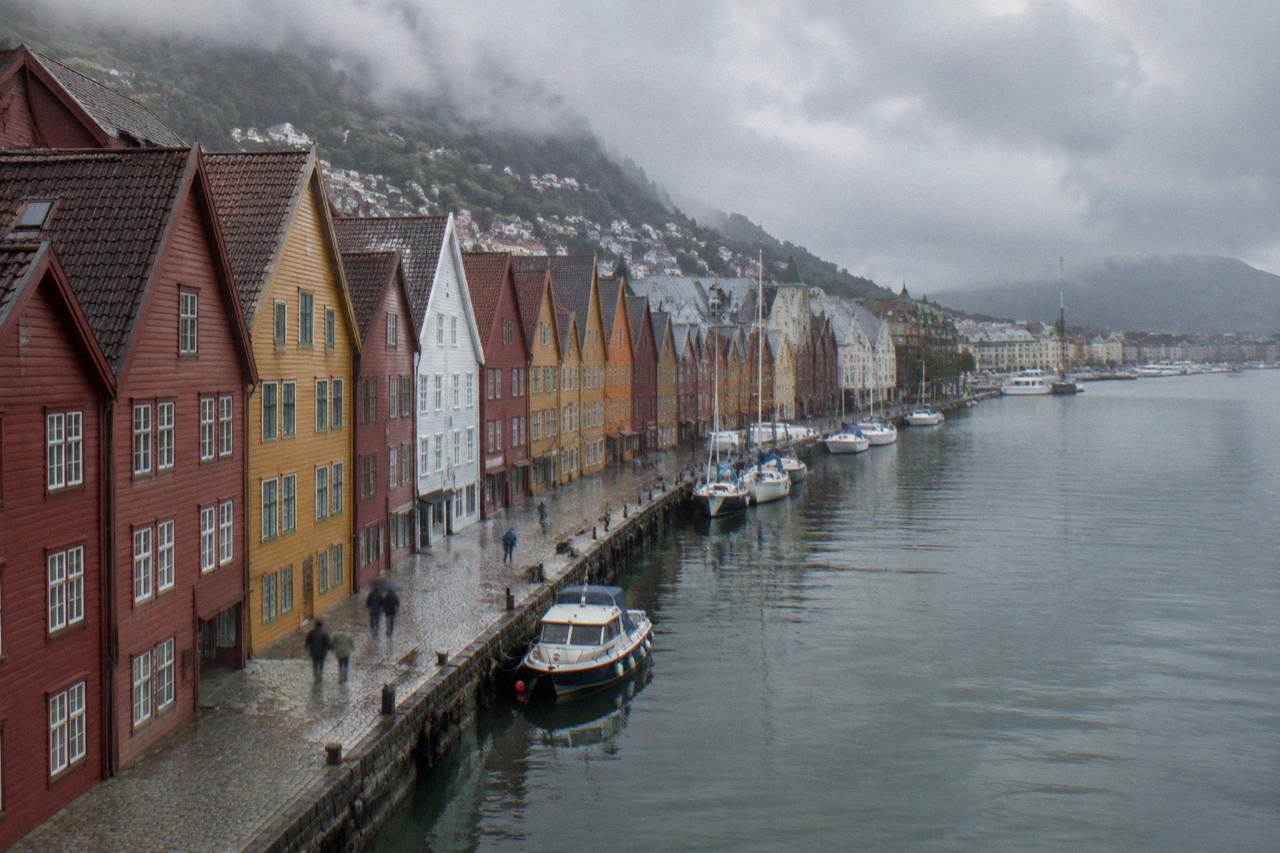
Yes. Bergen is worth visiting on its own merits, not only as a fjord stopover: a municipality of 294,860 people holds a UNESCO World Heritage waterfront, two mountain transports, a working fish market and a museum quarter inside a centre you can cross on foot. The official 2026 Bergen Card flyer prices 24 hours of entry plus county-wide transport at 400 NOK per adult, a density of sights per krone that very few European cities can match.
That density is the real argument. UNESCO's own listing text for Bryggen, the Hanseatic wharf, records its inscription on the World Heritage List in 1979, and the wooden buildings still stand on the harbour front between the fish market and the fortress. The kommune's population figure, 294,860 as of 1 January 2026, makes Bergen Norway's second-largest city, yet almost everything a first-time visitor wants sits within a fifteen-minute walk of the harbour.
The honest counterargument is time. Bergen rewards slow wandering, bad weather rewards it less, and a city that logs 217 days with precipitation across a year does not always cooperate with a tight schedule. The sections below take each part of the decision, price, weather and fjord logistics, and answer it with the figures. For a broader profile of the city's character, see what makes Bergen special.
What Makes Bergen Worth The Trip?
Three things make Bergen worth the trip: a UNESCO-listed Hanseatic waterfront you can walk end to end, two mountain rides that lift you above the rooftops in minutes, and a cluster of museums, markets and wooden quarters packed into a centre small enough to cover without a car. The official 2026 Bergen Card flyer lists roughly twenty paid attractions inside that radius, from Bryggen Museum at 170 NOK to the Hanseatic Museum at 160 NOK with a guided visit.
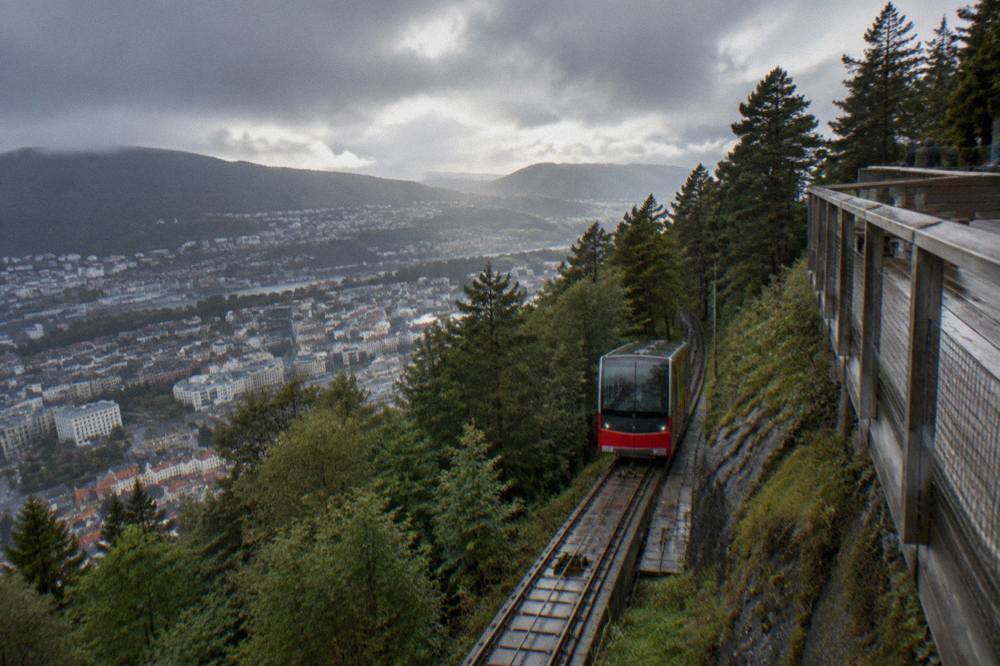
Start with the waterfront. Bryggen's gable-fronted rows are the postcard, but the working harbour around them still functions: fishing boats moor alongside the tourist quays, and the fjord cruise terminals leave from the same water. From there the city stacks upward. The Fløibanen funicular climbs to Fløyen on one side of the centre and the Ulriken643 cable car serves the taller Ulriken on the other, and the 2026 Bergen Card flyer prices an adult Fløibanen return at 200 NOK from April through September, dropping to 145 NOK from October through March. Ulriken643's own pricing page confirms a 435 NOK adult return.
The museums pull the story together. The Hanseatic Museum explains the German traders who ran the wharf for centuries, Bryggen Museum sits on the archaeological layers beneath the wooden buildings, and Haakon's Hall inside the Bergenhus fortress dates the city's medieval royal period. The figures below all come from the same 2026 Bergen Card flyer and pricing pages, published 12 May 2026, which this site treats as the single strongest current source for attraction prices.
| Attraction | Adult price (NOK) | Notes from the 2026 Bergen Card flyer |
|---|---|---|
| Fløibanen return | 200 (Apr-Sep) / 145 (Oct-Mar) | Seasonal ordinary price, child 100 / 75 |
| Ulriken643 cable car return | 435 | Confirmed on ulriken643.no's own price page |
| The Aquarium (Akvariet) | 380 (Nov-Feb) / 380-415 (Mar-Oct) | Seasonal windows per the flyer |
| Bryggen Museum | 170 ordinary / 85 with Bergen Card | Half price on the card |
| Hanseatic Museum | 160 | Includes guided visit per the flyer |
| Haakon's Hall | 120 | Inside the Bergenhus fortress |
| KODE Art Museums | 200 | Bergen Card rate; the museum's own standalone price is not published on this flyer |
One planning note the flyer makes clear: the Ulriken643 cable car runs scheduled maintenance closures in the first two weeks of 2026, reopening around 13 January, plus standard Christmas closures, so anyone visiting over the holidays should check the operator's page before promising the summit. The rest of the headline attractions, Bryggen, Fløibanen, KODE, the fish market and the fortress, showed no closure or renovation flags.
If the city itself sells you, the fastest way to compress its highlights into a single half day is a guided walk or a themed tour. The options below are the ones this site rates highest for a first visit, spanning food, fjord and the classic long cruise.
What Does A Bergen Trip Cost?
A Bergen trip costs less than many people expect once transport is solved: the 24-hour Bergen Card is 400 NOK per adult and 100 NOK per child aged 3-15, covering Skyss buses and the Bybanen light rail across the whole of Vestland county, including the airport line, plus free or discounted entry to most listed attractions. A single Skyss zone A ticket is 51 NOK, and card tiers run to 700 NOK for 96 hours.
The card math is where most itineraries tip one way or the other. At 24 hours the card pays for itself with roughly two attractions plus a ride or two, because the ordinary line-item prices in the table above add up quickly. At 48 hours (500 NOK), 72 hours (600 NOK) or 96 hours (700 NOK), the card effectively becomes your entire local transport and museum budget, which is why this site's own Bergen Travel Guide coverage leans on it for every itinerary length.
Food and drink are where Norway's reputation for expense is genuinely earned, and no verified Bergen-specific price band for meals is given here, so none is invented. What can be said is structural: the fish market and the surrounding harbour restaurants carry tourist pricing, the streets one block inland run cheaper, and a food tour that walks you through the local specialities with a guide who knows the room is one way to spend once and eat well. The Bergen Card flyer confirms that Flybussen, the airport bus, is not included free with the card, though a discount may apply.
For the timing question, most first-time visitors land between two and four nights, and there is a separate, fuller answer on how many days Bergen needs. The short version appears further down this page.
How Wet Is Bergen, Really?
Bergen is wet, but rarely unbearably so: the yr.no Met Norway station table for Bergen records 217 days with precipitation across the trailing thirteen months, with observed monthly mean temperatures running from -1.4°C in January 2026 to 14.9°C in July 2026. November was the wettest observed month at 321.8 mm against a 275.0 mm normal, while April 2026 came in at just 65.9 mm, less than a quarter of November's total.
The rain reputation is real, and it is also the wrong lens. The same table shows that the wet months are wet and the shoulder months can be surprisingly dry, and the figures swing far more than the "it always rains in Bergen" shorthand suggests. January 2026, for instance, logged only 82 mm, far below its 256 mm normal, while August 2026 came in at 243.6 mm against a 208 mm normal. Planning around the monthly numbers beats planning around the myth. Everything else covered here is indexed on Bergen Travel Guide.
| Month | Mean temp (observed) | Precipitation (observed mm) | Precipitation normal (mm) |
|---|---|---|---|
| Oct 2025 | 9.7°C | 231.9 | 268.0 |
| Nov 2025 | 6.0°C | 321.8 | 275.0 |
| Dec 2025 | 5.8°C | 303.5 | 290.0 |
| Jan 2026 | -1.4°C | 82.0 | 256.0 |
| Feb 2026 | 0.8°C | 133.4 | 209.0 |
| Mar 2026 | 5.9°C | 243.9 | 202.0 |
| Apr 2026 | 7.9°C | 65.9 | 141.0 |
| May 2026 | 9.9°C | 127.4 | 109.0 |
| Jun 2026 | 14.4°C | 165.7 | 132.0 |
| Jul 2026 | 14.9°C | 184.2 | 158.0 |
| Aug 2026 | 14.3°C | 243.6 | 208.0 |
Source for every figure in the table: the Norwegian Meteorological Institute's statistics for the Bergen station, via yr.no. The extremes across the same trailing window run from a high of 28.0°C on 14 August to a low of -11.3°C on 8 January, which tells you the city's climate is temperate oceanic rather than the deep freeze many visitors picture when they hear "Norway". For a deeper cut on the rainfall question, see the rainiest month in Bergen.
Wet days change what "worth visiting" means in practice, and Bergen adapts well: the museums, the aquarium and the covered fish market halls absorb the worst hours, and the mountain transports run in weather that would close a viewpoint road elsewhere. The one genuinely weather-dependent activity is the view from Fløyen or Ulriken, so leave those flexible rather than booking them into a fixed hour.
Is Bergen A Good Base For The Fjords?
Bergen works as a fjord base because the departures start at the city quay: the Mostraumen cruise, the Hardangerfjord day tours and the Norway in a Nutshell routes toward Flåm all leave from or near the centre, and the Bergen Card's transport coverage spans all of Vestland county. The trade-off is honest and worth repeating, every serious fjord day trip swallows most of a day, so the fjords are a reason to add nights in Bergen, not to skip the city.
The two flagship options head in different directions. The Mostraumen route runs three-and-a-half to four hours up the Osterfjord and back, tight enough to share a day with the city. The bigger Sognefjord and Flåm routes are full-day commitments by boat, bus and the Flåm Railway. If you are weighing whether the shorter cruise justifies its slot, this site has a dedicated verdict on the Bergen fjord cruise, and the three picks below are the ones this site rates for turning Bergen into a fjord base.
Season matters more than most first-time visitors expect. The fjord transport network runs year-round, but the highest-rated tour options cluster in the warmer half of the year, and the same is true of the kayaking and glacier-lake day trips further out. Booking windows open early for the June peak around the festival cluster, when Festspillene, Bergenfest, Nattjazz and Bergen Pride all land in the same late-May-to-mid-June stretch, so a fjord trip in that window competes with the city's busiest, liveliest fortnight.
For travellers who want the fjord logistics handled end to end, the food-led option below pairs the city's market and harbour with the Fløibanen ride, and it earns its place here because it compresses the tastes and the view into a single afternoon.
How Many Days Does Bergen Need?
Two full days is the honest minimum for Bergen, one for the city itself and one for a fjord, with three days allowing a second fjord route, a museum-heavy rain day or a slower pace through Bryggen and the surrounding quarters. The centre is compact enough that little time bleeds away in transit, and the 96-hour Bergen Card at 700 NOK is built precisely around that longer, fjord-plus-city stay.
The sequencing that works on paper is simple. Day one covers the waterfront: Bryggen in the morning, the fish market, one or two museums, and either the funicular or the cable car in the afternoon light. Day two goes to the fjords, whichever direction you choose. A third day absorbs the weather, because in a city with 217 precipitation days in the trailing year, a plan that cannot flex is a plan that will break. For the fuller breakdown by trip length, see how many days in Bergen is enough.
So, is Bergen worth visiting? The verified numbers stack up: a UNESCO waterfront inscribed in 1979, a 435 NOK cable car and a funicular priced by season, a county-wide transport and museum card starting at 400 NOK, and the entire western fjord network departing from the harbour. The rain is real and the cost is Norwegian, but the city earns its place on the itinerary, and the figures above let you check every krone of that claim.
Common Questions About Visiting Bergen
Is Bergen worth visiting if it rains all week?
Yes, with adjustments. The museums, the aquarium, the fish market halls and the Hanseatic Museum are all indoors, and Fløibanen runs in weather that closes viewpoints elsewhere. With 217 precipitation days in the trailing thirteen months, a wet week is possible, so book the mountain rides flexibly and keep two museum-heavy days in reserve.
Is Bergen walkable without a car?
Yes. The centre, from Bryggen to the fish market, the fortress and the museum quarter, sits within a short walk of the harbour, and the Bergen Card covers Skyss buses and the Bybanen light rail across Vestland county, including the airport line, for anything further out. A single zone A Skyss ticket costs 51 NOK if you travel without a card.
Do you need to book fjord tours from Bergen in advance?
In peak season, yes. The festival cluster from late May to mid-June, when Festspillene i Bergen, Bergenfest, Nattjazz and Bergen Pride run in overlapping windows, fills the city and the boats together, and the highest-rated fjord options are limited-capacity departures from the city quay. Outside that window, same-week booking is usually workable.
Is one day enough to see Bergen?
One day covers the waterfront essentials: Bryggen, the fish market, one museum and one mountain ride, ideally with the 24-hour Bergen Card at 400 NOK to bundle transport and entry. What one day cannot absorb is a fjord, and the fjord day trips are the reason many visitors add a second or third day in the first place.
Can you see the fjords from Bergen itself?
Partly. Bergen sits on a harbour opening toward the fjord network, and the views from Fløyen and Ulriken take in water, islands and mountains, but the headline fjords such as the Hardangerfjord and the Sognefjord with Flåm are reached by day trips from the city's quays and terminals rather than seen from the centre.