What Is So Special About Bergen, Norway?
Bergen, in Vestland county on Norway's southwestern coast, is special for its UNESCO-listed Hanseatic wharf, rain-soaked coastal climate, seven surrounding mountains and the fjords on its doorstep.
Bergen, on Norway's southwestern coast in Vestland county, is a former Hanseatic League trading post that grew rich on dried fish and German merchants, and it has spent the centuries since turning that history into one of the most distinctive cityscapes in Scandinavia. The kommune's own page states the municipality holds 294,860 residents as of 1 January 2026. Around them sit a UNESCO-listed wharf, a funicular to a mountain plateau, a rain climate most of Europe cannot imagine, and the fjords of the west within a day's reach. That combination, history, weather and geography packed into one walkable city, is the short answer to the question this page unpacks.
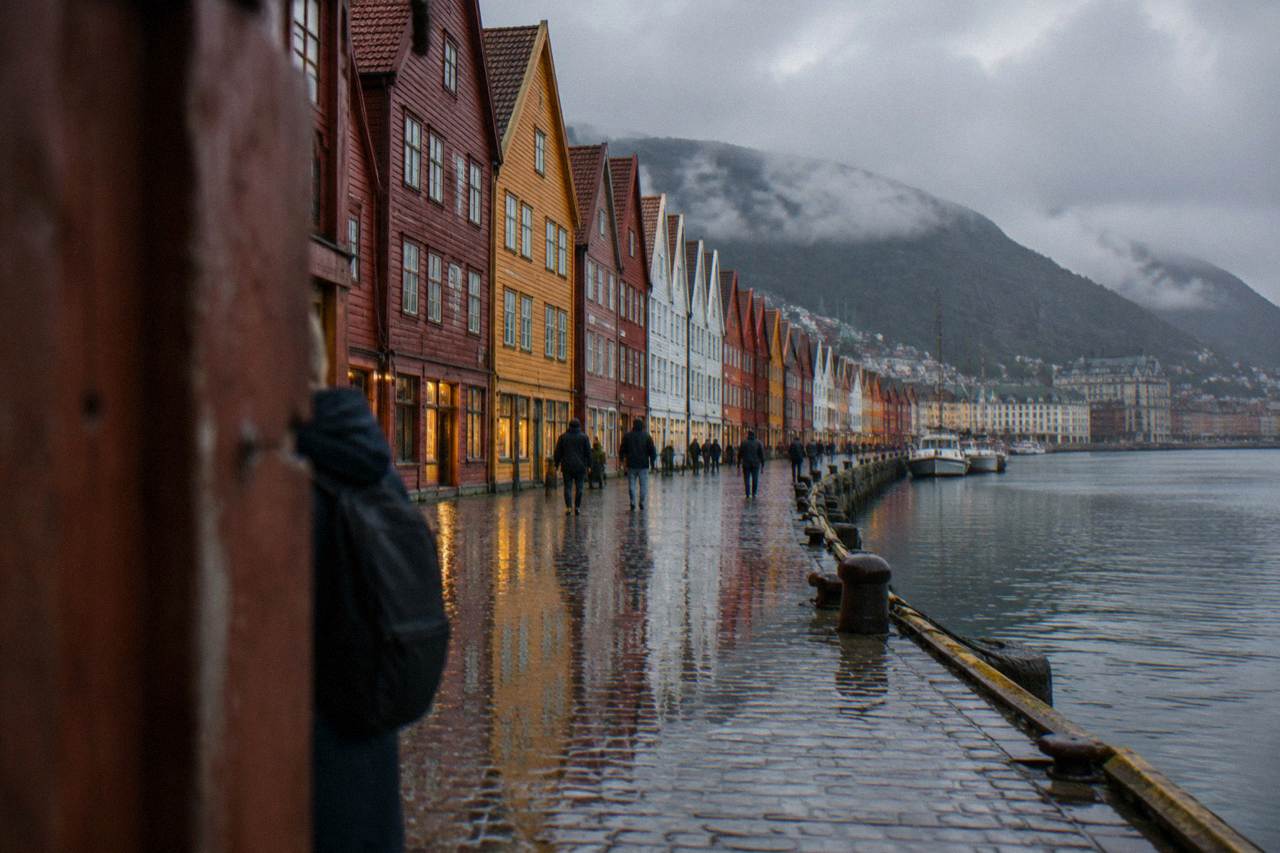
Bergen's Hanseatic Wharf And Its UNESCO Status
Bryggen, the old wharf where Hanseatic merchants traded for centuries, has been on the UNESCO World Heritage List since 1979, the year UNESCO's own listing records as the date of inscription. The Bergen Card's 2026 flyer confirms the wharf's museums still operate today, including the Hanseatic Museum at 160 NOK with a guided visit and the Bryggen Museum at 170 NOK ordinary entry or 85 NOK with the card.
The wooden gabled buildings along the wharf are not museum pieces behind glass. They burn. They leak. They get rebuilt in the traditional manner after fires, the way they have been for hundreds of years, and shops, studios and restaurants keep working inside them. That is the unusual part: Bergen's most protected heritage district is also its most commercially alive one, with the fish market a few minutes' walk away and the things worth weighing before you commit covered in detail elsewhere on this site.
The Hanseatic influence also explains why Bergen feels different from Oslo, which is a capital laid out by planners. Bergen grew as a port, so its centre huddles between the harbour and the mountainsides, with narrow lanes climbing away from the water. Readers comparing the two cities will find the full case laid out in the Oslo or Bergen comparison.
What Is So Special About Bergen, Norway?
Bergen is special because it stacks four things into one small city: a UNESCO World Heritage wharf, seven mountains that rise almost directly from the streets, a coastal fjord landscape reachable on a day trip, and a compact, walkable centre that survived as a living wooden town rather than a reconstruction. Add a food culture built on the fish trade, and few cities of under 300,000 people offer anything comparable.
The mountains are the first thing that registers. Fløyen and Ulriken, the two most visited, frame the city so closely that residents treat them as municipal parks. The Bergen Card's 2026 flyer lists a Fløyen funicular return at 200 NOK for an adult from 1 April to 30 September, dropping to 145 NOK from 1 October to 31 March, and an Ulriken643 cable car return at 435 NOK. Both are ordinary prices, printed on the flyer, not promotional figures.
Then the festivals. The official festival sites list a dense late-spring cluster: Festspillene i Bergen ran 27 May to 10 June 2026, Bergenfest at Bergenhus Festning ran 10 to 13 June 2026, and Nattjazz at USF Verftet ran 29 May to 6 June 2026. In autumn the Bergen International Film Festival fills the town from 14 to 22 October 2026. For a small city, the calendar is heavy, and the Bergen Travel Guide keeps the running list.
That density of food, history and terrain is also why guided formats work well here as an orientation layer rather than a substitute for exploring alone.
Why Does It Rain So Much In Bergen?
Bergen's climate is temperate oceanic and wetter than almost anywhere in Norway: yr.no's Bergen station table shows 217 days with precipitation across the trailing 13 months, monthly mean temperatures from -1.4C in January 2026 to 14.9C in July 2026, and a wettest month of November with 321.8 mm of rain against a 275.0 mm normal. The mountains that make the city famous also wring rain out of the Atlantic air.
No daylight-hours or sunshine figure is quoted here because none was sourced from primary data. What the yr.no table does show, month by month, is a city where rain is a background condition rather than an event. November 2025 recorded 321.8 mm. December followed with 303.5 mm. Then January 2026, cold and dry by comparison, delivered just 82 mm, which locals would still call a rainy month in most other countries.
| Month | Mean temp (observed) | Precipitation (observed mm) |
|---|---|---|
| Sep 2025 | 13.1C | 206.6 |
| Oct 2025 | 9.7C | 231.9 |
| Nov 2025 | 6.0C | 321.8 |
| Dec 2025 | 5.8C | 303.5 |
| Jan 2026 | -1.4C | 82.0 |
| Feb 2026 | 0.8C | 133.4 |
| Mar 2026 | 5.9C | 243.9 |
| Apr 2026 | 7.9C | 65.9 |
| May 2026 | 9.9C | 127.4 |
| Jun 2026 | 14.4C | 165.7 |
| Jul 2026 | 14.9C | 184.2 |
| Aug 2026 | 14.3C | 243.6 |
That table comes straight from the Norwegian Meteorological Institute's statistics for the Bergen station, and it is the reason packing advice for this city is mostly packing-for-rain advice. The wettest single month on the list is November, which is why the question of which month is the rainiest in Bergen has a precise answer rather than a guess.
Which Mountains And Fjords Sit On Bergen's Doorstep?
Bergen is walled in by seven mountains, with Fløyen reachable by funicular and Ulriken by cable car, and it sits at the mouth of a fjord system that lets visitors reach Osterfjord, Hardangerfjord and Sognefjord territory in a single day. The Bergen Card flyer prices the funicular return at 200 NOK in summer, 145 NOK in winter, and the Ulriken643 cable car return at 435 NOK for an adult.
The practical consequence is that a visitor can be on a mountain plateau within minutes of leaving the fish market, then back down for lunch. The cable car ticket sold through this site's listings covers the Ulriken round trip, and the question of cable car versus funicular is really a question of which view you want: Ulriken is the higher of the two.
Beyond the city walls, the day-trip network opens up. The fjord cruises up Mostraumen, the Hardangerfjord waterfall tours and the long Sognefjord and Flam runs all leave from or near the centre, and the trade-offs are covered in the site's dedicated page on fjord day trips from Bergen.
| Attraction | Ordinary adult price (2026 Bergen Card flyer) | Bergen Card price |
|---|---|---|
| Fløyen funicular return (Apr-Sep) | 200 NOK | discounted, one per card |
| Fløyen funicular return (Oct-Mar) | 145 NOK | discounted, one per card |
| Ulriken643 cable car return | 435 NOK | discounted |
| The Aquarium (Akvariet) | 380 NOK (1 Nov-28 Feb window) | discounted |
| Hanseatic Museum with guided visit | 160 NOK | discounted |
| Bryggen Museum | 170 NOK | 85 NOK |
| Haakon's Hall | 120 NOK | discounted |
KODE Art Museums appears in the flyer at 200 NOK, but that is the card's line-item price, not a confirmed standalone museum ticket, so no ordinary KODE price is printed here.
One way to lock in the city-overview half of the day before the fjord half is to reserve the guided option in advance.
What Food Is Bergen Known For?
Bergen's food identity is built on the sea: the fish market at the head of the harbour is the historic heart of the trade, and the dried-cod commerce that funded the Hanseatic wharf still shapes what the city eats, from fresh shellfish to the brown cheese and cinnamon buns sold around it. The city also runs a dedicated food festival each September, the Bergen Matfestival, listed around 4 to 5 September 2026.
The full breakdown of what food Bergen is famous for runs to its own page, including the pastry the city is known for. What matters here is that food in Bergen is not a bolt-on dining scene: it is the original industry. The wharf exists because of fish. The museum district exists because of fish. Even the mountain viewpoints were once working routes for the merchant community.
Guided food walks are the format that connects the two halves, moving from market stalls to the neighbourhoods where locals actually eat, with the history folded in between stops. The Food and Culture Walk is the one this site features for exactly that reason, and its duration, rating and current price all render from the operator's live listing below rather than from stale figures typed into a page.
What Makes The Bergen Card Good Value?
The Bergen Card 2026 costs 400 NOK for a 24-hour adult pass, rising through 500 NOK for 48 hours, 600 NOK for 72 hours and 700 NOK for 96 hours, with child passes from 100 to 175 NOK. It includes free Skyss buses and the Bybanen light rail across Vestland county, including the airport line, where a single zone A ticket otherwise costs 51 NOK.
That transport inclusion is the quiet headline. A visitor landing at Flesland can ride the light rail into the centre on the card, ride it back out, and use the county buses in between, before a single museum is counted. The card's own flyer is the source for every price in the table below, and it is also the source for the detail that the airport bus is not included free.
| Bergen Card (2026) | Adult | Child (3-15) |
|---|---|---|
| 24 hours | 400 NOK | 100 NOK |
| 48 hours | 500 NOK | 125 NOK |
| 72 hours | 600 NOK | 150 NOK |
| 96 hours | 700 NOK | 175 NOK |
Whether the card pays off depends on pace, which is why the site treats it as a planning tool for how many days in Bergen is enough rather than an automatic purchase. A slow two-day visitor who walks everywhere will likely do better paying per attraction. A fast mover doing the funicular, the museums and the county buses will clear the card's cost quickly.
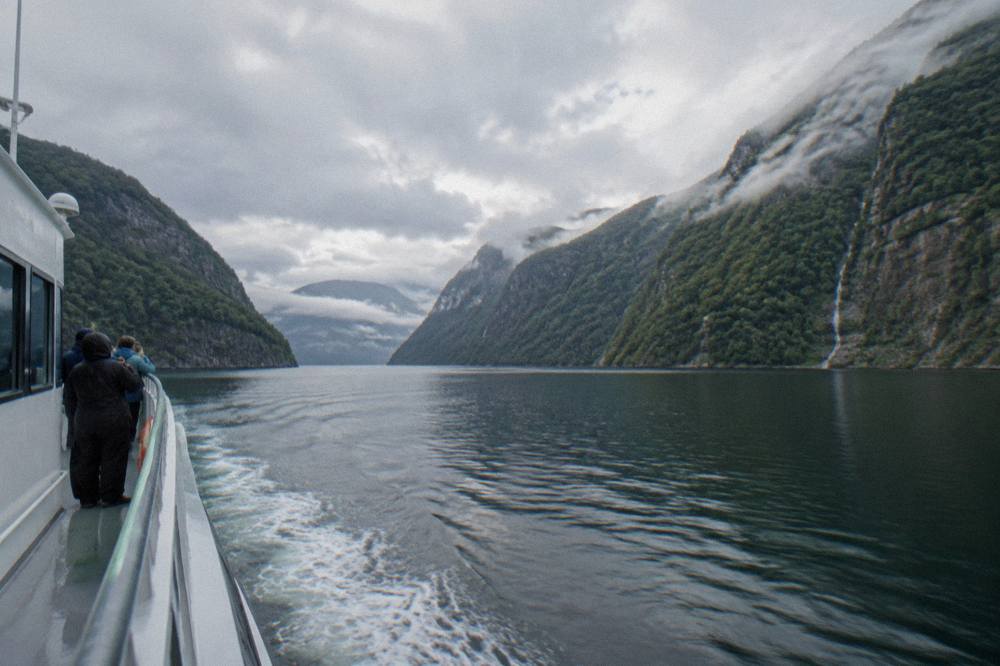
For visitors who prefer someone else to handle the route, these are the three formats this site compares most often for first trips.
Common Questions About Bergen, Norway
What is so special about bergen, norway?
A UNESCO-listed Hanseatic wharf, seven mountains rising from the streets, 217 days of precipitation in the trailing 13 months per yr.no's station table, and fjord day trips from the city centre. That stack of history, weather and geography in a city of 294,860 people is the answer in one sentence.
Is bergen worth visiting?
Yes, for most travellers. Bergen combines a walkable historic centre with genuine fjord access, and the Bergen Card's 2026 pricing makes a dense two- or three-day itinerary affordable to run. The site's dedicated page covers the honest counter-cases, mainly the rain and the cost of Norway.
How many days in bergen is enough?
Two days covers the wharf, one mountain and a museum or two. Three days adds a fjord day trip without rushing. The site's itinerary page breaks the trade-offs down day by day.
Is bergen the rainiest city in Europe?
The yr.no table shows 217 days with precipitation over the trailing 13 months for the Bergen station, which is exceptional for Norway. Comparisons against other European cities need their own primary data, so this site does not rank Bergen against cities it has not verified.
Is norway in the european union?
No. Norway is a Schengen Associate, an EEA and EFTA member applying the Schengen acquis, but not an EU member. The currency in Bergen is the Norwegian krone, NOK, never the euro.