Bergen Food Tour
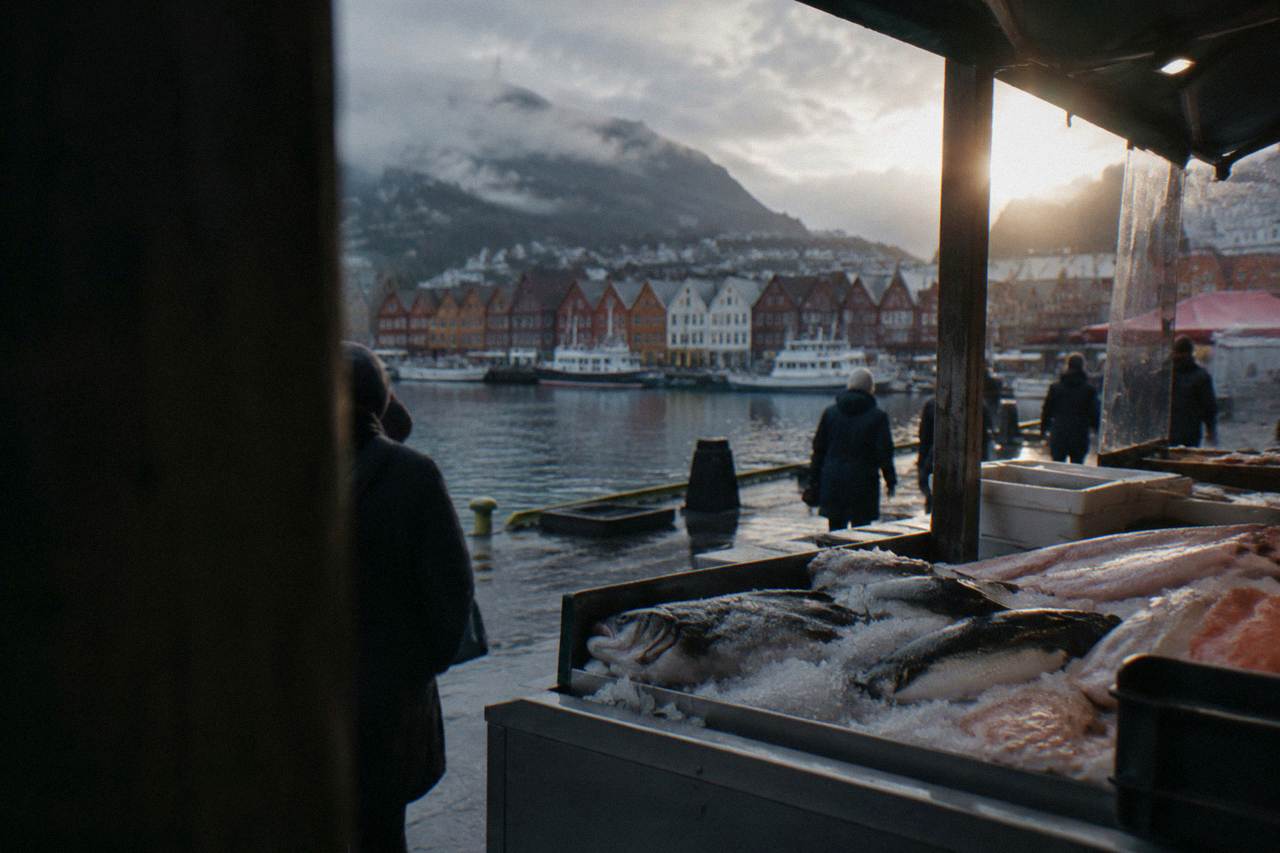
Bergen, on the southwestern coast of Norway in Vestland county, is the country's seafood gateway, and a guided food tour is the fastest way to understand what the city eats, from harbourside fish counters to the cinnamon buns that anchor every Norwegian coffee break.
Short answer
A Bergen food tour is a guided walking route through the city centre that pairs tastings with the stories behind them. Expect harbourside seafood, bakery classics and Norwegian specialities, with formats ranging from tip-based walks to full tours that add a funicular ride up Fløyen. Prices and durations for the bookable options on this page render from the live listings below.
Bergen, in Vestland county on Norway's southwestern coast, was built on dried fish, Hanseatic trade and a harbour that still lands catch every morning. A food tour here is not a novelty add-on to a fjord itinerary, it is the most direct route into what the city actually is: a former Hanseatic League trading post where the food culture grew out of the sea, the mountains and long winters. This guide from Bergen Travel Guide covers every food tour format available in the city, what you taste, what it costs, when to go, and how to fold a food walk into the rest of a Bergen trip.
What Is A Bergen Food Tour And What Do You Taste?
A Bergen food tour is a guided walking route through the city centre that stops at a series of food venues, from harbourside fish counters to bakeries and small restaurants, pairing each tasting with the story of how it fits the city's Hanseatic and seafaring past. Most routes stay inside the compact area between the Fish Market and the cobbled lanes behind Bryggen, so you eat and walk rather than ride.
The format matters more here than in most cities. Bergen's historic core is small enough that a tour can cover the Fish Market, the old trading wharf and several back-street bakeries in a single loop, which is why the walking-tour format dominates the local food scene. Guides on these routes lean hard on history: the dried cod trade that built Bryggen, the Hanseatic merchants who lived and ate in the wharf buildings UNESCO inscribed on the World Heritage List in 1979, and the coastal kitchen that grew around whatever the boats brought in.
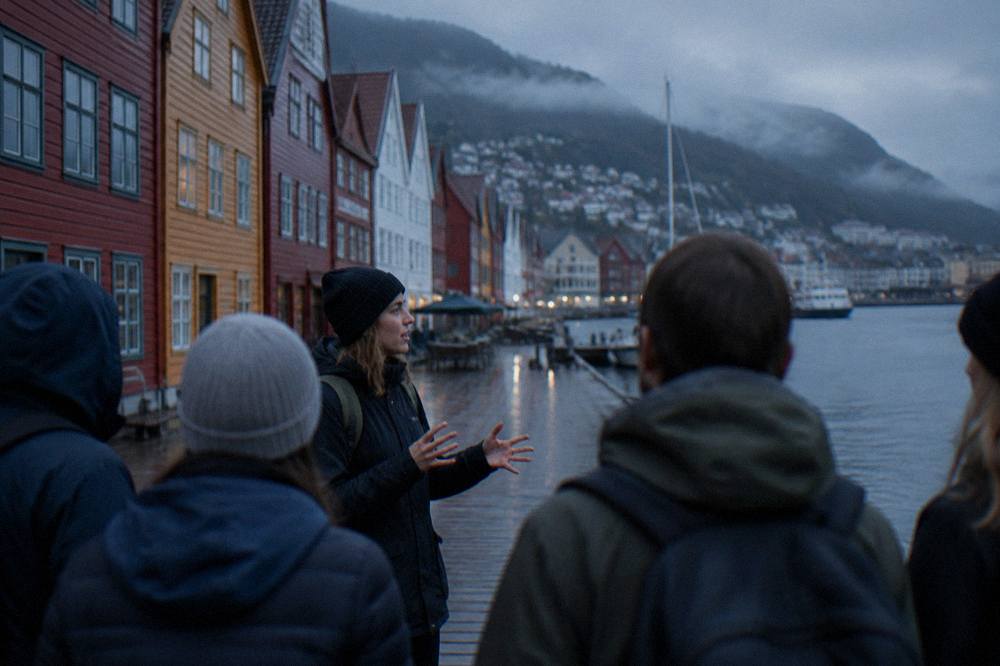
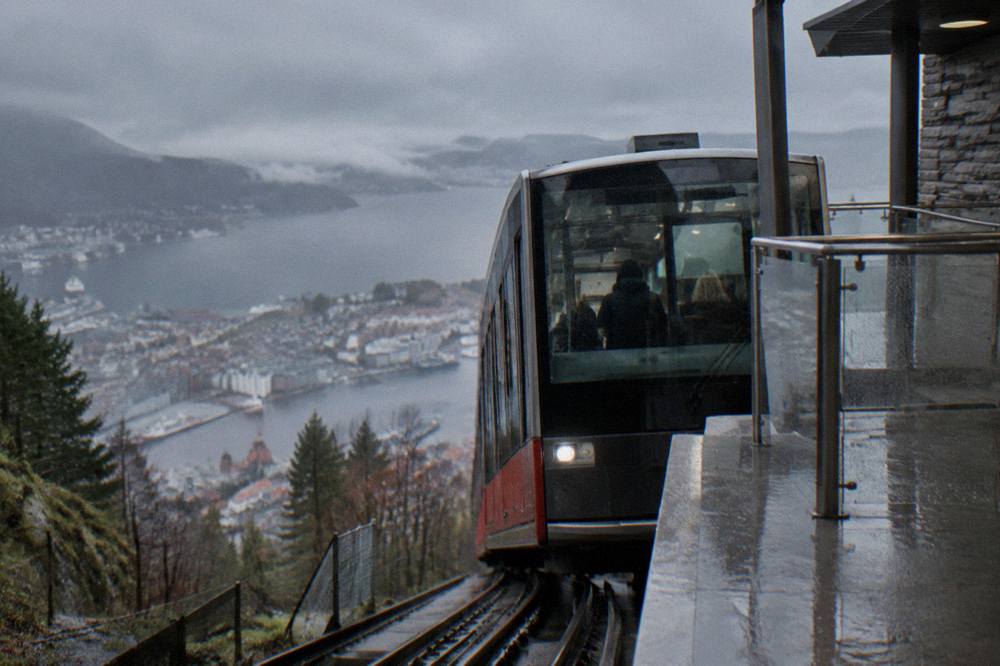
The tasting list reflects the region. Seafood takes the lead, since Bergen sits at the mouth of a fjord system with the open Atlantic beyond it. Behind that come the bakery staples Norwegians treat as daily infrastructure rather than treats, plus mountain-larder products that travelled down to the coast for centuries. One tour on this site's roster, A Taste of Bergen Food Tour with Fløibanen Funicular, extends the idea vertically: after the tastings it adds a ride up the funicular for the view over the city, which makes it as much a sightseeing tour as a food walk. The full tour page breaks down the route, and you can also Check availability for your dates.
What a food tour is not, is a restaurant crawl with commentary bolted on. The best routes use the stops as anchors for the city's story, and the guides who run them tend to be locals who can explain why Bergen eats the way it does rather than just pointing at a menu. If you want the deeper background on the dishes themselves, our guide to what Bergen eats covers the individual foods in detail.
How Much Does A Food Tour In Bergen Cost?
Food tour pricing in Bergen depends almost entirely on format: tip-based community walks run on whatever you choose to give the guide, mid-range group tours charge a fixed per-person rate that usually includes the tastings, and the full-day or multi-stop formats that add transport elements, like a funicular ride, sit at the top of the range. Every bookable tour's exact price, rating and duration renders from the live listing blocks on this page rather than from static text.
That structure is worth understanding before you book, because the gap between formats is not really about food quality. A tip-based walk and a premium tour may pass the same fish counter and both hand you a taste; what changes is the number of stops, the amount of food included, the group size and whether anything beyond walking is bundled in. The 2026 roster on this site runs the full spread, from free, tip-based GuruWalk routes through mid-priced guided walks to the featured taste tour that adds the Fløyen funicular.
A few things sit outside the tour price itself and are worth budgeting separately. The Skyss single adult ticket in zone A costs 51 NOK according to visitbergen.com's travel information page, though on most food tours you never board a bus at all because the route stays central. Tipping at the individual stops is not expected on a paid tour where tastings are included, but on the tip-based walks the contribution at the end is the guide's entire payment model, so budget for it as a real cost rather than a courtesy. The broader spending picture, from restaurant mains to a pint of beer, is covered in our cost guide for Bergen.
One more pricing note: several products on this site, including the hop-on-hop-off bus and the Segway tour in the comparison blocks above, do not publish a price with the operator at all. Where that is the case, the listing card carries only what the operator discloses, and no figure appears in the prose here. Treat any food tour that quotes you a price at the door rather than on the listing with caution, and read the planning guide for a Bergen trip for how to sequence paid activities against free ones.
Which Bergen Food Tour Fits Your Trip?
Match the tour to the shape of your itinerary rather than to the food list. Short trips with a fjord day already booked suit a compact two-to-three hour central walk; cruise-day visitors should pick a route that starts near the port; travellers who want the city's view as well as its flavours should take the tour that bundles the Fløyen funicular ride; and budget travellers can take a tip-based walk and spend the savings at the stalls afterwards.
The first filter is time. If Bergen is a one-day stop between fjord excursions, a long food tour eats the whole afternoon, and a short central walk leaves room for Bryggen and the Fish Market on your own. Our one day in Bergen itinerary shows just how quickly the central sights stack up, and how little slack there is for a slow-moving tour on a tight schedule. Travellers with two days or more, covered in the two-day itinerary, can afford the longer formats without sacrificing anything.
The second filter is what you want the tour to do. Purely culinary? The dedicated food walks keep every stop about eating. History first, food second? The combined food-and-culture format, represented on this site by the Food and Culture Walk, splits its attention between the two. Food plus a postcard view? The featured Fløyen tour is built exactly for that, and it is a natural fit for anyone with a single afternoon.
The third filter is who is travelling. The featured tour and the culture walk are walking formats, so they suit anyone comfortable on cobbles. Families with children tend to do better on shorter routes where the food arrives fast and the guide keeps the pace light, an angle covered in more depth in our Bergen with kids guide. And if you are booking far in advance, the operator's live listing shows the current cancellation terms, which matter more in Bergen than in most cities because of the rain: the yr.no Bergen station table shows 217 days with precipitation over the trailing 13 months, and plans change with the forecast.
What Foods Is Bergen Famous For?
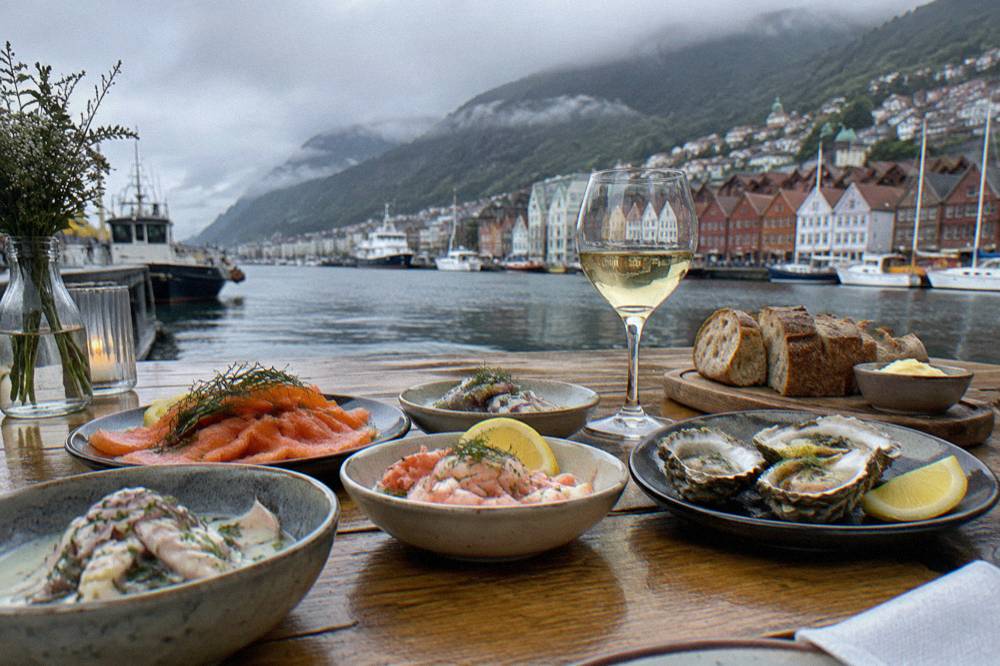
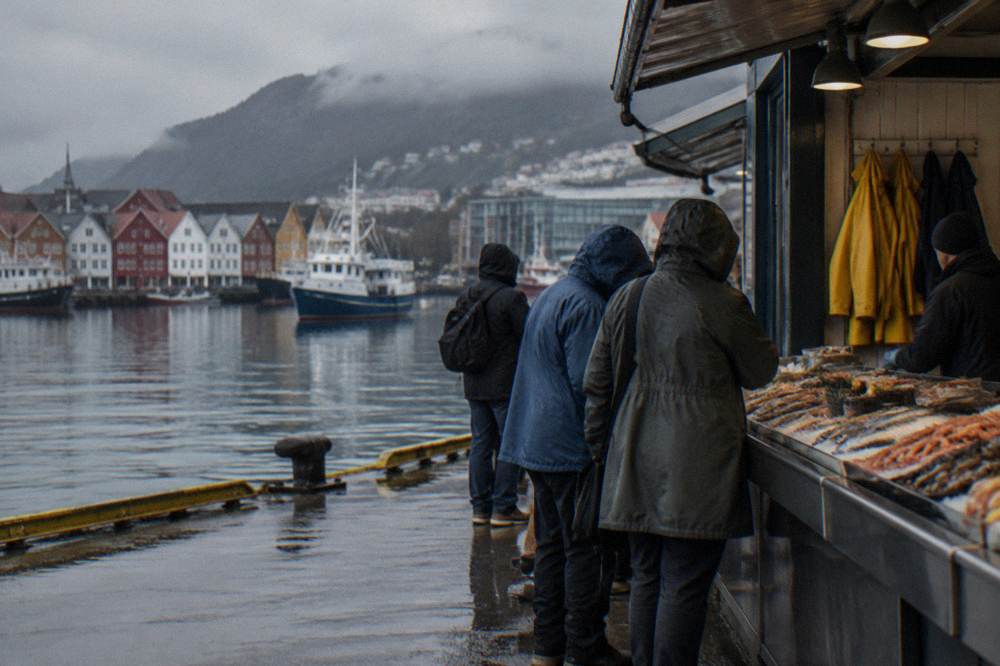
Bergen's food identity is built on the harbour: fresh and cured seafood from the Fish Market and the wharf counters, the cinnamon buns and bakery staples Norwegians eat daily, brown cheese and other mountain-larder products that travelled down to the coast, and the fish soups that turn the day's catch into a meal. A food tour in the city is effectively a route through that list, stop by stop.
The city's position explains the menu. Bergen sits where a long fjord system meets the open ocean, and for centuries it was the export gateway for dried fish from northern Norway, a trade the Hanseatic merchants ran from the wharf at Bryggen. That legacy still shapes what the food stalls sell and what the tours taste: the sea comes first, and everything else fills in around it.
| Classic | What it is | Where a food tour usually tastes it |
|---|---|---|
| Seafood from the counter | Fresh catch sold and served at the harbourside market | The Fish Market and the stalls along the inner harbour |
| Fish soup | A coastal soup built on the day's catch | Market kitchens and harbour restaurants |
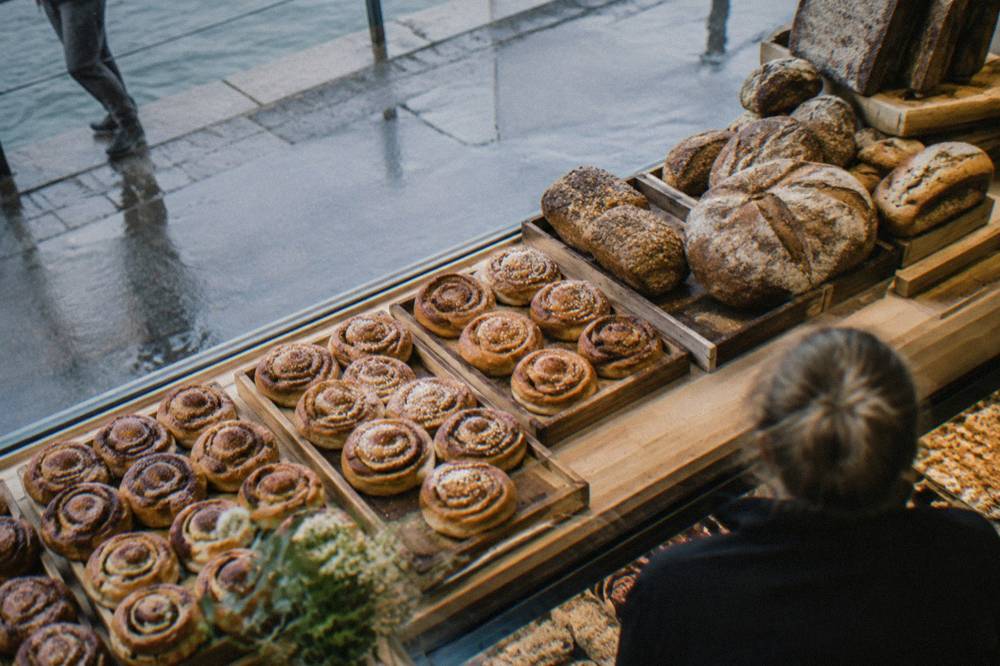
| Skillingsbolle | The large Norwegian cinnamon bun, a coffee-break staple | Bakeries in the central streets, a regular tour stop |
| Brown cheese (brunost) | Caramelised whey cheese, sliced thin and eaten on bread | Breakfast counters and delicatessen stops |
| Cured and dried fish | The historic export product of the Hanseatic trade | Wharf counters and food-history stops near Bryggen |
What the table cannot show is the seasonality behind it. The tasting list shifts with what the boats bring in and with the festivals that take over the centre, so the same tour route in June and in November can taste noticeably different. The structural guide to the dishes themselves, including the pastries the city is known for, lives in our food specialities answer page, and the restaurant-level detail, from harbourside dining to the places locals actually book, is in the best restaurants in Bergen guide.
Where Do Locals Eat In Bergen?
Locals in Bergen eat away from the wharf: the answer pages and restaurant guides on this site consistently point to the streets behind the Fish Market, the areas around Marken and Skostredet, and the neighbourhood restaurants of Sandviken and Nordnes, rather than the harbourside stalls that face the cruise passengers. A food tour that follows the locals' routes therefore moves a few streets inland from the postcard frontage.
The distinction matters for expectations. The stalls at the Fish Market are a genuine working market and a legitimate taste of the city, but they are also where every visitor lands first. The streets behind them hold the bakeries, the small kitchens and the counter-service places where people who live in Bergen actually spend their money. Good tour guides use both, because the contrast is itself the lesson: same city, two food economies running side by side.
For exploring on your own after the tour, the where to stay in Bergen guide maps which central neighbourhoods put you within walking distance of the eating streets, and the best hotels in Bergen guide narrows it to specific properties. If your food interests run to cooking rather than eating out, note that the tour formats on this page are tasting walks, not cooking classes; there is no kitchen-based product in the current verified roster, so a hands-on class would need to be arranged outside the listings on this site.
When Is The Best Time To Take A Bergen Food Tour?
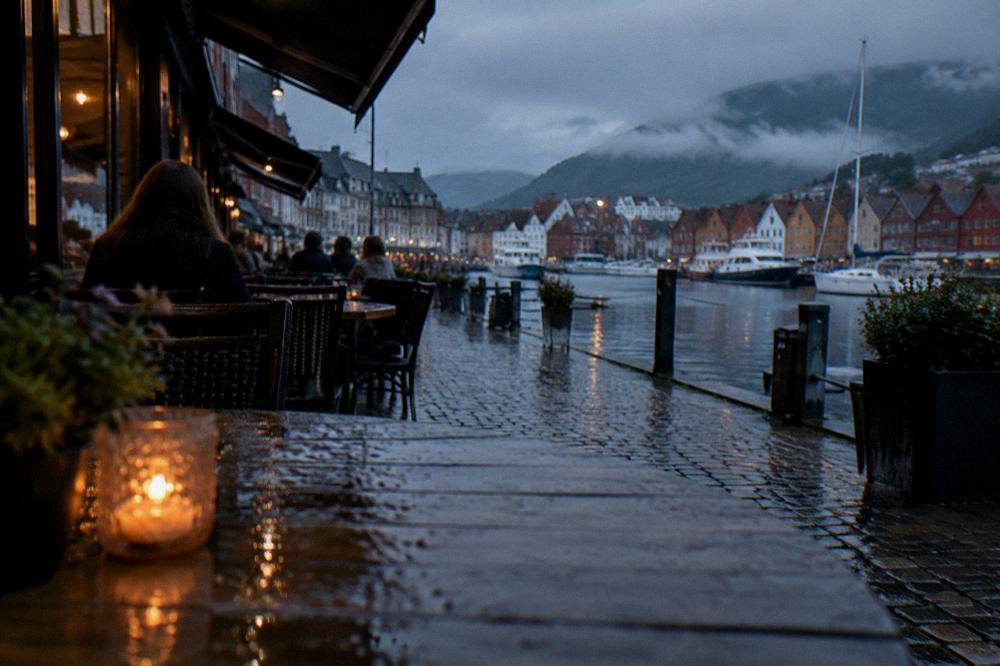
The warm and driest months for a food walk in Bergen are late spring through summer, with the yr.no station table showing June at 14.4 C and July at 14.9 C mean temperature and April the driest of the trailing 13 months at 65.9 mm of rain. That said, Bergen is a temperate oceanic city with 217 days of precipitation in the trailing year, so there is no reliably dry season, only wetter and less wet months.
The climate data is unambiguous about the shape of the year. Winter months sit cold and very wet, autumn is the heaviest rainfall of all, and the late spring is the best compromise between temperature and dryness. Since food tours are walking tours, rain affects them more than it affects bus or boat products: an afternoon of tastings is still enjoyable in drizzle, but the walk between stops is part of the experience.
| Month (observed) | Mean temperature | Precipitation |
|---|---|---|
| September | 13.1 C | 206.6 mm |
| October | 9.7 C | 231.9 mm |
| November | 6.0 C | 321.8 mm |
| December | 5.8 C | 303.5 mm |
| January | -1.4 C | 82.0 mm |
| February | 0.8 C | 133.4 mm |
| March | 5.9 C | 243.9 mm |
| April | 7.9 C | 65.9 mm |
| May | 9.9 C | 127.4 mm |
| June | 14.4 C | 165.7 mm |
| July | 14.9 C | 184.2 mm |
| August | 14.3 C | 243.6 mm |
The table comes from the official Met Norway data published via yr.no for the Bergen station, and the full month-by-month analysis, including what it means for packing, is in our Bergen weather guide. For timing your trip around the calendar as well as the climate, the best time to visit Bergen guide ranks the seasons against crowds and prices.
How Do You Combine A Food Tour With Bergen Sightseeing?
The most efficient pairing is the featured food tour, which builds the Fløyen funicular ride into the itinerary, so one booking covers both the tasting walk and the city's signature view. Beyond that, the Bergen Card covers museum entry and all Skyss buses and Bybanen light rail in Vestland county including the airport line, which makes a food tour plus a museum afternoon the standard two-activity day in the centre.
The arithmetic of a Bergen day favours stacking. The 2026 Bergen Card, priced by the official visitbergen.com flyer at 400 NOK for a 24-hour adult pass and up to 700 NOK for 96 hours, includes transport and a long list of attractions, so the savings depend on how many you visit. The food tour sits outside the card, but the sights around it do not, and a single card day can wrap several of them around a midday or afternoon tasting walk.
| Bergen Card duration | Adult | Child (3-15) |
|---|---|---|
| 24 hours | 400 NOK | 100 NOK |
| 48 hours | 500 NOK | 125 NOK |
| 72 hours | 600 NOK | 150 NOK |
| 96 hours | 700 NOK | 175 NOK |
The attraction prices the flyer lists around a food-tour day are just as concrete. The Fløyen funicular, which the featured tour includes anyway, otherwise costs 200 NOK adult return in the April to September window and 145 NOK from October to March, per the same flyer. The museums and sights near the tasting routes fill the rest of the table below.
| Attraction | Price listed in the 2026 Bergen Card flyer |
|---|---|
| Fløyen funicular return (Apr-Sep) | 200 NOK adult |
| Fløyen funicular return (Oct-Mar) | 145 NOK adult |
| Ulriken643 cable car return | 435 NOK adult |
| The Aquarium, low-season window | 380 NOK adult |
| Bryggen Museum | 170 NOK ordinary, 85 NOK with the card |
| Hanseatic Museum with guided visit | 160 NOK |
| Haakon's Hall | 120 NOK |
| KODE Art Museums | 200 NOK on the card, its standalone price was not verifiable from kode.no |
Note the KODE line carefully: the 200 NOK figure is the Bergen Card's own listed price, not a confirmed standalone adult ticket, which is exactly how the site treats it. Full details on what the card covers and when it pays off are in our Bergen Card guide.
Getting to the meeting point is straightforward, and the transport table below shows what each option costs. Most food tour meeting points sit inside the walkable core, so on foot is usually the honest answer.
| Way to reach a central meeting point | Cost | Notes |
|---|---|---|
| On foot from anywhere in the core | 0 NOK | The historic centre is compact and walkable |
| Skyss single ticket, zone A | 51 NOK | visitbergen.com's travel page lists the current fare |
| Bybanen light rail with a Bergen Card | Included | The card covers all Skyss buses and Bybanen in Vestland county |
| Flybussen airport bus | Not included in the card | The flyer notes a discount may apply; flybussen.no should be checked directly for the fare |
If the plan grows beyond food and museums into the fjords, the fjord tours from Bergen guide covers the day trips, and the getting around Bergen guide handles the transport picture in full.
Is A Guided Food Tour Better Than Eating Independently In Bergen?
A guided food tour buys you curation and access, not better food: the guides know which counters are worth stopping at, the stops are pre-arranged so nothing is sold out from under you, and the history arrives with the meal. Eating independently is cheaper per plate and gives you full control of pace and portions, but it leaves you working out an unfamiliar food culture with a map and guesswork, and in a city this wet, a planned indoor route has real value.
The honest case for independence is strong. Bergen's restaurants stand on their own, and the best restaurants guide plus the budget guide can assemble an eating day that costs less than any tour and moves entirely at your own speed. If you enjoy reading menus, talking your way through a fish counter and treating lunch as a discovery process, skip the tour and eat freely.
The case for the tour is what you cannot replicate on your own. A guide who explains the Hanseatic trade while handing you the food it produced turns a snack into the city's biography, and the pre-booked stops remove the two failure modes of independent eating in a small city: arriving at the famous counter just as it closes, and ordering the safe thing because the menu is in a language you do not read. For a short visit, that compression is worth money.
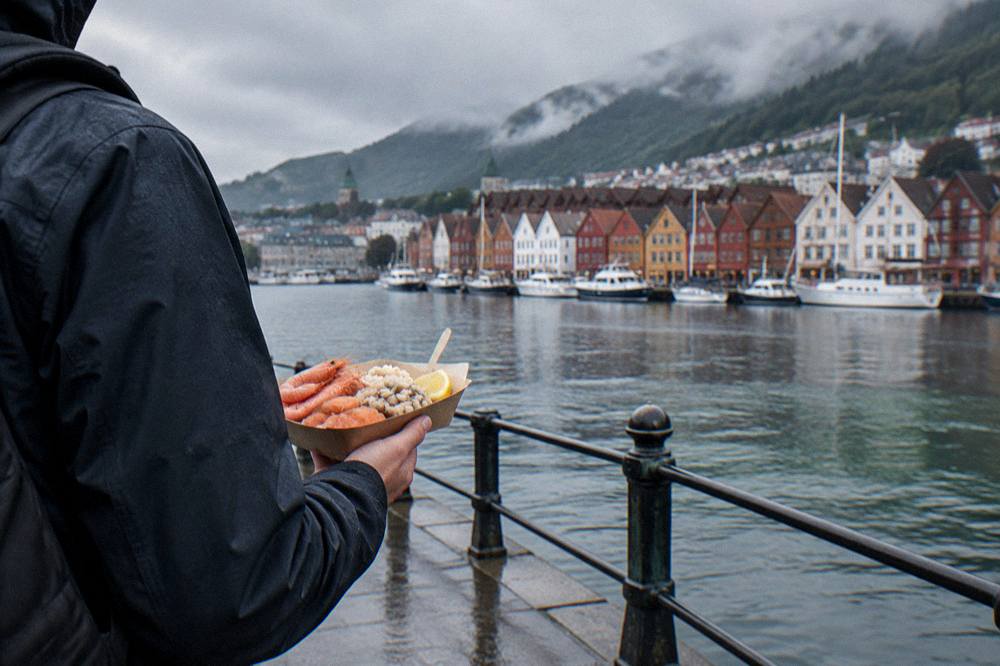
A middle path works well too. Take a short tour on your first full day as an edible orientation, then return independently to the two or three stops that stood out. The guide's route becomes your shortlist, and the rest of the trip eats itself. Cruise passengers with a single day, whose constraints are covered in the cruise port guide, should lean toward this pattern in reverse: eat independently near the ship, and save the tour slot for the departure day when the timing is known.
Common Questions About Bergen Food Tours
How long does a Bergen food tour last?
The walking formats on this site's roster typically run in the two to three and a half hour range, with the featured tour extending beyond that because it adds the Fløyen funicular ride. Exact durations render from each tour's live listing card on this page rather than from static text, so check the block for the format you are considering before booking.
Do Bergen food tours include the food, or do you pay at each stop?
Paid group tours include the tastings as part of the ticket, which is the standard model for the guided formats on this site. The tip-based community walks work differently: the walk itself is free and the guide is paid by contribution at the end, so budget for the tip as the real cost. Check the inclusions line on the live listing for the specific tour you are booking, since inclusion lists vary by operator.
Are Bergen food tours good in the rain?
Largely, yes, because the stops are indoors and the walks between them are short. Bergen recorded 217 days with precipitation over the trailing 13 months in the official Met Norway data via yr.no, so every tour operator here plans around rain as the default. Bring a proper rain jacket rather than an umbrella, which the wind on the wharf makes mostly decorative, and see our packing guide for Bergen for the full kit.
Can you take a Bergen food tour with dietary restrictions?
Most operators can adapt for vegetarian and common allergy needs when told in advance, and the booking flow on each listing carries the dietary note field for exactly that. Bergen's food culture is seafood-heavy, so anyone with a shellfish or fish allergy should state it clearly at booking rather than assuming the route can flex on the day. The listing for the featured tour carries the operator's own dietary terms.
Is a food tour in Bergen worth it if you only have one day?
If it is the featured format, yes, because it doubles as sightseeing: the tasting walk covers the central food streets and the included funicular ride delivers the classic view over the city, so one booking does two jobs. If your single day already includes a fjord cruise or a long day trip, swap to a shorter central walk and eat the rest independently using the best restaurants guide.
Do you tip the guide on a Bergen food tour?
On paid tours a tip is appreciated but not expected, in line with Norwegian norms generally, which our money and tipping guide covers in full. On the tip-based community walks the contribution at the end is the guide's payment, so there you tip as a matter of the format itself rather than etiquette. Nobody will chase you either way, and no fixed percentage is published by any operator on this site.
A food tour is the one Bergen activity that feeds you while it explains the city, and the featured tour that adds the Fløyen funicular does it in a single booking. Pick the format that matches your itinerary, book the stops you cannot rearrange, and let the rain decide which of the two routes to the bakery you take.