Is Bergen Safe
Bergen, on Norway's southwestern coast, is one of the safest cities a traveller can visit, but its real risks are weather, slippery streets and mountain trails, not crime.
Short answer
Yes. Bergen is a small, low-crime city of roughly 295,000 people in Vestland county where violent crime against visitors is rare. The practical safety issues are rain, wind, dark winter pavements and hiking terrain, all of which are manageable with basic preparation.
Bergen, a former Hanseatic League trading post in Vestland county on Norway's southwestern coast, is one of the calmest cities a visitor can find in Europe, and the honest answer to whether it is safe is yes, with a caveat: the thing most likely to hurt a tourist here is not a person, it is the weather. No crime statistic, safety ranking or pickpocket figure is quoted here, and none is needed to say what every visitor notices within a day: the city is quiet at night, the streets are orderly, and the real planning problem is the rain.
This guide, written by the Bergen Travel Guide editorial desk from official sources, breaks safety down into the questions travellers actually ask: the city at night, solo travel, the specific risks on Bergen's mountains, transport, money and health care. It also carries a month-by-month weather table, because the Met Norway data for Bergen shows 217 days with precipitation in the trailing 13 months, and knowing that number is more useful than any reassurance.
Is Bergen Safe For Tourists At Night?
Yes, Bergen is safe to walk around at night. The city centre around Torgallmenningen, Bryggen and the harbour stays lit and quiet after dark, violent crime against visitors is rare, and the most common night-time annoyance is drizzle rather than disturbance. Standard city caution applies near late-night bars, but there is no area of central Bergen a visitor needs to avoid.
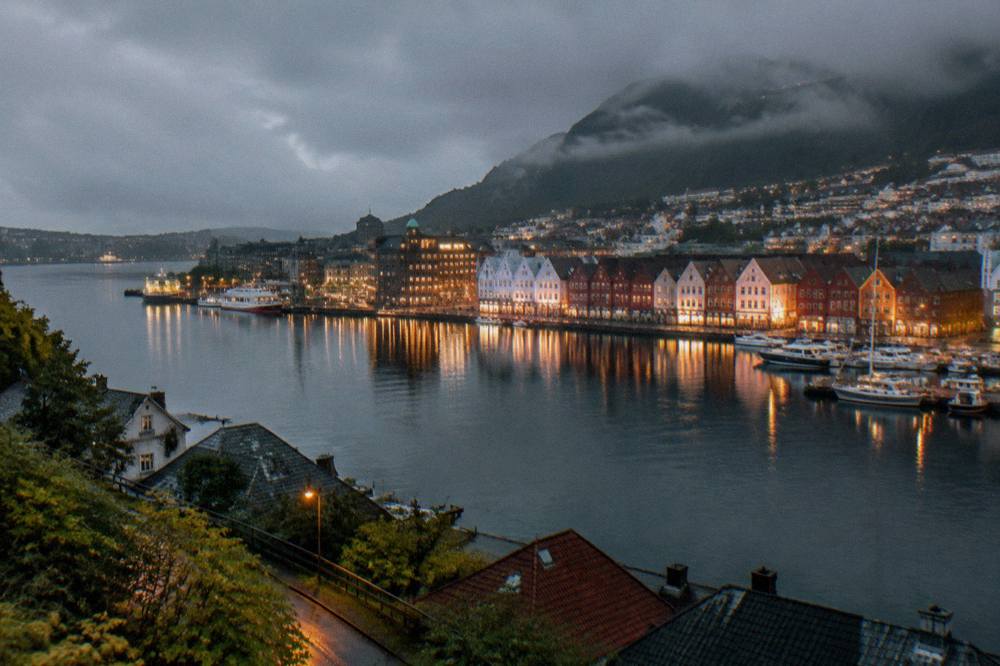
Bergen is a compact city of roughly 294,860 people, small enough that the night-time centre empties quickly once restaurants close. The areas visitors actually use, Bryggen, Marken, the Fisketorget fish market end of the harbour, and the streets around Torgallmenningen, sit within a short walk of one another, so most evening walks never leave well-lit, busy ground. The kommune's own pages describe Bergen as a municipality whose evening economy concentrates around a handful of streets rather than sprawling nightlife districts.
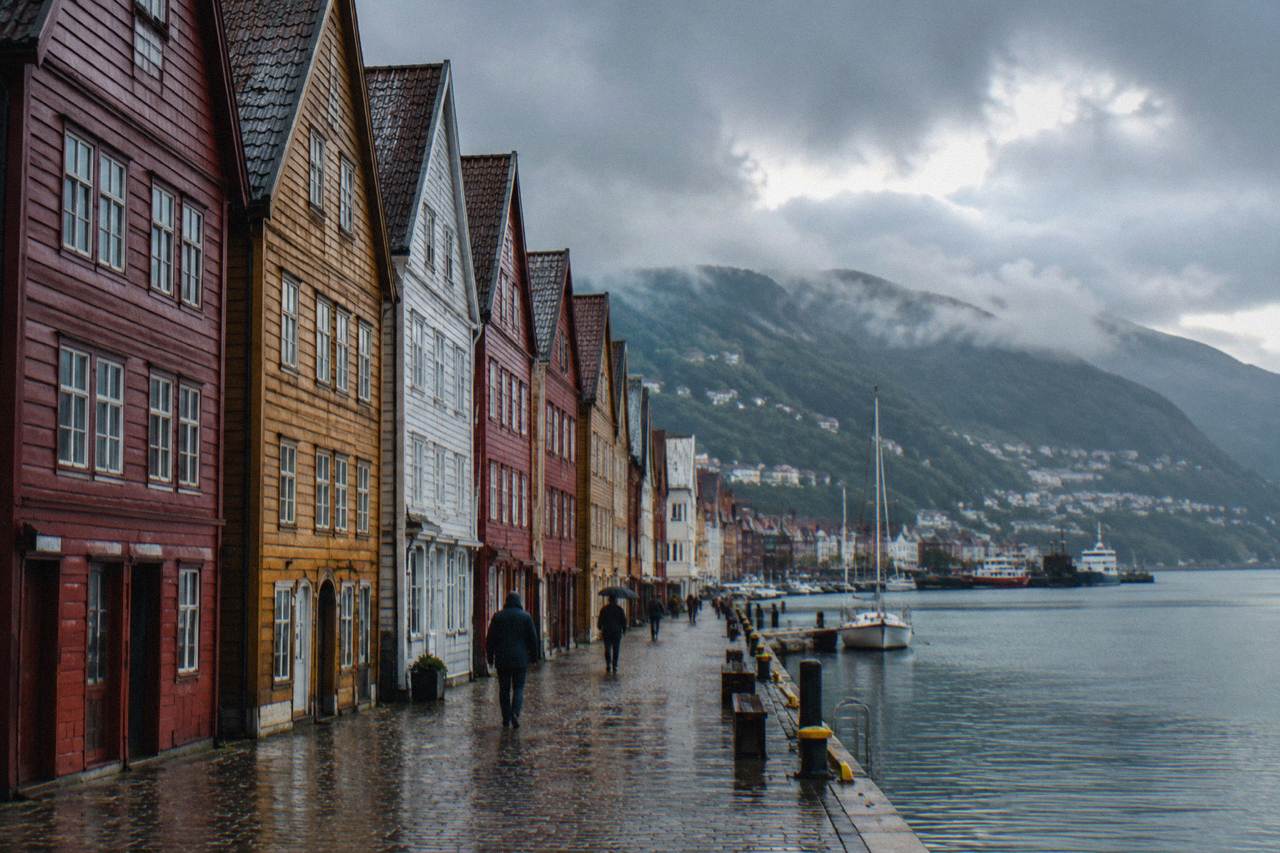
The two things worth more caution than any person are the pavement and the light. Rain, which Met Norway's Bergen station table shows falling on 217 of the trailing 13 months' days, leaves cobbled streets and painted wooden walkways slick, and in December and January the darkness arrives in late afternoon. Shoes with grip and a reflective layer on outerwear matter more here than in most European cities. For where to base yourself, see the site's pages on where to stay in Bergen and the hotel-by-hotel best hotels in Bergen guide.
Is Bergen Safe For Solo Travellers And Women?
Yes, Bergen is widely regarded as comfortable for solo travellers of any gender. Norway ranks among the world's most gender-equal societies, street harassment is uncommon, and Bergen's small scale means short, walkable distances at night. The same advice applies as anywhere: keep your phone charged, tell someone your hiking plans, and trust your instincts around anyone who has been drinking.
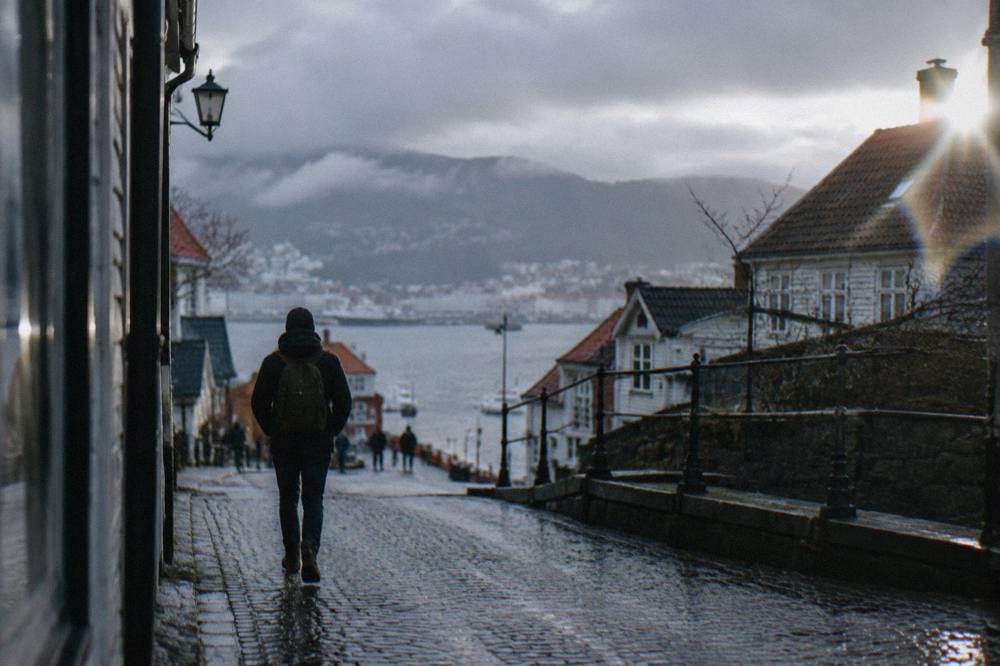
Solo visitors tend to find that Bergen's risks shift from social to environmental. In the city, a solo traveller's evening is straightforward. Outside the city, the picture changes: Bergen is ringed by mountains whose trails are unlit, lightly trafficked and exposed to fast-moving weather, and a solo hiker who twists an ankle on Mount Ulriken or the Stoltzekleiven stair climb has fewer passers-by to help than on a Mediterranean trail. The site's hiking in Bergen guide covers the popular routes; the safety rule worth repeating is to hike in daylight and carry the wardrobe for rain even when the morning looks clear.
The standard European solo-travel infrastructure exists: pharmacies are well-stocked, tap water is excellent, and English is spoken near-universally. For a first visit structured around the city itself, the site's planning a trip to Bergen page lays out a route that keeps solo travellers on the well-trodden core.
What Are The Real Safety Risks In Bergen?
The real risks in Bergen are weather, terrain and expense, not crime. Met Norway's Bergen station table shows 217 days with precipitation in the trailing 13 months and monthly rainfall as high as 321.8mm in November, mountain trails turn slick within minutes of rain, and the low risk that remains is opportunistic theft in crowded tourist zones. None of these requires more than preparation.
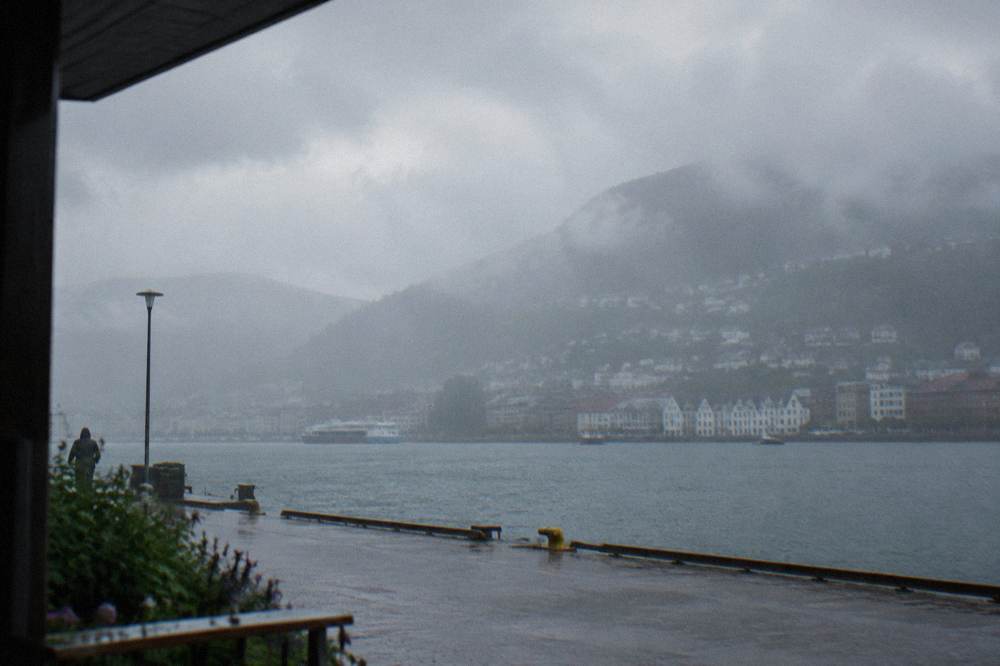
Weather first, because it dominates everything else. The table below, drawn from yr.no's Bergen station statistics, shows how the rainfall is distributed; note that no sunshine-hours or daylight-hours figure was sourced, so none is given.
| Month | Mean temp observed | Precipitation observed (mm) |
|---|---|---|
| September | 13.1°C | 206.6 |
| October | 9.7°C | 231.9 |
| November | 6.0°C | 321.8 |
| December | 5.8°C | 303.5 |
| January | -1.4°C | 82.0 |
| February | 0.8°C | 133.4 |
| March | 5.9°C | 243.9 |
| April | 7.9°C | 65.9 |
| May | 9.9°C | 127.4 |
| June | 14.4°C | 165.7 |
| July | 14.9°C | 184.2 |
| August | 14.3°C | 243.6 |
Read that as a planning document. January 2026 was unusually dry at 82mm, but it was also the coldest month at -1.4°C, with the trailing year's low of -11.3°C. November, at 321.8mm, is the wettest month in the table, and November rain on cobbles and timber walkways is the single most common cause of visitor slips. The site's Bergen weather page covers the climate in depth, and best time to visit Bergen translates it into season choices.
Terrain is the second risk. The climbs up Fløyen via the funicular or on foot, Ulriken via the cable car, and the stair-heavy Stoltzekleiven route are all safe in good conditions and genuinely hazardous in wind, ice or fog. yr.no's forecast is the tool locals actually use; the site's rainy day in Bergen itinerary exists precisely because a day can be written off by weather rather than by anything a person might do to you.
Is Bergen Safe In Winter, Rain And Darkness?
Yes, but winter Bergen demands the right kit. Between late October and March the city is wet or icy underfoot, daylight is short, and Met Norway's data shows December rainfall of 303.5mm, so waterproof layers, shoes with real grip and visible clothing are the practical safety measures. Ice underfoot is the top winter hazard, not crime.
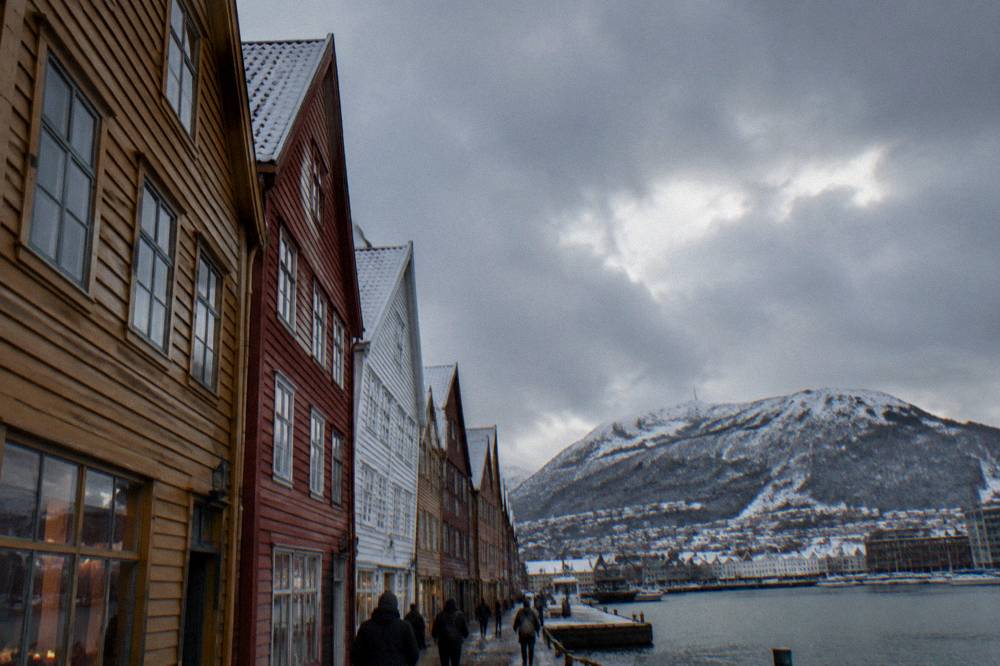
Winter safety in Bergen is mostly footwear and layering. Temperatures in the observed table never average below -1.4°C in the city, which sounds mild, but coastal damp makes cold feel sharper than the number suggests, and the freeze-thaw cycle glazes stone surfaces. Locals wear studded soles in the icy weeks; visitors can get by with lugged boots and short, careful steps on flagged stone.
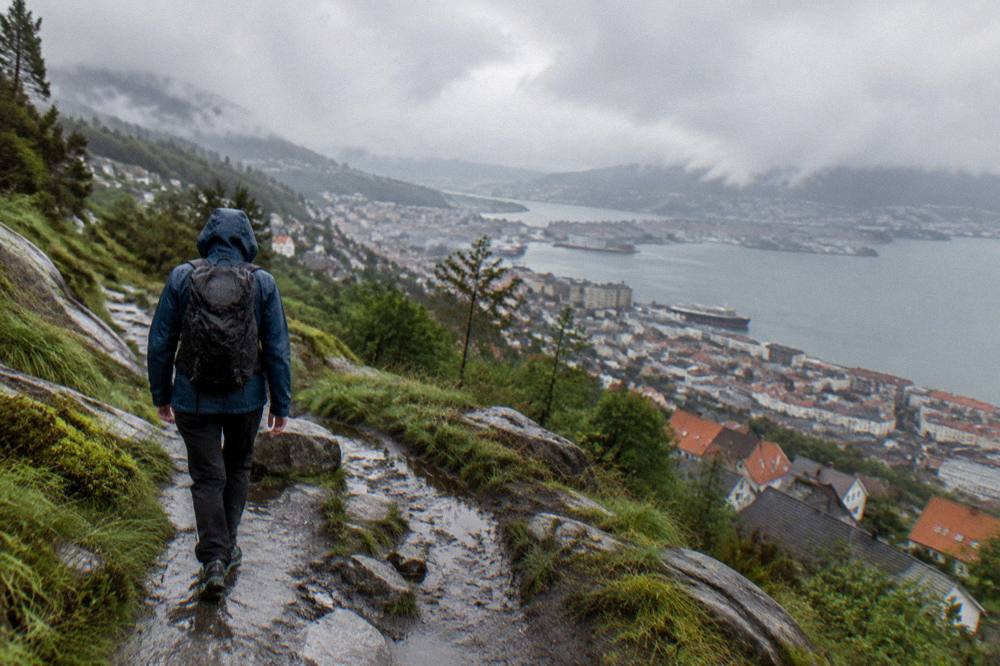
The mountains above the city change character in winter. The Ulriken643 cable car (435 NOK for an adult return, per its official price page) and the Fløyen funicular (200 NOK adult return in the April-September window, 145 NOK from October to March, per the official Bergen Card flyer's price table) keep running in winter, but their summit trails can hold snow long after the harbour is bare. If you ride up in winter, check the summit conditions before choosing to walk down. The site's Bergen in winter page covers the full season.
The funicular and cable car appear together in the site's comparison of the two, and the decision-matrix is a safety question as much as a sightseeing one:
| Route Up | Official Adult Return Price | Winter Consideration |
|---|---|---|
| Fløyen funicular | 200 NOK (Apr-Sep), 145 NOK (Oct-Mar) | Lower summit, gentler trail network, still icy in shade |
| Ulriken643 cable car | 435 NOK | Higher, more exposed summit trails; verify conditions before walking down |
| On foot via Stoltzekleiven | No ticket required | Steep stone stairway; slick when wet, avoid in ice |
Is Public Transport In Bergen Safe?
Yes, Bergen's public transport is safe, punctual and simple. A single adult Skyss ticket for zone A costs 51 NOK, per the fare confirmed on visitbergen.com's travel-information page, the Bybanen light rail and buses serve the airport and the whole city centre, and the Bergen Card covers Skyss buses and the light rail across Vestland county, including the airport line.
The risks on Bergen's transport are fare inspection and confusion, not violence. Tickets are bought before boarding or validated on the platform, and inspectors do check. Everything else is logistics: the Skyss travel planner is the authoritative tool for routes, and the site's getting around Bergen page explains tickets, zones and the Bybanen in practice.
Two 2026 service notes come from official Skyss and Bybanen sources and matter to visitors with centre- or airport-bound plans: summer maintenance work suspended parts of lines 1 and 2 between late June and mid-July 2026, with replacement buses, and the Nonneseter stop has been closed in the city-bound direction since 23 February 2026 because of demolition work nearby. Neither affects safety; both affect route planning, so check skyss.no on the day. The airport connection itself is covered in the site's Bergen airport guide, and the Bergen Card page prices out when the card's free transport pays for itself.
A self-guided fjord day trip such as this one is, in safety terms, one of the most reassuring ways to see the region: you travel on scheduled trains, buses and boats with staffed stations and published timetables rather than renting a car for mountain roads in unfamiliar weather.
Are Pickpockets And Scams A Problem In Bergen?
No, pickpocketing and scams are a minor problem in Bergen compared with most European destinations, and no sourced figure exists for the city either way. The sensible precautions are ordinary ones: watch your bag in the crowded cruise-day crush along Bryggen and keep cards separate from cash. There is no established street-scam scene, no aggressive ticket touting, and no area visitors are told to avoid.
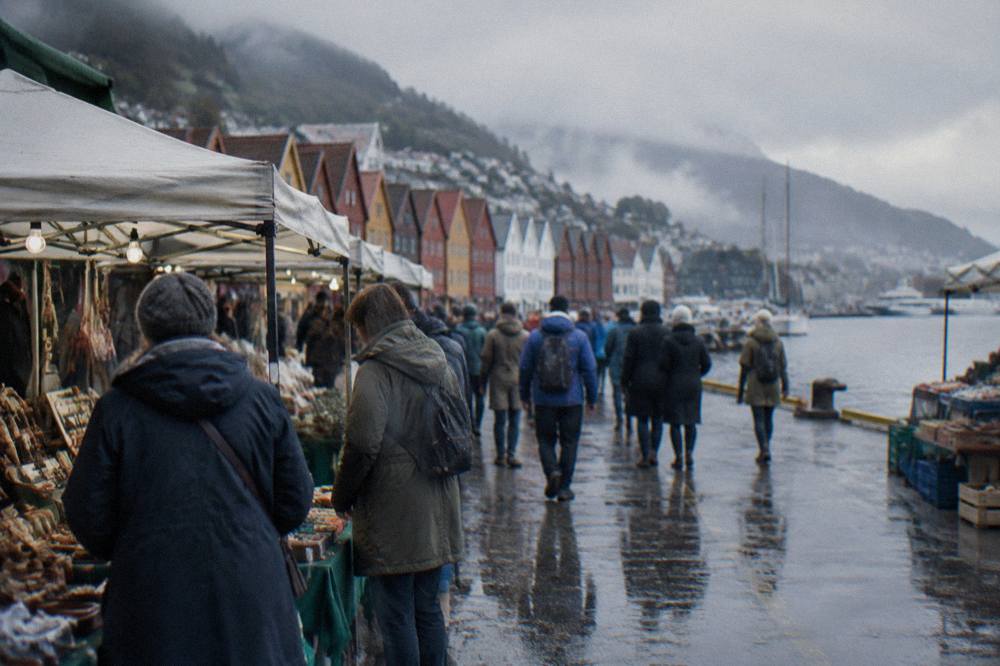
What Bergen does have is cruise crowds. On days when ships are in, the stretch from Bryggen to the fish market packs shoulder to shoulder, and that is the one setting where the usual city rules, zipped bag in front, phone not in a back pocket, are worth following. The Port of Bergen publishes a live list of arrivals, so the port's own pages are the place to see which days will be busy, though no annual cruise-call count has been verified from a primary source and none is stated here.
Money safety is a different question from theft: Bergen is expensive, card payments are accepted essentially everywhere, and the currency is the Norwegian krone (NOK), never the euro. Norway is not an EU member, so do not expect euro pricing or EU banking assumptions; it is a Schengen Associate applying the Schengen acquis. A specific ETIAS go-live date is deliberately not given here, because it has not been independently re-verified and has slipped repeatedly; check the official Norwegian and EU sources before you travel rather than trusting any dated claim. The site's page on how expensive Bergen is puts realistic numbers on a day.
Is Bergen Safe For Families And Older Visitors?
Yes, Bergen is one of Europe's easier cities for families and older visitors. The core between Bryggen, the harbour and the funicular base is compact and largely step-light, car traffic in the centre is limited, public transport has low floors and level boarding, and the main attractions, the aquarium, Fløyen and the museums, are safe, staffed and well-maintained. The one recurring hazard is the same wet cobbles.
For families, the practical notes are simple: the Bergen with kids itinerary keeps the day on level ground, the aquarium's official adult price sits at 380 NOK in the winter window per the Bergen Card flyer, and the VilVite science centre and Fløibanen funicular give rainy-day fallbacks that need no mountain walking. For older visitors, the funicular is the sensible mountain option because the summit terrace is reachable without stairs, while the Stoltzekleiven climb is the one headline attraction genuinely unsuited to anyone with knee or heart concerns.
The Bergen Card, 400 NOK for a 24-hour adult pass with child passes at 100 NOK, per the official 2026 flyer, bundles the transport and most museum entries, which reduces both cost and the number of separate queue-and-ticket decisions an older visitor has to make:
| Bergen Card Length | Adult (NOK) | Child 3-15 (NOK) | Covers |
|---|---|---|---|
| 24 hours | 400 | 100 | Skyss buses and Bybanen countywide, including the airport line, plus discounted attraction entry |
| 48 hours | 500 | 125 | Same coverage over two days |
| 72 hours | 600 | 150 | Same coverage over three days |
| 96 hours | 700 | 175 | Same coverage over four days |
What Should You Do If Something Goes Wrong In Bergen?
Norway's emergency services, police, fire and ambulance, are all reached through the country's national emergency number, which works from any phone including foreign mobiles, and the country also operates a dedicated medical emergency line and a non-urgent health advice service. Bergen's health system is universal and high-standard, pharmacies dispense over-the-counter advice widely, and travel insurance is essential for non-residents because care is billed afterwards.
The practical structure for a visitor is clean. Learn the national emergency number before your trip, since it is deliberately not printed here; the official Norwegian directories and your hotel's front desk will have it posted. For a lost passport, the issuing country's consulate is the route. For police reports, a non-urgent report can be filed online or in person, and doing so within a day matters mostly for an insurance claim rather than for recovering property in a low-theft city. For illness, the local system will treat visitors; what it will not do is waive the bill, so travel insurance with health cover is the single most consequential safety purchase for a Bergen trip, and it is a purchase rather than a precaution.
Bergen's own risk profile, ranked by what the verified facts in this pack actually support, looks like this:
| Risk | Likelihood For A Visitor | Main Mitigation |
|---|---|---|
| Slip on wet cobbles or timber | High on any rainy day | Lugged footwear, unhurried pace |
| Caught out by weather on a summit trail | Moderate year-round | Check yr.no, carry rain layers, hike in daylight |
| Ice underfoot in winter | Moderate in freeze weeks | Studded soles or careful short steps |
| Opportunistic theft in cruise crowds | Low | Ordinary bag discipline at Bryggen |
| Violent crime | Very low | No specific action needed |
| Uninsured medical bill | Low likelihood, high cost | Travel insurance before departure |
A guided walk is one way to get the city's geography fast while keeping to well-trodden ground, and the site's Bergen walking tours page compares the options.
What Day Trips Around Bergen Are Safe For Cautious Travellers?
The organised day trips from Bergen are safe for cautious travellers because they run on scheduled ferries, buses and trains with licensed operators. The Mostraumen fjord cruises, Hardangerfjord tours and Norway in a Nutshell routes all keep you on staffed public-transport infrastructure rather than self-drive mountain roads, which is the safest possible structure for a visitor who does not want to navigate rural Norway alone.
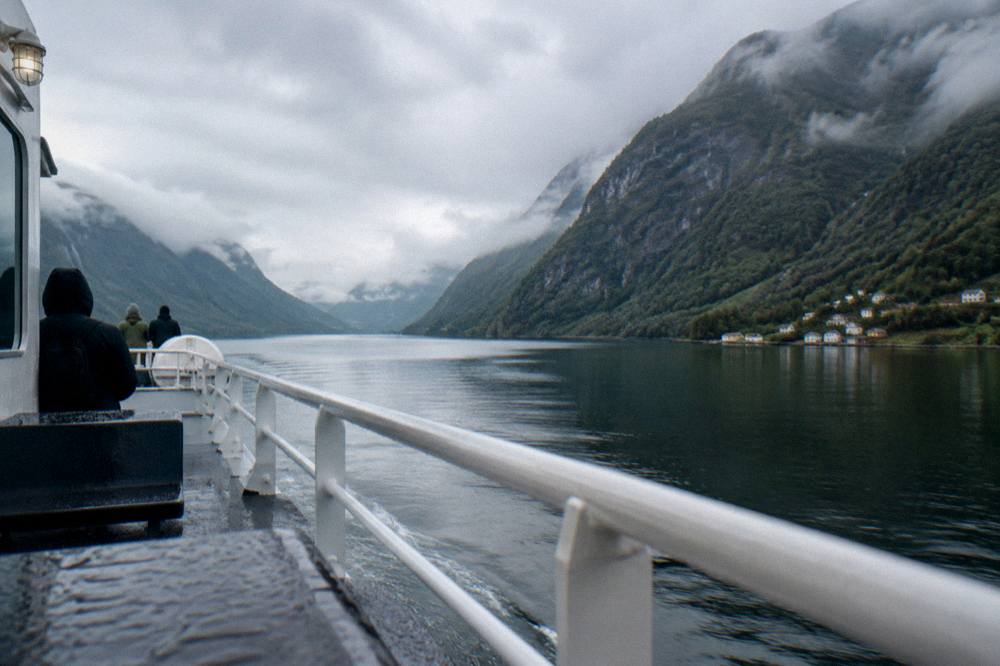
The site's fjord tours from Bergen guide lays out the full range, and the safety logic is consistent: a boat with a licensed crew on a sheltered fjord, or a train on the Flåm railway's own permanent way, carries less risk for a visitor than a rental car on wet, winding mountain roads with unfamiliar signage. For travellers who prefer structure, guided options cover the whole route; for travellers who like independence, self-guided versions use the same public infrastructure and simply hand you the tickets. Either way, the weather note from the city follows you out: fjord air is cooler than city air, and rain gear belongs in the bag in every month of the table above.
The cable car up Ulriken is the same argument at city scale: a licensed, inspected aerial lift instead of a wet mountain trail, with the 435 NOK adult return ticket confirmed on the operator's own price page.
Is Bergen Safe Compared With Other Norwegian Cities?
Yes, and no sourced crime statistic contradicts it. Bergen is a small, orderly city whose safety profile matches the rest of urban Norway, and the practical differences between Bergen and Oslo for a visitor concern size and layout, not personal safety. Whichever you choose, the hazards are the same: wet surfaces, dark winter afternoons and exposed trails, all of which are preparation problems.
The site's answer page on Oslo versus Bergen covers the comparison from a sightseeing angle, and the safety logic follows it. Bergen is smaller and hillier; Oslo is larger and flatter. Both share the same national conditions: a temperate coastal-influenced climate on the west where rain dominates, universal card payment, excellent English, and an emergency system that treats visitors well but bills them afterwards. Bergen's distinguishing safety feature is its amphitheatre of mountains, which is both its main attraction and its main source of minor incidents, so the two pieces of advice that travel with any visitor here are the two this guide has repeated: check the forecast before you gain altitude, and keep grip underfoot.
For reading around the rest of the trip, the site's pages on Bergen in summer, Bergen at Christmas and flights to Bergen cover the seasons and the arrival logistics, and the packing side of safety, what to actually put in the bag for 217 days of annual precipitation, sits in the what to pack for Bergen guide.
Common Questions About Bergen Safety
Is Bergen safe at night?
Yes. Central Bergen stays quiet and lit after dark, violent crime against visitors is rare, and the practical night-time hazards are wet pavements and early winter darkness rather than people. Ordinary city caution around late-night bars is enough; there is no central area a visitor needs to avoid.
Is Bergen safe for solo female travellers?
Yes. Norway is one of the world's most gender-equal societies and street harassment is uncommon in Bergen. The safety advice that actually matters for solo visitors is environmental: carry rain layers, hike in daylight, tell someone your route if you go up a mountain, and keep your phone charged.
Is there pickpocketing in Bergen?
Opportunistic theft exists wherever cruise crowds gather, so keep your bag closed along the Bryggen waterfront on busy ship days, but no sourced pickpocket figure exists for Bergen and the city has no established street-scam scene. Ordinary precautions are sufficient.
Is Bergen safe to walk around in winter?
Yes, with the right footwear. Winter rain and freeze-thaw glaze the cobbles and timber walkways, so lugged soles or studded overshoes are the standard local solution. Temperatures in the city rarely sit far below freezing, but the coastal damp makes cold feel sharper than the number suggests.
Is it safe to hike the mountains above Bergen?
Yes in clear weather, with preparation. The trails up Fløyen and Ulriken are well used but unlit and exposed, and Met Norway's table shows 217 days with precipitation in the trailing 13 months, so conditions change fast. Check yr.no's forecast, hike in daylight, carry rain layers, and in winter verify summit conditions before choosing to walk down.
What is the emergency number in Bergen, Norway?
Norway operates a single national emergency service reachable from any phone, including foreign mobiles, alongside a dedicated medical emergency line and a non-urgent health advice service. Confirm the emergency number on an official Norwegian source or your hotel's posted information before you travel, and make sure your travel insurance details are saved in your phone, since care for non-residents is billed afterwards.
Bergen is, in the end, a city where the safety checklist is short: insurance before you fly, grip on your feet from October to March, a forecast check before you gain altitude, and a closed bag in the cruise-day crush. Everything beyond that is the same ordinary city sense that serves you anywhere, applied in a place where the police are mostly idle and the rain is not.