Bergen Camping Park Norway
Camping is one of the most affordable ways to stay in Bergen, Norway, and the city is small enough that a pitch on the outskirts still leaves the harbour, the museums and the fjord tours within easy reach by bus or light rail.
Short answer
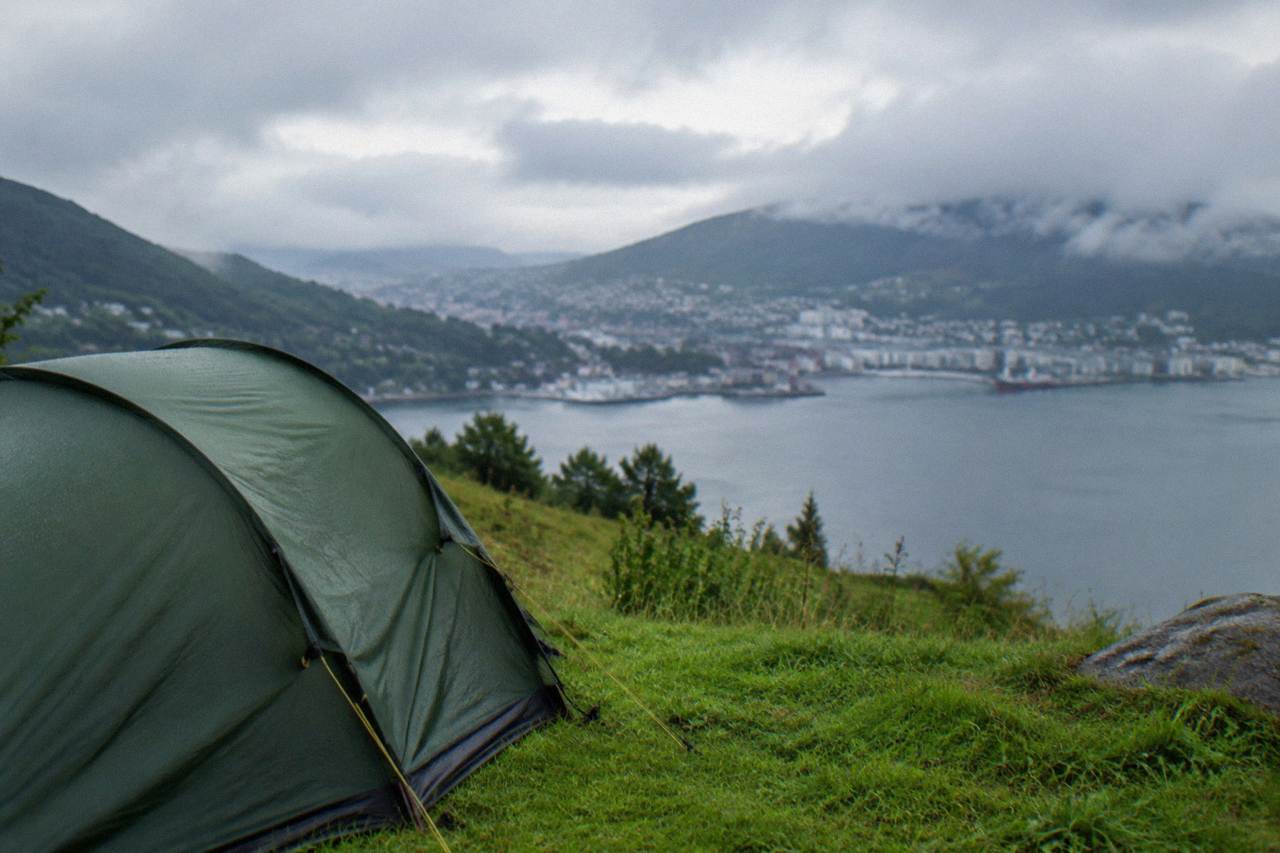
Bergen camping parks range from city-edge sites with full facilities to basic fjord-side pitches further out in Vestland county. A Bergen Camping Park Norway trip works best as a base strategy: sleep at the campsite, use the Skyss bus and Bybanen light rail to reach the centre, and spend at least one full day out on the fjords.
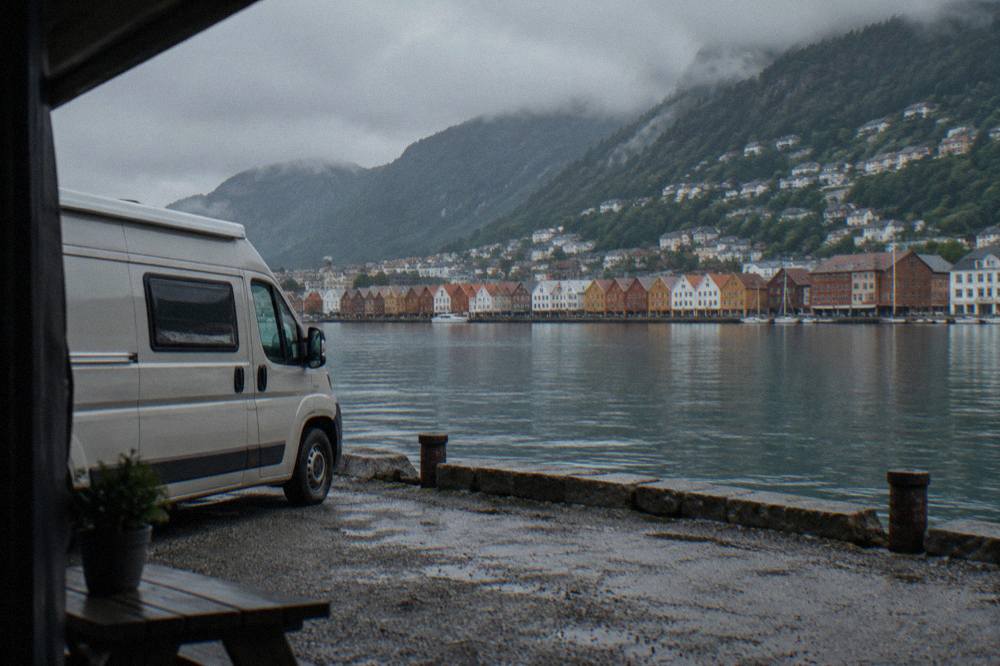
Bergen, in Vestland county on Norway's southwestern coast, is one of Europe's most rewarding cities to camp near: the former Hanseatic trading post sits wedged between seven mountains and the sea, and nearly every campground in the wider area puts you within a bus ride of the harbour at Bryggen, the UNESCO-listed wharf inscribed in 1979. This guide covers what a Bergen Camping Park Norway trip actually involves, from choosing a pitch and budgeting a daily spend to getting into the centre without a car and picking the right season.
What Is Camping Near Bergen, Norway Actually Like?
Camping around Bergen splits into three rough rings: a handful of city-edge campsites with full facilities, a wider band of fjord-side and farm pitches scattered through the islands and valleys of Vestland, and remote spots reachable only by boat or long trail. The climate is temperate oceanic, wetter than most of Norway, with yr.no's Bergen station table showing monthly means from -1.4C in January to 14.9C in July and 217 days with precipitation over the trailing 13 months.
That last number is the single most important planning fact on this page. Camping here is not Mediterranean dry-camping or continental desert camping: it is waterproof, tent-friendly most of the year, and genuinely warm only in a short summer window. The same yr.no table shows the rainiest observed month in the period was November, with 321.8mm against a 275.0mm normal, while April dropped to just 65.9mm. Rain is not a reason to skip Bergen camping, but it shapes every gear decision and every pitch choice you make.
The payoff is scale. Bergen is a compact city of roughly 294,860 people (the kommune's own population page states 294,860 as of 1 January 2026), and beyond the built-up area the landscape opens almost immediately into fjord, forest and mountain. A camper who bases themselves at a campsite within the Skyss public transport network gets both worlds: cheap nights, and a single bus or light rail ride into one of Norway's most walkable historic centres. For trip logistics beyond camping, the site's Bergen trip planning guide covers flights, arrival and timing in more detail.
What the area does not offer is a desert-style wild freedom to pitch anywhere with facilities. Norwegian practice, covered in depth further down this page, gives everyone a right to roam, but organized camping with showers, kitchens and power still happens at campsites, and those are where many visitors stay. Treat a Bergen campsite as a base, not a destination, and the model works extremely well.
Which Bergen Camping Park Norway Option Suits Which Camper?
Families and first-time visitors should pick a full-service campsite near the city with a kitchen, laundry and play area; campervan travellers benefit from sites with hardstanding pitches and electricity hookups; cyclists and hikers do better at basic pitches near trailheads; and anyone planning long fjord days should weight the journey to the departure piers more heavily than on-site facilities. Campsite nightly rates are set by each individual site and are not published in this guide, so check the campsite's own current price list before booking.
That last sentence matters. Campsite prices around Bergen change seasonally, sites charge differently for tent, campervan and motorhome pitches, and many add per-person and per-vehicle fees on top. Any single figure printed here would be out of date within a season. The honest answer is that a campsite pitch is nearly always the cheapest roof in the region, well under what the hotels of central Bergen charge, and the trade is comfort and predictability.
The table below sorts the common options by traveler type rather than by name, because campsite quality shifts faster than any article can track. Use it to decide what kind of pitch you need before you start comparing individual sites.
| Camper type | Best-fit campsite type | Why it fits |
|---|---|---|
| Family with children | City-edge, full facilities | Kitchen, laundry and play space; short bus ride to the Aquarium and Fløibanen |
| Campervan or motorhome | Hardstanding pitch with electricity | Level ground, hookup, waste disposal on site |
| Tent camper, weekend trip | Sheltered grass pitch near the centre | Low cost, quick access to the Fish Market and Bryggen |
| Hiker or cyclist | Basic pitch near a trailhead or route | Short mornings, no daily inbound commute needed |
| Fjord day-tripper | Pitch near bus or light rail links | Early departures for full-day fjord tours matter more than facilities |
One structural point that surprises first-time visitors: Bergen's campsites are not clustered in one camping district the way they are in some resort towns. They sit along the shores and valleys surrounding the city, which means your real decision is not which site is best but which side of the city you want to wake up on. The direction of your planned day trips should drive the choice more than any amenity list. Anyone planning a multi-day fjord schedule should also read the site's overview of fjord tours from Bergen before committing to a pitch location.
What Does A Day Of Camping Near Bergen Cost?
A realistic camping day budget is dominated by three items: the campsite pitch (price set per site, typically the cheapest element), attraction tickets, and food. Confirmed city-side prices from the 2026 Bergen Card flyer are NOK 400 for a 24-hour adult card and NOK 100 for a child, rising to NOK 700/175 for 96 hours, including free Skyss buses and the Bybanen light rail across Vestland county, and a Skyss zone A single costs 51 NOK, visitbergen.com states.
The Bergen Card is the lever that makes a camping trip economical once you leave the pitch. Because it bundles unlimited Skyss and Bybanen travel, including the airport line, a cardholder camping anywhere on the network effectively cancels their daily transport budget for city days. The full price ladder from the official 2026 flyer, published 2026-05-12, looks like this:
| Bergen Card duration | Adult (NOK) | Child 3-15 (NOK) |
|---|---|---|
| 24 hours | 400 | 100 |
| 48 hours | 500 | 125 |
| 72 hours | 600 | 150 |
| 96 hours | 700 | 175 |
Attraction prices add up quickly without one, which is exactly the situation the card is designed for. The same flyer's ordinary-price table gives fixed figures for the headline sights, shown below. Note one caveat: KODE Art Museums is listed at 200 NOK in the flyer, but that is the Bergen Card window price, not a confirmed standalone ticket price.
| Attraction | Ordinary adult price (NOK) | Notes from the 2026 flyer |
|---|---|---|
| Fløibanen funicular return | 200 (Apr-Sep) / 145 (Oct-Mar) | Child 100 / 75 |
| Ulriken643 cable car return | 435 | Confirmed on ulriken643.no too |
| The Aquarium | 380 (Nov-Feb window) | 380/415 seasonal Mar-Oct |
| KODE Art Museums | 200 (Bergen Card price) | Standalone price not verified |
| Haakon's Hall | 120 | At Bergenhus Fortress |
| Hanseatic Museum | 160 | Includes guided visit |
| Bryggen Museum | 170 | 85 with Bergen Card |
Food is the third cost, and campers control it better than hotel guests: a campsite kitchen plus a supermarket run keeps a day's eating close to what you would spend at home, while the city's restaurants sit at Norwegian prices. The site's Bergen restaurant guide is the honest reference for what a restaurant day costs, and campers usually split the difference: cooked breakfasts at the pitch, a simple lunch, one restaurant dinner as a treat. For a fuller cost picture across accommodation types, see how expensive Bergen really is.
How Do You Get From A Campsite Into Central Bergen Without A Car?
The Skyss network is the answer: its buses and the Bybanen light rail cover the city and much of Vestland county, a zone A single costs 51 NOK, and a Bergen Card makes every Skyss and Bybanen ride free for the card's duration, including the airport line. Bybanen line 1 connects Bergen Airport Flesland to the city centre, and most campsites sit on or near a bus route that feeds into Bergen busstasjon or Byparken.
Two practical notes from the 2026 transport calendar are worth checking before you rely on the light rail. Skyss published summer maintenance windows in 2026: line 1 was suspended between Slettebakken and Byparken from 29 June to 26 July, with replacement buses running, and the Nonneseter stop has been closed in the city-bound direction since 23 February 2026 because of nearby demolition work. Neither affects the airport-to-centre spine, but if your campsite plan depends on a specific stop, check the Skyss travel planner for the dates you will actually be there. The full index of guides sits on Bergen Travel Guide.
The car-free model works better from some campsites than others, and that is a legitimate selection criterion. Before booking any pitch, find its nearest bus stop and count the connections. A site with a direct route into the centre beats a prettier site with a transfer, especially on fjord-tour mornings when the buses leave early. The site's getting around Bergen guide maps the whole system, including the ferries that extend the network across the water.
If you would rather not work out the orientation alone on day one, a private guide handles it: the Private Tour: Bergen City Sightseeing runs three hours with your own guide and is detailed on its dedicated tour page, or Check availability for current dates. Doing it early means the rest of your camping week runs on routes you already understand.
For anyone arriving by air and heading straight to a pitch, the Bergen airport guide covers the transfer options in full, including the Bybanen line 1 route from Flesland.
When Is The Best Season For Camping In Bergen, Norway?
July is statistically the warmest month at 14.9C mean and June follows at 14.4C, making the June-to-August window the classic camping season, while April is the driest recent month on record at 65.9mm and spring offers noticeably emptier campsites. Winter camping is possible but hard: January's mean sat at -1.4C with 82mm of precipitation, and the trailing-13-month temperature range ran from 28.0C at the August high to -11.3C at the January low, yr.no's Bergen station table shows.
Those extremes frame the decision. Midsummer gives long days, the warmest water for a brave swim, and the full festival calendar, but it also gives the crowds and the peak campsite rates. Shoulder months trade a few degrees for quiet pitches and mistier, moodier fjords, which many photographers actively prefer. The raw numbers for the trailing observed year:
| Month | Mean temp (C) | Precipitation (mm) |
|---|---|---|
| Sep | 13.1 | 206.6 |
| Oct | 9.7 | 231.9 |
| Nov | 6.0 | 321.8 |
| Dec | 5.8 | 303.5 |
| Jan | -1.4 | 82 |
| Feb | 0.8 | 133.4 |
| Mar | 5.9 | 243.9 |
| Apr | 7.9 | 65.9 |
| May | 9.9 | 127.4 |
| Jun | 14.4 | 165.7 |
| Jul | 14.9 | 184.2 |
| Aug | 14.3 | 243.6 |
Read the pattern rather than any single row. November and December are the wet outliers, each far above the spring months, which is why hardy Norwegian campers mostly winterize or switch to cabins then. April and February sit at the dry end of the observed year, and April in particular combines low rainfall with rising temperatures, an underused window. The full seasonal breakdown, including month-by-month trade-offs and what stays open in the cold months, is in the site's best time to visit Bergen guide.
Festival timing is a second seasonal lever. The Bergen International Festival ran 27 May to 10 June in 2026, with Bergenfest and Nattjazz overlapping that window and Bergen Pride in the same early-June stretch, per the official festival sites. Camping in that fortnight means the city fills in the evenings while your pitch stays cheap, the best of both. For winter hardiness, the Bergen in winter guide covers what stays open.
What Should You Pack For Camping In Bergen's Climate?
Pack for wet, not for cold extremes: a genuine waterproof jacket and trousers, boots with real grip, a tent with a proper hydrostatic head and a full rainfly, and quick-drying layers beat any down expedition kit. The observed trailing year never exceeded 28.0C at the high end, so heat gear is barely relevant, while 217 days with precipitation in 13 months means every single item should survive being rained on, and nothing cotton should cross the Norwegian border in your bag.
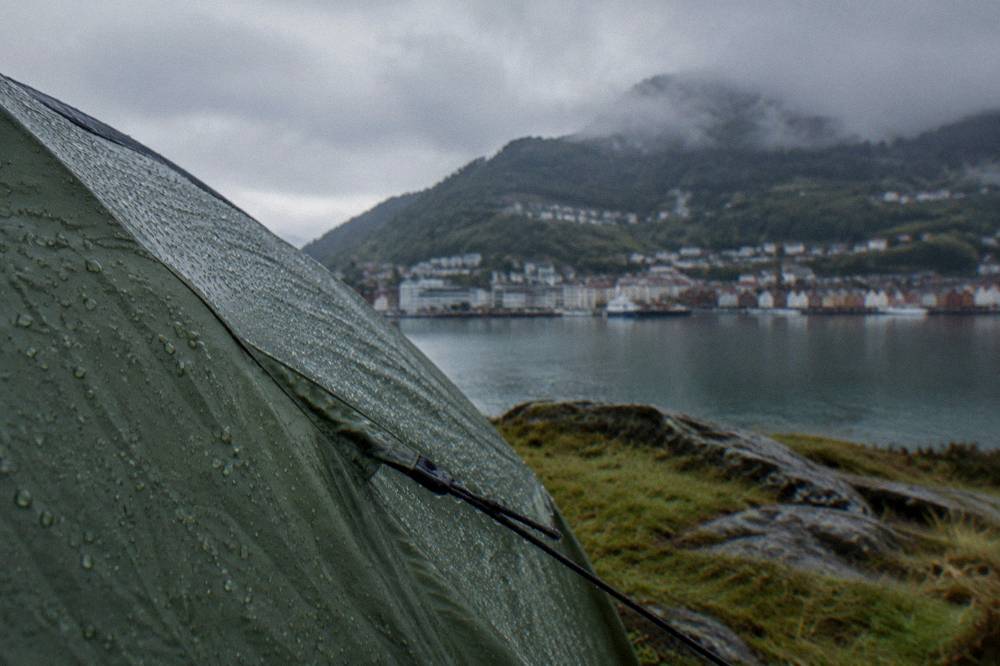
The packing logic follows directly from the weather table above. With rain possible on roughly two days in three across a year, the failure mode of a Bergen camping trip is not hypothermia, it is misery: wet socks, a soggy sleeping bag and a drowned phone. The table maps each category to the reason it earns its place.
| Category | What to bring | Why it matters here |
|---|---|---|
| Shelter | Tent with full rainfly and sealed seams | 217 precipitation days in 13 months |
| Sleep system | Synthetic or well-protected down bag | Synthetic insulates when damp |
| Footwear | Waterproof boots with aggressive tread | Wet rock, root and boardwalk trails |
| Clothing | Merino or synthetic layers, waterproof shell | No cotton; it stays wet for days |
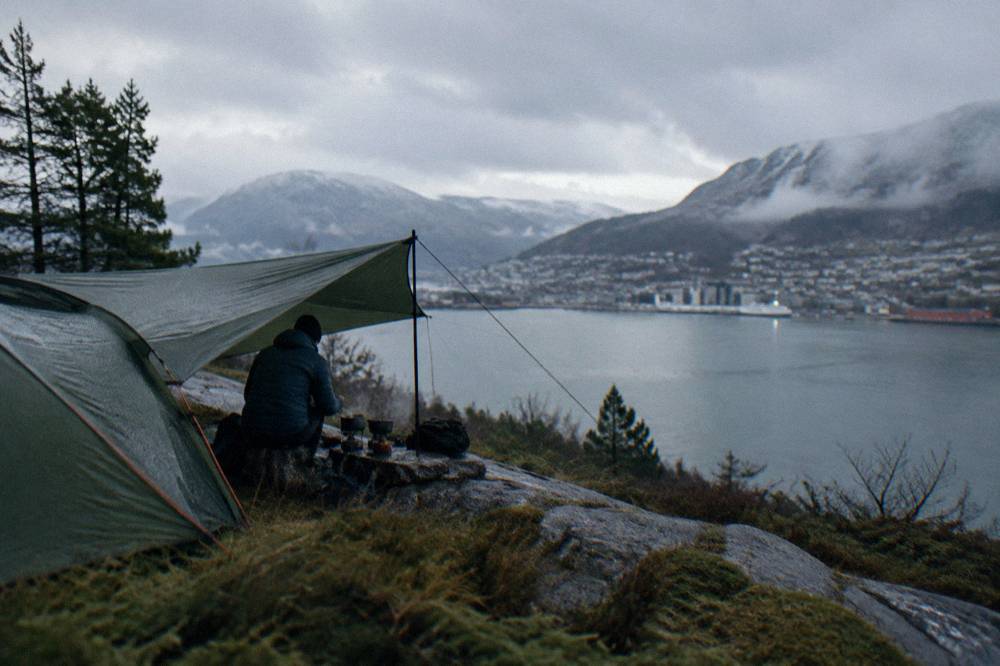
| Camp kitchen | Stove usable under a tarp or vestibule | Cooking indoors is rarely an option |
| Drying plan | Spare baselayers, a clothesline | Nothing dries itself in this climate |
| Power | Sealed power bank, dry bags | Rain reaches everything eventually |
The item many travelers regret skipping is the second set of baselayers. With limited drying opportunities at a basic pitch, one wet afternoon can end a whole trip's comfort if there is no dry layer left. A full item-by-item checklist, including city clothing that works between the museum and the campsite, is in the site's Bergen packing guide and its companion piece on Bergen weather.
Can You Camp Anywhere In Norway, Or Only At Bergen Campsites?
Norway's right to roam, allemannsretten, permits tenting on uncultivated land for a night or two away from houses and built-up areas, and it applies around Bergen as anywhere else in the country, but it covers tents and self-sufficiency only: it does not grant campervan overnighting on private ground, campfires in dry seasons, or any facilities whatsoever, and it places the full responsibility for fire safety, litter and distance from dwellings on the camper.
The distinction that matters for a Bergen trip is between the right to roam and the camping-park product this page is about. The right to roam is a legal tradition, free, and facility-free: you carry everything, you leave nothing. A Bergen camping park is a paid product with showers, kitchens, waste disposal and a bus stop nearby. Most first-time visitors to the region should book the paid option for most nights and perhaps spend one deliberate night under the right to roam in a spot they have properly scouted, rather than the reverse.
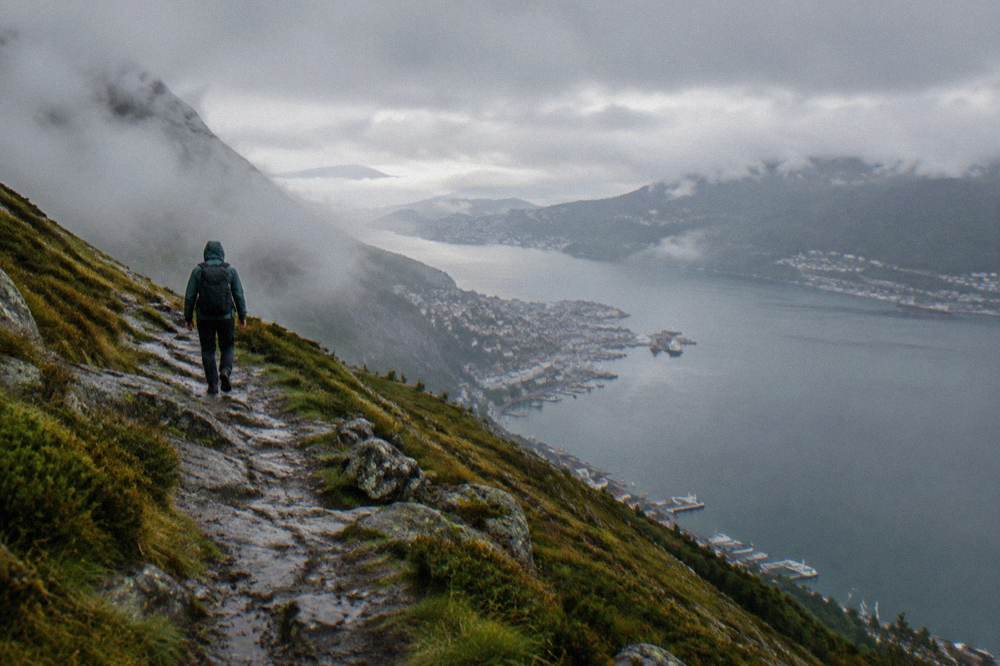
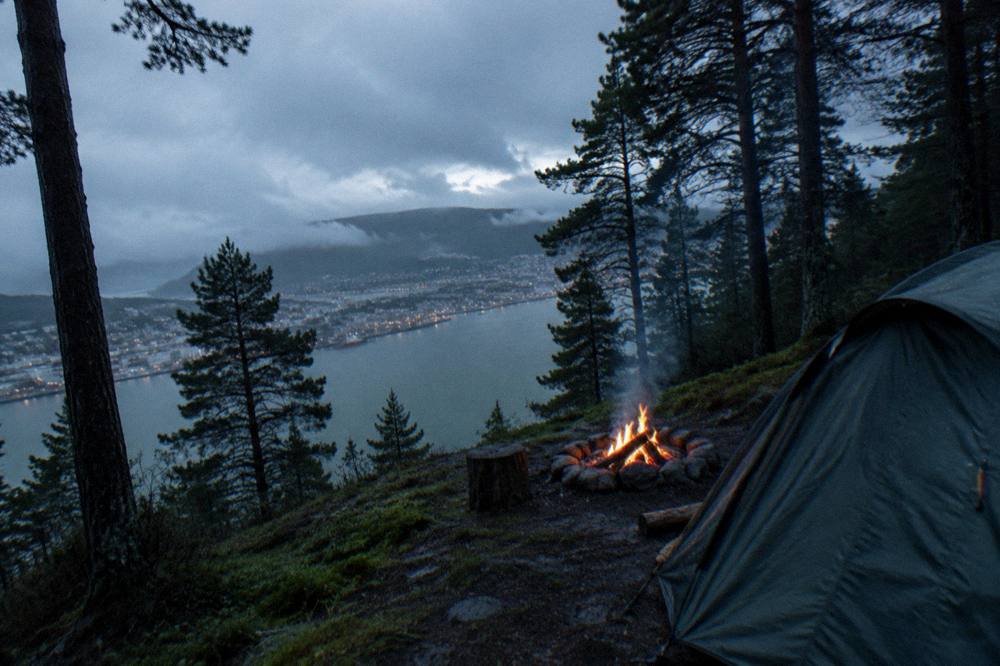
Practical limits around Bergen itself: the city and its immediate shorelines are built-up, so open land suitable for a legal wild pitch sits further out in Vestland, often requiring a hike or a boat, and the weather table above applies doubled once you are exposed on a mountainside with no drying room. Fire rules follow local bans, which are posted in dry periods. Campers who want long-distance routes with legal overnight stops should start from the site's Bergen hiking guide, which covers the trail network radiating from the city.
What Can You Do From A Bergen Campsite Base?
A campsite base splits the week cleanly: city days for Bryggen, the museums, Fløibanen and Ulriken, and fjord days using the full-day departures that leave from the harbour. The Mostraumen fjord cruise runs roughly 3.5 hours and fits an afternoon, while Sognefjord and Hardangerfjord tours take most of a day, so the real planning rule is to group your long days together and keep a flexible city day in reserve for whatever the weather ruins.
The mountains on your doorstep are the cheapest entertainment of the week. Fløibanen returns cost 200 NOK in the April-to-September window and 145 NOK from October to March per the 2026 flyer, and Ulriken643's return is 435 NOK, but both mountains also have walking routes up for anyone camped and booted already. Museum days can be built around the Aquarium, KODE and the Hanseatic quarter, and the Bergen Card guide works through exactly when the card pays for itself on that kind of schedule.
Two long-haul options deserve a special place in a camping week, because they turn the campsite into a genuine expedition base. The first is a private day tour to the Vøringsfossen waterfall and Kjeåsen, a private trip into the Hardanger interior:
The second is the two-day Grand Sognefjord round trip covering fjords, waterfalls and a glacier, the region's most complete overnight fjord itinerary and a natural fit for campers who already have their sleeping kit with them:
Either one pairs well with a day of guided sightseeing in the city itself, and the private city tour that anchors this page's recommendations runs three hours with a private guide:
Between those two styles of day, the practical rhythm of a camping week emerges: long fjord days that exhaust you and send you back gratefully to a quiet pitch, alternating with soft city days when the rain does its worst. The trio below pulls the three options together in one place for anyone building that kind of mixed schedule.
Is Camping Near Bergen Good For Families And Beginners?
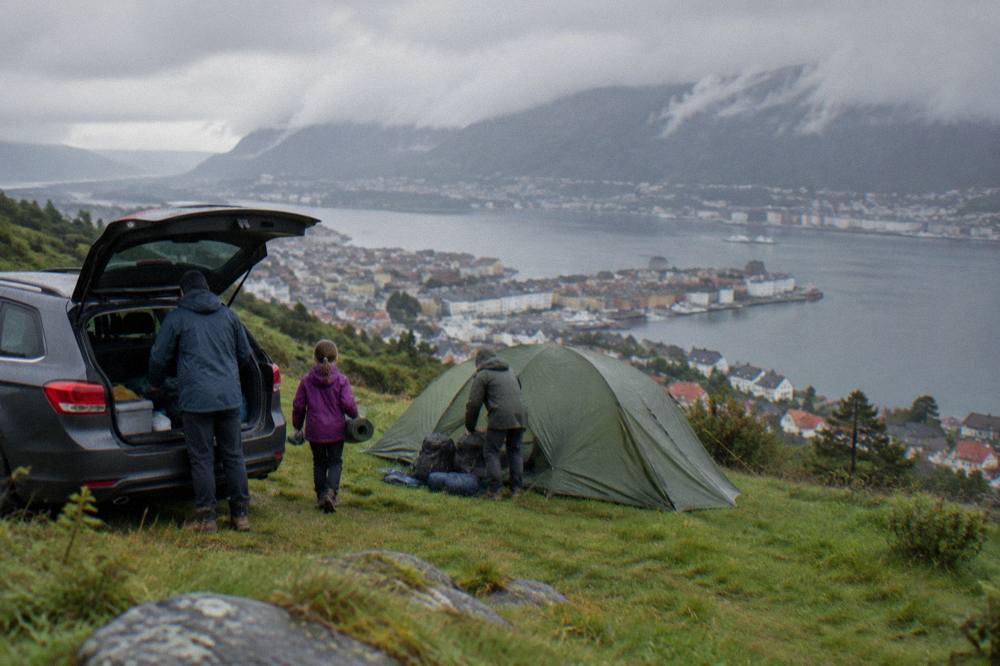
Yes, with one condition: families should book full-service, city-edge campsites rather than remote pitches, because the facilities, the short bus ride to the Aquarium and Fløibanen, and the escape hatch of a warm common room matter more with children than any scenic payoff. Beginners should treat their first Bergen camping stay as a two- or three-night trial, not a week-long commitment, and keep one night pre-booked in town as a weather fallback.
The child-specific arithmetic favours camping here more than in most destinations. The Aquarium's ordinary adult entry is 380 NOK in the winter window per the 2026 flyer, Fløibanen's child return is 100 NOK in the main season, and the Bergen Card's child prices, from 100 NOK for 24 hours, cover transport and most museums in one figure. A family that sleeps at a campsite and spends on attractions rather than accommodation gets a Bergen trip that is dramatically cheaper than the hotel version of the same week.
Beginners benefit from the same gradual approach. Pitch first at a site with a shop and a kitchen, learn the Skyss routes on a soft city day, and only then move outward toward the more basic fjord-side pitches. The site's Bergen with kids guide covers the child-facing side of the city in full, and campervan families arriving from Oslo may find the Oslo to Bergen train guide useful for the inbound leg, since a rail arrival plus a rented campervan is a common two-part plan.
Common Questions About Camping Near Bergen
Can you camp for free near Bergen, Norway?
Norway's right to roam allows free overnight tenting on uncultivated land, at a distance from houses, for a night or two, and it applies around Bergen. It provides no facilities, no campervan overnighting on private land and no fire rights during local bans, so many visitors combine one scouted free night with paid campsites for the rest of the trip.
Are there campsites inside Bergen city?
Organized campsites sit in the areas surrounding the built-up centre rather than inside it, typically along the shores and valleys on the city's edges. From most of them, Skyss buses or the Bybanen light rail reach the centre in a single ride, and a Bergen Card makes those rides free for the card's duration.
How much does a campsite near Bergen cost per night?
Nightly rates are set individually by each campsite and vary by season, pitch type and vehicle, so this guide deliberately prints no figure. Check the campsite's own current price list before booking. As a rule of thumb, a pitch is the cheapest roof in the region, well below central Bergen hotels.
Is it too rainy to camp in Bergen?
No, but it is too rainy to camp unprepared. yr.no's Bergen station table shows 217 days with precipitation over the trailing 13 months and a wettest observed month of 321.8mm in November, against a mildest profile in April at 65.9mm. With a proper tent, shell clothing and spare layers, rain is an inconvenience, not a dealbreaker.
Do Bergen campsites open in winter?
Opening seasons vary by site and many Norwegian campsites reduce to cabin-only service or close in the deepest winter months. January's observed mean of -1.4C with an extreme low of -11.3C in the trailing period makes winter camping possible but a specialist activity. Confirm directly with the campsite for winter dates before planning a cold-season stay.
Can you reach the fjords from a Bergen campsite by public transport?
Partly. Skyss buses and the Bybanen get you into central Bergen and across much of Vestland, and the Bergen Card covers them, including the airport line. The full-day fjord tours, however, depart from central locations on their own schedules, so the practical pattern is a bus or light rail ride into town first, then the tour's own departure.
A Bergen Camping Park Norway trip, done right, is less about the campsite than about what the campsite unlocks: the same harbour, mountains and fjords the hotel guests see, at a fraction of the nightly cost, with a stove of your own and a pitch you can return to each evening. Choose your side of the city by your day trips, arm yourself against the rain rather than the thermometer, and let the Skyss network carry the rest.