What To Pack For Bergen
Bergen, on Norway's southwestern coast, is one of Europe's wettest cities, so what you pack decides whether you enjoy it or merely survive it.
Short answer
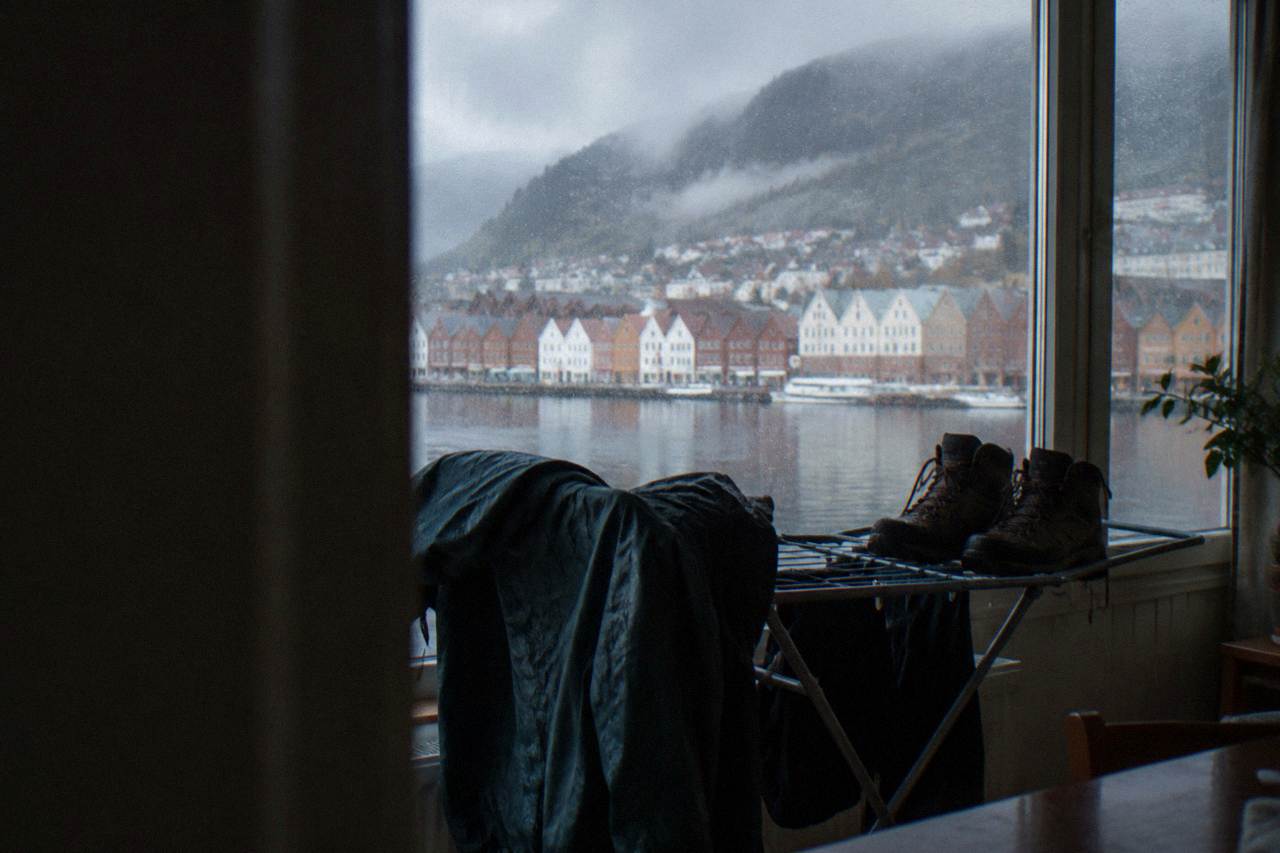
Pack a genuinely waterproof shell jacket, a mid-layer, and broken-in shoes with grip: Met Norway data shows Bergen had 217 days with precipitation in the trailing 13 months and monthly averages from -1.4C to 14.9C, so plan for rain on any date and layer for everything else.
Bergen, a city and municipality in Vestland county on Norway's southwestern coast, rewards travelers who pack for weather rather than for a season. yr.no's Bergen station table, which carries Met Norway data, shows a trailing 13 months with 217 days of precipitation and monthly average temperatures swinging from -1.4C in January 2026 to 14.9C in July 2026, with a recorded high of 28.0C on 14 August and a low of -11.3C on 8 January. That range means the same city can ask for a sun hat in July and serious insulation in January, and rain can arrive in any month of the year. The former Hanseatic trading post, whose Bryggen wharf has been on the UNESCO World Heritage List since 1979, is also a vertical city: the streets climb quickly from the harbor toward Mount Fløyen, so footwear matters as much as the jacket. This guide lays out what to pack for Bergen month by month, what to wear on the hills and boats, and what to leave at home.
What Weather Should You Pack For In Bergen, Norway?
You are packing for a temperate oceanic climate that is wetter than most of Norway: Met Norway data via yr.no shows monthly precipitation normals between about 109mm in May and 290mm in December, 217 days with precipitation across the trailing 13 months, and monthly average temperatures from -1.4C to 14.9C. Rain, not cold, is the constant. The wrong packing mistake in Bergen is almost always an unlined jacket, not a missing parka.
The monthly picture is worth internalizing before you touch your suitcase. The yr.no statistics table for the Bergen station records observed means of 14.9C in July 2026, 14.3C in August, 13.1C in September, and then a slide through 9.7C in October to 6.0C in November and 5.8C in December. Winter sits close to freezing, -1.4C in January and 0.8C in February, before spring climbs back through 5.9C in March and 7.9C in April. For a deeper look at how these numbers translate into trip planning, the site's guide to Bergen weather month by month breaks the year down in full.
Two details surprise first-time visitors. First, precipitation does not pause in summer: June 2026 saw 165.7mm of rain and July 184.2mm, so a summer trip needs the same shell as a winter one. Second, the wettest months in the observed table were November, at 321.8mm, and December, at 303.5mm, while April was the driest at 65.9mm. The site's guide on the best time to visit Bergen uses the same data to identify the driest booking windows.
| Month | Observed mean temp | Observed precipitation | Precipitation normal |
|---|---|---|---|
| Aug | 14.3C | 243.6mm | 208.0mm |
| Sep | 13.1C | 206.6mm | 248.0mm |
| Oct | 9.7C | 231.9mm | 268.0mm |
| Nov | 6.0C | 321.8mm | 275.0mm |
| Dec | 5.8C | 303.5mm | 290.0mm |
| Jan | -1.4C | 82.0mm | 256.0mm |
| Feb | 0.8C | 133.4mm | 209.0mm |
| Mar | 5.9C | 243.9mm | 202.0mm |
| Apr | 7.9C | 65.9mm | 141.0mm |
| May | 9.9C | 127.4mm | 109.0mm |
| Jun | 14.4C | 165.7mm | 132.0mm |
| Jul | 14.9C | 184.2mm | 158.0mm |
What Clothes Should I Pack For Bergen, Norway?
Pack a three-layer system built around a properly waterproof shell jacket with a hood, a warm mid-layer such as a fleece or wool sweater, and a quick-drying base layer, and plan for roughly 7 to 13C in the shoulder seasons, near-freezing winter days, and mild but showery summers around 14 to 15C. Merino wool is the single most useful fabric you can bring, because it keeps insulating when the rain reaches it.
The shell is the piece that matters most. A water-resistant jacket will not survive a November week in this city; the Bergen Card flyer alone lists 24-hour prices of NOK 400 for an adult, and you do not want to spend your visit ducking between shops instead of walking Bryggen. Look for taped seams, a storm flap over the zip, and a hood deep enough to hold its shape in wind. Rain trousers are optional in summer, close to essential from October through March, and they double as wind protection on the fjord boats, where the combination of open water and moving vessel chills faster than the air temperature suggests.
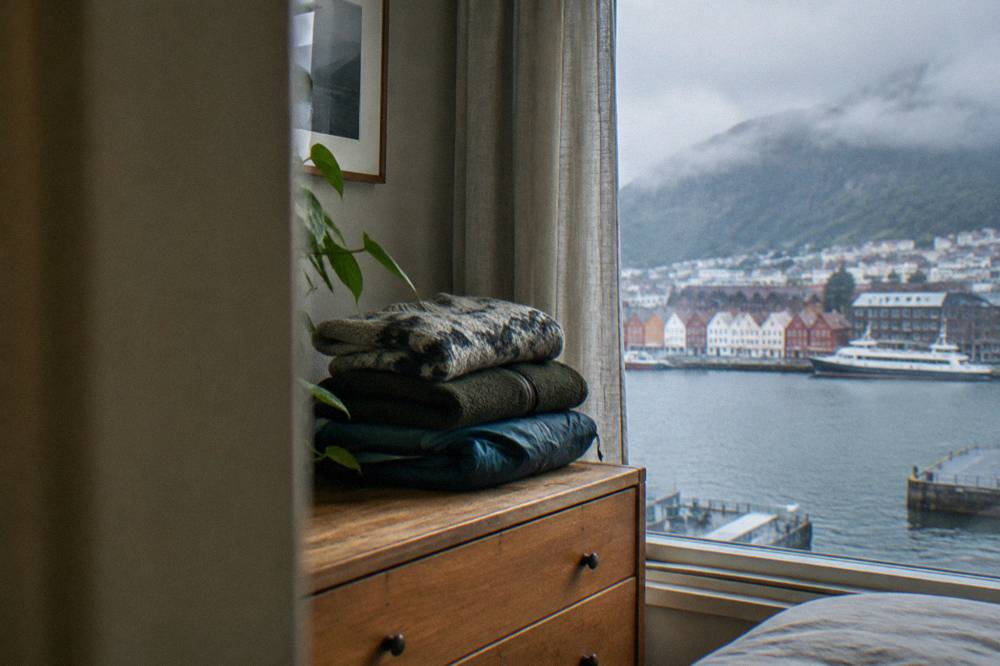
Under the shell, think wool rather than cotton. A merino base layer plus a mid-weight fleece covers everything from a July evening at 14C to a January afternoon at -1.4C, and both dry overnight in a heated hotel room, which cotton never reliably does. Add one insulating sweater for evenings, one pair of wool socks per day of the trip, and a scarf that can serve as a neck layer on the boat and a cushion on the bench. The question of denim comes up constantly; the site's answer on whether you can wear jeans in Norway covers the tradeoffs, and the short version for Bergen is that jeans are fine for the city if you accept they will stay wet for hours.
| Layer | What To Bring | What It Does In Bergen |
|---|---|---|
| Base layer | Merino or synthetic long-sleeve top, 1-2 | Keeps warmth when damp, dries overnight |
| Mid-layer | Fleece jacket or wool sweater | Core insulation from -1.4C winter to cool summer evenings |
| Shell | Waterproof hooded jacket, taped seams | The single most important item, for 217 wet days a year |
| Lower body | Quick-dry trousers, optional rain trousers | Keeps legs functional in sustained rain and on boats |
| Accessories | Wool socks per day, hat, gloves, scarf | Small items that carry most of the comfort at the extremes |
Bergen is compact enough that you will rarely be far from your hotel, and that shapes the list: you can pack lighter than you would for a rural Norwegian itinerary and top up layers during the day. The site's planning a trip to Bergen guide covers the itinerary side of that equation, and where to base yourself is covered in where to stay in Bergen, which matters because the city centre makes midday layer swaps easy.
How you spend your evenings also changes what hangs in the wardrobe. A food tour that moves between six or seven stops keeps you walking and warm; the listing for the A Taste of Bergen Food Tour with Fløibanen Funicular pairs tastings with a ride up the mountain, so the same jacket you wore at sea level needs to be comfortable at the top.
What Footwear Handles Bergen's Hills And Rain Best?
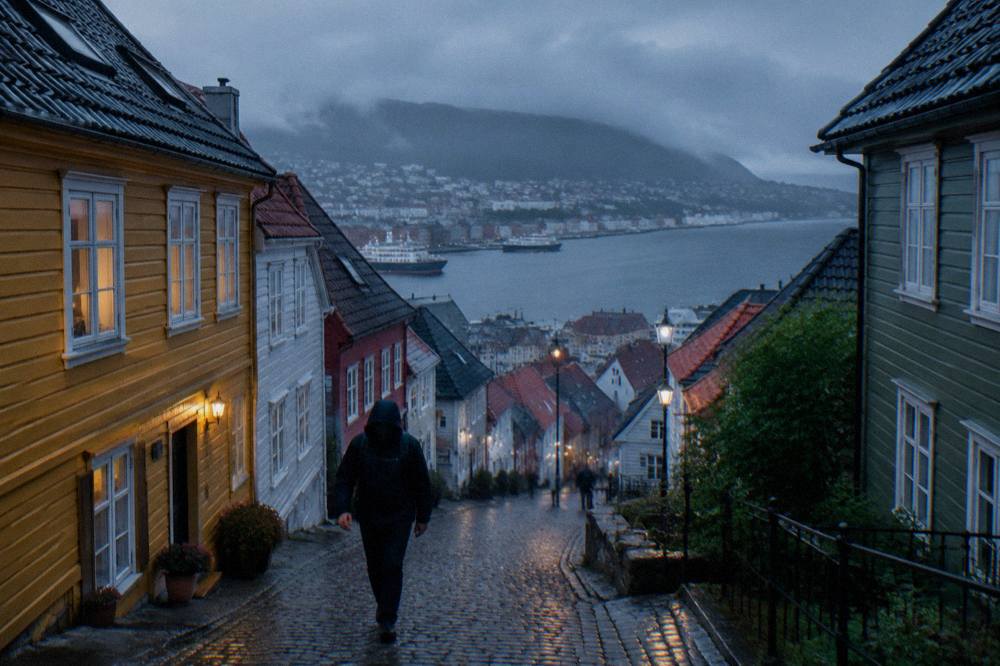
Bring one broken-in pair of waterproof shoes or boots with real grip and one lighter pair for indoors, because Bergen's streets climb steeply from the harbor toward Fløyen, cobblestones stay slick in the rain that falls on 217 of the trailing 13 months' days, and a blister on day one will cost you the rest of the trip. New boots belong nowhere in this suitcase.
The terrain does the arguing here. Walking from the Fish Market up toward the Fløibanen lower station, or across the hanseatic lanes of Bryggen, you cross pitched cobbles, polished stone, and wooden planking, all of which film with water within minutes of rain starting. A sole with deep lugs handles all three; a smooth city sole handles none of them once the surface is wet. Mid-height boots also reduce the ankle fatigue of the climbs around Sandviken and the paths above the Stoltzekleiven trail, which the site's hiking in Bergen guide covers in detail for anyone planning to go beyond the streets.
Pack a second, lighter pair for museums and restaurants. Norwegian homes and many smaller venues expect you to be comfortable, and a full day in wet boots ends better if the evening pair is dry and soft. This is also the swap that saves the trip when the first pair is drying on the hotel radiator after a November day.
| Footwear | Best Months | Why It Works In Bergen |
|---|---|---|
| Waterproof ankle boots, lugged sole | Year-round, essential Oct-Mar | Grip on wet cobblestone and planking, support on steep streets |
| Trail shoes, water-resistant | Apr-Sep | Lighter for summer walking, still handles the rain film |
| Indoor or evening pair | Year-round | Dry comfort while the day pair dries |
| Sandals | Jul-Aug only | Viable on the warmest observed month, 14.9C mean, risky on wet stone |
One packing habit that earns its space: a small dry bag or even a plastic bag for the wet pair, so the dry pair and the rest of the case stay dry on the flight home.
What Should You Pack For A Fjord Day Trip From Bergen?
For a fjord day trip from Bergen, pack your shell jacket plus rain trousers, a warm hat and gloves regardless of summer, a fully sealed dry bag for electronics, motion-sickness tablets for open water, and a packed snack or planned meal stop, because fjord boats run for hours in moving air that feels several degrees colder than the harbor, and most longer tours spend the whole day away from the city.
The physics is unforgiving on the water. A July mean of 14.9C in town becomes a wind-chilled ride on a boat doing twenty knots down a fjord, and the Mostraumen and Hardangerfjord routes both include stretches where the only shelter is the cabin. Layers you can add without leaving the deck beat a single thick coat every time. The site's overview of fjord tours from Bergen covers which routes suit which travelers, and the practical packing logic is the same across all of them: assume rain, assume wind, and protect anything electronic.
Day trips are also long days. Options in the site's roster run from a Rosendal cruise to full-day Sognefjord and Nærøyfjord combinations, so a small daypack with water, a top-up layer, and any personal medication belongs in the plan alongside the tickets. One of the most dramatic options pairs a private drive with the Voringsfossen waterfall, and the tour listing carries its own duration and pricing details.
| Item | Fjord Day Trip Use | Notes |
|---|---|---|
| Shell jacket with hood | Deck time in wind and spray | Non-negotiable in every month |
| Rain trousers | Sustained showers on open water | More useful on boats than umbrellas |
| Warm hat and gloves | Wind chill on the fjord | Even in July, mean 14.9C on land |
| Sealed dry bag | Phone, camera, documents | Spray and rain reach every deck |
| Motion-sickness tablets | Open-water stretches | Take before boarding, not after |
| Snacks and water | Long itineraries, sparse stops | Full-day tours outlast café hours |
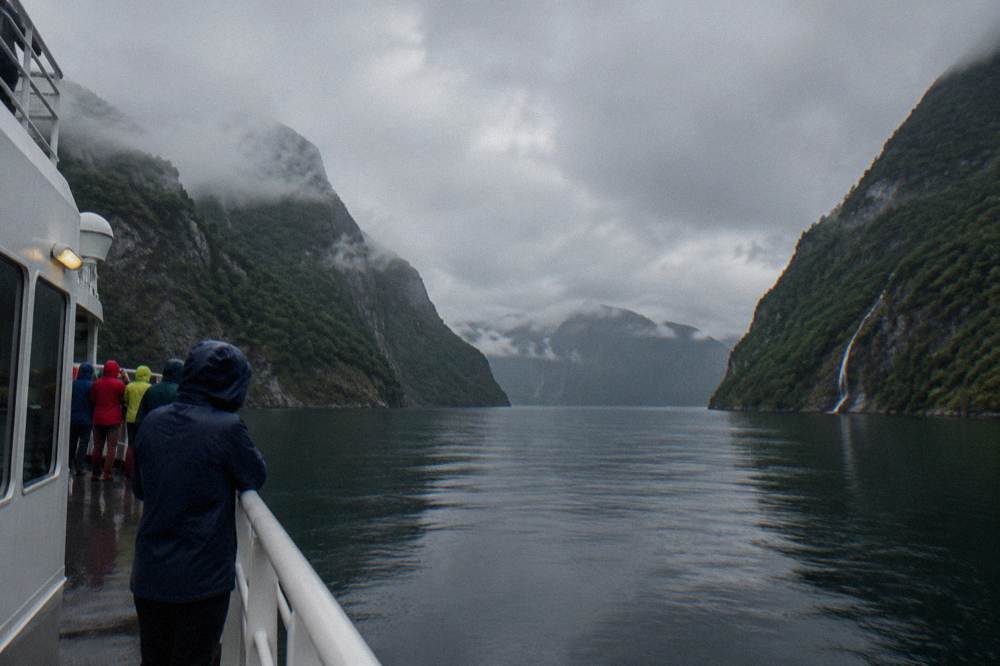
Umbrellas, for the record, are close to useless on the fjords and marginal even in the city, where the same coastal wind that follows you up the mountain flips a brolly inside out on Torgallmenningen square. The shell-and-hood combination does everything the umbrella was supposed to do, and it keeps both hands free for the boat rail and the camera.
How Does Packing Change Between Seasons In Bergen?
In summer you pack around means of 14.4C to 14.9C and keep the shell for 165mm-plus of monthly rain; in winter you pack for -1.4C means, possible lows near -11.3C, and shorter, darker days; and the shoulder seasons of April-May and September-October sit in the 6-13C band where layering does the most work, with April the driest observed month at 65.9mm and November the wettest at 321.8mm.
Summer visitors reliably under-pack warmth. A Bergen July feels mild at midday, but evenings on the harbor front and any time above the treeline drop toward single figures, and June and July each recorded more than 160mm of observed rain in the current table. The fix is simple: the summer case gets the same shell as the winter case, one mid-layer, and a light hat, and it skips the insulated gloves and the thermal base layer. The full index of guides sits on Bergen Travel Guide.
Winter is the reverse problem, over-packing for cold that rarely goes extreme. The observed January mean was -1.4C and the recorded low was -11.3C on 8 January, which is genuinely cold but not continental-Arctic cold, so a real insulated parka is often overkill over a good mid-layer and shell. What winter actually demands is the waterproof layer, because December's 303.5mm of rain arrives mostly as cold rain and sleet that soaks through anything less than a sealed shell. The site's guide to Bergen in winter covers what the season looks like on the ground.
| Season | Typical Observed Means | Key Packing Shifts |
|---|---|---|
| Winter, Dec-Feb | -1.4C to 5.8C | Thermal base layer, insulated gloves, waterproof boots, no umbrella |
| Spring, Mar-May | 5.9C to 9.9C | Full layering system, April is the driest observed month at 65.9mm |
| Summer, Jun-Aug | 14.3C to 14.9C | Lighter base layer, keep the shell, light hat, skip rain trousers on short visits |
| Autumn, Sep-Nov | 6.0C to 13.1C | Warmest mid-layer, November is the wettest observed month at 321.8mm |
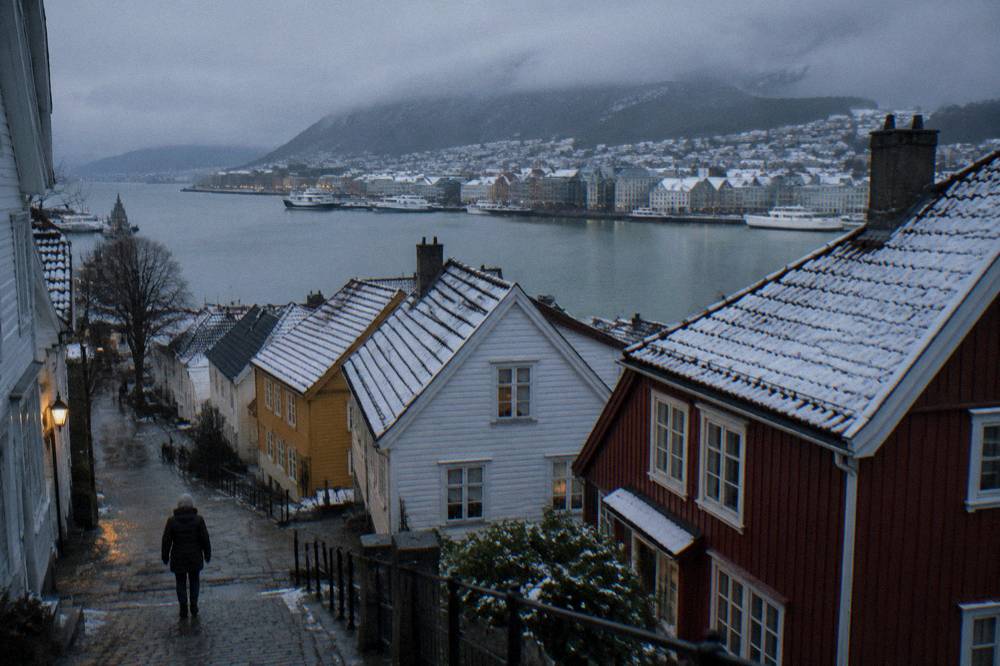
Autumn is the season that catches visitors out. September still averages 13.1C and feels like an extension of summer, but the table shows 206.6mm of observed rain, and by November the city takes 321.8mm and averages just 6.0C. Anyone booking an autumn trip should pack as if for late winter in most of Europe and then remove one layer.
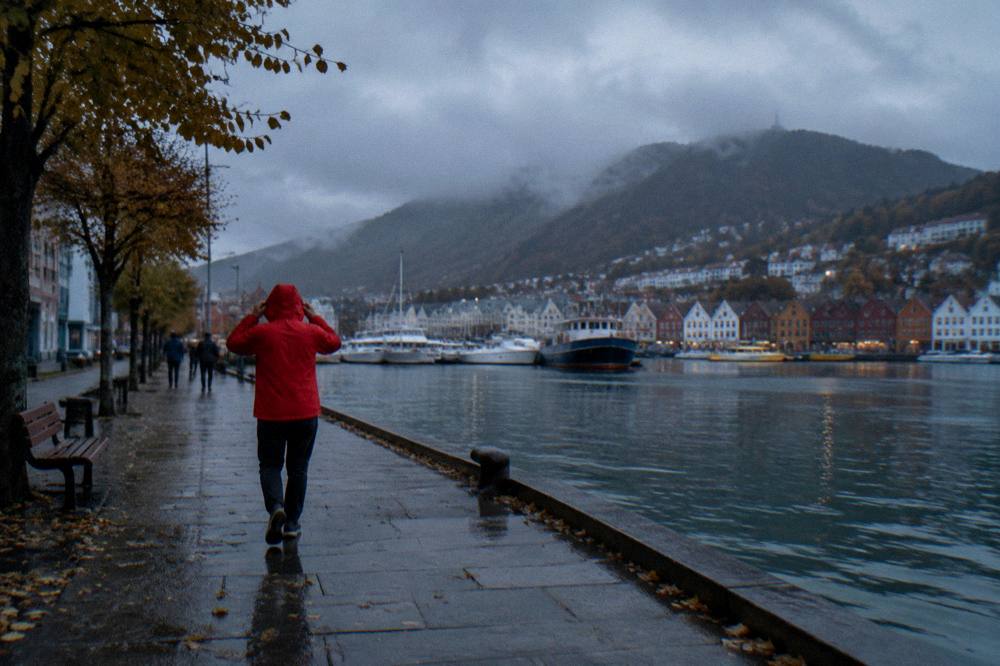
What Should You Pack For Hiking Around Bergen?
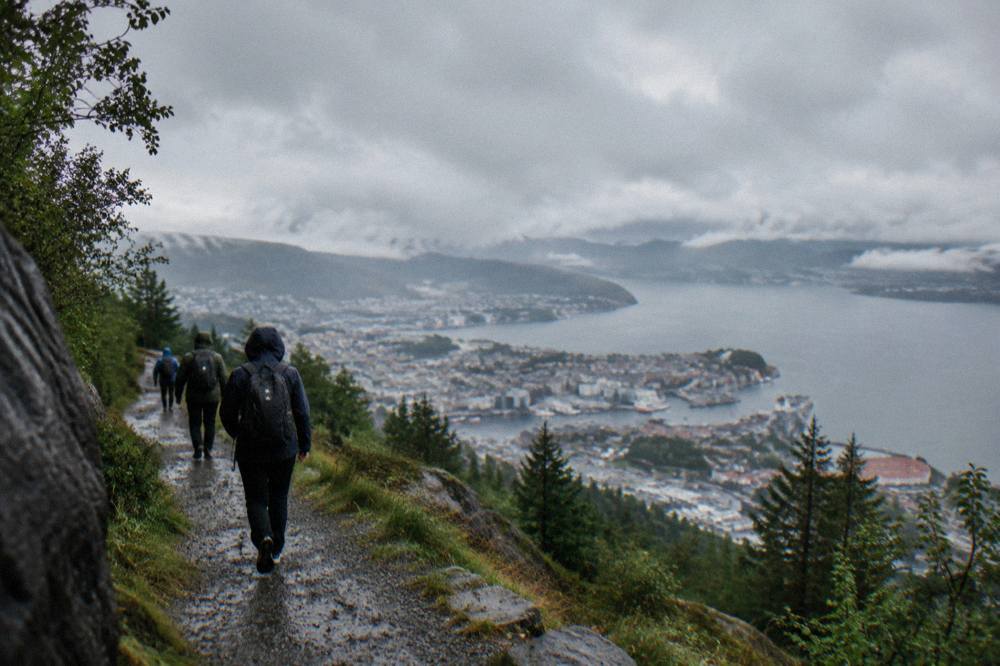
For hiking around Bergen, pack proper boots with ankle support, a base layer you can sweat in, the same waterproof shell you use in town, a warm layer for summits, and a small first-aid kit, because trails like the climb toward Fløyen rise several hundred meters above streets that may be at 14C while the exposed top is wet, windy, and near single figures, in a region where 217 of the trailing 13 months' days carried precipitation.
The mountain system directly above the city is what makes Bergen unusual among European city breaks. Fløibanen carries visitors up Mount Fløyen, whose round-trip ticket the official Bergen Card flyer lists at 200 NOK for an adult from April through September and 145 NOK from October through March, and Ulriken643 serves the city's highest of the seven mountains at 435 NOK return, but once you are up there, the trails run for hours across open ground where the weather that felt mild at sea level turns horizontal. The site's hiking in Bergen guide covers the routes; the packing logic is that the summit layers need to work when they are wet.
That means merino or synthetic rather than cotton next to the skin, a hat and gloves even on a July hike, and enough water for trails where streams may be running but signage is in Norwegian first. A headlamp earns its grams outside the summer months, since winter afternoons end early and a delayed descent in the dark is the classic avoidable mistake.
What Should You Leave At Home When Packing For Bergen?
Leave behind the umbrella, the single thick coat that replaces layering, cotton jeans as your only trouser option, dress shoes with smooth soles, and more than two pairs of shoes total, because each of these fails against Bergen's specific combination of 217 wet days in the trailing 13 months, steep streets, and a compact centre that rewards mobility over outfit changes.
The umbrella deserves its own line in the rejection pile. Coastal wind follows the harbor up the main streets, and the rain in Bergen is frequently the sideways kind, so a hood does the job an umbrella cannot. Hard-shell suitcases also underperform here if your itinerary includes boats or mountain trails; a soft bag or pack squeezes into the storage racks of the fjord day-trip vehicles and the small rooms of historic buildings. The site's guide on getting around Bergen explains why a case with good wheels earns its keep between the airport and the hotel, but the day trips reward the bag you can carry.
| Item To Leave | Why It Fails In Bergen |
|---|---|
| Umbrella | Coastal wind and sideways rain defeat it; a hood works better |
| One thick coat instead of layers | Fjord boats and hikes need adjustable warmth, not a single setting |
| Only cotton jeans | Cotton stays wet for hours once the rain reaches it |
| Smooth-soled dress shoes | Slick cobblestone and wet planking make them a slip hazard |
| Bulky hard suitcase | Day-trip vehicles, boats, and older buildings have tight storage |
One genuinely useful thing to bring instead: a few Norwegian kroner in coins or a low-value note, plus a working tap-to-pay card. The site's answers on Apple Pay in Bergen and using Uber in Bergen cover the payments and ride-hailing picture, and the practical packing takeaway is that cards cover almost everything while a coin or two still matters in scattered spots.
Can You Pack Light For A Trip Built Around Rain?
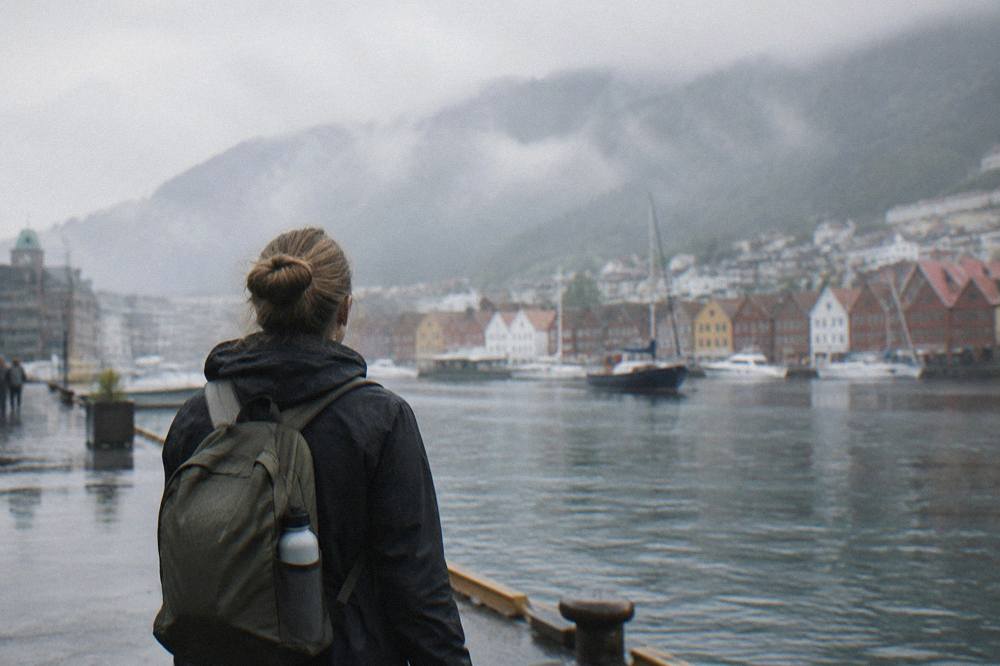
Yes, and packing light works better in Bergen than in most Nordic cities, because the entire visitor-facing core is walkable, hotels sit minutes from the harbor, and the repeated items that dominate this list, wool socks, base layers, and a single excellent shell, compress small and rotate fast, so a carry-on-sized case genuinely covers a four-day city trip with a fjord day included.
The trick is to stop packing for outfits and pack for weather states instead. One shell, two mid-layers, three base layers, and enough wool socks to never wear a damp pair rotates through any length of stay, with a laundry stop or a hotel sink resetting the cycle mid-trip. The site's itineraries for one day in Bergen and the longer plans under the same section show how little ground you actually need to cover each day, and the compact geography is what makes the small case viable. Even airport arrivals keep the burden low, as the flights to Bergen and Bergen airport guides explain, since the city is close enough to the airport that a light case never becomes a slog.
The Bergen Card changes the equation slightly in your favor, because the 2026 flyer lists free Skyss buses and Bybanen light rail across Vestland county, including the airport line, at card prices from NOK 400 for 24 hours, meaning you move around without planning around luggage storage. The site's Bergen Card guide covers what the card includes in full.
For evening planning, remember that restaurant kitchens in Norway tend to close earlier than in southern Europe, and reservations matter on festival weekends; the site's restaurants in Bergen guide is the companion piece if your evenings revolve around food rather than bars. Whatever the plan, the shell jacket comes with you.
Common Questions About Packing For Bergen
What clothes should I pack for Bergen, Norway?
Pack a waterproof hooded shell jacket, a warm mid-layer, merino base layers, quick-dry trousers, and boots with grip. Met Norway data via yr.no shows monthly means from -1.4C in January to 14.9C in July and 217 days with precipitation in the trailing 13 months, so the rain layer matters on every single trip date.
Do I need an umbrella in Bergen?
No. Coastal wind and frequent sideways rain defeat umbrellas, and a hooded waterproof shell does the job better while keeping your hands free on the fjord boats and the steep streets around Bryggen.
What shoes should I bring to Bergen?
Broken-in waterproof boots or shoes with a lugged, grippy sole, plus one lighter dry pair for evenings. The streets climb steeply from the harbor, cobblestones and wooden planking stay slick in the rain, and new boots are the fastest way to lose a day of the trip.
Is Bergen cold enough for a heavy winter coat?
Usually not. The observed January 2026 mean was -1.4C with a recorded low of -11.3C, so a good mid-layer under a sealed shell works better than a single thick parka, and it adjusts when you step indoors.
What should I pack for a fjord cruise from Bergen?
Your shell jacket, rain trousers, a warm hat and gloves even in summer, a sealed dry bag for electronics, and motion-sickness tablets. The boats run for hours in moving air that feels several degrees colder than the harbor, on routes that can keep you away from the city for the full day.
Can I pack light for a short Bergen trip?
Yes. The visitor core is compact and walkable, so one shell, two mid-layers, three base layers, and wool socks for each day fit a carry-on case and rotate through even a four-day stay with a fjord day trip included.
Pack for rain first, layer for everything else, and Bergen's weather stops being the story of the trip and becomes the backdrop to it.