Bergen Photography: The Best Photo Spots, Golden Hour And Fjord Views In Norway
Bergen, Norway, is a city assembled for cameras: a UNESCO World Heritage wharf, two mountain summits over the rooftops and a harbor that opens straight onto the fjords. This guide covers the best photo spots, rain tactics, golden hour, gear and fjord day trips.
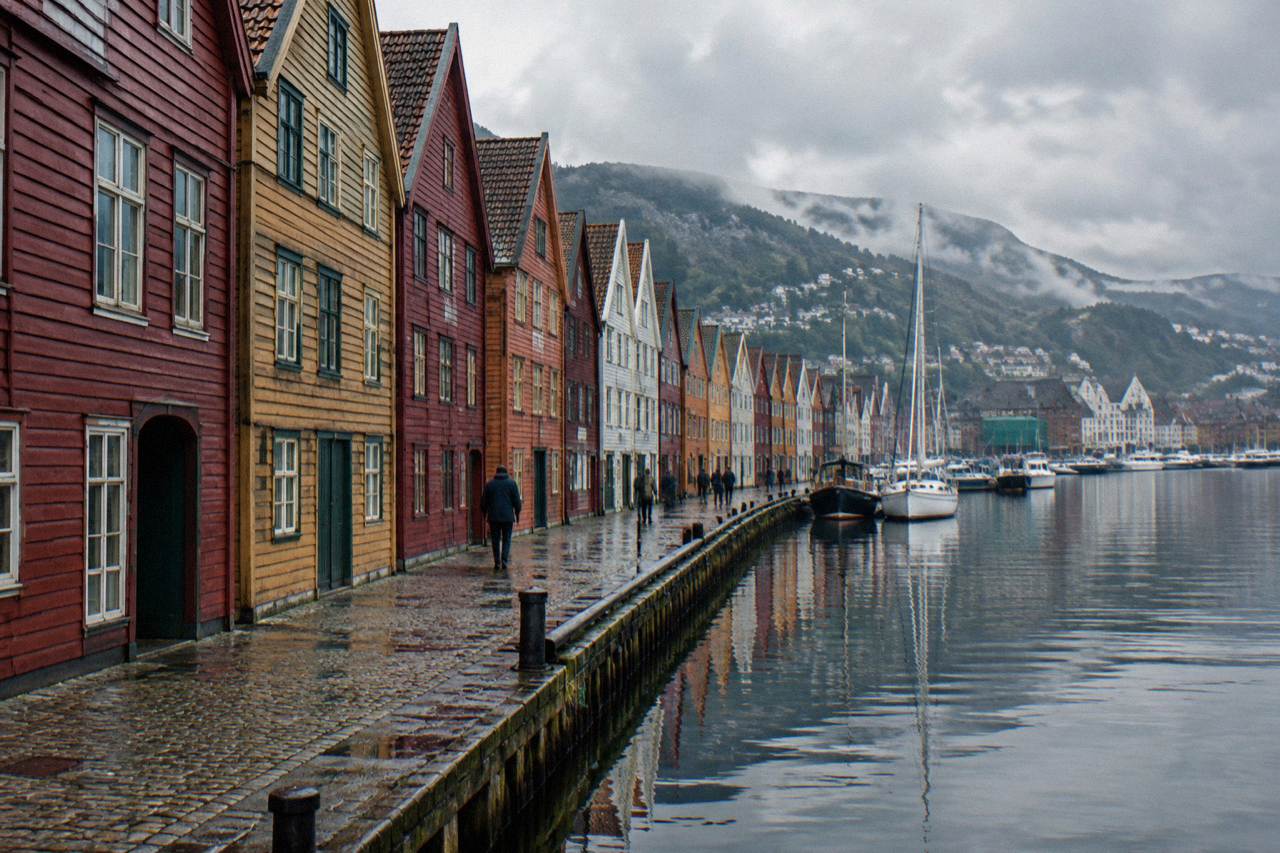
Short answer
Yes, Bergen has a golden hour, though this far north it behaves unusually: summer light declines slowly over a long evening, winter light stays low and amber through a short day, and cloud softens nearly all of it. The best photo spots are Bryggen's reflected gables, the Fløyen and Ulriken summits, the harbor front and the wooden lanes of Sandviken and Nordnes.
Bergen, the old Hanseatic trading post on Norway's southwestern coast in Vestland county, is a city that seems assembled for a camera: a UNESCO World Heritage wharf of colored gable ends, a fish market where steam and stalls share the frame, forested mountains pressing in on the rooftops, and a harbor that opens straight onto fjord water. The light here is not the dependable kind. It is northern, low, mobile and often wet, and it can turn the same row of warehouses into three different photographs within a single afternoon. That is the working condition for every shot in this guide, and it is also the reason the city photographs so well.
This page is the photography companion to the rest of Bergen Travel Guide: it walks the spots in shooting order, explains how rain and fog should reshape your shot list rather than cancel it, tells you what golden hour actually means at this latitude, prices the viewpoints, and names the fjord trips that justify carrying a full kit bag for a day. Start here if the camera is the reason for the trip; start with the planning a trip to Bergen guide if the camera is one item on a longer list.
What Are The Best Photography Spots In Bergen, Norway?
The shots that define Bergen are the Bryggen wharf's colored gable ends reflected in Vågen harbor, the city grid seen from the Fløyen summit, the Ulriken ridge above the clouds, the fish market's steam and stalls, the stone of Bergenhus fortress, and the wooden lanes of Sandviken and Nordnes. Bryggen is the most published view; it was inscribed on the UNESCO World Heritage List in 1979, and no other angle says Bergen as quickly.
Bryggen deserves its status. The row of tall, narrow wooden buildings on the eastern side of Vågen was the Hanseatic trading quarter for centuries, and the gables lean and vary enough that no two frames are quite the same. Shoot it from the head of the harbor near the fish market for the full reflection, from the floating jetty on the western side for a low, waterline angle, and from along the quay at Sandviken across the water for the long-lens compression shot.
The supporting cast matters as much. Fisketorget, the fish market between the harbor and the town square, gives you steam, ice, scales and hands, which is a rare thing in a city that mostly photographs buildings. Bergenhus fortress supplies grey stone, grass banks and a raised platform over the harbor mouth. Nordnes, the peninsula to the north, delivers quiet lanes, small wooden houses and water on three sides. Skosten and the small streets behind the cathedral are where the city stops performing for visitors.
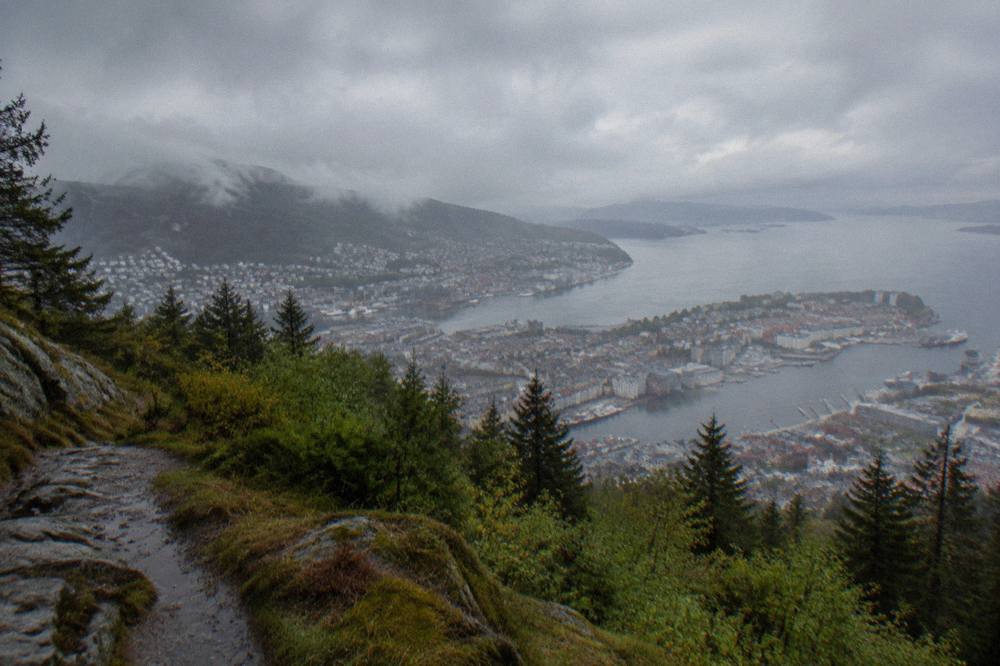
The table below is the shooting order the layout of the city suggests: harbor first, because that is where the light is cleanest early, then the lanes, then the summit in the afternoon when the city has warmed into its own haze.
| Spot | What to shoot | Best light | How to reach it |
|---|---|---|---|
| Bryggen wharf | Gable ends, reflections, covered lanes | Early morning, blue hour | On foot from the town square |
| Vågen harbor front | Fishing boats, water texture, skyline | Dawn and dusk | On foot along the quays |
| Fisketorget fish market | Steam, stalls, hands, ice | Mid-morning to afternoon | On foot, between harbor and square |
| Fløyen summit | City grid, harbor, island layering | Afternoon into evening | Fløibanen funicular from the city center |
| Ulriken summit | The whole mountain bowl, islands, fjord arms | Afternoon, above-cloud days | Ulriken643 cable car |
| Bergenhus fortress | Stone ramparts, harbor mouth | Midday to afternoon | On foot along the northern quay |
| Sandviken lanes | White wooden houses, steep cobbles | Morning | On foot or a short bus ride north |
| Nordnes point | Quiet lanes, water on three sides | Morning | On foot from the fish market |
| Stoltzekleiven trail | Climb shots, canopy, summit view | Morning, before the climb warms up | On foot from the city center |
Two of these are covered in depth elsewhere on the site: the best time to visit Bergen guide handles the seasonal decision, and the hiking trails around Bergen guide covers the uphill options that end with a view. For photographers, the short version is that the city is compact enough to walk between all of the harbor-area spots without transport, and the summits are the only locations that need a ticketed ride.
Which Bergen Photo Spots Work Best In Rain And Fog?
Rain is the default condition rather than the exception, so the best rain-day spots are the ones where wet surfaces become part of the frame: Bryggen's reflected gables, the cobbled slopes behind the cathedral, the still surface of Lungegårdsvannet, the fish market's covered stalls, and any lane where rain-lit cobbles double the color. Fog days belong to the funicular: shoot the city from Fløyen as towers and church spires pierce the cloud deck.
Rain photography in Bergen is less about waterproofing your courage and more about choosing subjects that improve when wet. Stone cobbles under rain become mirrors. The colored fronts of Bryggen deepen rather than wash out, and harbor water goes flat and reflective in the still air that often follows a shower. Shoot into the rain with a hood, keep the cloth in a pocket rather than a bag, and work in short bursts of ten minutes with a dry reset inside a cafe between them.
Fog is the more dramatic gift. When the cloud base sits at or just above the city, the Fløibanen funicular climbs out of it in minutes, and the summit platform becomes a viewpoint over a white sea with church towers and crane masts piercing the surface. That photograph does not exist on a clear day, which is exactly the point. On heavy-fog days with no lift in the cloud, stay low: fog compresses depth, so it flatters the narrow wooden lanes and the small harbor boats far more than it flatters wide harbor vistas.
| Condition | Spots that still work | What to shoot |
|---|---|---|
| Steady rain | Bryggen from the market side, Fisketorget's covered rows | Reflections, steam, umbrellas as color accents |
| Heavy fog | Fløyen summit, Sandviken lanes, the cathedral slopes | Cloud-deck city, compressed depth, silhouettes |
| Drizzle | Harbor front, Nordnes lanes | Soft overcast light, muted harbor tones |
| Wet-clear break | Vågen quays, Bergenhus ramparts | Calm water, clean low light, boat wakes |
The one subject that genuinely dies in bad weather is the long fjord panorama from the summits: haze eats the island layering, and a grey wall of cloud where the horizon should be is not a mood, it is a missing picture. Save the summit shoots for the breaks, and let the city itself carry the wet days.
There is a second reason to keep the harbor front on your list in every condition: it is where the tours that photographers actually use depart from. The food and culture walk, the zodiac runs and the guided kayak trips all leave from or near the central quays, which makes the harbor a base for shooting before departure and after return, in whatever light the day has offered.
If the forecast is a wall of rain from dawn to dusk, do not fight it at the summits. The densest photographic material in Bergen is all within a short walk of a doorway: lanes, gables, cobbles, steam and glass, and every one of them is better wet.
How Do You Photograph Bryggen And The Harbour Without Crowds?
The workable window is the first hour of daylight, before the day-trip groups reach the wharf and before the fish market's stalls are fully set. Bryggen sits against open water, so early light arrives low and clean across Vågen, and the harbor surface is at its calmest. After mid-morning, shoot the narrow covered lanes between the warehouses instead, where depth and shadow do the work that reflections did at dawn.
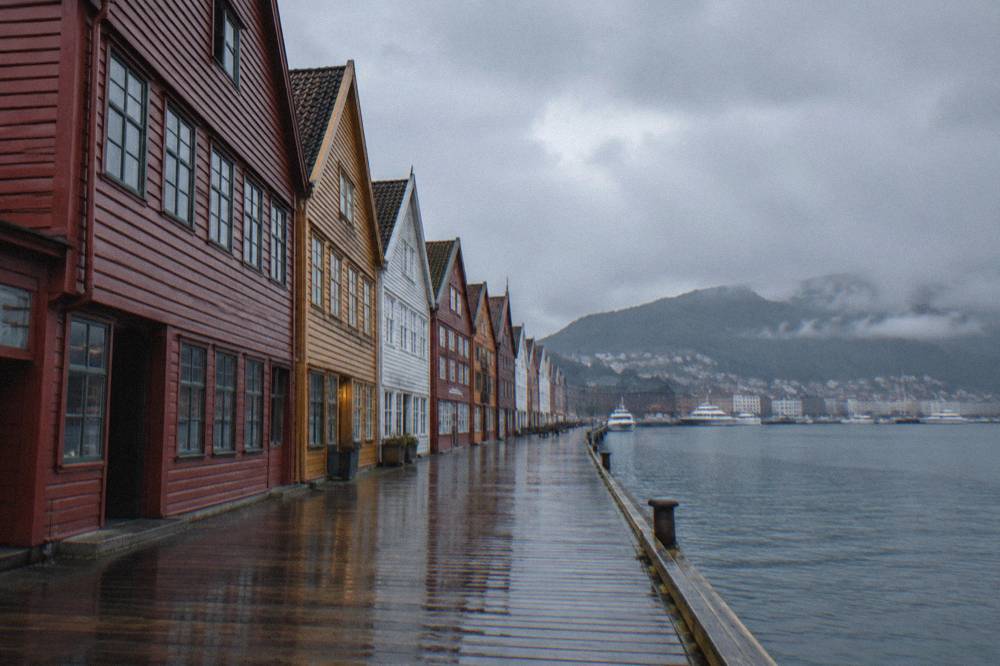
The practical sequence is fixed by geography. Stand at the head of the harbor near the fish market for the wide reflection frame first, while the water is still. Move west along the quay for the compressed long-lens frames across the water. Then cross to Bryggen itself and walk the covered passages between the buildings, which stay shrouded and moody no matter how many people are on the outer quay. The passages are the answer to the crowds: they are narrow, dim, and full of texture, and visitors tend to photograph the gables without ever walking through them.
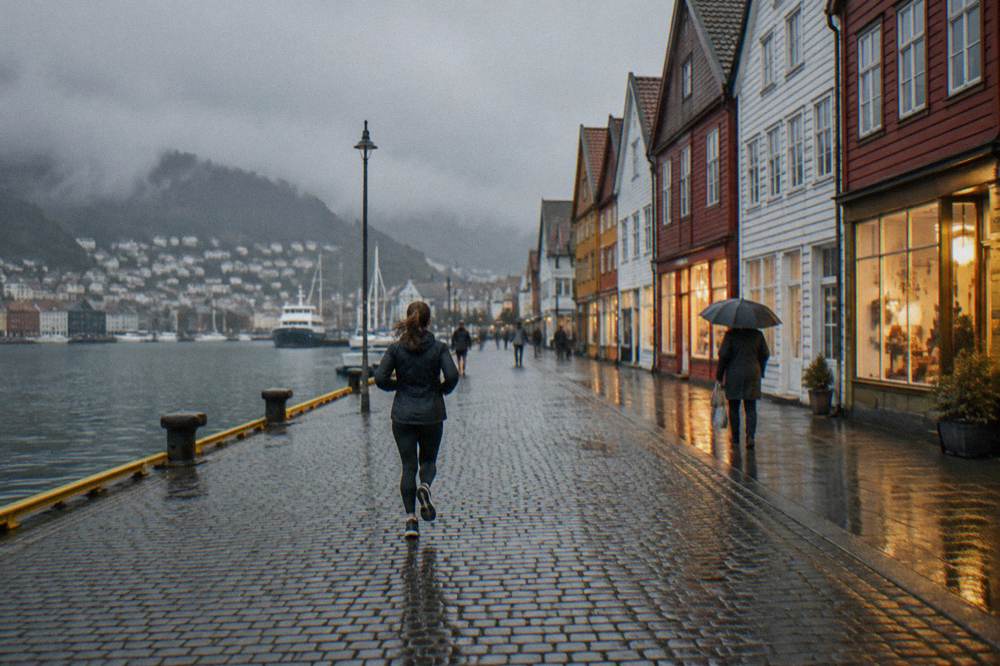
The blue hour in the other direction, after the shops close, is the second quiet window. The harbor front empties, the water settles, and the wharf's roofline reads as a clean silhouette against whatever evening sky the coast has produced. A tripod earns its carry here. Long exposures on wet cobbles and still water are the two signature night techniques the city offers, and both need the camera locked down rather than handheld.
One efficient way to cover the wharf and the streets behind it is to attach yourself to a walk led by someone who works them daily. The Food and Culture Walk moves through the compact streets between the wharf and the market with stops that double as location scouting, and the listings page carries the current price, rating and schedule, Check availability for the dates you are in the city.
The walk's value for a photographer is not the food, though the food is genuinely good; the best restaurants in Bergen guide covers that properly. It is the route. Guides who work the same lanes every week know which doorways hold their light at which hour, which stalls set up early, and which corners stay empty for the longest stretch of the morning, and that knowledge transfers in a way no map does.
Does Bergen Have A Golden Hour?
Yes. Bergen lies far enough north that summer evening light stretches into a long, slow decline and winter light compresses into a low, amber slant that can hold for much of the short day. Because the city is hemmed by mountains, direct golden light arrives late and leaves early, and much of what remains is filtered through cloud. The result is a soft silver-to-gold quality that photographers either chase or learn to use.
The honest description of summer is that there is no single golden hour; there is a golden evening. The sun takes a shallow path across the northern sky, so the light after the working day stays warm and directional for a long stretch, and the harbor front, the western quays and the Fløyen summit platform are all in position to use it. Winter is the opposite extreme. The sun barely clears the ridge line, so the low-angled, warm light that other cities get for twenty minutes a day is effectively the default light of a clear winter afternoon, though clear afternoons are the scarce resource.
| Season | Light character | Where it works hardest |
|---|---|---|
| Spring | Clean, broken light, fast-changing skies | The harbor front, Nordnes lanes |
| Summer | Long, slow evening decline, late sunsets | Fløyen summit, the western quays |
| Autumn | Low amber afternoons, storm skies | Bryggen, Lungegårdsvannet |
| Winter | Low slanting light through much of the short day, blue-hour at mid-afternoon | The wharf, the covered lanes, any reflected water |
Cloud is the third element in every golden hour here, and it cuts both ways. A heavy deck kills the warm light entirely, but broken cloud over the fjord arms produces the city's most dramatic evenings: lit patches moving across the water, dark ridgelines, and warm edges on the underside of the cloud. The Bergen weather month by month guide tracks what each part of the year statistically delivers, and the short photography version is to plan for the shoulder seasons, when the light is low and the cloud is broken more often than not.
The final planning note on golden hour is patience with the schedule rather than the sky. Autumn and winter give you the lowest light and the emptiest viewpoints, and the same summits that are crowded at midday are often quiet in the last hours of a short winter afternoon, which is when the city below is at its warmest color.
Where Can You Shoot Bergen From Above?
The two paid summits are Fløyen, reached by the Fløibanen funicular, and Ulriken, reached by the Ulriken643 cable car, and each gives a different photograph: Fløyen looks down the length of the city and harbor, while Ulriken looks across the whole bowl of roofs, islands and water. The 2026 Bergen Card flyer lists a Fløibanen adult return at 200 NOK from April to September and 145 NOK from October to March, and the Ulriken643 return at 435 NOK.
Fløyen is the forgiving summit. The funicular leaves from a station minutes from the fish market, the platform at the top gives an immediate panorama over the city grid, and the surrounding forest provides secondary frames of canopy and trail. The harbor reads clearly from up there, the island layering beyond works at any focal length, and the whole visit can be as short or as long as the light allows.
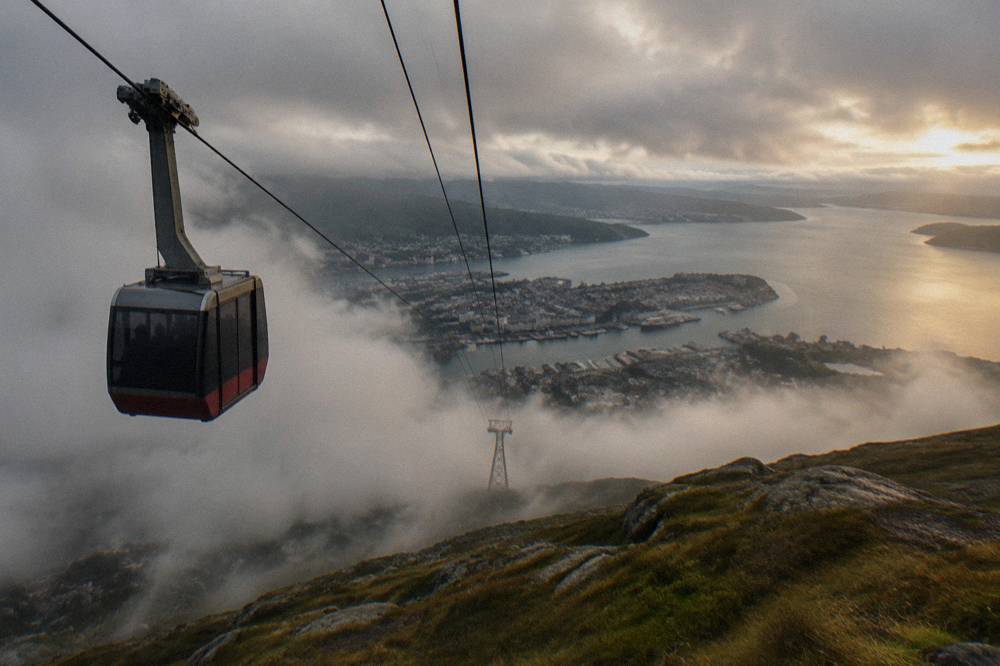
Ulriken is the bigger commitment and the bigger reward. The cable car climbs to the highest of the city's surrounding mountains, and the view takes in the full mountain bowl, the fjord arms fanning west and the islands scattered beyond the harbor mouth. On above-cloud mornings, which the mountain's height makes more likely than from Fløyen, the summit photographs a white sea of cloud with ridge after ridge breaking through. Note the maintenance closure: the operator schedules the cable car's closure for the first two weeks of 2026, with reopening around 13 January, so a mid-winter summit shoot needs a quick check of the operator's page first.
| Viewpoint | Transport | Adult return price | Notes for photographers |
|---|---|---|---|
| Fløyen | Fløibanen funicular | 200 NOK Apr-Sep, 145 NOK Oct-Mar (Bergen Card flyer) | Closest to the center; platform panorama plus forest frames |
| Ulriken | Ulriken643 cable car | 435 NOK | Highest summit; full city bowl and fjord arms |
| Stoltzekleiven | On foot, stone stair trail | Free | Climb in forest, summit shared with Fløyen routes |
| Skansen | On foot | Free | Elevated old-town view over harbor and rooftops |
| Bergenhus ramparts | On foot | Grounds free | Low harbor-mouth platform, castle stone as foreground |
Two budget notes from the same verified flyer. A Skyss single ticket in zone A is 51 NOK, and the Bergen Card bundles free buses and light rail across the county with discounted attraction entry, which can matter if a shoot plan bounces you between the harbor, the summit stations and the outer viewpoints in one day. The getting around Bergen guide details the rest of the transport picture.
For a free summit with a view, the stone stair trail up Stoltzekleiven delivers you to heights overlooking the city on the Fløyen side of the ridge, and the price is effort rather than a ticket. Shoot the climb itself: the trail's stone steps, roots and canopy are the best forest material inside the city limits.
What Camera Gear And Settings Suit Bergen's Weather?
Bring weather sealing and a lens cloth above everything else. Bergen recorded 217 days with precipitation across the trailing thirteen months of Met Norway station data, so a rain sleeve, a microfibre cloth and a bag cover will see more use than any filter. A fast standard prime handles the wharf and the lanes; a wide zoom earns its keep on the summits and in the fjords.
The climate table below is the one to plan around, because it is what the weather station actually recorded rather than what a brochure hopes for. Note the shape of it: no month is dry, and the wettest months are the dark ones. The photographic consequence is that gear decisions are really weather decisions.
| Month | Mean temp (observed) | Precipitation (observed mm) |
|---|---|---|
| September | 13.1C | 206.6 |
| October | 9.7C | 231.9 |
| November | 6.0C | 321.8 |
| December | 5.8C | 303.5 |
| January | -1.4C | 82 |
| February | 0.8C | 133.4 |
| March | 5.9C | 243.9 |
| April | 7.9C | 65.9 |
| May | 9.9C | 127.4 |
| June | 14.4C | 165.7 |
| July | 14.9C | 184.2 |
| August | 14.3C | 243.6 |
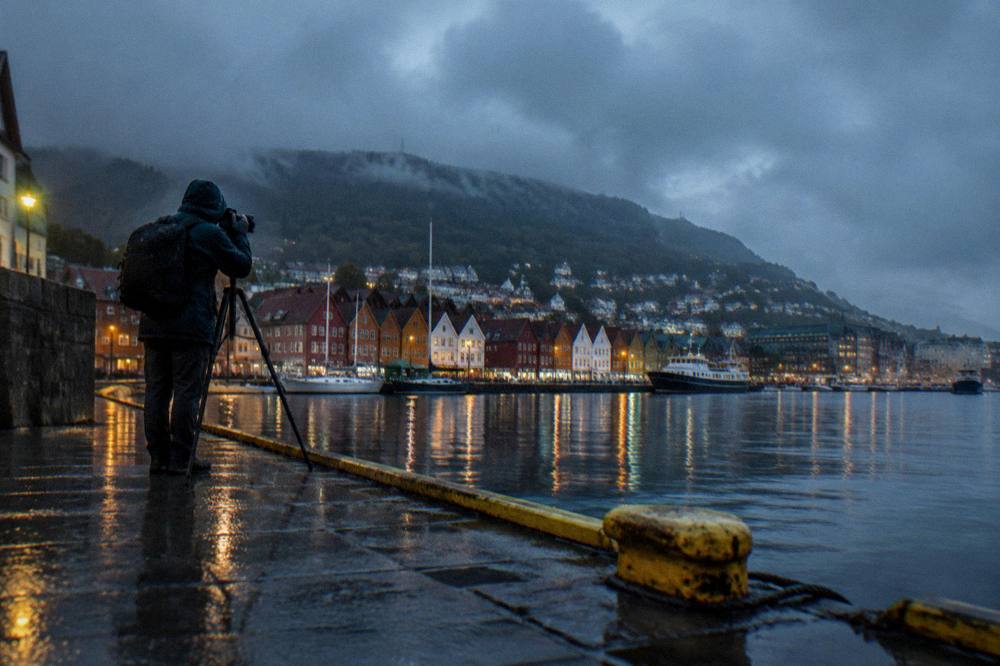
Settings follow the light, not a formula. The two constants are wet surfaces and low sun, which together mean the city rewards underexposure and shadow retention more than most destinations: the color in a wet cobbled street survives when the sky is allowed to blow out, and it dies when the frame is pushed bright. Shoot the harbor at small apertures when the water is still, and open up for the lanes, where the light between the wooden houses falls off fast.
| Condition | Setting approach |
|---|---|
| Overcast dry | Base ISO, evaluative exposure; saturated fronts carry the frame |
| Rain | Slight underexposure, fast enough shutter to freeze rain streaks, hood on |
| Reflections on still water | Small aperture, tripod, polarizer used sparingly to keep some sheen |
| Low winter light | Open aperture, protect shadows, embrace the warm slant |
| Blue hour on the quays | Tripod, long exposure, water and cobbles as light sources |
The gear list, in priority order: a weather-sealed body or a good sleeve, two cloths because one will be wet, a prime for the lanes, a wide zoom for the summits and fjords, a travel tripod light enough to actually carry, and spare batteries kept in an inside pocket, because cold and damp drain them faster than the specifications admit. Skip the big filter kit; a single polarizer is enough, and in a city that leans on wet reflections, even that gets used gently.
Is Bergen Good For Night Photography And Northern Lights?
Bergen is a competent night-photography city rather than a spectacular one: the harbor front and Bryggen's roofline carry strong blue-hour frames, wet cobbles and still water make natural long-exposure subjects, and northern lights do appear in the city's sky on rare, clear, dark winter nights. The realistic plan is to treat the aurora as a bonus and build the night portfolio around reflections, lit gables and long exposures.
The core night shoot is compact and walkable. The harbor front between the fish market and Bergenhus gives the wharf silhouette against open water; the quays at Sandviken give it again from across the harbor with a foreground of small boats; and the streets behind the cathedral give rain-lit cobbles and shop glow if the evening is wet. The northern lights in Bergen guide covers the aurora question honestly, and its conclusion is the same one a photographer should hold: possible in winter on clear, dark nights, never promised, and best treated as a lottery ticket you buy by simply carrying the tripod on winter evenings.
What Bergen's night photography reliably offers is blue hour in a northern register. In winter that blue hour starts in the middle of the afternoon, which is an underrated gift: you get night-photography conditions at a civilized hour, with the shops still open and the harbor still active, and the deep-blue sky fades slowly enough that a single setup can be worked for a long stretch before it is fully dark. Bergen in winter covers the whole seasonal picture for planning.
Which Fjord Photo Trips From Bergen Reward The Camera Most?
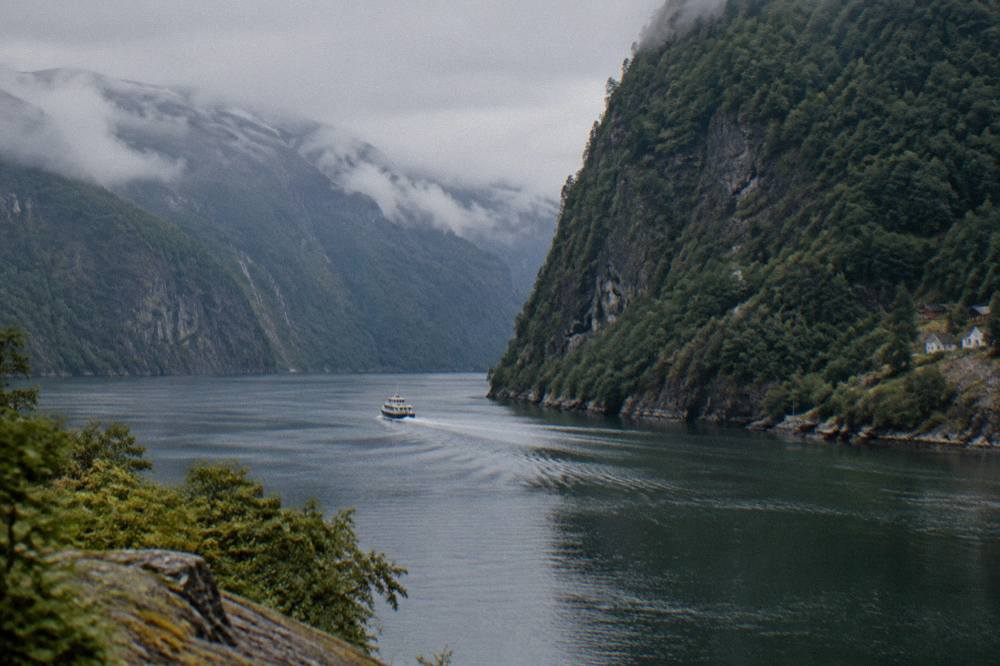
The classic fjord camera trips from Bergen are the Mostraumen cruise out of the Osterfjord, where the channel narrows to a slot between sheer rock, the Sognefjord routes toward Flåm, the Hardangerfjord's orchard-lined water, and the Nærøyfjord, the narrowest and most photographed arm of the Sognefjord system. All four are reachable as day trips. Mostraumen is the shortest commitment; the Sognefjord routes trade the biggest scale for the longest day.
The fjord tours from Bergen guide compares the routes in detail. From a purely photographic standpoint, the deciding factors are how much of the day you can spend shooting, and what kind of fjord geometry you want in the frame: narrow slot walls that force vertical compositions, wide water with island layering, or cliff-and-waterfall scale.
| Fjord area | Signature shot | Season note |
|---|---|---|
| Mostraumen, Osterfjord | Sheer slot walls closing around the boat | Spring melt fattens the waterfalls |
| Sognefjord toward Flåm | Deep water, farm ledges, rail line above | Long daylight in summer helps |
| Hardangerfjord | Orchard slopes meeting cliff walls | Late spring blossom, autumn fruit |
| Nærøyfjord | Narrowest channel, hanging farms, cliff scale | Popular in summer; calm water early |
For photographers who want the water itself as the platform rather than the subject, the fjord options out of the central harbor split neatly. A fast private run in a zodiac or pontoon boat puts you low over the water with a flexible route, which suits shooters chasing angles rather than a fixed itinerary, and the operator's live listing carries current pricing and departure slots.
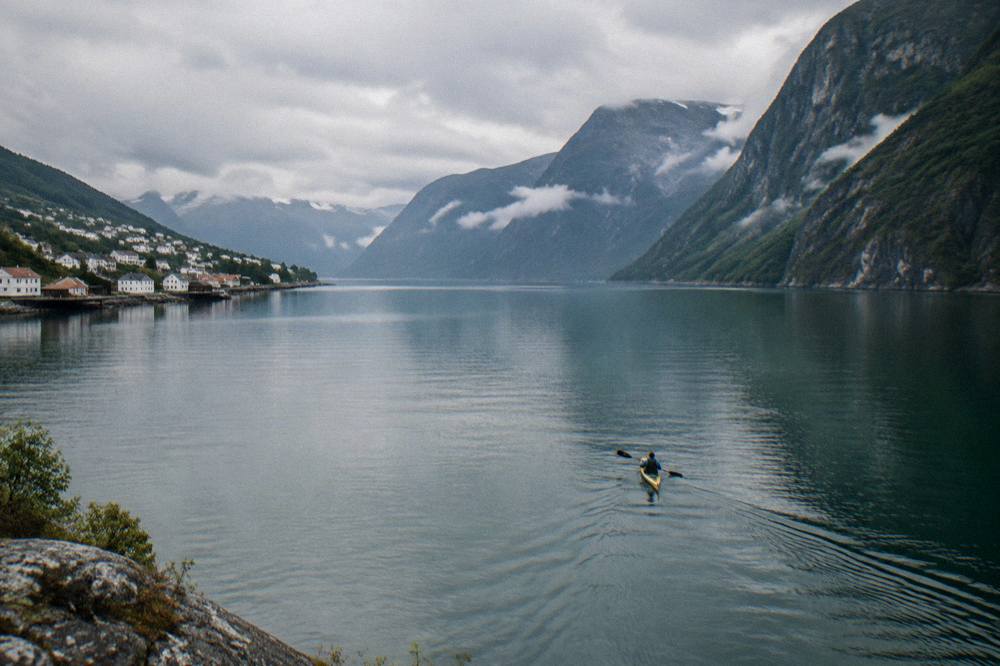
The slow alternative is a paddle. A guided kayak tour on the fjord water puts the camera at the lowest possible angle, with the city and the mountain walls rising from water level, and it is the one format where the photographer is also the engine of the frame's movement. Expect to work hard for the water protection: salt spray and a camera are a managed relationship, not a relaxed one. The listing page holds the current price, rating and schedule.
All three tours below leave from or near the central harbor, and all three work as the spine of a photography day: harbor front at dawn, tour through the middle of the day, harbor front again at blue hour with a memory card already full.
Whichever route you choose, the rule that holds across all of them is the same one that governs the city: go for the low light. The morning departures deliver calmer water and cleaner air, and the fjord walls, like Bryggen's gables, photograph warmest at the start and the end of the day rather than at noon.
Common Questions About Photography In Bergen
Does Bergen have a golden hour?
Yes. This far north, summer evenings decline slowly through a long, warm stretch of light, while winter afternoons hold a low, amber slant for much of the short day. Mountains and cloud filter much of it, so the practical version is a soft, silver-to-gold light that rewards the harbor front, the western quays and the summit platforms.
Where is the best view of Bergen?
Fløyen, reached by the Fløibanen funicular, looks down the length of the city grid and the harbor, while Ulriken, reached by the Ulriken643 cable car, takes in the whole bowl of roofs, islands and fjord arms. The 2026 Bergen Card flyer lists the Fløibanen adult return at 200 NOK in the April to September window and 145 NOK from October to March, and the Ulriken643 return at 435 NOK. The stone stair trail up Stoltzekleiven is the free alternative with a shared summit payoff.
Can you see the northern lights in Bergen?
Rarely, on clear, dark winter nights, and low over the water when they do appear. Treat the aurora as a bonus rather than a plan, and build the winter night portfolio around blue-hour frames, lit gables and long exposures on wet cobbles, all of which the city delivers reliably.
Is Bergen good for photography in winter?
Yes, with the right expectations. The light is low and warm through the short day, blue hour arrives at a civilized mid-afternoon hour, and the off-peak season empties the viewpoints. The trade-off is weather: the trailing thirteen months of Met Norway station data count 217 days with precipitation, and the wettest observed months, November and December, sit inside the darkest stretch of the year.
What lens should I bring to Bergen?
A fast standard prime for the wharf, the covered lanes and the street work, plus a wide zoom for the summit panoramas and the fjord channels. A long lens is useful only for the compressed Bryggen frames from across the harbor, so it is the first thing to leave behind if weight matters.
Do I need a tripod in Bergen?
Yes, if you want the two signature night techniques: long exposures on still harbor water, and blue-hour frames of the wharf roofline. A small travel tripod is enough, and it will double as a stabilizer for the low-light lanes in winter afternoons, when the light between the wooden houses falls off quickly.
Pack for the rain, chase the low light, and let the cloud do half the compositional work; that is the whole method, and the city supplies the rest.