Northern Lights Bergen Norway
Bergen sits at 60.39 degrees north, inside the band where the aurora can appear, but the same coastal climate that keeps the city green also keeps it cloudy. This guide covers how to use Bergen as a base and where to go when the forecast turns clear.
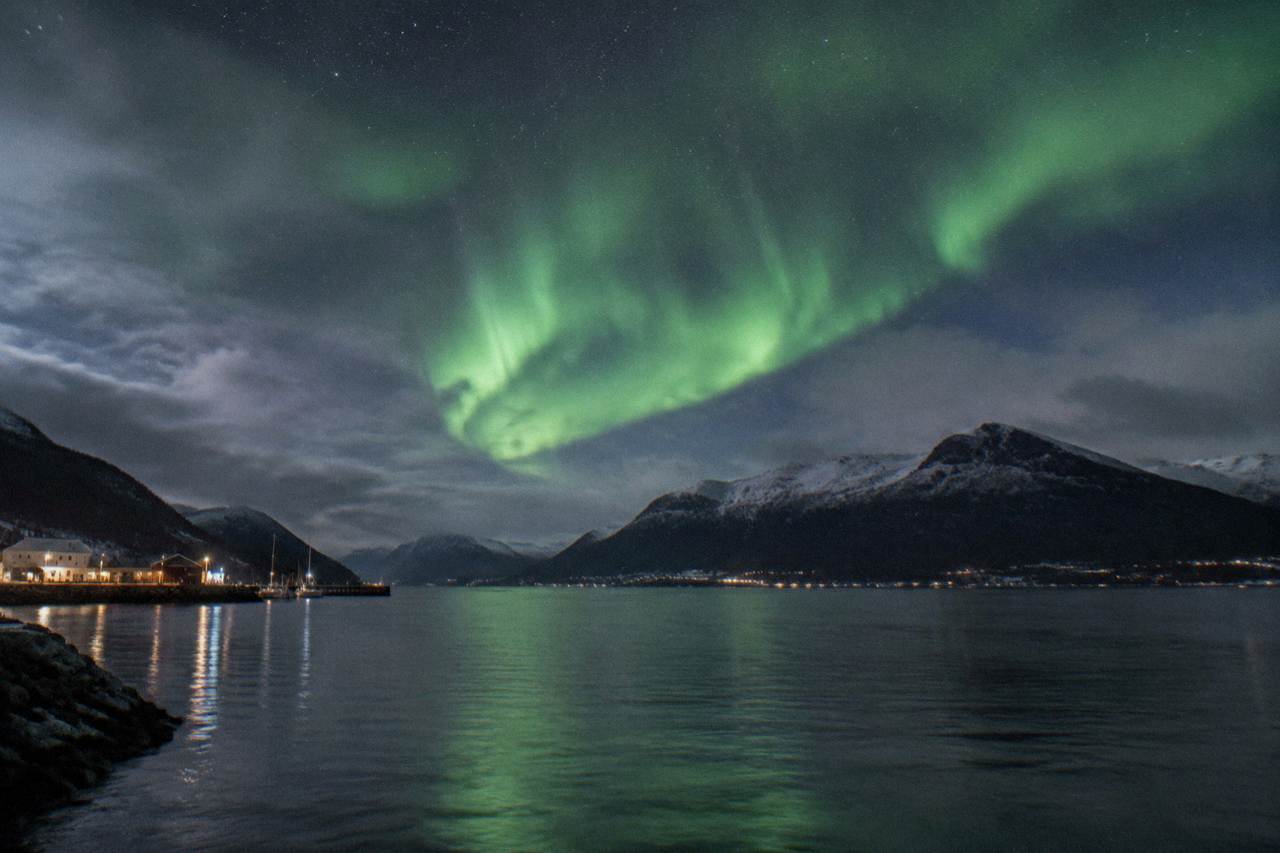
Short answer
You can occasionally see the northern lights from Bergen, Norway itself, but the coastal cloud cover, 217 days with precipitation in the trailing 13 months per yr.no, makes sightings in town the exception. The workable plan is to use Bergen as a base, watch the forecast, and spend clear winter evenings in darker spots along the fjords or inland.
Bergen, in Vestland county on Norway's southwestern coast, sits at 60.39 degrees north, which places it inside the latitude band where the northern lights can appear. The catch is the city's own weather. yr.no's Bergen station table, drawing on Met Norway data, shows 217 days with precipitation across the trailing 13 months, and that oceanic cloud cover is exactly what stands between a would-be aurora hunter and the sky. The realistic approach is to treat the city as a comfortable base and to be ready to move when a clear night arrives, which is what the rest of this guide lays out in detail.
Can You Actually See The Northern Lights In Bergen, Norway?
Yes, but rarely from the city itself, and the reason is weather rather than latitude. Bergen sits at 60.39 degrees north, inside the band where the aurora can occur, yet yr.no's Bergen station table shows 217 days with precipitation over the trailing 13 months, and coastal cloud is what keeps sightings in town occasional rather than routine. The realistic plan treats the city as a base and moves toward darker, more stable skies on the clear winter nights that do arrive.
The distinction matters because plenty of visitors arrive expecting a Tromso-style experience and leave disappointed. Bergen's climate is temperate oceanic, wetter than most of Norway, with monthly average temperatures running from -1.4C in January 2026 to 14.9C in July 2026 according to the same station table. That mildness is a double-edged sword: it keeps the winter city walkable and ice-free compared with inland Norway, but the moisture that arrives off the North Sea also thickens the cloud deck.
The aurora itself is not the constraint. When a strong display happens at this latitude, it is often visible even through partial cloud, low on the northern horizon. Locals do photograph it from spots like the waterfront and the lower slopes of the city's two mountain cables, and the images are genuine. What you cannot plan for is a date. What you can plan for is a strategy: several nights in the region, a willingness to travel an hour or two out of the city when the forecast breaks, and realistic expectations for the evenings when it does not.
For the broader climate picture, including the month-by-month rainfall that drives every aurora decision in this guide, read the companion page on Bergen weather and seasons.
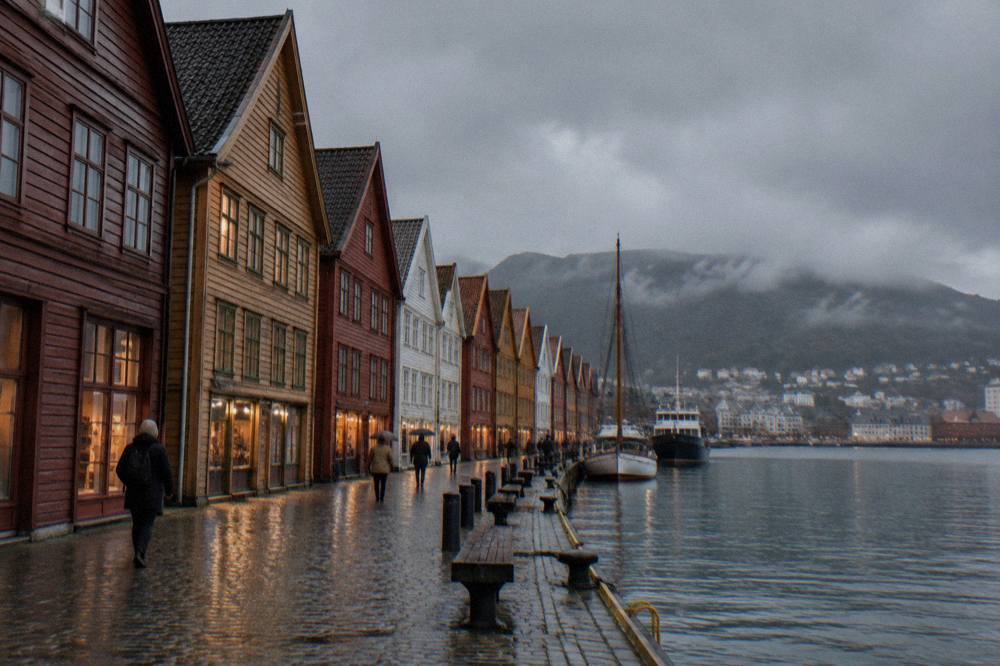
How Do I Get From Bergen To The Northern Lights?
You get there by leaving the city's glow and its coastal cloud behind for the evening, not by travelling to another part of the world. From central Bergen the practical routes are west and north along the fjord arms by boat, inland toward higher and drier terrain by bus or rail, or a scheduled day trip that ends somewhere genuinely dark. The Bergen Card's own flyer lists free Skyss buses and the Bybanen light rail across all of Vestland county, including the airport line.
Start with the direction problem. Light pollution in Bergen is concentrated in the city bowl between Fløyen and Ulriken, and the harbour reflects a fair amount of it upward. Moving out of the bowl puts darker sky behind you, but moving east or north also puts you closer to the inner fjord valleys, where the coastal cloud belt tends to thin out. That second effect is the more valuable one.
The transport menu, all of it covered in detail on getting around Bergen, includes the Bybanen light rail and the Skyss bus network. A single adult Skyss ticket in zone A costs 51 NOK per the visitbergen.com transport page, and the Bergen Card includes the whole county network free. If you are staying several nights and intend to chase clear patches, the card pays for itself on transport alone before any attraction is counted; the full price structure is laid out on the Bergen Card guide.
For evenings specifically, the boat option deserves more attention than it gets. Departing the harbour puts open water and mountain walls around you within minutes, and the fjord arms north of the city are darker than any point you can walk to from a hotel. Several of the fjord products in the site's tour roster run daylight departures, but the same geography that makes them good daytime trips, Osterfjord, Mostraumen, the Hardangerfjord arm, is the geography that rewards a clear evening. The full set of options is on the fjord tours from Bergen page.
One planning note that is easy to miss: the aurora season overlaps with the region's festival and maintenance calendar, so check what is running before you lock dates. The infogain box below covers the dated items that matter for a winter visit.
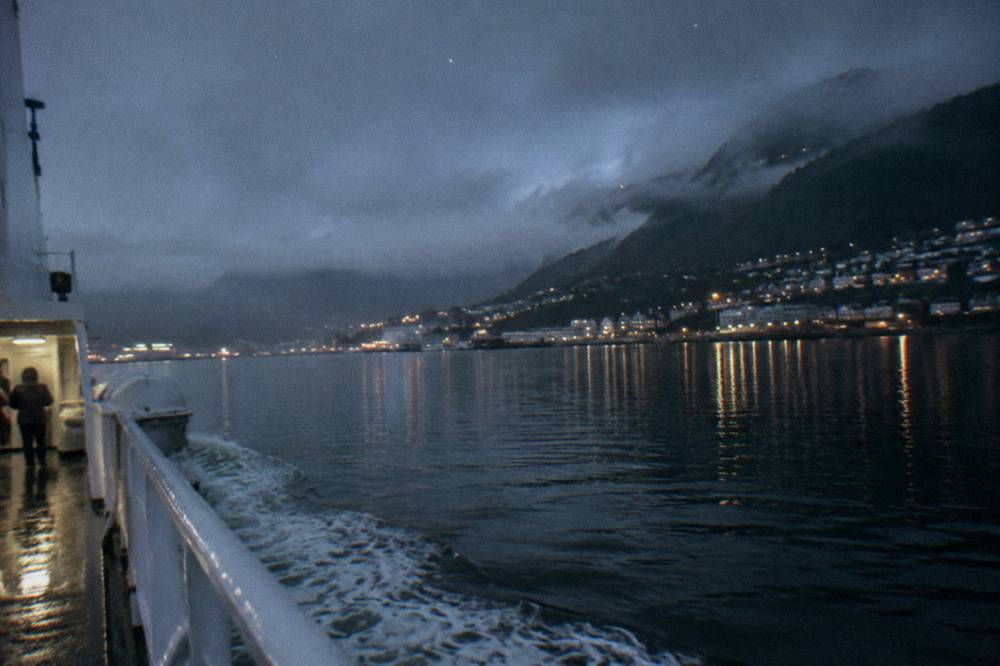
Where To Go Near Bergen For Darker Skies And Clearer Nights?
The strongest dark-sky candidates around Bergen are the inland valleys and the fjord arms east and north of the city, where the coastal cloud belt thins and the horizon opens over water. Structured options include the Mostraumen fjord runs up Osterfjord, the full-day Hardangerfjord trips, and the glacier-lake tours that climb east of the coast. All of them end the day far from street lighting, which is the single most important property an aurora-era base can have.
The physics of the situation is on your side inland. Bergen's cloud is orographic and coastal, fed by moist North Sea air lifting over the first mountain range. Fifty kilometres inland, the same weather system often presents as a clear or partly clear sky over the inner valleys. You cannot verify this on any given night from a hotel room, which is why the practical advice is to pick accommodation and transport that let you move when the forecast, not the calendar, says go.
That is also the argument for pairing an aurora trip with a daytime excursion rather than a dedicated night tour. The site's featured glacier-lake option, the Folgefonna National Park and glacier lake tour, runs east into the mountain interior where the cloud cover is different from the coast, and lunch is included. The listing gives its duration as a full day. Check availability
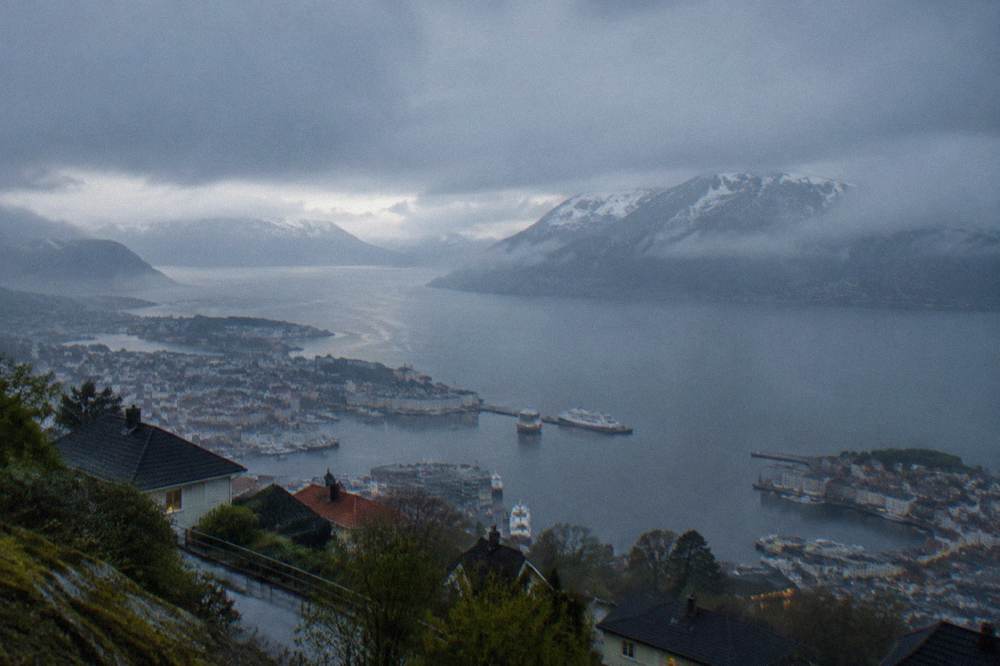
The Rosendal option works the same logic on water. The cruise to Rosendal along the Hardangerfjord spends an extended stretch in the fjord landscape south of the city, the listing states, and the same stretch of water is one of the region's better evening platforms on a clear night.
For travellers who prefer to stay in the city and simply get oriented cheaply, the hop-on hop-off sightseeing bus runs a loop of the city with a 24-hour or 48-hour ticket, per the listing; its price is not published by the operator, so treat the listing itself as the source. It is a daytime tool, not an aurora one, but it maps the city bowl quickly and shows you exactly which direction the light pollution runs.
Is a night out in the dark country actually a reasonable ask? Here is the reassurance line most people need: the major day trips from Bergen are structured products with live availability and standard cancellation terms, so booking one does not lock you into a plan the weather can ruin. Pay-later and free-cancellation options are common on the operator's live listing; check the terms there before you commit.
What Does An Aurora-Season Trip From Bergen Cost?
A 24-hour Bergen Card costs 400 NOK for an adult and 100 NOK for a child aged 3 to 15, with 48h, 72h and 96h options stepping up to 700 NOK, per the official 2026 flyer. It includes free Skyss buses and the Bybanen light rail across Vestland county including the airport line, plus discounts at Fløibanen, Ulriken643 and most museums. Standalone costs stack quickly without it: a Skyss single in zone A is 51 NOK and a winter Fløibanen return is 145 NOK.
The table below pulls together the confirmed 2026 figures that matter for a winter planning budget. Every number comes from either the official Bergen Card flyer or the visitbergen.com transport page, both fetched directly this season. The rest of the planning pages sit on Bergen Travel Guide.
| Item | Adult price (NOK) | Child price (NOK) | Source window |
|---|---|---|---|
| Bergen Card 24h | 400 | 100 | 2026 flyer |
| Bergen Card 48h | 500 | 125 | 2026 flyer |
| Bergen Card 72h | 600 | 150 | 2026 flyer |
| Bergen Card 96h | 700 | 175 | 2026 flyer |
| Skyss single, zone A | 51 | 51 | visitbergen.com |
| Fløibanen return, Oct-Mar | 145 | 75 | 2026 flyer |
| Fløibanen return, Apr-Sep | 200 | 100 | 2026 flyer |
| Ulriken643 return | 435 | lower | ulriken643.no |
Two notes on that table. First, the Flybussen airport bus is not included free with the Bergen Card, the flyer is explicit on that point, and its fare should be read from the operator's own site rather than assumed. Second, the aquarium's ordinary adult price runs 380 NOK in the November-to-February window and 380 to 415 NOK seasonally from March to October, per the same flyer, so a family day of indoor fallback activities adds up fast. The museums are the cheaper plan B: Haakon's Hall is 120 NOK, the Hanseatic Museum with guided visit is 160 NOK, and Bryggen Museum is 170 NOK ordinary or 85 NOK with the card.
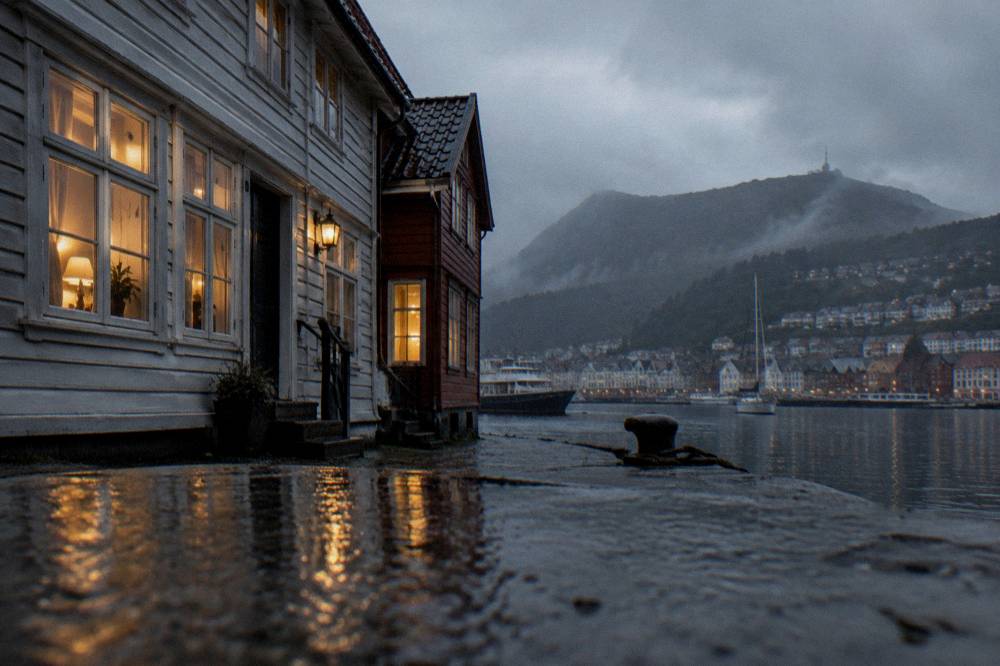
The budgeting logic for an aurora hunter is different from a general tourist's. You are effectively paying for optionality: accommodation you can leave at short notice, transport that runs late, and refundable day trips. The how expensive is Bergen page breaks down the everyday costs, food and lodging included, and the where to stay in Bergen page covers the districts that make a late-night departure easy versus painful.
When Is The Best Month To See The Northern Lights From Bergen?
The darkest and statistically coldest months, October through March, are the aurora window, and within that window the drier months beat the wetter ones. yr.no's Bergen station table shows November as the wettest month in the trailing period, 321.8mm observed against a 275.0mm normal, while April delivered just 65.9mm, and January 2026 was the coldest at -1.4C average. The shoulder edges of the window, October and February-March, offer the best trade between darkness and dry sky.
Here is the month-by-month picture for the aurora half of the year, straight from the Met Norway table via yr.no:
| Month | Mean temp (C) | Precipitation observed (mm) | Precipitation normal (mm) |
|---|---|---|---|
| October | 9.7 | 231.9 | 268.0 |
| November | 6.0 | 321.8 | 275.0 |
| December | 5.8 | 303.5 | 290.0 |
| January | -1.4 | 82.0 | 256.0 |
| February | 0.8 | 133.4 | 209.0 |
| March | 5.9 | 243.9 | 202.0 |
Read that table as a cloud-risk table rather than a comfort table. November is the wettest month in the record at 321.8mm observed against a 275.0mm normal, and December follows at 303.5mm against a 290.0mm normal, and a night under that kind of cloud is a night with no aurora regardless of solar activity. January was unusually dry and unusually cold in the most recent observed year, 82mm against a 256mm normal, and February came in at 133.4mm against a 209mm normal. Those two months are, on the current data, the highest-probability stretch.
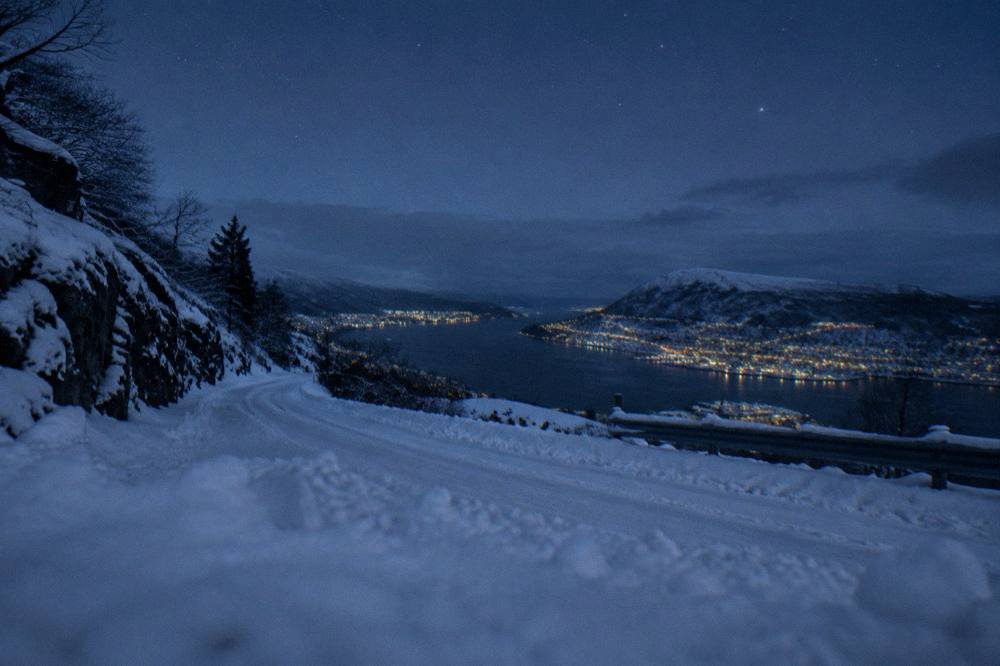
The festival calendar is worth checking against your chosen window, partly for atmosphere and partly because it changes the city's brightness and bed supply. The Bergen International Film Festival runs 14 to 22 October 2026. The Christmas Market runs 20 November to 22 December 2026, and the Pepperkakebyen gingerbread city runs 14 November 2026 to 10 January 2027. The best time to visit Bergen and Bergen in winter pages carry the fuller seasonal picture, and the site's festivals page itemises the rest of the calendar.
A caveat the station table itself forces: none of this is a forecast. It is a trailing 13-month observed record against long-run normals, and the difference between the two columns, January's 82mm against a 256mm normal, is exactly the kind of month-to-month variance that makes a single-night aurora gamble unwise. Book nights, not nights, if that makes sense: three or four clear-sky chances is a real strategy, one is a coin toss with worse odds.
What Should You Pack For An Aurora Night Around Bergen?
Pack for wet, mild cold and standing still, which is a different kit than the deep-freeze gear people imagine. The same yr.no table that makes the aurora case makes the packing case: 217 days with precipitation in the trailing 13 months, winter means hovering between -1.4C and 6C, and rain totals that stay high even in the coldest months. Waterproof layers, insulated boots and a thermos outrank heavy expedition gear, and spare batteries matter more in damp cold than any single expensive item.
The mistake many travelers make is dressing for continental Norway, sub-Arctic, dry, brutally cold, when the coast delivers something closer to a wet Scottish winter. The what to pack for Bergen page carries the full checklist, but the aurora-specific additions are these:
| Aurora-night item | Why it matters in coastal Vestland |
|---|---|
| Waterproof shell and trousers | 217 trailing days with precipitation, per yr.no |
| Insulated, waterproof boots | Standing still for hours in 0-6C damp |
| Thin gloves plus liner gloves | Operating a camera phone in drizzle |
| Spare power bank, kept warm | Cold, wet batteries drain fast |
| Thermos | No facilities at dark-sky spots |
| Red-light head torch | Preserves night vision, standard practice |
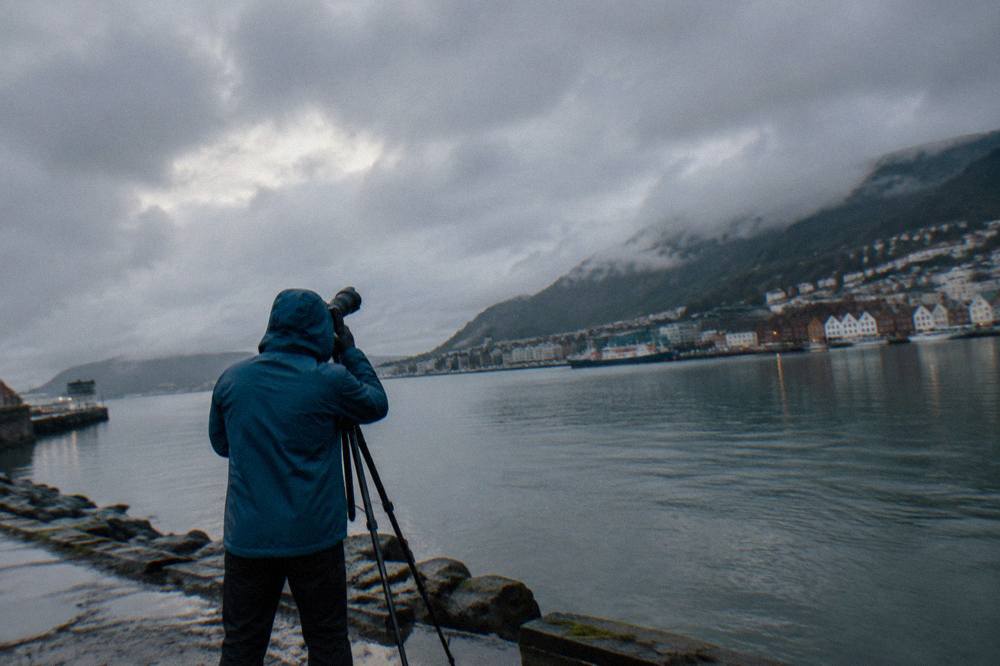
The photographic kit deserves its own line. A tripod and a camera or phone capable of multi-second exposures matter far more than lens quality at this latitude, where displays are often faint and low on the horizon. Give the tripod a foam wrap if you have one; metal legs in damp near-freezing air are miserable to handle.
Which Bergen Day Tours Pair Well With An Aurora Hunt?
The best pairings are the day trips that run inland or up the fjord arms, because they scout the exact dark terrain you want to return to at night: the glacier-lake tours into the mountain interior, the Hardangerfjord and Rosendal cruises along open water, and the Mostraumen runs up Osterfjord. City products like walking tours and the hop-on-hop-off bus orient you for the evenings you stay in town. Durations, prices and ratings render from the live listings, not from this page.
The logic is simple. A day trip is a reconnaissance run for the evening. If the sky over the inner fjord is clear at two in the afternoon, the odds that it stays that way past dark are decent, and you will know the road, the stop and the viewpoint before you have to find them in the dark. The featured glacier-lake tour is the strongest single pairing, Folgefonna National Park and glacier lake with lunch, a full-day excursion on the listing.
The Rosendal cruise is the water pairing, cruise to Rosendal by the Hardangerfjord, per the listing.
And for the in-town days between trips, the hop-on-hop-off sightseeing bus maps the city in an afternoon; its price is unpublished by the operator, so the listing is the only source.
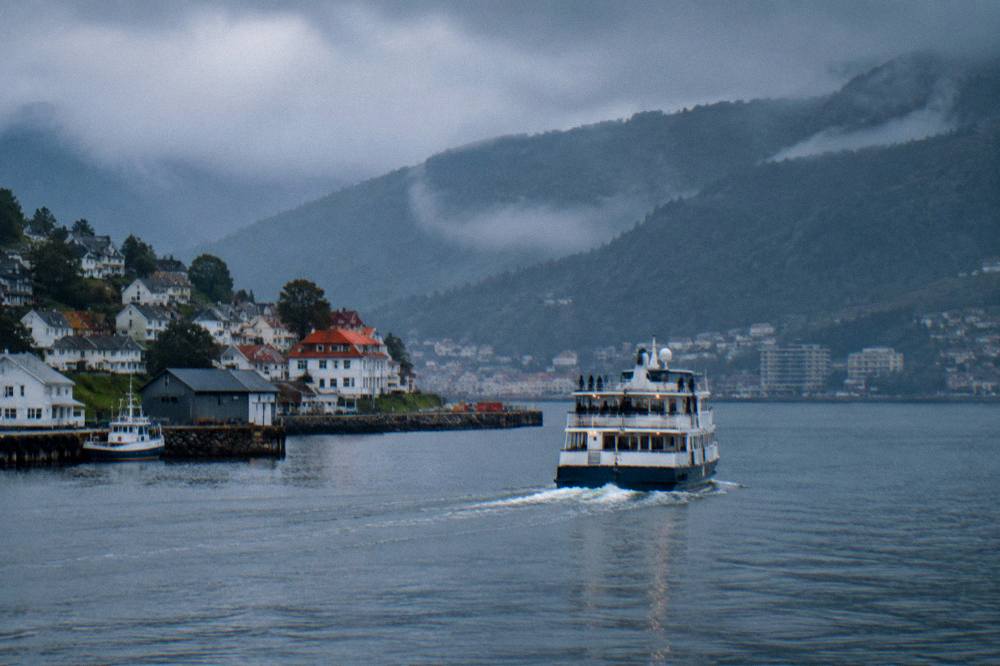
If the fjord-and-glacier direction appeals, the deeper itineraries are worth reading next: the fjord tours overview, the planning a trip to Bergen primer, and the Bergen airport page for arrival logistics, where the Bybanen's airport line is the cheapest option and is free with the Bergen Card. The winter-focused pages, Bergen in winter and the wider seasonal guides on this site, carry the rest of the cold-month picture.
Common Questions About The Northern Lights In Bergen
How do I get from Bergen to the northern lights?
You travel out of the city's light and cloud for the evening: along the fjord arms by boat, inland by bus or rail, or via a day trip that ends in dark terrain. The Bergen Card includes free Skyss buses and the Bybanen light rail across Vestland county, which covers the first leg of most runs. The verbatim question also appears as a section heading above with the full answer.
Can you see the northern lights in Bergen itself?
Occasionally, yes. The city sits at 60.39 degrees north, inside the auroral band, but 217 days with precipitation in the trailing 13 months per yr.no mean the coastal cloud usually wins. Treat in-town sightings as a bonus, not a plan.
What is the best month for aurora near Bergen?
On the current data, February and March trade decent darkness against drier sky, and the most recent observed January was unusually dry at 82mm against a 256mm normal. November and December are the wettest months and the worst odds.
Do I need to book a tour to see the aurora from Bergen?
No. Transport is cheap with a Bergen Card, 400 NOK for 24 hours including the county network, and dark fjord-side spots are reachable on scheduled services. Tours help by putting you in dark terrain during the day and giving you refundable structure if the sky fails.
Is Bergen too far south for the northern lights?
No. At 60.39 degrees north, Bergen is well within the latitude band where displays occur. The obstacle is meteorological, not geographical: oceanic cloud cover, not the solar physics, is what limits sightings.
How cold is an aurora night in Bergen?
Milder than many visitors expect. Winter monthly means run between -1.4C and 6C per the Met Norway table, and precipitation stays frequent even in the coldest months, so the kit that matters is waterproof and windproof rather than expedition-weight.