Bergen Shopping
Bergen, in Vestland county on Norway's southwestern coast, is a Hanseatic trading town that still shops like one: wool from the mountains, fish from the harbor, and design studios tucked between the wooden houses. This guide lays out what is actually worth buying, which streets to walk, and what the attraction prices look like around the big sights.
Short answer
Buy Norwegian wool knitwear, marine and leather goods, aquavit and brown cheese, and contemporary Scandinavian design; shop the Bryggen rows for souvenirs, Marken and Skostredet for independent stores, and the Fish Market for food; use the 2026 Bergen Card for attraction and transport savings.
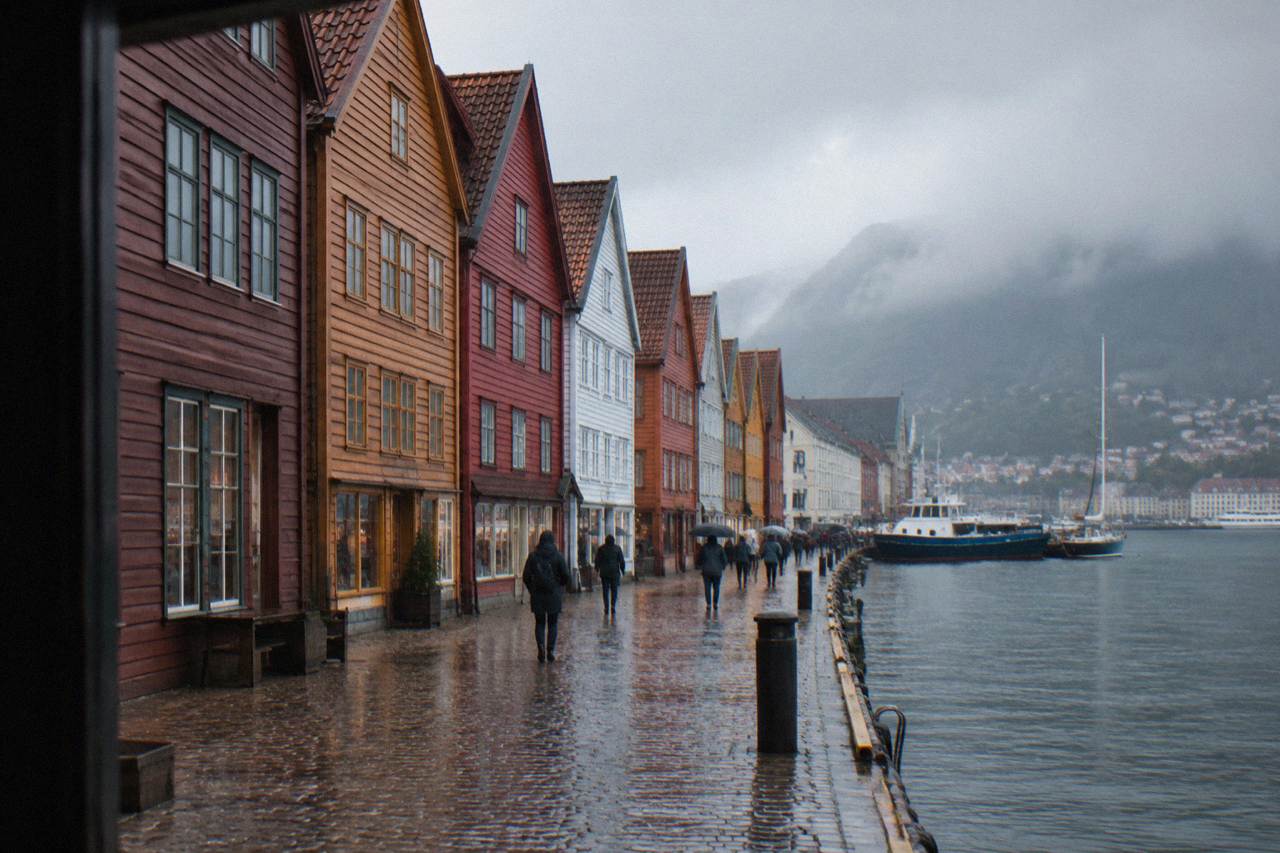
Bergen, a former Hanseatic League trading post in Vestland county on Norway's southwestern coast, earned its wealth by selling fish, wool and grain across the North Sea, and the shopping instinct never left. The city is small enough that you can walk from the souvenir rows of Bryggen to the designer studios of Skostredet in a quarter of an afternoon, and wet enough that half the retail in town exists to keep people warm and dry.
A few ground rules before the storefronts. Prices for bookable tours on this page render from the operator's live listing rather than being typed by hand, so they are always current. Attraction and transport prices in NOK come from the official 2026 Bergen Card flyer published by visitbergen.com on 12 May 2026, which this site treats as the primary source for the season. And because the city is wet, with yr.no's Bergen station table showing 217 days with precipitation over the trailing 13 months, shopping here doubles as rain planning; the indoor stores and the covered market halls are as much a strategy as a pastime.
Where To Shop In Bergen: The Streets And Quarters That Matter
Bergen's shopping concentrates in five walkable areas: the Bryggen wharf rows for souvenirs and craft workshops, Torgallmenningen and the city-centre blocks for mainstream retail, Marken for small independent shops and vintage, Skostredet for contemporary Norwegian design, and the Fish Market on the harbor for food. All five sit within a short walk of each other in the city centre, so a single shopping day can cover them without a bus ticket. The historic character changes block by block: Bryggen's wooden buildings are a UNESCO World Heritage Site, inscribed in 1979 per UNESCO's own listing, and the shops inside them lean traditional, while Skostredet a few streets south is where the newer studios are.
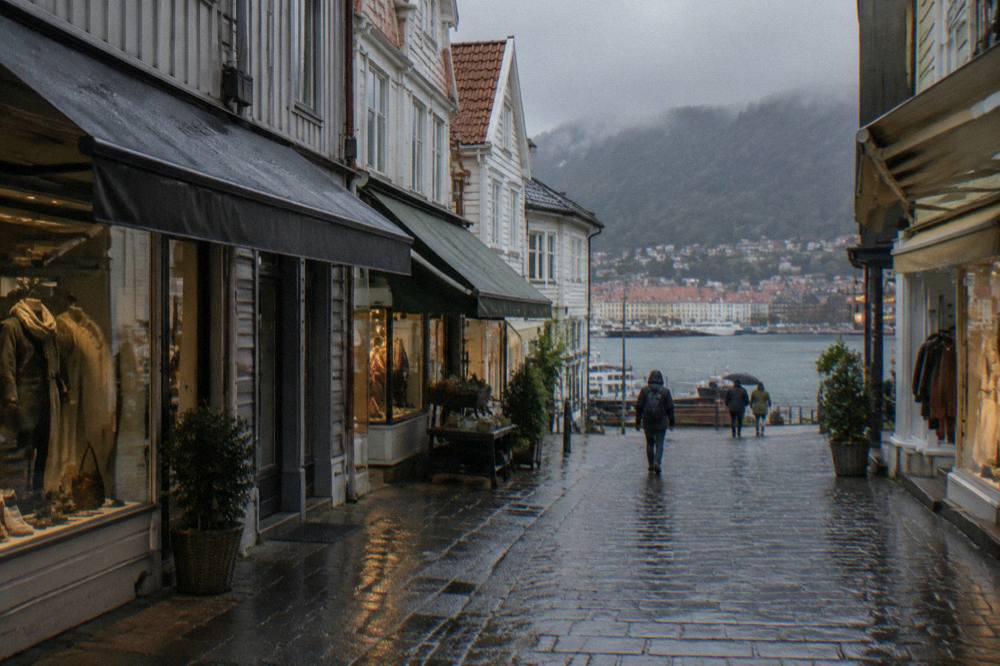
Bryggen is the emotional center of the city's retail, even if it is the most touristy. The long rows of colorful wooden warehouses face the harbor, and the passages between them hide small workshops and stores selling knitwear, ceramics, trolls and fjord photography. UNESCO's listing text for Bryggen describes the wharf as the remains of the old Hanseatic trading docks, and the commercial continuity is genuine: people have been selling things on this waterline since the German merchants ran the stockfish trade. Expect the highest souvenir density here and the highest prices to match.
Torgallmenningen, the main square of the city centre, anchors the mainstream shopping. Department stores, chain fashion and the big bookshops cluster here and on the pedestrianized streets around it, which makes it the practical place for anything functional: an umbrella, a phone charger, thermals, or a second pair of socks when the first pair loses its argument with the weather. Marken, a short walk north, is the compact district of small independent shops, cafés and vintage stores set on a slope between the centre and Nordnes; it is where locals actually browse on a Saturday.
| Area | Character | What to hunt for |
|---|---|---|
| Bryggen wharf rows | UNESCO-listed wooden warehouses, souvenir and craft density | Knitwear, ceramics, fjord photography, traditional crafts |
| Torgallmenningen and city centre | Mainstream pedestrian retail, department stores | Functional purchases, fashion, books, rain gear |
| Marken | Independent shops on a slope near Nordnes | Vintage, small-batch goods, cafés |
| Skostredet | Designer street of contemporary studios | Norwegian design, homeware, jewelry |
| Fish Market (Fisketorget) | Open harbor market between Bryggen and the center | Smoked and fresh fish, caviar tubes, reindeer meat, souvenirs |
Skostredet deserves a specific mention because first-time visitors often miss it. The street runs through the old town blocks southwest of the harbor, and its low wooden buildings now house contemporary Norwegian and Scandinavian design stores: furniture, glassware, jewelry and minimalist clothing. If you want something made in Norway that will still be in your kitchen in ten years, this is the street, and the walk between here and Bryggen passes several of the alleys covered in the old town guide. For how these districts slot into a full arrival plan, see the planning guide at planning a trip to Bergen, and for the walkability question specifically, a route through the center is covered on the Bergen city centre guide on this Bergen Travel Guide site.
One practical note on moving between these areas: a Skyss single adult ticket in zone A costs 51 NOK per the visitbergen.com transport page, but you will rarely need it for shopping, because the whole retail core is on foot. The light rail and bus network matters more for reaching suburban malls or the airport with a full suitcase, which is covered in the getting around guide linked further down.
What Is Good To Buy In Bergen?
The five things worth buying in Bergen are Norwegian wool knitwear, marine and leather goods, aquavit and other bottle-shop items, brown cheese and food souvenirs from the Fish Market, and contemporary Scandinavian design from the studios around Skostredet. Wool is the headline because it is the one category where a coastal mountain city has a genuine, centuries-old advantage, and because it solves the problem travellers arrive with, which is staying warm and dry in a climate the yr.no table shows as wet in every single month.
Everything else on this short list is either distinctly local, distinctly good, or both.
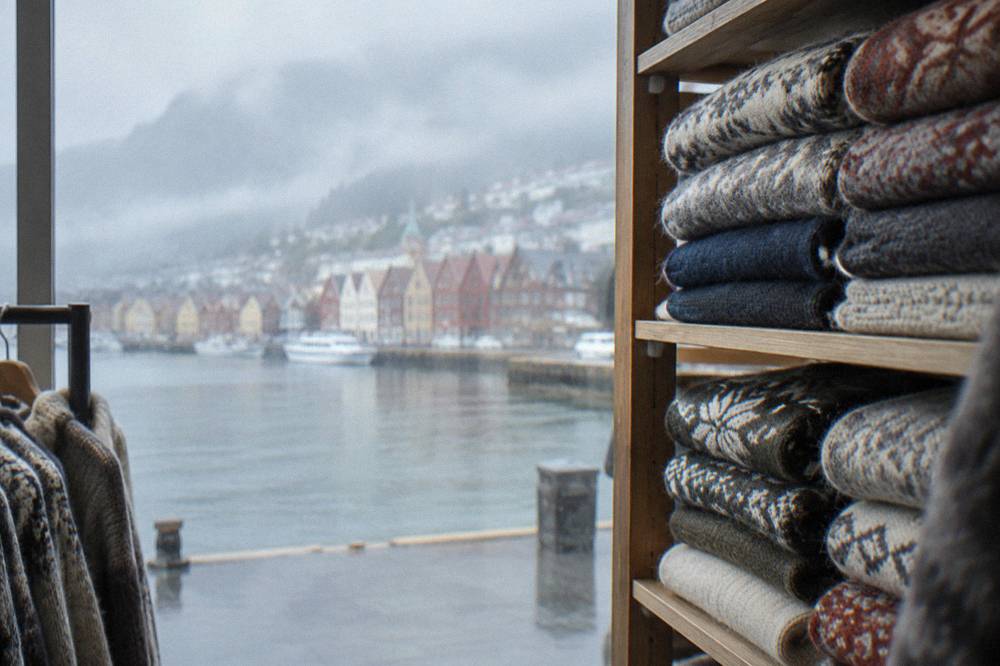
Wool first, because wool is the honest answer to the question in this heading. A proper Norwegian wool sweater is not cheap, but it is the single most useful object you can carry home from this coast, and the patterns sold in the Bryggen shops and the city-centre stores are the same ones Norwegians wear on the mountain paths above town. Look for garments labeled with Norwegian wool content rather than a fjord print on a synthetic, and check the care label, because a sweater that cannot be washed is a sweater you will wear twice. Socks, hats, mittens and scarf-weight yarns are the budget-friendly end of the category and pack flat.
| Category | Why it is a Bergen buy | What to check before paying |
|---|---|---|
| Wool knitwear | Genuine local advantage, solves the rain problem | Fiber content label, washability, fit over a base layer |
| Marine and leather goods | Harbor city with a leather-working tradition | Stitching, sole quality, whether it is a shoe or a souvenir |
| Aquavit and bottle-shop items | Distinctly Norwegian, gift-friendly | Airline rules if you have a connecting flight |
| Brown cheese and food souvenirs | The taste visitors remember most | Vacuum packing for cheese and fish, customs at home |
| Scandinavian design | Studios on Skostredet make it local | Fragility, shipping options for heavy pieces |
The Fish Market, which sits on the harbor between Bryggen and the center and gets its own full page in the Fish Market guide on this site, is where the food souvenirs live. Smoked salmon, trout, caviar tubes, reindeer and moose meat, cloudberries in jars and brown cheese in wax are the standard haul. Brown cheese, the caramelized whey cheese Norwegians eat on waffles, is the most divisive souvenir in the country, and the staff at market counters are used to handing out samples precisely because of that. Ask for vacuum packing on anything smoked or cured, and if you are flying home via another airport, remember liquids and spreadable foods still face the usual cabin rules.
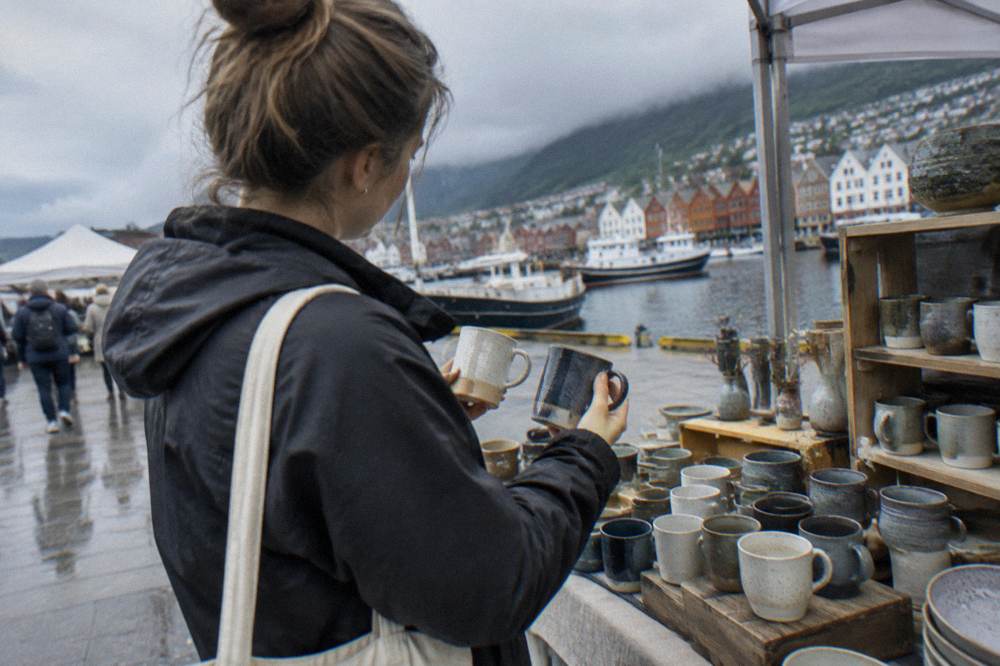
Bottle-shop buys are the second gift tier: aquavit, the caraway spirit, plus whatever local gin and fruit liqueurs the Vinmonopolet shelves carry. Norway's alcohol retail is state-controlled, and prices are high everywhere, so buy the bottle you cannot get at home rather than hunting a bargain, because there isn't one. Reindeer-hide slippers, sisal and wool throws, and the laminated troll your relative definitely asked for round out the bottom of the list, and the souvenir rows of Bryggen will sell you all of them within fifty meters of each other.
If your shopping day should double as an orientation day, a guided walk is an efficient start, and the roster's Discover Bergen on Foot and Boat option, which combines the old town streets with a harbor stretch, fits the theme exactly. It is one of this site's featured tours, and you can check the operator's live listing for current dates and pricing with Check availability, or read the full tour page at Discover Bergen on Foot and Boat.
How Much Does Shopping In Bergen Cost Compared To Sightseeing?
A shopping day in Bergen splits into two ledgers: retail prices, which are high across Norway and are best treated as fixed, and attraction and transport prices, which are published in NOK and can be cut hard by the 2026 Bergen Card, which costs 400 NOK for 24 hours per adult, 500 NOK for 48 hours, 600 NOK for 72 hours and 700 NOK for 96 hours per the official flyer. The card includes free Skyss buses and the Bybanen light rail across Vestland county, including the airport line, plus free or discounted entry at most major sights, which matters when a day of shopping sits next to a day of museums.
The attraction prices below are all drawn from the official 2026 Bergen Card flyer, which this site fetched directly, and they are the ordinary adult rates for the current season. The pattern is consistent: a day that stacks two or three paid attractions plus light rail rides will usually clear the 400 NOK card price, while a day that is purely shopping and wandering will not. The card's own flyer lists the full coverage, and the deeper breakdown of what the card does and does not include is on the Bergen Card guide page.
| Attraction or transport item | 2026 ordinary adult price (NOK) | Bergen Card treatment |
|---|---|---|
| Skyss single ticket, zone A | 51 | Free travel with card instead |
| Fløibanen funicular return, 1 Apr-30 Sep | 200 | Discounted, one per card, at ticket office |
| Fløibanen funicular return, 1 Oct-31 Mar | 145 | Discounted, one per card, at ticket office |
| Ulriken643 cable car return | 435 | Discounted |
| KODE Art Museums (Bergen Card price) | 200 | Covered on the card |
| The Aquarium, seasonal windows | 380-415 | Discounted |
| Bryggen Museum | 170 (85 on card) | Free on card per flyer |
| Hanseatic Museum with guided visit | 160 | Covered on card |
| Haakon's Hall | 120 | Covered on card |
Two of these line items do double duty for shoppers. Fløibanen and the Ulriken643 cable car are the classic add-ons to a shopping day because they are the fastest way to see the city you just walked, and the flyer's seasonal split on the funicular, 200 NOK in summer versus 145 NOK in winter, is a real saving if your trip is in the cold half of the year. The Aquarium's two seasonal windows, 380 NOK from 1 November to the end of February and 380 to 415 NOK from 1 March to 31 October, follow the same logic in reverse: the shoulder season is marginally cheaper at the waterfront attractions than the height of summer.
The honest budget summary, and the one this site stands behind on the cost page, is that retail in Norway is expensive in a way no local trick undoes, while sightseeing is expensive in a way the Bergen Card genuinely softens. The full cost picture for the city, restaurants included, is laid out in the how expensive is Bergen guide, and pairing a shopping day with a food walk is covered below.
Where To Find Food Souvenirs In Bergen Beyond The Fish Market
Beyond the Fish Market, food souvenirs in Bergen come from three more places: the delicatessens and cheese counters around the city centre, the supermarket aisles for chocolate, crispbread and cloudberry jam, and the seasonal food festivals, with the Bergen Matfestival running around 4-5 September 2026 per the official festival listings. The Fish Market is the showcase, but it is a tourist showcase with prices to match, and half the good edible souvenirs in this city sit on ordinary shop shelves at ordinary Norwegian prices, which is to say still high, just not harbor-market high.
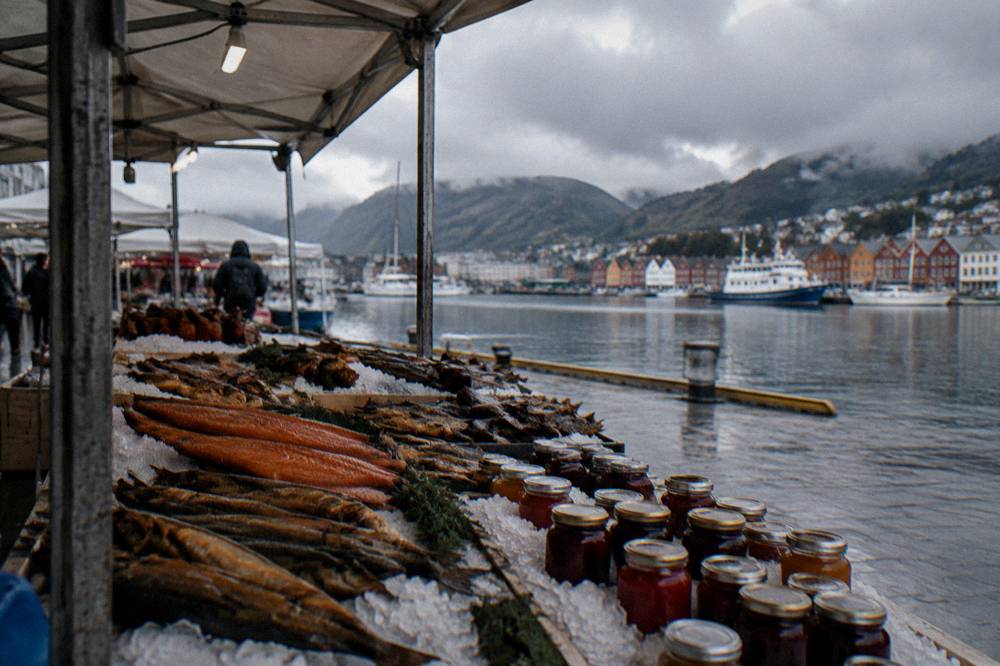
The supermarket strategy sounds like a downgrade and is not. Freia milk chocolate, the standard Norwegian gift chocolate, tubed caviar, brown cheese in wax, crispbread, cloudberry and lingonberry preserves and raspberry licorice are all supermarket items, and they travel well. The delicatessen counters and the better cheese shops in the center carry aged golost and the smoked sausages that the market also sells, at prices that are easier to swallow, and the staff will vacuum-seal for travel. The division of labor is simple: buy the photogenic salmon and the sampled cheese wherever you tasted it, buy everything else in a grocery store.
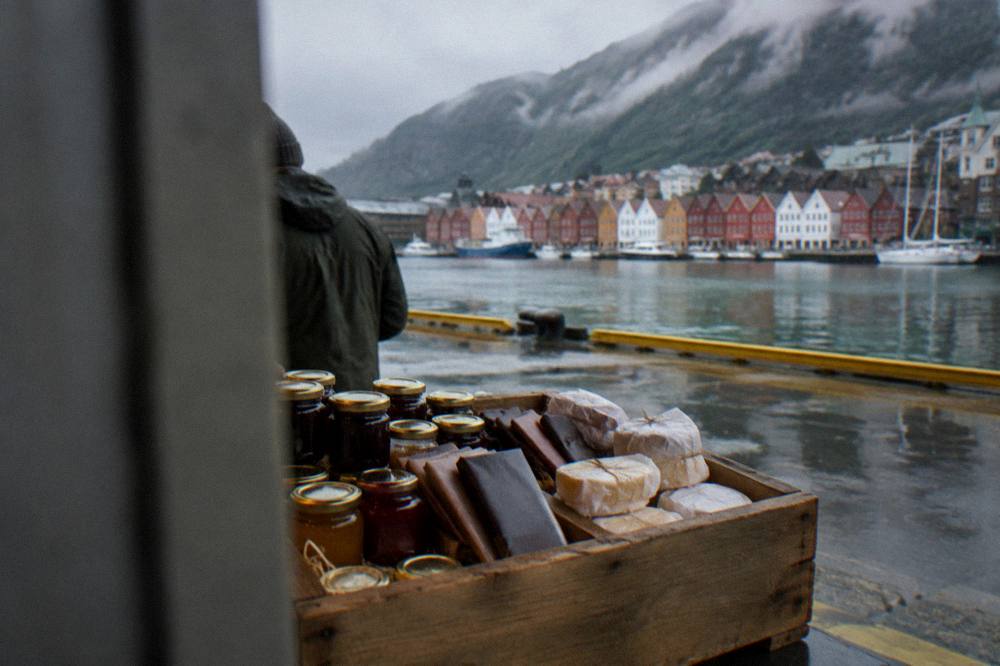
The Matfestival, the city's food festival, which the official listings place around 4-5 September 2026 in central venues, runs alongside the Norsk Siderfestival, the cider festival, and is the single best window of the year for edible souvenirs: local producers, cider makers and cheese dairies set up stalls within walking distance of the regular shops. If your dates miss it, the Fish Market plus a delicatessen covers the same ground at a slower pace. A food-focused guided walk is the other shortcut, and there are two on this site's roster worth checking on the day, starting with the one below.
The holiday season changes the food-souvenir map entirely. The Bergen Christmas Market at Festplassen runs 20 November to 22 December 2026 with free entry, per the visitbergen.com listings, and Pepperkakebyen, the gingerbread city that claims to be the world's largest, runs 14 November 2026 to 10 January 2027. Both are covered in detail on the Bergen at Christmas guide, and the market's food stalls mean mulled wine, gingerbread and gift-sized jars can be bought in one loop.
Is Shopping In Bergen Expensive, And How Can You Spend Less?
Yes, shopping in Bergen is expensive by almost any comparison, because Norway's wage level and import costs set the floor, but three levers work: buy the wool, food and design items that are local rather than imported, use the supermarket for edible souvenirs, and let the 2026 Bergen Card absorb the transport and attraction costs so the shopping budget is not also paying for sightseeing. None of these make Bergen cheap. They make the spend deliberate instead of accidental, which is the difference between one good sweater and three mediocre ones.
The wool calculation is the clearest one on the page. A proper Norwegian sweater costs real money in the Bryggen shops, and it costs nearly the same money in the city-centre stores, because the goods are the same and the Norwegian price floor does not move for a better address. What changes is category: socks, mittens and hats carry a fraction of the price of a full knit and solve most of the actual weather problem, given the yr.no Bergen station table shows precipitation in every month of the trailing 13 months and 217 days with precipitation across the year. The practical move is one good mid-layer plus accessories, bought on the first day so they get worn for the rest of the trip.
| Spending lever | How it saves | Trade-off |
|---|---|---|
| Norwegian-made over imported souvenirs | Same price band, better object | Fewer items for the money |
| Supermarket food souvenirs | Market-stall prices avoided | Less atmosphere, no samples |
| Accessories over full knitwear | A fraction of the sweater price | Less of the classic look |
| Bergen Card for transport and entries | Attraction spend absorbed, not discounted | Only pays off with 2-3 paid sights |
| Shoulder-season timing | Winter funicular at 145 NOK vs 200 NOK | Colder, wetter shopping streets |
The card lever deserves one honest caveat. The 2026 Bergen Card's 400 NOK 24-hour adult price clears its own cost only if you ride and enter things: the flyer's line items above show that a funicular return at 200 NOK plus two museum entries already brackets the card price. A pure shopping day with no entries should skip the card and buy the 51 NOK Skyss single only if a suitcase or the airport line is involved. The timing question, which month to come at all, is its own subject and is handled in full on the best time to visit Bergen page.
The last lever is timing within the day. Norwegian shops close earlier than many visitors anticipate, and the harbor market winds down with the light. A shopping plan that puts outdoor markets and Bryggen's rows first, design studios midday, and department stores late is the one that fits the way this city actually keeps its hours. For what the streets feel like in each season, the weather data behind all of this is on the Bergen weather page.
How To Get Your Purchases Home From Bergen
The practical export rules are: buy wool and textiles freely, keep receipts for anything expensive, ask for vacuum packing on all smoked fish and cheese, leave reindeer hide and some meat products until you have checked your home country's rules, and remember that liquids like aquavit go in checked luggage or get bought airside if your airport has it after security. None of this is complicated, but a jar of cloudberry jam seized at a connecting gate is a disappointing end to an otherwise excellent haul, and the rules differ enough by destination that a two-minute check beats a guess.
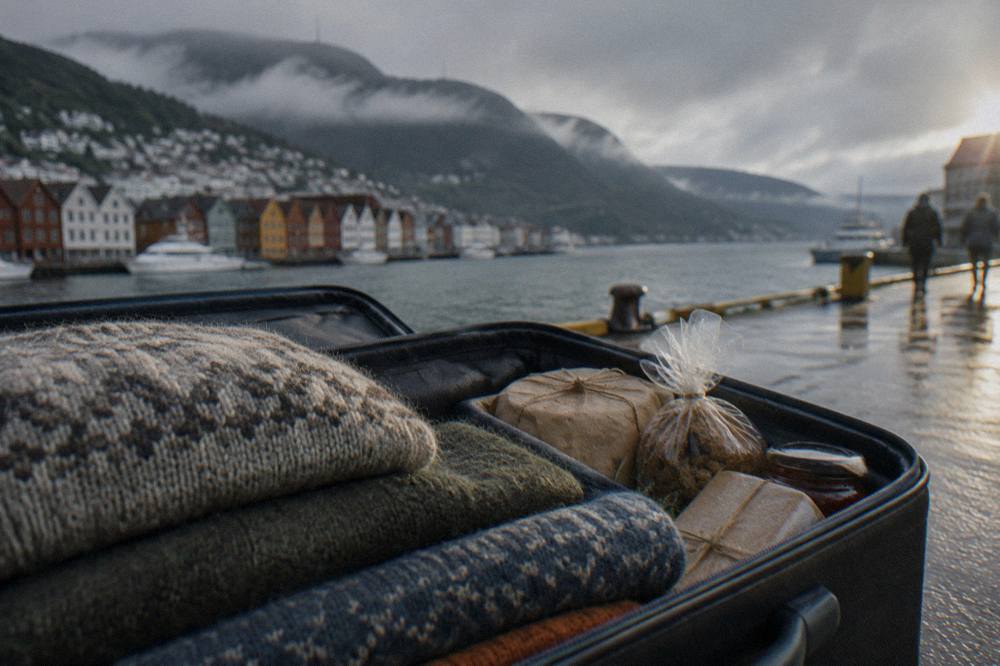
Packing is the other half of the problem, and wool makes it easy. Sweaters, socks, hats and throws compress into the dead space a pair of shoes leaves, and they protect the fragile ceramics from Skostredet better than the bubble wrap the design shops will sell you. The failure mode is the reverse load: buying a heavy glass or ceramic piece on day one and then carrying it through three days of rain-slick cobbles. Buy fragile things late, ask the studios about shipping, and several of them will arrange it for furniture and art even when the price tag looks like a handover-only one.
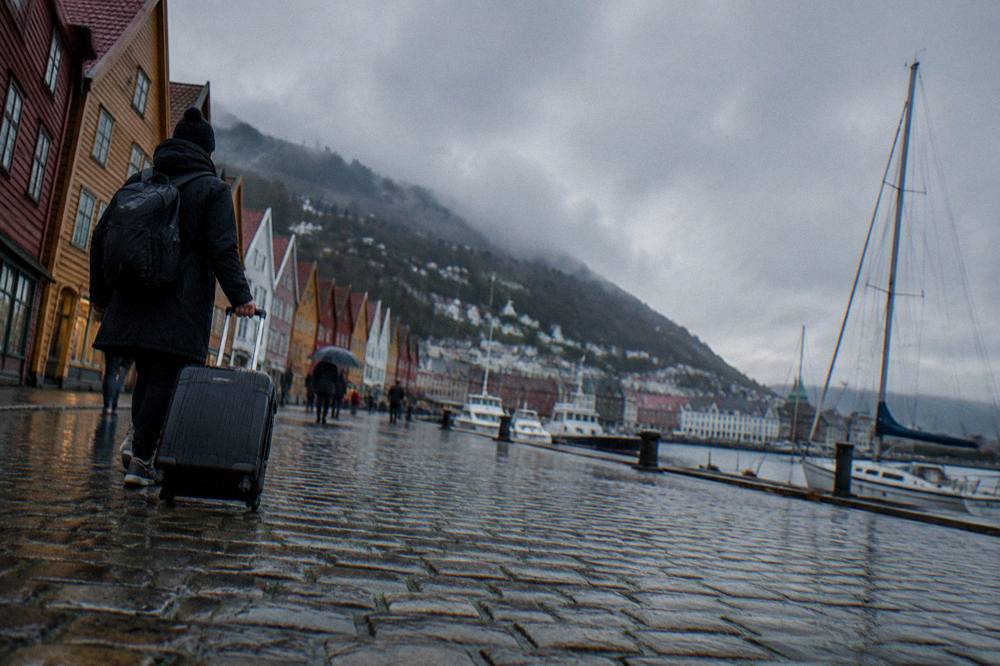
The airport question closes the loop. Bybanen line 1 runs from the city centre to Bergen Airport Flesland and is included free with the Bergen Card, which makes it the default way to move a suitcase out of town; the airport layout, the bus alternatives and the arrival-day logistics are all on the Bergen airport guide. One seasonal note for late-night departures: a scheduled runway night closure for lighting maintenance affects the airport overnight between 19 May and 5 June 2026, from roughly half past ten in the evening to half past three, which matters only if your flight leaves in that window. The full transport picture, including how the light rail and buses divide the city, is on the getting around Bergen page.
If the shopping trip grows into a fuller itinerary, the next reads on this site are the best restaurants in Bergen for spending the money you saved, and the where to stay in Bergen page for being near enough to the shops to walk the bags home. A fjord day is the classic counterweight to a retail day, and the options are compared on the fjord tours from Bergen page.
Common Questions About Shopping In Bergen
What is good to buy in Bergen?
Norwegian wool knitwear is the headline buy, followed by marine and leather goods, aquavit from the state bottle shop, brown cheese and smoked fish from the Fish Market or a delicatessen, and contemporary Scandinavian design from the studios around Skostredet. Wool is the most useful and the most local, and accessories like socks and hats deliver the same material at a fraction of the price.
Where To Shop In Bergen If You Only Have A Few Hours?
Stay in the core: start at the Bryggen rows for souvenirs and craft workshops, cut through Torgallmenningen for anything functional, and finish on Skostredet for design. All three are within a short walk of each other in the city centre, so even a layover-sized window covers the essentials without transport.
Is Shopping In Bergen Expensive?
Yes, by almost any comparison, because Norwegian wage levels and import costs set the price floor. The levers that work are buying local goods rather than imported souvenirs, using supermarkets for edible items, and letting the 2026 Bergen Card, at 400 NOK for 24 hours per the official flyer, absorb transport and attraction costs so the shopping budget is not paying for sightseeing too.
Can You Buy Brown Cheese In Bergen And Take It Home?
Yes, brown cheese is sold at the Fish Market, in delicatessens and in every supermarket, usually in wax packaging that travels well. Ask for vacuum packing where it is offered, keep the receipt, and check your home country's rules on dairy imports, which vary and are the only real constraint on an otherwise easy souvenir.
When Are The Best Markets In Bergen?
The Bergen Christmas Market at Festplassen runs 20 November to 22 December 2026 with free entry, Pepperkakebyen, the gingerbread city, runs 14 November 2026 to 10 January 2027, and the Bergen Matfestival, the food festival, fills central venues around 4-5 September 2026. The rest of the year, the Fish Market and the Bryggen rows are the daily constants.
What Should You Not Buy In Bergen?
Skip imported souvenirs with a fjord print but no Norwegian origin, fragile ceramics bought on day one of a walking trip, and any bottle of spirits you cannot carry in checked luggage on a connecting flight. The pattern behind all three is the same: the good buys in this city are the local ones, the durable ones, and the ones that survive the trip through the rain to the airport.