Bergen Accessibility
Bergen, in Vestland county on Norway's southwestern coast, is a compact, historic city built on hills and surrounded by water, and that combination shapes every accessibility decision a visitor makes. This guide covers what the primary sources confirm: fares, card prices, climate data and the tours that suit travellers who cannot or prefer not to walk far.
Short answer
Bergen's city core is compact and the Bybanen light rail and Skyss buses cover it, with a Skyss single ticket at 51 NOK in zone A and the Bergen Card (from 400 NOK for 24 hours) including all of it. Hills, wooden wharf alleys and mountain attractions need case-by-case checks with each operator before you book.
Bergen, on the southwestern coast of Norway in Vestland county, is a small city with a steep profile: a flat harbour core, wooden wharf quarters, and mountains rising directly behind the town. For a visitor with limited mobility, that profile cuts both ways. The centre is compact enough that distances between the main sights are short, and the transit network that knits it together is modern. At the same time, the historic districts that give Bergen its UNESCO listing, the wharf at Bryggen inscribed in 1979, were built by Hanseatic merchants across centuries of trading history, and they were never built with wheels in mind. This guide, from Bergen Travel Guide, sticks to what primary sources actually confirm: fares, card prices, official climate data and verified tour products, with honest pointers on what has to be checked directly with each operator.
How Accessible Is Bergen For Wheelchair Users And Slow Walkers?
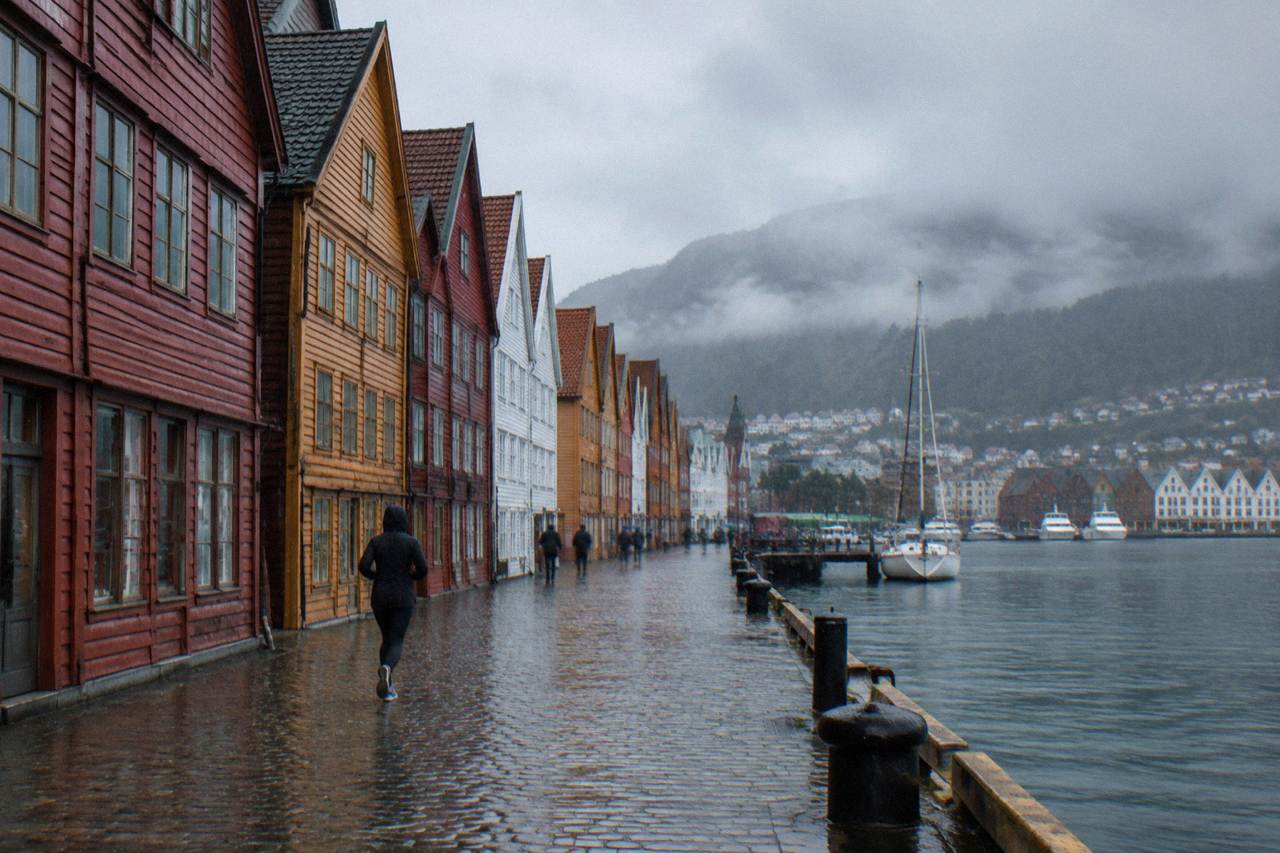
Bergen's city centre is compact and transit-served, but it is a hill city with historic surfaces: the harbour-side core between the Fish Market and the park at Festplassen is mostly flat and short on foot, while the areas around Bryggen, the Sandviken quarter and anything approaching the mountains involve slopes, steps and uneven ground that no source rates as step-free. Practical planning therefore splits into two questions: which routes stay flat, and which attractions can be reached without stairs.
The honest starting point is terrain. The kommune's own tourism information, visitbergen.com, markets Bergen as a walkable city, and the flat harbour core supports that claim for distances: the main square, Torgallmenningen, the Fish Market, the harbour and the lower part of Bryggen sit close together. What the marketing does not spell out is surface quality. Bryggen's parallel wooden alleys are uneven by design, and the surrounding streets in the old town are a mix of cobbles and patchwork asphalt. A manual wheelchair user may manage the outer quay, which is a modern paved promenade, but the interior alleys are a different proposition.
The second honest point is that detailed, venue-by-venue accessibility data for Bergen attractions is not something this site can responsibly invent. Ramps, lift dimensions and adapted toilets change with renovations, and none of that can be assumed to remain accurate. What a good plan does instead is contact each venue ahead, in English, through the contact details on its own listing, and ask the specific questions that matter: step-free entry, lift size, accessible toilet, and whether the guided portions involve standing or stairs. Norwegian venues answer such emails quickly, and many publish an accessibility page of their own.
Third, the weather is an accessibility factor in itself. Rain makes wooden decks, cobbles and steep stone staircases more hazardous, and Bergen is wet: the yr.no Met Norway station table shows 217 days with precipitation over the trailing thirteen months. Grip, a wheelchair poncho and a slow pace are not luxuries here. The practical consequence for pacing is simple: build rest points into every block of the day, because a city that looks small on a map still takes effort when surfaces are wet and uneven.
Is Central Bergen Walkable With Limited Mobility?
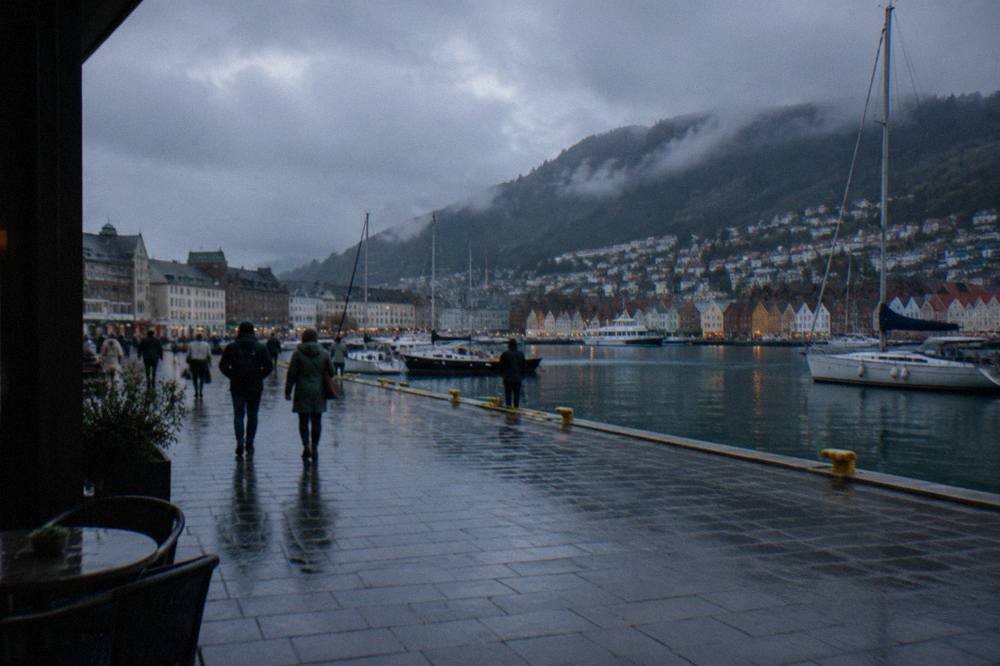
Most of central Bergen's headline sights sit within a flat, compact harbour core that a slow walker can cover in short stages, with the Fish Market, Torgallmenningen square, the lower Bryggen quay and Festplassen all close together on level ground, while the historic wooden alleys behind Bryggen, the Sandviken slopes and the streets climbing toward Fløyen are steep, uneven or stepped and should be treated as sit-or-skip for anyone with seriously limited mobility.
The flat spine is the harbour. A useful orientation is to think of the day as running along the water: start at the Fish Market, follow the modern quay promenade past the moored boats, and continue to the tip at Nordnes if energy allows. This is paved, level and served by rest options in the form of cafes and benches. The central Bergen city guide covers the streets along this spine in detail.
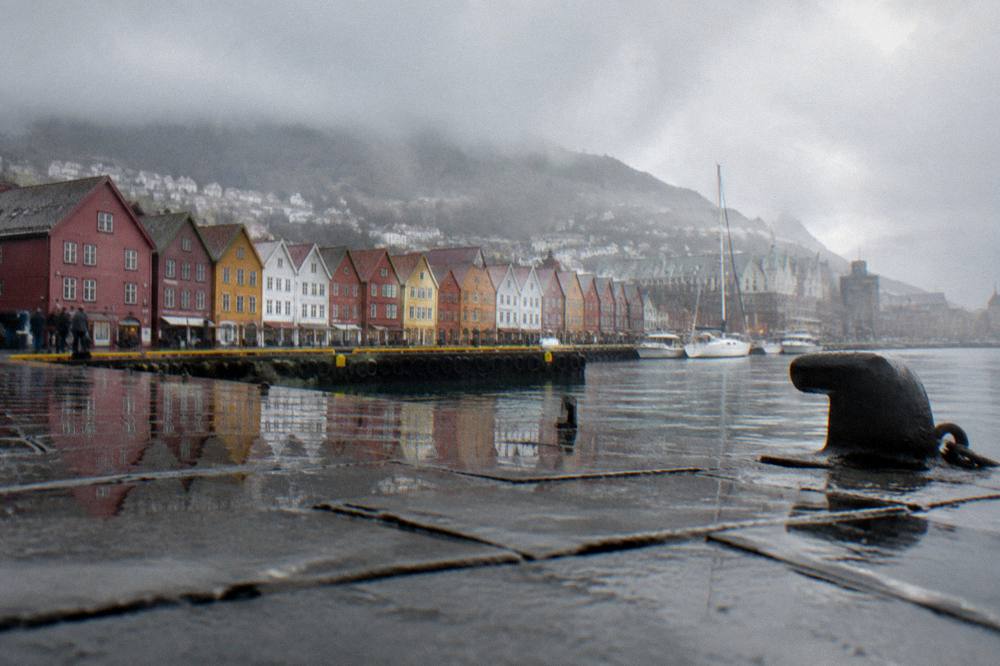
Behind that spine, quality drops off fast. The interior of Bryggen, the wooden Hanseatic wharf, is a network of narrow passages with thresholds and boards, and it is the single most famous thing in the city, which creates a real tension for visitors who cannot manage it safely. The compromise is the outer quay, which delivers the postcard view of the gabled wooden facades without entering the alleys at all.
One further point deserves a flag: pacing tools help. A self-guided audio format removes the pressure of keeping up with a group, and the roster includes a short audio product for central Bergen, listed below, which covers landmarks and stories in under an hour on the visitor's own schedule and at the visitor's own pace.
Beyond the core, distances stop being walkable and the question becomes transport, which is the next section. Slow walkers should also note that the compact centre means taxis are short hops, not long commitments, and that building a day around two or three anchor points rather than a full circuit is the standard advice for this terrain.
Which Bergen Transport Options Are Step-Free?
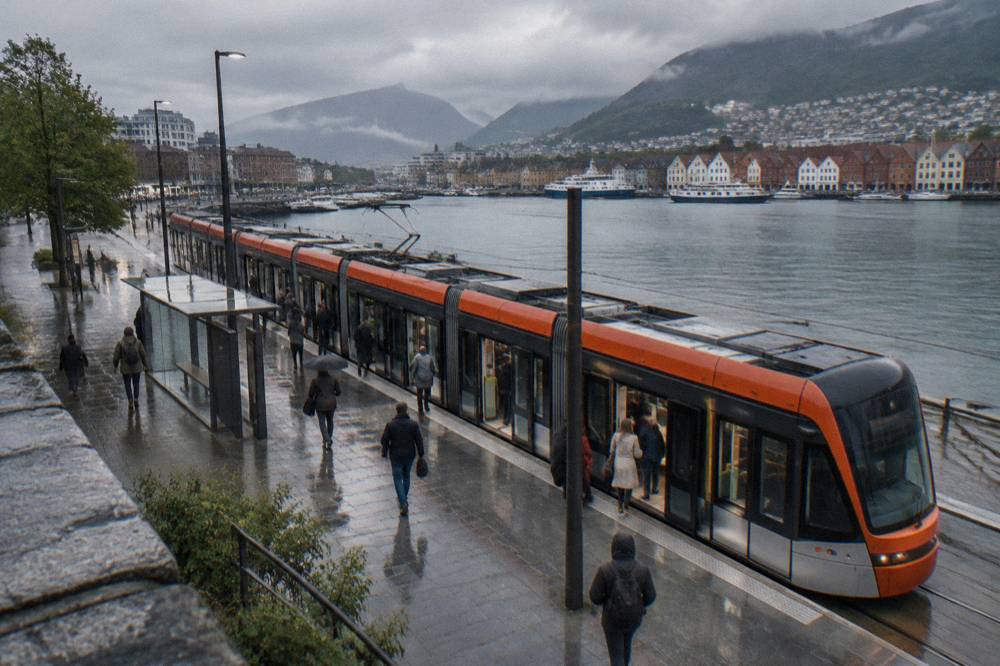
Bergen's Bybanen light rail and its Skyss buses are the backbone of accessible local transport: the Bybanen runs modern low-floor vehicles on line 1 from Bergen Airport Flesland into the city centre and on line 2 through the centre, with level boarding at stations, and a Skyss single ticket in zone A costs 51 NOK, with the Bergen Card covering all Skyss buses and Bybanen trains in Vestland county, including the airport line, at no extra charge.
The Bybanen is genuinely the accessibility headline of this city. Light rail vehicles in Bergen are low-floor with step-free boarding, and stations are built with level platforms; the network's own operator pages and Skyss's travel planner carry current service information, including planned engineering work. That last point matters for travellers planning ahead: Skyss published summer 2026 maintenance on line 1 between Slettebakken and Byparken from 29 June to 26 July, with replacement buses running, and the Nonneseter stop has been closed in the city-bound direction since 23 February 2026 because of demolition work nearby. Any traveller with mobility equipment should check skyss.no's disruption page for their dates before trusting a specific station.
Buses fill in where the rails do not go. Skyss zone A covers the city, and the 51 NOK single fare is confirmed on visitbergen.com's own travel information page and on the Bergen Card flyer. City buses in Norway are, as a class, low-floor with a kneeling function and a ramp, but individual route and vehicle status is a question for Skyss rather than something to assume; their customer service answers accessibility queries directly.
For door-to-door needs, taxi is the fallback, and no specific fare or dispatch detail is given beyond the fact that apps and phone dispatch both operate in the city, as covered in the getting around Bergen guide. The fare question with taxis in Norway is rarely pleasant, so short harbour-core hops are the economical way to use them.
The table below pulls the confirmed money figures together for the transit layer of an accessible trip.
| Transport item | Price (NOK) | Notes |
|---|---|---|
| Skyss single ticket, zone A | 51 | Adult, confirmed on visitbergen.com travel page |
| Bybanen with Bergen Card | Included free | All Skyss buses and light rail in Vestland county, incl. airport line |
| Bergen Card 24h adult | 400 | Includes the transit coverage above |
| Bergen Card 24h child (3-15) | 100 | Same transit coverage |
What Should Reduced-Mobility Visitors Know About Fløibanen And Ulriken643?
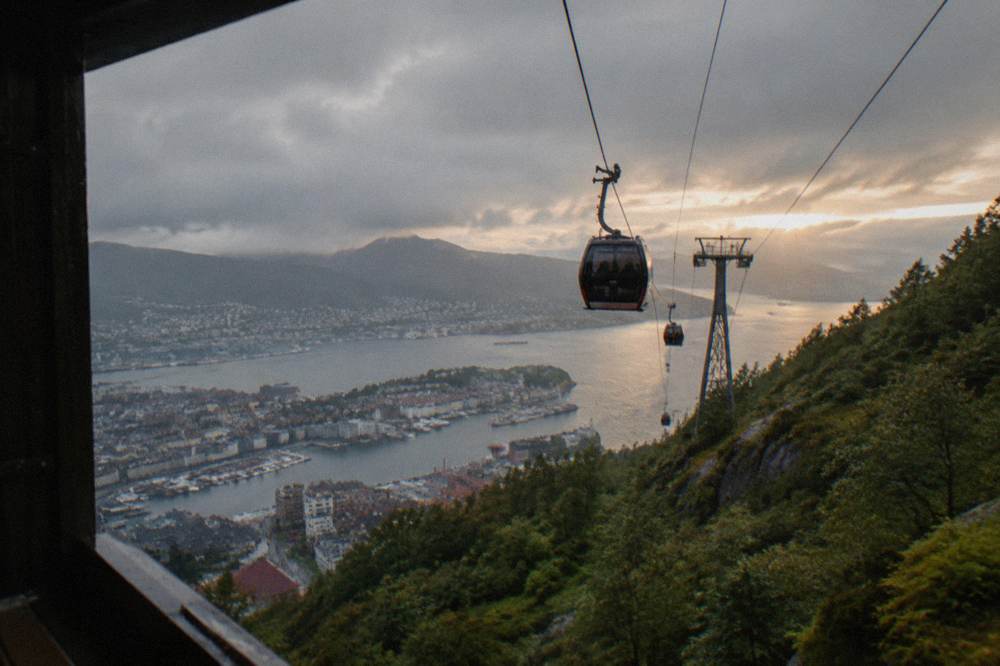
The two mountain systems above Bergen are priced and scheduled in primary sources, Fløibanen's return at 200 NOK adult from April to September and 145 NOK from October to March, and Ulriken643's return at 435 NOK adult, but neither operator's step-free access, lift details or boarding assistance policy could be confirmed, so email each operator before booking and ask specifically about wheelchair boarding, and note Ulriken643 has scheduled maintenance in the first two weeks of 2026, reopening around 13 January.
Those two price lines and the closure dates come from the operator's own pages and from the official 2026 Bergen Card flyer, which is the strongest single primary source for this site's attraction pricing. What the flyer does not contain is accessibility geometry, and this guide will not invent it. Funiculars and cable cars vary enormously between systems in door width, platform gaps and whether a wheelchair can board at all, and a wrong assumption here ruins a day rather than an hour.
The mountain payoff, for those who can use them, is the reason people come: the view over the city, the fjord arms and the islands. The alternative for visitors who cannot board either system is honest and still good, namely the flat harbour spine and the viewpoints reachable by car or taxi on the road network above the city, arranged privately. A private vehicle with a driver who handles the routing is where guided products genuinely earn their keep for this audience, and one such product appears below.
A private sightseeing product sits especially well in an accessibility plan because the pace is negotiable with the guide rather than fixed by a group, and the vehicle door-to-door structure removes the surface-quality questions that the historic quarters raise. The trade-off is price, which sits far above the public-transit layer, and the listing carries the current figure.
The seasonal price split on Fløibanen is worth knowing for budgeting, since the off-season saving applies only outside the April-to-September window, and the Ulriken643 2026 maintenance closure means early-January visitors should confirm reopening dates on ulriken643.no before building a plan around it.
Are Bergen's Museums And Indoor Sights Accessible?
Bergen's major museums, including KODE Art Museums, the Hanseatic Museum, Haakon's Hall, Bryggen Museum and the Bergen Maritime Museum, all publish their admissions in the official 2026 Bergen Card flyer, from 120 NOK at Haakon's Hall to 170 NOK ordinary at Bryggen Museum and 160 NOK at the Hanseatic Museum, but their individual step-free access, lift and toilet arrangements must be confirmed with each museum directly, though many venues sit at street level in the flat core.
Indoor days matter more in Bergen than in drier cities, because with 217 days of precipitation over the trailing thirteen months in the Met Norway data, a museum layer is not optional planning, it is the backbone of the plan. The good news for slow walkers is that several of the headline museums sit in or near the flat harbour core, so an indoor circuit can be built without hills.
The pricing table below is the confirmed 2026 flyer data, with the KODE figure carrying a specific caveat: 200 NOK is the Bergen Card flyer's listed figure for KODE, and kode.no's own standalone ticket page does not show a confirmed ordinary price, so treat 200 NOK as the card-related figure rather than a verified walk-up price.
| Attraction | Ordinary price (NOK) | Bergen Card price (NOK) |
|---|---|---|
| Haakon's Hall | 120 | Reduced on the flyer |
| Bryggen Museum | 170 | 85 |
| Hanseatic Museum (with guided visit) | 160 | Reduced on the flyer |
| KODE Art Museums | Not independently verified | 200 (flyer figure) |
| The Aquarium (Akvariet) | 380 (Nov-Feb) / 380-415 (Mar-Oct) | Reduced on the flyer |
For wheelchair users, the practical method is a two-line email per museum: does the entrance have steps, and is there an accessible toilet? Museums in Norway answer this routinely, and renovation status changes, which is exactly why a static third-party claim, including one from a site like this, is worth less than the venue's own current answer.

What Does The Bergen Card Cost, And Does It Help Accessible Travel?
The 2026 Bergen Card costs 400 NOK for 24 hours and 100 NOK for a child, rising through 500 NOK at 48h, 600 NOK at 72h and 700 NOK at 96h for adults, and for accessible travel its single biggest value is transit: the card includes all Skyss buses and Bybanen light rail in Vestland county, including the airport line, which means a wheelchair user can move across the city and from the airport on the low-floor network without buying individual 51 NOK tickets.
Those prices are the official visitbergen.com flyer figures, published in May 2026, and the transport line is the accessibility story inside them. For a visitor whose mobility is limited, not paying per journey changes behaviour in the right direction: it makes the tram a default rather than a decision, and the tram is the step-free backbone of the city. The Bergen Card guide covers the attraction discounts in full.
The duration choice is worth a sentence. A 24-hour card suits a single sightseeing day; the 72-hour card at 600 NOK starts to make sense when the plan includes museums plus a transit-heavy day trip within Vestland county. What the card does not include is the airport bus, Flybussen, which the flyer confirms is excluded, and for which no fare could be verified from the operator's own site; the light rail airport line is the covered, confirmed alternative.
| Bergen Card duration | Adult (NOK) | Child 3-15 (NOK) |
|---|---|---|
| 24 hours | 400 | 100 |
| 48 hours | 500 | 125 |
| 72 hours | 600 | 150 |
| 96 hours | 700 | 175 |
The card also carries discounted Fløibanen and Ulriken643 tickets, one per card, purchased at the ticket office rather than onboard, which is a detail worth knowing when budgeting a mountain day.
When Is The Best Weather For An Accessible Bergen Trip?
The Met Norway station table for Bergen shows the warmest, driest recent months clustered in late spring and summer, July at a 14.9C observed mean and 184.2mm of rain, June at 14.4C and 165.7mm, and April the driest recent month at 65.9mm, while the wettest months in the table are November at 321.8mm and December at 303.5mm, so for mobility-limited travel the practical recommendation is May through August, accepting rain stays frequent at 217 days with precipitation across the trailing thirteen months.
That recommendation is arithmetic on the official yr.no table, not a promise of sunshine. Bergen does not do dry. The difference between a June visit and a November visit is not the presence of rain, it is the volume and the temperature, and the table below shows the full trailing-thirteen-month picture so the planning can be done on real numbers.
| Month | Mean temp (C) | Precipitation (mm) |
|---|---|---|
| September | 13.1 | 206.6 |
| October | 9.7 | 231.9 |
| November | 6.0 | 321.8 |
| December | 5.8 | 303.5 |
| January | -1.4 | 82.0 |
| February | 0.8 | 133.4 |
| March | 5.9 | 243.9 |
| April | 7.9 | 65.9 |
| May | 9.9 | 127.4 |
| June | 14.4 | 165.7 |
| July | 14.9 | 184.2 |
| August | 14.3 | 243.6 |
For accessible travel specifically, two rows deserve emphasis. April's 65.9mm recent total makes it a dark-horse candidate for visitors who prefer cool weather and drier surfaces, though 7.9C means gloves and layers. January's low precipitation total of 82mm comes bundled with a -1.4C mean, and ice on cobbles and wooden decks is a genuine hazard for anyone unsteady on their feet, so winter visits need a clear-eyed view of that trade-off. The full seasonal picture is in the Bergen weather guide, and the best time to visit Bergen guide weighs the same data for general travellers.
What Accessible Food Experiences Does Bergen Offer?
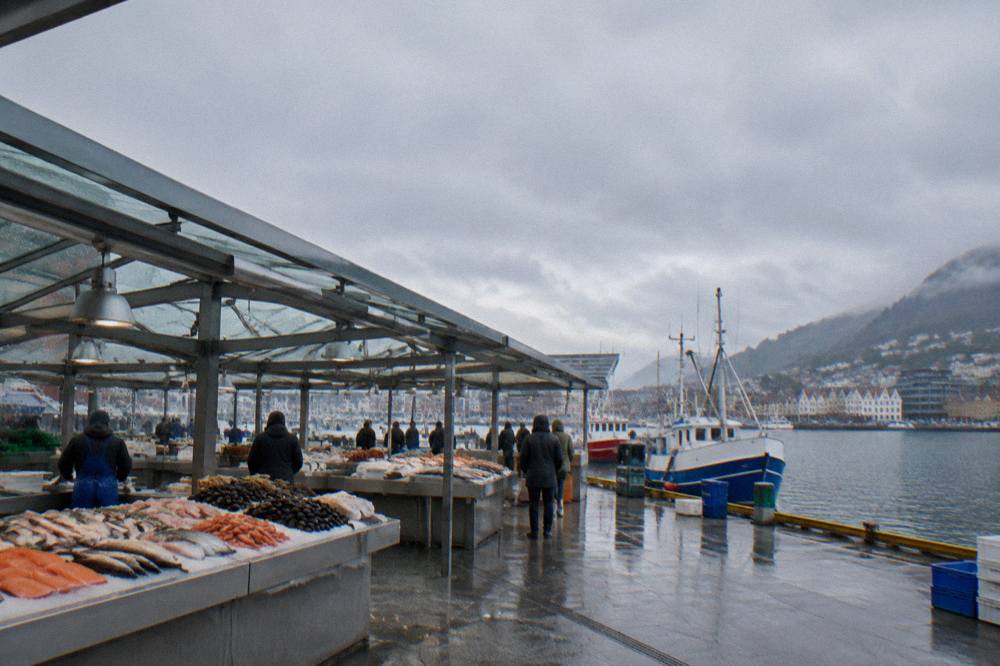
Bergen's food culture concentrates in the flat harbour core around the Fish Market and the surrounding restaurant streets, which is structurally good news for reduced-mobility visitors, and the verified food-tour products on this site's roster include a three-hour walk-and-taste product and a longer option that pairs tastings with the Fløibanen funicular, with the funicular variant best suited to visitors who can board the funicular and the flat-walking variant better for those who cannot.
The Fish Market sits on the flat harbour spine, and the streets around Torgallmenningen and Skostredet hold most of the city's serious restaurants, a cluster mapped in the best restaurants in Bergen guide. Seafood is the obvious theme, and the market's own stalls make a short, self-paced tasting stop that involves no stairs at all.
Guided food products change the calculus, because a walk-and-taste format covers ground between stops. That is precisely where the pairing of guide and pace matters: a good operator answers honestly when asked how far the walk is, whether stops have steps, and whether seating is available at each venue. Ask before booking, not after.
The featured tour below is the funicular-pairing option from this site's roster. Its listing carries the current price and rating, and its Fløibanen leg means the same boarding question as the mountain section applies: confirm with the operator what the funicular portion requires before booking if mobility is limited.
For travellers who prefer to build their own meal day, the flat-spine method works well: one market stop, one lunch near the square, one dinner on the quay, each within a few level minutes of the others, with the tram available for anything longer. The planning a trip to Bergen guide carries the general framework.
What Day Trips From Bergen Suit Reduced-Mobility Travellers?
Day trips from Bergen run by bus and boat to the fjords, and the structural question for accessibility is boarding: large sightseeing vessels on routes such as Mostraumen and the Sognefjord have gangways and decks that vary by vessel and tide, while coach-based products such as the glacier-lake and Hardangerfjord tours involve scheduled stops that may or may not be step-free, so email the operator with specific dates and ask about boarding assistance, ground conditions at stops and toilet access.
That answer is deliberately procedure-shaped, because day-trip accessibility is not a fixed property of a destination, it is a property of that day's vehicle and crew. What this site can confirm is the product layer: the fjord tours from Bergen guide maps the full range, from three-and-a-half-hour fjord cruises to full-day mountain-and-waterfall circuits, and the roster's glacier-lake product is one of the best-reviewed of the coach-based full-day options.
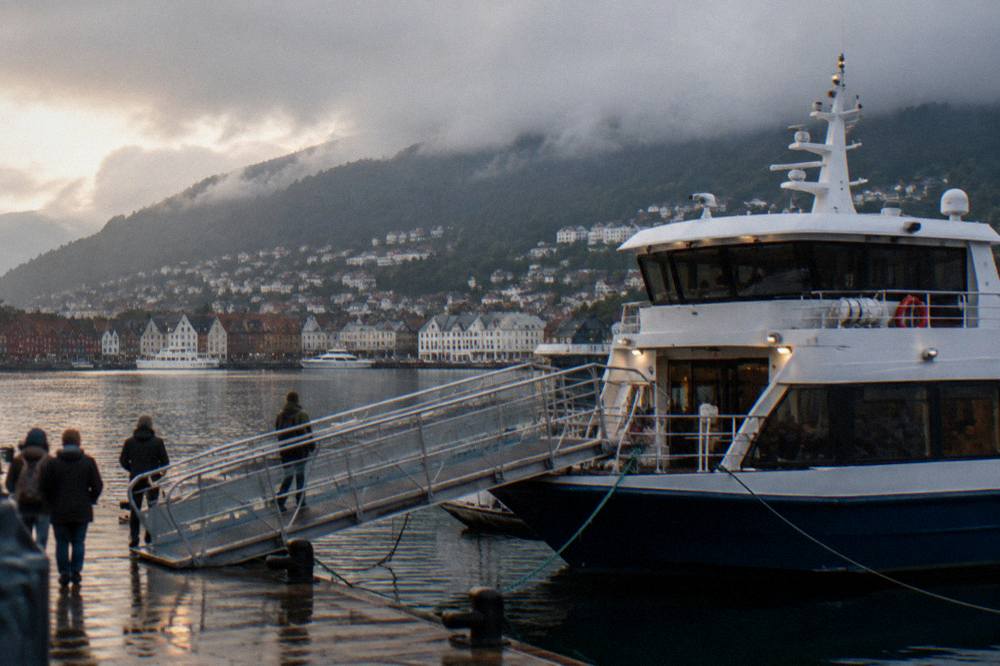
Boat trips deserve one extra flag: tide. Gangway gradients on Norwegian harbour steps change with the water level, and an easy boarding at midday can be a steep ramp at low tide an hour later. Operators know this and will tell you the boarding time's tide if asked, which is exactly the kind of question worth asking two weeks out rather than at the quay.
For cruise passengers, the same logic applies at the port end: Bergen's cruise port guide covers the terminals and shuttle arrangements, and cruise lines' own mobility assistance desks hold the definitive shore-side arrangements for each call.
Common Questions About Accessible Travel In Bergen
Is Bergen wheelchair accessible?
Partly. The Bybanen light rail and Skyss buses form a low-floor transit backbone, a 51 NOK single in zone A or free with the Bergen Card, and the flat harbour core is compact. Historic surfaces at Bryggen, the hills and the mountain attractions are not step-free in any verified sense, so each must be checked with its operator.
Does the Bergen Card help with accessible travel?
Yes, mainly through transport. The 2026 card, from 400 NOK for 24 hours, includes all Skyss buses and Bybanen light rail in Vestland county including the airport line, so a wheelchair user can ride the step-free network without per-journey tickets.
Is the Bergen light rail step-free?
The Bybanen runs modern low-floor vehicles with level boarding at its stations, which is why this guide treats it as the accessibility backbone of the city. Service disruptions, including the 2026 maintenance on line 1 between Slettebakken and Byparken and the one-directional Nonneseter stop closure, are published on the Skyss disruption pages.
Can you visit Bryggen with limited mobility?
The outer quay yes: the modern waterfront promenade delivers the full view of the wooden facades on level, paved ground. The interior alleys of the UNESCO-listed wharf are narrow and uneven, so most limited-mobility visitors treat the quay as the destination and skip the passages.
When is the driest time to visit Bergen for easier walking?
By the Met Norway table, April's recent 65.9mm total was the driest month in the trailing thirteen, and May through August combine the warmest means, 9.9C to 14.9C, with moderate rainfall. November at 321.8mm is the wettest month in the table and the hardest for outdoor walking.
Are Bergen taxis and airport transfers workable with a wheelchair?
Taxis operate across the city by app and phone, and no specific fare or adapted-fleet figure is published, so an adapted-vehicle request should be made at booking rather than at the kerb. The Bybanen line 1 from Bergen Airport Flesland is the confirmed step-free public route into the centre, covered free by the Bergen Card, and the Bergen airport guide covers arrival logistics.
Bergen rewards a specific kind of planning: short flat stages, the tram as default, museums confirmed by email two weeks ahead, and honest decisions about the hills and the wharf alleys. Do that, and the city gives back its harbour light, its wooden facades and its seafood without demanding a single staircase.