3 Days In Bergen In Winter
Three days is the sweet spot for a winter weekend in Bergen, Norway: enough time for the UNESCO-listed wharf, both mountain rides, the museums and one fjord excursion before the early darkness settles in.
Short answer
Three days. Two covers only the historic core and one mountain; four pushes past what winter opening hours comfortably support. A Friday-to-Sunday plan fits Bryggen, Fløyen, the museums and one fjord day trip.
Bergen, the Hanseatic trading city in Vestland county on Norway's southwestern coast, compresses remarkably well in winter. The question "how many days in bergen in winter" resolves to three for almost every kind of traveller: the city of roughly 294,860 people (kommune figure, 1 January 2026) keeps its core attractions inside one walkable peninsula, the days are short, and the payoff of a fjord excursion is worth protecting an entire day for. This itinerary lays out a Friday-to-Sunday plan built around the official Bergen Card price sheet and the Met Norway climate record, with a rain contingency, because in Bergen that is not pessimism, it is arithmetic: the trailing 13 months of yr.no station data count 217 days with precipitation.
How Many Days In Bergen In Winter?
Three days is the answer most winter visitors settle on: enough for Bryggen, Fløibanen, the Hanseatic museums and one fjord or Hardangerfjord day trip, without stretching a dark, wet weekend too thin. Two days covers the city core only, and four begins to need a second day trip or a museum-heavy pace. A Friday-to-Sunday plan fits Bergen's compact centre, its 217-days-with-precipitation climate and winter opening hours at museums, which shorten after the autumn shoulder.
The reasoning is structural rather than sentimental. On Bergen Travel Guide the question splits into two halves: what the city itself needs, and what the surrounding fjords deserve. The city needs two unhurried days. The fjords need one full day, because every worthwhile option, whether the Mostraumen cruise or the Hardangerfjord route, is a day trip rather than an afternoon stroll. A three-day budget covers both without the attrition that comes from racing between attractions in the dark.
Visitors with only a single day should read the one day in Bergen itinerary instead and treat the fjords as a reason to return. Visitors stretching to a longer stay will find the five-day Bergen and fjords plan adds Voss and the Sognefjord towns. For a longer discussion of the tradeoffs, see how many days in Bergen is enough, and if you are wondering whether a fourth day would feel like padding, is 4 days in Bergen too long addresses exactly that.
A quick comparison of the three realistic lengths:
| Length | What it covers comfortably | What it misses |
|---|---|---|
| 2 days | Bryggen, Fløyen, Fish Market, one museum | Any fjord day trip, Ulriken, most of KODE |
| 3 days | Full city core, Ulriken, all major museums, one fjord excursion | A second fjord region, Voss, Troldhaugen |
| 4 days | Everything above plus a second day trip or a slow museum day | Only worth it if you add the Sognefjord |
What Should Day One In Bergen Cover?
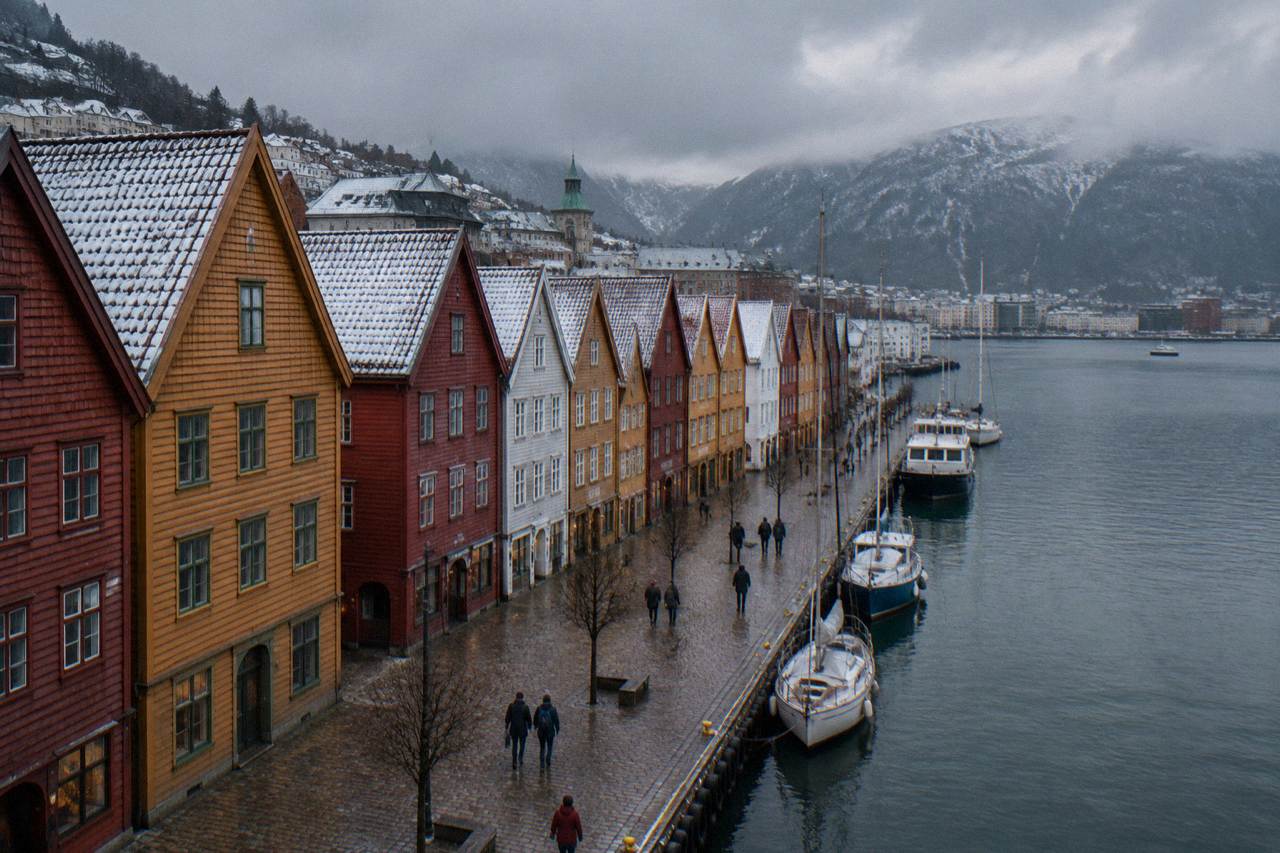
Day one belongs to the historic core: Bryggen's Hanseatic wharf, a UNESCO World Heritage Site inscribed in 1979, then the Hanseatic Museum at 160 NOK with its guided visit, the Fish Market, and a Fløibanen funicular ride up Fløyen, where the winter return fare is 145 NOK for an adult between 1 October and 31 March. Everything sits on one compact, walkable peninsula, so a single unhurried day is genuinely enough for the whole set.
Start at Bryggen, the row of gabled wooden merchant buildings that survived fire after fire and earned its UNESCO inscription in 1979, per the listing's own text. Winter empties the wharf of crowds, which is the one honest compensation for the drizzle. The narrow wooden alleyways between the buildings hold small independent shops and a museum entrance, and they photograph best in the flat grey light of a January or February morning.
The Hanseatic Museum sits at the wharf's eastern end; the Bergen Card flyer lists it at 160 NOK with a guided visit. From there it is a two-minute walk to the Fish Market at the harbour front, which in winter is quieter and more local in character than in the cruise season. Do not plan a long restaurant stop for lunch here; the compact core rewards walking while the light lasts.
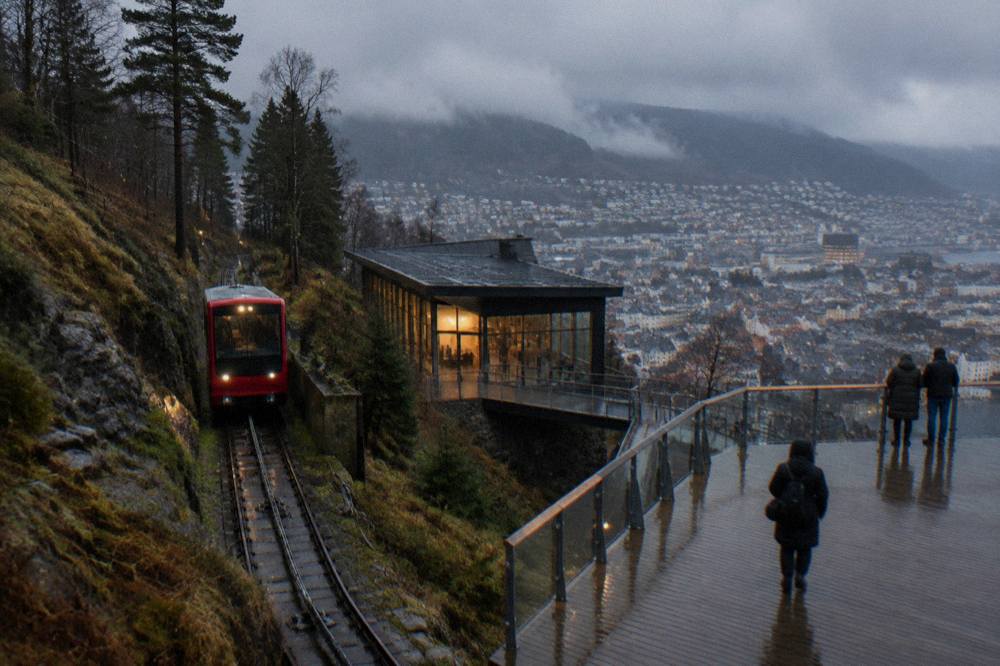
Finish the day on Fløyen. The funicular's own price table gives a 145 NOK adult return for the 1 October to 31 March window, rising to 200 NOK in the summer half of the year, and the Bergen Card flyer confirms a discounted card rate purchased at the ticket office. The city view from the top is the classic Bergen postcard, and in winter the mountain plateau above the station holds enough snow for a short walk before the light goes. Keep the ride for late afternoon: the view at dusk, with the city lights coming on below, is the strongest version of it.
If you would rather have a local frame the whole first day, a guided food and culture walk through the winter streets is the alternative to doing it alone. More on that under day two.
What Should Day Two In Bergen Look Like?
Day two is the museum and mountain day: KODE Art Museums at 200 NOK per the Bergen Card flyer, the Aquarium at 380 NOK in its 1 November to 28 February window, Bryggen Museum at 170 NOK ordinary or 85 NOK with the card, and Haakon's Hall at 120 NOK, all reachable on foot or one short Bybanen ride, with Ulriken's cable car as the afternoon climax if its maintenance calendar allows.
Begin at KODE. The art museum complex holds a notable collection of Edvard Munch graphics alongside the Golden Age Norwegian landscape painters, and its winter galleries are the correct answer to a forecast of horizontal rain. Treat 200 NOK as the figure from the Bergen Card flyer rather than a confirmed walk-up price, and check the museum's own site before you go.
The Aquarium sits at the tip of Nordnes, roughly fifteen minutes on foot from the wharf. The flyer prices it at 380 NOK for the winter window of 1 November to 28 February. Sea lions, penguins and a cold-water tank the size of a small theatre make it a reliable half-day, and it doubles as the best bad-weather option in the city for families; the Bergen with kids itinerary leans on it heavily.

For the afternoon, Ulriken, the tallest of Bergen's seven mountains, is the ambition. Two planning notes from the current data. First, the Ulriken643 price page lists a 435 NOK adult return. Second, the cable car's own site announces a scheduled maintenance closure in weeks one and two of 2026, reopening around 13 January, plus standard Christmas closures, so check before you build day two around it. A round-trip ticket can be checked for current dates at the operator's live listing for the Ulriken cable car.
For the evening, the free-walk scene runs year-round: a GuruWalk comedy history walk, the best-reviewed of the bunch on GuruWalk, keeps a two-and-a-half-hour winter departure, and its page is at Bergen's Best Walking Tour on GuruWalk. It is free and tip based, which suits a budget evening.
The featured option for this itinerary, though, is the guided food and culture walk, a route through the winter city with stops at the eateries locals actually use; the tour's page shows the current price and dates, and the operator's live listing can be checked here: Check availability.
Should Day Three Stay In The City Or Head For The Fjords?
Day three should leave the city for a fjord, and the choice is between the half-day Mostraumen cruise out of the harbour, the full-day Hardangerfjord waterfalls-and-lunch route, or the long Flåm itinerary with railway and fjord cruise combined; all three are bookable day trips from Bergen, and winter departures thin out, so the operator's live listing, not a printed timetable, is the source of truth for what runs on your date.
The Mostraumen option is the shortest: a boat from the harbour into the Osterfjord's narrow Mofjord, close enough to a waterfall that the spray reaches the deck on the summer runs. It is the right pick if you want your fjord day compressed into a morning, leaving the afternoon for one last museum or a slow walk through Marken's shops.
The Hardangerfjord route is the middle choice and the one this itinerary favours for a winter weekend. One version runs as a scenic tour with waterfalls and lunch included, and its page shows a 4.6 rating from 100 reviews, figures that render from the verified listing data: Scenic Hardangerfjord tour with waterfalls and lunch. Hardangerfjord in winter trades orchard greenery for frozen falls and near-empty viewpoints, and the ferry crossing alone justifies the day. Current dates and seats are shown on the operator's live listing.
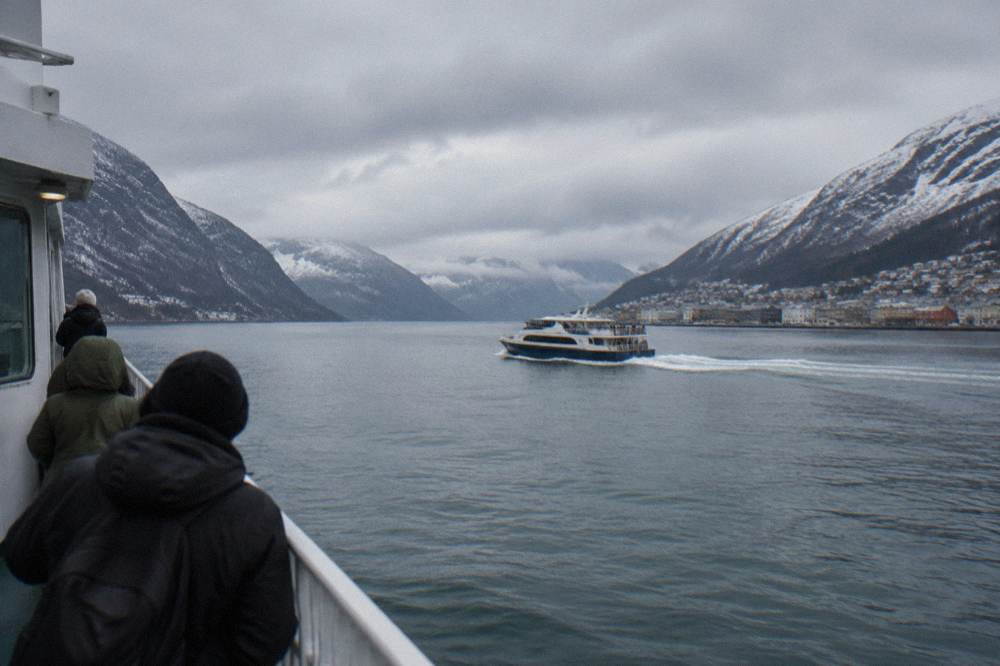
The Flåm option is the full-commitment day: the long-established Bergen to Flåm route pairs a Sognefjord cruise with the famous mountain railway, a combination the dedicated Flåm Railway guide covers in depth. The King of Fjords cruise ticket is the simplest version, bookable at the King of Fjords cruise page; winter sailing dates are limited, so check the listing before committing the day.
If the forecast or the departure calendar kills the fjord plan, do not force it. The backup is a slower third day in the city: Troldhaugen, Edvard Grieg's lakeside villa, plus Bergenhus Fortress with Haakon's Hall at 120 NOK, and the rainy day in Bergen itinerary for the full list of indoor options.
What If It Rains All Weekend In Bergen?
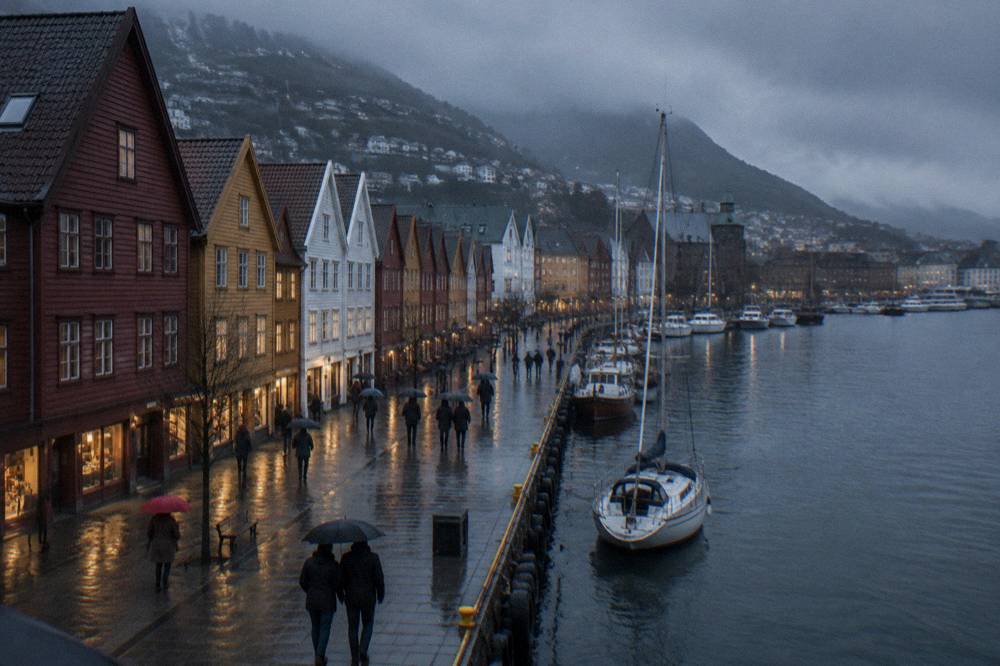
A rained-out weekend is not a failed weekend in Bergen: with 217 days of precipitation counted in the trailing 13 months of Met Norway data, the city is built to be enjoyed wet, and KODE, the Aquarium, Bryggen Museum, the Maritime Museum and the Hanseatic Museum form a walkable indoor circuit that comfortably absorbs two full days without a single exposed viewpoint.
The honest framing matters here. Bergen is not a city that occasionally disappoints with rain; it is a temperate oceanic city where precipitation is the background condition. The yr.no station table for Bergen recorded 321.8mm of precipitation in November 2025 alone against a 275.0mm normal, and even the driest recent month in the table, January 2026, logged 82mm. Planning around rain is not cynicism, it is the local default.
The indoor circuit, with every price from the official Bergen Card flyer: KODE at 200 NOK, the Aquarium at 380 NOK in the winter window, Bryggen Museum at 170 NOK ordinary or 85 NOK with the card, the Hanseatic Museum at 160 NOK with a guided visit, and Haakon's Hall at 120 NOK. Add the Maritime Museum and the covered Fish Market, and two wet days fill themselves.
The one wet-weather trap worth flagging: do not book a fjord cruise for a day with a serious storm forecast. Sea state in the Osterfjord can turn a sightseeing run into an endurance test, and the operators cancel genuinely rough days. The operator's live listing shows current departure status, which is more reliable than any printed winter timetable.
What Does A Bergen Winter Actually Feel Like?
A Bergen winter runs mild and wet rather than severe: Met Norway's observed monthly means for the trailing 13 months show 5.8C in December, -1.4C in January and 0.8C in February, with the cold-season extremes in the record standing at 28.0C in August and -11.3C on 8 January, while monthly precipitation normals range from roughly 109mm in May to 290mm in December, so pack for rain, wind and the occasional hard freeze, not for Arctic snow.
The numbers, straight from the yr.no statistics table for the Bergen station (Norwegian Meteorological Institute data), for the winter half of the year:
| Month | Observed mean temp | Precipitation observed | Precipitation normal |
|---|---|---|---|
| October | 9.7C | 231.9mm | 268.0mm |
| November | 6.0C | 321.8mm | 275.0mm |
| December | 5.8C | 303.5mm | 290.0mm |
| January | -1.4C | 82.0mm | 256.0mm |
| February | 0.8C | 133.4mm | 209.0mm |
| March | 5.9C | 243.9mm | 202.0mm |
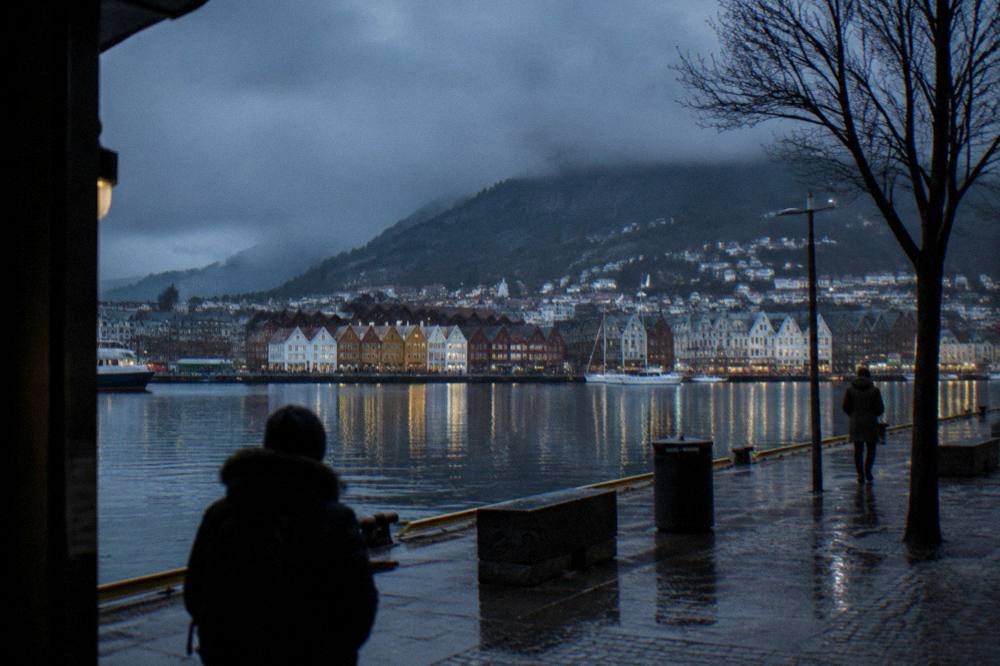
Two readings of that table matter for an itinerary. First, December and November are the wettest months by both observed and normal figures, so a pre-Christmas weekend carries the highest rain risk; the Bergen in winter guide covers that period specifically, along with the site's seasonal Christmas coverage. Second, January 2026 was anomalously dry at 82mm observed against a 256mm normal, a reminder that any single month can buck the pattern in either direction. No per-month rain-day count or daylight-hours figure was verified from a primary source, so none is printed here.
How Much Does A Winter Weekend In Bergen Cost?
A mid-range three-day weekend can hold attraction and transport costs to a few hundred NOK per person before food and lodging: the 48-hour Bergen Card at 500 NOK covers the city's buses, the Bybanen light rail including the airport line, and card-rate entry to most museums, with Fløibanen at 145 NOK, Ulriken643 at 435 NOK and the Aquarium at 380 NOK as the principal add-ons, and a single Skyss zone A ticket at 51 NOK on pay-as-you-go days.
The Bergen Card options, from the official flyer:
| Card | Adult | Child (3-15) |
|---|---|---|
| 24 hours | 400 NOK | 100 NOK |
| 48 hours | 500 NOK | 125 NOK |
| 72 hours | 600 NOK | 150 NOK |
| 96 hours | 700 NOK | 175 NOK |
The winter attraction prices, all from the same flyer unless noted:
| Attraction | Winter price (adult) | Bergen Card rate |
|---|---|---|
| Fløibanen return (Oct-Mar) | 145 NOK | Discounted at ticket office |
| Ulriken643 return | 435 NOK | Discounted |
| KODE Art Museums | 200 NOK (flyer figure) | Included window 1 Oct-30 Apr |
| Aquarium (1 Nov-28 Feb) | 380 NOK | Discounted |
| Bryggen Museum | 170 NOK | 85 NOK |
| Hanseatic Museum | 160 NOK with guided visit | Discounted |
| Haakon's Hall | 120 NOK | Discounted |
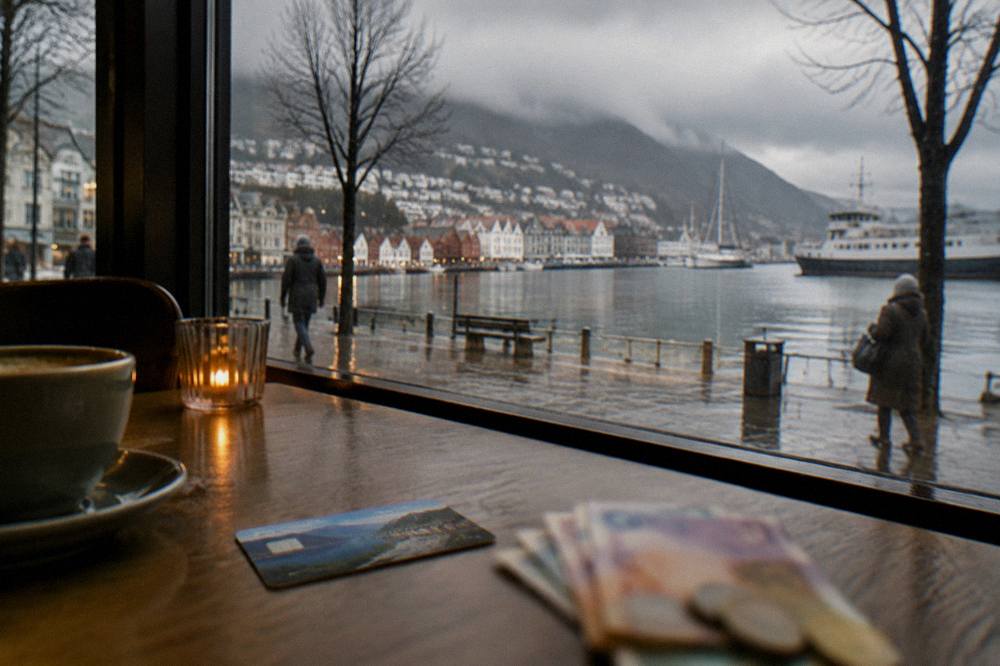
For a weekend of this shape, the 48-hour card at 500 NOK is usually the right call: it covers two days of buses and the light rail, the airport line included, and the free-admission window for KODE runs 1 October to 30 April, which is exactly when a winter visit lands. The card's own flyer lists all of this. If the third day is a fjord excursion, the card does not cover fjord tours, so treat it as a two-day city instrument.
Food is the other line item, and it is a real one in Norway. For the eating side of the weekend, from cinnamon buns to the fish soup the city is known for, the site's food coverage walks through what to order and where. A guided food walk bundles several stops into one evening and is priced on its own listing.
What Should You Pack For A Bergen Winter Weekend?
Pack for rain first and cold second: a proper waterproof shell with a hood, waterproof boots with grip for wet cobbles and the occasional freeze, wool layers rather than cotton, a warm hat and gloves for the mountain viewpoints where the wind off the fjord bites, and a small daypack with a dry bag or case for your phone, because the 217-days-with-precipitation climate does not pause for photographs and Bergen's winter streets stay wet even when the rain stops.
The specific list, by category:
| Category | What to bring | Why |
|---|---|---|
| Outer layer | Waterproof jacket with hood, rain trousers | Rain is the default condition, not the exception |
| Footwear | Waterproof boots with grip | Wet cobbles, occasional ice on Fløyen's plateau |
| Insulation | Wool base layers, fleece mid-layer, hat, gloves | -1.4C January mean with wind off the water |
| Extras | Dry bag for phone, spare socks, hand warmers | Long waits at viewpoints in drizzle |
| Evening | One warm indoor outfit | Restaurants are casual; no dressing up required |
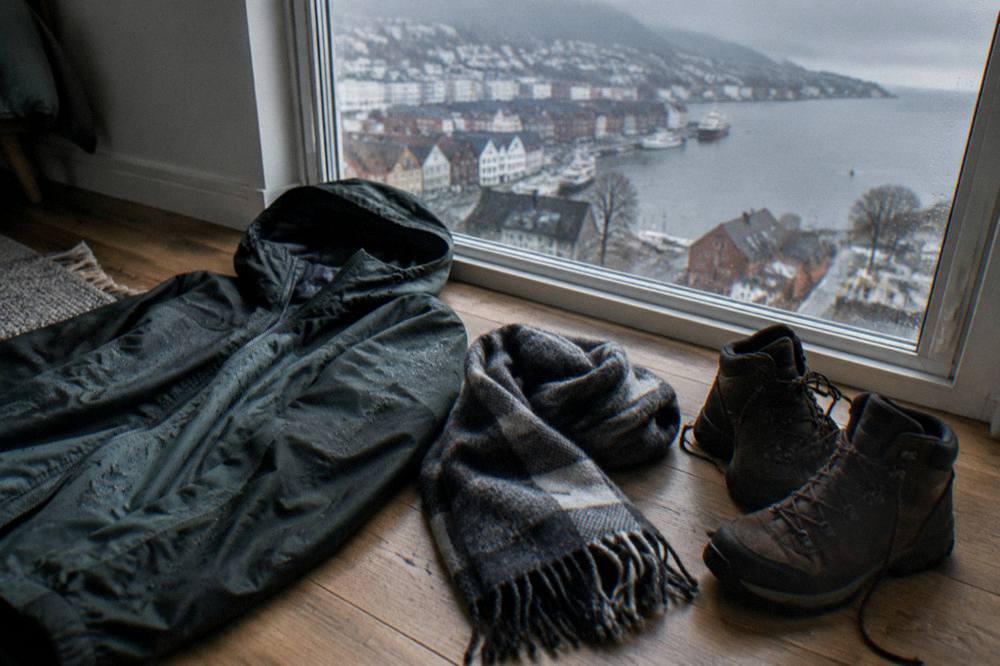
One note on the freeze risk: the observed January 2026 mean of -1.4C with an extreme low of -11.3C on 8 January in the trailing record means real cold happens, but it is the exception rather than the rule. The rain shell earns its space every single weekend, and the boots matter as much as the jacket: Fløyen's plateau paths hold ice after a freeze, and wet cobbles in the old town are slick in every season.
Common Questions About A Bergen Winter Weekend
How many days in Bergen in winter?
Three. Two days cover the historic core, Fløibanen and one or two museums, while a third day is needed for any fjord excursion, since every worthwhile option is a full or half-day trip rather than a city stop. A Friday-to-Sunday structure fits the compact centre and the short winter daylight.
Is December a good month for a Bergen weekend?
December is the most atmospheric and the wettest month on the record: Met Norway data shows 303.5mm of observed precipitation against a 290mm normal, but the Christmas Market at Festplassen runs 20 to 22 December and Pepperkakebyen, the gingerbread city, runs 14 November to 10 January. Pack for rain and go for the atmosphere.
Do fjord tours from Bergen run in winter?
Some do, on a reduced calendar, but winter departures thin out and schedules change by date, so the operator's live listing is the only reliable source for what runs on your specific day. Mostraumen, Hardangerfjord and Flåm options all appear as bookable products with current availability shown on their listings.
Is the Bergen Card worth it for a winter weekend?
Usually yes. The 48-hour card at 500 NOK covers city buses and the Bybanen light rail, including the airport line, and the free-admission window for KODE runs 1 October to 30 April, which is exactly the winter period. It does not cover fjord tours, so treat it as a city instrument for two of your three days.
Is Fløibanen or Ulriken643 better in winter?
Fløibanen for reliability and proximity: it departs from the city centre, 145 NOK for a winter adult return, and the funicular runs through the season. Ulriken643 at 435 NOK offers the higher viewpoint, but its own site announces a maintenance closure in the first two weeks of 2026 and standard Christmas closures, so check its calendar before planning around it.
Is three days in Bergen in winter too long?
No, provided the third day goes to the fjords or to a second mountain. Three days only feels long if all three stay inside the city core, which two days already cover. This is why the itinerary sends day three out of town.
Three days, then, is the answer: two for the wharf, the funicular and the museums, and one for the water. Plan the fjord day first, book the weather-dependent bits around it, keep a dry pair of socks in the daypack, and Bergen in winter will hand back more than most cities manage at their sunniest.