Bergen Norway Webcam
A Bergen Norway webcam answers the question every forecast struggles with: is it actually raining in the city right now? Here is how to read the live cameras, what the weather table says month by month, and what a webcam check is worth before you book anything.
Short answer
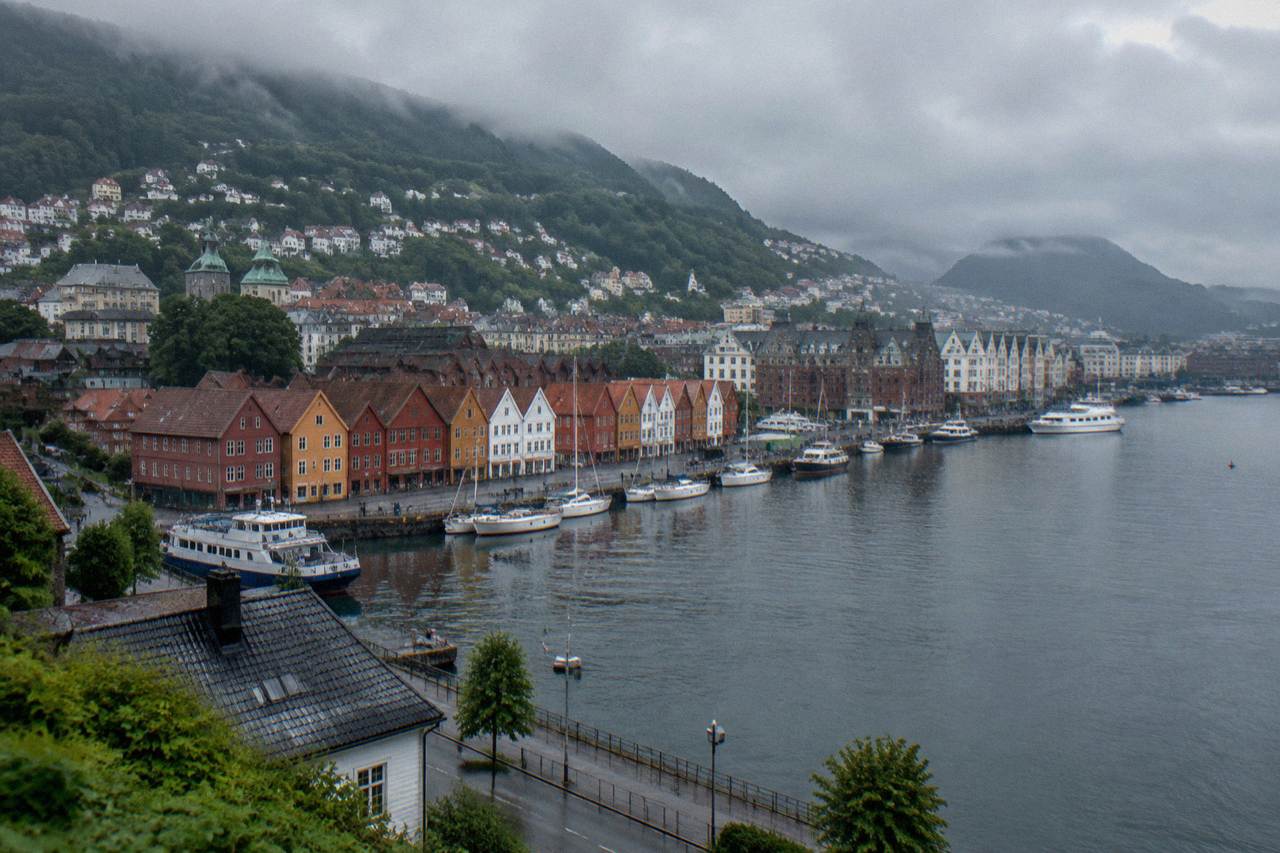
Bergen webcams are most useful for real-time weather, harbour cruise traffic and mountain visibility checks. The live cameras show the city between the seven mountains, the waterfront wharf area and the fjord approaches, and they are best combined with the official weather station data, which shows 217 days with precipitation in the trailing 13 months.
A live camera pointed at the waterfront tells you more about arriving in Bergen than a forecast icon ever will. This is Bergen, a city and municipality in Vestland county on Norway's southwestern coast, and it sits wedged between mountains and sea in a way that makes weather genuinely local: the harbour can be clear while the top of Mount Ulriken is inside a cloud. A webcam check before you leave your hotel, or before you even board a flight to Bergen, is the fastest way to see which of those two Bergens you are walking into today.
The cameras also answer questions no forecast addresses. Is the water in the harbour calm enough that a fjord cruise sounds appealing? Are the cruise tenders already alongside? Is there snow left on the peaks above the city in spring? All of that is visible from a fixed camera, and none of it is visible from a weather app. This guide covers what the live views show, how to pair them with the official numbers from yr.no's Bergen station table, and what the cameras cannot tell you, so you can plan a Bergen trip around what you see rather than what you hope for.
What Can You Actually See On A Bergen Norway Webcam?
A Bergen webcam shows you three things a forecast cannot: live weather conditions at street level, the state of ship traffic in the harbour, and real-time visibility on the mountains that ring the city. The cameras watch the waterfront and wharf area, the harbour approaches used by cruise ships and fjord boats, and the upper stations on the two city mountains, so one or two views together cover most of what a visitor cares about. They do not show the fjords themselves, which sit far beyond any fixed city camera, and they do not replace a weather table with real numbers.
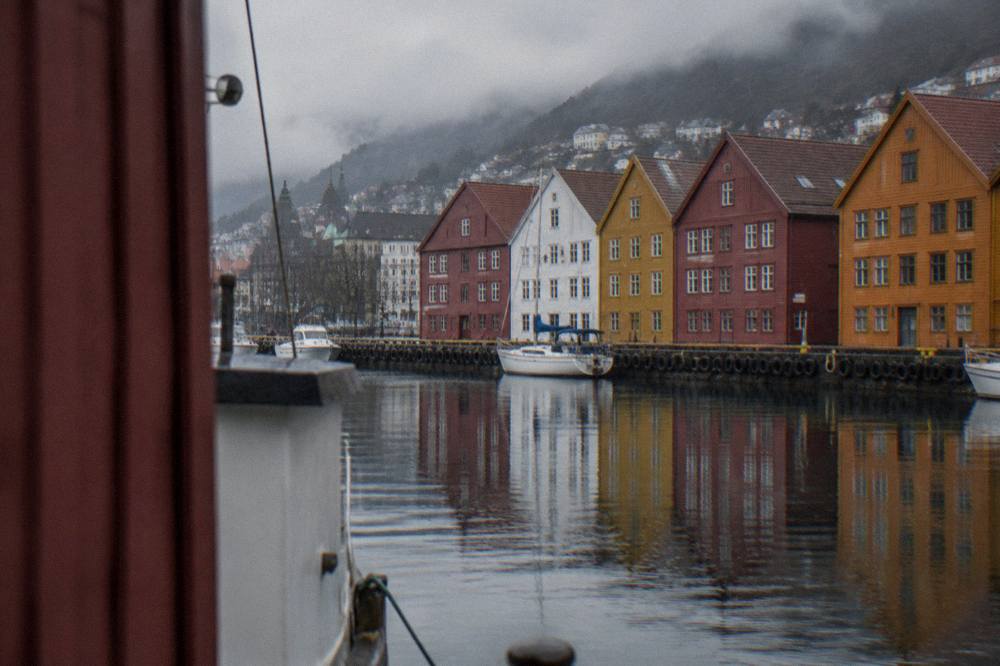
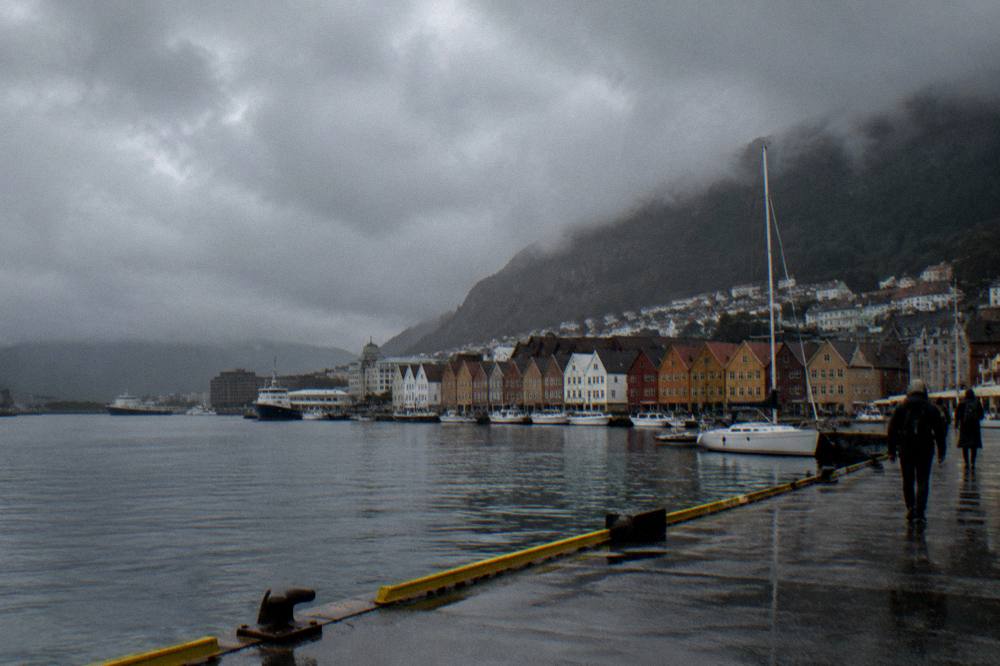
Start with the waterfront view. The historic wharf, Bryggen, is the single most photographed street in the city, and the cameras that watch the harbour almost always include its gable ends in frame. UNESCO's own listing confirms the wharf was inscribed on the World Heritage List in 1979, and you can pick out those coloured timber buildings on a live view in any season. In the same frame you will usually see the small boat traffic of a working harbour: ferries, sightseeing boats heading toward the fjord, and the water buses that shuttle across the bay.
The second thing to watch for is ship traffic. The Port of Bergen publishes a live list of arrivals, and a harbour camera lets you confirm with your own eyes that the ship listed has actually come alongside. On a busy summer morning the difference between a quiet quay and a quay with a large vessel at rest changes the entire feel of the old town district, because the passenger flow heads straight for the same lanes the cameras watch. If you are staying anywhere near the water, checking the arrivals list alongside the camera view tells you whether to expect crowds or quiet at the fish market that day.
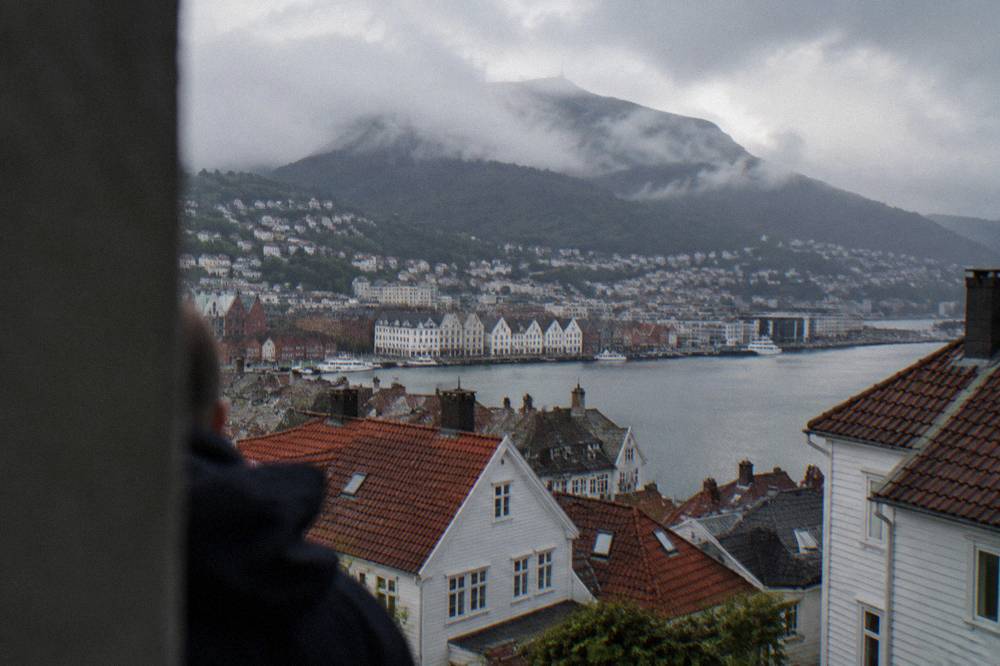
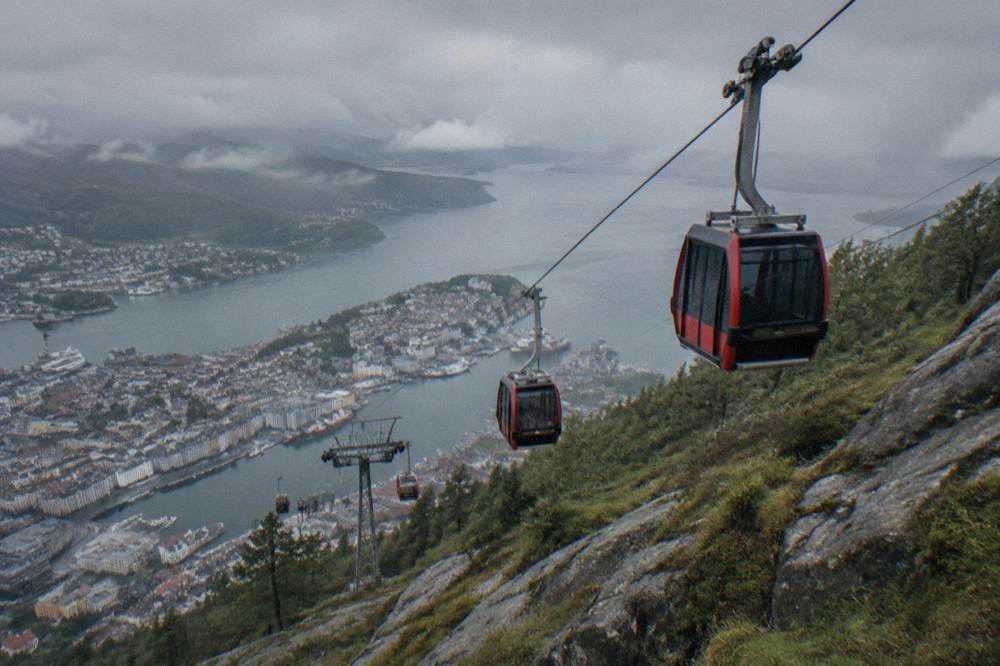
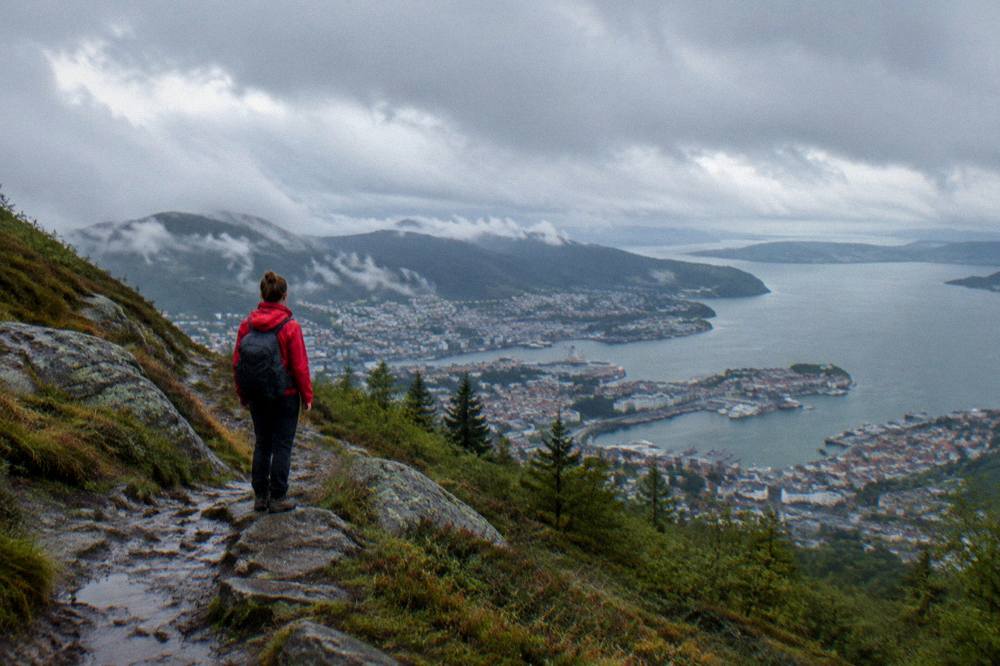
The third is visibility on the mountains. Bergen is ringed by peaks, and the two with paid ascents, Fløibanen's Mount Fløyen and the Ulriken643 cable car on Mount Ulriken, both sit at the mercy of low cloud. A camera looking upward, or a camera mounted high up looking down, shows you instantly whether the summit is in cloud or clear. That single check can decide your whole morning, because the funicular and the cable car are expensive enough that riding into a white void is a poor use of a day.
How Do You Judge Bergen Weather From A Live Camera View?
You judge Bergen weather from a webcam by looking at three tells: whether the mountain summits are visible or in cloud, whether the water in the harbour is flat or choppy, and whether pedestrians in the frame are carrying umbrellas or wearing rain jackets. The camera shows you the current hour honestly, and in Bergen that matters more than a forecast, because the trailing 13 months of official station data show 217 days with precipitation. Cloud height in particular is the detail forecasts compress into a single icon.
The cloud question is the big one. If the tops of the peaks above the city are visible in the morning frame, you have a good-visibility day by local standards, and a ride up Fløibanen or Ulriken643 will actually give you the view you paid for. If the summits are cut off at a low line, the mountain stations are probably sitting in mist, and the better move is a museum morning followed by an afternoon check of the same camera. Locals make exactly this call every day, and the camera lets you make it from your room.
The water tell matters if a fjord trip is on your plan. A flat harbour means calm inshore water, which is what most Mostraumen and Hardangerfjord boats want. Whitecaps inside the harbour itself suggest a windy day, and while the fjord boats run in conditions far beyond what a camera shows, comfort is a different question from safety. Pair the camera view with the wind figure in yr.no's Bergen station data and you have a reasonable picture of what three hours on open water will feel like.
The people tell is crude but reliable. Umbrellas up in the frame means steady rain. Hoods up but umbrellas down means drizzle or showers, the most common Bergen state of all. Nobody in the frame doing anything unusual means it is dry, which in this city is a small event worth noticing. Do not treat the camera as a forecast for later in the day; Bergen weather turns fast, and the station table, not the camera, is the tool for the rest of the week.
Pair the live view with the official numbers, and do not stop at the camera. The table below is the observed picture from the trailing 13 months at the Bergen weather station, published by the Norwegian Meteorological Institute via yr.no's Bergen station table. Note how the observed figures sit above or below the long-term normals month by month, which is exactly the kind of nuance a camera can never show you.
| Month | Mean temperature | Precipitation, observed | Precipitation, normal |
|---|---|---|---|
| October | 9.7C | 231.9 mm | 268.0 mm |
| November | 6.0C | 321.8 mm | 275.0 mm |
| December | 5.8C | 303.5 mm | 290.0 mm |
| January | -1.4C | 82.0 mm | 256.0 mm |
| April | 7.9C | 65.9 mm | 141.0 mm |
| July | 14.9C | 184.2 mm | 158.0 mm |
The lesson in that table is the one every first-time visitor learns the hard way: the wettest month in the observed record, November at 321.8 mm against a 275.0 mm normal, ran well past its own long-term average, while January came in far drier than its 256.0 mm normal. Rain here does not follow the tidy pattern the averages suggest. If a trip month is fixed, the pages on Bergen weather and the best time to visit Bergen go deeper than any single table can.
Which Views Are Most Worth Checking Before You Ride Fløyen Or Ulriken?
Before you buy a ticket up either city mountain, check a camera that shows the summit or the ridge line: Mount Fløyen's top station sits at the end of the funicular line above the city centre, and Mount Ulriken's cable car rides to the highest of the seven peaks, so cloud at the summit line means a white-out view even when the streets below are dry. The decision is purely visual, and it is the single highest-value webcam check in the city. The price difference between the two is real, so wasting either ride on fog stings.
The economics make the check worthwhile. The official Bergen Card 2026 flyer lists a Fløibanen return at 200 NOK for an adult in the April to September window and 145 NOK from October to March, while an Ulriken643 return is 435 NOK. Those are figures from the flyer's ordinary-price table, and the Bergen Card discounts each differently. A two-second look at whether the upper stations are inside cloud protects a 200 to 435 NOK decision, and more importantly it protects the half day you planned around the view.
There is a second, less obvious use: timing. Clear windows in Bergen often arrive in bursts, especially in spring and autumn, when a grey morning can turn into a clear evening. A camera is the only tool that shows you a clearing trend in real time, because it updates continuously while a forecast updates on its own schedule. If the first morning frame shows cloud at the summit level but the midday frame shows the ridge, that is your signal to move the mountain ride up the plan and push the museum down.
The mountains also tell you about the season. Snow holding on the tops in April changes what a Fløyen walk looks like and what footwear the trails above the top station demand. In November and December, the same cameras show the city's Christmas lights coming on below while the peaks stay dark by mid afternoon, which is the visual version of the precipitation column in the table above: this is a dark, wet, atmospheric time of year, not a lost one. The Bergen in winter and Bergen at Christmas pages cover what to do with that kind of day.
| Attraction | Ordinary price, adult | Season window | Source note |
|---|---|---|---|
| Fløibanen return | 200 NOK | 1 Apr to 30 Sep | Bergen Card 2026 flyer |
| Fløibanen return | 145 NOK | 1 Oct to 31 Mar | Bergen Card 2026 flyer |
| Ulriken643 return | 435 NOK | All year | ulriken643.no price page |
| The Aquarium | 380 NOK | 1 Nov to 28 Feb | Bergen Card 2026 flyer |
| The Aquarium | 380 to 415 NOK | 1 Mar to 31 Oct | Bergen Card 2026 flyer |
| KODE Art Museums | 200 NOK | Listed as the Bergen Card figure | Flyer; KODE's own standalone price was not confirmed |
Can A Bergen Webcam Help You Time A Cruise Day Or A Walking Tour?
Yes, and the two use cases are different: for a cruise day the camera tells you about your fellow passengers, because the port publishes a live arrivals list and the harbour view confirms how many ships are alongside, while for a walking tour the camera tells you about clothing and comfort, because the tours run in rain and the question is whether you want to be out in it. In both cases the camera changes what you pack and when you leave, not whether the product itself operates.
Start with the cruise case. If you are arriving in Bergen by ship, the arrivals list and the harbour camera tell you whether your ship is the only one in port that day or one of several, and that changes the old town experience dramatically. The lanes around the wharf and the fish market are narrow, and the flow from a large vessel at rest heads straight into them within minutes of passengers being cleared. If you are an independent visitor rather than a cruise passenger, the same check works in reverse: a camera showing a quiet quay means a good morning for the waterfront, and a camera showing a ship at rest means you should walk the harbour early and give the lanes to the crowds later.
The walking-tour case is simpler. The guided walks of central Bergen run in all weather, and rain in the frame does not mean a cancellation, it means a hood and a decision about how much standing still you want to do on the walk. A camera showing dry streets at 08:00 is a good argument for taking a morning departure rather than an afternoon one, because the odds of a dry window shrink through the day in the wetter months, as the precipitation column in the station table shows plainly.
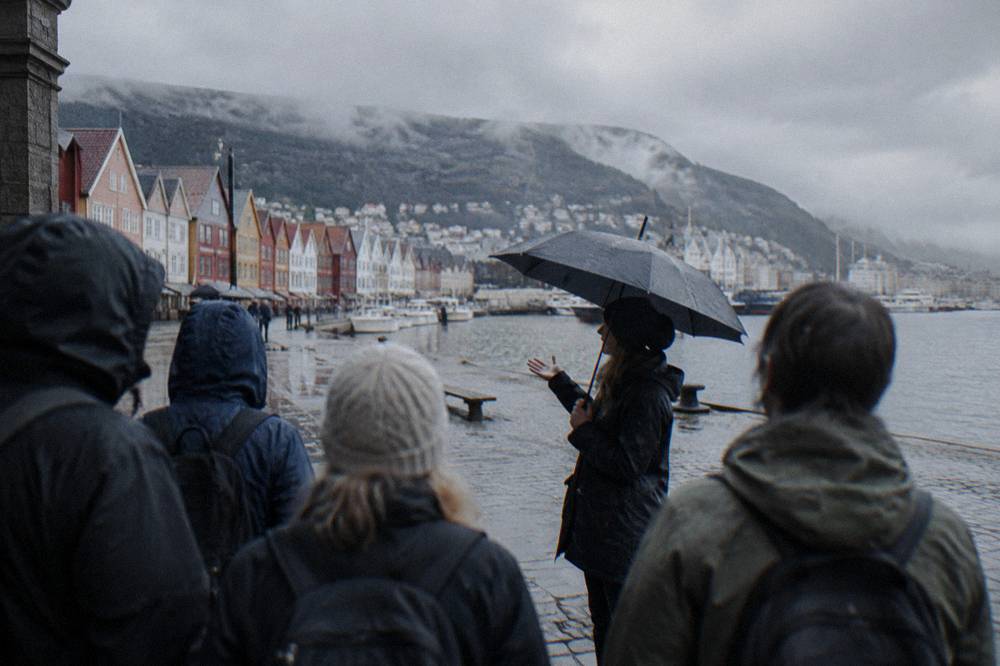
A small-group guided walk is the natural complement to a webcam morning, because the same streets that fill the camera frame are the ones a guide can put a story behind. The Bergen: Past & Present Small Group Guided Walking Tour covers the city centre, and the operator's live listing carries its current price, rating and departure times. For a similarly structured alternative there is the Walking Tour in Bergen of the Past and Present, which also explores the centre, or the small-group walk with Martin, whose price is not published by the operator, so check the listing rather than any figure quoted elsewhere. You can compare availability for the Past & Present walk directly: Check availability.
If the camera shows a proper grey day with rain set in, the swap is easy: the museum cluster around the lake makes a strong wet-weather alternative, and the Bergen museums and rainy day in Bergen pages list the full set. The Aquarium's own numbers in the table above are a reminder that indoor days in this city are not cheap either; a museum-heavy Bergen day costs real money, which is the argument the Bergen Card page makes in detail.
What Numbers Should You Check Alongside The Camera?
Alongside the live camera you should check three things: the current temperature and precipitation figures at the Bergen station, the wind speed if anything on open water is planned, and the arrivals list at the port if your day involves the harbour. The camera gives you a picture, the station table gives you the numbers behind it, and the arrivals list tells you about crowds the camera only hints at. None of the three substitutes for another.
The temperature figure matters more than visitors expect, because Bergen's coastal position keeps the city mild for its latitude. The observed monthly means in the trailing 13 months ran from -1.4C in January to 14.9C in July, and the extremes in the same record were 28.0C at the high end and -11.3C at the low end. A camera frame can look cold while the street is at 6C, and look warm while a coastal wind takes the edge off 14C, so pair the visual with the number before you dress for the day.
Precipitation is the number that explains the city. The 217 days with precipitation in the trailing 13 months is the figure that defines the Bergen wardrobe, and the monthly column shows why November is the month locals brace for and April, at 65.9 mm observed against a 141.0 mm normal, can be a quiet surprise. Do not read a dry morning camera frame as a dry day; read it as a dry hour, and carry the shell jacket anyway. The packing logic is on the what to pack for Bergen page.
Wind matters mostly for the water. A harbour camera showing choppy water tells you the story qualitatively; the station's wind figure tells you how strong the story is. For anything involving open water, from the small sightseeing boats in the harbour to a full Mostraumen or Hardangerfjord day trip, the wind number is the one to glance at, and the fjord tours from Bergen page breaks down what each of those trips involves.
| What you check | What it tells you | What it cannot tell you |
|---|---|---|
| Waterfront camera frame | Current rain, crowd levels, boat traffic | Conditions later in the day |
| Summit visibility on camera | Whether the mountain view is worth the ticket price | Trail conditions underfoot |
| Station temperature | How cold or mild the streets actually are | Wind chill at height |
| Station precipitation figures | How wet the month runs compared with normal | Which hours of today will be wet |
| Port arrivals list | How many ships are alongside, and crowd pressure | How many passengers go ashore |
| Harbour water state | Calm or choppy inshore conditions | Conditions beyond the harbour mouth |
How Do You Turn A Webcam Check Into A Day Plan?
The practical routine is a five-minute morning check: look at the waterfront frame for rain, look at the summit line for cloud, glance at the station numbers for temperature and wind, then order your day so the views come first if the frame is clear and the museums come first if it is not. The camera's job is to break the tie between competing plans, and in a city with 217 wet days in the trailing 13 months, that tie needs breaking most mornings.
Consider a worked example. The morning frame shows the wharf in light drizzle, the summit line cut off, and the station showing 9C. That is a museum morning followed by an indoor lunch and a midday re-check of the camera: if the ridge line appears after noon, the afternoon belongs to Fløibanen, whose 145 NOK October to March return price is listed in the flyer table above, and the evening light goes to the harbour walk. If the ridge never appears, the aquarium and the museums carry the day, and the harbour camera at dusk still shows a city worth walking through with a hood up.
Now the opposite frame. Dry streets, summits clear, cruise quay empty. That is the morning for the view first, before any weather window closes, then a late-morning walking tour in the lanes, because the historic centre is compact and the dry hours are precious. The small-group walks above fit this shape well, and the one day in Bergen itinerary shows exactly how the pieces fit in order. The planning a trip to Bergen page handles the longer versions of the same logic.
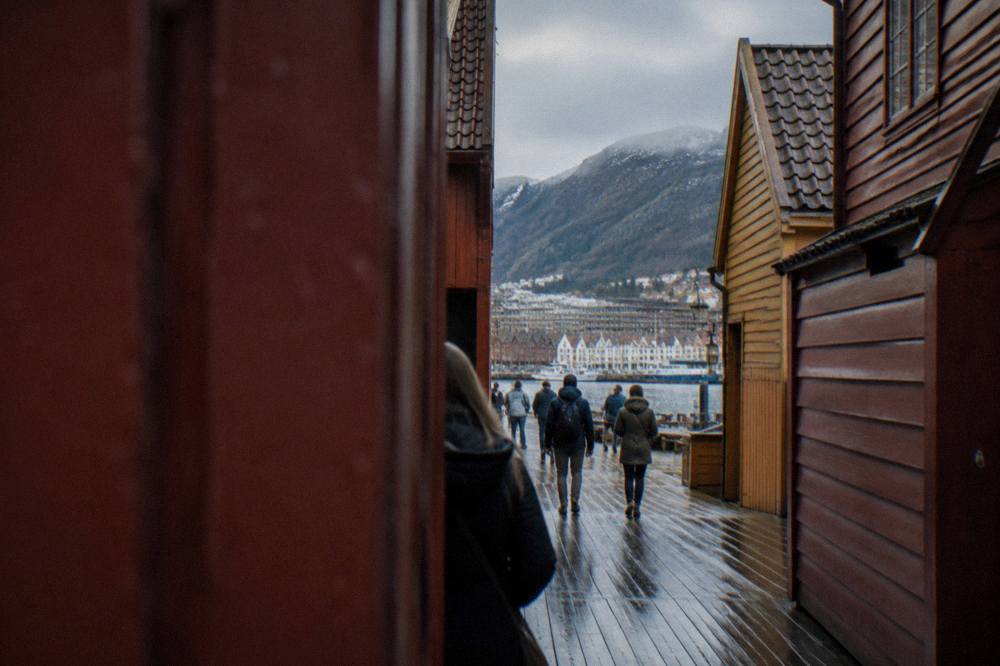
The seasonal angle changes the routine. In summer the sun works with you late in the day, so a clear evening frame argues for moving the mountain ride to the afternoon and keeping the morning for the fjord boats, since several run most of the day. In autumn the light closes early and the rain totals climb, so the camera's job is catching the shrinking clear windows, November being the month that delivered 321.8 mm of observed precipitation in the trailing record. Winter adds snow to the summit check, and the pages on Bergen in autumn, Bergen in summer and Bergen in spring each carry the specific advice.
One habit worth borrowing from locals: check the camera at the moment of decision, not an hour before. Conditions here change fast enough that an hour-old frame is a stale frame. The routine is the same whether the decision is a 435 NOK cable car ticket, a two-hour walk or just the choice between the umbrella and the light shell: look at the live picture, look at the number, decide, go.
What Can A Bergen Webcam Not Tell You?
A Bergen webcam cannot tell you anything beyond its own frame: it shows no road conditions, no trail status above the mountain stations, no queue lengths at the funicular or the cable car, no fjord weather outside the harbour, and no forecast beyond the current moment. A fixed camera is a window on one spot at one time, and the failure mode is treating it as a plan rather than as a single data point.
The trail point matters most for hikers. A clear summit on camera says nothing about whether the trails above the top station are wet, icy or snow-covered, and several of the walks from the Fløyen side are long enough that conditions change along the route. The hiking in Bergen page covers the trails properly, and the camera's role there is limited to the visibility check on the day itself.
The queue point matters in peak season. A camera watching the funicular's lower station may show people, but headcounts from a fixed frame are guesswork, and the real crowd driver, the cruise arrivals, is better read from the port's own arrivals list than from any lens. Similarly, the harbour water's calm appearance says nothing about conditions once the sightseeing boats leave the sheltered bay, and the wind figure at the station remains the better guide for anything involving open water.
| Camera shows | Camera does not show | Where to check instead |
|---|---|---|
| Rain at street level | Which hours of the day stay dry | Station table and forecast |
| Summit cloud line | Trail conditions underfoot | Hiking page and local reports |
| Ships alongside | Passenger numbers going ashore | Port arrivals list |
| Harbour water state | Open-water conditions beyond the bay | Station wind figure |
| Crowd presence in frame | Queue lengths at attractions | Ticket office or operator listing |
| Daylight and city lights | Total daylight hours | No sourced daylight figure; check a time table |
Finally, the camera cannot do the deciding for you. Bergen rewards the visitor who treats a grey frame as a different day rather than a worse one, because the city in drizzle, with the lights of the wharf doubled in wet cobblestones, is the version photographers chase. The tools in this guide, the live frame, the station numbers and the arrivals list, are all aimed at the same end: walking out the door at the right hour in the right clothes, with the right expectation. The rest of the planning, from where to stay in Bergen to getting around Bergen, builds on that same morning decision, and Bergen Travel Guide carries the rest of it.
Common Questions About Bergen Webcams
Can a Bergen webcam show me the fjords?
No. The city cameras watch the harbour, the waterfront and the mountains that ring the city, and the fjords themselves, including Mostraumen, Hardangerfjord and the Sognefjord arms, lie well beyond the reach of any fixed Bergen camera. The fjord views require a boat trip or a drive, not a lens.
Is a Bergen webcam a reliable way to check the weather?
It is reliable for the current moment and unreliable for anything later. Bergen's weather turns fast, and the official station data shows 217 days with precipitation in the trailing 13 months, so a dry frame is a dry hour rather than a dry day. Use the camera for now and the station table and forecast for the rest of the day.
Which is better on a cloudy day, Fløyen or Ulriken?
Neither summit view rewards a ride when the cloud line is below the top stations, which is exactly what the camera check is for. When the summits are clear, the choice comes down to price and preference; the Bergen Card 2026 flyer lists a Fløibanen adult return at 200 NOK from April to September and 145 NOK from October to March, against 435 NOK for Ulriken643.
Can I see cruise ships on a Bergen webcam?
Yes, harbour-facing cameras show vessels alongside, and the Port of Bergen also publishes a live list of arrivals, which tells you how many ships are in that day. Together they give a good picture of crowd pressure on the waterfront, though no camera or list shows how many passengers actually go ashore.
When is the best time of year for clear webcam views?
The station table suggests the driest observed months in the trailing record were January at 82 mm and April at 65.9 mm, while November was the wettest at 321.8 mm. Clear frames are likeliest in the colder, drier months and scarcest in late autumn, though any month can deliver both a clear morning and a wet afternoon in the same day.
Do Bergen webcams show the northern lights?
A city camera pointed at a brightly lit waterfront is a poor aurora instrument, and no sourced figure confirms northern lights visibility in Bergen. The camera's nighttime value here is the harbour lights and the wharf, not the sky.