Hurtigruten Bergen
Bergen, on Norway's southwestern coast in Vestland county, is the southern turnaround port of the Hurtigruten coastal express, and this guide covers where the ships dock, what a port day can hold, and how to fold a voyage into a wider trip.
Short answer
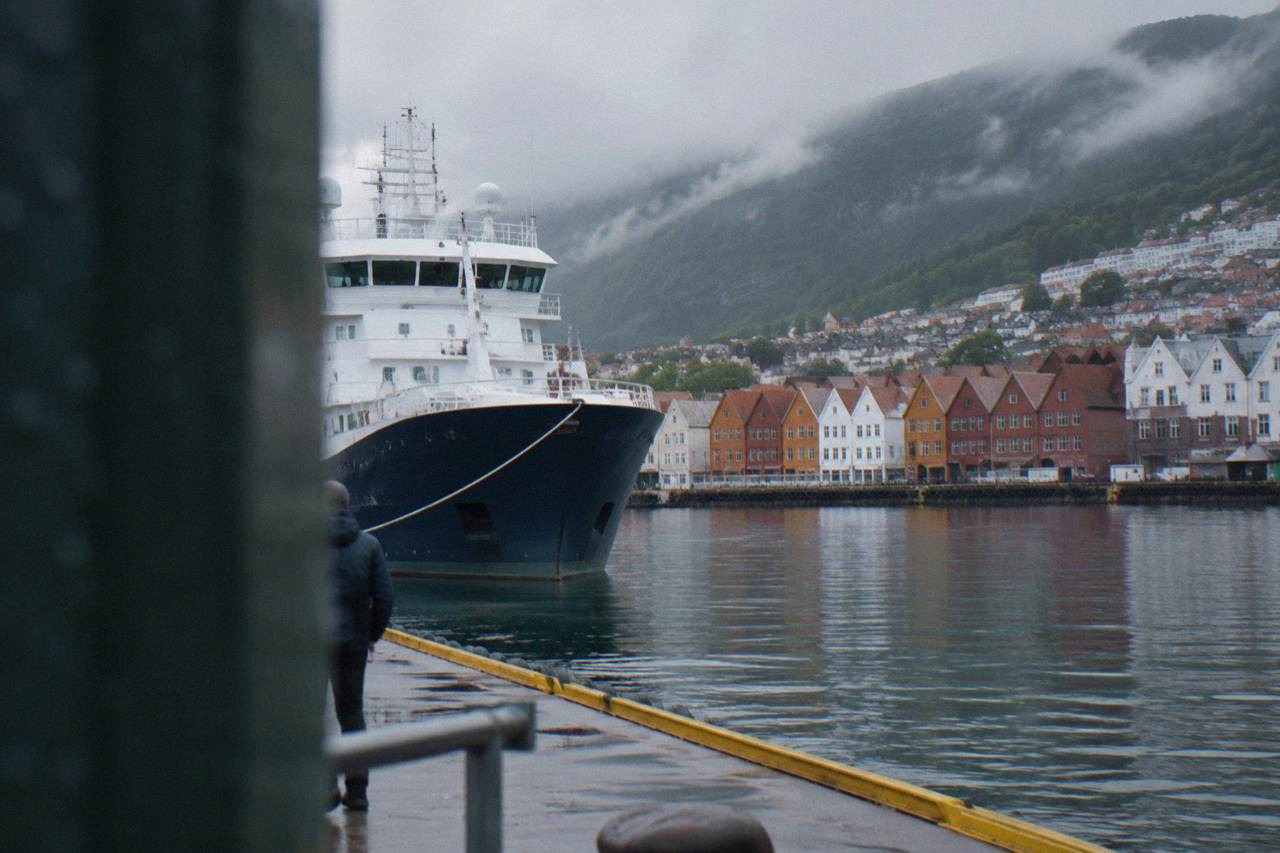
Hurtigruten ships call at the port of Bergen, Vestland, Norway, the southern turnaround point of the coastal express route between Bergen and Kirkenes. The ships dock at the deep-water quays a short walk from Bryggen, the Hanseatic wharf inscribed on the UNESCO World Heritage List in 1979, so a port day in Bergen needs no taxi: the waterfront, the fish market and the Fløibanen funicular are all within easy reach.
Bergen, on Norway's southwestern coast in Vestland county, is where the Hurtigruten coastal express begins and ends its long run north. The route has tied the city to the fjord coast for generations, and the ships still tie up within sight of Bryggen, the Hanseatic wharf that UNESCO inscribed on the World Heritage List in 1979. This guide from the Bergen Travel Guide editorial desk explains where the ships dock, what a port day can realistically cover, and how a voyage fits around a longer stay in the city, using verified prices and official figures rather than guesswork.
What Is The Hurtigruten Coastal Express In Bergen, Norway?
The Hurtigruten coastal express is the working ship route that runs between Bergen and Kirkenes, calling at dozens of small ports along the Norwegian coast, and Bergen is its southern turnaround port. The service grew out of a government tender to connect coastal communities that had no road links, and it still carries freight, cars and locals alongside passengers. Bergen, a former Hanseatic League trading post of roughly 294,860 residents, is where the voyage starts north or turns back south.
The route's working character is the thing most first-time visitors misunderstand. This is not a purpose-built cruise line in the Mediterranean mould: the ships were built to deliver post, cargo and passengers to communities the road network never reached, and timetables still reflect ports that matter for logistics rather than for sightseeing. That means the ships often sail at odd hours, and the value of the journey rests on the coast itself, the fjords, the weather and the shifting light, rather than on onboard entertainment.
Bergen's role is the anchor. Every northbound sailing departs from the city, and every southbound sailing turns around here before heading back along the coast. For a traveller, that creates two distinct ways to use the product: a short port visit in Bergen while the ship is alongside, or a booked voyage, from one night upward, that begins or ends in the city. Most people who plan a Hurtigruten trip as part of a Norway itinerary do the second and spend a few days in Bergen before or after, which is why the practical questions that follow matter so much.
Where Do Hurtigruten Ships Dock In Bergen, And How Close Is The City Centre?
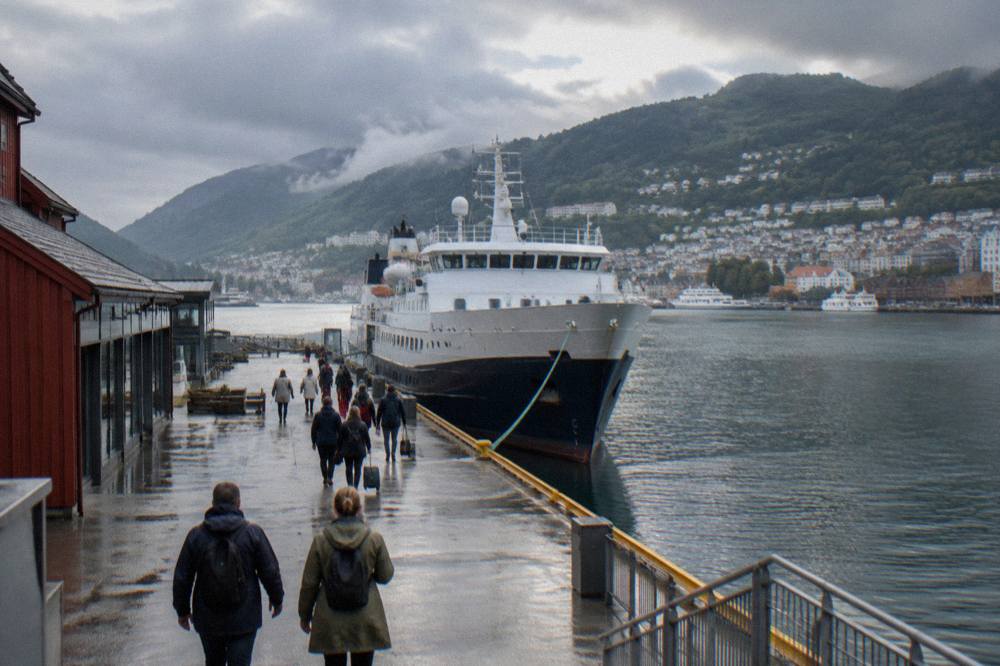
Hurtigruten ships berth at the deep-water quays of the Port of Bergen, a short and level walk from the heart of the city: Bryggen, the fish market at Torgallmenningen and the Fløibanen funicular base are all reachable on foot from the cruise terminals, with no taxi or transfer needed. The port publishes a live list of ship arrivals, so you can confirm an individual call on the day. Central Bergen is compact, and the walking distance from quay to wharf is the single biggest advantage the port offers.
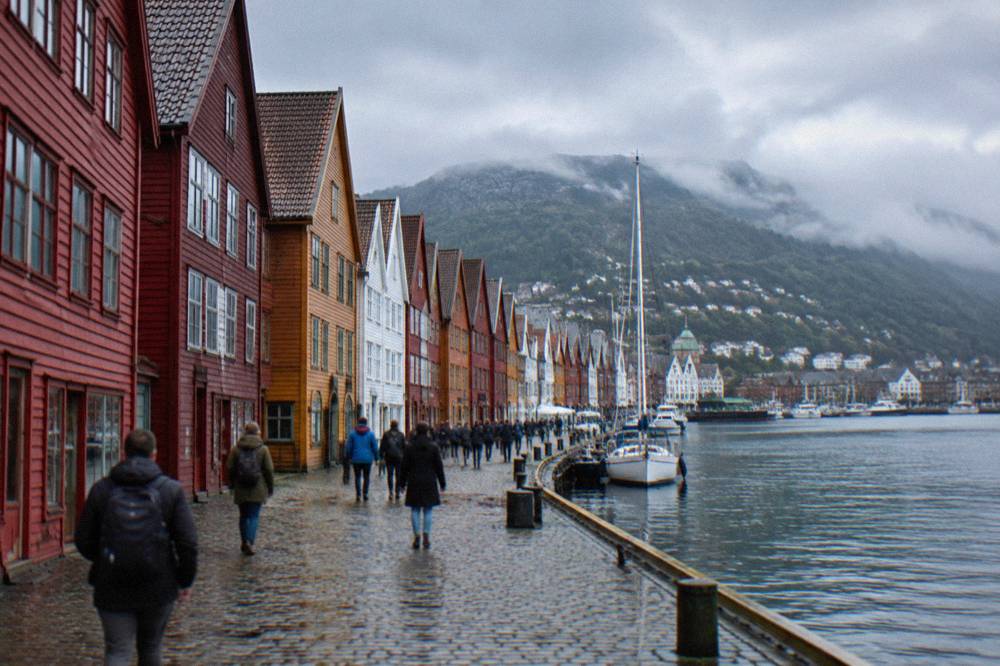
The practical consequence is that a port day in Bergen needs almost no planning around transport. Step off the ship, and the coloured Hanseatic gables of Bryggen are a few minutes away along the waterfront. The fish market sits at the head of the harbour, the Fløibanen funicular station is at the foot of the mountain just behind it, and the grid of small shops and restaurants around Torgallmenningen fills the space between. A visitor with four or five hours ashore can see the wharf, eat, and ride the funicular without ever consulting a bus timetable.
That compactness is unusual among cruise ports, and it is worth designing your day around it. Because everything is walkable, the real constraint is not distance but time and queues: the funicular in high summer, and the museums' opening hours, matter more than any transfer. Plan the one thing you most want to do, put it first, and let the rest of the city fill in around it. The full picture of how the city's transport network fits together, including buses and the light rail, is covered in the getting around Bergen guide.
What Can You Do During A Hurtigruten Port Day In Bergen?
A realistic port day in Bergen covers Bryggen, the fish market, one museum and one mountain view: Bryggen and the Hanseatic Museum sit on the wharf itself, the Fløibanen funicular lifts you to the Fløyen viewpoint above the city, and the Bergen Card bundles most of it, including the Skyss buses and the Bybanen light rail across Vestland county, including the airport line. Four to six hours is enough for all four if you do not dawdle.
Start on the wharf. Bryggen is the reason the harbour looks the way it does, and the Hanseatic Museum, at 160 NOK for an ordinary adult ticket including a guided visit per the official Bergen Card flyer, explains the German traders who ran the stockfish export business from these buildings for centuries. The Bryggen Museum, at 170 NOK ordinary and 85 NOK with a Bergen Card, covers the medieval excavations underneath the wharf and pairs well with a walk through the narrow wooden lanes behind the gables.
Then ride the funicular. Fløibanen's own price table, carried in the official Bergen Card flyer, lists an adult return at 200 NOK from 1 April to 30 September and 145 NOK from 1 October to 31 March, with children at 100 NOK and 75 NOK in the same windows. Bergen Card holders buy a discounted funicular ticket at the ticket office, one per card. The view from Fløyen takes in the whole harbour, which is the best way to appreciate where your ship sits and where the fjords begin. If you would rather ride the other mountain, the Ulriken643 cable car's round-trip adult ticket is 435 NOK, confirmed on the operator's own prices page.
Here are the headline attractions and their official prices in one table, drawn from the 2026 Bergen Card flyer:
| Attraction | Ordinary adult price | Bergen Card price |
|---|---|---|
| Fløibanen funicular (return, Apr-Sep) | 200 NOK | Discounted at ticket office |
| Fløibanen funicular (return, Oct-Mar) | 145 NOK | Discounted at ticket office |
| Ulriken643 cable car (return) | 435 NOK | Discounted |
| The Aquarium (Akvariet, 1 Nov-28 Feb) | 380 NOK | Discounted |
| Bryggen Museum | 170 NOK | 85 NOK |
| Hanseatic Museum (with guided visit) | 160 NOK | Discounted |
| Haakon's Hall (Bergenhus Fortress) | 120 NOK | Discounted |
| KODE Art Museums | Higher ordinary price in summer | 200 NOK |
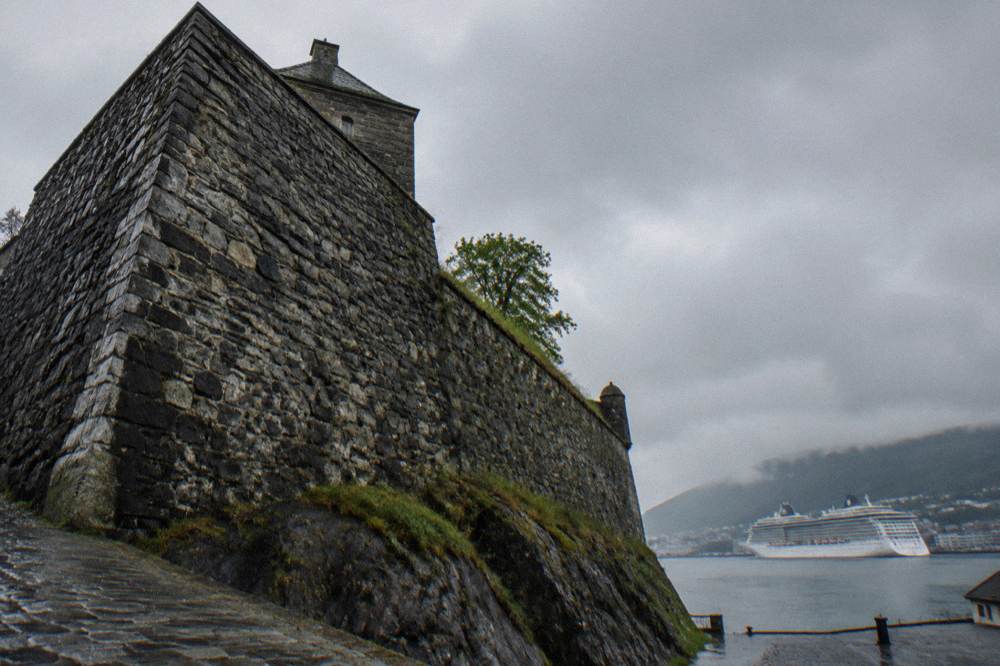
If your port day is short, cut the museum and keep the mountain. If it is long, add Bergenhus Fortress at the mouth of the harbour, whose stone walls sit directly between the cruise quays and the open water, and the Bergenhus Fortress guide covers it in detail. Hungry after all that? The best restaurants in Bergen are clustered within the same walkable core, and the fish market is the obvious first stop for a fast, local plate.
The three options above are the ones worth weighing if your ship time stretches beyond a plain walking day. The locally operated Mostraumen cruise is the half-day fjord fix, the night tour across both mountains suits a late evening berth, and the guided local cruise gives the fjord a running commentary. Whichever way you lean, availability on a given sailing date is the real constraint, so it pays to check before you build the rest of your day around it.
A port day is also a fine window for a guided experience, and the roster includes options that fit the schedule of a ship call. If your berth runs late into the evening, the night tour that combines both mountains by cable car is built around exactly that kind of day, though its operator publishes no rating on the listing. For a shorter stop, a guided walking tour of the city core, on foot with a local guide, compresses the whole story of the Hanseatic town into a single shore block, and the Bergen walking tours guide compares the options.
Should You Start A Hurtigruten Voyage In Bergen Or Board Further North?
Bergen is the natural starting point for a full Hurtigruten voyage, because the classic route is designed as a round trip between Bergen and Kirkenes, and embarking in Bergen gives you the complete southbound or northbound leg, including the crossing into the fjords southwest of the city. Boarding further north, at Ålesund or Tromsø, trims the voyage and the fare but skips the Bergen departure and the coast immediately beyond it. Start in Bergen if the full route is the point.
The trade-off is mostly about time. The full coastal voyage between Bergen and Kirkenes is a multi-day commitment in both directions, and those who do it often pair it with only a day or two in the city beforehand. If your total Norway budget is a week, a realistic split is two days in Bergen, the voyage north, and a flight home from a northern airport, which is exactly the shape of the itinerary most first-time visitors end up wishing they had booked.
Bergen also earns its place as a pre-voyage base on its own merits. The city is among the rainiest big cities: the Met Norway station table for Bergen shows 217 days with precipitation across the trailing 13 observed months, and November alone recorded 321.8 mm of rain against a normal of 275.0 mm. Packing for the voyage starts with packing for Bergen, and the what to pack for Bergen guide and the Bergen weather guide cover it properly.
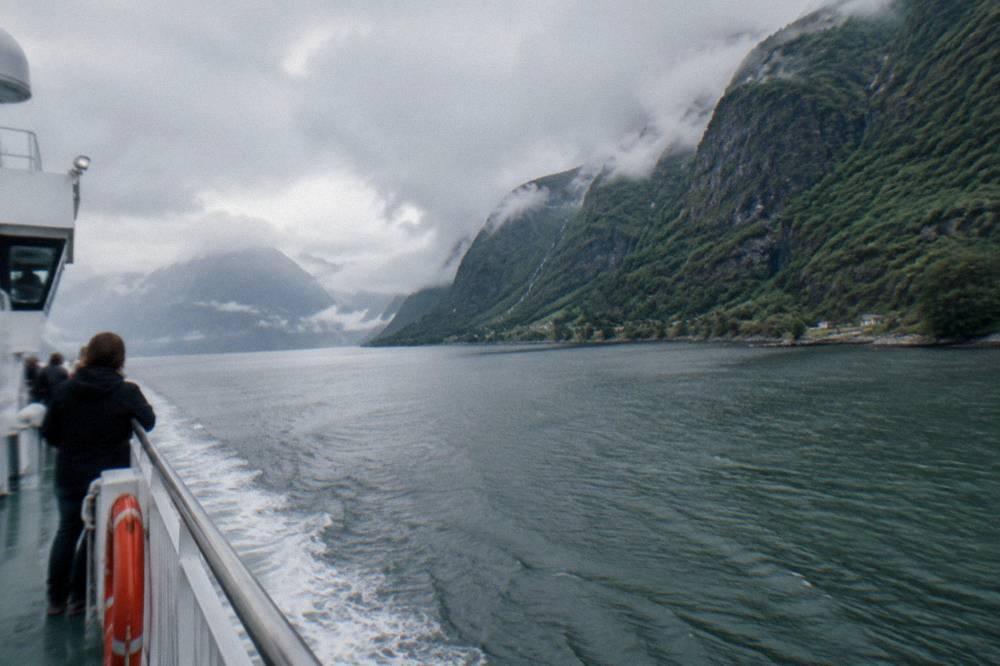
Here is what the Met Norway station data says month by month, which is the honest basis for deciding when to sail:
| Month | Mean temperature observed | Precipitation observed | Precipitation normal |
|---|---|---|---|
| September | 13.1° C | 206.6 mm | 248.0 mm |
| October | 9.7° C | 231.9 mm | 268.0 mm |
| November | 6.0° C | 321.8 mm | 275.0 mm |
| December | 5.8° C | 303.5 mm | 290.0 mm |
| January | -1.4° C | 82.0 mm | 256.0 mm |
| February | 0.8° C | 133.4 mm | 209.0 mm |
| March | 5.9° C | 243.9 mm | 202.0 mm |
| April | 7.9° C | 65.9 mm | 141.0 mm |
| May | 9.9° C | 127.4 mm | 109.0 mm |
| June | 14.4° C | 165.7 mm | 132.0 mm |
| July | 14.9° C | 184.2 mm | 158.0 mm |
| August | 14.3° C | 243.6 mm | 208.0 mm |
Read the table honestly: April and May are the driest months in the observed data, and January, counter to every stereotype about Arctic Norway, was the driest month of the whole trailing period. The summer months are the warmest but not the driest. The best time to visit Bergen guide unpacks the seasonal trade-offs in more depth, and the Bergen in spring guide covers the shoulder-season case.
How Does A Hurtigruten Departure Fit With Getting To Bergen?
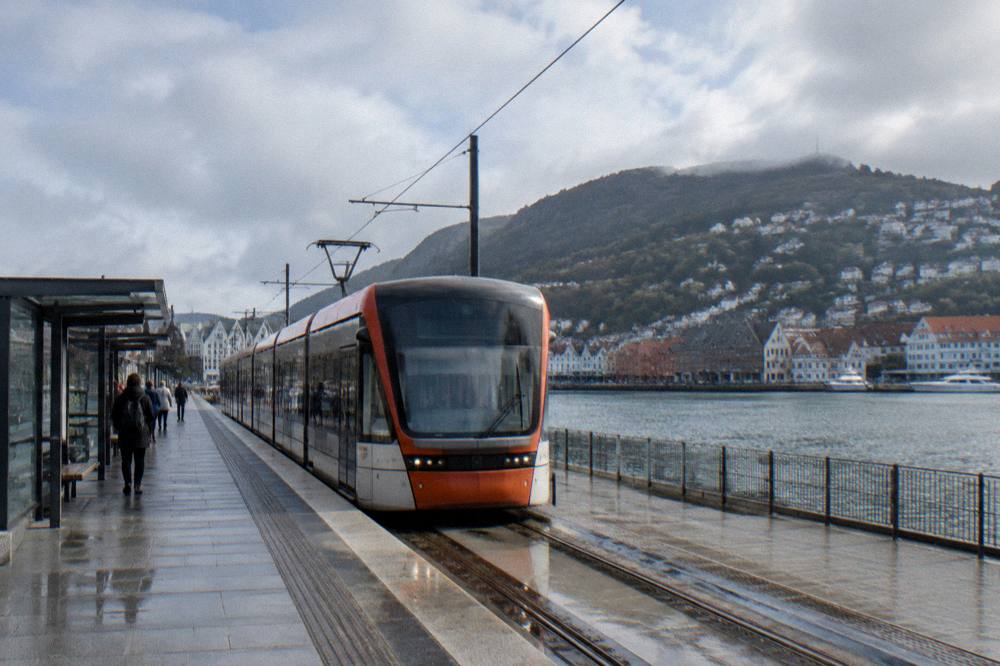
The Bybanen light rail line 1 connects Bergen Airport Flesland to the city, is the cheapest transfer, and is covered free by the Bergen Card along with Skyss buses; a single Skyss adult ticket in zone A is 51 NOK, and the airport bus is not included in the card. Trains from Oslo arrive at Bergen station beside the bus terminal, a short hop from the harbour. Every arrival route lands you close to the Hurtigruten quays.
The airport transfer is the piece visitors overthink. The light rail runs from the airport into the city centre, and the Bergen Card makes it free, which is a genuinely useful detail for anyone with a voyage booked: buy a 24-hour card at 400 NOK for an adult or 100 NOK for a child aged 3 to 15, and it covers the airport line plus every city bus for the day you arrive. The longer cards, 48h at 500/125 NOK, 72h at 600/150 NOK and 96h at 700/175 NOK, suit a pre-voyage stay, and the Bergen Card guide runs through the full inclusions.
| Bergen Card duration | Adult price | Child price (3-15) |
|---|---|---|
| 24 hours | 400 NOK | 100 NOK |
| 48 hours | 500 NOK | 125 NOK |
| 72 hours | 600 NOK | 150 NOK |
| 96 hours | 700 NOK | 175 NOK |
Flying in matters for another reason: the voyage ends, or begins, with a long leg between Bergen and wherever home is. The flights to Bergen guide and the Bergen airport guide cover the airport side, while the Oslo to Bergen train guide makes the case for arriving over the mountains by rail, one of the most scenic rail journeys in the country, and a fitting overture to a coastal voyage. If your plan involves a car, the car rental in Bergen guide covers one-way rentals, which is relevant if you plan to drive to the fjords before sailing.
Note one seasonal caveat: Bergen Airport Flesland has a scheduled overnight runway closure for lighting maintenance from 19 May to 5 June 2026, between roughly 22:30 and 03:30 UTC on weeknights. That affects night cargo and some late arrivals, not the terminal or daytime flights, but it is worth knowing if your voyage starts with a red-eye connection into Bergen.
What Are The Best Fjord Experiences To Add Around A Hurtigruten Trip?
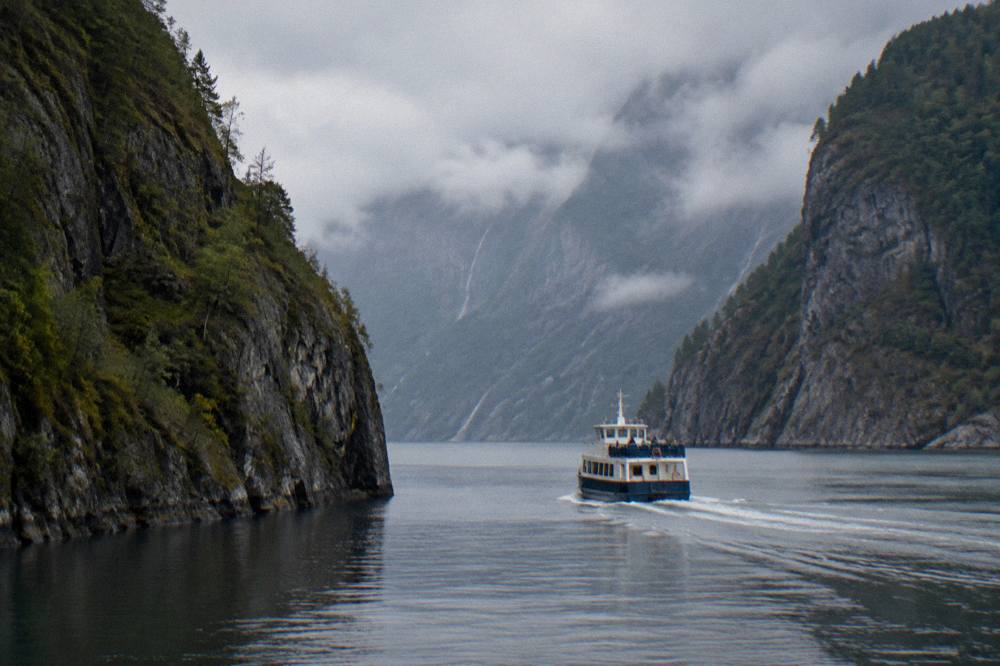
The strongest add-on to a Hurtigruten voyage is a fjord cruise out of Bergen itself: the Mostraumen route into Osterfjord is the classic half-day option, running roughly 3.5 to 4 hours from the city harbour, and a locally guided version of that cruise is this site's featured pick for this page, with its live price, rating and schedule carried on the operator's listing. Longer add-ons include the Sognefjord and Flåm day trips and the Hardangerfjord tours, all covered in the site's dedicated fjord guides.
The Mostraumen cruise earns its reputation because it fits the shape of a Bergen visit: you sail out of the same harbour your coastal ship uses, run up a branch of Osterfjord where the channel narrows between cliffs, and return within an afternoon. The cruise operated and guided by locals is the version this page highlights, and you can check its current availability and price on the operator's live listing: Check availability. The site's own Mostraumen fjord cruise guide covers the route in detail, and the broader fjord tours from Bergen guide compares every option.
The wider fjord menu divides into three families. The Sognefjord and Flåm trips, including the famous Flåm Railway, are full-day commitments into Norway's longest fjord system, covered by the Sognefjord guide and the Bergen to Flåm guide. The Hardangerfjord tours east of the city are the orchard and waterfall fjord, covered in the Hardangerfjord guide. The glacier trips to Folgefonna and the Rosendal cruises are the southerly options, and the Folgefonna and Rosendal guide handles those. Here is how the day-trip families compare at a planning level:
| Day-trip family | Direction from Bergen | Typical commitment | Best covered by |
|---|---|---|---|
| Mostraumen fjord cruise | North, up Osterfjord | Around half a day | Mostraumen fjord cruise guide |
| Sognefjord and Flåm | Northeast, into the longest fjord | Full day to two days | Sognefjord guide |
| Hardangerfjord | South and east of the city | Around 8 hours | Hardangerfjord guide |
| Folgefonna glacier | South, into Folgefonna National Park | Full day | Folgefonna and Rosendal guide |
Do the fjord add-on before the voyage, not after. The logic is simple: after days at sea, the appetite for another boat is lower, and the Bergen fjord departures run on fixed daytime schedules that pair well with a hotel stay in the city. The where to stay in Bergen guide and the best hotels in Bergen guide cover the neighbourhoods near the quays, which is where most Hurtigruten passengers base themselves the night before sailing.
How Does A Hurtigruten Voyage Compare With A Cruise Port Day In Bergen?
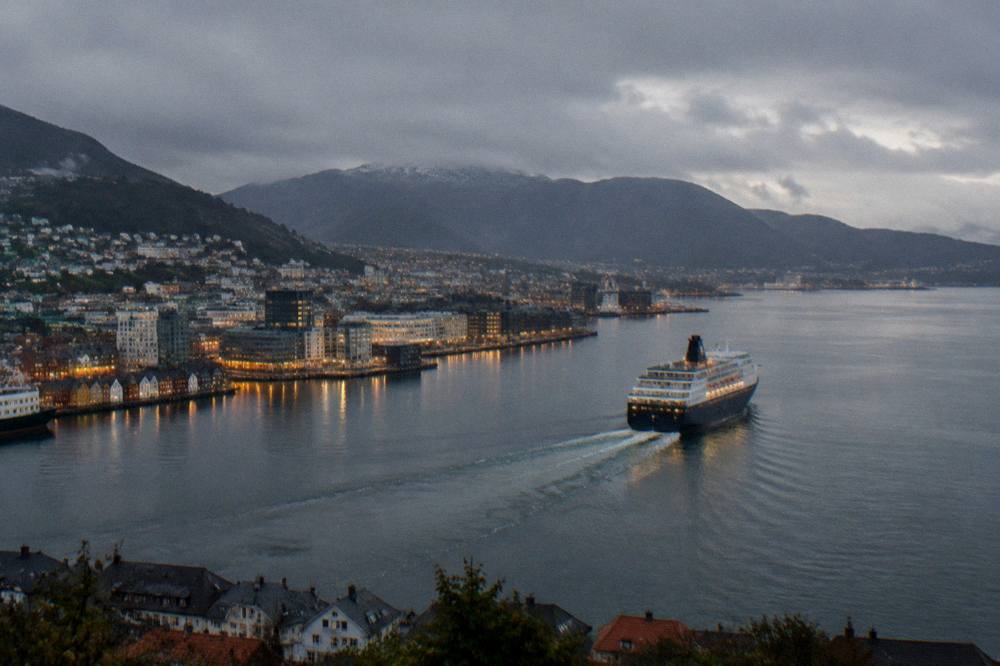
A Hurtigruten voyage and a big-ship cruise port day in Bergen use the same harbour but are different products: the coastal express is a scheduled working service focused on the Norwegian coast, while large international cruise calls at the same Port of Bergen deliver thousands of passengers ashore for a single day before sailing on. The port publishes a live arrivals list that shows both, and the city feels the difference: a port day is a snapshot, a voyage is a journey.
The port-day version of Bergen is well covered elsewhere on this site: the Bergen cruise port guide and the Bergen cruise ship day guide are built entirely around the one-day visit, including how the crowds move between the quay, Bryggen and the funicular. If you are sailing Hurtigruten but have only a few hours in the city beforehand, those guides are the practical ones to read, because they compress the same waterfront into a tighter plan.
The voyage, by contrast, rewards a different kind of preparation. You will see Bergen at sailing time, often in evening light or in rain, and then you will see the coast unfold for days: the fjord mouths, the island chains, the Arctic ports in the north. What you will not get is the fixed daily itinerary of a Mediterranean-style cruise; the timetable bends to ports and weather, and the ship's rhythm is the point. Travellers who accept that rhythm tend to rate the voyage highly, and travellers who expect onboard theatre tend not to.
One Bergen-specific planning point closes the comparison. The city's shoulder seasons, spring and autumn, are when the port is busiest with scheduled calls and the streets are calmest with tourists; the Bergen in autumn guide and the Bergen in summer guide lay out the seasonal character. Winter sailing, meanwhile, is its own proposition, shorter days and a real chance of snow on the northern stretch, and the Bergen in winter guide covers what the city itself offers around a winter departure.
Common Questions About Hurtigruten Bergen
Six questions a Hurtigruten passenger asks most about the Bergen end of the voyage, from the dock itself to the city days around it.
Where Do Hurtigruten Ships Dock In Bergen?
Hurtigruten ships berth at the deep-water quays of the Port of Bergen, within a short, level walk of Bryggen, the fish market and the Fløibanen funicular base, so no transfer or taxi is needed. The port publishes a live list of arrivals, which is the reliable way to confirm which quay a specific ship is using on a given date. Central Bergen is compact, and the entire waterfront core sits within walking distance of the berths.
That walkability shapes every port-day plan in the city. The coloured gables of Bryggen, the stalls of the fish market and the base station of the funicular all sit in the same small harbour bowl, so the order you visit them in matters more than any logistics. The Bergen cruise ship day guide turns that geography into an hour-by-hour plan.
Can you visit Bergen without taking the full Hurtigruten voyage?
Yes. Bergen is a city worth several days in its own right, and many travellers treat it purely as a destination: the Hanseatic wharf, the funicular to Fløyen, the museums and the day trips into the fjords around the city fill two or three days comfortably. The full planning picture, including how many days to allocate, is in the planning a trip to Bergen guide on this site.
Do you need a visa or special entry documents to sail Hurtigruten from Bergen?
Norway is a Schengen Associate: an EEA and EFTA member applying the Schengen acquis, but not an EU member. Entry to Bergen is a Schengen crossing for third-country nationals, and visa-exempt visitors should check the current entry requirements with the Norwegian authorities before travelling. No specific ETIAS start date should be relied on, as that system's timeline has shifted repeatedly.
Is the Bergen Card worth it for a pre-voyage stay?
Often, yes. The 2026 Bergen Card starts at 400 NOK for 24 hours and covers free travel on Skyss buses and the Bybanen light rail across Vestland county, including the airport line, plus free or discounted entry to most of the major attractions, including the Bryggen Museum at 85 NOK with the card versus 170 NOK ordinary. The full inclusions are itemised in the Bergen Card guide on this site.
What is the rainiest month in Bergen?
Across the trailing 13 observed months, November was the wettest, recording 321.8 mm of precipitation against a normal of 275.0 mm, according to the Met Norway station data via yr.no. December was close behind at 303.5 mm. April was the driest month observed, at 65.9 mm.
Can you see the northern lights from a Hurtigruten voyage?
On winter sailings, yes, the northern stretch of the coastal route is under the auroral belt, and sightings are a real possibility on clear nights above the Arctic Circle. Bergen itself is too far south to be a reliable aurora destination; the northern lights in Bergen guide on this site explains what is realistic at the city's latitude.
How many days should you spend in Bergen before sailing?
Two days is the practical minimum for most first-time visitors: one for the city core, Bryggen, the funicular and a museum, and one for a fjord cruise such as the Mostraumen route or a walk on one of the mountains. Three days adds a full fjord day trip or a slower museum itinerary. The how many days in Bergen question is covered in depth elsewhere on this site.
A Hurtigruten voyage that starts in Bergen rewards the traveller who treats the city as more than a gangway. Give it a day or two of rain-proof planning, ride the funicular before you sail, take a fjord cruise from the same harbour your ship leaves from, and read the arrivals list the night before, and the voyage will begin the way the route has always worked: with Bergen's wharf at your back and the whole coast ahead.