Bergen Norway History
Bergen, on the southwestern coast of Norway in Vestland county, grew from a royal harbour town into a Hanseatic trading capital. This guide traces the city from the Viking Age to the wharf UNESCO listed in 1979.
Short answer
There was no town called Bergen during the Viking Age. People lived on the peninsula in farms and at royal estates, and the city itself grew into a royal trading town only in the late Viking Age and the Middle Ages that followed. German Hanseatic merchants later made the Bryggen wharf the stockfish hub of the North Atlantic, and UNESCO inscribed Bryggen on the World Heritage List in 1979.
Bergen, a city and municipality in Vestland county on the southwestern coast of Norway, packs nearly a thousand years of documented urban life into a harbour pocket between steep mountains and the North Sea. The kommune's own page states a population of 294,860 as of 1 January 2026, which makes it one of the largest cities in the country, yet the historic core is barely a few hundred metres across. Colourful gabled warehouses lean over the water at Bryggen. A stone fortress guards the harbour mouth. Up the hillside, the funicular climbs toward Fløyen through woodland that has fed and sheltered the town since its first days. This guide walks through that history in order, from the Viking Age question everyone asks to the fires, the Hanseatic merchants and the UNESCO listing, and it ends with the sites you can still stand inside today.
What Is The Oldest Part Of Bergen?
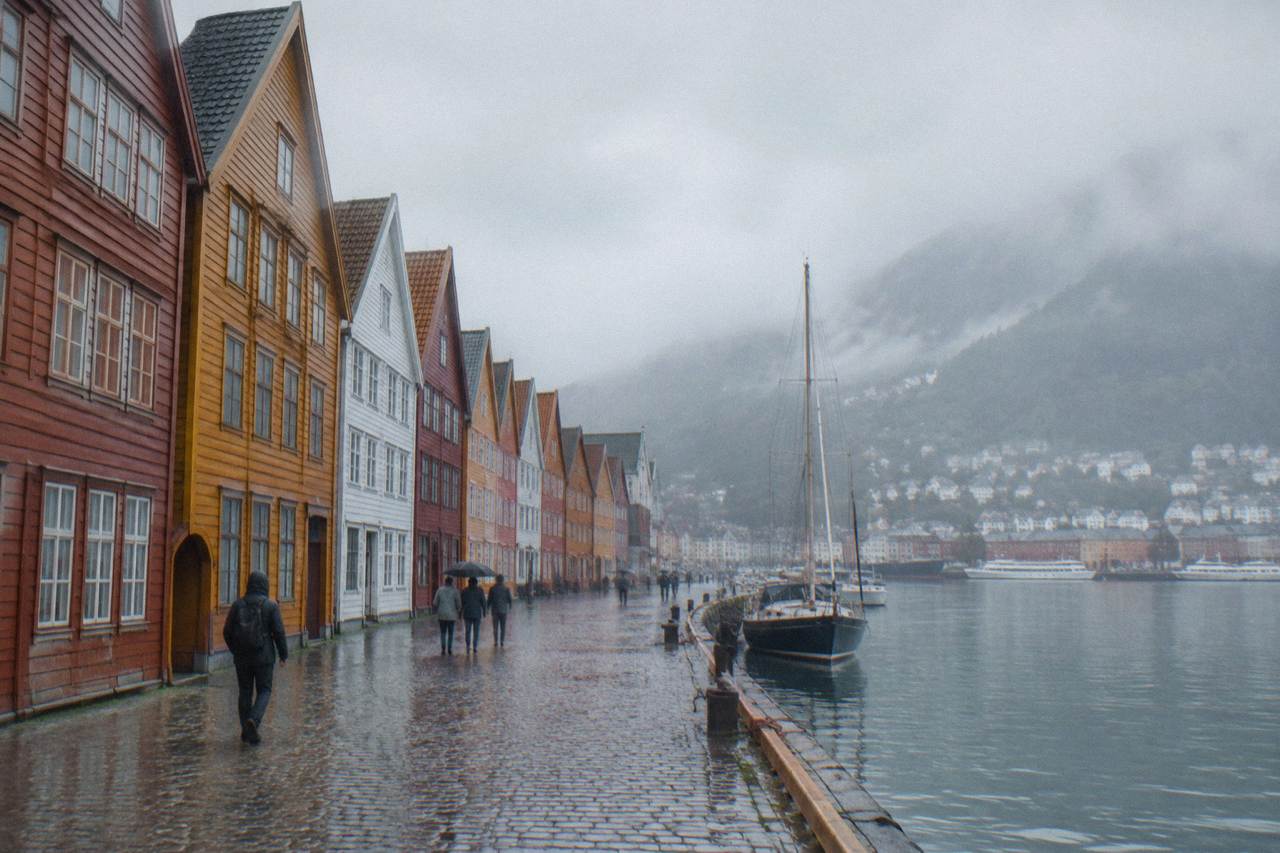
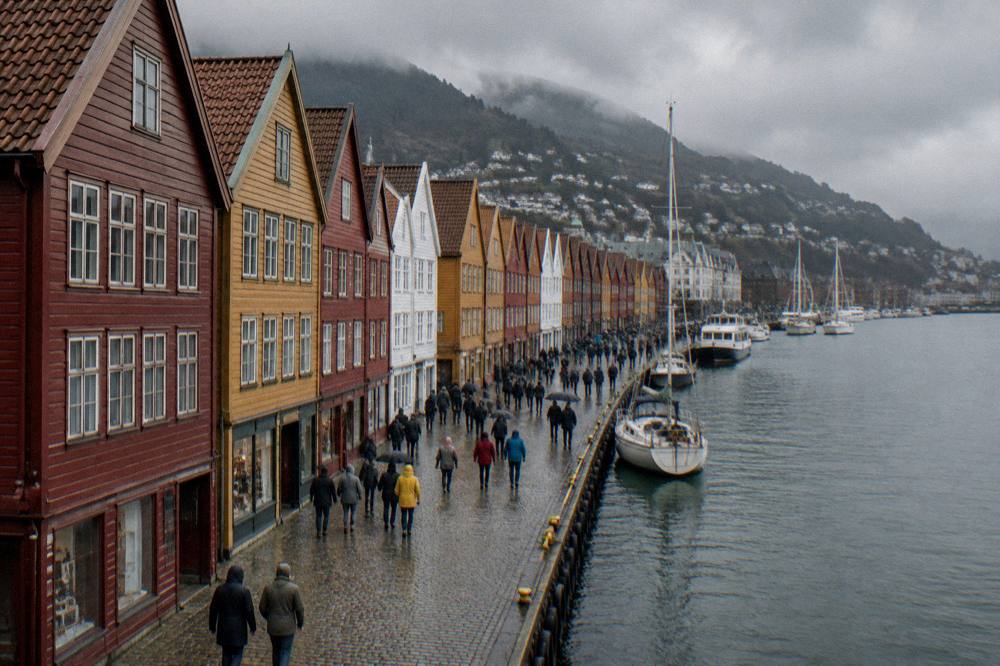
Bryggen, the old Hanseatic wharf on Bergen's eastern harbour side, is the oldest part of the city still standing, a row of colourful wooden gables that UNESCO inscribed on the World Heritage List in 1979. UNESCO's own listing describes a Hanseatic wharf that grew up around a medieval trading town on Norway's southwestern coast, and the timber buildings you walk between today descend directly from that German merchant quarter, rebuilt after fire after fire on the same medieval footprint.
The wharf is the anchor of every history walk in the city, and its survival is close to a miracle. Bergen burned repeatedly, and timber buildings of this type simply do not usually last. What kept Bryggen alive was a combination of continuity and law: the merchant quarter was rebuilt on the same plots, over the same foundations, with the same room programme, generation after generation. The long rows you photograph today are therefore not the original medieval timbers, but they are the original medieval district, with excavated cellar layers beneath the buildings running back centuries.
A practical note for planning: the buildings are working shops, cafés and museums, not a museum set. Entry to the lanes is free at any hour. The museums attached to the quarter charge admission, and the Bergen Card's own flyer lists Bryggen Museum at 170 NOK for an adult, or 85 NOK with the card, which is the cheapest structured way into the archaeology under the wharf. If you are mapping a wider trip, the what the Bergen Card costs guide breaks down every covered site in the old town.
Did Vikings Live In Bergen?
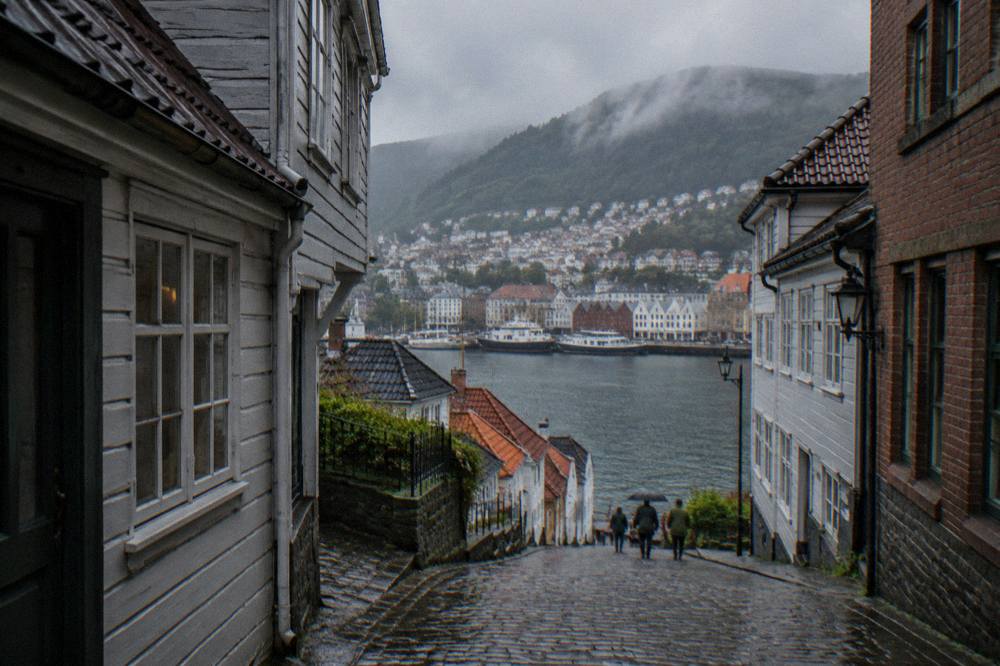
No, there was no town called Bergen during the Viking Age: people lived on the peninsula, but the city itself came later. Archaeology and the kings' sagas point to scattered farms and a royal estate on the heights above the harbour long before any wharf, church or market street existed, and Bergen grew into a proper royal trading town only in the late Viking Age and the early Middle Ages that followed it.
That distinction matters more here than in most European cities, because the Viking Age and the founding of Bergen sit almost back to back. The kings who unified Norway needed western harbours, and the natural harbour between the seven mountains, with its sheltered bay and its approaches from the open sea, answered that need. Farmers had already cleared land on the slopes, and the same royal estate that hosted the court before the town existed is the reason the earliest church foundations cluster where they do.
So the honest answer to the question is: Vikings lived around Bergen, and the town that became Bergen grew out of their world. Excavations in the city centre have reached down through medieval layers toward this early period, and the museums display the finds: combs, tools, boat fittings, the ordinary debris of a working harbour settlement rather than a warrior town. The Bryggen Museum, sitting directly on the wharf excavations, is where most of that material is interpreted for visitors.
Families planning around this history should know that the Viking thread is woven into the wider region rather than the city centre alone. The old farm names survive on the hillsides, the hiking trails above the town follow routes older than any street, and the hiking the trails above the city guide covers several walks that pass through this early cultural landscape, where place names carry the Viking Age even when buildings do not.
How Did The Hanseatic League Shape Bergen?
The Hanseatic League, the German merchant network that dominated northern European trade, established its trading office on Bryggen and turned Bergen into the stockfish hub of the North Atlantic. German merchants lived, worshipped and traded in their own closed quarter for generations, and their wooden gables, assembly rooms and warehouses still line the harbour today, a district within the city that kept its own rules, its own language and its own church for centuries.
Stockfish, the wind-dried cod of northern Norway, is the commodity that explains everything about medieval Bergen. The fish came south by sea from the Arctic coast, was graded and stacked in the Bryggen warehouses, and was shipped onward to the hungry cities of Europe. The German merchants who controlled that pipeline were, for a long stretch of the city's history, the effective power in the harbour: the Norwegian crown taxed them, the local population worked for them as fishermen and porters, and the whole western Norwegian economy bent around the trade they ran.
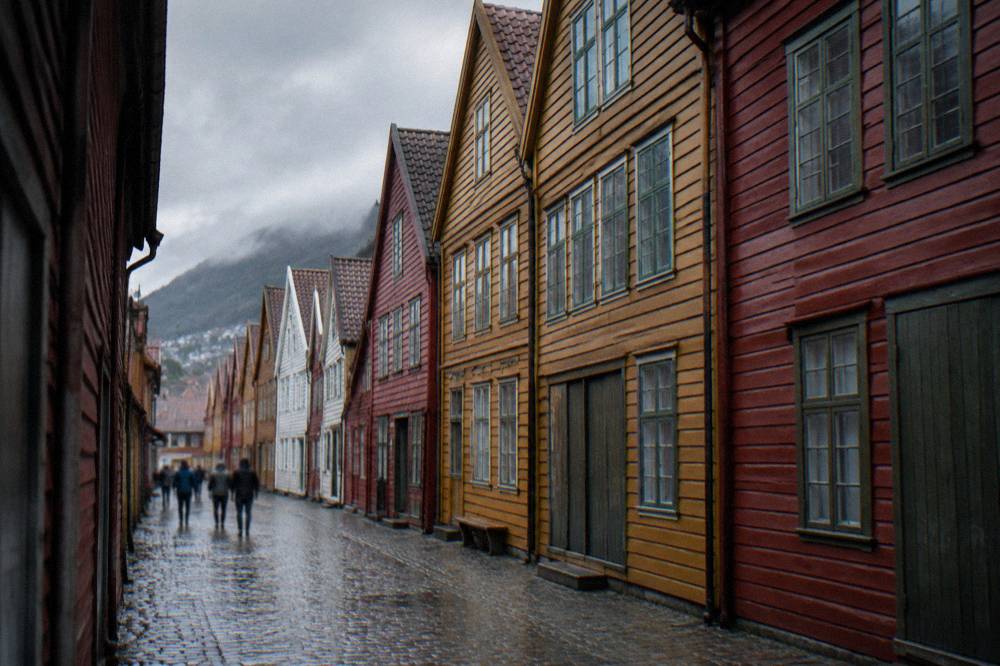
The Hanseatic Museum, inside one of the old merchant houses, shows the domestic side of that world: the cramped sleeping lofts, the counting rooms, the stockfish smell that the building still carries. The Bergen Card's own flyer lists it at 160 NOK for an adult, with a guided visit included in the price, and it is the single best indoor stop for understanding who the Germans actually were. The district also kept its own assembly room, where merchant law was argued and disputes settled, a reminder that Bryggen was less a neighbourhood than a self-governing factory floor for international trade.
Here are the historic indoor sites with confirmed prices from the official 2026 Bergen Card flyer, published 2026-05-12:
| Historic site | Adult price (NOK) | Bergen Card price (NOK) |
|---|---|---|
| Bryggen Museum | 170 | 85 |
| Hanseatic Museum (guided visit) | 160 | listed in the flyer |
| Haakon's Hall | 120 | listed in the flyer |
| KODE Art Museums | 200 (Card rate) | 200 |
| The Aquarium (Akvariet), 1 Nov to 28 Feb window | 380 | listed in the flyer |
The KODE figure deserves a caveat: kode.no's own ticket page did not load, so the 200 NOK figure here is the Bergen Card line-item price, not a confirmed standalone museum ticket. Treat it as the card rate and check the museum directly before paying at the door.
If you want the full Hanseatic story with your own feet on the cobbles, a guided walk is the most efficient way in, and the trio below includes two history-focused walking options plus the fjord trip that shows the sea road the merchants sailed.
What Survives From Medieval Bergen Today?
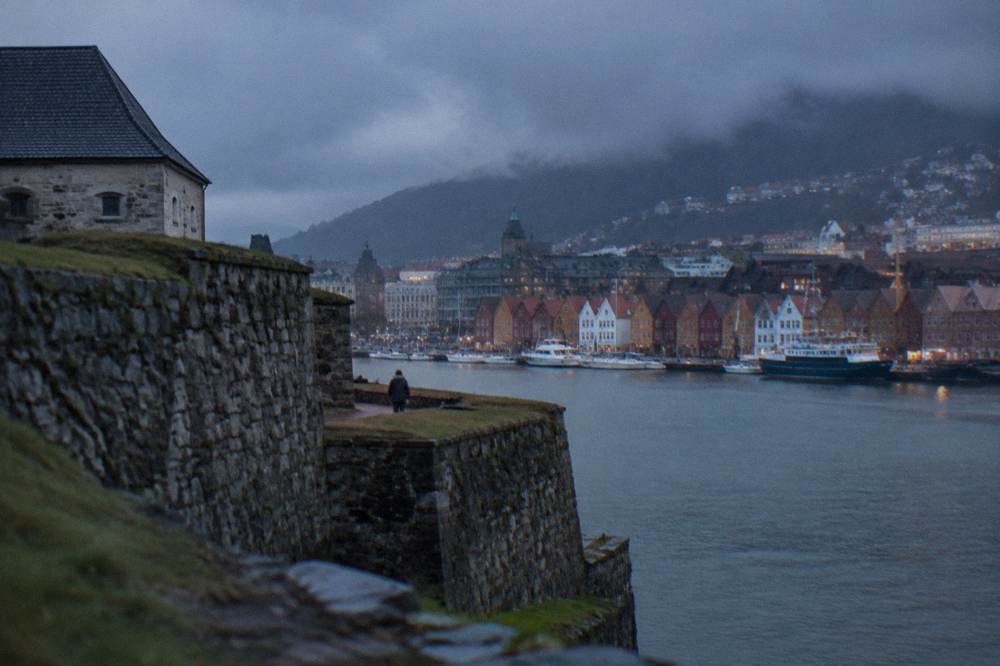
Bergenhus Fortress holds the clearest medieval remains in the city: Haakon's Hall, a royal stone hall from the Middle Ages, and the defensive walls around the harbour mouth, together with St Mary's Church, the oldest surviving church building in Bergen, and Bergen Cathedral near the centre. The Bergen Card's own flyer lists Haakon's Hall at 120 NOK for an adult, one of several medieval sites reachable on a single day's walking circuit of the harbour.
The fortress is the surprise for most first-time visitors, because it is not a hilltop ruin but a working stone complex sitting right at the water's edge, minutes from the fish market. Haakon's Hall is the emotional centre of it: a royal banqueting hall built for a medieval wedding celebration of state significance, and the largest secular stone building of its period surviving in Norway. Walking into it, you feel the scale of what the medieval Norwegian crown could build at the height of the town's royal era. The walls around it were expanded by later generations, including the Renaissance-era Rosenkrantz Tower, so the fortress reads as a layered diagram of several centuries of military architecture in one site.
St Mary's Church, on the edge of Bryggen, is the other essential medieval survival. It served the German merchant community, and its interior reflects that congregation's wealth. Bergen Cathedral, rebuilt after the city's fires, carries the later medieval and early modern story in its stonework. None of these are large sites; you can see all of them, unhurried, in a single day, and the circuit between them is exactly the route most guided city walks follow.
The Medieval period also left the city its street logic. The lanes around Bryggen, the square at Torgallmenningen, and the slope up to the cathedral were all established in the medieval town and have been re-cut by fire rather than replanned by architects. The plan a full Bergen trip guide maps the modern walking routes onto this old geography, which is the easiest way to feel the medieval town without a guidebook.
If the fortress circuit leaves you ready for lunch, the old town happens to be one of the best eating districts in Norway, and the food traditions here are the direct descendants of the harbour trade this guide has been describing. One tour pairs the guided tasting walk with a ride up the funicular, and the box below shows the current offer.
A morning walk is the classic way to absorb this circuit before the cruise crowds thicken, and the option below follows the harbour, the fortress and the old centre in a single loop.
How Did Fire And Plague Reshape Bergen?
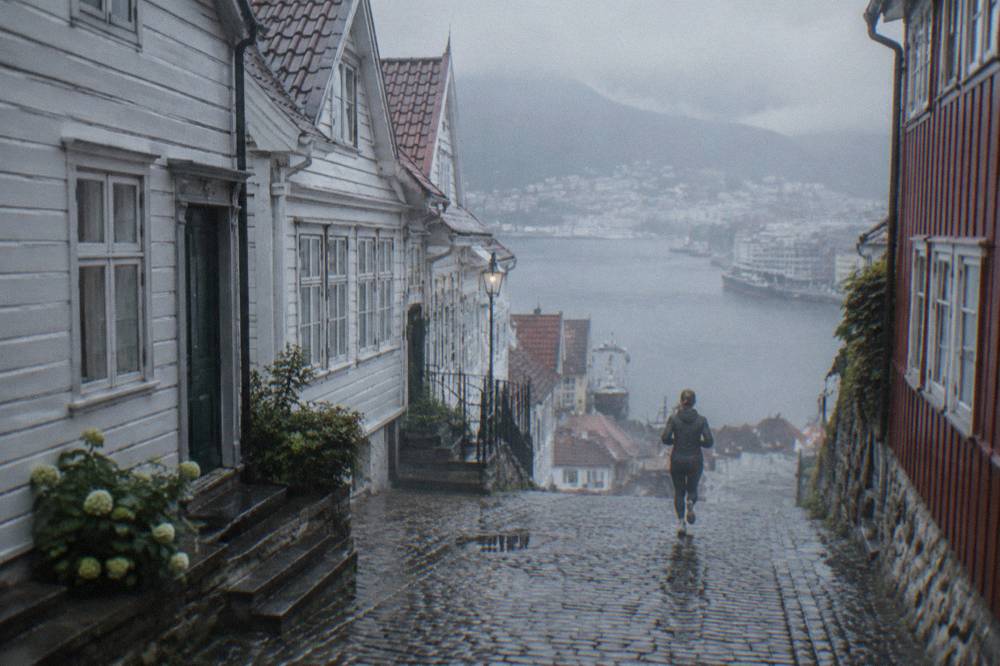
Fire, more than war, is the force that has reshaped Bergen most often: a wooden Hanseatic town built tight against a busy harbour burned repeatedly across the centuries, most recently in modern times, and each reconstruction narrowed the streets, pushed the German merchants out of their monopoly and turned Bryggen from a living trading quarter into the heritage district it is now. The Black Death, arriving generations into the town's history, gutted the local merchant class and accelerated the German office's dominance of the wharf.
The logic of the fires is geographical. The town needed to sit at the water for trade, on flat land that barely exists between the mountains and the bay, so the buildings packed tight, of timber, with open hearths and tarred roofs. Add a wet, windy coastal climate, and you get a settlement that burned catastrophically every few generations, and rebuilt on the same footprints because there was nowhere else flat to build. The great fires of the early modern period destroyed Bryggen in stages. A catastrophic citywide fire in more recent times cleared whole districts of the centre, which is why the grid around Torgallmenningen reads as modern while the wharf reads as ancient.
The plague, by contrast, worked quietly. When it swept through, it killed a large share of the Norwegian merchants and sailors who had run the harbour trade alongside the Germans. The Hanseatic office, recruiting from cities that recovered faster, filled the gap, and for centuries afterwards the wharf was effectively a German town inside a Norwegian one. The fires eventually did to the German community what the plague could not: after repeated destruction and the economic shifts of the early modern period, the Bryggen trade thinned, and the last generations of Hanseatic presence faded away as the modern era arrived.
There is a strange modern echo of this story in the way the district is preserved today. The postwar decades very nearly demolished Bryggen for a new road scheme, and the campaign to save it led to the UNESCO inscription in 1979. The buildings have been under continuous conservation since, and the excavations that accompany the conservation work keep producing the medieval artefacts now displayed in the museums. Destruction built this city's history, and it keeps revealing it.
Why Is Bryggen A UNESCO World Heritage Site?
UNESCO inscribed Bryggen on the World Heritage List in 1979, and its own listing explains why: the wharf is an exceptionally preserved monument to the Hanseatic League's Atlantic trading empire, a district of timber warehouses and gabled facades that documents how stockfish from northern Norway was stored, graded and shipped to Europe from a harbour on the Vestland coast. The listing cites 1979 as the year of inscription and the buildings' continuous working history going back to the Middle Ages.
What UNESCO recognised was not beauty alone, though the row of gables is the most photographed facade in Norway. The listing's argument is about evidence: Bryggen is one of the few places on earth where the physical plant of the Hanseatic trading system, its warehouses, its counting rooms, its lanes and its cellar deposits, survives as a functioning district rather than isolated monuments. The wharf was still handling cargo within living memory of the preservation campaign. That continuity, from medieval monopoly to working port to heritage site, is what no replica or reconstruction could offer.
For visitors, the inscription has one practical consequence: the quarter is managed, monitored and explained to a standard few city districts enjoy. The foundations are stabilised, the archaeology is published, and the museums on the site exist specifically to interpret it. The district also anchors the city's wider visitor economy, which is why the accommodation around it fills first. The where to stay in Bergen guide covers the neighbourhoods within walking distance of the wharf, which is the single best base for a history-focused stay.
The preservation story is not finished. Conservation teams work through the buildings on a rolling schedule, and the excavated deposits beneath the wharf continue to yield material that reshapes what historians know about the medieval trade. A static monument it is not.
How Do You Explore Bergen's History On Foot?
You cover the most history per step on foot: start at Bryggen's gables, cross to Bergenhus and Haakon's Hall, climb past St Mary's Church into the old centre, and finish above it all on Fløyen. Guided walks compress that whole circuit into roughly two hours, food walks pair the old wharf with the fish market, and the funicular shows how closely the town has hugged its mountain since its first days, all on routes that follow the medieval geography rather than fighting it.
Bergen is genuinely walkable, and its history is unusually concentrated. The full circuit, harbour to fortress to church to hillside, is short enough that the limiting factor is interest, not distance. Two things make a guided version worthwhile. First, the good local guides know which facade is a rebuild and which cellar is original, and that judgement is invisible to a visitor. Second, the food angle is not a gimmick here: the fish market and the old trading wharf are the same story told through cargo, and tasting the harbour's food traditions, from stockfish descendants to modern seafood, is the fastest way to understand what the Germans actually shipped.
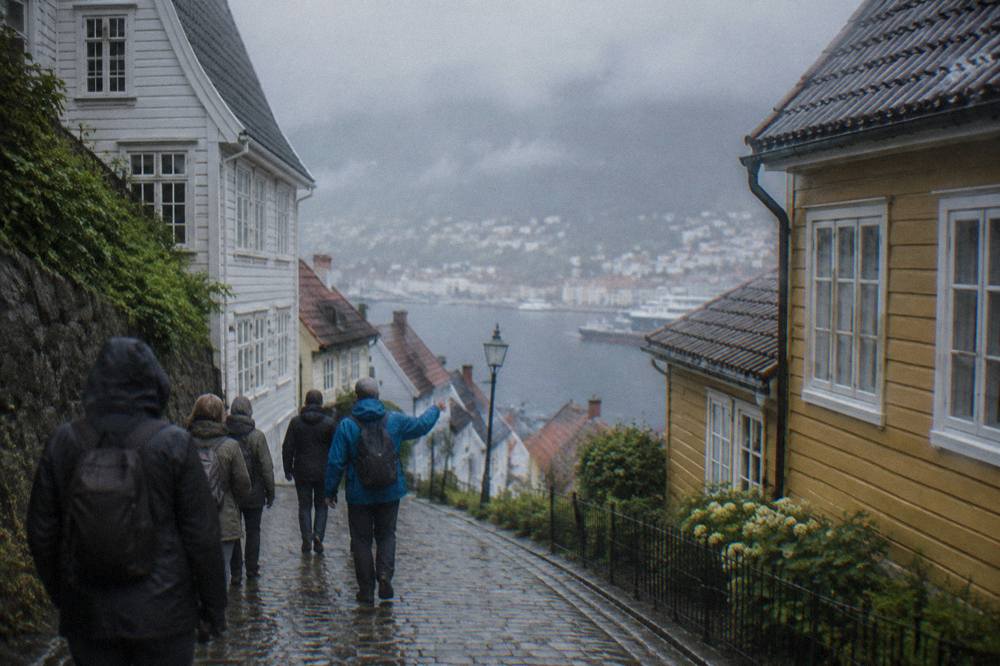
The food walk below is the one this site features on its history pages, and for good reason: it folds the Fløibanen funicular ride into the route, so the panorama from Fløyen, the view that shows the whole medieval harbour plan in one glance, is built into the walk. It runs about three and a half hours and pairs the old town with tastings drawn from the market traditions the Hanseatic trade created. If you would rather start the day with pure history and eat later, the morning walking tour earlier in this guide does the fortress-and-wharf circuit in a tighter window. Availability changes with the seasons, so the live listing is the authority on dates and current terms: Check availability.
The sea road is the other half of the story, and it deserves a slot in any history-focused itinerary. The same fjord approaches that carried stockfish south and timber out now carry visitors out to the Osterfjord, and the fast RIB version of that trip gets you to the narrow Mostraumen strait and back inside a couple of hours, which leaves the afternoon free for the museums. The premium RIB option is the most time-efficient fjord taste from the historic harbour.
For a fuller comparison of every fjord option that departs from the harbour, including the all-day trips up the Sognefjord, the fjord tours from Bergen overview is the site's dedicated guide to the water routes the merchants sailed.
When Is The Best Time To Visit Bergen's Historic Sites?
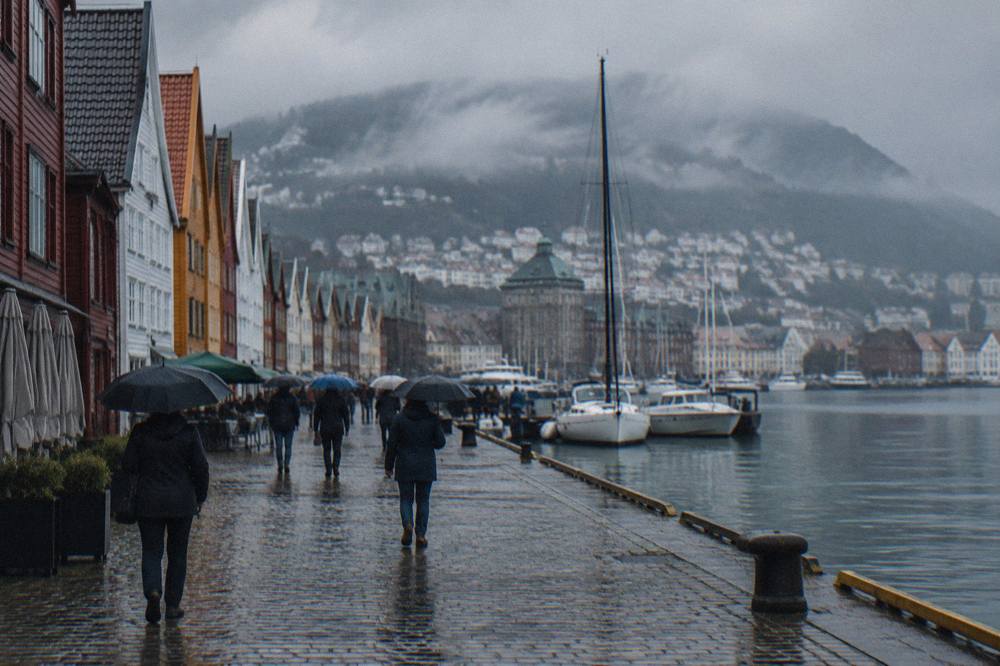
Late spring through early autumn is the most reliable window for Bergen's historic core: yr.no's Bergen station table shows monthly means running from -1.4C in January 2026 to 14.9C in July 2026, with 217 days of precipitation over the trailing thirteen months, so the open-air sites, the wharf, the fortress walls and the old streets, are best walked in the warmer half of the year. Winter swaps walking weather for the Christmas market and the gingerbread city, both well inside the wet season.
The climate data deserves a direct look, because it is the one factor that genuinely shapes a history walk here. The table below is from Met Norway's own statistics for the Bergen station, and it shows the character of the city: mild for its latitude, never properly cold on average, and wet in every single month, with November the wettest observed month at 321.8mm against a 275.0mm normal.
| Month | Mean temp (C) | Precipitation (mm) |
|---|---|---|
| Sep | 13.1 | 206.6 |
| Oct | 9.7 | 231.9 |
| Nov | 6 | 321.8 |
| Dec | 5.8 | 303.5 |
| Jan | -1.4 | 82 |
| Feb | 0.8 | 133.4 |
| Mar | 5.9 | 243.9 |
| Apr | 7.9 | 65.9 |
| May | 9.9 | 127.4 |
| Jun | 14.4 | 165.7 |
| Jul | 14.9 | 184.2 |
| Aug | 14.3 | 243.6 |
Two readings of that table matter for planning. April was the driest observed month at 65.9mm, and April to August carries the warmest means, so that is the sweet spot for long days on the fortress walls. There is no dry season here: even the best months carry meaningful rain, so a layered, waterproofed packing approach is the right instinct. For a broader seasonal breakdown, the the best time to visit Bergen guide weighs crowds, prices and festivals alongside the climate.
Winter has its own historical draw, though it is an indoor history. The Bergen Christmas Market runs at Festplassen from 20 November to 22 December 2026, Monday to Friday from 12:00 to 21:00 and weekends from 10:00, with free entry, and Pepperkakebyen, billed as the world's largest gingerbread city, runs 14 November 2026 to 10 January 2027. Both are listed on visitbergen.com's what's-on pages. The museums, including the Hanseatic Museum and the Bryggen Museum's excavations, make a genuinely good rainy-day circuit, and the planning a trip around bad weather itineraries on this site are built around exactly that pattern.
One maintenance note for mountain-hardware history: Ulriken643, the cable car on the city's highest mountain, closes for scheduled maintenance in the first weeks of each year, including weeks one and two of 2026 with a reopening around 13 January, plus standard Christmas closures. Fløibanen, the funicular that carries the food walk uphill, runs year-round, with a return adult ticket listed by the Bergen Card flyer at 200 NOK from 1 April to 30 September and 145 NOK from 1 October to 31 March.
Here is the rest of the confirmed 2026 pricing for the mountain transport and the city pass that bundles it:
| Ticket | Adult price (NOK) | Notes |
|---|---|---|
| Bergen Card 24h | 400 | child 100, ages 3 to 15 |
| Bergen Card 48h | 500 | child 125 |
| Bergen Card 72h | 600 | child 150 |
| Bergen Card 96h | 700 | child 175 |
| Fløibanen return, 1 Apr to 30 Sep | 200 | child 100 |
| Fløibanen return, 1 Oct to 31 Mar | 145 | child 75 |
| Ulriken643 return | 435 | year-round adult rate |
| Skyss single ticket, zone A | 51 | bus and light rail |
The Bergen Card's own flyer confirms it covers free Skyss buses and the Bybanen light rail across Vestland county, including the airport line, which makes the card as much a transport ticket as a museum pass for a history-focused stay.
Finally, the city's living calendar, which is itself a layer of history in motion. The Bergen International Festival, the oldest of the pack, has confirmed dates for both 2026 and 2027:
| Event | 2026 dates | 2027 dates |
|---|---|---|
| Bergen International Festival (Festspillene) | 27 May to 10 June | 26 May to 12 June |
| Bergenfest | 10 to 13 June | 9 to 12 June |
| Nattjazz | 29 May to 6 June | 28 May to 5 June |
| Bergen Pride (Regnbuedagene) | 29 May to 6 June | not yet announced |
| Bergen International Film Festival | 14 to 22 October | not yet announced |
| Bergen Christmas Market | 20 Nov to 22 Dec | not yet announced |
| Pepperkakebyen | 14 Nov to 10 Jan 2027 | not yet announced |
Bergen's history is unusually generous to the visitor: the Viking question, the Hanseatic wharf, the medieval fortress and the UNESCO story all sit within a fifteen-minute walk of each other, under a sky that has been raining on this harbour, more or less, for the entire thousand years of it. Pack for the rain, buy the card if you are museum-heavy, walk the circuit in the morning, and the city's whole timeline will open up under your feet.
Common Questions About Bergen's History
Did Vikings live in Bergen?
People lived on the Bergen peninsula during the Viking Age, in scattered farmsteads and at a royal estate above the harbour, but there was no town called Bergen yet. The city grew into a royal trading town only in the late Viking Age and the Middle Ages that followed, so Vikings lived around Bergen rather than in Bergen itself.
Why is Bryggen a UNESCO World Heritage Site?
UNESCO inscribed Bryggen on the World Heritage List in 1979 because the wharf is an exceptionally preserved monument to the Hanseatic League's North Atlantic trading empire, with timber warehouses, lanes and cellar deposits documenting the medieval stockfish trade on Norway's western coast.
How old is Bergen, Norway?
Bergen's documented urban history runs back roughly a thousand years, from a royal harbour town of the late Viking Age and early Middle Ages, through centuries as the Hanseatic League's stockfish hub, to a heritage city of today that has preserved its medieval wharf district.
Was Bergen a Hanseatic city?
Not a member city, but the League's most important office in the North Atlantic. German merchants ran a self-governing trading quarter on Bryggen for centuries, controlling the stockfish trade between northern Norway and Europe, and the district kept its own rules, church and assembly room inside the Norwegian town.
What is the oldest building in Bergen?
Among buildings standing today, the medieval survivors cluster around Bryggen and the fortress: St Mary's Church is the oldest surviving church building in the city, and Haakon's Hall at Bergenhus is the largest surviving secular stone hall of the medieval royal era. Most of the timber wharf has been rebuilt on its medieval footprint after repeated fires.
Is Bergen older than Oslo?
Bergen's rise as a town came later than Oslo's founding era as a medieval centre, but Bergen overtook it for size and wealth during the Hanseatic period and remained Norway's largest city for centuries afterwards. Both grew from royal foundations rather than Viking towns, on harbours and rivers that had been used for centuries before either town existed.