Bergen Ferry: The Complete Guide To Ferries To And From Bergen, Norway
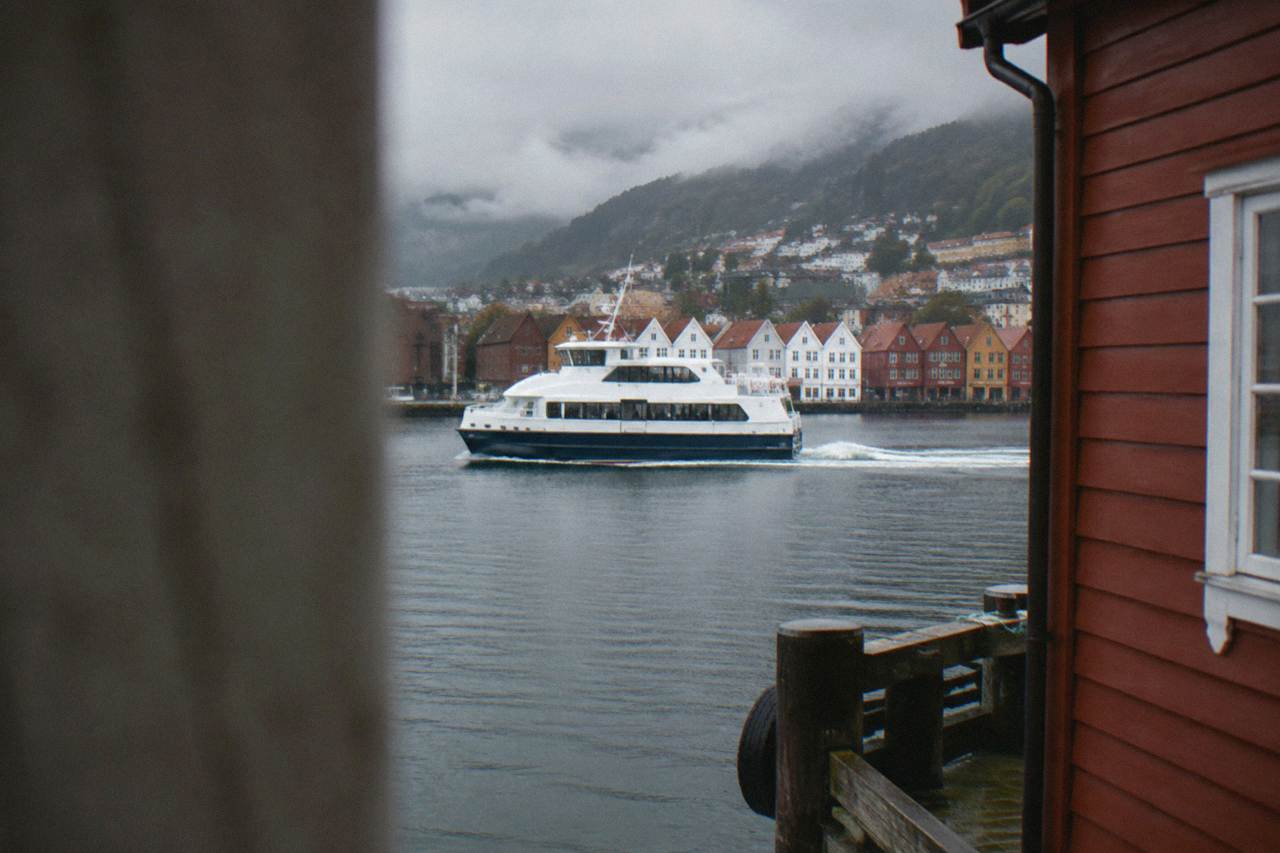
Bergen, on Norway's southwestern coast in Vestland county, was built around its harbour, and water is still the most natural way to arrive, leave and explore. This guide covers every ferry connection that touches the city, from the Denmark question to fjord crossings and cruise departures.
Short answer
There is no direct scheduled passenger ferry between Bergen and Denmark; the sea routes to Denmark leave from ports on Norway's southern coast, so the practical answer is a train or bus connection south, or a flight. Within Norway, Bergen's ferry life is local and fjord-focused: harbour commuter boats, fjord day-trip cruises and the coastal steamer all leave from the city centre.
Bergen, in Vestland county on Norway's southwestern coast, exists because of its harbour. This was a Hanseatic League trading post, and the reason the Hanseatic merchants set up shop on this particular patch of rainy coastline was that ships could reach it, shelter in it and leave from it loaded. Five centuries later that logic still holds. The city's cruise port, its coastal steamer departures, its island commuter boats and its fjord day trips all radiate from the same compact waterfront within walking distance of Bryggen, and understanding how they fit together is one of the most useful pieces of planning a trip to Bergen anyone can do. This page, from Bergen Travel Guide, covers every ferry connection that touches the city.
This page answers the ferry questions people actually search before a Norway trip, starting with the biggest one, the Denmark crossing, then working through the harbour ferries, the fjord crossings, the cruise calls and the coastal steamer. It also covers what water-based travel costs here, because Norway prices its ferries like everything else: with intention.
Why Bergen, Norway Is A City Shaped By Its Harbour
Bergen grew around its natural harbour on Norway's southwestern coast because sea access, not road access, was what mattered in the Middle Ages, and the city's geography still makes water the logical direction of travel today for anyone visiting Vestland county. The old Hanseatic wharf at Bryggen, a UNESCO World Heritage Site inscribed in 1979, sits directly on the harbour front. Cruise ships tie up a short walk from it. The coastal steamer's berth sits within sight of the fish market. Almost every water departure a visitor will use, from a fjord cruise to a multi-day coastal voyage, leaves from the same few hundred metres of quay that medieval traders used.
What that means in practice is that ferry planning in Bergen is unusually convenient. The Bergen city centre core is compact and walkable, the quays are central, and the question of how to get to the dock usually answers itself on foot. It also means the harbour is busy in season, and summer days can see cruise calls, fjord excursion boats and the coastal steamer sharing the same waterfront at once.
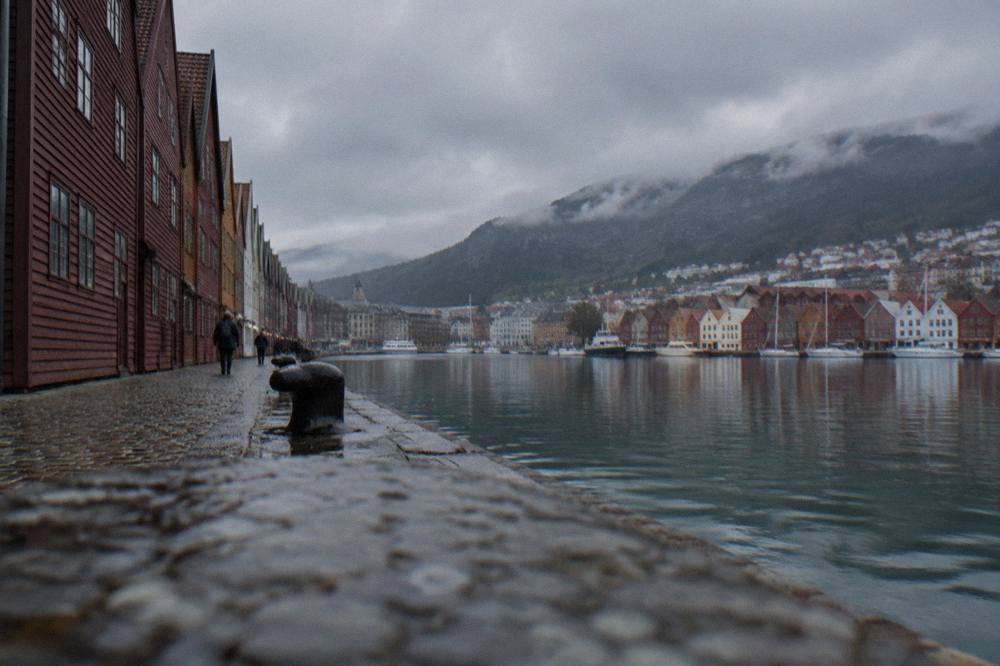
The harbour is not just scenery, either. It is a working transport hub for the region, and the distinction between a tourist cruise and a scheduled service matters for both price and purpose. Scheduled and semi-scheduled services follow fixed routes on fixed logic. Tour boats follow demand. Knowing which is which is the difference between a planned day and a wasted one.
How Long Is The Ferry From Bergen To Denmark?
There is no direct scheduled passenger or car ferry between Bergen and Denmark, so there is no crossing time to quote: the sea routes from Norway to Denmark depart from ports on Norway's southern and western coast, not from Bergen, and the practical route from Bergen is a train or bus journey south to connect to one of those, or a direct flight to Copenhagen. The direct Bergen to Denmark ferry belongs to an earlier era of Norwegian travel, and no operator currently runs the route. Anyone selling a "ferry from Bergen to Denmark" ticket is selling a combination, not a sailing.
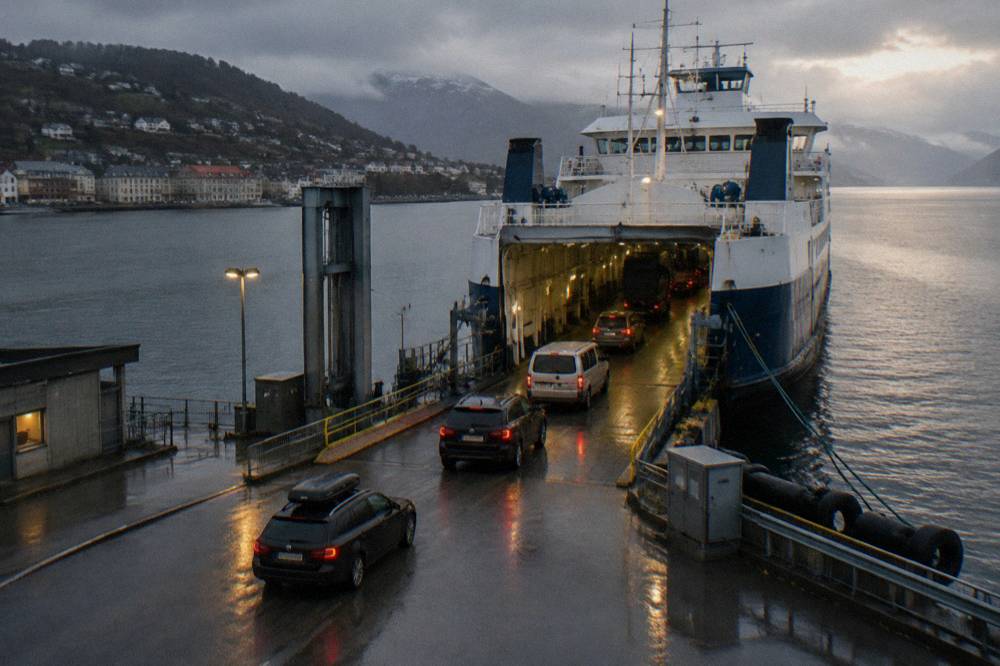
That answer surprises people because the ferry to Denmark is such a standard part of the Norwegian travel imagination. The routes that do exist, from Norway's south coast ports toward Danish and German terminals, are the descendants of the crossings people remember. From Bergen, reaching one of them means first getting south, which in Norway means either the scenic overland route or a short flight. The Oslo to Bergen train covers the mountain crossing in a single celebrated journey, and from the Oslo region onward there are coastal connections to think about.
For most travellers the honest comparison is between the charm of a multi-leg sea-and-rail adventure and the speed of flying. If the journey itself is the point, the overland-and-ferry route is one of the great slow trips in Europe. If Bergen is the destination and Denmark is a next stop, flying wins on time, and the ferry question becomes a planning footnote rather than a real decision.
Two practical notes finish this off. First, booking anything multi-leg across operators means leaving generous buffer time, because Norwegian weather can delay sailings in any season. Second, this page is about Bergen, and it is worth being precise: a Denmark ferry booked "from Norway" will almost certainly not start in this city, so build the itinerary from the actual departure port.
If the question behind the Denmark search is really "how do I see Norwegian water from Bergen", the answer changes completely, because Bergen has some of the best boat journeys in the country leaving from its doorstep, and those are covered in the rest of this guide.
What Ferry Boats Run On Bergen's Own Harbour?
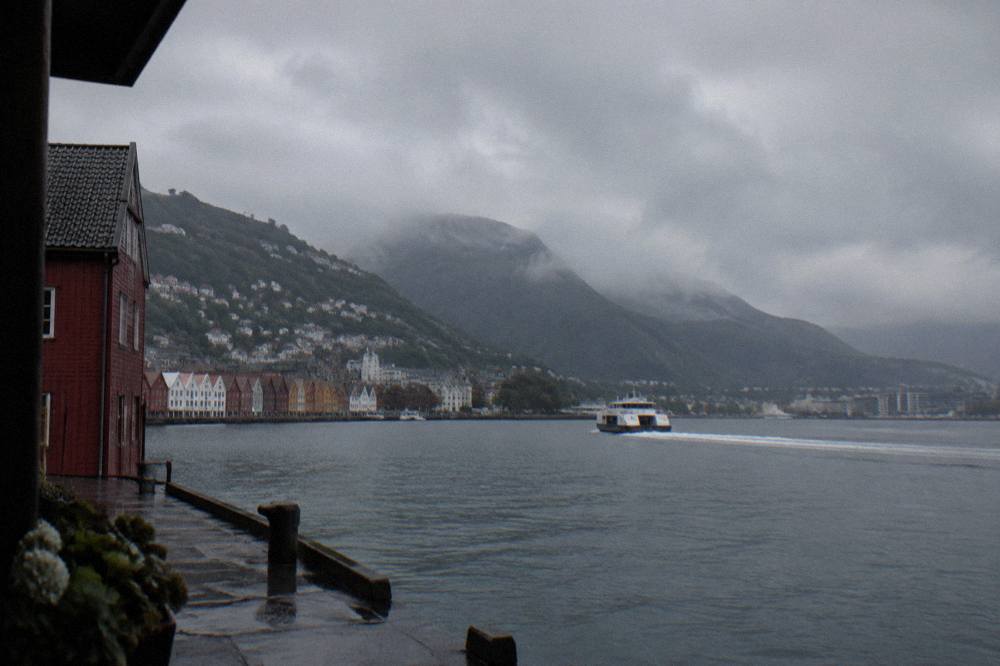
Bergen's inner harbour runs scheduled small ferries linking the city centre with the islands and peninsulas around it, and these ordinary commuter boats double as one of the cheapest and most local sightseeing trips available, since they follow working routes rather than tour itineraries. The municipality sits across a sprawl of islands and fjord arms, and for the people who live on them, boats are simply the bus. Visitors can ride the same services, watch the harbour open up from the water and do it for the cost of an ordinary public transport ticket.
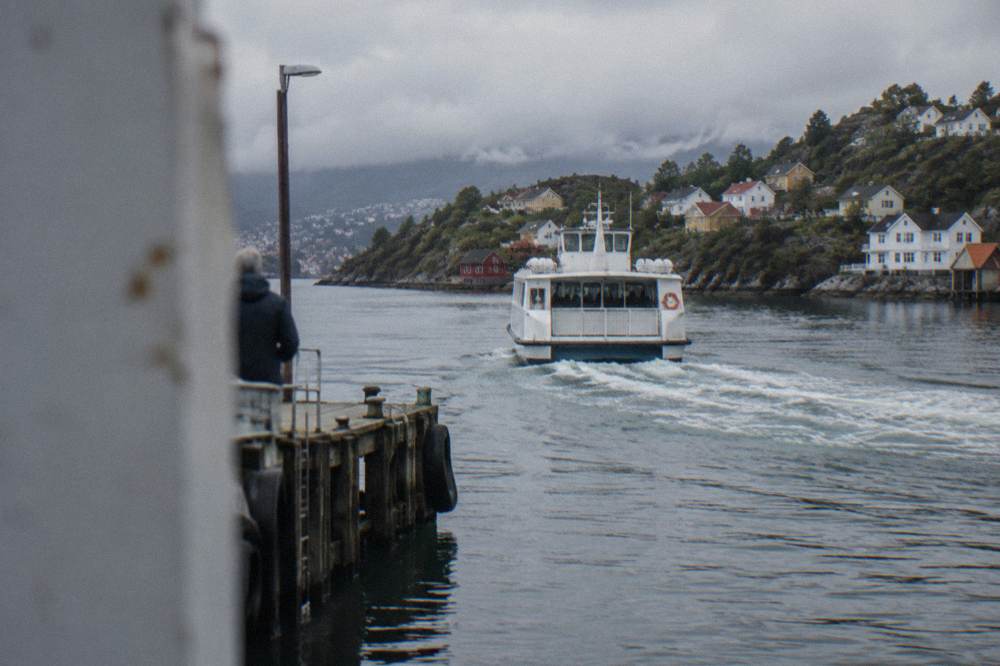
The essential fact for a visitor is that public transport in the region is run by Skyss, the same authority behind the buses and the Bybanen light rail, and a Skyss single adult ticket in zone A costs 51 NOK according to visitbergen.com's own travel information page. The 2026 Bergen Card flyer confirms the card covers free travel on Skyss buses and the Bybanen light rail across Vestland county, including the airport line, which makes the card relevant to harbour-area travel even when the specific ferry legs sit outside it. Check the Skyss planner for the current route map before relying on any individual boat.
The mental shift that makes these boats worthwhile is simple: they are not sold as attractions, so they are priced and scheduled like transport. A visitor who rides one is seeing the harbour the way locals do, as infrastructure, and the views arrive as a side effect. For travellers who like that idea, the getting around Bergen guide covers the full picture of buses, trams and walking routes.
Is Bergen A Cruise Port, And Which Ships Call There?
Bergen is one of the busiest cruise ports in Norway, with ships tying up at quays within walking distance of the city centre, and the Port of Bergen publishes a live list of ship arrivals on its own website, so anyone can check which vessels are in on a given date. The port's arrivals feed is public and current, which is genuinely useful for two groups: visitors who want to avoid the cruise-day crowds at Bryggen, and cruise passengers themselves planning an independent day ashore rather than a ship excursion.
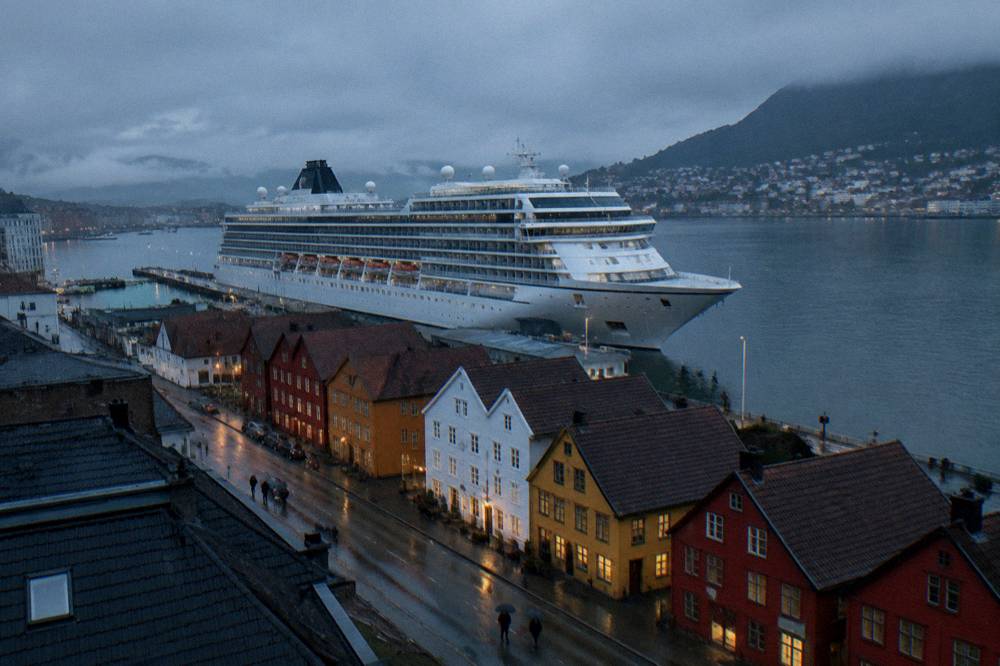
Cruise-day planning in Bergen deserves its own attention, and the Bergen cruise port guide on this site covers it in detail, from which berth a ship is likely to use to how far the walk into town actually is. The short version is that it is short. Passengers step off into one of the most walkable port cities in Europe, and the temptation to overbook ship excursions is usually a mistake when the essentials, Bryggen, the fish market and the funicular, are reachable on foot. The dedicated cruise ship day in Bergen page walks through a full independent itinerary.
The other great vessel associated with the city is the coastal steamer, the Hurtigruten service that has run Norway's coast for well over a century and treats Bergen as its southern turning point. Sailing north from Bergen is the classic way to start a coastal voyage, and plenty of travellers plan an entire Norway trip around that single departure, a decision covered on the site's Hurtigruten from Bergen page. What matters for ferry planning is that the coastal steamer and the cruise ships share the same waterfront, so a summer afternoon can feel busier than the population of 294,860 that the kommune's page reports would suggest, simply because a large share of the day's visitors is concentrated on a few quays.
Which Fjord Ferry Day Trips Leave From Bergen?
The fjord day trips are where Bergen's ferry options genuinely shine: scheduled and tour-run boats leave the city centre for the Mostraumen strait, the Hardangerfjord, the Sognefjord and Flåm territory, and these are the water journeys most visitors actually take, with durations that range from a couple of hours on the water to full-day round trips. Unlike the Denmark question, this one has real, bookable answers, and the fjord tours from Bergen roster on this site covers them, with the Hardangerfjord tours among the most popular. The Hardangerfjord tour with lunch and waterfalls is the featured pick on this page for good reason: it is a guided day that combines a ferry crossing with waterfall stops and a meal, which covers a lot of Norway in one ticket.
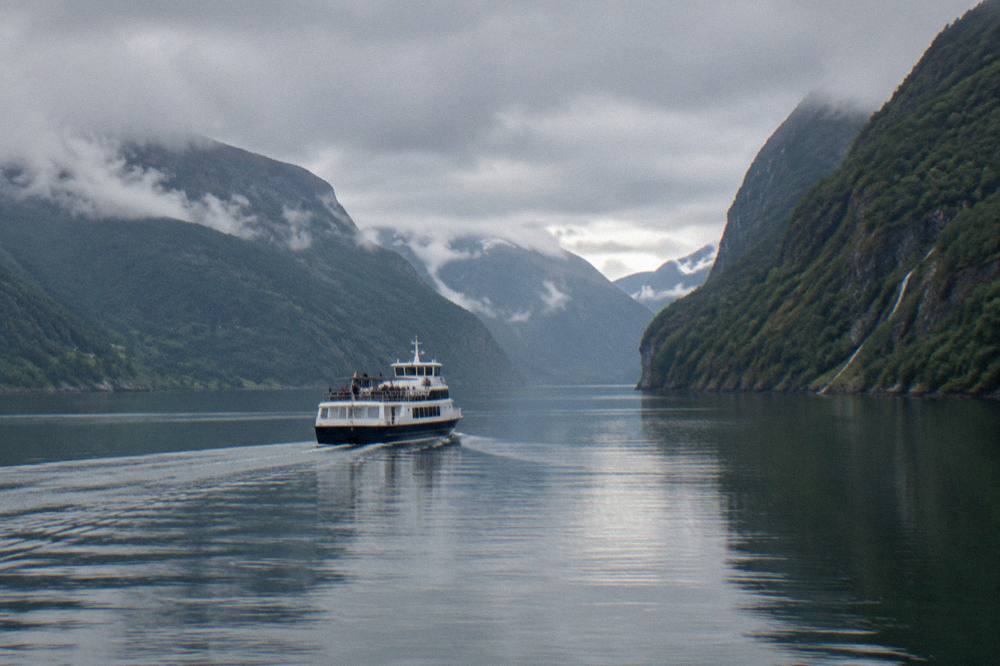
The Mostraumen route is the other classic. It runs out of the city into the Osterfjord and through a narrow, dramatic strait, and the tour versions include the option of a local guide aboard, a route covered in full on the Mostraumen fjord cruise page. For a self-guided traveller who wants to build the day from parts, there is a full round-trip product that handles the transport chain while leaving the pacing to you. Families and groups who want privacy can even book a small-boat charter with a driver, which turns a fjord into a private ferry for the afternoon. To see the live prices, ratings and durations for the leading options, check availability through the picks below.
The Norway in a Nutshell concept deserves a specific mention because it is the ferry-adjacent trip most people confuse with a ferry. It is a self-drive or guided circuit that strings together train, bus and ferry legs into one fjord crossing after another, and it can be started from Bergen. Whether it suits you is a question of temperament more than budget, and the Norway in a Nutshell guide weighs it up in detail. Travellers short on time should also read how long the ferry ride from Bergen to Flåm takes, because that single leg is the one many day-trippers care about most.
What Do Water-Based Bergen Tickets Cost?
The price anchor for water and harbour-adjacent travel in Bergen is the Bergen Card, which in 2026 costs 400 NOK for a 24-hour adult pass, 500 NOK for 48 hours, 600 NOK for 72 hours and 700 NOK for 96 hours, with child prices at 100, 125, 150 and 175 NOK respectively, per the official flyer, and the card includes free Skyss buses and Bybanen travel county-wide plus discounted entry to the major sights. That is the single best-documented number set for a visitor deciding how to pay for a water-heavy few days, and the flyer is the source to trust for the current season. The full breakdown lives on the site's Bergen Card page.
| Bergen Card (2026) | Adult | Child (3-15) |
|---|---|---|
| 24 hours | 400 NOK | 100 NOK |
| 48 hours | 500 NOK | 125 NOK |
| 72 hours | 600 NOK | 150 NOK |
| 96 hours | 700 NOK | 175 NOK |
The card's relationship to water travel is partial. It covers the public transport legs strongly, and the flyer lists Fløibanen, the funicular up to Fløyen, at 200 NOK adult return in the April to September window and 145 NOK from October to March, with the Ulriken643 cable car return at 435 NOK and the aquarium at 380 to 415 NOK depending on season. What the card does not do is turn a commercial fjord cruise into a free sailing; tour boats are commercial products with their own pricing, which is why the tokens on this page render live figures rather than typed ones.
| Attraction or transport item (2026) | Adult price | Source note |
|---|---|---|
| Skyss single ticket, zone A | 51 NOK | visitbergen.com travel page |
| Fløibanen return, 1 Apr to 30 Sep | 200 NOK | Bergen Card flyer |
| Fløibanen return, 1 Oct to 31 Mar | 145 NOK | Bergen Card flyer |
| Ulriken643 cable car return | 435 NOK | ulriken643.no and flyer |
| The Aquarium, seasonal windows | 380 to 415 NOK | Bergen Card flyer |
| KODE Art Museums, card rate | 200 NOK | flyer line item, not KODE's own standalone price |
Two honesty notes belong next to that table. The KODE figure is the Bergen Card flyer's line item, and the museum's own standalone 2026 price does not appear on kode.no, so treat 200 NOK as the card price rather than a walk-up one. And the transport prices above attach to those specific items; a ferry fare, a Flybussen airport bus fare and any journey time the sources do not state are simply not on this page, because a number that no primary source confirms does not get printed here. For the wider money picture, read how expensive Bergen really is before setting a daily budget.
When Is The Best Season For Ferry Travel Around Bergen?
The best window for boat-heavy days in Bergen runs from late spring through early autumn, roughly May to September, when the fjord tour schedules run at full frequency and the harbour is at its most active, but the city's temperate oceanic climate means rain is possible in every month and the trailing 13 months of Met Norway data recorded 217 days with precipitation, so waterproof planning beats calendar optimism. This is not a dry Mediterranean port. It is a wet, green, coastal city where the weather table below, drawn from the same Met Norway data behind the Bergen weather guide, is the honest season companion.
| Month | Mean temperature | Precipitation observed |
|---|---|---|
| March | 5.9 C | 243.9 mm |
| April | 7.9 C | 65.9 mm |
| May | 9.9 C | 127.4 mm |
| June | 14.4 C | 165.7 mm |
| July | 14.9 C | 184.2 mm |
| August | 14.3 C | 243.6 mm |
| September | 13.1 C | 206.6 mm |
| October | 9.7 C | 231.9 mm |
Read that table the way a sailor would. The warmest means sit in July, but July still carries 184.2 mm of rain in this observed set, and the wettest month in the whole trailing period was November at 321.8 mm. The rain does not stop the boats. What it changes is the experience on deck and the visibility of the mountain walls you came to see, which is why flexible booking and a cancellation-friendly tour matter more here than in most destinations. When a fjord morning looks grey, check the live listing before assuming a cancellation, and when it looks clear, go that day.
Winter has its own case. The Christmas market at Festplassen runs from 20 November to 22 December 2026 with free entry, and the Pepperkakebyen gingerbread city runs from 14 November 2026 to 10 January 2027 per visitbergen.com listings, so a winter ferry-and-festival itinerary is a real option rather than a compromise. Fewer sailings, shorter days and colder decks are the trade, and the Bergen in winter guide covers them properly, alongside the site's Bergen at Christmas page.
| Season in Bergen | Harbour and ferry character | What to plan around |
|---|---|---|
| Spring (Mar to May) | Schedules ramping up, fewer crowds | Mixed rain, the driest observed month was April at 65.9 mm |
| Summer (Jun to Aug) | Peak tour frequency, cruise calls | Book fjord days early, expect rain anyway |
| Autumn (Sep to Nov) | Full schedules into Sept, then quieter | The wettest stretch of the year in this data set |
| Winter (Dec to Feb) | Reduced sailing frequency, festive quays | Christmas market dates, the January cold snap hit -11.3 C |
How Do You Plan A Ferry-Centred Stay In Bergen?
A ferry-centred Bergen stay works best as two or three nights in the city with one water day committed and one kept flexible: base yourself near the harbour, buy the Bergen Card for the transport and sightseeing legs, book the big fjord day in advance, and hold a backup rainy-day plan because 217 precipitation days in 13 months means the odds of a washout are never zero. The mistake most first-timers make is treating water days as interchangeable, when in reality a Mostraumen strait run, a Hardangerfjord day and a coastal voyage north are three completely different trips.
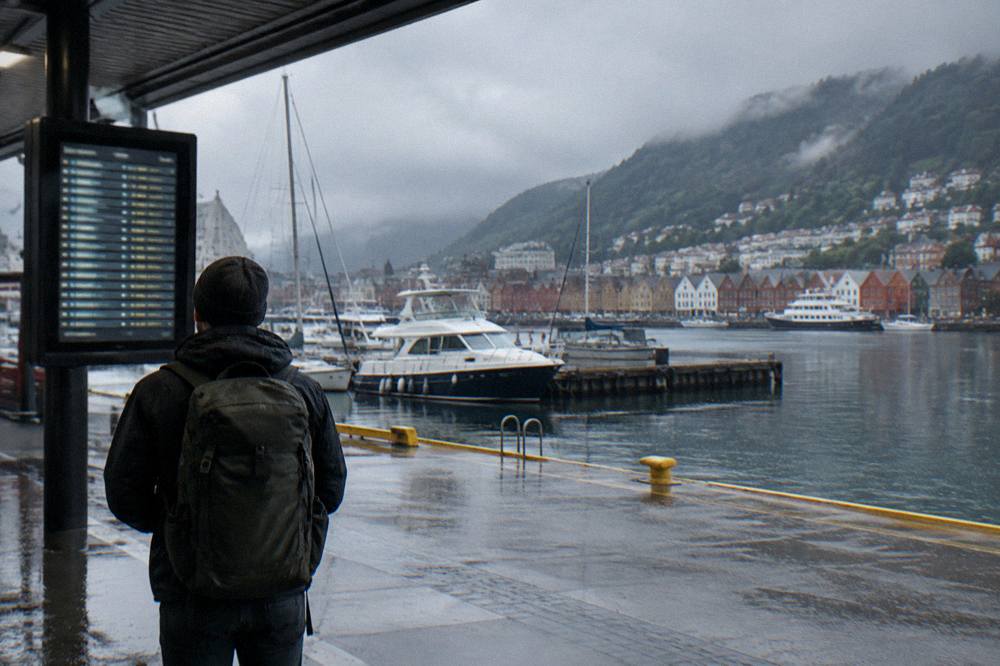
Practically, the pieces stack like this. First, decide the nights; four days is a common question, and the honest answer is that it depends on whether the coastal steamer is on your list, a question the site's is 4 days in Bergen too long page tackles directly. Second, pick the base, and the where to stay in Bergen guide covers the harbour-adjacent options that make early departures painless. Third, order the water days by weather dependency: the flexible commuter-boat rides can absorb a grey afternoon, while the full-day fjord tours deserve the best forecast you can give them. Fourth, remember that Copenhagen and Denmark sit on the far side of a flight or a long overland chain, not a ferry from this city, and plan that leg as its own decision.
For travellers who want someone else to own the logistics for one day, the guided Hardangerfjord option is the one this page features. You can compare it against the self-guided and cruise-ticket alternatives through the picks below, and see the operator's live listing for the current price and departure details. Whatever you book, keep the cancellation terms in view: weather-resilient plans in Bergen are the difference between a good trip and a story about the one that got away.
Common Questions About Bergen Ferries
How long is the ferry from Bergen to Denmark?
There is no direct ferry between Bergen and Denmark, so there is no duration to quote. Sea routes to Denmark depart from ports on Norway's southern coast, reached from Bergen by train, bus or a connecting flight, and the Denmark leg becomes a separate booking from one of those ports.
Can you take a ferry from Bergen to Flåm?
Yes, water routes connect the Bergen region toward Flåm, and the day-trip products built around them are among the most booked fjord options from the city. The specific ferry leg's length is covered in detail on this site's dedicated answer page, and the tour listings render current durations and prices.
Does the Bergen Card cover ferries?
The 2026 Bergen Card covers free Skyss buses and the Bybanen light rail across Vestland county, including the airport line, plus discounted entry to attractions such as Fløibanen and Ulriken643. Commercial fjord cruise tickets are separate products and are not included.
Is Bergen a cruise port?
Yes. Cruise ships dock within walking distance of the city centre, and the Port of Bergen publishes a live list of ship arrivals on its own website, which is useful both for cruise passengers and for visitors who want to avoid the busiest days at Bryggen.
Do I need to book fjord boats from Bergen in advance?
In the May to September peak, yes, the popular full-day departures sell out. Off season, walk-up is more realistic, but departure frequency drops, so checking the operator's live listing for the exact date matters more than the season rule of thumb.
What is the cheapest way to get on the water in Bergen?
The scheduled public services around the harbour are priced as transport, not tours, and a Skyss zone A single is 51 NOK per the visitbergen.com travel page. For anything beyond that, the cheapest water day is usually the one you build from public legs plus one paid attraction.
Bergen's ferry picture is really three pictures stacked on one waterfront: a missing international link people still ask about, a working local boat network, and some of the finest fjord crossings in Europe leaving daily in season. Get those three straight, and the harbour stops being scenery and starts being the most useful transport hub of the trip.