Bergen Parking
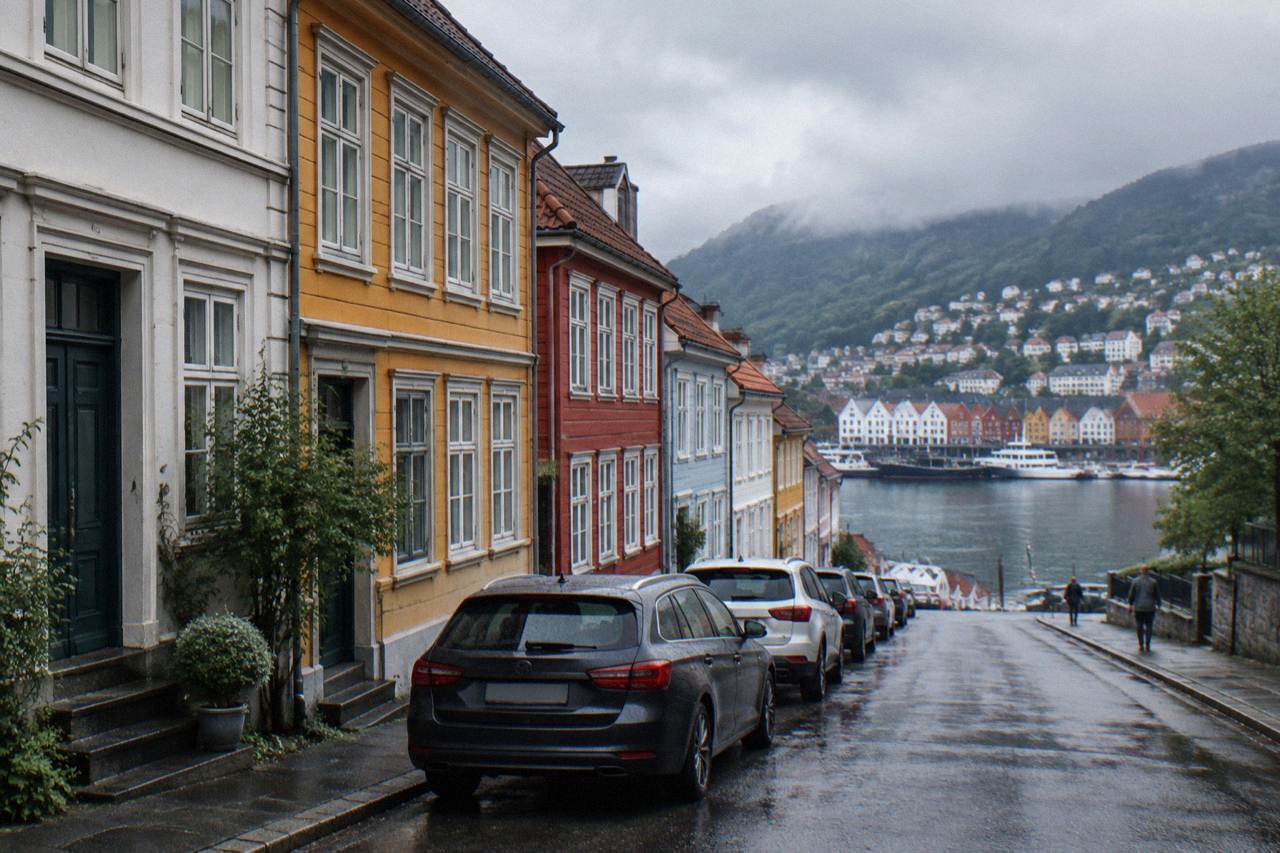
Bergen, a former Hanseatic trading city in Vestland county on Norway's southwestern coast, is one of the least car-friendly city centres a visitor can drive into. This guide sets out when parking in Bergen makes sense, when the Bybanen light rail does the job better, and how to handle a car you have already rented.
Short answer
Visitors to Bergen should generally avoid parking in the city centre. The core is compact, walkable, and served by the Bybanen light rail, and a 24-hour Bergen Card at 400 NOK covers unlimited Skyss buses and Bybanen rides, including the airport line. A rental car earns its keep for fjord day trips, not for city sightseeing.
Bergen, a former Hanseatic League trading post in Vestland county on Norway's southwestern coast, was built on a peninsula of narrow streets long before the automobile existed, and it still behaves that way. The city's core around Bryggen, the Fish Market and Bergenhus Fortress is compact, hemmed in by mountains and water, and genuinely walkable, which means a car is often more burden than benefit. Still, plenty of travellers arrive in Bergen with a rental car, a cruise itinerary that starts here, or a road trip through the fjords, and for all of them the same practical questions come up. This guide, from the editorial desk at Bergen Travel Guide, answers them using verified local figures rather than guesses.
Do You Even Need A Car In Bergen?
Visitors to Bergen do not need a car for the city itself, because the centre is compact and walkable and the Bybanen light rail plus Skyss buses cover everything the legs cannot. A 24-hour Bergen Card costs 400 NOK for an adult and includes unlimited Skyss buses and Bybanen light rail across Vestland county, including the airport line, per the official 2026 flyer. A car only starts to make sense when the plan involves fjord day trips or towns the rails do not reach.
That last sentence is the honest dividing line. Fjord tours from Bergen run by bus and boat to places like Mostraumen, Hardangerfjord and the Sognefjord, and many visitors book them and never touch a steering wheel. If that is the plan, the car can stay at the airport or the hotel the whole trip.
The counter-case is real, though. A self-drive loop through Hardangerfjord or toward Stavanger gives a freedom no tour bus can match, and winter drivers arriving from Oslo often have the car whether they wanted it or not. The rest of this guide assumes the car exists and answers the question of what to do with it.
Where Can You Actually Park In Bergen City Centre?
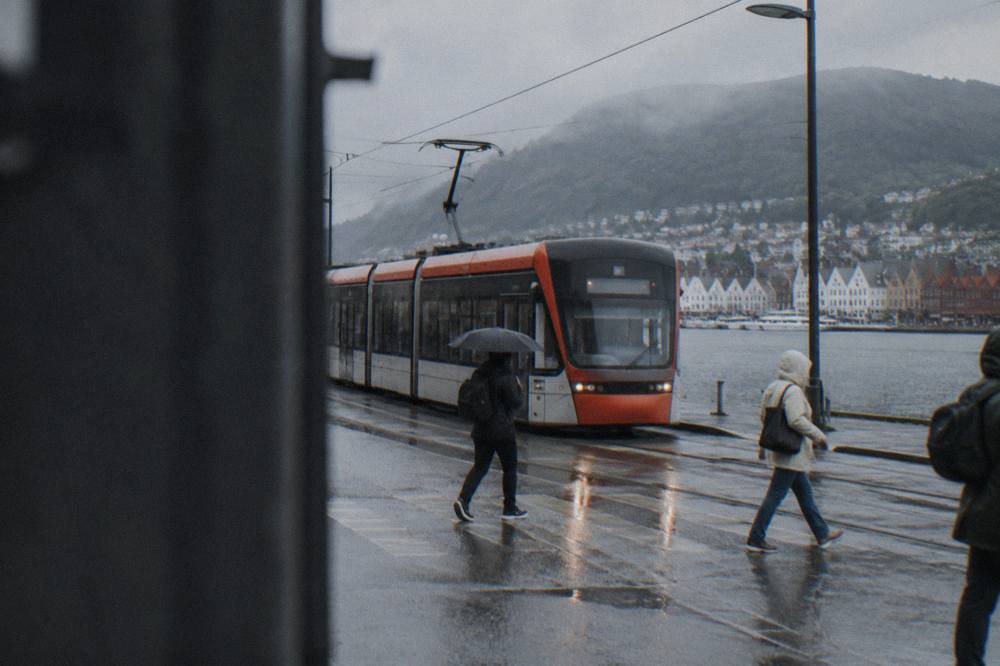
Central Bergen has a limited supply of street parking and paid garages in a small, densely built core, and the practical answer is to park once at the hotel or a garage outside the medieval streets and then move on foot. The oldest quarters, Bryggen and the alleyways around it, are UNESCO-listed and simply not built for cars, and the kommune actively prioritises pedestrians, trams and buses in the centre. Expect tight spaces, short kerbside time limits, and payment by app or machine rather than cash.
What this means in practice: treat parking as a one-time decision at the start of the stay, not a repeated hunt. Drivers who try to move the car attraction by attraction lose more time hunting kerbside spaces than they would spend walking, and the penalties for overstaying are real. The planning a trip to Bergen guide covers how the city is laid out; the short version is that the walkable core is small enough that one well-chosen parking spot serves the whole day.
For cruise passengers the calculus differs again, since the terminal sits within walking distance of the centre. The Bergen cruise port guide details the terminal and dock areas, and there is no reason at all to rent or move a car on a single port day. On a port day the smarter move is a guided orientation, and two of the strongest options are below.
Is Park And Ride The Smartest Bergen Parking Move?
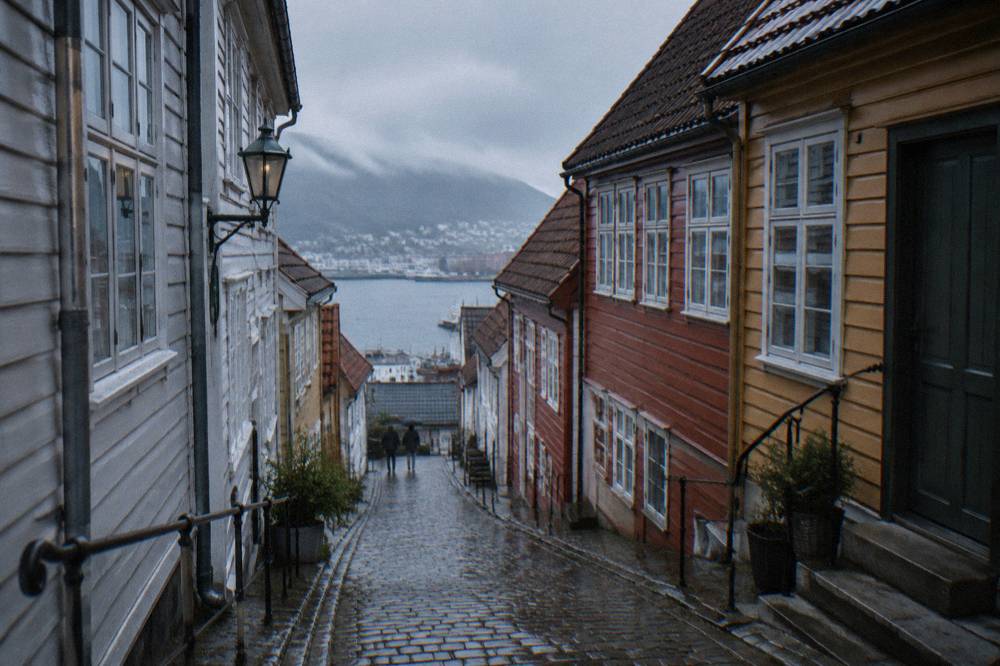
Yes, for most of the year park-and-ride beats central parking in Bergen, because the Bybanen light rail is frequent, runs from the outer suburbs and the airport into the city centre, and is included free with every Bergen Card tier. A single Skyss adult ticket in zone A costs 51 NOK, and the card's transport inclusion is confirmed on the official 2026 flyer. Leaving the car at a rail-served location outside the core converts a parking problem into a short tram ride.
The economics are not close. Compare what a day of urban movement costs with the card versus the friction of driving into the core:
| Option | What it covers | Verified cost |
|---|---|---|
| Skyss single ticket, zone A | One adult bus or Bybanen trip | 51 NOK |
| Bergen Card 24h | All Skyss buses + Bybanen incl. airport line, plus attractions | 400 NOK adult / 100 NOK child |
| Bergen Card 48h | Same transport coverage, wider window | 500 NOK adult / 125 NOK child |
| Bergen Card 72h | Same transport coverage, 3-day window | 600 NOK adult / 150 NOK child |
| Bergen Card 96h | Same transport coverage, 4-day window | 700 NOK adult / 175 NOK child |
The card details, including the attraction discounts stacked on top, are broken down in the Bergen Card guide. The airport-line inclusion matters for park-and-ride thinking too: a driver arriving at Bergen Airport does not need the car in the city at all, and the Bybanen line 1 connects Flesland with the centre. Note that the Bergen Card flyer confirms the airport bus, Flybussen, is not included free with the card.
This desk does not publish parking tariffs, so treat any garage's rate as something to confirm at the barrier or in the payment app on the day. Treat any garage's rate as something to confirm at the barrier or in the payment app on the day, not something a guide can promise.
What About Parking At Bergen Airport And Returning A Rental?
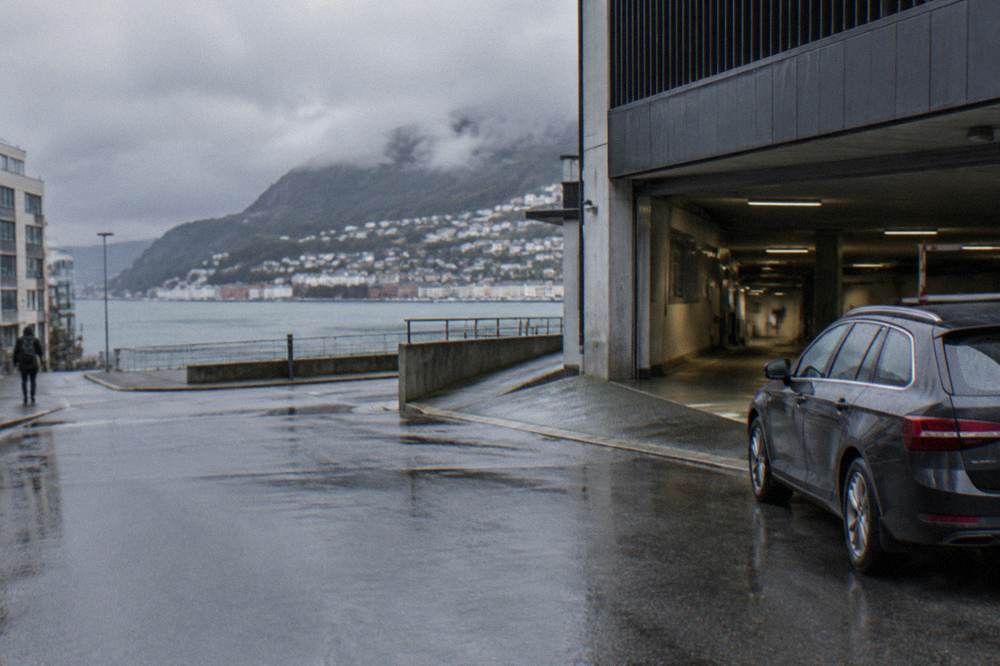
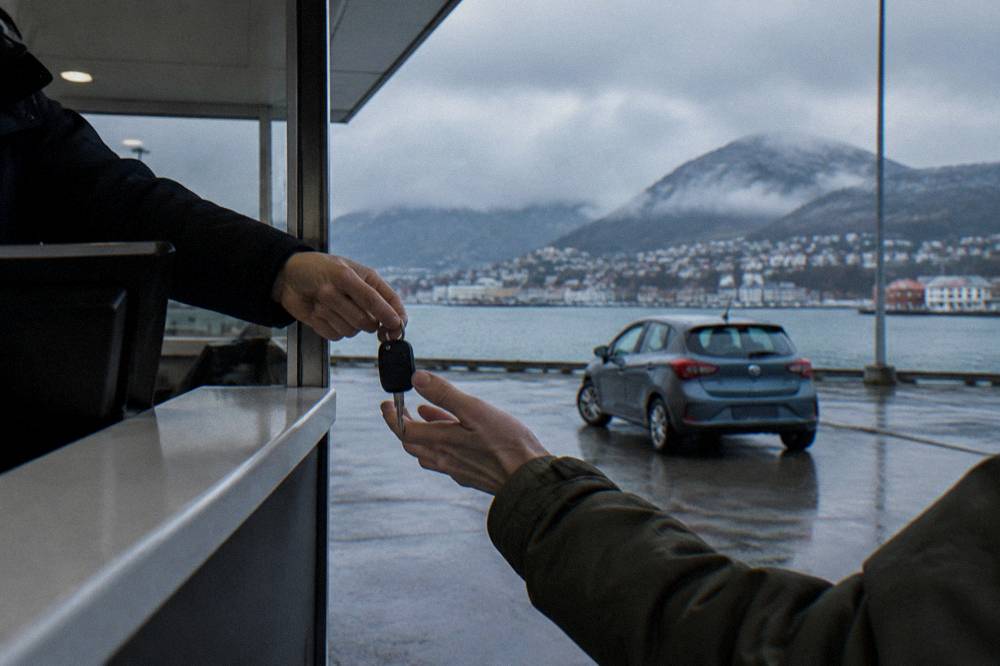
Bergen Airport, Flesland, is the southern terminus of Bybanen line 1 and the cheapest airport-to-city transfer for Bergen Card holders, since the light rail is included with every card tier while the airport bus is not. For rental returns, the airport consolidates the major operators in one area, so returning the car on arrival day and finishing the trip car-free is usually smoother than hauling it into town. A driver heading onward to the fjords should simply collect the car on departure day instead.
The airport's one scheduled disruption in this period is narrow: a night-time runway lighting maintenance closure from 19 May to 5 June 2026, 22:30 to 03:30 UTC nightly, excluding weekend nights, per the Avinor circular. It affects overnight operations only, not the terminal, not the Bybanen, and not any daytime arrival. Passengers on ordinary daytime flights will never notice it.
The car rental in Bergen guide covers the rental question in depth, and the flights to Bergen and getting around Bergen guides fill in the rest of the arrival picture. The single most useful mental model: collect the car the morning the road trip starts, not the evening the flight lands.
How Does Weather Affect Parking And Driving In Bergen?
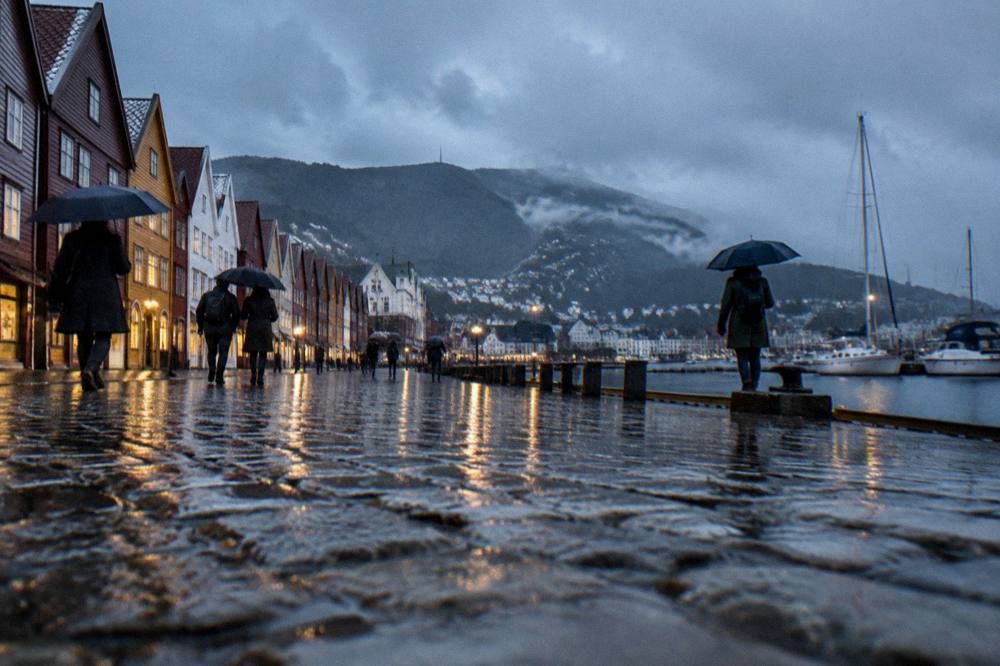
Bergen has a temperate oceanic climate that is wetter than most of Norway, with yr.no's Met Norway station table showing 217 days with precipitation over the trailing 13 months and monthly means running from -1.4C in January 2026 to 14.9C in July 2026, so rain is a parking reality all year and snow is mostly a winter-quarter one. Wet cobbled streets, narrow ramps and dark winter afternoons reward slow driving and covered garage parking over kerbside hunting.
The monthly picture from the station table, worth reading before choosing a season to drive:
| Month | Mean temperature | Precipitation observed |
|---|---|---|
| October | 9.7C | 231.9 mm |
| November | 6.0C | 321.8 mm |
| December | 5.8C | 303.5 mm |
| January | -1.4C | 82.0 mm |
| April | 7.9C | 65.9 mm |
| July | 14.9C | 184.2 mm |
Two things jump out of that table. First, the wettest observed month in the trailing period was November at 321.8 mm, wetter even than December. Second, January was unusually dry at 82 mm in this observed period; the normal for the month is far higher at 256 mm, so do not read one dry January as a trend. The Bergen weather and Bergen in winter guides unpack the seasons properly.
Practical consequences for drivers: mountain roads around the city, including the route up to Ulriken's trailheads, can be icy from late autumn through early spring, and rental cars should be booked with winter tyres in that window. The best time to visit Bergen guide weighs the seasons for the trip as a whole.
Parking Near The Mountains: Fløyen And Ulriken
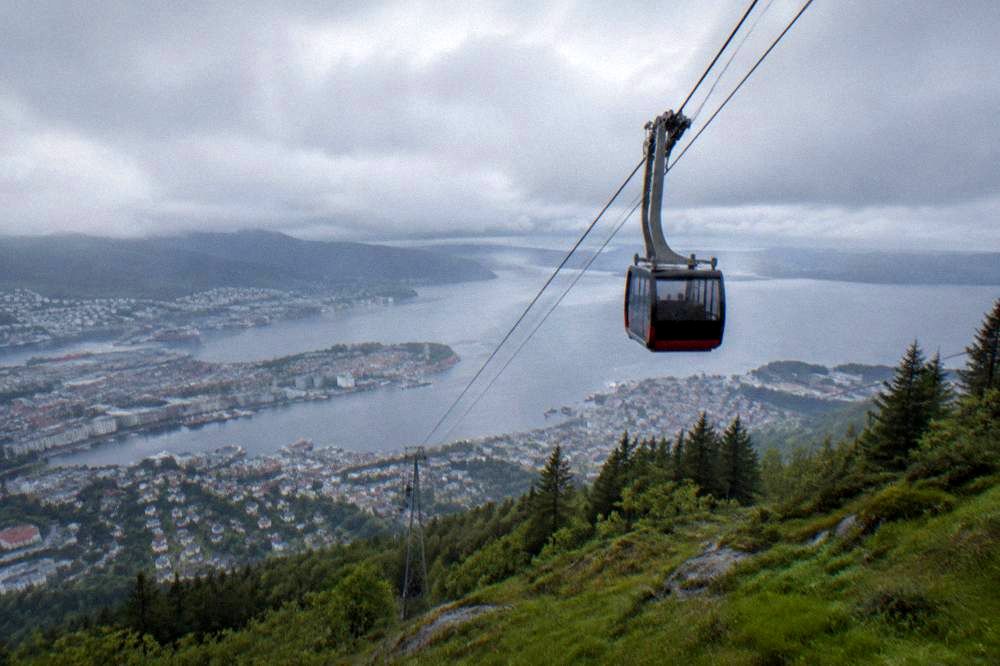
The two mountain attractions above Bergen are both reachable without a car, which is the better plan: Fløibanen's funicular departs from the city centre and a return adult ticket is 200 NOK from 1 April to 30 September or 145 NOK from 1 October to 31 March, while Ulriken643's cable car return is 435 NOK adult per its own prices page. Driving to either base saves nothing on the ticket and adds a parking problem at a trailhead that fills first on dry days.
The verified access costs side by side:
| Mountain attraction | Access method | Verified adult return price |
|---|---|---|
| Fløibanen funicular | Departs the city centre, no car needed | 200 NOK (Apr-Sep) / 145 NOK (Oct-Mar) |
| Ulriken643 cable car | Shuttle and bus connections serve the base | 435 NOK |
| Bergen Card discount on Fløibanen | Card rate, one per card, at the ticket office | Discounted rate on the flyer |
Hikers planning to earn the summit on foot will find the hiking in Bergen guide covers the trails, including the Sherpa steps and the trail between the two mountains. Those routes start from the city or transit stops, not from car parks, which is the pattern for Bergen hiking generally: the walks begin where the trams and buses end.
One seasonal note repeated from the infogain block above because it genuinely changes plans: the Ulriken643 cable car closes for scheduled maintenance across the first two weeks of 2026, with reopening around 13 January, plus standard Christmas closures. A driver who has planned a January mountain morning around the cable car should check the operator's own site first.
The Segway option above deserves a word, because its price is not published by the operator and this desk will not invent one. What the listing does publish is a 4.8 rating for a tour built around the best viewpoints, and the tour's own page carries the live price: see the Segway day tour page or Check availability.
Hotel Parking In Bergen: What To Check Before Booking
Hotel parking in Bergen is not universal, is often limited to a handful of spaces per property, and in historic buildings in the core frequently means a nearby public garage rather than on-site parking, so the question belongs in the booking process, not the reception desk. Confirm three things before reserving: whether the hotel has its own spaces, what the per-night charge is, and whether a space can be reserved or is first-come.
A hotel that answers all three is worth a premium for a car-based stay.
The reason this matters is structural. Central Bergen's building stock includes converted Hanseatic-era and wooden-period structures where a car park was never part of the plan, and the newer hotels cluster where space allowed, not always where a driver would prefer. The where to stay in Bergen and best hotels in Bergen guides cover the neighbourhoods; when reading them with a car in mind, treat parking as a filter of its own on top of location and price.
For travellers on a budget, the Bergen on a budget logic applies double to cars: parking is one of the quietest line items in an expensive city, and the how expensive is Bergen guide shows where the krone actually go. A one-night garage charge in the core can exceed a full day of Bybanen travel for two people with change left over, given that a single zone A Skyss ticket is 51 NOK and a whole day of transport plus attractions fits inside a 400 NOK card.
What To Do With The Car And The Bags Between Stops
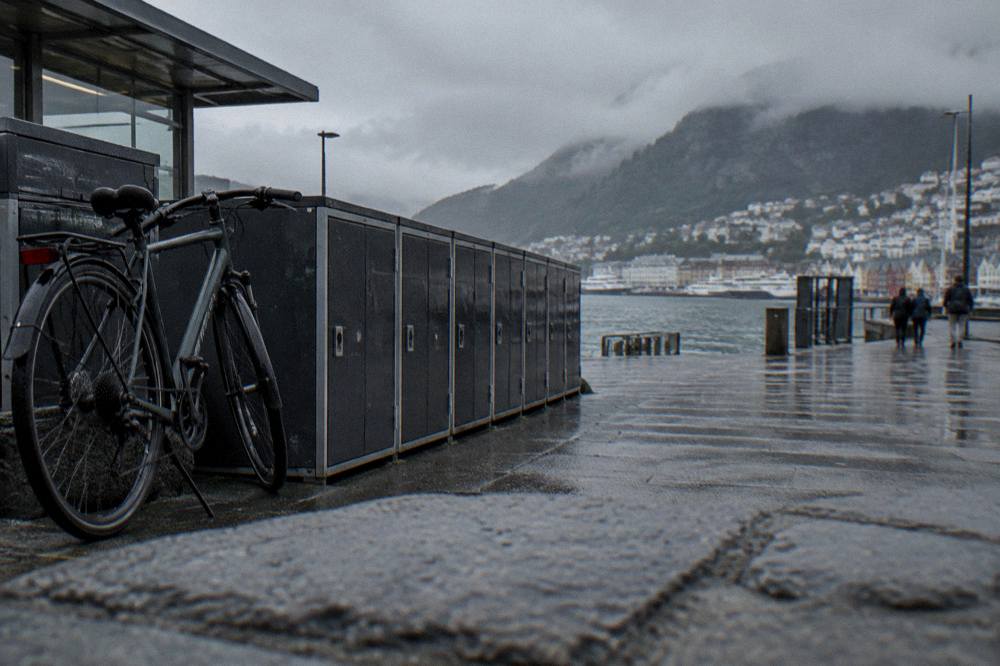
Visitors parked outside the centre do not need to drag luggage or a car between attractions, because the Bybanen and Skyss network does the moving and verified luggage services cover the gaps: Radical Storage operates at Bergen Station and Bergen Harbor with a published rate of 3.90 EUR per bag per day, that being the operator's own published figure. Drop the bags at the station, park the car once, and spend the day on foot or rail.
The verified service picture:
| Service | Coverage | Verified figure |
|---|---|---|
| Radical Storage, Bergen Station | Luggage storage per bag per day | 3.90 EUR, operator's published rate |
| Radical Storage, Bergen Harbor | Luggage storage per bag per day | Same operator rate |
For the food-inclined, a car-free afternoon also opens the restaurants of Bergen without any worry about wine with lunch and a steering wheel after it. This is not a small point in Norway, where drink-drive limits are strict and enforcement unapologetic.
A final pairing thought for the day the car sits still: the strongest car-free experiences in the city mix walking, water and viewpoints, and the on-foot-and-by-boat option below is one of the most consistently well reviewed ways to spend a car-free morning.
Between the walking options and the water, though, the decision usually comes down to pace: a slow stroll on foot with a local guide, or a faster sweep of the viewpoints by Segway, or a half-day on the fjord. For a wider comparison of the three formats travelers tend to weigh, the shortlist below puts the strongest option in each category side by side.
When A Car In Bergen Is Actually The Right Call
A car is the right call in Bergen only when the itinerary leaves the city for places the rails and tour buses serve poorly, such as a self-drive loop of the Hardangerfjord villages, a multi-day fjord road trip toward Alesund or Stavanger, or late-evening shooting trips to viewpoints after public transport thins out. For the city itself, the Bybanen, the buses and the walkable core beat parking on cost, time and stress, and the official Bergen Card pricing makes the car-free arithmetic even stronger.
The destination guides that assume a car, and reward having one, are the ones worth reading before deciding: Hardangerfjord, Folgefonna and Rosendal, Voss, Balestrand and Bergen to Alesund. In the city itself, none of that matters, and the car is simply a thing to be parked once and forgotten.
The Mostraumen cruise above is the classic proof of the point: the fjord it serves lies a short sail from the city, and the boat leaves from the harbour in the centre, which is the one part of Bergen where parking is hardest and least needed. The full picture is in the Mostraumen fjord cruise guide.
Common Questions About Bergen Parking
Can you park for free in Bergen?
Free long-stay parking in central Bergen is effectively not part of the picture; the core uses paid kerbside parking with time limits and paid garages. This desk does not publish specific garage tariffs, so confirm rates at the barrier or in the parking app on the day. What is verified is the alternative: a Skyss zone A single is 51 NOK and the Bergen Card's 24h tier at 400 NOK includes unlimited buses and Bybanen, airport line included.
Is Bergen car-free friendly for tourists?
Yes, exceptionally so. The centre is compact and walkable, the Bybanen runs from the airport into town, and the official 2026 Bergen Card flyer confirms free Skyss and Bybanen travel with every card tier. A car is never needed for getting around inside the city.
Where do you park when visiting Bryggen?
The honest answer is that you do not drive to Bryggen. The wharf and its alleys are UNESCO-listed, inscribed in 1979 per UNESCO's own listing, and sit in the most car-hostile corner of the centre. Park once at a garage or hotel outside the medieval quarter, or arrive by Bybanen, and cover the wharf, the Fish Market and Bergenhus Fortress on foot.
Should I rent a car in Bergen?
Only if the itinerary leaves the city. Self-drive loops of the Hardangerfjord or trips toward Voss, Rosendal or Alesund justify a car; a stay built around Bryggen, the mountains and a fjord cruise does not. The car rental in Bergen guide covers the decision in more detail.
Is parking in Bergen expensive?
Relative to the transit alternative, yes, and the comparison is what matters: a single Skyss ticket is a verified 51 NOK and a full day of transport plus attractions fits inside a 400 NOK Bergen Card. Parking tariffs vary, so check the garage's own signage or app on arrival.
Does the Bergen Card cover parking?
No. The official 2026 flyer covers Skyss buses, the Bybanen light rail including the airport line, and attraction entry or discounts. Parking is not among the inclusions, and Flybussen, the airport bus, is explicitly not included free either. The card is a transit-and-attractions product, not a motoring one.
The short version of everything above: park once, outside the medieval core, and let the light rail do the rest. Bergen rewards travellers who arrive by water, rail and shoe leather far more generously than it rewards anyone circling a block for a kerbside space.