Is A Train Ride From Oslo To Bergen Worth It?
Whether the Oslo to Bergen train ride is worth it, what the route passes, how it compares with flying, and what to do when the train reaches Bergen in Vestland, Norway.
The train ride from Oslo to Bergen ends in Bergen, a city and municipality in Vestland county on Norway's southwestern coast, and it rewards the effort: the line climbs from Oslo's lowlands onto the Hardangervidda mountain plateau, the largest high mountain plateau in Northern Europe, and drops again through tunnels and snow fences toward the western fjord country. This page, from Bergen Travel Guide, gives a straight answer on the trade-offs, without inventing a fare, a journey time or a timetable figure this site has not verified. What is verified here is Bergen's own end of the route: what the city costs, what its climate does to the views, and what to do with your time once the train reaches the station.
Is A Train Ride From Oslo To Bergen Worth It?
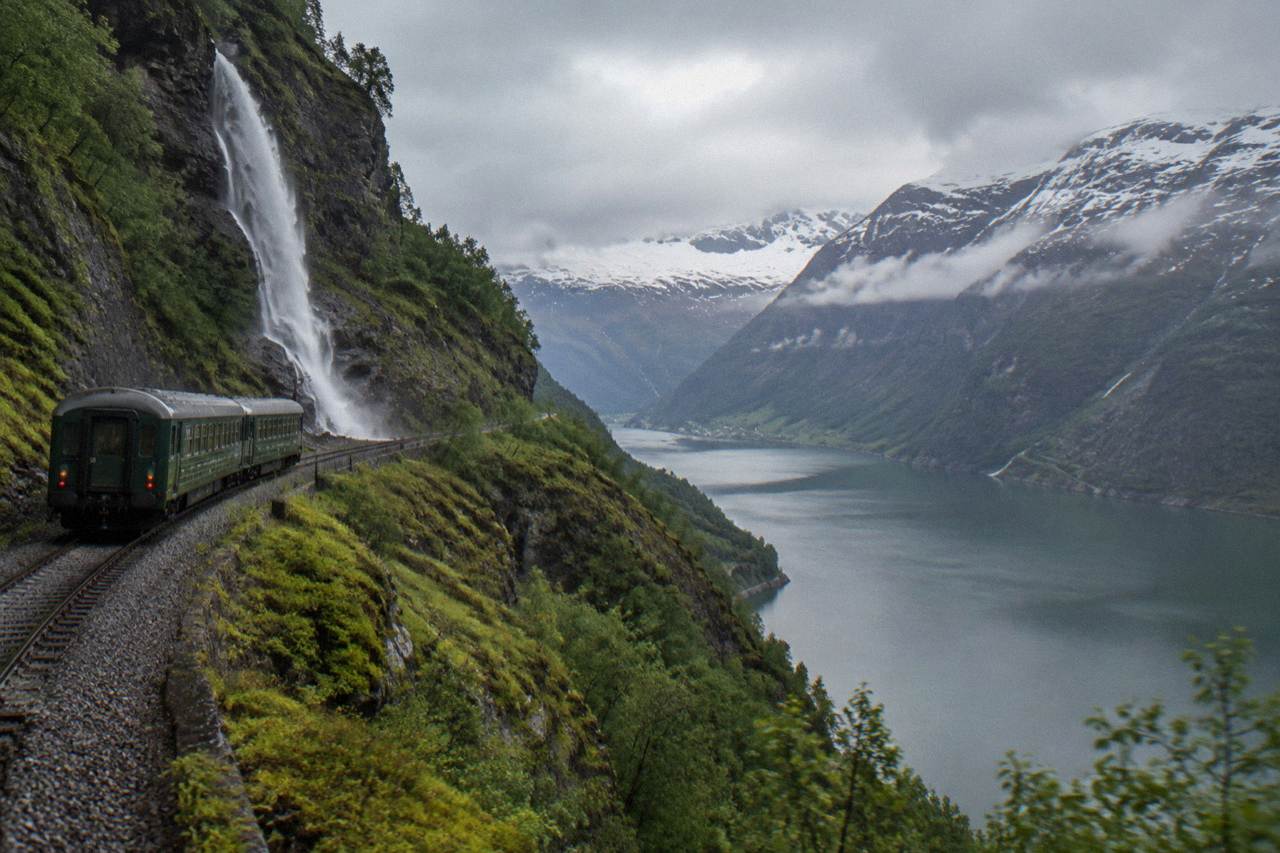
Yes, for the scenery and the arrival, the train ride from Oslo to Bergen is worth it: the route crosses the Hardangervidda plateau, the highest stretch of mainline railway in Northern Europe, before descending into Bergen, a former Hanseatic League trading post of 294,860 people in Vestland county. The trade-off is time and money: flying is faster, and this site has verified no fare or journey-time figure for either option, so compare live prices before booking.
The honest framing is that the train is a sightseeing product as much as a transport product. Travellers who sit on the right or left window for the mountain stretch are buying four or so hours of high plateau, frozen lakes in winter and brown tussock in summer, snow fences standing taller than a person on either side of the track. That is the part people remember, and it is the part no flight can offer.
The second half of the argument is the arrival. Bergen's railway station sits a short walk from the city centre, Bryggen and the harbour, so the train delivers you into the walkable core rather than an airport suburb followed by a transfer. A fuller route breakdown lives in the Oslo to Bergen train guide, and the best seat choice for the Oslo to Bergen train is worth settling before you board, because the view is not the same on both sides.
What Does The Oslo To Bergen Route Pass On Its Way To Bergen?
The route runs from Oslo across eastern farmland, up onto the Hardangervidda plateau, the largest high mountain plateau in Northern Europe, then down through the western valleys to Bergen on the coast. The mountain section is the reason to take the train: above the treeline for much of it, with engineered snow shelters and tunnels protecting the track through winter conditions that Bergen's own coastal climate, 217 days with precipitation in the trailing 13 months, never shows at sea level.
The plateau is the headline. Hardangervidda sits above the treeline, so the landscape is open tundra rather than forest, and the railway's highest point makes it the highest mainline stretch in Northern Europe. In practice that means the train passes through country that visitors to Norway would not otherwise see: the same mountain interior that the Oslo to Bergen road crosses at Finse, where the snow can lie late into spring and the scenery switches between white, brown and green depending on when you travel.
The weather matters more on this route than on almost any other European train ride, and not only on the plateau. Bergen's own climate is temperate oceanic and wetter than most of Norway: Met Norway data via yr.no shows monthly observed averages from -1.4C in January 2026 to 14.9C in July 2026, with precipitation normals ranging from about 109mm in May to 290mm in December. A winter crossing can be dramatic and white; an autumn one can end in low cloud on the descent toward the coast. Neither is a reason to skip the train, but both are reasons to plan a Bergen arrival that does not depend on clear skies, and the rainiest month in Bergen page explains which months carry the most water.
Timing your ride around daylight is the other practical point. This site has sourced no daylight-hours figure for Bergen and will not invent one, so the safe advice is qualitative: in the darkest weeks of December and early January the mountain stretch can be dim or dark for much of a midday crossing, while from late spring through summer the light lasts long enough that even an evening train shows scenery. Pick a departure with the sun up if the view is the point of the exercise.
Train Or Flight From Oslo To Bergen: Which Should You Book?
Take the train if scenery, a city-centre arrival and a car-free trip matter most; fly if schedule dominates, because the flight is shorter. This site has verified no fare, frequency or journey-time figure for either option and will not print one, so the real decision comes down to daylight, weather and price on your date, checked live against the operator's own listings before you book either way.
The trade-off is straightforward once you strip out the numbers nobody should be quoting from memory. The flight wins on clock time and often on price when booked far ahead; the train wins on everything that happens between the two cities. There is a dedicated comparison in is it better to fly or train from Oslo to Bergen, which works through the decision in more depth than this page needs to.
One angle that belongs to this page: the flight lands you at Bergen Airport Flesland, south of the city, while the train lands you at Bergen station in the centre. From the airport, the Bybanen light rail line 1 is the cheapest option into town, and it is included free with the Bergen Card; the exact journey time in minutes has not been verified by this site, so check the Skyss travel planner rather than trusting a remembered figure. The train arrival skips that transfer altogether.
If you have already decided the train is worth it, the next question is usually what the two ends of the line feel like, and the Oslo or Bergen comparison is the natural read. Bergen is the smaller of the two and the one surrounded by fjord and mountain, which is exactly the landscape the train spends its final hour descending into.
What Should You Do When The Train Reaches Bergen?
Walk Bryggen, ride Fløibanen up Fløyen, and eat your way through the harbour area: those are the three anchors of a first day after the train arrives. A 24-hour Bergen Card costs 400 NOK for an adult and 100 NOK for a child aged 3-15, and the official 2026 flyer lists free Skyss buses and Bybanen light rail across Vestland county, including the airport line, plus discounted entry to Fløibanen and Ulriken643.
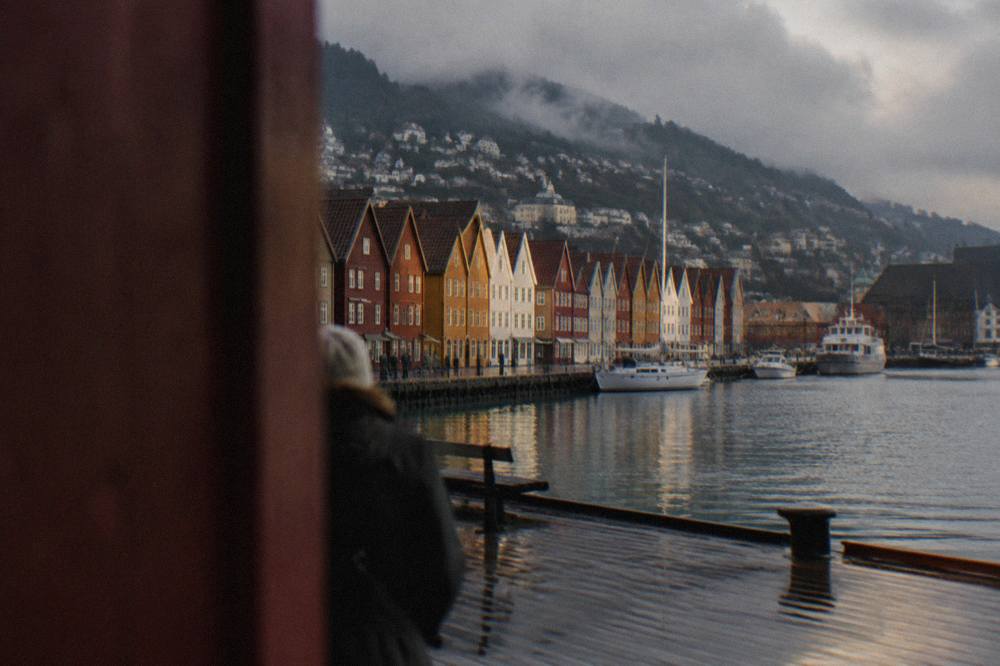
Bryggen, the Hanseatic wharf, was inscribed on the UNESCO World Heritage List in 1979 according to UNESCO's own listing, and it sits about ten minutes on foot from the station. From there the harbour, the fish market and the lower slopes of Fløyen all fall within a walkable circuit, which is why so many train arrivals turn into a walking afternoon without any planning.
The two mountain lifts bookend a first visit. The Bergen Card's ordinary-price table lists a Fløibanen return at 200 NOK for an adult from April to September and 145 NOK from October to March, while Ulriken643's own prices page lists an adult return at 435 NOK, confirmed on two of its own pages and echoed in the Bergen Card flyer. The two climbs are compared in detail on is the Bergen funicular worth it, and the funicular is the one you can walk to from the station end of town.
| Bergen Card length | Adult price (NOK) | Child 3-15 (NOK) |
|---|---|---|
| 24 hours | 400 | 100 |
| 48 hours | 500 | 125 |
| 72 hours | 600 | 150 |
| 96 hours | 700 | 175 |
The card starts to make sense the moment you stack a lift, a museum and a bus ride, and the full attraction list is on the Bergen Card page. A single Skyss adult ticket in zone A is 51 NOK, so transport alone does not justify the card; the attraction entries do.
| Attraction near the station end | Verified price | Source |
|---|---|---|
| Fløibanen return, adult, 1 Apr-30 Sep | 200 NOK | Bergen Card ordinary-price table 2026 |
| Fløibanen return, adult, 1 Oct-31 Mar | 145 NOK | Bergen Card ordinary-price table 2026 |
| Ulriken643 return, adult | 435 NOK | ulriken643.no prices page |
| KODE Art Museums, Bergen Card rate | 200 NOK | Bergen Card flyer 2026 |
| Haakon's Hall | 120 NOK | Bergen Card flyer 2026 |
| Hanseatic Museum with guided visit | 160 NOK | Bergen Card flyer 2026 |
One caveat on that table: the 200 NOK KODE figure is the Bergen Card flyer's line item, not KODE's own standalone adult price, which this site could not verify from kode.no directly. Treat it as the card rate, and check the museum's own ticket page before relying on a walk-up figure.
Is The Train From Oslo To Bergen Worth It In Every Season?
In summer, yes without hesitation: long daylight and a green-brown plateau make the crossing a scenic rail trip to remember. In winter the same ride is a coin toss on weather, because Bergen's coastal climate is temperate oceanic and wet, with November's observed precipitation at 321.8mm against a 275.0mm normal in the yr.no station table, so a winter arrival can land in rain even when the plateau is frozen clear.
The seasonal logic cuts both ways. Winter gives the plateau its most dramatic look, snow from the treeline up, and the descent into the western valleys is where the train's engineers earn their keep, with tunnels and snow shelters that keep the line running through conditions the coast rarely sees. The risk is at the Bergen end: the same Met Norway table shows temperature extremes over the trailing 13 months of 28.0C on 14 August and -11.3C on 8 January, and a city that can be mild and soaking on the same day the mountains are frozen.
Spring and autumn sit in between. April 2026 delivered only 65.9mm of observed precipitation in Bergen against a 141.0mm normal, one of the driest months in the trailing 13, while March 2026 came in at 243.9mm against a 202.0mm normal, wetter than its own normal. The lesson is not to trust the season label: check the forecast, not the calendar, because the monthly figures swing well past their normals in both directions.
What Can You Do From Bergen After The Train?
Bergen is the practical base for the western fjords: Mostraumen, Sognefjord, Hardangerfjord and the Norway in a Nutshell circuit all start from the city, so the train is only the first scenic leg of what can become a multi-day fjord itinerary. How many days to give Bergen itself depends on how much of that you add, and travellers who arrive by train may regret booking an onward flight the next morning rather than an extra night.
The classic extension is the fjord day trip. Mostraumen runs as a half-day cruise on the Osterfjord, Hardangerfjord trips add waterfalls and ferry crossings, and the Sognefjord and Flåm routes fill a full day or two. There is a full comparison in can you do a day trip to the fjords from Bergen, and the nuts-and-bolts version on the Norway in a Nutshell page.
If the weather turns, and in Bergen it will at some point, the rainy day in Bergen guide carries the indoor plan, and the question of how many days in Bergen is enough has a different answer for a train-and-fjord trip than for a flying visit.
Common Questions About The Oslo To Bergen Train
Is a train ride from Oslo to Bergen worth it?
Yes for most travellers: the route crosses the Hardangervidda plateau, the highest mainline railway stretch in Northern Europe, and arrives directly in central Bergen rather than at an airport. Fly only if schedule is the priority. Check live prices for both options before deciding, as this site has verified no fare figure for either.
How long is the train ride from Oslo to Bergen?
This site has not verified a journey-time figure from a primary source and will not print one. It is generally described as a full day's scenic ride in each direction, but check the operator's own timetable before planning connections.
Is the train from Oslo to Bergen better than flying?
Better for scenery and for the arrival, since the train stops in central Bergen while flights land at Flesland and require a transfer into town. Flying is faster. The detailed comparison is in is it better to fly or train from Oslo to Bergen.
Which side of the train is best for the Oslo to Bergen route?
Both sides show mountain scenery on the plateau section, but the best window changes over the journey as the line curves. The dedicated seat-choice page works through it; in general, sit on the side facing the valley on the western descent.
Can you see the fjords from the Oslo to Bergen train?
You see mountains, plateau and western valleys, not the fjords themselves. The fjord views come after arrival, on cruises from Bergen such as Mostraumen or the Sognefjord routes, which is why the train pairs naturally with a fjord day trip once you reach the coast.
Is the train ride from Oslo to Bergen worth it in winter?
The plateau at its snowiest is spectacular, but Bergen's coastal end is wet in winter: November's observed precipitation was 321.8mm against a 275.0mm normal. Book a winter ride for the mountains and keep the Bergen plans flexible for rain.
The train from Oslo to Bergen earns its reputation on the plateau and pays it back with a city-centre arrival within walking distance of Bryggen. Book it when daylight allows, check the forecast at both ends, and give Bergen at least a full day before you ride the line again in the other direction.