Is It Better To Fly Or Train From Oslo To Bergen?
Fly or take the train from Oslo to Bergen, Norway? A plain comparison of scenery, arrival logistics at Flesland, weather risk and how to choose for a short Bergen trip.
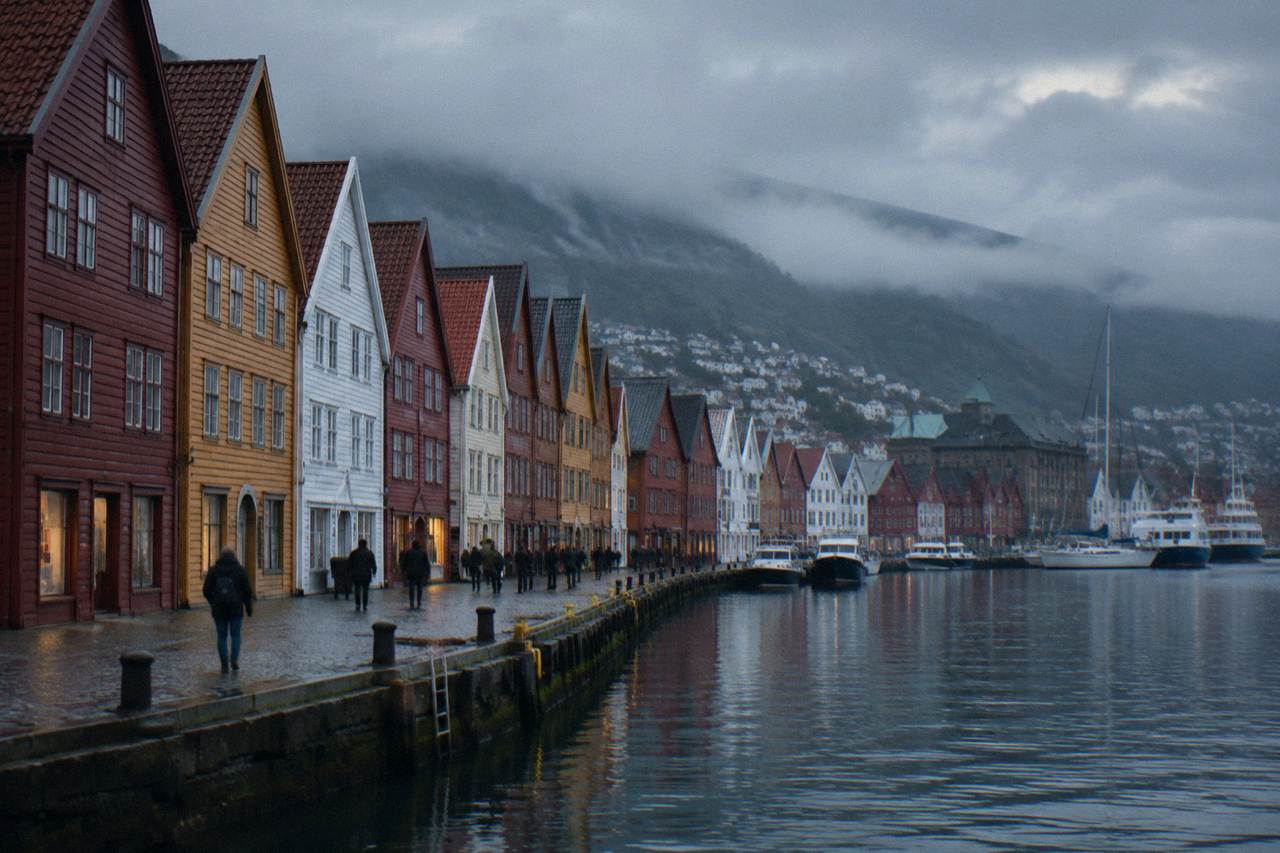
Bergen, in Vestland county on Norway's southwestern coast, is reachable from Oslo by two very different routes: a short flight south into Bergen Airport Flesland, or the Bergen Line, the mountain railway that links eastern Norway to the west. Travellers ask the question constantly, and the honest answer is that neither option is wrong. The train arrives straight into the heart of a city that grew rich as a Hanseatic League trading post, while the flight protects a tight itinerary and frees hours for the Bryggen wharf, a food tour, or a fjord cruise. What follows sets out what each option involves, what the verified transport and climate data says, and how to decide.
Is It Better To Fly Or Train From Oslo To Bergen?
Flying from Oslo to Bergen is the better choice when the calendar is tight, because the flight skips the mountain crossing and lands you at Bergen Airport Flesland with most of the day still ahead. The train is the better choice in almost every other case: it runs between the two city centres, it crosses high mountain country between eastern and western Norway, and the journey itself becomes part of the trip rather than dead time between hotels.
The deciding factor is rarely money or comfort. It is how many days the Norway itinerary allows. With three or more days based in Bergen, the train deserves serious consideration: it saves a hotel night in some itineraries, it removes two airport transfers, and it turns a travel day into the most photographed leg of the trip. With two days or fewer, the flight is usually the rational pick, because every hour spent in a mountain tunnel is an hour not spent at Bryggen.
There is also a middle position worth naming. Some travellers fly one direction and take the train the other, which is exactly the kind of planning question the site covers in more depth in the companion piece on whether the Oslo to Bergen train is worth it. If the debate comes down to which city you prefer at the end of the trip, that is a different question again, one answered in the comparison of Oslo and Bergen.
Why The Train From Oslo To Bergen Wins On Scenery And Arrival
The train from Oslo to Bergen wins on arrival because it deposits passengers at Bergen Station, inside the city centre and within walking distance of the lake, the shopping streets and the harbour. It wins on scenery because the line spends much of its length crossing high mountain country, terrain that road travellers only glimpse and flyers never see at all. No transfer is needed at the end, which no flight into Flesland can claim.
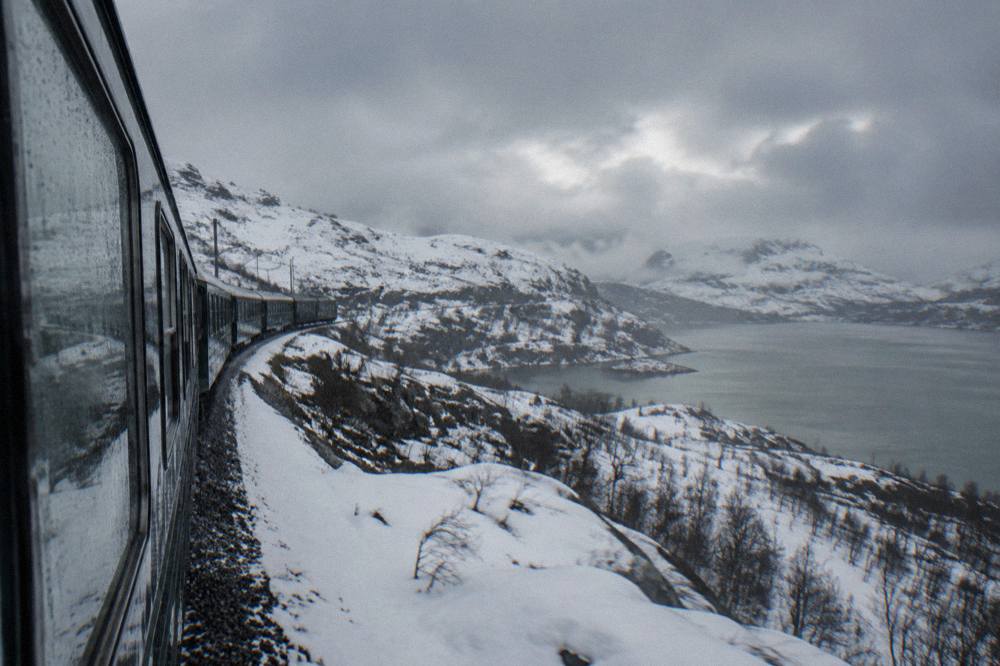
The Bergen Line is the argument people are really making when they say "take the train." The route climbs out of eastern Norway, crosses the mountain plateau, and drops down toward the western fjord country, and the window view changes with every stage. Snow can sit on the higher stretches long after the coast has turned green. Travellers who care about the view should read the site's full guide to the Oslo to Bergen train and, just as importantly, the piece on which seat is best on the Oslo to Bergen train, because the carriage side you pick changes what you see for hours.
Arrival is the quieter advantage. Bergen Station sits centrally, and the walk from platform to a central hotel is short in a compact city. A flight, by contrast, ends at Flesland, which is outside the city and needs a deliberate connection, covered below. On a long travel day the difference is not cosmetic: the train passenger is often checking in while the flyer is still waiting for a light rail carriage.
The train also pairs naturally with the first evening in the city. Arriving in the centre, on foot from the station, the obvious move is a slow introduction to the city, and the walking options below are built for exactly that first-evening energy.
Why Flying Into Bergen Airport Flesland Wins On Time
Flying into Bergen Airport Flesland is better when the itinerary is short, because the flight compresses the Oslo to Bergen leg and leaves the day usable. The Bybanen light rail line 1 runs from the airport toward the city, the Bergen Card covers that airport line free of charge, and a single Skyss zone A ticket costs 51 NOK for an adult without a card. The airport-to-centre connection is simple, frequent and cheap.
Flesland is a compact airport, and the connection into town is the part that surprises people most pleasantly. The Bybanen is the cheapest option and is included free with the Bergen Card, which the flyer arriving for a weekend can buy at the airport and use for the whole stay. The site's guide to flights to Bergen covers routes and arrival logistics in more detail.
| Arrival detail | Train to Bergen Station | Flight to Bergen Airport Flesland |
|---|---|---|
| Where you finish | Central Bergen, on foot from the sights | Flesland, south of the city |
| Connection into town | None needed | Bybanen light rail line 1 |
| Fare for that connection | Not applicable | 51 NOK zone A single |
| Free with a Bergen Card | Not needed | Yes, the airport line is included |
| Cheapest pass covering it | Not needed | Bergen Card 24h, 400 NOK adult |
One warning carried over from the verified transport data: the Bybanen has scheduled summer maintenance windows, and the airport line has been affected in past years, so check the Skyss travel planner for the travel dates before locking a tight connection. For the return leg, the question reverses neatly, and the site covers it separately in the best way to travel from Bergen to Oslo.
Landing early with a full afternoon is the flyer's reward, and Bergen has a compact, walkable centre that rewards it immediately. The food and culture walk is the classic first-afternoon move for exactly this arrival pattern.
What Bergen's Weather Does To Each Option
Bergen's climate argues for the train more than many travelers anticipate. Met Norway data over the trailing 13 months shows 217 days with precipitation in the city, a January 2026 monthly average of -1.4C, a July 2026 average of 14.9C, and November 2025 as the wettest observed month at 321.8mm of rain. Coastal weather here is wet and changeable, and that shapes the fly-versus-train calculation in both directions.
The rainfall figure is the one that changes minds. A city with 217 wet days out of roughly the last 13 months does not run on perfect-weather plans, and neither should the itinerary that reaches it. Flyers gain time but inherit a small additional sensitivity: coastal airports sit in exactly the weather system that produces those numbers. The train crosses high mountain country instead, which brings its own winter considerations, but it keeps the traveller inside one continuous, ground-level journey rather than stacking a flight on top of a coastal arrival.
None of this means flying is fragile. It means the smart plan builds slack either way. Book the last flight of the day and nothing after it, or take the train and accept that the scenery is the schedule. Rain in Bergen is not an obstacle to the city itself; the site's piece on the rainiest month in Bergen is the practical companion read, and the answer there surprises most first-time visitors.
How To Decide For Your Own Bergen Trip
Choose the train from Oslo to Bergen if the journey is the point, if the itinerary has three days or more, or if the idea of waking up in Oslo and stepping off in central Bergen appeals. Choose the flight if the trip is two days or fewer, if the fjord day trips matter more than the scenery between cities, or if winter weather makes you value the schedule protection of a short hop. Most first-time visitors with the time take the train one way.
The practical tiebreaker is what happens after arrival, not the journey itself. Bergen rewards time: the fjord cruises, the funicular and the mountain cable car all eat half-days, and the site's answer to how many days in Bergen is enough is the honest planning read before booking either transport. If the answer to that question is "two", fly and spend every hour inside the city. If it is "four or five", the train day stops being a cost and becomes one of the days.
| Bergen Card | Adult (NOK) | Child 3-15 (NOK) |
|---|---|---|
| 24 hours | 400 | 100 |
| 48 hours | 500 | 125 |
| 72 hours | 600 | 150 |
| 96 hours | 700 | 175 |
The card is the connective tissue between both arrival options. It covers the Bybanen airport line free, includes Skyss buses and the light rail across Vestland county, and discounts the mountain transport. The 2026 flyer from visitbergen.com lists those prices directly. A flyer who lands in the morning with a 48-hour card has effectively bundled the transfer, the city transport and the sightseeing discounts into one purchase before leaving the terminal.
For the evening itself, after the train or the plane, the city has one more gear. The night tour that lifts you over Bergen on the two mountain systems is the strongest use of a first clear evening, and it is the one product that turns an arrival day into a full day.
Whatever the choice, book the fjord day separately and early. The Mostraumen cruise in particular tends to sell out among the fjord options from the city, and the trio below reflects what travellers commonly pair with a first visit: the food walk, the fjord and the mountain evening. More on the full spread of fjord options sits in the site's overview of things to do in Bergen and the fjords around it, a question that answers the wider version of this one.
The short version, in the voice this site's Bergen Travel Guide homepage uses: fly if the trip is short, take the train if the trip is the point, and split the difference if you can. Bergen does not punish either choice. It only punishes the traveller who spends the whole journey with the blinds down.
Common Questions About Travel From Oslo To Bergen
Most questions come down to three practical points: the time each option takes, the arrival point in Bergen, and the reliability of each in coastal weather. The train arrives into the city centre with no connection needed; the flight arrives at Flesland with a cheap, frequent light rail into town. Scenery favours the train heavily, and schedule protection favours the flight.
Is it better to fly or train from Oslo to Bergen?
Fly when the trip is two days or fewer and every hour in the city counts. Take the train when the itinerary has three days or more and the mountain crossing is part of the appeal. The train runs city centre to city centre, while the flight lands at Flesland and needs a Bybanen connection, 51 NOK as a zone A single or free with a Bergen Card.
Is a train ride from Oslo to Bergen worth it?
For most first-time visitors, yes. The Bergen Line crosses high mountain country between eastern and western Norway, and the scenery is the reason travellers book it even when a flight would be quicker. The seat you pick matters almost as much as the ticket, so check the carriage-side advice before reserving.
How do I get from Bergen Airport Flesland to the city centre?
Take the Bybanen light rail line 1, which connects the airport with the city. A single Skyss zone A adult ticket costs 51 NOK, and the Bergen Card covers the airport line free, along with buses and the light rail across Vestland county. The card starts at 400 NOK for 24 hours for an adult.
What is the best way to travel from Bergen to Oslo?
The same two options apply in reverse. The flight protects a short schedule; the train returns you to Oslo across the same mountain country with a central arrival at the Oslo end. Many travellers fly one direction and take the train the other to see the scenery once without paying the time cost twice.
How many days in Bergen is enough?
Two days cover the city core: Bryggen, the fish market, the funicular or the cable car, and one fjord cruise. Three days add a full fjord day trip such as Mostraumen or Hardangerfjord, and four or five allow the wider Sognefjord round trips. Short trips should lean toward flying; longer ones make the train day easy to absorb.
Does Bergen's weather affect the choice?
Yes, in both directions. Met Norway data over the trailing 13 months shows 217 days with precipitation in Bergen, so coastal weather is a constant rather than an exception. Build slack into either plan: a later flight with nothing booked after it, or a train day treated as scenery rather than schedule, and the wet city will not catch you out.