What Language Do They Speak In Bergen?
Bergen, Norway, speaks Norwegian in its local Bergensk dialect, writes mostly in Bokmål, and uses English widely in tourism. Here is what visitors actually need.
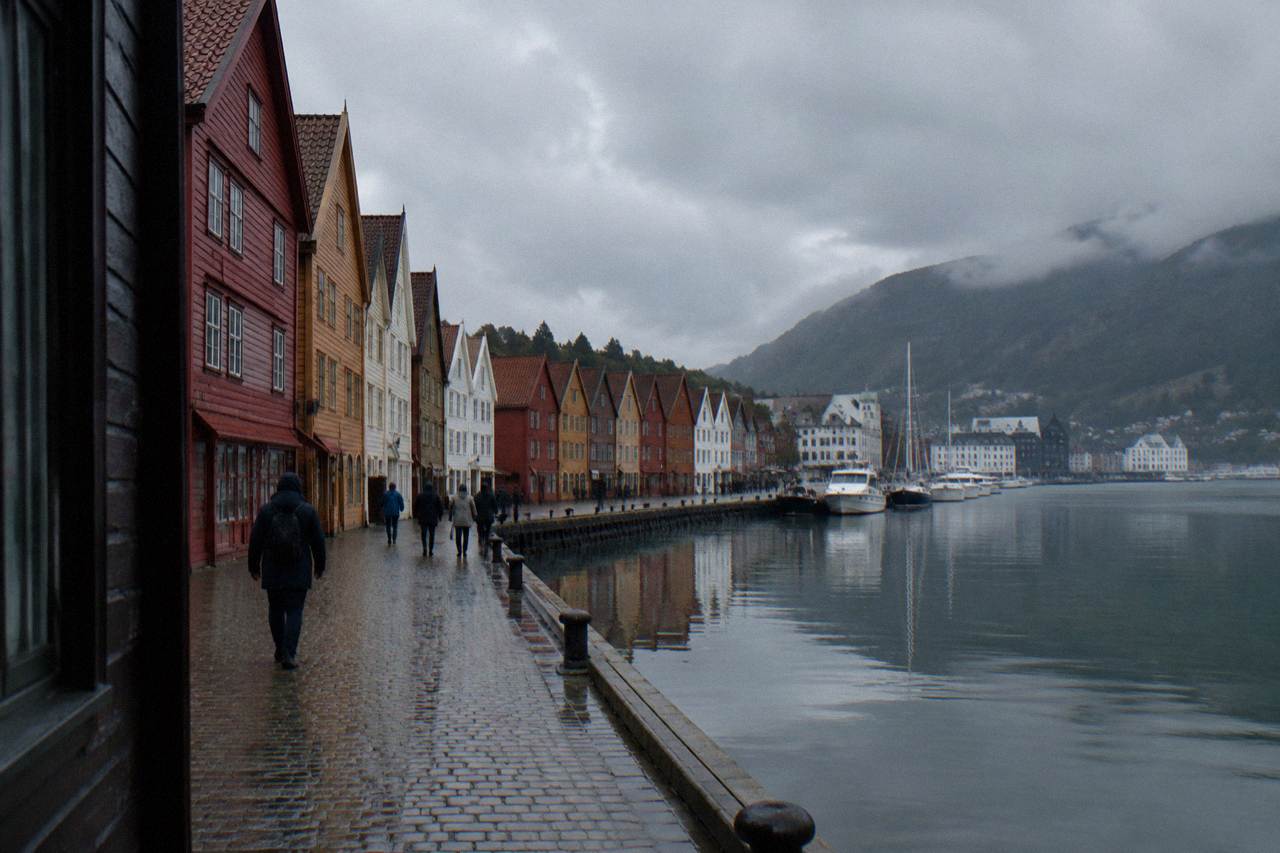
Bergen, in Vestland county on Norway's southwestern coast, is a compact city of roughly 294,860 people wrapped between mountains and fjords, and the language you will hear on its cobbled streets is Norwegian, delivered in a dialect that locals guard with real pride. The city was a Hanseatic League trading post for centuries, which left German and Dutch threads woven into both its architecture and its vocabulary. For a visitor, the practical picture is simpler than the history suggests: Norwegian in the local Bergensk form, English in almost every tourist-facing situation, and two written standards on the signs and screens you will read along the way.
What Language Do They Speak In Bergen?
Bergen, in Vestland county on Norway's southwestern coast, uses Norwegian as its official and everyday language, spoken almost universally in the local Bergensk dialect and written mainly in the Bokmål standard. English is widely spoken in shops, museums, hotels and tour settings, so visitors who arrive with only English manage comfortably across the city centre and at every major attraction.
Norway's official language is Norwegian, and every public institution in Bergen, from the kommune's offices to the Skyss transport authority, operates in it. What makes Bergen interesting is the local form. Bergensk is one of the country's most recognisable dialects, shaped by the city's trading history, and residents use it in preference to any standardised form of speech. A visitor listening at the fish market or on a bus will hear it constantly, even though every written sign follows national conventions.
The Hanseatic era left more than the Bryggen warehouses, a UNESCO World Heritage site inscribed in 1979. Trading contact with German merchants seeded a merchant vocabulary into Bergensk that survives in scattered words and place references today. The dialect also carries its own personality in tone and rhythm, which Norwegians elsewhere imitate and tease affectionately. None of this changes what a tourist needs: menus, ticket machines and museum labels are written in standard Norwegian, and staff switch to English the moment a conversation requires it.
For context on how the city presents itself to first-time visitors beyond language, the companion page on what makes Bergen special covers the geography and history in more depth.
Is English Enough For A Bergen Visit?
English is enough for nearly every tourist situation in Bergen: attractions, public transport, hotels, restaurants and guided tours all operate in English as a matter of routine. Norwegian schoolchildren learn English from an early age, so asking directions, ordering a cinnamon bun or booking a fjord cruise happens in English without friction anywhere in the city centre.
You would have to work quite hard to find a situation in central Bergen where English fails. Ticket clerks at Fløibanen, attendants at the aquarium, servers at the fish market and conductors on the Bybanen light rail all handle English daily, because the city's economy runs on international visitors arriving by cruise ship and by air. Museum audio guides and signage routinely come in English alongside Norwegian, and the tours listed on this site state their operating language on each operator's live listing, so you can confirm before booking.
A few Norwegian words still earn their place in your day, partly because they appear on signs you cannot avoid. The table below covers the ones that surface most often on a visit.
| Norwegian | English | Where you will meet it |
|---|---|---|
| Hei | Hi | Every shop greeting |
| Takk | Thanks | Cashiers, drivers, cafés |
| Unnskyld | Excuse me | Crowded streets, queues |
| Ja / Nei | Yes / No | Signs, tickets, menus |
| Hvor mye koster det? | How much does it cost? | Markets, stalls |
| Ha det | Bye | Informal farewells |
One nuance worth knowing: Norwegian politeness is quiet and understated. A simple "hei" and "takk" covers almost every interaction, and Norwegians do not expect elaborate courtesy formulas. Overdoing it can feel stranger than saying nothing at all.
What Is The Bergensk Dialect?
Bergensk is the city's own dialect of Norwegian, known across the country for a guttural r sound, clipped verb endings that drop the markers standard Norwegian keeps, and vowel shifts that make Bergen speech instantly recognisable to other Norwegians. It is a spoken variety only: it appears in conversation, never in official writing.
The most famous marker is the so-called skarre-r, a guttural r produced in the throat rather than rolled on the tongue, a feature Bergensk shares with several European languages but with few Norwegian dialects. Then come the endings: where standard Norwegian says a verb's past form with a distinct ending, Bergensk tends to flatten it, so sentences finish abruptly where other dialects trail off. Vowel sounds shift too, which is why a word like "byen", the city, can sound like it gains a syllable it does not have on paper.
The dialect absorbed vocabulary from centuries of trade. Hanseatic merchants, largely German speaking, ran the Bryggen wharf for hundreds of years, and the trading life of the harbour stamped loanwords into everyday speech. Some survive in family names, street talk and older quarters, though a short visit will not separate them out. What you will notice instead is tone: Bergensk is fast, dry and often delivered with a kind of cheerful bluntness that visiting Norwegians find either charming or bracing, depending on the weather and the exchange rate.
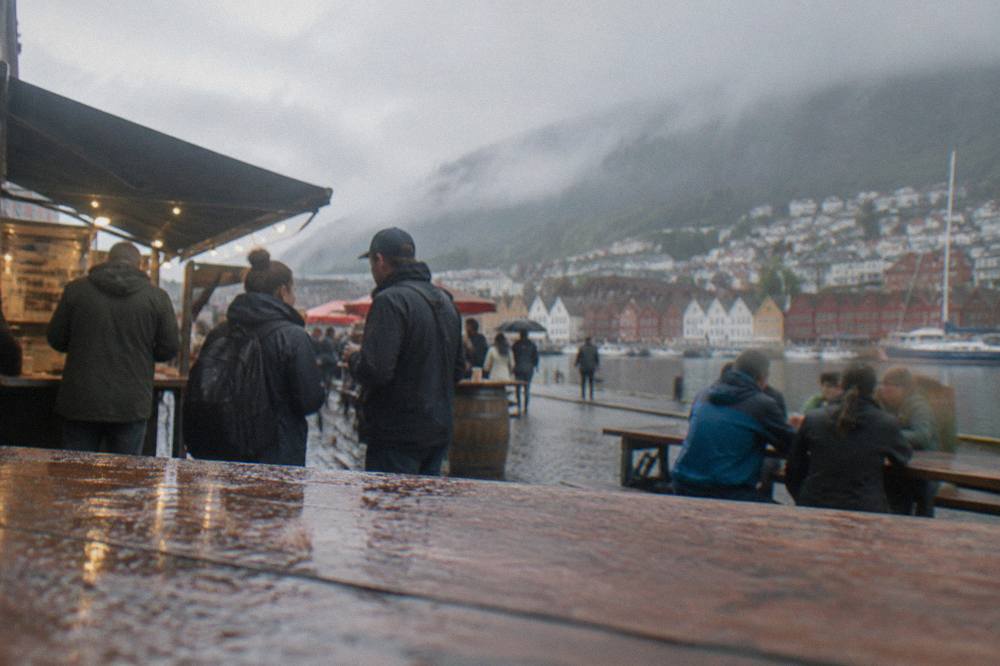
If a dialect walk sounds like your kind of introduction, the food-and-culture walks sold on this site move through the same streets where Bergensk is spoken loudest, and a guide will happily translate the phrases worth taking home. You can check current availability through the operator's live listing: Check availability. Pairing language with the city's famous dishes works well too, and the page on food Bergen is known for names what you will actually order.
How Do Bokmål And Nynorsk Differ Around Bergen?
Bergen writes in Bokmål, one of Norway's two official written standards, a form descended from Danish through centuries of union with Denmark. Nynorsk, the other standard, was created from rural Norwegian dialects as the country built its own written identity, and it dominates schools across much of Vestland county, which makes Bergen stand out as a Bokmål city inside a Nynorsk-leaning region.
Both standards are fully official: laws, government and media use either, and every Norwegian child studies both, with one as the main form. Bokmål is used by the large majority of the country, and its centre of gravity is the urban east. Nynorsk's heartland is the west coast countryside, the fjord valleys and the rural Vestland municipalities surrounding Bergen on nearly every side. So a road trip inland from the city moves through Nynorsk place names and school notices, while Bergen's own kommune documents, newspapers and street signage stay in Bokmål. More of these guides are collected on Bergen Travel Guide.
The differences are visible on paper rather than audible in conversation, because nobody actually speaks either standard aloud as a dialect; Bergensk is the spoken reality here. For a visitor, the practical takeaways are small. Some museum panels and public notices in the county appear in Nynorsk, where word forms differ slightly, but English translations sit alongside them at any attraction oriented toward visitors. The table below sketches the landscape without drowning you in grammar.
| Form | What it is | Where you encounter it |
|---|---|---|
| Bergensk | Spoken city dialect | Conversations, markets, trams |
| Bokmål | Written standard, Danish descent | Bergen signs, kommune pages, menus |
| Nynorsk | Written standard, rural-dialect base | Rural Vestland signage, schools |
| English | Foreign language, widely taught | Attractions, tours, hotels |
Which Bergen Tours And Attractions Run In English?
Guided products sold from this site, including the city's food walks, fjord cruises and cable car tickets, state their operating language on the operator's live listing, and English is the default for visitor-facing guiding throughout the city. Checking the listing before booking settles the question definitively for each individual product.
This matters most on the day trips. A full-day fjord excursion with a guide narrating in English is a different experience from a self-guided ticket with a printed itinerary, and the roster here spans both: cruises with local guides, self-guided round trips, and combo products mixing buses, boats and railways. The listing is where the language detail lives, and it is where the price and duration live as well, which is why this site points you there rather than summarising figures secondhand. The same holds for the mountain rides: Ulriken643's own pages carry its English information alongside Norwegian, and the cable car is a straightforward self-service visit where signage does the talking.
For structure on how to fit an English-language day together, whether one full day or three, the itinerary pages on how many days Bergen deserves lay out the sequencing, and the broader verdict on whether Bergen is worth visiting weighs the case honestly.
Do Any Other Languages Help In Bergen?
German, French and to a lesser extent Spanish and Italian appear in Bergen's tourist ecosystem, mostly on cruise-ship days and at the largest museums, but none is worth learning for a visit. Norwegian plus English covers the city completely; German occasionally helps at heritage sites because of the city's Hanseatic past.
The Hanseatic connection means the German thread runs deepest at the historic end of town. The Hanseatic Museum and the Bryggen museums tell the story of the German merchant enclave that ran the wharf, and some of the period terminology in the exhibitions is German in origin. Norwegian and Danish remain mutually intelligible to a degree that surprises visitors, a legacy of the countries' long political union, and Swedish is close enough that the three languages blur at the edges.
The festival calendar is where Bergen becomes most multilingual. During the Bergen International Festival, held 27 May to 10 June in 2026 and returning 26 May to 12 June 2027 for its jubilee edition, the city fills with international performers and audiences, and English becomes as audible as Norwegian in the concert halls. Nattjazz runs 29 May to 6 June in 2026, and Bergenfest takes over Bergenhus Festning from 10 to 13 June the same year.
Common Questions About Language In Bergen
What Language Do They Speak In Bergen?
Norwegian, spoken in the local Bergensk dialect and written mainly in the Bokmål standard. English is widespread in every tourist-facing setting, from hotels and museums to guided tours and public transport.
Do People In Bergen Speak English?
Yes, widely and comfortably. English is taught from an early school age in Norway, and Bergen's tourism and cruise economy means hotel staff, guides, shopkeepers and transport workers use it daily.
Is Bergensk Hard To Understand For Other Norwegians?
Not hard, but instantly recognisable. Its guttural r, clipped verb endings and vowel shifts mark a speaker as Bergensk within a sentence, though other Norwegians follow it without real difficulty.
What Is The Difference Between Bokmål And Nynorsk?
They are Norway's two official written standards. Bokmål descends from Danish; Nynorsk was built from rural dialects as Norway developed its own written identity. Bergen writes in Bokmål while much of the surrounding Vestland countryside leans Nynorsk.
Should I Learn Norwegian Words Before Visiting Bergen?
A handful helps and takes minutes: hei, takk, unnskyld, ja, nei. Anything more is optional, because English carries a visitor through the entire city without a gap.