Which Is Nicer, Bergen Or Tromsø?
Bergen or Tromsø? A comparison of Norway's fjord capital and its Arctic gateway on fjords, weather, winter and cost, using verified Bergen figures.
Bergen, in Vestland county on Norway's southwestern coast, and Tromsø, deep inside the Arctic Circle in the north of the country, are the two Norwegian cities most often shortlisted against each other, and the comparison is a genuinely close one. Bergen trades on its Hanseatic wharf, its surrounding fjords and a temperate oceanic climate; yr.no's Bergen station table shows monthly averages from -1.4C in January 2026 to 14.9C in July 2026, with 217 days of precipitation over the trailing 13 months. Tromsø trades on polar night, midnight sun and the northern lights. This page compares the two the only way that holds up: on Bergen's figures from primary sources, and on the qualitative character of each city that any visitor can check for themselves.
Which Is Nicer, Bergen Or Tromsø?
Neither city is simply nicer, and the honest answer depends entirely on what a trip is for: Bergen is nicer for wooden Hanseatic heritage, fjord day trips, walkable city scale and green coastal scenery, while Tromsø is nicer for the northern lights, polar night, midnight sun and an Arctic island setting. Bergen is the safer all-round choice for a first visit to Norway, because its attraction list is denser and its fjord connections run year-round.
The rest of this page breaks that verdict into the things a reader can actually verify. Bergen's side of every comparison below is drawn from primary sources: the official Bergen Card 2026 flyer published by visitbergen.com, the Met Norway climate statistics for the Bergen station, and UNESCO's own listing for Bryggen. Tromsø's side is described qualitatively, because no Tromsø figures were verified, and no invented number for the other city belongs on a page like this.
A useful frame is the trip length. If a visit is two or three days, Bergen's compact centre, its funicular and its two mountains give it the edge, because almost everything is reachable on foot. If the trip is a winter week built around one goal, seeing the aurora, Tromsø's location makes the case for itself. Many travellers eventually do both, in different seasons, and stop treating them as rivals at all.
What Kind Of City Is Bergen, Norway?
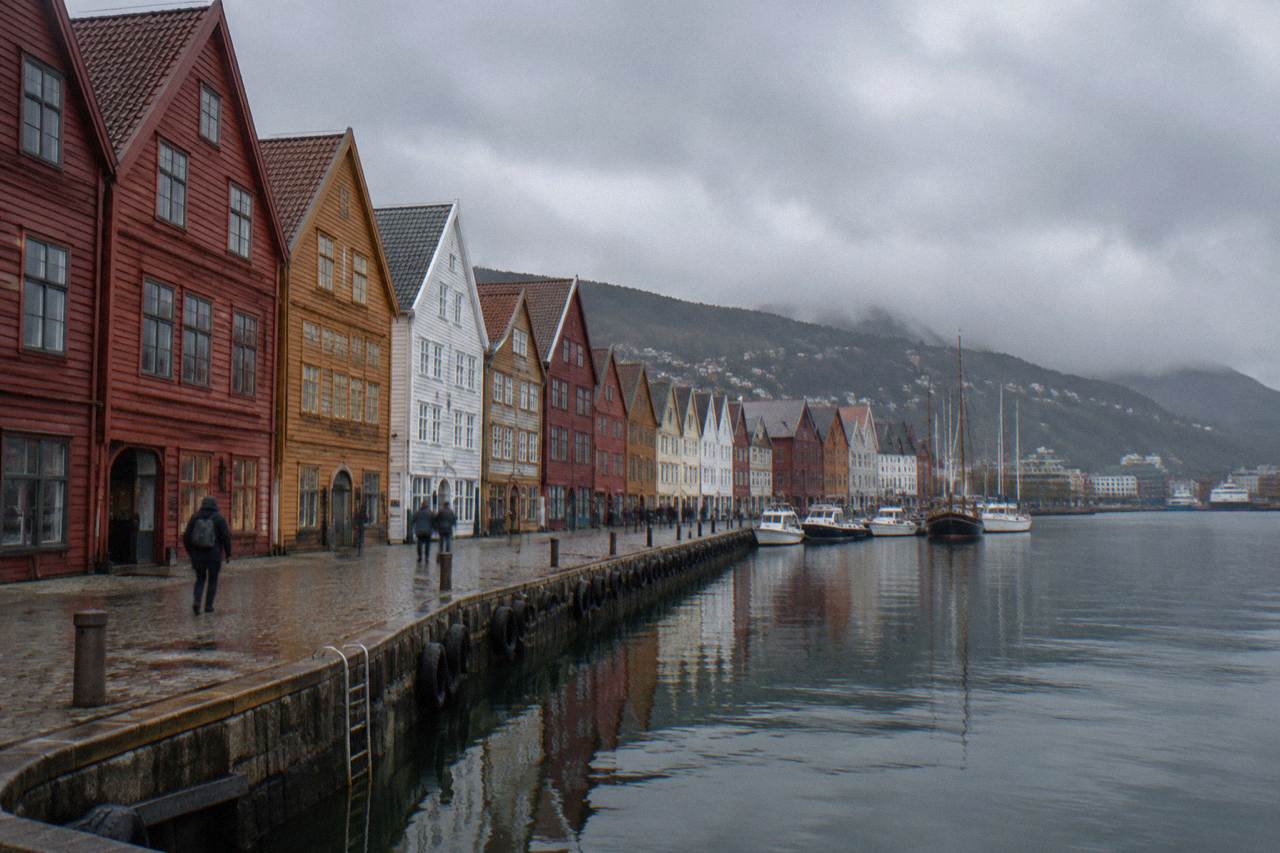
Bergen is a small, wet, wooden, walkable Hanseatic port city of about 294,860 people, framed by seven mountains and sitting at the mouth of Norway's fjord country. UNESCO's own listing says Bryggen, its Hanseatic wharf, was inscribed on the World Heritage List in 1979. Its scale is the key fact: the aquarium, the fish market, Bryggen, the Fløibanen funicular and most major museums sit within a short walk of each other in the centre.
That density is what makes Bergen work as a short-stop destination. The Fløibanen funicular carries visitors up the flank of Fløyen, one of the city mountains, and the Bergen Card flyer lists a return ticket at 200 NOK for an adult from 1 April to 30 September, or 145 NOK from 1 October to 31 March. The Ulriken643 cable car serves the tallest of the seven mountains, with a return ticket at 435 NOK per adult on the operator's own price page. Two mountains, one compact historic core, and a harbour that has been a trading hub since the Hanseatic era.
Food is the other argument for Bergen's compactness. The historic fish market sits minutes from Bryggen, and the city's food culture is one of the strongest in the country, which is exactly why the best introduction is a guided one. The three tours below are the picks that make the most of the city on that first visit, from a food-and-culture walk through the centre to a fast RIB safari on the nearby fjord and a full-day glacier-lake trip into the surrounding national park country.
For a deeper read on the city itself, the site's longer takes on how many days in Bergen is enough and what food Bergen is famous for cover both questions in detail.
What Kind Of City Is Tromsø?
Tromsø is an Arctic island city several hundred kilometres north of Bergen, inside the Arctic Circle, known as a base for the northern lights in winter and the midnight sun in summer. It is small by Norwegian city standards, with a wooden historic centre, the striking Arctic Cathedral, and a landscape of snowy islands and fjords. Its climate is cold-polar rather than oceanic, its winter is dark, and its headline attraction is something Bergen simply cannot offer: the aurora borealis.
That last point is the honest core of the whole comparison. Bergen's climate is temperate oceanic, wet and green, with winters that rarely go deep below freezing; the Met Norway table shows the trailing-13-month low in Bergen at -11.3C in early January. Tromsø's latitude gives it polar night in midwinter and midnight sun in midsummer, and that extreme light cycle is the reason most people travel there. A visitor who wants darkness at noon and the aurora overhead has one answer; a visitor who wants Hanseatic timber, fjord cruises and a city you can cross on foot has the other.
What Tromsø does not offer is Bergen's density of accessible heritage. Bryggen's inscription in 1979, the Hanseatic Museum, the fortress at Bergenhus and the cluster of museums around the harbour give Bergen a walkable historic weight that Tromsø, a younger and more northerly settlement, does not match. Conversely, no Bergen attraction answers the Arctic Cathedral or a husky sled under the lights. The two cities are not really competing on the same board.
How Does The Weather Compare Between Bergen And Tromsø?
Bergen is wet and mild for its latitude; Tromsø is cold and snowy with extreme winter darkness. Over the trailing 13 months, yr.no's Bergen station table shows monthly means from -1.4C in January to 14.9C in July and 217 days with precipitation. No Tromsø figures were verified, so every number in the table below belongs to Bergen, and any comparison with the north rests on character rather than published local data.
| Month (Bergen station) | Mean temperature | Precipitation observed |
|---|---|---|
| January 2026 | -1.4C | 82.0 mm |
| April 2026 | 7.9C | 65.9 mm |
| July 2026 | 14.9C | 184.2 mm |
| September 2025 | 13.1C | 206.6 mm |
| November 2025 | 6.0C | 321.8 mm |
The pattern in the table is the classic Bergen one: mild winters, cool summers, and heavy rainfall peaks in late autumn, with November 2025 recording 321.8 mm of observed precipitation against a normal of 275.0 mm. The site's full breakdown of the rainiest month in Bergen covers that peak in detail. Tromsø's character, by contrast, is snow cover through winter and a short, bright summer, which changes what packing looks like for each city.
The practical consequence for a visitor is gear. Bergen rewards a rainproof outer layer in any month; the site's page on what to wear and pack for Norway is the companion piece for that. Tromsø in winter rewards serious insulation and a tolerance for very short days. Neither city is nicer on weather alone; Bergen is merely more predictable in its unpredictability, and its rain is the price of the green that frames it.
What Does Each City Cost To Visit?
In Bergen, the verified reference points are a 51 NOK Skyss single ticket in zone A, a 24-hour Bergen Card at 400 NOK for an adult, Fløibanen returns at 200 NOK in summer or 145 NOK in winter, and Ulriken643 returns at 435 NOK, all from the official 2026 Bergen Card flyer and the operator's price page. No Tromsø prices were verified, so no comparable figures for the northern city are stated here, and any Tromsø budget should be checked against its own operators.
| Item in Bergen | Verified price | Source |
|---|---|---|
| Skyss single ticket, zone A | 51 NOK | visitbergen.com transport page |
| Bergen Card, 24h adult / child | 400 / 100 NOK | Bergen Card 2026 flyer |
| Bergen Card, 96h adult / child | 700 / 175 NOK | Bergen Card 2026 flyer |
| Fløibanen return, adult, Apr-Sep | 200 NOK | Bergen Card flyer price table |
| Fløibanen return, adult, Oct-Mar | 145 NOK | Bergen Card flyer price table |
| Ulriken643 return, adult | 435 NOK | ulriken643.no price page |
The Bergen Card is the structural answer to the city's costs, because the flyer states it includes free Skyss buses and Bybanen light rail across Vestland county, including the airport line, alongside free or discounted entry at most major attractions. For a visitor staying three or four days, the card pays its way through transport alone. The same logic exists in Tromsø for its own attractions, but this page will not price it, and a rough parity between Norwegian cities is the only honest general statement available.
Cost, in the end, is rarely the deciding factor between the two cities; the flight north and the season chosen will move a budget more than any single ticket. The real deciding factors are the fjord day trips in the south and the lights in the north.
Which City Has Better Day Trips?
Bergen's day-trip reach is arguably the strongest in Norway: the Mostraumen fjord cruise runs half a day from the city centre, the Hardangerfjord and the Folgefonna glacier lake sit within a day trip, and the Sognefjord and Flåm railway connections run as full-day round trips. Tromsø's day trips are Arctic ones, whale watching in season and wilderness camps. In summer, Bergen wins the day-trip contest outright; in winter, the comparison reverses.
The southern options are what this site can actually verify. A day trip to the fjords from Bergen is not only possible but the single most common reason people base themselves in the city, and the guides to Sognefjord and Hardangerfjord cover the two great arms of it. The picks below are three of the strongest ways out of the city, from a food walk that stays in town to a fast RIB safari and a glacier-lake expedition.
That combination, a food-and-culture walk on arrival day and a fjord or glacier day after it, is the shape of most successful Bergen itineraries. It is a fair summary of the city's advantage in this comparison: variety within reach, without ever changing hotel.
So Which City Should You Choose For Norway?
Choose Bergen if the trip is a first visit to Norway, is two to four days long, is in spring through autumn, or is built around fjords, wooden heritage and walkable city life; choose Tromsø if the trip is a winter trip built around the northern lights or midnight sun, and nothing else on the list matters more. Bergen is the more complete city destination; Tromsø is the more single-minded one, and single-minded destinations win when the single thing is what you came for.
The honest tie-breaker, then, is not niceness but purpose. If it helps, this site's own pages on whether Bergen is worth visiting and how Bergen compares with Oslo apply the same test to other pairings, and the answers consistently come back to season and intention rather than a universal winner.
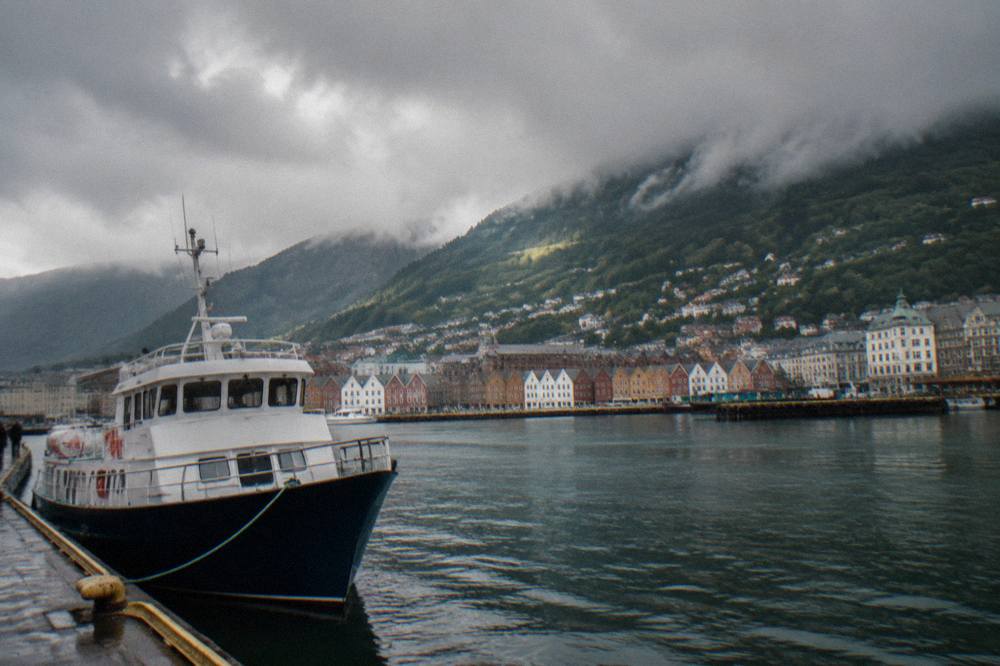
For the many travellers whose answer lands on Bergen, the gentlest first morning is a guided walk through its food culture, paired with the fjord or glacier day after it. The pick below is the one this site recommends for exactly that arrival day.
The last word belongs to the obvious point both cities share: neither is a bad choice, and Norway rewards the traveller who treats them as two different countries in one. For more on planning either half of it, Bergen Travel Guide covers the southern half in full.
Common Questions About Bergen Or Tromsø
Which is nicer, Bergen or Tromsø?
There is no universal winner. Bergen is nicer for Hanseatic heritage, walkable scale, fjord day trips and a mild, wet, green climate; Tromsø is nicer for the northern lights, polar night, midnight sun and an Arctic island setting. For a first trip to Norway, Bergen is the more complete all-round choice.
Is Bergen rainier than Tromsø?
yr.no's station table for Bergen shows 217 days with precipitation over the trailing 13 months, with monthly totals peaking at 321.8 mm in November 2025. Tromsø precipitation figures are unavailable, so the northern city is not priced, counted or compared numerically here.
Can you see the northern lights in Bergen?
Bergen lies far south of the Arctic Circle and is not a reliable aurora destination, its cloud cover being the added obstacle. Tromsø's location inside the Arctic Circle is the reason aurora travellers choose it, and that is one of the clearest practical differences between the two cities.
How many days do you need in Bergen?
Two days cover the historic centre, one mountain and the fish market comfortably; three to four allow a full fjord day trip plus a second excursion, such as the Hardangerfjord or the Folgefonna glacier lake, without changing hotels.
Which city is better in winter, Bergen or Tromsø?
For winter as most people imagine it, snow and darkness and lights, Tromsø. For a winter city break with museums, a Christmas market and a funicular that runs through the cold season, Bergen: Met Norway's table shows Bergen's January 2026 mean at -1.4C, mild for its latitude, and the Bergen Card flyer lists Fløibanen winter returns at 145 NOK for an adult.