Which Black Metal Bands Are From Bergen?
The Bergen, Norway black metal bands that made the city famous in extreme music, from Burzum and Immortal to Gorgoroth and Taake, and where the scene's history lives today.
Bergen, a Hanseatic trading city in Vestland county on Norway's southwestern coast, is the place most closely tied to Norwegian black metal. The genre's second wave was shaped in large part by a handful of bands and personalities who lived, recorded and made headlines there in the early nineties, and the city's name still carries that reputation among metal listeners worldwide. This page from Bergen Travel Guide sets out which bands actually came from Bergen, why the city became a hub, and what a visitor can see of that history today without turning a music trip into something grim.
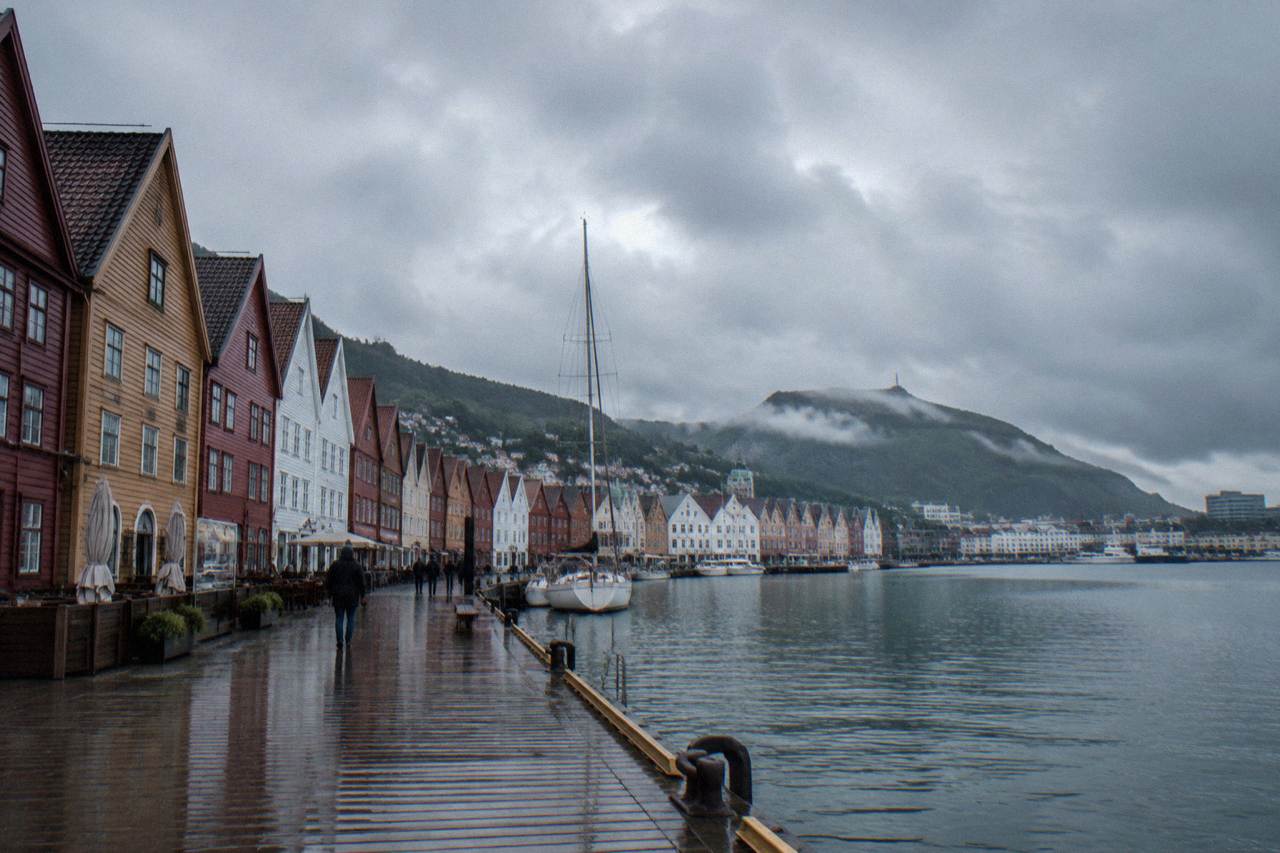
Which Black Metal Bands Are From Bergen?
The bands most identified with Bergen, Norway are Burzum, Immortal, Gorgoroth, Enslaved, Taake and Aeternus, with the city also central to the stories of Mayhem and Emperor through musicians who lived there. Burzum and Immortal were the founding pillars of the local scene, Gorgoroth and Aeternus followed in the same era, and Taake carried the Bergen sound into the following decades.
Take each name in turn.
Burzum is the one-man project of Varg Vikernes, who recorded the early albums that helped define the Norwegian second wave while living in the Bergen area. The project's lo-fi, keyboard-laced approach became one of the genre's templates, and its notoriety, driven as much by the crimes and trials of its creator as by the music, fixed international attention on the city.
Immortal was formed by Abbath, Demonaz and others with strong roots in the Bergen scene. Where other Norwegian bands leaned toward Satanism as imagery, Immortal built a fantasy world of blizzard-blasted mountains and coined a style fans call "winter metal." The band's imagery drew directly on the western Norwegian landscape, and the mountains around Bergen, including Ulriken, appear in its visual language again and again.
Gorgoroth, named for the plateau in Tolkien's Mordor, is another long-running Bergen band, known for stark, aggressive albums and a stage reputation built on theatrical, deliberately provocative live shows. Aeternus, also from Bergen, was one of the earliest acts to blend black metal with slower, doom-like elements, a style its members called "dark metal."
Enslaved, while formed in the nearby west-coast town of Haugesund by Ivar Bjørnson and Grutle Kjellson, is closely tied to Bergen, where the band has long been based and where much of its recording history took place. Its early albums stood apart for drawing on Norse mythology and Viking history rather than the anti-religious themes of its peers, and its later work moved into progressive territory while keeping a foot in the black metal tradition.
Taake, led by Hoest, is the best-known Bergen band of the generation after the founders, singing in Norwegian dialect and carrying the local style forward. Around these names sits a wider cluster of Bergen acts across related genres, from Audrey Horne's rock-heavy sound to darker folk and doom projects, which is why the city is spoken of as a metal town generally and not only a black metal one.
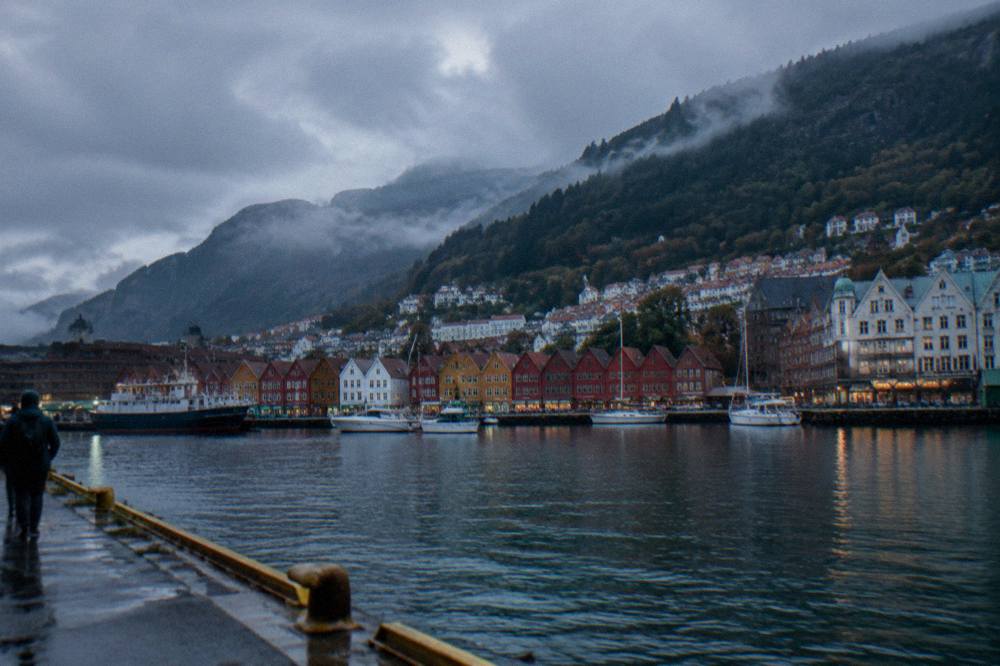
Why Did Bergen Become A Black Metal Capital?
Bergen became a black metal hub because a small group of musicians lived and recorded there at the same moment, the city's Grieg Hall studio became a recording home for the scene's key albums, and a cluster of arsons and crimes in the early nineties tied the city's name to the genre in the world's press. No single authority declared Bergen the capital; the label stuck because the people and the recordings were concentrated there.
A few practical reasons made the city fertile ground. Bergen sits between mountains and fjords, and its long, dark, wet winters give it a natural atmosphere that matched the music's mood. The city also had a working music infrastructure: the Grieg Hall's recording facilities hosted albums by several of the bands named above, which meant the scene had a shared technical home rather than scattered basements.
The darker side of the story is well documented and cannot be skipped. A series of church arsons across Norway in the early nineties, several of them in and around Bergen, including the destruction of the wooden Fantoft stave church just south of the city, turned the scene from a musical niche into a national news story. Vikernes was eventually convicted of murder and arson, and other scene members were convicted on arson charges. The trials made Bergen's name in the international press for reasons the city has spent decades living down.
| Band | Bergen tie | What it is known for |
|---|---|---|
| Burzum | Founded by a Bergen-area resident | Lo-fi one-man albums that shaped the second wave's sound |
| Immortal | Formed by Bergen-scene musicians | Blizzard-themed fantasy imagery and a distinctive guitar style |
| Gorgoroth | Long-running Bergen band | Stark, aggressive albums and confrontational live shows |
| Aeternus | Bergen band from the same era | Early blend of black metal with doom-like "dark metal" |
| Enslaved | Long based in Bergen | Norse-mythology themes that moved into progressive metal |
| Taake | Bergen band of the next generation | Norwegian-language black metal carrying the local style forward |
The honest framing for a visitor is this: Bergen's black metal history is real and internationally significant, but the city today is a UNESCO-listed Hanseatic port, a university town and a gateway to the fjords, and most residents treat that era's violence as a closed and shameful chapter rather than a selling point. The music survives as part of the city's broader cultural fabric, and the scene's later generations have been largely law-abiding musicians playing to a devoted international audience.
Where Does Black Metal History Show Up In Bergen Today?
Black metal history in Bergen today shows up mostly in places rather than plaques: the rebuilt Fantoft stave church, the mountains and fjord views that shaped the album imagery, the Grieg Hall where key albums were recorded, and the record shops and venues where the later local scene plays and sells its music. There is no official black metal museum, so the trail is one you assemble yourself.
Fantoft stave church, in the Fana district south of the centre, is the single most direct site. The original medieval structure was relocated there from elsewhere in western Norway, burned in the arson wave and was later rebuilt as a replica. Visiting it means standing at the exact site of the event that pushed the scene into international headlines. The surrounding park and wooded slope are quiet, and the setting does most of the explaining. Fans of the music's imagery will recognise the church's silhouette from one of the genre's most famous album covers, which was photographed at the site.
The mountains are the other free site. The imagery of Norwegian black metal, especially Immortal's, is inseparable from western Norway's landscape of ridgelines, cloud and snow. Taking the Fløibanen funicular up Fløyen or the cable car up Ulriken puts you inside the exact kind of scenery that fills the album art, and both viewpoints look back over the compact city where the scene lived. You do not need a ticket to a black metal landmark; you need weather gear and a ridge.
| Site in Bergen | Connection to the scene | How a visitor experiences it |
|---|---|---|
| Fantoft stave church | The arson that made the scene world news happened here; the church was rebuilt | A quiet replica church in a wooded park in the Fana district |
| Grieg Hall | Recording home of several scene albums | A working concert hall; check the programme for current events |
| Fløyen and Ulriken | The landscape that shaped the genre's imagery | Funicular and cable-car rides with sweeping views over the city |
| City-centre record shops | Where later Bergen metal bands sell and sign releases | Browse for local labels and current bands between sightseeing stops |
Downtown, the trail turns into ordinary city pleasures. The record shops and bars around the centre stock releases from Bergen's living metal scene, and venues across the city host local extreme-metal shows alongside everything else a Norwegian university city programmes. If you want a guide's overview of the food, the Hanseatic streets and the culture of central Bergen in one walk, the Bergen Food and Culture Walk covers that ground, with the option to Check availability before you arrive.
Is Bergen A Good Trip For A Metal Fan?
Yes, Bergen works well for a metal-motivated trip, because the black metal history sits inside a walkable Hanseatic port surrounded by fjords, meaning a music pilgrimage doubles as one of Norway's most rewarding general visits, with rainy-day museums, stave churches and mountain views all within reach of a compact centre. The metal content is a layer on top of the city, not the whole of it.
Plan it as a two- or three-day visit. One day for the centre: the Bryggen wharf, the Hanseatic Museum, the fish market and the winding lanes of the old town, with the funicular up Fløyen in the afternoon. One day for the farther sites: Fantoft stave church, reached by the light rail, paired with a stroll in the Fana district. A third day, if you have it, belongs to the fjords, because the same landscape that fills the album covers is an hour away by boat.
Music fans often ask how many days to budget; the answer depends on how many of these layers you want, and our guide to how many days in Bergen is enough breaks the trade-offs down. Rain is part of the deal: the trailing year's weather data for Bergen counts 217 days with precipitation, so pack for it rather than gambling against it, and read the local answer on the rainiest month in Bergen if you are choosing dates.
A fjord cruise is the natural third layer of the trip. The Mostraumen cruise up the Osterfjord, where the boat squeezes through a narrow channel past cliffs and waterfalls, gives you the landscape the genre built its imagery from, seen the way few first-time visitors expect: at water level, with spray on the windows. A smaller RIB or zodiac trip covers similar water at speed for those who want the landscape with adrenaline attached.
Common Questions About Bergen Black Metal
Which Black Metal Bands Are From Bergen?
Burzum, Immortal, Gorgoroth, Aeternus and Taake are the bands most identified with Bergen itself, while Enslaved, though formed in Haugesund, has long been based in the city. The Bergen scene also overlapped with Mayhem and Emperor through musicians who lived in the area.
Is there a black metal museum in Bergen?
No. There is no official black metal museum or tourist trail in Bergen. The history is visible through sites such as the rebuilt Fantoft stave church, the Grieg Hall recording venue and the mountain landscapes that shaped the album imagery, which visitors assemble into their own itinerary.
Can you visit the Fantoft stave church connected to the black metal history?
Yes. The wooden stave church at Fantoft, south of the city centre in the Fana district, burned in the arson wave of that era and was later rebuilt as a replica. It stands in a quiet wooded park and can be reached on the Bybanen light rail.
Do black metal bands still play in Bergen?
Yes. Bergen remains an active metal city with a wide range of bands across black, doom and related genres, and venues across the city programme local extreme-metal shows as part of the normal music calendar of a Norwegian university town.
Is Bergen worth visiting if you are not a metal fan?
Yes. Bergen's black metal history is one thin layer of a city that is also a UNESCO World Heritage port, a gateway to the fjords and a compact, walkable cultural centre. Visitors with no interest in the genre still rank the city among Norway's highlights, and our write-up on whether Bergen is worth visiting covers the case in full.
The short version: Bergen's black metal bands made the city's name in one of music's most extreme corners, and the buildings, mountains and studio halls where it happened are all still there to see, wrapped in a city that has far more to offer than its darkest decade.