Where Is Bergen, Norway?
Bergen sits in Vestland county on Norway's southwestern coast, between mountains and fjords. Here is exactly where it is, how to reach it, and what its location means for your trip.
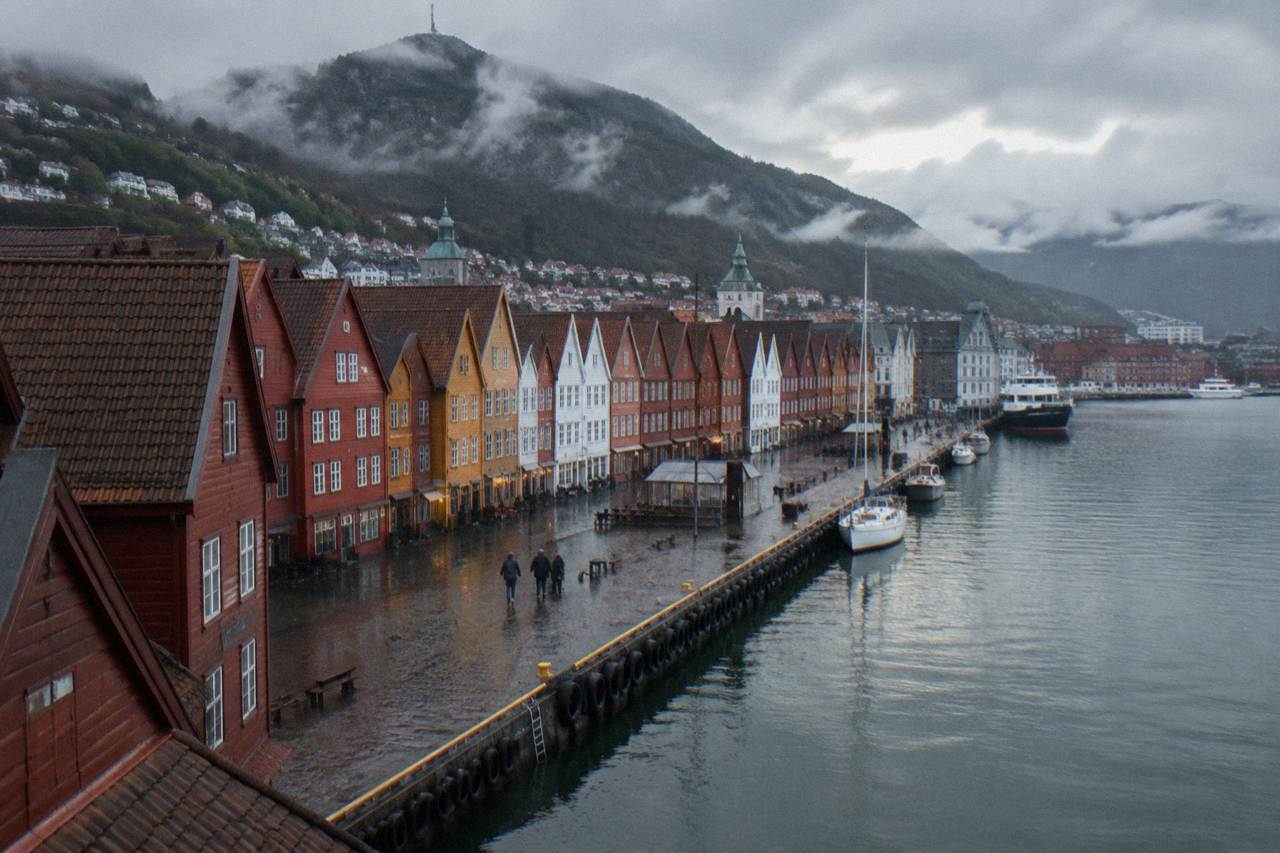
Bergen, Norway is a city and municipality in Vestland county, set on the country's southwestern coast where the mountains drop almost straight into the sea. The kommune's own statistics put the population at 294,860 as of 1 January 2026, and the historic wharf at the heart of the city, Bryggen, has been inscribed on the UNESCO World Heritage List since 1979. Locally the place is also known as the "city of seven mountains," a nickname the job card for this page permits and that no official body has ratified. What follows answers the question of location properly: where Bergen sits, how you get there, and what that coastal setting does to a visit.
Where Is Bergen, Norway?
Bergen is a city and municipality in Vestland county, on the southwestern coast of Norway, sheltered between a working harbor and the steep mountains that give it the local nickname "city of seven mountains." The kommune's own figures list its population as 294,860 as of 1 January 2026, and its Hanseatic wharf, Bryggen, has held UNESCO World Heritage status since 1979. Norway is not an EU member; it is a Schengen Associate applying the Schengen acquis.
That single sentence carries most of what a map question really asks. Vestland is one of Norway's western counties, the region travelers usually picture when they imagine fjords, and Bergen is its administrative home and by far its largest city. The city grew around a harbor facing the sea lanes of the North Atlantic, and the modern visitor still arrives at that same waterfront, whether by plane, train, cruise ship or the small ferries that thread the nearby fjords. The currency everywhere in the city is the Norwegian krone, NOK, and no Bergen-specific tourist tax has been verified, so do not plan for one.
The setting is the part worth dwelling on. Mountains, water and roughly 294,860 people are compressed onto a narrow coastal shelf, which is why the city climbs its hillsides in stacked rows of wooden houses rather than spreading outward the way flat-terrain capitals do. Sandviken and Nordnes, the old peninsula neighborhoods, wrap around the harbor on either side of the city centre, and the two mountains visitors climb most, the ones carrying the funicular and the cable car, sit effectively inside the built-up area. A first-time visitor who expects a compact, walkable core with serious terrain on every edge has the right mental picture.
Where Is Bergen On The Map Of Norway?
Bergen lies on Norway's western, ocean-facing side, in the county of Vestland, at the head of a network of fjord inlets on the southwestern stretch of the country's long coastline. It is not on the Oslo side of the country or in the Arctic north; it sits among the fjords of western Norway, with the Sognefjord and Hardangerfjord regions as its inland neighbors and the open sea directly to the west.
On a paper map of Norway, find Oslo in the southeast, then run your eye west and slightly north along the southern bulge of the country until the coastline shatters into fjords. Bergen is at the heart of that broken coast. The city is the natural gateway to western Norway's fjord country, which is why so much of the country's classic tourist infrastructure, the scenic railway, the fjord boats, the coastal steamer, either starts here or passes through. For a decision many visitors face between the two cities, the comparison piece on Oslo versus Bergen goes deeper than geography.
Getting oriented on arrival is easier than the terrain suggests. The centre is compact enough that most of it can be covered on foot in a couple of hours, and the questions of how long to allow overall are handled in how many days in Bergen is enough. When your time is short, sightseeing products compress the orientation problem, and the trio below is a fair cross-section of the ways this site's roster covers the city.
How Do You Get To Bergen, Norway?
Bergen is reached mainly by air into Bergen Airport, Flesland, which sits south of the city on the Bybanen light rail's line 1, or by rail over the mountains from Oslo, or by ship along the coast. The Bybanen airport line is included free with the Bergen Card, while the Flybussen airport coach is not; a single Skyss ticket in zone A costs 51 NOK, per the visitbergen.com transport page and the 2026 Bergen Card flyer.
The airport connection is the one most foreign visitors use. The Bybanen light rail runs from Flesland into the city centre, and the Bergen Card flyer is explicit that Skyss buses and the Bybanen across Vestland county, including the airport line, are covered by the card, which makes the card a transport pass as much as an attraction pass. The airport's own operations matter only rarely to a visitor: a scheduled overnight runway-lighting maintenance closure runs 19 May to 5 June 2026, between 22:30 and 03:30 UTC on weekday nights only, with no terminal closure involved. Anyone landing outside those hours notices nothing.
The train from Oslo is the scenic arrival, crossing the mountain spine of southern Norway before dropping to the coast. Whether the long rail journey is worth it compared with a short flight is its own question, weighed in detail in is a train ride from Oslo to Bergen worth it. Arriving by sea is the third option: Bergen's port publishes a live list of arrivals, and cruise passengers dock within walking distance of the wharf.
| Getting around Bergen | Figure | Notes |
|---|---|---|
| Skyss single ticket, zone A | 51 NOK | Buses and Bybanen, per visitbergen.com |
| Bergen Card, 24 hours | 400 NOK adult | Free Skyss and Bybanen, incl. airport line |
| Bergen Card, 48 / 72 / 96 hours | 500 / 600 / 700 NOK | Child prices 125 / 150 / 175 NOK |
| Flybussen airport coach | Not included with the card | A discount may apply; check the operator |
| Fløibanen return, 1 Apr-30 Sep | 200 NOK adult | 145 NOK from 1 Oct-31 Mar |
| Ulriken643 cable car return | 435 NOK adult | Confirmed on ulriken643.no |
For visitors who prefer someone else to handle the moving parts on day one, sightseeing products slot in neatly here.
Why Did Bergen Grow On Norway's Southwestern Coast?
Bergen exists where it does because the spot was a nearly ideal medieval harbor: sheltered, ice-free through winter, and positioned on the sea route between the North Atlantic and the fishing grounds of western Norway. German merchants of the Hanseatic League established a trading post here, and the Bryggen wharf they built is the structure UNESCO inscribed in 1979, still standing, rebuilt in its own image, at the center of the modern city.
The Hanseatic chapter explains the city's look more than any other single fact. The wooden gable houses of the wharf were warehouses and offices for dried fish and grain moving through the port, and the district around them, with the Hanseatic Museum and the fortress at Bergenhus, preserves that commercial layer. The kommune's population figure of 294,860 makes Bergen the big city of the west coast today, but its architecture keeps insisting it was built by merchants, not by planners.
It is worth being honest about one constraint on this page: nobody writing for Bergen Travel Guide has been to Bergen, and the site's About page says so. Every figure here is attributed to its primary source, the kommune's population page, the Bergen Card's own 2026 flyer, yr.no's Bergen station table, UNESCO's own listing, because that is the honest way to write about a place from a desk.
Where Is Bergen Relative To The Fjords?
Bergen sits at the coastal mouth of western Norway's fjord system, with the Hardangerfjord region to its south and east and the Sognefjord system, including the Nærøyfjord and Flåm, to its north and west inland. The Mostraumen branch of the Osterfjord is close enough to the city that a fjord cruise can leave from the harbor and be back within the same half day.
This is the geographic fact that makes Bergen the standard base for fjord trips. The long fjords cut inland from the coast east and north of the city, so a day trip from Bergen is a real proposition rather than a marketing phrase, a question this site answers directly in can you do a day trip to the fjords from Bergen. The classic round trip is the Norway in a nutshell route, and its value case is argued in is the Norway in a nutshell tour worth it.
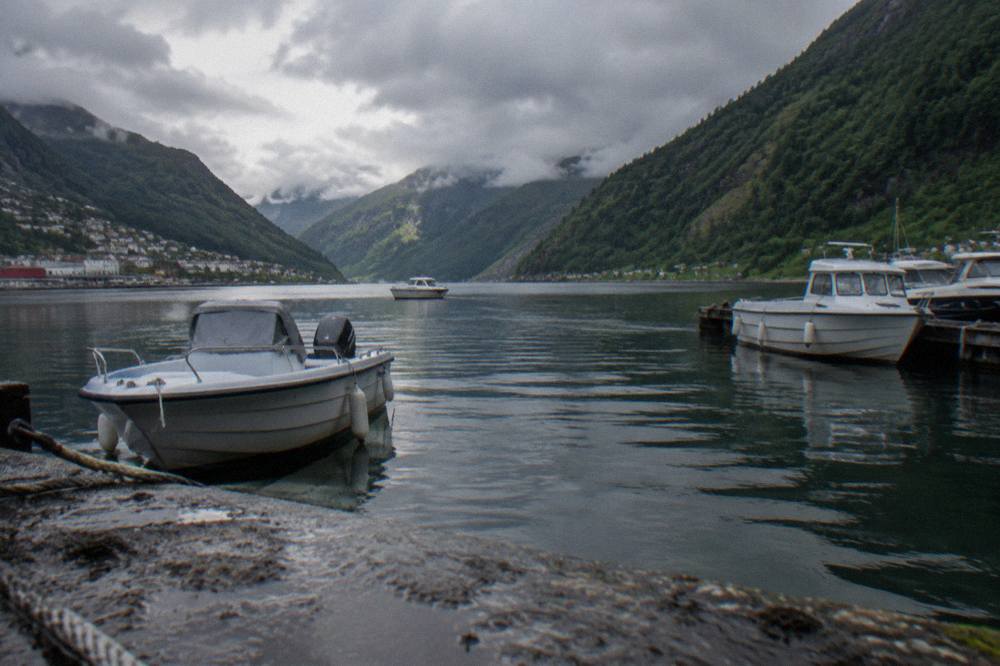
For visitors who want the fjord experience without surrendering a full day, the Mostraumen option is the geographically nearest one, and it is one of the strongest products on this site's roster.
What Does Bergen's Coastal Location Mean For Its Weather?
Bergen has a temperate oceanic, coastal climate that is wetter than most of Norway's: yr.no's Bergen station table, built on Met Norway data, shows trailing-13-month mean temperatures from -1.4C in January 2026 to 14.9C in July 2026, with 217 days of precipitation recorded across the same period. November was the wettest month in the table at 321.8mm observed, against a 275.0mm normal.
The sea moderates the winters and keeps the summers cool, and the mountains wring rain out of the Atlantic air on a schedule that surprises visitors from drier places. The rain is not a footnote to the city's identity; it is the reason the surrounding slopes are so green, and it is why packing advice for Norway leans hard on waterproof layers. The wettest-month question in detail is covered in what is the rainiest month in Bergen, Norway.
| Month | Mean temp (observed) | Precipitation (observed) |
|---|---|---|
| October 2025 | 9.7C | 231.9mm |
| November 2025 | 6.0C | 321.8mm |
| January 2026 | -1.4C | 82.0mm |
| April 2026 | 7.9C | 65.9mm |
| July 2026 | 14.9C | 184.2mm |
| August 2026 | 14.3C | 243.6mm |
No daylight-hours or sunshine-hours figure for Bergen could be sourced, so none is stated here. The temperature extremes in the same trailing-13-month table ran from a high of 28.0C on 14 August to a low of -11.3C on 8 January.
What Is The Best Time Of Year To Visit Bergen?
The warmest months in the trailing-13-month Bergen station table were July 2026 at 14.9C and August 2026 at 14.3C, with June at 14.4C, which makes the June-to-August window the standard answer for comfort, and it is also the window that stacks the city's biggest festivals, led by the Bergen International Festival from 27 May to 10 June 2026.
Shoulder seasons trade crowds for rain odds, and winter brings the Christmas market at Festplassen, running 20 November to 22 December 2026 with free entry, plus Pepperkakebyen, the gingerbread city, from 14 November 2026 to 10 January 2027. Anyone planning around specific festivals should verify dates close to travel, since programs shift and 2027 dates are not yet announced across the board. The festival calendar below carries only dates confirmed from official festival sites.
| Festival or event | 2026 dates | 2027 dates |
|---|---|---|
| Bergen International Festival (fib.no) | 27 May-10 June | 26 May-12 June |
| Bergenfest (Bergenhus Festning) | 10-13 June | 9-12 June |
| Nattjazz (USF Verftet) | 29 May-6 June | 28 May-5 June |
| Bergen International Film Festival | 14-22 October | Not yet announced |
| Bergen Christmas Market at Festplassen | 20 Nov-22 Dec | Not yet announced |
Eating your way through the city is one of the best uses of a mild-weather day here, and the food question has its own deep answer in what food is Bergen famous for. For a guided version that pairs the market with a funicular ride, the operator's live listing carries current pricing for the Taste of Bergen food tour with the Fløibanen funicular, and the sightseeing trio below rounds out the options.
Common Questions About Bergen's Location
Where is Bergen, Norway?
Bergen is a city and municipality in Vestland county on Norway's southwestern coast, between a harbor and the mountains locals count as seven. The kommune lists its population as 294,860 as of 1 January 2026, and its Bryggen wharf has been UNESCO World Heritage listed since 1979.
Is Bergen in the EU?
No. Norway is not an EU member. It is an EEA/EFTA member and a Schengen Associate applying the Schengen acquis, which is how border rules actually work for visitors, and no specific ETIAS go-live date is stated on this site because none was independently verified.
What county is Bergen in?
Vestland county, the western fjord county of Norway, and Bergen is its administrative center and largest city.
What currency is used in Bergen?
The Norwegian krone, NOK. Prices on this site are given in NOK where a primary source states them, such as the 2026 Bergen Card flyer.
Is Bergen close to the fjords?
Yes, in the sense that matters to travelers. The Hardangerfjord and Sognefjord systems lie east, north and south of the city, and the Mostraumen branch of the Osterfjord is reachable as a half-day cruise from the harbor.
Does it rain all the time in Bergen?
Not all the time, but often. yr.no's Bergen station table recorded 217 days with precipitation across the trailing 13 months, and the climate is temperate oceanic, wetter than most of Norway, so pack for rain in any month.
Bergen's location is the short answer and the long story at once: a Hanseatic harbor city on Vestland's wet southwestern coast, tucked under seven mountains at the gateway to the fjords, reachable by light rail from Flesland or by train across the mountains from Oslo, and best understood by looking at the harbor first and the map second.