What Not To Do As A Tourist In Norway?
The mistakes visitors make in Bergen and across Norway, from underestimating rain to assuming the euro works, with verified prices and local transport facts.
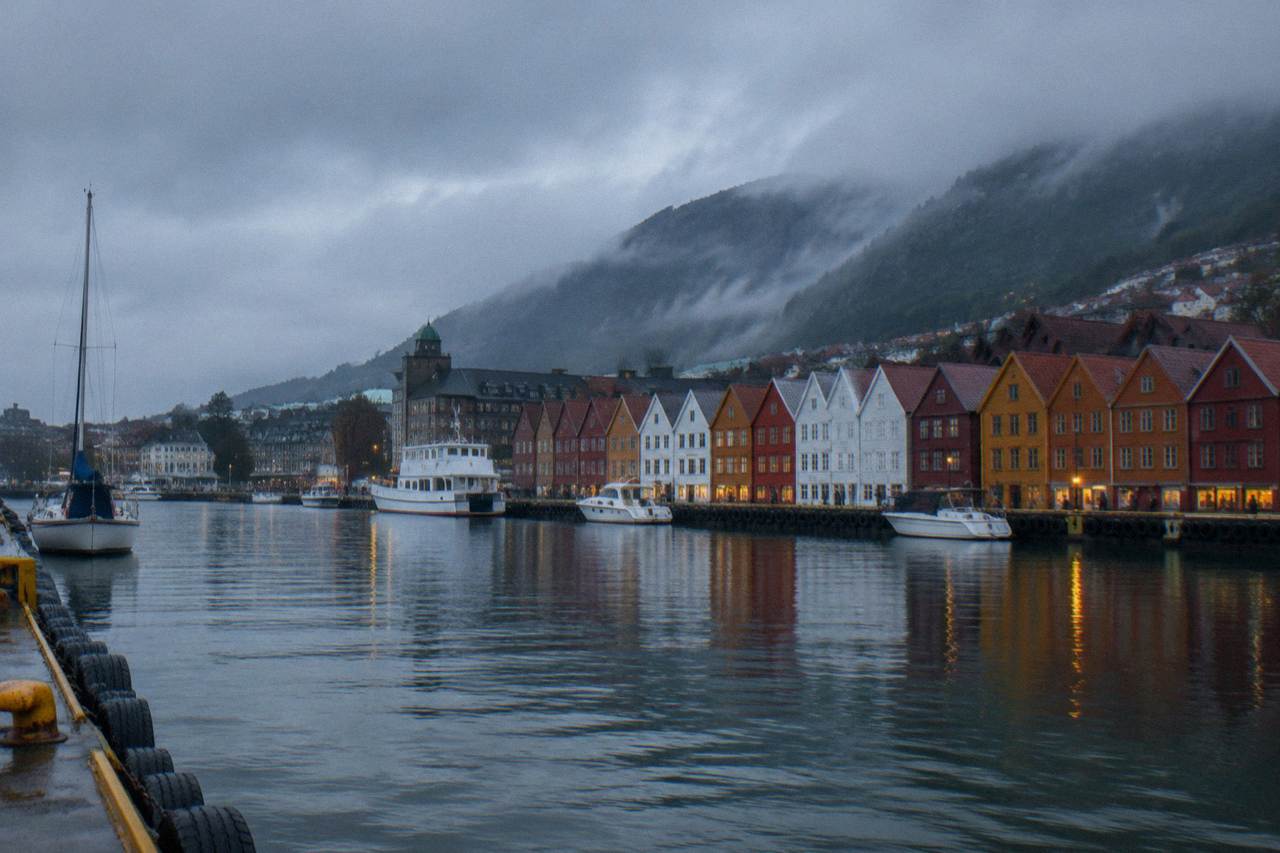
Bergen, a city and municipality in Vestland county on Norway's southwestern coast, was built on trade rather than sunshine, and it still behaves that way. The old Hanseatic wharf is UNESCO-listed, the mountains crowd in on three sides, and the rain arrives on roughly 217 days in a trailing 13-month window, according to Met Norway's own station table for the city. Visitors who arrive prepared enjoy it enormously. Visitors who arrive with assumptions tend to spend their trip wet, over budget, and confused at the checkout. This page collects the mistakes worth avoiding, in the city and beyond it.
What Not To Do As A Tourist In Norway?
Do not underestimate the weather, do not assume Norway uses the euro, do not confuse the country with an EU member, and do not treat local transport and attractions as interchangeable with the rest of Europe. Norway is a non-EU EEA and EFTA member and a Schengen Associate, not an EU state, the currency is the Norwegian krone, and the coastal climate is wetter than almost anywhere else on the mainland. Every one of these facts changes how a trip should be planned.
The single most common mistake is packing for a generic European city break. Bergen's climate is temperate oceanic. Met Norway's table for the Bergen station shows observed monthly means ranging from -1.4C in January 2026 to 14.9C in July 2026, with November the wettest month in the trailing window at 321.8mm of precipitation against a 275.0mm normal. A thin jacket and city shoes will not survive that. Rain layers, real footwear, and a willingness to keep walking in drizzle are the basic kit. The question of wardrobe comes up so often that this site covers it separately in what to wear in Norway.
The second mistake is money. Norway is not in the EU, does not use the euro, and prices are quoted in Norwegian kroner (NOK). Card payment is near universal, and many visitors ask whether Apple Pay works in Bergen before they arrive; the short answer is that contactless payment is standard almost everywhere. What is not standard is arriving with euro cash and expecting anyone to accept it.
The third is treating Bergen as a smaller Oslo. The two cities are compared constantly, and the honest comparison lives in which is nicer, Oslo or Bergen. Bergen is a former Hanseatic League trading post whose wealth came from stockfish and shipping, and its rhythm, geography, and weather are entirely its own.
Do Not Underestimate The Rain In Bergen
Met Norway's station table records 217 days with precipitation over the trailing 13 months and a November peak of 321.8mm observed rainfall against a 275.0mm normal. The mistake is not the rain itself, it is planning as if it were optional. Locals do not cancel plans for drizzle, and neither should a visitor, but the clothing and the daily schedule have to be built around it.
The yr.no statistics table for the Bergen station, which carries Met Norway's data directly, shows the shape of a year here. The driest month in the trailing window was April 2026 at 65.9mm, still more rain than many European cities see in their wettest month. The numbers below are drawn from that table, observed values rather than normals, and they explain why the shoe question matters more than the sweater question.
| Month (observed) | Mean temperature | Precipitation |
|---|---|---|
| January 2026 | -1.4C | 82.0mm |
| April 2026 | 7.9C | 65.9mm |
| July 2026 | 14.9C | 184.2mm |
| November 2025 | 6.0C | 321.8mm |
Three practical consequences follow. First, indoor plans should exist for every day, not as a fallback but as half of the itinerary; the museums, from the Hanseatic Museum to KODE, are covered in detail on this site. Second, hikes such as the Stoltzekleiven stair climb should only be attempted in decent visibility and proper shoes, because wet timber and wet rock are genuinely slippery. Third, do not trust a sunny forecast beyond the morning. The right mental model for a Bergen day is layered, changeable, and occasionally dramatic.
The rain also shapes what "wasting money" looks like. Buying a single-trip Skyss ticket at 51 NOK for zone A every time it rains adds up quickly, while the official 2026 Bergen Card flyer lists 24-hour cards at 400 NOK for an adult and 100 NOK for a child aged 3 to 15, with 48h, 72h, and 96h options rising to 700 NOK, and all of them include free Skyss buses and Bybanen light rail across Vestland county, including the airport line. Sitting in a hotel because the weather turned is the most expensive mistake of all.
Do Not Get The Money And The Entry Rules Wrong
Norway uses the Norwegian krone, not the euro, and it is a Schengen Associate country through the EEA and EFTA rather than an EU member, so do not describe or plan arrival as an EU crossing. Prices in Bergen are high and are quoted in NOK everywhere. No Bergen-specific tourist tax or visitor levy has been sourced, so do not budget for one either, and do not repeat a claim about one from another site.
The currency point sounds obvious until the first supermarket receipt. The krone floats, so any figure quoted in another currency goes stale, and this page will not convert anything. What can be stated firmly, because the official Bergen Card flyer published on 12 May 2026 lists it, is the attraction price structure in kroner: Fløibanen's return funicular ticket at 200 NOK for an adult from 1 April to 30 September and 145 NOK from 1 October to 31 March, Ulriken643's return cable car ticket at 435 NOK for an adult, and the Aquarium at 380 NOK in its winter window. Those are the flyer's ordinary prices, not guesses.
| Item (2026 Bergen Card flyer figures) | Adult price | Child price |
|---|---|---|
| Bergen Card 24h | 400 NOK | 100 NOK |
| Bergen Card 48h | 500 NOK | 125 NOK |
| Bergen Card 72h | 600 NOK | 150 NOK |
| Bergen Card 96h | 700 NOK | 175 NOK |
| Fløibanen return, 1 Apr - 30 Sep | 200 NOK | 100 NOK |
| Fløibanen return, 1 Oct - 31 Mar | 145 NOK | 75 NOK |
| Ulriken643 return | 435 NOK | listed on flyer |
On entry rules, the mistake to avoid is certainty. Norway applies the Schengen acquis without being an EU member, and any specific date for a new electronic travel authorisation system has slipped repeatedly, so no date belongs on a page like this one. If a trip depends on entry rules, check the official Norwegian immigration authority directly before travelling rather than a blog.
Tipping causes unnecessary anxiety for the same reason: it is not obligatory in Norway, and rounding up or leaving a small amount in restaurants is appreciated rather than expected. The genuinely expensive habits are taxis taken out of habit, restaurant wine, and buying water in bottles, which is unnecessary given the tap water quality.
Do Not Eat Badly Or Skip The Local Food Culture
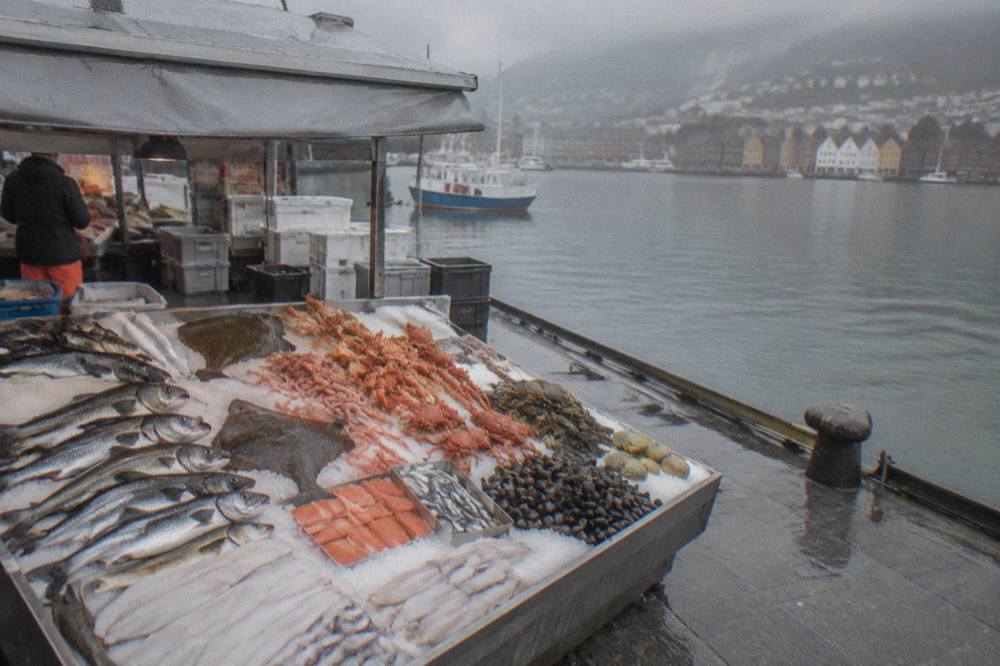
Do not eat only at the first restaurant within sight of the Fish Market, do not assume Norwegian food is limited to salmon, and do not leave without trying the local specialties that actually define the city. Bergen's food identity runs through fresh fish, lamb, and baked goods, and the question of what food Bergen is famous for has a long and specific answer worth reading before booking a table.
The fish market at the harbour is a real institution, but it sits at the top of the visitor funnel, and the streets a few blocks inland hold most of the character. For orientation on the deeper food culture, this site's answer to what food Bergen is famous for covers the specialties, and the guide to where locals eat in Bergen covers the addresses. A common failure mode is treating a two-night stay as too short for any of it, which brings up the question of how many days in Bergen is enough; the honest answer is that food deserves at least one dedicated evening.
For visitors who want the food culture explained rather than discovered by trial and error, the site's featured food and culture walk is a sensible shortcut, and its live details, price, and rating are on the operator's own listing rather than restated here: Check availability. A guided walk of this kind does two things at once, it feeds you and it explains what is on the plate, which matters in a country where the menu terms are not always transparent.
Do Not Treat The Fjords As All The Same
Do not book the first fjord trip that appears in a search result, because the fjords reachable from Bergen differ enormously in character, duration, and price. Hardangerfjord to the south is orchard country with waterfalls and ferry crossings, Mostraumen is a narrow, dramatic arm reached in half a day, and the Sognefjord routes toward Flam are full-day commitments. Choosing randomly wastes one of the few genuinely unrepeatable days of a trip.
The comparison questions this site fields most are whether Hardangerfjord is worth visiting and whether Sognefjord is worth it, and the answer to both is yes, but for different travellers on different schedules. The related mistake is assuming a fjord day cannot be done from the city at all, which the site answers directly in whether a day trip to the fjords from Bergen is possible. It is, and it is the single most common reason people give for Bergen being worth visiting in the first place.
One trip that suits the mistake-avoidance mindset particularly well is the cruise to Rosendal on the Hardangerfjord, a roughly seven-hour boat day that needs no car, no planning, and no ferry timetable decipherment. Its current price, rating, and availability render from the operator's listing, never from memory:
A short paragraph of practical caution belongs here too. Fjord boats run to timetables that tighten outside summer, the same wet climate applies out on the water as in the city, and the bar for footwear does not drop just because the day involves sitting down. Book the day for the weather window, not the calendar.
Do Not Assume The Transport Behaves Like Home
Do not board the Bybanen light rail or a Skyss bus without a valid ticket, do not expect an airport bus fare to match a figure quoted on a random forum, and do not plan around a rigid timetable that maintenance schedules can break. The Bybanen line 1 connects Bergen Airport at Flesland to the city centre and is included free with the Bergen Card, while the airport bus is not included in that card's free-transport coverage. Ticket inspection is real and fines are not negotiable.
The transport mistakes are mostly small and avoidable. A single adult Skyss ticket for zone A costs 51 NOK, a figure this site verified directly from visitbergen.com's transport page and the Bergen Card flyer. Beyond that single number, do not trust journey times or fares copied from other sites, because several airport figures are deliberately absent here rather than guessed.
The deeper transport mistake is over-planning. Visitors who build hour-by-hour itineraries around fixed connections tend to lose whole afternoons to a delayed ferry or a closed funicular. Build each day around one anchor, a fjord boat, a museum block, a mountain, and leave slack around it. Bergen rewards loose plans more than tight ones, because the city is compact enough that a cancelled plan is usually a five-minute walk from a better one.
Common Questions About Tourist Mistakes In Norway
What not to do as a tourist in norway?
Do not underestimate the rain, do not assume the euro is accepted, do not confuse Norway with an EU member, do not skip the local food, do not book fjord trips at random, and do not ride public transport without a valid ticket. Norway is a Schengen Associate, the currency is the Norwegian krone, and Bergen's climate is temperate oceanic with 217 days of precipitation in the trailing 13 months.
Is Norway in the EU?
No. Norway is an EEA and EFTA member that applies the Schengen acquis as a Schengen Associate country, but it is not an EU member state and it does not use the euro. The currency is the Norwegian krone (NOK).
What should I not wear in Bergen?
Do not rely on jeans and city shoes as your only option, because the rain is persistent and the ground is often wet. Waterproof layers and real footwear matter more than warmth most of the year. The site's page on wearing jeans in Norway covers the wardrobe question in detail.
Do I need cash in Norway?
Almost certainly not. Card and contactless payment, including phone-based payment, is accepted almost everywhere in Bergen. Do not arrive expecting to change euro cash, and do not expect anyone to quote you prices in euro, because the currency is the Norwegian krone.
Is a fjord day trip from Bergen actually possible?
Yes. Mostraumen, the Hardangerfjord, and the Sognefjord routes toward Flam are all reachable as organised day trips from the city, with durations from half a day to around thirteen hours depending on the route. The choice between them is about character and schedule, not feasibility.
How many days do I need in Bergen?
Two full days covers the city itself comfortably, including Bryggen, a mountain, and the museums, with a third day for a fjord trip. Fewer than two days is the mistake, not the city, because the most memorable excursions need a full day each.
Every mistake on this page shares one root cause: arriving with a template of Europe that Bergen does not fit. Replace it with the city's own facts, kroner not euro, rain layers not sunscreen assumptions, a Schengen Associate not an EU member, and the trip tends to go right on its own. Further planning help, including itinerary outlines and attraction guides, sits across Bergen Travel Guide.