What Are Bergen's Hidden Gems?
The quiet corners of Bergen, Norway: stone churches, small museums, local food lanes and winter secrets, with 2026 prices from the official Bergen Card flyer.
Bergen, on Norway's southwestern coast in Vestland county, hides its best sights in plain sight. The former Hanseatic trading post that UNESCO's own listing says joined the World Heritage List in 1979 pulls every visitor toward Bryggen's painted wharf, and rightly so, but a short stroll away sit stone churches, merchant house museums, harbour bath houses and shop lanes that almost no itinerary names. The kommune's own population page counts 294,860 residents, and most of them never queue at the fish market, which tells you where the real city actually is.
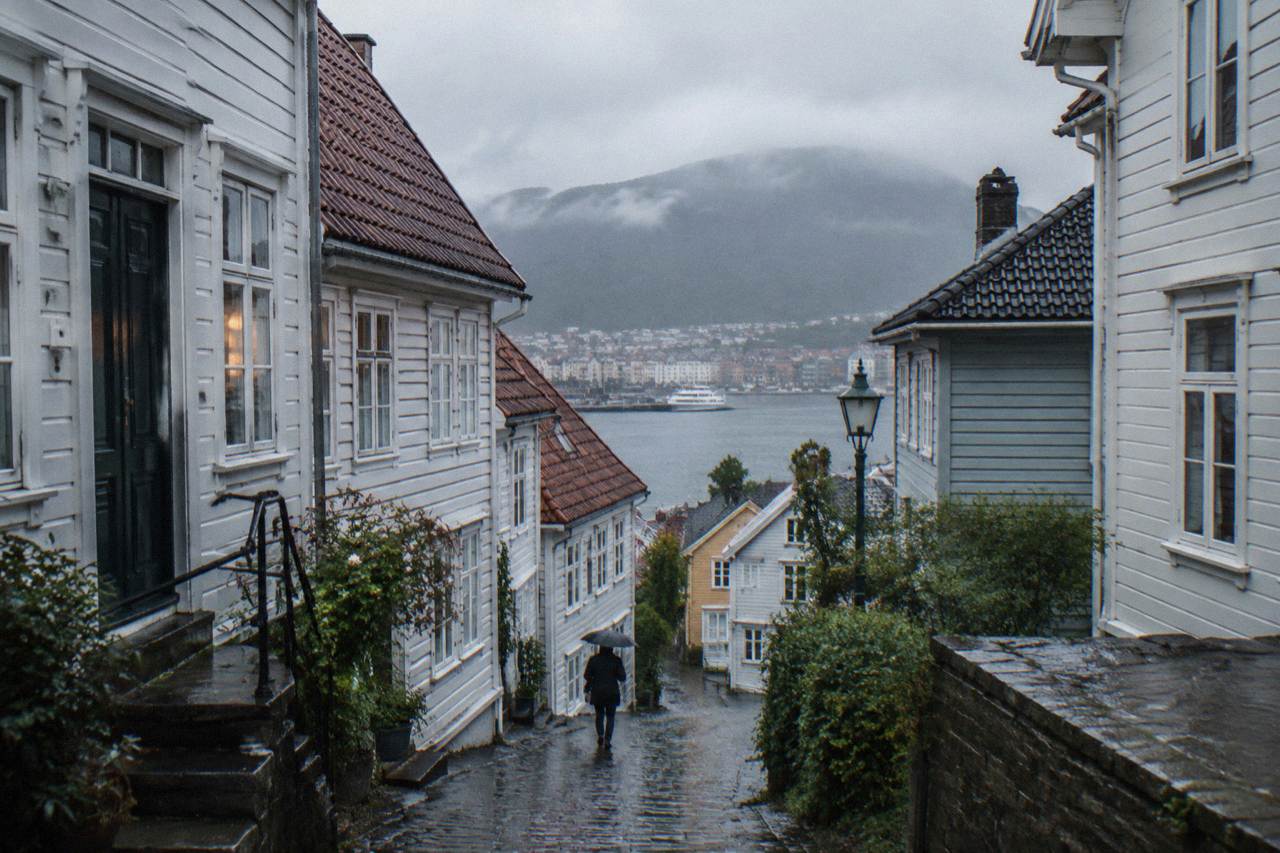
What Are Bergen's Hidden Gems?
Bergen's hidden gems are the quiet layer beneath the famous wharf: the stone interior of St Mary's Church, the Hanseatic Museum's merchant rooms, Haakon's Hall inside Bergenhus Fortress, the KODE art galleries, the winter gingerbread city of Pepperkakebyen, and the shop lanes of Marken and Skostredet, all in central Bergen. The 2026 Bergen Card flyer prices several of them at 120 to 170 NOK, making the quiet side of the city cheaper than its headline sights.
The pattern across all of them is the same. They sit minutes from the cruise-ship berth, they cost less than the funicular, and they are empty precisely when Bryggen is full. visitbergen.com's own Bergen Card flyer lists exact 2026 prices for almost every sight in this article, which makes the quiet layer unusually easy to plan on a budget.
The distinction matters for how you spend a day. The headline attractions, Fløibanen and the Ulriken643 cable car, are views from above. The gems below are the city itself: wood, stone, salt and candlelight. A good plan does both, and the planning guide on Bergen Travel Guide splits the difference day by day.
Here is what the quiet layer costs, straight from the 2026 Bergen Card flyer and the operators' own price pages:
| Sight | Ordinary adult price (NOK) | Source note |
|---|---|---|
| Fløibanen funicular return | 200 (1 Apr, 30 Sep) / 145 (1 Oct, 31 Mar) | Bergen Card flyer price table |
| Ulriken643 cable car return | 435 | Confirmed on ulriken643.no |
| KODE Art Museums | 200 as listed with the Bergen Card | Flyer listing; standalone price not published there |
| The Aquarium | 380 (1 Nov, 28 Feb) / 380, 415 (1 Mar, 31 Oct) | Bergen Card flyer |
| Bryggen Museum | 170 ordinary / 85 with Bergen Card | Bergen Card flyer |
| Hanseatic Museum | 160 with guided visit | Bergen Card flyer |
| Haakon's Hall | 120 | Bergen Card flyer |
| Skyss single ticket, zone A | 51 | visitbergen.com transport page |
Read that table as a strategy. Everything from Bryggen Museum downward costs less than a single Skyss ticket more than the cheapest headline sight, and the cheapest three of them together still cost less than one Ulriken643 return.
Which Quiet Corners Of Central Bergen Do Most Visitors Walk Past?
The corners that visitors walk past sit closest to the crowds: St Mary's Church, the stone church tucked between Bryggen and the fish market; the Nordnes peninsula, where old wooden houses line the streets running out toward the harbour bath; and the lanes of Sandviken on the northern shore of the harbour. All three are free to wander from the outside, and all three go almost silent once the day-trip crowds thin in the late afternoon.
Start with St Mary's Church in Bergen, because it is the most paradoxical gem in the city. Visitors photograph its stone towers from Bryggen's boardwalk every minute of the day, then never cross the street. The building stands between the two busiest places in Bergen, which is exactly why its pews stay quiet while the wharf beside it hums. Go when a service is not running, sit for a while, and the whole city outside becomes the attraction.
Nordnes works differently. The peninsula curls out between the harbour and the fjord, and its streets climb through old wooden housing toward the water on three sides. The harbour bath at its tip is the local answer to the question of what to do with a coastline this grey-green. The kommune's page lists the peninsula's museums and green spaces as everyday city amenities, not attractions, which is the point: you are sharing Bergen with Bergen.
Sandviken, across the harbour, is the quietest of the three. White and ochre wooden houses stack up the hillside north of the fortress, and the streets narrow until the cruise ships disappear behind them. It is a place for an unhurried hour rather than a checklist item, and it costs nothing at all.
If you would rather have a local frame the story while you walk, these guided options cover the same ground with a guide who knows which doorway belongs to which century:
The bands above are the two formats that suit a hidden-gems day best: small-group history walks that route through the quiet lanes, and a food-led walk that ends with a ride up the Fløibanen funicular, whose return ticket the Bergen Card flyer prices at 200 NOK in summer and 145 NOK in winter. Whichever you pick, book the first departure of the morning, when the streets still belong to the people who live on them.
Which Lesser-Known Museums Reward A Slow Hour In Bergen?
The museums that reward a slow hour are the small ones on the historic strand: the Hanseatic Museum, at 160 NOK with a guided visit; Bryggen Museum at 170 NOK ordinary, or 85 NOK with a Bergen Card; Haakon's Hall inside the fortress at 120 NOK; and the KODE galleries, listed with the Bergen Card at 200 NOK. The Bergen Card's own flyer carries all four prices, and the 24-hour card itself costs 400 NOK.
The Hanseatic Museum is the one most first-time visitors get wrong, because they assume it duplicates Bryggen's wharf. It does the opposite: it takes you inside the merchant life the wharf only shows from outside. The guided visit listed in the flyer is the format to choose, since the rooms explain themselves poorly and the guides explain them well. The museum's own listing describes trading rooms kept as the Hanseatic merchants left them, which is a rarer thing on this coast than the view from any mountain. The wider set of guides lives on Bergen Travel Guide.
Bryggen Museum, at the head of the wharf, holds what the fires and the excavations underneath the wooden buildings produced. The 85 NOK Bergen Card rate is one of the steepest discounts in the whole flyer, close to half the ordinary 170 NOK price, so anyone holding the card should treat it as a priority rather than a maybe. Haakon's Hall, the great stone ceremonial hall inside the fortress, is the shortest visit of the four and the most solemn, and at 120 NOK it costs less than a fish-market lunch.
KODE is the sleeper. The Bergen Card flyer lists it at 200 NOK, so treat 200 NOK as the card-linked figure rather than a walk-up price. Inside, several connected buildings hold everything from old masters to Norwegian landscape painting, and because the complex faces the city's small lake rather than the harbour, the crowd pressure never builds the way it does at Bryggen.
The card math is worth pausing on. A 24-hour Bergen Card at 400 NOK also includes free Skyss buses and the Bybanen light rail across Vestland county, including the airport line, so the museum discounts stack on top of transport you were likely buying anyway. Two card-rate museum visits plus a couple of bus rides and the card has largely paid for itself before dinner.
Where Do Bergen Locals Eat Away From The Fish Market?
Locals eat behind the fish market, not at it: the small kitchens and bakeries of the lanes around Marken and Skostredet, the cafés serving Bergen's everyday food rather than harbour-front souvenir plates, and the restaurants a few streets uphill where the pricing loosens up. A guided option, the Taste of Bergen food walk, pairs those stops with a Fløibanen funicular ride, and the question of what to order has its own answer page.
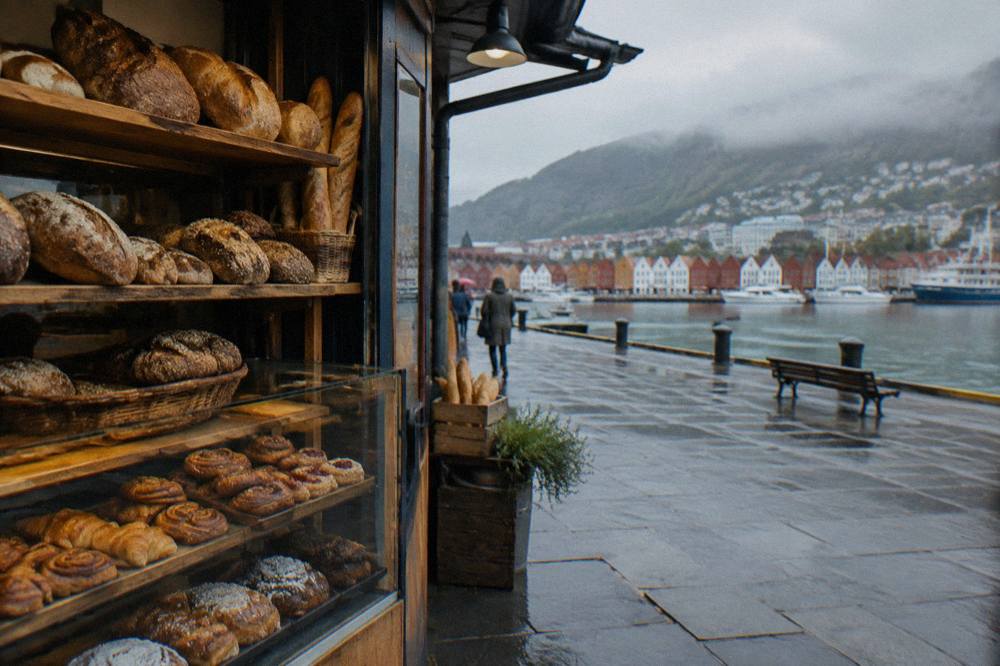
The fish market is a lovely place to look at langoustines and an expensive place to eat them. The streets behind it, running from Marken toward Skostredet, are where the city actually feeds itself: bakeries, small counters and serious kitchens with none of the harbour-front rent baked into the menu. The difference is not subtle, and it is the single fastest way to feel like a resident rather than a caller.
What to order is a whole topic of its own, and Bergen's local food specialities cover it in detail, from the everyday baked goods to the winter plates that only appear when the cold comes. The short version: follow the queues of people carrying shopping bags, not cameras.
The A Taste of Bergen food tour with the Fløibanen funicular is the guided shortcut through exactly this layer, tasting its way through the local stops and finishing with the funicular rather than a bus. Check availability before locking in your dining plans, since the walk shapes the rest of the day's appetite.
When Should You Hunt For Bergen's Hidden Gems?
The timing depends on what you are hunting: late May to early June packs the city's festivals into one fortnight, the film festival runs 14 to 22 October 2026, and from 14 November 2026 the Pepperkakebyen gingerbread city stays open until 10 January 2027. Rain is a constant rather than a risk, with yr.no's Bergen station table showing 217 days with precipitation across the trailing 13 months, so keep a roofed gem in reserve for every open-air one.
The festival fortnight deserves a special mention, because it is the closest thing Bergen has to a secret season. The official festival sites publish the dates, and the cluster is remarkable: the Bergen International Festival, Bergenfest, Nattjazz and Bergen Pride all land inside the same two weeks in late May and early June.
| Event | 2026 dates | Venue |
|---|---|---|
| Bergen International Festival (Festspillene i Bergen) | 27 May, 10 June | City-wide, official program at fib.no |
| Bergenfest | 10, 13 June | Bergenhus Festning |
| Nattjazz | 29 May, 6 June | USF Verftet |
| Bergen Pride (Regnbuedagene i Bergen) | 29 May, 6 June, parade 6 June | Pride Park in Nygårdsparken and city streets |
| Bergen Matfestival | Around 4, 5 September | Central venues |
| Bergen International Film Festival (BIFF) | 14, 22 October | Various venues |
Full details live on the official festival sites, and the guide to Bergen's festivals and events tracks them across the year. What the table hides is the effect on the hidden gems: during festival fortnight the headline venues fill, and the quiet layer empties even further, which makes late May the best hidden-gem weather window in the calendar.
Winter is the specialist's season. From 14 November 2026 the Pepperkakebyen, the gingerbread city built each year, runs until 10 January 2027, and it is the single most Bergen thing on this list: a city within the city, rebuilt annually out of baked goods by its own residents. The dark months also cut the queues everywhere else.
The weather explains why planning matters here. yr.no's Bergen station table shows monthly mean temperatures from -1.4C in January 2026 to 14.9C in July 2026, with November the wettest observed month at 321.8 mm against a 275.0 mm normal. The lesson is not to avoid any month, it is to pair every outdoor gem with a museum or a bakery two streets away.
| Month (observed) | Mean temperature (°C) | Precipitation (mm) |
|---|---|---|
| Sep | 13.1 | 206.6 |
| Oct | 9.7 | 231.9 |
| Nov | 6.0 | 321.8 |
| Dec | 5.8 | 303.5 |
| Jan | -1.4 | 82.0 |
| Feb | 0.8 | 133.4 |
| Mar | 5.9 | 243.9 |
| Apr | 7.9 | 65.9 |
| May | 9.9 | 127.4 |
| Jun | 14.4 | 165.7 |
| Jul | 14.9 | 184.2 |
| Aug | 14.3 | 243.6 |
Those are observed figures from the trailing 13 months at the Bergen station, not long-run averages, so read them as a recent year rather than a promise. January's 82.0 mm stands out as the driest entry in the whole table, which is worth knowing if your idea of a hidden gem is a wet street with nobody on it.
If all of this stretches your itinerary, the honest answer is that the hidden layer needs its own half-day, and how many days in Bergen is enough is the question to settle before you book anything. Anyone mixing the quiet corners with the views should also read whether the Bergen funicular is worth it, since Fløibanen at 200 NOK summer or 145 NOK winter is the one headline sight that pairs naturally with a hidden-gem walk.
Whichever format you choose, the small-group walks above are the ones that route through the quiet corners this article describes, and the food-led option adds the funicular at the end. Book the morning slot, carry the rain layer, and leave the fish market to the people who do not know what is behind it.
Common Questions About Bergen's Hidden Gems
What are Bergen's hidden gems?
Bergen's hidden gems are St Mary's Church between Bryggen and the fish market, the Hanseatic Museum's merchant rooms, Haakon's Hall in the fortress, the KODE galleries, the Nordnes and Sandviken lanes, the winter Pepperkakebyen gingerbread city, and the food streets of Marken and Skostredet. Several of them cost between 120 and 170 NOK to enter, per the 2026 Bergen Card flyer.
How much do Bergen's quieter sights cost?
Per the 2026 Bergen Card flyer: Haakon's Hall 120 NOK, the Hanseatic Museum 160 NOK with a guided visit, Bryggen Museum 170 NOK ordinary or 85 NOK with a Bergen Card, and KODE listed with the card at 200 NOK. The Aquarium is 380 NOK in the November to February window and 380 to 415 NOK the rest of the year.
Is the Bergen Card worth it for hidden gems?
Often, yes. A 24-hour card costs 400 NOK for an adult and includes free Skyss buses and Bybanen light rail across Vestland county, including the airport line, plus discounted entry to most of the sights in this article. The Bryggen Museum rate drops from 170 NOK to 85 NOK with the card, one of the steepest discounts in the flyer.
When is Pepperkakebyen open?
The gingerbread city runs from 14 November 2026 to 10 January 2027, per visitbergen.com's listings. It is a winter-only attraction, rebuilt each year, and it is the most family-friendly of Bergen's hidden gems.
Can you find Bergen's hidden gems without a car?
Yes, entirely. The gems in this article all sit in or near the city centre, and the Bybanen light rail and Skyss buses, both included with the Bergen Card, cover everything beyond walking range. A single zone A Skyss ticket costs 51 NOK, per visitbergen.com's transport page, so even without the card the hops are cheap.
What food should you try off the tourist track in Bergen?
Follow the lanes behind the fish market, around Marken and Skostredet, where bakeries and small kitchens serve Bergen's everyday food at local prices rather than harbour-front ones. The bakeries are the fastest win, and the restaurants a few streets uphill are where the pricing loosens up. A guided food walk maps those stops in a single morning.