What Is The Population Of Bergen?
Bergen, in Vestland county on Norway's southwestern coast, has a population of roughly 294,860. What that number means for a visit, and how the city actually feels on the ground.
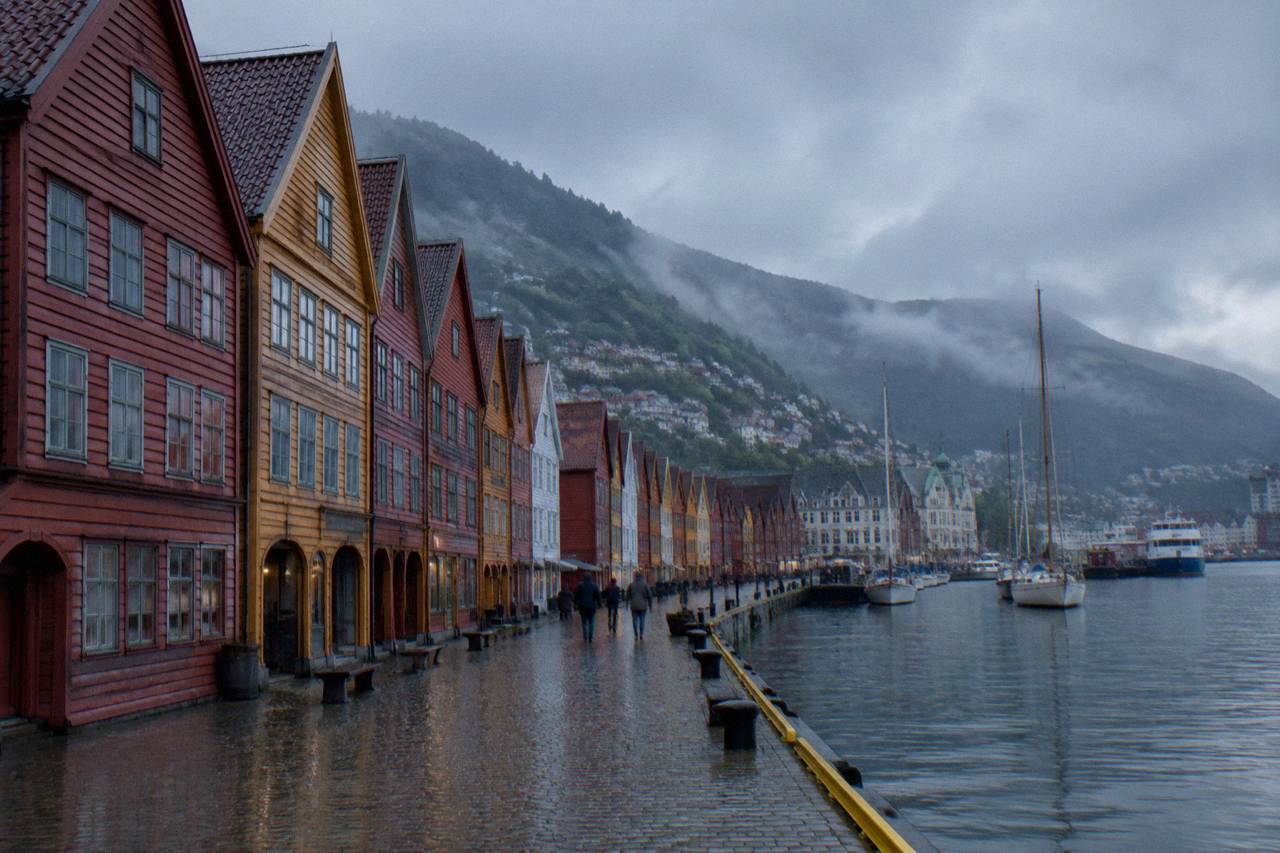
Bergen, the city and municipality in Vestland county on Norway's southwestern coast, has a population of approximately 294,860 as of 1 January 2026, according to the kommune's own statistics page. That single figure covers the whole municipality, not just the historic core of wooden Hanseatic houses that many people picture when they hear the city's name. It is a number worth understanding before a trip, because it explains almost everything about how Bergen behaves: why the centre is walkable, why the mountains feel close, and why a city that was once the Hanseatic League's northern trading post now works as a comfortable base for fjord country.
What Is The Population Of Bergen?
Bergen, a city and municipality in Vestland county on the southwestern coast of Norway, has a population of approximately 294,860 people as of 1 January 2026. The figure comes from the kommune's own population statistics page, and it counts the entire municipality, the built-up centre, the surrounding suburbs and the islands, not merely the historic harbour district of Bryggen that visitors see first.
The number deserves a caveat, and this site gives it to you straight. The 294,860 figure was surfaced through a live search read of the official Bergen kommune statistics page rather than a direct fetch of a national statistics table, and the research file behind this site flags it for a second direct-source confirmation. Treat it as the best current official figure rather than a census-certified constant.
What the figure does tell you, clearly, is scale. This is not a village with a cruise dock, and it is not a sprawling capital either. It is a mid-sized Scandinavian city of roughly 294,860 people, and everything about the place follows from that. The seven mountains that ring the centre are not a distant backdrop; they are a 15-minute funicular ride from the fish market. The population lives around a harbour that still works, with the live list of ship arrivals published by the port on its own site.
Here is the verified picture at a glance, with every figure drawn from the research file behind this site:
| Fact | Figure | What it means for you |
|---|---|---|
| Population (1 Jan 2026) | 294,860 | Whole municipality, per the kommune's page |
| County | Vestland | Western Norway, fjord country |
| Annual days with precipitation | 217 | Trailing 13 months, yr.no Met Norway data |
| Bryggen UNESCO status | Inscribed 1979 | The wharf is a World Heritage Site |
| Currency | Norwegian krone (NOK) | Not the euro; Norway is not an EU member |
| 24-hour Bergen Card | NOK 400 adult / 100 child | Covers buses, light rail and museum discounts |
A note on that last row: Norway is a non-EU EEA/EFTA member and a Schengen Associate, applying the Schengen acquis, but it is not an EU member, so the krone is the currency and EU-crossing language never applies here. For a fuller read on what the city offers at that scale, the what is so special about Bergen Norway page covers the character question this page deliberately skips.
How Big Is Bergen Compared With Oslo And Other Norwegian Cities?
Bergen sits in the second tier of Norwegian cities. Oslo, the capital, sits well ahead of it in population, while Bergen is the dominant city of the west coast, the regional hub for Vestland and the surrounding fjord counties. Bergen is large enough for a full urban weekend and small enough that you never need a car in the centre.
The comparison people actually care about is the feel, not the league table. The question the which is nicer, Oslo or Bergen page takes on in detail has a population-driven answer: Oslo spreads outward across a wide plain, while Bergen's 294,860 people are squeezed between mountains and a fjord, which concentrates everything. Shops, restaurants, the aquarium and the museums sit within a rectangle you can cross on foot in half an hour.
The concentration is not an accident. A former Hanseatic League trading post, Bergen grew on its harbour because the mountains left nowhere else to grow. The population packed itself along the water and up the slopes, which is why neighbourhoods like Sandviken and Nordnes climb hillsides, and why the Fløibanen funicular exists at all: the top of Fløyen was the only direction left for the city to expand into, upward.
If you are planning around that scale, two products fit the geometry of the place especially well. A guided food-and-funicular walk through the centre suits the compact grid, and a small-group walking tour with a local guide does the same for visitors who want history with their legwork. The food tour pairs especially well with a population-dense harbour town whose eating culture grew out of the fish trade.
Between the two, walking tours cover the city proper; if you would rather see what a mid-sized west-coast hub is the gateway to, the fjord day trips are where Bergen's size works in your favour, because a city of 294,860 sustains daily departures that a small town could not.
What Does A City Of Bergen's Size Feel Like On The Ground?
A city of roughly 294,860 people, wedged between seven mountains and a fjord, feels busy in its core and quiet within a ten-minute walk of it. The centre is compact enough to cover entirely on foot, cruise-ship days can crowd the Bryggen wharf, and the surrounding neighbourhoods stay genuinely residential, so the crowds thin fast once you leave the harbourfront. Expect urban energy, not urban anonymity.
The numbers behind the feel are worth knowing. The port publishes a live list of arrivals, so on any given summer day the effective daytime population swells with cruise passengers who never appear in the 294,860 count. No verified annual cruise-call figure exists from a primary source, so none is printed here, but the practical effect is visible: harbourfront crowds peak mid-morning and ease by late afternoon.
Weather does the rest. Bergen is a temperate oceanic city, wetter than most of Norway, and the yr.no Met Norway station table shows why packing matters as much as planning: 217 days with precipitation over the trailing thirteen months, monthly rainfall running from 65.9 mm in April to 321.8 mm in November. Rain here is infrastructure, not incident.
| Month | Mean temperature | Precipitation |
|---|---|---|
| January | -1.4 °C | 82.0 mm |
| April | 7.9 °C | 65.9 mm |
| July | 14.9 °C | 184.2 mm |
| September | 13.1 °C | 206.6 mm |
| November | 6.0 °C | 321.8 mm |
Those are observed figures from the Met Norway table for the Bergen station, not averages invented for a season, and they explain why the city's indoor life, its museums, its cafés and its fish market, is built to such a high standard. A population of 294,860 sustains that year-round.
One thing a city of this size does well, that matters if rain interrupts a harbour day, is food. The eating culture around the fish market and the compact old town rewards a guided introduction, and the A Taste of Bergen food tour with Fløibanen is the product that fits it most naturally, a walk through the city's food culture ending with the funicular ride up the mountain the population grew up against. Check availability if that shape suits your first full day.
Does Bergen's Population Change With The Seasons?
The registered population of roughly 294,860 changes slowly, through ordinary births, deaths and migration, not in seasonal waves. What changes dramatically is the number of people on the streets: the university term, the festival calendar from late May through June, the summer cruise season and the Christmas market all pump temporary crowds into a city whose permanent core changes little month to month. Visit in the shoulder months and you feel the difference immediately.
The seasonal rhythm is anchored by the festival cluster. The Bergen International Festival runs 27 May to 10 June 2026, with the 2027 edition set for 26 May to 12 June as a jubilee year. Bergenfest follows at Bergenhus fortress, 10 to 13 June 2026 and 9 to 12 June 2027, and Nattjazz fills USF Verftet from late May into early June. Those events stack into a fortnight in which the city centre doubles down on street life, restaurants run at capacity and the hotels charge accordingly.
Winter inverts it. The gingerbread city runs from mid-November into early January, and the Christmas market fills Festplassen into December, but the darkest weeks belong mostly to locals. That is when a population of 294,860 shows its everyday face: neighbourhood cafés, the swimming saunas of the harbour, and hiking trails where you share the mountain with a handful of dog walkers rather than tour groups.
No verified visitor-arrivals or overnight-trips figure for Bergen was sourced for this site, so this page stays silent on tourism volume numbers rather than estimating one. What can be said, from the festivals' own sites and the climate table, is when the city's population pressure peaks and when it eases.
How Many Days Should You Give A City Of Bergen's Size?
A city of Bergen's population needs two full days for its core, and a third or fourth if you want the fjords that sit on its doorstep. The centre itself, Bryggen, the fish market, Fløibanen and Ulriken, the museums, is genuinely a 48-hour proposition because everything sits within walking or funicular range. The fjord day trips, Mostraumen, the Sognefjord, the Hardangerfjord, each consume a full day and depart from the harbour precisely because a city this size can support them.
The arithmetic is the point. A 294,860-person city is big enough to run daily fjord departures, daily guided walks and a food scene worth a dedicated evening, yet small enough that none of it requires crossing a metropolis to reach. The how many days in Bergen is enough page breaks the itineraries down day by day, but the population logic holds: two days in the city, one day in the fjords, and you have used the city's scale efficiently.
For the fjord day, the choice that suits a first visit depends on how much of Norway's west you want in one go. The Viking village, Nærøyfjord cruise and Flåm railway combination is the most complete version, packing a UNESCO-listed fjord arm and one of the world's most famous railway lines into a single departure from Bergen.
Whichever of those three you lean toward, the pattern is the same: a compact resident base large enough to keep departures running daily through the season, so you can decide late and still find a seat. The Viking village and Flåm railway option below is the one most first-time visitors pick for a single big day out of the city.
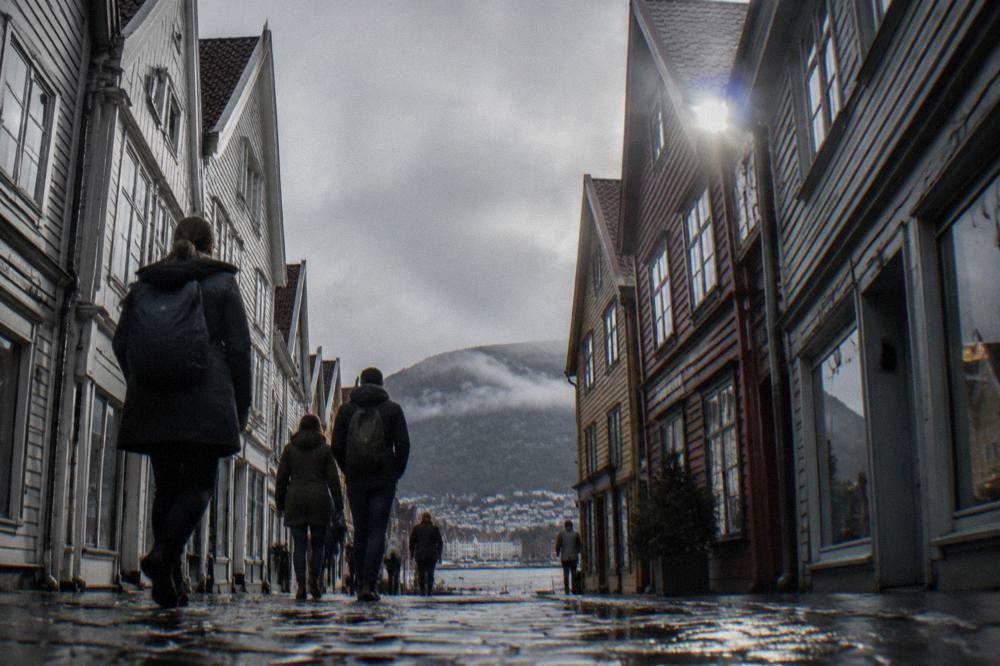
For the rest, Bergen Travel Guide holds the full attraction-by-attraction breakdown, and the size logic in this page applies to all of it: a city of 294,860 is small enough to walk and large enough to fill whatever you give it.
Common Questions About Bergen's Population
What is the population of bergen?
Approximately 294,860 people as of 1 January 2026, according to the Bergen kommune statistics page. The figure covers the whole municipality in Vestland county, Norway, not just the historic centre.
Is Bergen Norway's second-largest city?
Bergen sits in the second tier of Norwegian cities, well behind the capital, Oslo. No verified population figure for any other Norwegian city is available, so no comparative number is printed here.
Does Bergen's population include the cruise passengers?
No. The 294,860 figure counts registered residents only. Cruise passengers, festival visitors and tourists are on top of it, which is why summer harbour days can feel far busier than the resident number suggests.
How many people live in greater Bergen versus the city centre?
The kommune figure of 294,860 covers the entire municipality, including suburbs and islands beyond the centre. The historic core around Bryggen and the harbour is only a small fraction of that total.
Does the population of Bergen grow in summer?
The registered population changes slowly. What grows in summer is the daytime crowd, driven by the festival calendar from late May through June and the cruise season, which the port's live arrivals list makes visible day by day.
Is Bergen big enough for a weekend city break?
Yes, and then some. A population of roughly 294,860 supports a full urban weekend, museums, food tours, guided walks and two mountain transport links, while staying compact enough to cover on foot.