Is Oslo Or Bergen Colder?
Bergen, on Norway's southwestern coast, has milder winters than Oslo. Here is what the Met Norway data shows, month by month, and what it means for your trip.
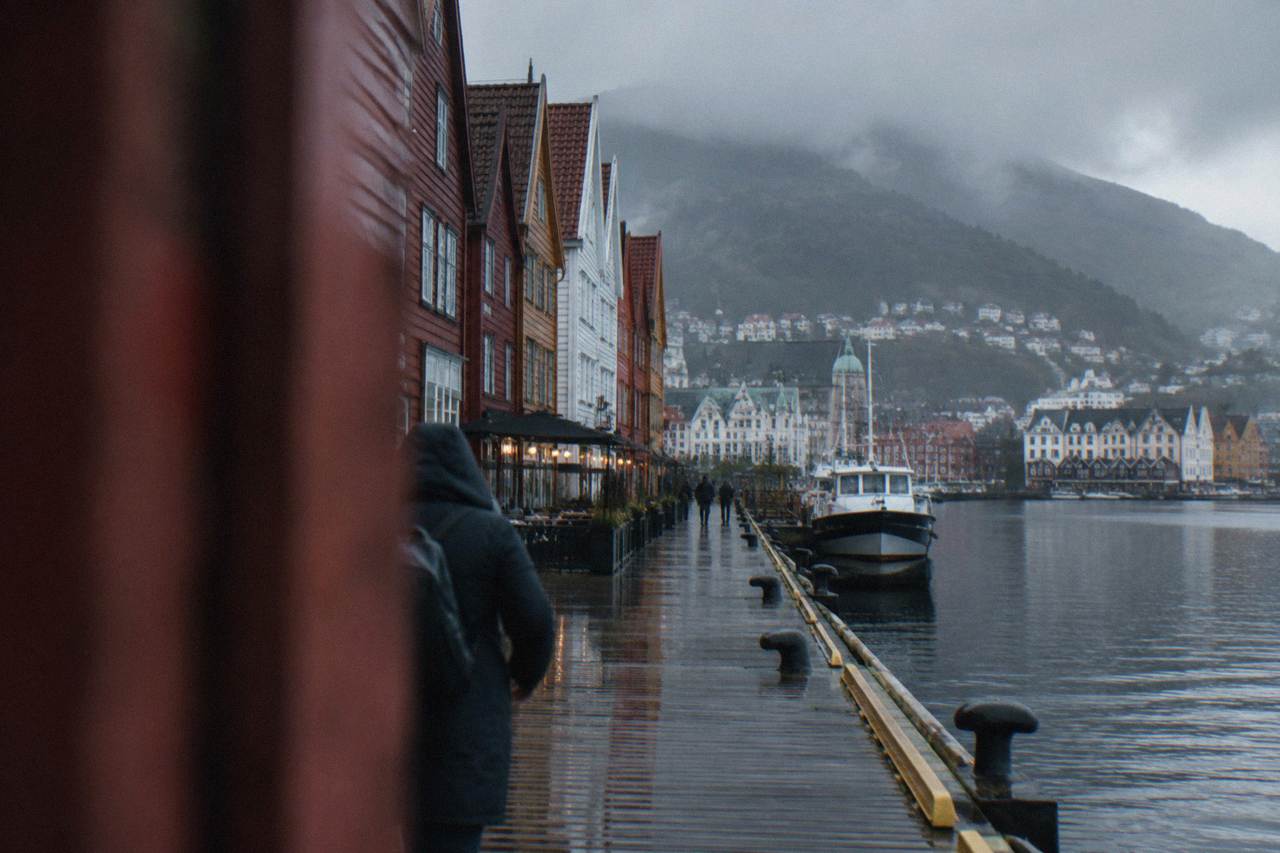
Bergen, the former Hanseatic trading post on Norway's southwestern coast in Vestland county, sits in the middle of a temperate oceanic climate zone, and that single fact decides the answer to a question travellers ask constantly when comparing Norway's two biggest cities. Oslo lies far inland, at the northern end of its own fjord in eastern Norway. Bergen faces the open North Sea weather systems that roll in off the Atlantic all year. The short answer is that Oslo is colder in winter, often sharply so, while Bergen is colder in summer, or at least it feels that way, because a Bergen summer mixes mild air with rain, wind and damp. The two cities do not just have different average temperatures, they have different kinds of cold.
Is Oslo Or Bergen Colder?
Oslo is colder than Bergen in winter, while Bergen is cooler than Oslo in summer, and the winter gap is the one that matters for travellers. Bergen's observed monthly average never fell below -1.4C over the trailing 13 months of Met Norway data, while Oslo, lying inland in eastern Norway, freezes far harder and holds snow on the ground for months. In July 2026 Bergen's observed monthly average was 14.9C, mild rather than hot, so summer belongs to Oslo and winter belongs, by comfort, to Bergen.
The geography explains almost everything. Bergen is a coastal city exposed to the North Sea, and ocean water acts as a giant temperature buffer: it cools slowly in autumn and warms slowly in spring, so coastal air stays comparatively mild in January and comparatively cool in July. Oslo sits at the innermost end of the Oslofjord, surrounded by land, and land does the opposite. It dumps heat quickly in October and builds it back slowly in spring. That is the classic inland pattern, colder winters and warmer summers, and it is why the two cities land on opposite sides of almost every seasonal comparison.
A second factor is precipitation. yr.no's Bergen station table shows 217 days with precipitation over the trailing 13 months. That is not a cold number on its own, but damp cold, air carrying North Sea moisture against skin and clothing, feels colder than the thermometer says, and Bergen produces it relentlessly. Oslo's winter cold, by contrast, is more often dry and clear, the kind of cold that woollen layers handle predictably. Visitors arriving in Bergen in February with thick insulation but no waterproof shell tend to have a worse time of it than visitors arriving in Oslo with proper winter kit.
What Bergen's Own Month-By-Month Data Shows
Bergen's observed monthly averages over the trailing 13 Met Norway months range from -1.4C in January 2026 up to 14.9C in July 2026, with precipitation totals ranging from 65.9mm in April 2026 up to 321.8mm in November 2025. The data comes from yr.no's official Bergen station table, and it shows a city whose cold is shallow but whose rain is constant. No month in the table averaged below freezing, and no month averaged above 15C.
That January figure deserves attention. A monthly average of -1.4C would be an unremarkable winter reading in Oslo, where inland cold settles in for the whole season, but in Bergen it was unusual enough that the month's total precipitation collapsed to just 82mm, far below its 256mm normal, because the same high-pressure system that brings deep cold to eastern Norway also blocks the Atlantic rain fronts from reaching the coast. February rebounded to a more typical 133.4mm. The extremes table tells the same story from the other side: the trailing 13 months reached 28.0C on 14 August and dropped to -11.3C on 8 January. Bergen can produce real cold, it just does not hold it.
| Month | Observed average (C) | Observed precipitation (mm) | Precipitation normal (mm) |
|---|---|---|---|
| Aug 2025 | 15.1 | 165.1 | 208.0 |
| Sep 2025 | 13.1 | 206.6 | 248.0 |
| Oct 2025 | 9.7 | 231.9 | 268.0 |
| Nov 2025 | 6.0 | 321.8 | 275.0 |
| Dec 2025 | 5.8 | 303.5 | 290.0 |
| Jan 2026 | -1.4 | 82.0 | 256.0 |
| Feb 2026 | 0.8 | 133.4 | 209.0 |
| Mar 2026 | 5.9 | 243.9 | 202.0 |
| Apr 2026 | 7.9 | 65.9 | 141.0 |
| May 2026 | 9.9 | 127.4 | 109.0 |
| Jun 2026 | 14.4 | 165.7 | 132.0 |
| Jul 2026 | 14.9 | 184.2 | 158.0 |
| Aug 2026 | 14.3 | 243.6 | 208.0 |
Read the precipitation column against the temperature column and the character of the city appears. November and December, averaging 6.0C and 5.8C, are not remotely cold by Nordic standards, yet they delivered 321.8mm and 303.5mm of precipitation respectively. That combination, several degrees above freezing with heavy and constant rain, is the signature Bergen winter. It is the reason the wettest month question gets asked so often, and it is why a windproof shell matters more in Bergen than the down coat that Oslo's climate rewards.
The shoulder months are the honest sweet spot. April 2026 came in at 7.9C with only 65.9mm of rain against a 141.0mm normal, the driest observed month in the whole table. May sat at 9.9C with 127.4mm. Neither month is warm, but both are dramatically drier than the winter they replace, and Bergen in that window delivers the clearest skies it ever produces.
When Bergen Feels Colder Than Oslo Anyway
Bergen can feel colder than Oslo even when its air temperature is several degrees higher, because damp oceanic cold transfers heat away from the body faster than dry inland cold, and 217 precipitation days out of the trailing 13 months means the damp is close to permanent. A March day in Oslo at -5C under clear skies can honestly be more comfortable than a March day in Bergen at 5.9C in drizzle and wind. The thermometer is only half the comparison.
Experienced Norway travellers plan for felt temperature, not measured temperature. The checklist for Bergen is short: a waterproof outer shell, shoes that survive wet pavement, and layers that work when humidity is high. The checklist for Oslo is different: serious insulation, because the inland cold is dry and deep, but far less worry about rain gear. Bergen's March 2026 precipitation total of 243.9mm, above even its 202.0mm normal, shows that spring does not reliably rescue the city from wet weather, even as the average climbs toward 6C.
Winter visitors with a limited wardrobe should also weigh what each city's cold buys them. Oslo's reliable freeze means reliable snow, a proper inland winter with sledding and cross-country tracks within easy reach of the centre. Bergen's milder wet winter means the city itself often stays green-grey, and the snow sits up on the mountain tops instead, reachable in minutes via Fløyen or Ulriken643. The cable car versus funicular comparison is, in winter, partly a comparison of two snow lines, and it is worth reading before committing to either mountain.
The seasonal pricing follows the seasons the data describes. The Bergen Card 2026 flyer, published on visitbergen.com, lists a Fløibanen return at 200 NOK adult from April through September and 145 NOK from October through March, and an Ulriken643 return at 435 NOK adult year-round. Winter in Bergen is the cheaper, quieter, wetter window, and the price table itself says so.
| Mountain transport | Oct-Mar adult return | Apr-Sep adult return | Source |
|---|---|---|---|
| Fløibanen funicular | 145 NOK | 200 NOK | Bergen Card 2026 flyer |
| Ulriken643 cable car | 435 NOK | 435 NOK | ulriken643.no prices page |
One further practical note for the cold season: Skyss zone A single tickets cost 51 NOK, and the Bergen Card 2026 flyer includes free Skyss buses and the Bybanen light rail, including the airport line, across Vestland county. On a wet, dark winter day in Bergen that free network is the difference between a pleasant museum afternoon and a soaked one.
There is a reason an audio tour earns its place in that box on a page about temperature. The coldest hours in Bergen are the ones spent outdoors with nowhere dry to go, and a self-guided narrated walk solves exactly that problem: it turns a wander into something with structure, at a price that barely registers against a mountain ticket or a fjord cruise. On a January afternoon at -1.4C, structure is warmth.
A good way to spend one of those damp, grey hours is the guided food walk through central Bergen, which pairs stops around the city's food institutions with a ride up the Fløibanen funicular, the same funicular whose winter return ticket drops to 145 NOK in the off-season. It appears among the picks above, and it exists precisely for days when the weather steers you indoors and underground-tunnel-wards. Check availability if a cold-weather afternoon slot fits your dates.
Which City Should You Choose For A Winter Trip?
Choose Oslo for a deep, dry, snowy winter with the clearest skies and the lowest temperatures, and choose Bergen for a mild, wet, atmospheric one where the average barely touches freezing and the city stays alive around you. Bergen's observed December average of 5.8C makes it one of the warmest city winters in Norway. The choice is not about escaping cold, it is about picking which kind of cold you prefer, and the coastal mildness of Bergen is the easier one for most visitors.
Bergen's winter case is strong in ways the temperature table understates. A December average of 5.8C means the harbour, the fish market and the lantern-lit wooden fronts of Bryggen all stay walkable, and the UNESCO listing, inscribed in 1979 according to UNESCO's own site text, does not hibernate for the season. The rainiest month answer matters here too: November's 321.8mm is the observed peak, and the calendar's later winter months, while still wet, come in below it, so a February visit is usually less soggy than a November one, even if the November to January window is what most people aim for in summer planning instead.
Oslo's winter case is equally real. Deep cold means stable snow, ice-skating on downtown rinks, and long forest trails on the city's edge. The trade is a darker, harder, drier cold that punishes under-dressing much faster than Bergen's drizzle does. Travellers splitting a trip between the two cities, and there are many who do, should budget their heaviest boots for Oslo and their best rain shell for Bergen. The Oslo to Bergen train guide covers the crossing between the two climates in one sitting, and the is it better to fly or train question resolves the other half of that logistics puzzle.
There is also the question of which city rewards a shoulder-season compromise. Late April, when Bergen's table shows 7.9C and a record-dry 65.9mm, is arguably the single best-value window in the whole dataset: winter prices, spring averages, and the mountains still white above the city. The how many days in Bergen question has a different answer in April than in November, because April days run longer and drier.
How To Pack For Bergen's Version Of Cold
Pack for damp, not for depth: a waterproof shell, waterproof shoes with real grip, merino base layers and one insulating mid-layer cover Bergen's observed range of -1.4C to 14.9C far better than a heavy parka does. The city's 217 precipitation days over the trailing 13 months mean rain arrives regularly, and the mild averages mean deep-cold gear usually goes unused. Add a warm hat for exposed waterfronts and mountain tops.
Bergen's cold is vertical as well as horizontal. The city centre can sit at 5C in rain while Fløyen's upper station, reached by the funicular, sits in cloud, wind and several degrees less. The Bergen Card flyer's own transport lines point up both mountains, and anyone riding either should assume the top station is a full season colder than the street they left. Layers that open and close are worth more than one thick coat that cannot.
The clothing question visitors actually ask most is whether everyday clothes survive the climate, and the jeans question answers itself in Bergen's data: jeans worn through a 243.9mm March take hours to dry in coastal humidity. Wool or synthetic trousers that shed water, and a shell with a hood, are the local answer. The rest of the kit is ordinary Nordic sense: reflective detail for dark streets, gloves that stay usable when wet, and shoes tested on wet stone.
Common Questions About Bergen And Oslo Temperatures
Is oslo or bergen colder?
Oslo is colder in winter, often by a wide margin, because it lies inland in eastern Norway. Bergen is cooler in summer, with an observed July 2026 average of 14.9C. Bergen's trailing-13-month monthly averages span -1.4C to 14.9C per Met Norway data, and its coastal winters rarely hold a freeze.
Does it snow in Bergen?
It snows in Bergen, but the city's mild coastal winters mean snow rarely settles for long downtown, with observed December and November averages of 5.8C and 6.0C. Snow sits reliably on the mountains above the city, reached by the Fløibanen funicular or the Ulriken643 cable car, while the streets stay wet rather than white.
Why does Bergen feel colder than its temperature?
Bergen's damp oceanic air pulls heat from the body faster than dry inland cold, and yr.no's Bergen station table records 217 days with precipitation over the trailing 13 months. A 6C day in November rain and wind can feel sharper than a clearer, drier day several degrees lower.
Which city has worse weather overall?
It depends what you count. Bergen is far wetter, with a wettest observed month of November 2025 at 321.8mm. Oslo's winters are colder and darker but drier. Neither city is "worse", they are different: Bergen trades deep cold for constant rain, and Oslo trades rain for reliable freeze.
What is the coldest month in Bergen?
January was the coldest month in the trailing 13 months of Met Norway data, with an observed monthly average of -1.4C and a temperature extreme low of -11.3C on 8 January. Even so, that January was unusually dry for Bergen, with only 82mm of precipitation against a 256mm normal.
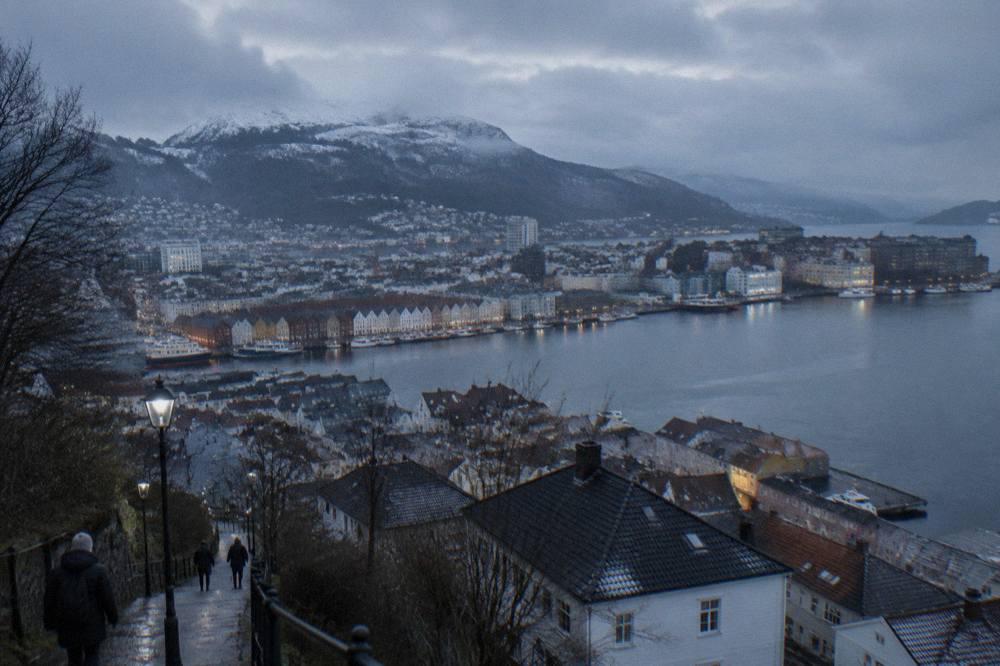
The comparison, in the end, is not really a contest. Oslo owns the deep, photogenic, demanding winter; Bergen owns the mild, wet, lantern-lit one, and the Met Norway table behind this site's figures, curated on Bergen Travel Guide, shows a coastal city whose coldest month averages barely below freezing. Bring the shell, take the funicular up to where the real snow lives, and let Oslo keep the records.