How Do I Call A Taxi In Bergen?
How taxis work in Bergen, Norway: ranks, apps, card payment, and the public transport alternatives that often beat a cab in the city centre.
Taxis in Bergen, a city of roughly 294,860 people in Vestland county on Norway's southwestern coast, are fully licensed and metered, and the practical answer is simpler than in larger capitals: you either walk to a rank, ask your hotel or restaurant to book one, or use a booking app, and in the compact city centre you will often find the light rail or a bus is faster and far cheaper than a cab. This page, part of Bergen Travel Guide's transport coverage, walks through when a taxi actually earns its fare in Bergen, how to pay, what the verified alternatives cost, and the wet-weather scenarios where a cab genuinely makes sense.
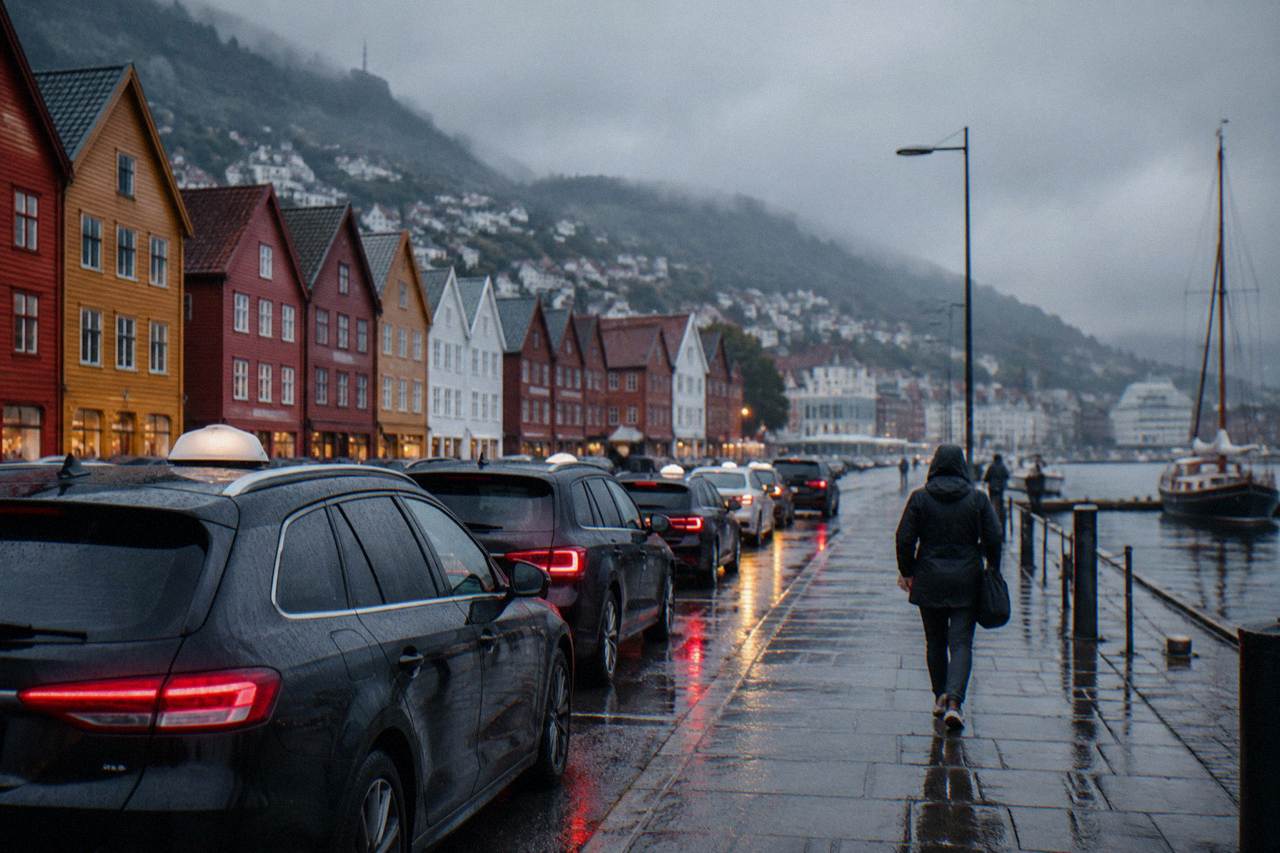
How Do I Call A Taxi In Bergen?
You rarely need to phone anyone. In central Bergen the reliable ways to get a taxi are: walk to a rank, which the airport terminal and the area around the bus station and major hotels have, ask hotel or restaurant staff to book one, or use a taxi operator's own booking app or phone line. Cabs are licensed and metered, most drivers take cards, and in a city this compact the light rail or a bus is usually faster door to door.
The phone-a-cab habit still works here, and hotel desks in Bergen handle it constantly, particularly on wet evenings when everyone wants a car at once. The wrinkle is that no single municipal taxi number exists for the city; operators run their own dispatch lines and apps. That means the most dependable "call" for a visitor without a local SIM is the hotel desk, a restaurant host, or a rank within walking distance of wherever you happen to be standing.
One Bergen-specific reality shapes all of this: rain. Yr.no's Bergen station table shows 217 days with precipitation across the trailing 13 months, so demand for taxis is spiky and weather-driven. On a dry Tuesday afternoon you may wait a while for a cab to seem worthwhile at all; on a saturated November evening, when the same table shows a monthly observed rainfall of 321.8mm, everyone in the city wants one at the same time. Booking through staff rather than hoping to flag one down in the rain is the difference between a five-minute wait and a long one.
Do You Even Need A Taxi In Bergen's City Centre?
Most of the time, no. Central Bergen between the Fish Market, Bryggen and the university parks is compact enough to cross on foot in well under half an hour, and Skyss buses and the Bybanen light rail cover nearly everything a visitor wants, including the airport. A single zone A Skyss ticket is 51 NOK, and every Bergen Card includes free Skyss and Bybanen travel across Vestland county. A taxi wins late at night, in heavy rain with luggage, or for door-to-door runs the rails skip.
Bergen is one of Europe's more walkable city centres, and visitors consistently underestimate how little of it needs a vehicle. The distance from Bryggen's Hanseatic wharf to the Fløibanen funicular lower station is a stroll, not a journey, and the peninsula of Nordnes wraps around the harbour within the same easy radius. If rain is the reason you are reaching for a cab, remember that the same rain is why the city's arcades, covered fish market hall and museums are so well used: they sit between you and your destination more often than you would guess.
The public transport case is strong and cheap in verified terms. The Bergen Card's 2026 flyer, published on visitbergen.com, lists the base adult card at 400 NOK, with 48h, 72h and 96h options at 500, 600 and 700 NOK respectively, and all of them include free Skyss buses and Bybanen travel county-wide. Against a metered taxi fare that the operators do not publish in advance, a 400 NOK card that also discounts Fløibanen, Ulriken643 and most museums is a planning-level bargain that a cab cannot compete with for anything beyond a single ride.
| Option | Verified price | What the sources confirm |
|---|---|---|
| Skyss single adult ticket, zone A | 51 NOK | One journey on buses and light rail |
| Bergen Card 24h | 400 NOK adult / 100 NOK child | Free Skyss buses and Bybanen, including the airport line |
| Bergen Card 48h | 500 NOK adult / 125 NOK child | Same transport coverage, longer window |
| Bergen Card 72h | 600 NOK adult / 150 NOK child | Same transport coverage, longer window |
| Bergen Card 96h | 700 NOK adult / 175 NOK child | Same transport coverage, longest window |
| Taxi | Metered, fare not published in advance | Licensed and metered; book by app, phone or rank |
A structured first day that uses the city's own two feet and rails instead of a cab is the single best way to keep the transport budget sane, and a small-group walk is a good spine for it.
How Much Does A Taxi Cost Compared To Bergen's Public Transport?
Bergen's taxi operators do not publish flat visitor fares, and no verified per-kilometre rate appears in this site's sourced research, so the comparison is between a meter you cannot predict and published figures: a 51 NOK Skyss single, and Bergen Cards from 400 NOK bundling all buses and the light rail with discounted attractions. Fløibanen's return is 200 NOK in season and Ulriken643's cable car return is 435 NOK, both on the official flyer. A taxi is a convenience purchase, not a budget one.
The rule worth internalising: anything the light rail reaches, take the light rail. The Bybanen runs from Bergen Airport at Flesland into the city centre on line 1, and the Bergen Card covers it free. The exact journey time in minutes is not given here, but the route is the airport's workhorse connection and the cheapest one that is priced in public sources.
Taxis earn their meter in the gaps: late-night returns when services thin out, airport runs with luggage and children, or a door-to-door trip to somewhere the rails skip. Norway does not have a tipping culture that expects anything from a taxi passenger, so the metered fare is the whole transaction.
Can I Pay For A Bergen Taxi By Card Or App?
Yes, card payment is standard, and taxis are no exception: drivers carry terminals that accept the same contactless cards and phone wallets used everywhere else in the city. Norway is not an EU member but is a non-EU EEA/EFTA member and a Schengen Associate, and its payment infrastructure is fully card-first, so cash is the fallback rather than the norm. For app bookings, the operator's own app handles the payment, which avoids any awkwardness over card acceptance at the kerb.
Norway is close to a cashless society, and that works in a visitor's favour here. The questions this site gets most about paying in Bergen are covered in detail on the page about whether you can use Apple Pay in Bergen, and the short version is that a contactless card or phone handles taxis, ferries, coffee and museum tickets alike. Cash is accepted in principle by most operators but rarely requested by anyone, and a driver will not be offended by a card.
The related question is whether rideshare apps work instead of traditional dispatch. That is a separate and frequently asked topic, and it has its own page: whether you can use Uber in Bergen, which goes through what is actually available and what to expect for wait times and coverage compared with the licensed local operators.
What About Getting From Bergen Airport To The City Centre?
Bergen Airport, Flesland sits at the end of Bybanen line 1, which runs into the city centre and is free with every Bergen Card, while a single zone A Skyss ticket is 51 NOK, both figures verified on visitbergen.com and the Bergen Card flyer. A taxi from the airport is metered with no published flat rate, so travelling light, the light rail is the cheapest and most predictable option; a cab makes sense with heavy luggage, a group splitting the meter, or a very late arrival.
The airport-to-centre decision is where many travellers overpay for a taxi out of pure unfamiliarity. The full arrival-to-door process, including what the terminal looks like and how the transport options stack up, is laid out in the site's Bergen airport guide, and the rail link makes it a genuinely low-stress landing. One scheduling wrinkle matters for late flyers: Bergen Airport has a planned overnight runway maintenance closure affecting night operations between 19 May and 5 June 2026, 22:30 to 03:30, excluding Saturday and Sunday nights, per Avinor's published circular, so overnight arrivals in that window should confirm their timing before relying on any late-night option, taxi included.
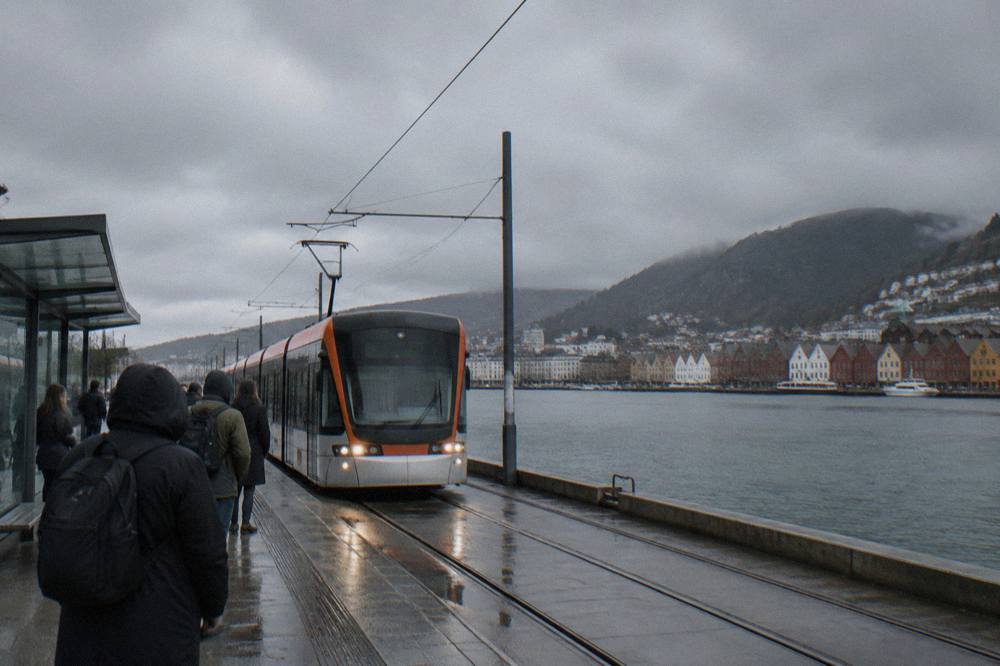
For the return trip, the same maths applies in reverse. A Bergen Card of any duration covers the airport line, so a 96-hour card at 700 NOK covers your airport rail journeys, your city buses and discounted attraction entry for a full long weekend. That is a harder deal for any metered cab to beat unless convenience is the whole point of your trip.
When Is A Taxi Actually The Right Call In Bergen?
A taxi is genuinely worth it in three scenarios: late at night when public transport frequency drops, in sustained heavy rain with luggage or small children, and for door-to-door trips to addresses the light rail does not serve, such as outer residential areas or trailheads. In the compact centre, in dry weather, or along the Bybanen corridor, a cab buys very little time for a lot of money, and the published Skyss and Bergen Card prices make the alternative predictable.
Bergen's climate is temperate oceanic, wetter than most of Norway, and the Met Norway table behind this site's weather coverage shows monthly means ranging from -1.4C in January 2026 to 14.9C in July 2026. The rain, not the cold, is what pushes people into cabs: November showed 321.8mm of observed rainfall in the trailing 13-month table, the wettest month recorded, and a November evening with restaurant reservations is exactly when the hotel-desk phone call beats standing at a rank hoping a car appears.
Wet weather is also when planned indoor time pays off, and a food-focused walk is one of the few tour formats that barely notices the drizzle, since much of it happens under roofs and counters.
The same logic applies to timing a full day: if you are only in the city briefly, the page on how many days in Bergen is enough is worth reading before you book anything, because transport decisions look different on a brief stop than on a four-day stay.
Common Questions About Calling A Taxi In Bergen
How do I call a taxi in bergen?
You do not usually need to phone one yourself. Use a taxi rank at the airport or in the city centre, ask hotel or restaurant staff to book a car through their local operator, or use a taxi operator's own booking app. Fares are metered and drivers take cards.
Can I pay for a taxi in Bergen with a card?
Yes. Norway is a card-first country, taxi terminals accept contactless cards and phone wallets, and the operator's own app handles payment for app bookings. Cash is a fallback, not the expectation.
Is a taxi from Bergen Airport worth it?
Usually not if you are travelling light. Bybanen line 1 runs from Flesland into the city centre, is free with any Bergen Card, and a single zone A Skyss ticket is 51 NOK. A metered cab wins mainly with heavy luggage, a group, or a very late arrival.
Do I need to tip taxi drivers in Bergen?
No. Norway does not have a tipping expectation for taxi rides, so the metered fare is the full amount. Rounding up is a courtesy, not a requirement.
Are taxis in Bergen expensive compared with the light rail?
Yes, in planning terms. A zone A Skyss ticket is a published 51 NOK and Bergen Cards from 400 NOK bundle all buses and the light rail with attraction discounts, while taxi fares are metered and not published in advance, so a cab is a convenience you pay for case by case.
Bergen rewards travellers who treat the taxi as a tool for the wet, late and luggage-heavy edges of the trip, and the Bybanen, the buses and a comfortable pair of shoes for everything else. For a city that sees rain on 217 of the last 13 months' days, that is a strategy that keeps both the budget and the mood dry.